

ProDave
-
Posts
30679 -
Joined
-
Last visited
-
Days Won
424
Everything posted by ProDave
-
A few of us have found if you limit the flow temperature to 40 degrees that seems to mostly eliminate defrosting. So set a fixed temp or adjust the heat curve so it never goes over 40. In cold weather it may just be better to leave it on all day and night with no set back.
-
I am not sure you are looking at this the right way. Sure you can fit the bare minimum to scrape a building regs pass, but would you not prefer to fit a decent amount to have some useful generation to lower your electricity bills each and every year?
-
A case of the author of the manual not understanding what he is writing about. Those DIN rail earth terminals are not dumb terminals like all the others, they clamp to and make electrical contact to the metal DIN rail which in turn is bolted to the metal back plate. So to all practical purposes all the earth terminals are already connected together and to the back plate. Adding earth cable fly leads may give you a warm feeling that you have done it right but will make no practical difference
-
I was at a house today where coincidentaly they were having the ASHP serviced. The owner was asking about the heat curves etc and the installer was talking them through it. They were running a heat curve that put the UFH water at 40 degrees when it was 0 outside !!!! and if I heard it right, up to 45 by the time it got to -10
-
I think you means Steading?
-
We went for keep it Simple. Fixed flow temperature to UFH no weather compensation. Just controlled with standard room thermostats in each room connected to standard manifold controller. All working well so far. Controlled by a conventional central heating programmer, on all day from 6AM to 9PM off at night because I want a silent house at night (still have a noisy pump issue to sort out) Been down to almost -10 so far and house remains warm and energy use is exactly in line with modelled prediction.
-
I hope they replace that edge row of tiles with damaged overlap pieces. I bet the roofer hates that job, inserting a row or 2 like that is never going to be easy. I can't help feeling a bit of detail may be missed there.
-

MVHR running properly???
ProDave replied to joe90's topic in Mechanical Ventilation with Heat Recovery (MVHR)
What is this gadget you speak of? -
Static caravan might be a bit better, at least it has a little bit of insulation, and would better convert to a garden room / studio. I argued with the planners and got the usual "temporary" planning condition on the caravan removed, so ours is staying to become a studio / work room / storage shed.
-
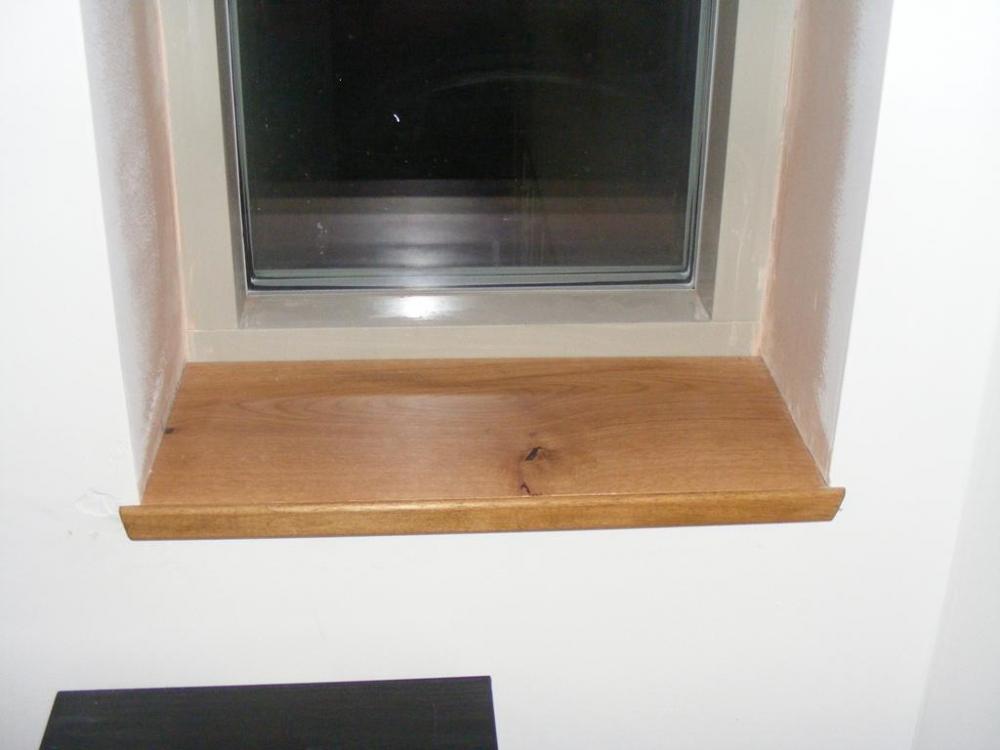
I found a donkeys years old pot of "Dark Oak" wood stain in the garage. Gave the trim the very thinnest possible coat of that so as not to be too dark, followed by a coat of clear varnish. I think this is acceptable:
-
So you have very little flow round that single pipe downstairs system. Go and shut off all upstairs radiators to ensure maximum pressure on the downstairs loop and see if that gets it moving. Could be an air lock, could be crud.
-
It's the water that makes a bath heavy, not the bath itself.
-
MVHR running properly???
ProDave replied to joe90's topic in Mechanical Ventilation with Heat Recovery (MVHR)
Is there merit in switching off the mvhr in the daytime if we are all out? -
MVHR running properly???
ProDave replied to joe90's topic in Mechanical Ventilation with Heat Recovery (MVHR)
I made that point in post #2, and Jack explained it with a spreadsheet in post #4 -
Also check joist sizing. Most of our joists span end to end of the building, so are sized for the longest span. That means for some spans they are over sized. Above our snug living room some of the joists are smaller, having been cut in 2 by the stairwell, so the joists on one half are the over sized ones, and on the other half of the room are the "correct" sized ones. The result is noticeably more floor bounce one side of the bedroom than the other. I wish I had noticed this on the plans and got the same size joists everywhere.
-
Re spreading a heavy load. I did this where my HW tanks sits. It was positioned right central to one joist (near it's end) I wanted to spread the load more evenly to more than 1 joist. So I inserted an extra spare bit of strong back. As well as fixing it in the conventional way. I had it so it's bottom sat (with a small packer) on the bottom chords of the outside joists. Then on the central joist (where the tank sat) I inserted parallel wedges to pack between the top chord of that joist and the strong back. The idea being if the central joist tried to flex when the tank was filled, the extra strong back would directly transfer some of that weight to the adjacent 2 joists.
-
MVHR running properly???
ProDave replied to joe90's topic in Mechanical Ventilation with Heat Recovery (MVHR)
That is similar to what we are finding, so perhaps the Lossnay units are not as good as they claim? It is colder here. When it's sub zero outside, 20 downstairs, the bedrooms have got down to 16 and I have been told that is too cold. The fix so far has been fire up the stove, get downstairs up to 25 and then all that excess heat finds it's way upstairs (mostly by convection up the stairwell) to warm up the bedrooms a bit. Currently about 5 degrees outside (and blowing a hoolie) Supply air to bedrooms is measuring 17 degrees so about 3 degrees cooler than downstairs exhaust air. 17 degrees supply air is a lot better than 5 degrees it would be today without the mvhr. Remember, just because downstairs exhaust air is at 20 degrees does not mean it will heat all supply air to 20 degrees. Some (half) of the exhaust air will be from the upstairs rooms that are also a bit cooler. -
I used them once. There specific use is to make a door self closing. Sometimes (usually?) you don't want that. I also recall having to shave some off the corner of the top of the door as they had risen to the point of touching the top of the frame before the corner of the door cleared the frame fully.
-
Strongbacks are normally about an inch thick, typically in the order of 6 by 1. At that thickness you can drill or notch them is something large needs to pass through e.g an mvhr duct. If you use 4 by 4, it will certainly be solid, but be absolutely sure you won't want to be getting a soil pipe through there later.
-
Pour a good dose of inhibitor into the header tank first.
-
Those olives are a long way from the end of the pipe. Offer up the new fittings. If the pipe bottoms out in the new fitting before the olive touches it's cone, then they are never going to compress. If that is the case, cut a bit off the end of the pipe.
-
A wrap of ptfe round the existing olive will never do any harm either.
-
Nothing else is decided. We have oak floor, oak kitchen worktop and will have oak doors. So logically want oak door liners (that one is not going to be fun finding them) and oak architrave and skirting (easy, Howdens sell oak veneer of both)
-
With a whole acre is there no chance of keeping the original house and dividing the garden to hive off a plot for yourself? It would be a lot more cost effective than knock down and rebuild.
-
This sounds like a new house near here. Someone bought an old bungalow to knock down and rebuild. It turns out at some point the owner of the bungalow had enlarged the garden by buying part of a field and the farmer sold it with an uplift clause if it was ever to be built on. The replacement house sits on the original garden, but he has built the garage on the ex field with the uplift clause. So far apart from some huffing and puffing the farmer has done nothing to chase this covenant. But I would expect it to be an issue if he ever tried to sell the house.


