
ProDave
-
Posts
30862 -
Joined
-
Last visited
-
Days Won
427
Everything posted by ProDave
-
Okay I hit a problem trying cooling on ours. I tried to set cooling mode on the LG controller, but it would not allow me to select that option. So I dug out the manual. I find that "cooling" mode is not available when you have opted to use an external room thermostat input. I use the room thermostat input as that is what allows me to control the heating from a normal programmer using the "call for heat" contact from the UFH manifold as the "thermostat" contact to the ASHP. To disable the room thermostat option (and thus allow cooling mode) would require opening up the ASHP and changing a DIP switch on the controller board. It is not even a software parameter that you can change. A future mod, when I can be bothered will be to connect that particular DIP switch to something more accessible, even a waterproof outdoor switch mounted on the outside of the ASHP would do it. Of course doing so would mean soldering 2 wires onto the back of the controller board and would invalidate any warranty I am sure. I have said before, the difference between one ASHP and another is in the detail of how they implement their controls, and I have to say the LG one that I have is very poor in the way it interfaces to the real world and the silly obstacles it throws in the way. Of course unless you ask other users who know it in detail you won't find this out until after you have bought the unit. And the silly bit, it even has a separate input for a cooling thermostat, separate to the heating thermostat input. One assumes that would still work if I disable the heating thermostat input and then set it to cooling mode. I think I said before, I get the feeling I have the V1A beta software in my unit with much room for improvement.
-
Mine is only really set up for heating. If I wanted to cool the floor, I would have to go and switch the ASHP to cooling mode on it's control panel, and then go and turn the heating programmer to on, and turn all the room thermostats up to stupidly high temperatures as all the controls assume heating mode and at the moment all the room thermostats would be turned off. If you were regularly going to use it for cooling you would want to re think the controls somewhat.
-
What is your floor make up? I have been tempted to fire mine up in cooling mode, but worry an Oak floor laid on a biscuit mix might not be happy if there starts to be condensation anywhere. Even though we are in the Highlands, it's 23 degrees in the bedrooms right now. I can feel a night purge coming on when we go to bed and lights out.
-
Flats with no windows under PD
ProDave replied to Tennentslager's topic in Party Wall & Property Legal Issues
So they have PP. How are they going to get that past building control with no means of escape? -
I must be either lucky or damned good at plasterboarding (you decide) I doubt the offcuts we had added up to much more than 3 or 4 sheets in total. They would all have gone in one run to the tip, but I got rid of them slowly for no effort by other means. Anything timber gets made into something or ends up on the WBS.
-
Shame they don't make a replacement bottom section that includes the steel plate already fixed to it.
-
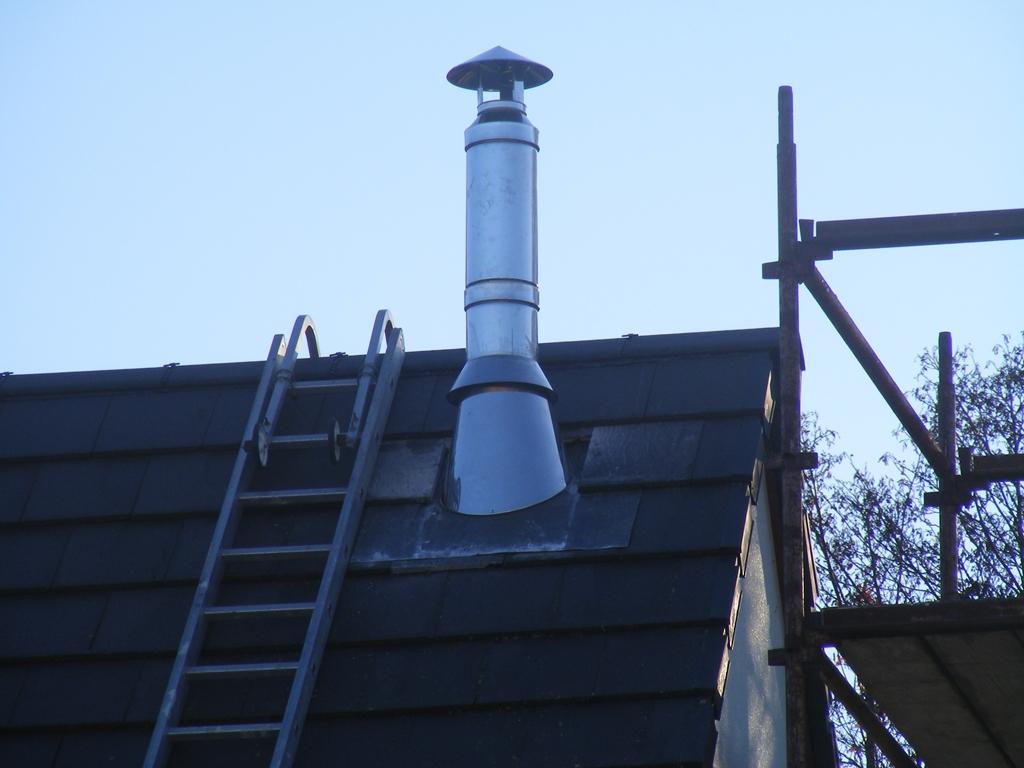
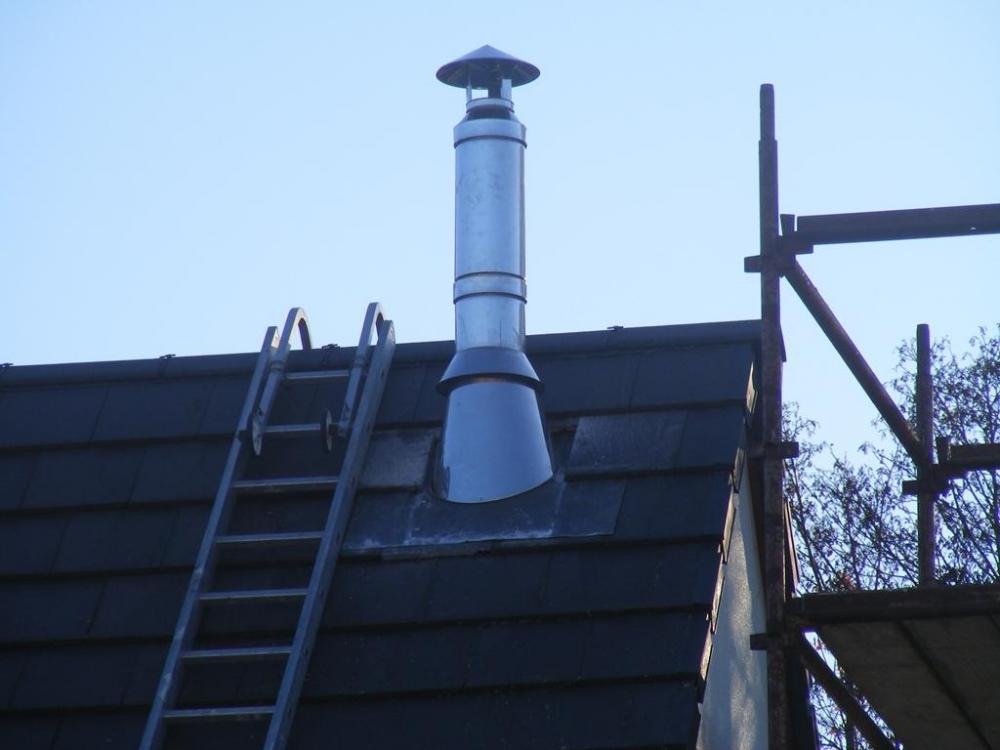
This is the flue terminal for our WBS, an ordinary "China Man's Hat" type to stop rainwater coming down the flue. A few weeks back we were woken up by "a noise downstairs" It soon became clear a bird was in the flue, had gone all the way down and was on the baffle plate at the top of the stove. The easiest way to get it our was dismantle the flue pipe out of the stove that meant digging out the fire cement. On that occasion we got the bird, a starling, out alive. Because we are not using the stove I had not re sealed the flue with fire cement. Just back from holiday, SWMBO says "why is there soot on top of the stove around the (unsealed) flue pipe? This time we found a dead bird as we were obviously not around to get it out in time, So we need to stop this keep happening. All I can think is wrap the top of the terminal in chicken wire to reduce the size of opening?
-
The only niggle here is with a trailer, or a commercial vehicle, you have to sign a form and hand it in to declare the waste you are tipping is private waste not commercial. So my first visit with the trailer goes like this: Can I have your form please? What form? The council's form to declare that is it personal waste. Oh I didn't know about that. Give me a form please and I will fill it in. We don't keep the forms here. Where do I get the form? From the council office in town? So you want me to drive into town, find somewhere to park with the trailer, go and get the form, fill it in, then come back and you will allow me to tip it? Just go and tip your waste and bring a form next time...... An amusing one one from Oxfordshire, BIL had done some gardening. He had a 1 ton builders bag in the back of his Landrover full of garden waste. He pulls up outside the garden waste skip and starts dragging this bag out of the Landy. An operative approached at great speed "you can't tip that much". BIL points to sign that says "Garden waste, 1 car, 1 bag" How many cars have I got? How many bags have I got? Operative sulks off in a huff. BIL no longer welcome there.
-
Sometimes it seems these places are designed specifically to deter people from using them. And then they wonder why fly tipping happens.
-
The mower had other ideas. 1/4 of the way through the blade snapped in half. The post mortem reveals it has been cracked for some time (it has encountered a few obstructions / stones etc many times) Awaiting a new blade to continue.
-
They have been in about 4 years but the house has only been occupied for coming up to a year (and still a LONG way from finished)
-
Ours are painted wood inside (they had stopped doing "wood" finish when we bought ours. I assume they offer that again?) No problems at all. Never any condensation on the frames. Just normal maintenance, dusting and cleaning.
-
Yes. Don't want all that electricity getting all unwanted and exported now do we.
-
Our Bialetti is probably 25 years old. You can buy all the spares, e.g the O ring that seals the join lasts about 2 years, and once I dropped it and broke the handle, I bought a new replacement handle from someone on ebay. Do let us know if it works on an induction hob, I suspect being aluminium that it won't.
-
Declaring a Climate Emergency.
ProDave replied to Triassic's topic in Environmental Building Politics
Shared freehold of flats works well in Scotland. -
I can't stand all this fascination for frothed up milk in coffee. Time was you used the be able to ask for a "white coffee" (or as the Australians like to call it, a flat white) But if you ask for that now, you get something covered in froth. The only way now is ask for a black coffee, and then, when it arrives, ask if you can have some milk (or cream) to put in it.
-
Just had 2 weeks away leaving the house to look after itself. PV generation over that fortnight was a bit down on expectation. But not surprising, there has been a lot of rain here while we were away, it was on the news while away that the centre of Dingwall 12 miles from us flooded again (it last flooded in 2006 when they said that was a 1 in 100 year event) The PV panels kept the HW tank topped up, the ASHP used just 3KWh in addition to the solar PV power sent to the immersion heater. In that fortnight, we exported 24KWh which is roughly 4 times what we normally export. That will no doubt be when the immersion thermostat cut out and no more could be diverted to hot water.
-
Your Home Base Load / Background Power Draw
ProDave replied to MrMagic's topic in Photovoltaics (PV)
I am just back from 2 weeks away. So 2 weeks with no cooking, no washing no tumble dryer etc. Just the usual stuff on standby, fridge etc. In that 2 weeks it used 39KWh per week or 5.6KWh per day. So that is as good a measure as I will get of our "base load" -
There was a coffee machine at the place we were just on holiday. At the end of the day it is just a packaged filter coffee machine, that costs a lot more than other ways or making coffee and produces a little waste plastic pot to be disposed of somehow without it ending up in the sea after use. That alone would stop me buying one. What is going to happen when the ban on single use plastics comes in? Will there be a lot of scrap machines no longer able to be used. We just use a Bialitti like this https://www.amazon.co.uk/Bialetti-Express-Espresso-Maker-makes/dp/B00004RFRU/ref=sr_1_2?adgrpid=53898799420&gclid=EAIaIQobChMI2uvL1vXF4wIVmK3tCh2nBQp8EAAYASAAEgJuW_D_BwE&hvadid=259144146901&hvdev=c&hvlocphy=9047006&hvnetw=g&hvpos=1t1&hvqmt=e&hvrand=14438212458903950149&hvtargid=kwd-302664606925&hydadcr=19168_1766454&keywords=bialetti+coffee+pot&qid=1563708928&s=gateway&sr=8-2 Most of the time fed with ground coffee, but SWMBO also buys coffee beans and grinds her own. No waste apart from the used coffee grains that can be composted if you wish.
-
We are back too. The ferry spat us out at 7AM this morning at Aberdeen after a dead calm crossing. And at that time on a Sunday morning the A96 is a delight to drive along. The two ladies of the house seem to have an inability to sleep on boats or planes, and have both gone to bed to catch up. I need to get the lawnmower out, our flat lawn resembles a wild meadow just now.
-
See my thread here As you will see from that I am on course to see £250 of savings per year so should have a payback of about 6 years. A few points: My system is smaller than Jeremy's and we have some serious shading issues from trees at the moment, something I will start addressing this winter with the start of a pruning and thinning regime. Because I DIY installed it I won't be eligible to claim the new export payment, but at the last count I had only exported less than £10 worth, so in my case it really would not have been worth paying extra for an MCS install just to claim such a tiny amount. @Robert Clark You mention the PV helping your heating. Sadly it won't. At the time you most need heating in the middle of winter, the PV will be producing very little. Our house has a worst case heat input a little over 2Kw provided by a 5KW Air Source Heat Pump. Most of our self usage comes from using the washing machine, dish washer and tumble dryer in the daytime (one at a time) the house base load, timing the ASHP to only heat hot water after 10AM when PV generation is reasonable, and lastly dumping any excess to the immersion heater to further heat the hot water.
-
I was assuming the keep it simple manual switch next to the tap. The float switch will protect the pump if the well runs dry.
-
If you use the car as an anchor for a safety rope take All keys for the car in your pocket. You look to have a secret lead gutter up the side of the dormers under the tiles. If that gets clogged with moss or bird muck it can block and oveflow.
-
Just about any of the cheap submirsible pumps from the likes of Screwfix etc would do what you want.
-
I think he meant maintaining the wall of the well, i.e. re pointing the brickwork.