
ProDave
-
Posts
30861 -
Joined
-
Last visited
-
Days Won
427
Everything posted by ProDave
-
Use all your big appliances, WM, TD, Dishwasher etc close to mid day, preferably one at a time. Time your ASHP to only do it's DHW heating after 11AM, the sun should be up by then and most of what it uses will come from the PV on a sunny day. Fit a PV diverter to send excess PV to the immersion heater. That just about covers it for us. BUT if I install any more PV then that will have to have batteries, otherwise it would just be too much to use real time.
-
Can I assume if, like me, you included the ground mount PV panels on the planning for my house, that I have not therefore yet used any of my permitted development allowance so I could still add another 12 square metres of permitted development PV? Alternatively is like mine ended up, with PV forming the roof of a shed, you could carry on building as many sheds as PD allows each with solar PV covered roofs.
-
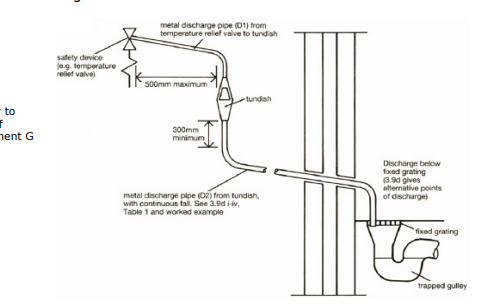
I would say no Picture from here (first google link that found the picture I wanted) https://www.e-lindsey.gov.uk/media/4257/050-Unvented-hot-water-storage-systems/pdf/050Unventedhotwaterstoragesystems.pdf You are supposed to have 500mm of straight pipe below the tundish. Yours appears to go straight into what I think is a waterless trap. Whether that will cause a problem I could not say. You could try manually operating the over pressure or over temperature relief valve and see how the water flows?
-
I did some work as a subcontractor for a local modular building company here. Their houses were not cheap but they were addressing the almost passive house end of the market making very well insulated houses. Building them as pre wired and pre plumbed modules gave the problem of how to join the wiring together at the joints between the modules. We never got any better than a junction box full of wagos that then got hidden. I parted company with them, amicably because they wanted a full time electrician but I did not want full time work. They since went bust.
-
I would probably enclose part of the side garden, up to the bin store area or the window in the end wall (still keeping 1M from the low fence) Once enclosed, that little corner would be a perfect place for a shed, without taking up any room in the main bit of garden. Planning law is a lot more lenient now with the "adjacent" description, which should allow you to fence in most of it. Previously it was any fence anywhere between the wall of the house and the highway needed PP if over 1M high.
-
I know them well. My BIL used to live in one, until they were forced out when they were all being dismantled (he ended up buying his AERE house in Wantage) They were very cold, and no doubt contained a lot of asbestos in their construction. I often said, and I believe the residents committee argued for selling them to the tenants as individual building plots, but the authority had other ideas. Half the Diamond project sits on one of the prefab sites now.
-
Put up a 2M fence, 1M in from your existing low fence. That should meet the argument of not being adjacent to the highway. That won't enclose all your garden, but most of it. Then in that gap between the tall fence and low fence plant a nice hedge (NOT Leylandii) and when the hedge should reach maturity about the same time as the 2M fence is ready to fall down. I have a relative in a similar layout estate and his entire garden is surrounded by a nice mature Beech hedge.
-
 And, if you build the house well enough, with enough insulation and air tightness, then as many of us have proved (even up here in the Highlands) then you way well not need any heating upstairs, just UFH downstairs.
 -
@Crofter as your name suggests you are on a croft are you not? I have been told several times that it is generally accepted a Croft can have 3 "caravans" on it. I don't know if that means without planning permission, or that is is expected that planning will be granted. If that is the case, your "hut" could be built under the caravan rules that you are familliar with, which would actually allow a larger hut than 30 square metres.
-
The USP of a sun amp has always been it's vacuum insulation panels and so a lower heat loss than a conventional cylinder. And a smaller volume for the same heat storage capacity, though it's form factor favours those who are restricted with height, they take up as much if not more floor space than a normal cylinder. Has anyone actually worked out how much you save due to the reduced heat loss of the sunamp and if that is it's only tangible benefit, what is the payback time of that saving?
-
It's pointless looking at graphs and doing sums. Just try it, and aim to run it at the slowest (quietest) speed that will achieve the flow rate that you want. Good pumps those nice and quiet.
-
Can someone explain some lesson one electrics please?
ProDave replied to saveasteading's topic in Consumer Units, RCDs, MCBOs
Yes but it did sometimes result in "that smell" of rotting dead mouse somewhere. -
Can someone explain some lesson one electrics please?
ProDave replied to saveasteading's topic in Consumer Units, RCDs, MCBOs
Very hard in an "ordinary" house. A normal build with all the ventilation requirements leaves plenty of mouse sized holes everywhere. Mice in the cold loft was a big problem at the last house. They could climb straight up the rendered walls, and in through the soffit vents that must be there to meet building regs. Remember if a hole is big enough for a biro pen to fit through, so can a mouse. This is the first mouse free house we have ever had. Achieved by making it air tight, and with a warm roof, so the air tight layer follows the roof and the loft space is warm, dry, inside the air tight envelope, and mouse free. We only once had a mouse in, entered through an open velux overnight. -
Thank you for that, I might have a word and see if they can offer something for us.
-
I don't have a very high opinion of SEPA as they showed complete disinterest when I raised a complaint about how treatment plants were registered. They don't want ANY details whatsoever about what you install so of course they don't check it.
-
I would read all the threads on here about sunamps and then ask yourself, why do I want to pay a lot more for a complicated magic box that claims wonderful things but comes with limitations and complications, where a traditional, dependable and reliable unvented hot water cylinder will do all I want without the complications. In my mind you need to have a VERY good reason not to use an UVC. What is your good reason?
-
Makes a stair lift look good value. At a cost of £20K I would be tempted to DIY something, purely for my own use, it would have no approvals of course.
-
Did they honour their free delivery or was there a charge? I am tempted to buy some of these currently cheap panels from City, they are so cheap, even compared to others they have, part of me thinks it might be a mistake.
-
Very true. There was a house approved here, the end of a field fenced off. The plot was sold and the house built. Then they tried for a second plot. It was obvious they intended to just keep going and slice up the field one plot at a time. The second one was refused, went to appeal and was refused and the appeal inspector said the first one should never have been granted permission. It was a good job that one was built because if the planning had lapsed, it might not be reinstated.
-
My plasterer used a couple of plastic milk crates (remember them) No tags. Seen plenty using upturned buckets.
-
All I can say is don't use Baumit. You can search the forum for my threads if you want to find out why.
-
SEPA are at the moment toothless. I know 2 septic tanks draining to a watercourse and they have no intention of upgrading. when I spoke to SEPA they said they will only investigate in case of a report of pollution. Otherwise they leave old systems undisturbed. I do HOPE this is going to change and they start enforcing the law. A treatment plant has to be 5 metres from a house and 10 metres from a watercourse, even if discharges into that watercourse. My guess is in practice your neighbours will sell, nobody will be interested, the new owners will use it as it is, leaks and all, and probably won't bother even emptying in, probably like the present users never empty it would be my guess. And SEPA will do nothing. I guess what they can do in relation to alterations depends on the wording of the agreement that allows it to be there. If the agreement shows a plan showing the location of the tank, then they just can't go and put the replacement somewhere else. They would have to negotiate with you. The best outcome for you would be they replace it with a treatment plant discharging into the watercourse. You say there is no room and the ground is unsuitable for a soakaway.
-
SWMBO would disagree with that. Only underwear, socks and towels go in the TD, and only then for a short time, not enough to dry them thoroughly. Just trying them any other way they does not meet the softness test. But even a short spell in the TD then letting them finish drying naturally and they are deemed soft enough.
-
The only reason you might want 3 core is if you plan to have a light fitting that needs a permanent live, perhaps it has a sensor for automatic operation? or perhaps you want a light and fan? If you are certain it will just be a light controlled from the switch on the wall then no need.
-
Yes I fitted the same Aico hard wired smoke alarm in my utility room. It was not required to have one there by building regs but I wanted early warning of anything smouldering in a tumble dryer. And we NEVER use the TD when we are not in the house.

