Gus Potter
-
Posts
2383 -
Joined
-
Last visited
-
Days Won
34
Everything posted by Gus Potter
-
Mica has led to apparent defects in building blocks
Gus Potter replied to Gus Potter's topic in Brick & Block
Hello DP Me too. I was wondering. It's a lot of houses that are affected. I was following the money. They must have been specified bearing in mind the economics.. we can buy something for less that will deliver a certain level of insulation.. we save money. I wonder what the specifiers / designers were thinking then and what they are now?.. -
Hello adam guest. As you probably know that small strip is called a ransom strip. You have a few options. Some are very risky.. like trying your just put your driveway over it, maintain it and after say ten years you can try and claim ownership .. but you'll need permission from the council too to create a new access to the public highway. The other way is to say approach the strip owner again (Network) and say.. how much do you want. There are three home owners interested here so smelling the coffee it could be worth your while.. Network homes. It's not often you get say three home owners willing to stump up the cash.. all in agreement.. this may (Network) be the best offer you are going to get for the forseable future as if one sells on their house it could all go cold. Then go the the council and say.. will you give us permission for a new / wider access to the highway? They probably will sell to you for a negotiated price as it's "free money" to them which is why they may have created the ranson strip in the first place.
-
Noise insulation pitched roof / vaulted ceiling
Gus Potter replied to Bosi's topic in Sound Insulation
Hello Bosi. Yes you mention weight.. it would be a good idea to have a look at what your roof structure can carry in terms of extra load. You have strenthened the roof but what has been allowed for in terms of acoustic plasterboard etc? You'll probably get much more noise ingressing through and around the window frames, service penetrations in the roof, put in a stove and the noise comes down the flue, the solum vents under the floor if you have them, your letter box and so on. I would try and identify / quantify all these areas first before spashing out on a fancy roof envelope. Don't forget how you are going to light the place.. no point in spending loads on the roof if you then go and cut holes in it for say down lighters. Yes if you live next to an RAF base then you may need a fancy roof acosutic wise but if the RAF are flying at night regularly then we probably have a bit more to worry about.- 14 replies
-
- 1
-

-
- sound
- sound insulation
- (and 5 more)
-
Yes joe spot on. If you are on a budget and are constrained by a standard 600mm deep worktop then it is what is is. Sometimes you can.. if you are lucky with the layout just fudge it up by thickening the wall over the worktops.
-
Hello jib90. Don't be.. each project is different. I like @joe90s approach but I have a couple of concerns - firstly, the end panels sit proud of the tall unit, does this cause any issues with the doors hitting the end panels? Generally no until the hinges get worn and the door opens more than 90 deg. Then you risk them prying against the end panel if it sticks too proud. Kids gets enthusiastic and throw the doors open.. teenagers worse when they are a "bit late home" Your starting point / review here is to take a few steps back. Where an how much space do you need behind the back of the carcase.. do you need to get any drain pipes and services hidden? If you have services then don't be tempted to cut a bit of the back of the base units. The more space you can generate behind the base units the easier life becomes. Next is just to check that you have the required clearances in front of say the oven and activity spaces.. if you need to get BC approval or just want to make sure you are not making any new kitchen less compliant. I can't see from the photo but sometimes you can just add another layer of plasterboard to the wall locally above the worktop if your side panel is not deep enough?
-
Mica has led to apparent defects in building blocks
Gus Potter replied to Gus Potter's topic in Brick & Block
You cynic! .. but you make a point. As a bit of background I'm asking as know a good builder who is just back from Ireland. One of his pals build a 350k house using these blocks and it's crumbling.. the load bearing walls too. His pal had a surveyor round who told him his house was effectively worthless as things stand. I'm wondering if same blocks have made their way to the rest of the of the UK.. Northern Ireland , Scotland as it's short journey or a slightly longer one if you count the ferry crossing. Another builder I know is getting some roof tiles from Ireland as no stock here... thus maybe these blocks have been creeping in? -
Have these blocks been used in the UK? Anyone know more about this? The Irish Times.. "Muscovite mica has led to apparent defects in building blocks used in at least 5,000 homes in the northwest, causing cracks to open up in thousands of buildings. Videos posted online show load-bearing blocks crumbling in homeowners’ hands." https://www.irishtimes.com/news/ireland/irish-news/q-a-what-is-mica-and-why-are-people-protesting-over-it-1.4593301 and https://www.bbc.co.uk/news/world-europe-49109158 What a nighmare for the home owner.
-
Are you selling your left handed adjustables?
-
@saveasteading"OK I do really know about this. Must have specified/supervised for tens of thousands of these, on mostly very big, but some small, columns. " and "Gus and others are mostly right, but my opinions are based on the difference between theory and practice." I have speced a few bases over the years, worn a different hat on occasion and erected a bit of steel too and mucked about with the grout.. packing of base plates and so on. Better to be mostly right than mostly wrong so thanks for the general agreement saveasteading. Good points you make.. the fence washers are a bit great of practical cost effective advice. For all you can see that there are a number of different approaches. To be on the safe side always check with your SE / designer as to how they have designed the base. If the bases are required to carry a horizontal load as well as a vertical (up / down load) then the bolts may be designed to carry horizontal shear load. If the bolts are in cones and you don't fill the cones fully then the shear force transfer to the found can be compromised particularly when you have an upward (uplift) force in a column. On a self build with steel work have a look to see if you have diagonal bracing to stabalise the structure. You may also have a big roof that acts like a kite and wants to lift off.. and this effect is needs to be dealt with. If you do have something like the above then you will probably have horizontal load transfer between the steel and the found.. you don't want movement taking place here. "Why not use expanding grout? Because they tend to assume it is magic and leave it well short of the plate and with gaps in it. Use it if you like but still supervise." Good advice here too. Ask your SE / designer and put forward you proposals..once you understand what the bases are required to do then follow through with good supervision. If you set yourself up right then it can be a good rewarding experience putting up the steels.. you really feel like you are making progress.
-
Yes.
-
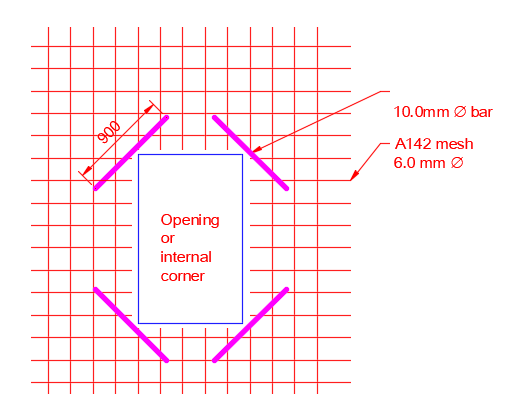
Good photos onoff! For all. Screeds and concrete shrinks. It cost pennies to do but where you have an internal corner just drop in diagonal bar, even if it is a poured self levelling screed or a screed with fibres. Even with fibres (plastic firbre ones definitley, steel fibres a bit less) you can still get crack development.. and this can cause you to worry that you have stretched your UF heating pipes.
-
Yes it is. There is a lot of real practical info on BH. If your just researching then the best thing to do to help yourself, save money and make in informed decision for your site is to learn as much about the ground as you can in laymans terms. Try if you can to read a little about clay soils, gravels, rock and how ground water behaves. Next have a look at your site.. what is next door for example? Could your neighbours do something at a later date that may say raise or lower the water table? Your neighbours could also include the council / water board assets for example; roads, parks, sewers and so on. Although hard to start you'll soon get a feel for the terminology of geotechnics and start to enjoy the fact that you are getting a handle on what can be a big cost risk. At first all you are trying to do is to learn enough so that you can ask the designers good questions. One of course is.. why are you doing it this way.. I'm paying you (designer) so can you explain why this is the best way to meet my requirements.. maybe you are just interested in the front end cost with say a 10 year guarentee or maybe you want more long term security / guard against water ingress say 20 -30 years down the line. If say you are near the top of a hill on free draining gravel ground (see saveasteading on gravel soils called Esker) then the ground water is highly unlikely to develop any significant hydrostatic pressure.. here you are really talking low risk damp proofing. At the other extreme.. jump now to say London and London clay which is pretty waterproof.. they use some of these type of clays to make dams out of. Here you could have other houses and say pavements close to your basement. Although the natural water table may be low you can experience times where water gets trapped against the basement walls. Significant water pressure can build up enough to damage your water proofing system. Sounds scary but once you have read a bit and learnt how soils behave you'll start to get a feel for your site and confident to ask the right questions. Select the right water proof barriers and water proofing system. This will be easier as you have an overview of what you need for your job. Lastly on a self build you are going to have to deal with the "builders". If you put this early work in then you'll get off on the right foot with the ground workers.. they will recognise that you "know a bit" and will be less likely to try and pull the wool over your eyes. They will then warn the brickie.. "Client knows a bit so don't muck about".. all the way up the chain!
-
If you have any DPM left pop another bit over the insulation as it can provide a slip membrane for the screed to shrink, helps reduce the risk of getting cracks in the middle for example. Maybe you are going / have done this anyway.
-
Hope this helps. Say you have some concrete pads to support columns. When the pads are cast they may vary in level, say + / 15mm. Often columns need to carry two basic forces, axial load and shear load. Sometimes they need to transmit a bending force to the concrete pad. There are three common ways to connect the column base plate to the pad. 1/ Cast in holding down bolts in cones. Usually waxed paper or polystrene. The cones are narrow at the bottom an wide at the top and this lets you wobble the bolts a bit to get them through the holes in the base plate. 2/ Cast in bolts with no cones.. need to be very accurate when doing this so avoid if you can. 3/ Place the column, drill out the concrete and use resin to fix the bolts. Works well with lowish forces. To get the column base plates level you often aim to set the top of the pad 20 -25mm below the intended level of the bottom of the base plate. The steel erector then uses shims under the centre of the base plate to get that plate level in the centre, then adjusts the bolts to pull the column plumb. It rocks about on the shim in the middle. Sometimes they use steel wedges round the edge of the plate to get it level and the column plumb. Now the grout. If you have cones then if they are not fully filled then the column can move sideways.. as the bolts still wobble about in the cone holes..not good! You can't get the cones filled using ordinary mortar as it does not flow enough to get under the plate and down the cone holes, and you can't compact the mortar in the cone holes. We know ordinary mortar etc shrinks when it cures.. and when it does so the nuts on the holding down bolts can come slack say after a month. The specialist grouts you buy are what we call compensated grouts. The grout contains an additive that expands as the grout cures and this is balanced against the shrinkage of the cement component. Hence the terms you see such as "non shrink grout. The grout sets up pretty quick. Once you get most of the steel up nip back and just give the nuts a check to see they are still tight. To keep life simple and for the cost I would just buy a bag of say the Sika 111 or a similar one part grout. all you need to do is add water as per the instructions and mix. If you start using a separate additive you'll only use a little and have to get the mix spot on. Make life easy and use the thinking time on the other exciting parts of your project.
-
Hello Grey Sage. You'll get plenty good info here to enable you to take a view on what is best for you. To get the best out of Build Hub can I suggest as a starting point you provide a bit of info on what you know about the existing construction. For example. The floors .. suspended or solid, wall type / cavities, roof construction, windows and existing levels of insulation. Also if you can give an indication of the floor area of the house and ceiling heights and number of storeys.
-
temporary habitation certificate and stairs
Gus Potter replied to Scoobyrex's topic in Building Regulations
Yes don't use MDF, use say 18mm OSB or an 18mm ply board as you can easily point to the load bearing capacity. This avoids the keen BC asking questions say about B&Q MDF, what happens if it gets wet? When you design a stair the handrail has to be able to carry a certain horizontal load and so do the spindles or in you case the ply say. No need to paint, if ply then when you are finished cut it up and make some nice shelves in the attic / garage with it. -
Novice to extension building - Deciding to project manage or not?
Gus Potter replied to Pamela's topic in Introduce Yourself
Hello Pamela. That's you up and running now! Hopefully this will give you some food for thought, even if to rule things out. For all the information that is provided on a warrant drawing is particular to Scotland, but hopefully other BH members in the UK may find something of use. "Have planning and building warrant sign off for a single-story side extension (roughly 74 m2) and part remodel of existing 1950’s bungalow in West Lothian, Scotland. Next stage is deciding to either project manage or ask Architect to take this on." Yes this decision crops regularly. I imagine you have asked your Architect what the project management fee will be and what the fee will be to produce a full tender package of information. As a rough guide expect this to be at least if not more than you have already paid your designers to get planning and warrant. To get your head round this the building warrant drawings are prepared so as to satisfy the requirements of the Scottish Building regs.. they are not full construction drawings. Some warrant drawings will be more detailed than others depending on the approach the Architect/ SE has taken and what level of input and drawing detail an SE has provided. A starting point here is to look at what level of drawing information you have and if you are able to use this as a basis for a contract without exposing yourself to too much risk.. say by way of extras or the contractor swapping materials / doing something that may compromise the structure for example. Ideally, we would like to hire a main contractor to build the extension to watertight/ weathertight stage which will have an agreed start and end date. Thereafter we are content to do the internal works ourselves alongside other trades, when needed. For this part we are flexible about project finish times as we are aware that material costs are increasing and this is a way, we can offset some of this. We appreciate the pros and cons of this route. For your particular set up (we do this in the central belt of Scotland) what about having a chat with your SE. I'm reading between the lines and guessing. What can work is that you say to the SE.. look we want to do as much as we can ourselves but need to know if the founds / main structure is ok. What will you charge to update your drawings for tender.. the devil in in the SE detail and can you make say three or so visits to site to check: 1/ The ground is ok before they cast the founds 2/ Once the underbuilding is up to drop by and just have a look 3/ Come back once the main structure is up but before anything is covered up 4/ Be available should the builder just want to give you a quick call if there is something they are not sure about. 5/ Hard to ask this but once you have a rappore with the SE.. be like our "Dad" and if we get stuck give us a few free pointers. It's a halfway house but with a bit of thought and effort on your side it can work. In terms of the JCT contarcts I assume you have had a look but have posted links to the ones; homeowners with or without consultant. With consultant https://www.constructionbooks.net/jct-contracts-2016/jct-homeowner-contracts/jct-build-contract-and-consultancy-agreement-for-a-home-owneroccupier-2021-9780414098282.aspx No consultant https://www.constructionbooks.net/jct-contracts-2016/jct-homeowner-contracts/jct-building-contract-for-a-home-owneroccupier-2021-9780414098275.aspx It is our intention to produce the contract/tender paperwork and we have seen on other websites the amount of paperwork that would accompany an invitation. However, what are the basic requirements that we need and is there anywhere we can see completed templates to give an idea of what level of detail is required? Currently looking at a JCT contract. You'll be hard pushed to find this as much is intellectual property of the designers. There is some generic stuff on the web. Why not go back to your Architect / SE and say, if we pay a little can you advise. That said there is good generic info on the web. "In the above situation who would be responsible for the CDM Reg? Us or the main contractor? Depends on the contract but if you go for the homeowner with no consultant then the contractor is liable for the CDM. The link below to the HSE helps set the mood re CDM for a homeowner doing an extension with no consultant. Well worth a read. https://www.hse.gov.uk/construction/areyou/client.htm Apart from the paperwork what else is involved in a project similar to ours? Timelines and pitfalls? For example, we are aware to record any amendments/suggestions by builders that we agree to so as to evidence ‘extra’ work for contract and payment purposes but are there other things that we need to consider? With regards to timelines – how long should we be considering for the tender process itself as well as the works if the plan was to commence March/April 2022. Any guidance on this is much appreciated. Great point here. build a rappore with your builder, it's really important as they are in and working on your house.. you can even make new friends.. just like a lot of folk do through work.. but. Take loads of photographs on a daily basis if you can, record the weather and put absolutely everything in writing. This can stop you falling out in a serious way. Some good builders I know (central Scotland belt) are booked up for the next 9 months at least so 2022 sounds sensible. Also, material prices will hopefully have stabilized a bit by then. The best time to be starting founds our way (I'm in East Kilbride) seems to be May time.. had some great weather this time of year recently. -
temporary habitation certificate and stairs
Gus Potter replied to Scoobyrex's topic in Building Regulations
Yes they do need to comply with the regs in terms of the max 100mm spacing between the spindles and if open treads then no gap more than 100mm. They also need to be able to carry the standard domestic loading stairs. The handrail height has to comply where there is a risk of fall from height. Landings need to comply where it is a safety issue but not for future stairlift installation. But they can be rough as you like in terms of appreance. Just you can't have nails etc sticking out of the handrail etc.. It's not to onerous. From a practical point of view.. you'll have lots of folk coming to look / admire your new home.. that last thing you need is for someone to get hurt and spoil it all. -
Great info from all. All I can add is great to see raft foundations.. and the base plates need holding down bolts so the nuts protrude a bit too. In terms of drainage this can go above and below the slab. For me.. best way to make either option work is to leave yourself plenty leaway in terms of pipe position and fall. When the drains are below the slab even the best contractors get the odd pop up holes a bit off.. the pipes get a knock when concreting. Cut yourself a bit of slack on positioning and it will pay dividends later when the pressure builds, lots of trades on site and you have to make on the spot decisions. For the shower trays I would try and leave almost a partial depth generous box out in the slab, check with the SE re rebar positions. In some cases you can omit the top rebar locally but you need some extra bars and diagonal bars round the edge of the boxout to prevent the slab cracking at the corners of the box out.. very important if you are having polished concrete floors. Mention this to your SE and it's a two minute job to add these bars to the reinforcement drawings. Partial depth box outs.. the seasoned contractors / addicted self buiders etc will be quick to point out that this sounds great on paper but in practice hard to execute if not sometimes impossible on site. The easy way is to know where you want the box out with some easy reference points to measure from, jump back onto the slab 18 - 24 hours after is has been cast, cut out the depth you need with a sthill saw and gently break out the green concrete. This is the easy way especially if you have omitted the rebar. TBlew keep us posted!
-
Connecting timber lintel to brickwork wall
Gus Potter replied to SillyBilly's topic in Floor Structures
Evening SillyBilly. To get you moving I would explore further cutting a pocket for the 3 x 145 lintels so they rest fully on the brick 102.5 mm. Wrap the ends of the timbers with DPC to keep them dry. I'm not sure how to interpret your plan view sketch but by the sound of it the loads the lintel are carrying are not too high.. thus you probably don't need a pad stone under these particular lintels as these bricks have a descent compressive strength and the mortar looks faily sound... the timber with the grain orientated horizontally will crush before the brick. When you get a chance just check with your designer that it is ok to do this. The two studs to the left of the doorway can come in handy and sometimes they have a structural intent...they may also be helping to restrain the masonry / carry vertical load and also as you may expect act as a sub frame for the door. You''ll probably be strapping out what was the existing outer leaf of the wall and adding a bit of insulation too. If you have transferred the vertical load to the masonry then you can maybe add studs if lateral restraint to the masonry is required and these may be able to be arranged to work around the drainage. The main thing is that by pocketing the lintel you are probably doing no harm and this will let you crack on while you check with your designer etc. Just be sensible.. clearly if you are going to knock holes in the masonry for doorways near the lintel support then it may not be enough to hold up the extension during the construction.. let common sense prevail! All the best with the project. -
The ply liner has advantages.. but that is predicated on the fact that the the liner is well fixed to the inner skin.. which is supposed to be plumb assuming masonry inner leaf... and that relies in part on good workmanship. The other thing is that if the ply box is off the square you have a pile of work to do to fix the lining so the margins around the windows look sweet. On Aluminium windows the frames are slender so any out of plumb effects really show up on the finish. On a wide (masonry) cavity wall I would look to see if they can be supported off the outer leaf if the inner leaf cantilever is large..weigh up the options.. each house is different!.. let the window fitters fit, square stuff up and positively fix the frame. Then do the finishing to get an even margin around the windows. Just as an aside if you have a timber frame (TF) on the inside then this fixing to the outer leaf is a non starter in my view as the TF moves about up and down by a fair bit. In other words the window is fixed / stays still as is fixed to the outer masonry leaf.. on the inside the TF is going up and down and this will not look good when viewed from the inside!
-
Hi Mike2020. @Roundtuit needs credit for this one.. the ten years. In terms of you 50 hours a week I can from experience advise that you may want to consider breaking this down. I have discovered from my own project that; 1/ I'm not 30 years old any more with endless physical energy. 2/ Best to break the day down into physical work and thinking time.. 3/ Have a large lunch and a sleep after, lets the brain work on solutions for the afternoon. Each to their own I suppose, the main thing is to set yourself up so you get a dail (at best) or weekly burst of reward for your efforts and this keeps you motivated for the long haul.
-
Connecting timber lintel to brickwork wall
Gus Potter replied to SillyBilly's topic in Floor Structures
Hi Temp. Just to take a step back. When you are doing the panel drawings for a joiner to work to for a timber frame you look at what off cuts you are going to generate. Now a standard length of timber is 4.8m and you can end up with say a few handy offcuts that you can use. Now although you may have a 3 ply 150 "lintel" on paper it may be that it is not carrying any significant load. If you you are using 145mm studs for the walls then this is an easy way of using the offcuts to build out the thickness of the wall over a doorway / window. The actual width of a C16 timber is 45mm so 3*45 gives 135mm, often the OSB board on the kit is 9.0 or 11.0mm so the joiner just needs to put a ripping on the inside of the lintel and this allows the plaster board to plane through with the 145mm studs ( we cut ourselves a bit of slack on 1.0mm). It's the simple stupid approach but economic practical design. If the 3 ply lintel is carrying some load then rather than trying to find a hanger then you can often support the end of the lintel using a couple of vertical studs and these you fix to the wall. Have a look to see what your 3 ply timbers are doing and look for the simple easy options? -
Quick question.. For domestic houses do we not look at the number of bedrooms first.. then jump to the British Waterways flows and loads guidance and this gives us the flows.. and we use this to design the drains and the water usage. Now I could have a bathroom with two baths, maybe three all in the same room.. but the flows are based on the number of folk that could be in the house and this is dictated by the "normal occupancy" for domestic purpose and this is derived from the number of bedrooms? To be pedantic.. you fit a new kitchen with and island unit. In the island you have a tiny sink for tipping out the gin you can't finish, you have another sink for day to day stuff then in the corner you have one of these massive deep 1960's 700mm deep sinks with a mangle over as you still like to do all you washing by hand and that sink holds the same amount of water as this baby bath. Now the folk that wrote the regs know / hope that it is uncommon that you may be.. so drunk to the extent that you are chucking out your night cap / washing the dishes / and doing a last hand wash all at the same time before you hit the sack. Dan F .. hope this helps.
-
Yes, but you still need a carrier for the plaster. The surveyor is correct, it's just they may have assumed that you know that the lime plaster needs something solid to "stick / bond to"