


Gus Potter
-
Posts
2383 -
Joined
-
Last visited
-
Days Won
34
Everything posted by Gus Potter
-
Beam helper on stair stringer
Gus Potter replied to MortarThePoint's topic in General Construction Issues
Hello all and @MortarThePoint hope all is good at your ends. There is plenty here to look at from Mortar's photo. My thoughts are this. Start with the Architectural appearance. Not sure if you are going to clad the stair like the Americans do in a high quality stable timber.. can look great and a I'm big fan of that when I get the chance... but you need a stable platform (not too shrinkable soft woods) to do this. The overall perpendicular distance from the nose of the tread to the underside of the stringer doesn't look too bulky.. do you really want to add extra material to the underside? How will that look compared with the rest of the hall we can't see? Structurally stairs are bit different as essentially they are two beams (the stringers with treads linking the tops) spanning a gap but are at an angle. The stair you have looks pretty close to the 42 deg maximum allowable pitch. Just say it is 45 degrees for ease of demonstration. Some of the basic checks we do when designing a stair is to make sure the treads (these are flat horizontal beams) are strong enough to span between the stringers, then we check the stringers and then the connections at the top and bottom of the flight. But as the stringer is at an angle we take the downwards load and convert that into it components which are a load acting perpendicular to the stringer and an axial load. The above shows the green load (you and your pals) on the treads converted into the component (vector) loads. Basically the bending force on the stinger is reduced by about 30% so that is good news as timber is very good at carrying axial loads along the grain. But what we are trying to do is get a stair that is not bouncy as well as not falling down. Beams (stringers in this case) bend in two ways.. in their plane and also by twisting.. as soon as they twist they deflect more and loose stiffness so bend even more... and then things often just get worse from there on. For BH folk! One thing to recognise here is that you can walk up a stair and feel movement.. highish frequency = "twangy" as opposed to low frequency which tends to make you nervous. My personal view.. it's actually a good feeling on a domestic stair as I think it gives it life. It "twangs a bit" but still feels safe and comfortable to walk up... that's my view for houses. You spend all that money on say other parts to bring the house to life.. why not let the stair resonate with you as you move about the house? Take a high end example say an oak frame.. it's living and moving.. why not make the stair feel "alive" My self build had a "lively stair" and it felt great.. but was still safe. I other words you can over design and make a stair dead both Architecturally and dead in terms of having a responsive house. Compare this with the stairs you go up in sports stadiums (I hope) they feel solid and dead.. but for good reason. What would you choose? Anyway back to strength and stiffness. If you take the stringers in isolation they will be quite flexible and bounce about. But the key thing is how the treads are fixed to the top of the stringers as it is mainly the treads that prevent the stringer form twisting... and thus misbehaving. The weak spot is.. and I think you have clocked this is that when the stringers dry and treads shrink they will split the stringer along the line of the bottom of the stepped notches. Now you lose all the stiffening etc that the stair relies upon. I think the split will start on the outside of the stringer away from the wall due to the treads shrinking and the way they bend.. they cause inward rotation so the split should start on the outide face of the stringer. If it was my stair I would get some 18mm marine ply and template that to the photo of the stringer away from the wall. Then glue and screw that to the stringer with structural glue say Cascamite. The screws only act as clamps while the glue sets. That will do two things. Main thing is it stops splitting of the notched bit away from the main body of the stringer.. so the tread still stops the stringer from twisting.. and the ply will also act to resist the some of the bending forces not least as you have effectively thickened the stringer. Lastly though you need to check the supports at the top and bottom of the flight. @markc As a ball park figure a domestic stair is generally desigend to carry about 150kg/ square metre on plan plus a safety factor of 1.5 to 1.6. Say 260 kg on plan to allow for a bit of self weight of the stair. Some of that will get transfered to the inner stringer fixings.. but just check your supports at the top and bottom are good enough. Hope this helps you make an informed descision. Main thing I want to know is how you are going to finish the stair, hand rails, glass? Just to add a caveat.. make sure you don't compromise fire protection etc! You may need to line the bottom of the stair?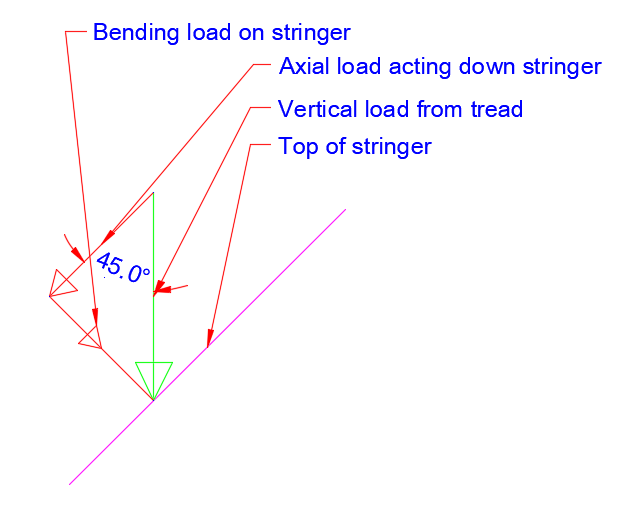
-
Location of steels and insulation
Gus Potter replied to Tetrarch's topic in House Extensions & Conservatories
Yes you are spot on. There is not much to go on in terms of the plan you posted.. but it looks like you have big open plan areas on the ground floor at that point thus horizontal stability is a key issue... can dominate the design at times. -
Are you saving any money or just having fun playing with the tech, just like buying an old car?
-
RSJ overlaps one side and falls short the other onto pad
Gus Potter replied to ag1976's topic in RSJs, Lintels & Steelwork
How much short? -
I would go for the pond and plan your garden and wildlife around that. Get that right and you will reap the rewards in terms of habitat and the enjoyment that follows. See once you get your hands dirty, playing with the water and clay.. making a pond.. you'll feel so good but as an adult you can admit that! but if you have kids.. it's called transferrance.. family fun all round. You can have the odd raised dry area say a deck. Try the pond thing first.. and report back.. in year or two.. it's like the outdoor nurseries where the kids and you get to be yourself.
-
Hello and welcome to BH from me. Ok you're in a conservation area. But first with my SE hat on don't dig out any more as you could compromise the founds! Post more photos and you'll get lots of help here. Main thing is not to do something that makes other things worse. But to wet your appetite attached is a typical tanking system you can install yourself.. you buy it online. Before you do you have a big learning curve ahead of you to get this right but you have made a start by posting on BH. Newton_CDM_Installation_Manual_9.0-2.pdf Newton-508_TDS_9.1.pdf
-
Location of steels and insulation
Gus Potter replied to Tetrarch's topic in House Extensions & Conservatories
You really should start asking questions.. There is a massive Elephant in the room here in that you are removing huge amounts of the building that are stopping it blowing sideways, called horizontal stability. Just glancing at your drawings.. you have building stability issues that need put to bed. That little green circle on your drawing could cost you a lot of money.. so ask what it is and the implications.. we are talking thousands here not a few quid. I work with experienced Architect's as an SE (Architectural designer myself so wear two hats) that understand this concept and communicate this to their Clients early on and how you get around it in a cost effective manner. As the Client push your Architect and SE to work together. Most importantly they should be explaining to you what they are doing, thinking and giving you info to let you make informed decisions. -
Raise ground floor level in an old church
Gus Potter replied to Jimbobjones's topic in Floor Structures
Like your post and love old buildings like this. What you propose is also easily reversable, you're being a good custodian. I would give the EPS a miss and spend a bit more on 150mm thick PIR for the following reasons: 1/ Your concrete floors probably will be well off the level and you will spend ages getting this right. 2/ EPS particularly Jablite compresses a lot before it carries the declared load... localised loads around shower trays / brittle finishes etc 3/ The labour time in fitting three layers is hard going. In summary by all means float your floor but I would not use Jablite or similar.When floating a floor use loads of glue and have some concrete blocks etc to hand to weigh it down while the glue sets. Leave a gap round the edge of the floor for movement. Do one room first and see how that works in terms of your costs and time.. best to do it yourself if you can as you often get a better job. Say you have the 10" (250mm) as the least thickness. What about using (100mm thick layer) type 2 sub base.. it is often what we call plastic but we can use this to our advantage.. this binds together quite well with a whacker plate ( moisten if need be with a light spray of water), blind that with a bit of soft sand. The reason for the soft sand is that the insulation is often not flat.. has bows in it so the only dead weight you have to hold it down is the T&G flooring.. you'll get a bouncy floor. You can sweeten out the sand blinding a bit and bed the insulation to some extent. For greater depth just increase the depth of the type two. If you have a shower tray, often in the corner of the room then you can fix a batten with DPC behind to the wall to support the edge of the flooring.. yes not ideal but it will stop the floor dropping and the shower tray leaking. You can run water pipes and waste pipes in the insulation and in the blinding layer.. but avoid electrical cables unless in a duct. I have cables in my UFH concrete floor but they are in ducts and the heating pipes are kept away from the cables. In terms of BC. Strictly speaking you are adding load to the floor but if pulled up you could probably justify it is ok. Some things but not all.. I would check are: 1/ If raising the floor will that mean some of the glazing is now below 800mm if so glass needs to be safety glass or have protection. 2/ Do you have any stairs.. are you going to make the rises uneven and cause a non compliance? 3/ Is there anything you have not told us in terms of how the walls breathe? Be aware that when you introduce insulation to an old building it can shift dew points etc.. best to just check before carting on. One main thing is to put in plenty perimeter insulation.. I would try and go for 50mm and take this right down to the existing concrete floor. If you keep the dumpling of soil a bit warmer inside the external walls this will deliver a surprising benefit. you can see the effect this has to some extent when you look at the U value tables for insulated solid floors.. it's called the perimeter vs area ratio.. a lot of heat is lost around the perimeter. -
Building Soul - with Thomas Heatherwick.
Gus Potter replied to SteamyTea's topic in Research Resources
Thanks @SteamyTea will give this a listen. -
Have you considered stick building a timber frame.. you do the walls and either a cut timber roof or prefabricated trusses? Stick building has plenty of advantages.
-
Victorian cellar conversion. Alternative to underpinning works.
Gus Potter replied to Annker's topic in Basements
I think I can see where you are coming from. Below is a simple model / sketch. Agree.. and it is often done badly.. and dangerously.. to do it well costs money.. with basements some contractors take the "who dares wins" approach, the first things that gets compromised is safety and quality of workmanship. What a good point, it's these things you would not probably know about. @Annker The theory around the sketch is well tested. This cantilever slab method is used when you have say a gap site and can't pile up against the adjacent buildings for one reason or another. The above I think results in an independent floor that doesn't impact too much on the existing founds etc. Looks simple as it's a foundation within an existing foundation... but.. the underbuilding will maybe have cross walls etc so it's not as simple as it looks as a sketch! The new strip found might cause a bit more settlement due to the extra stress on the soil but most buildings tend to fail / protest when the walls move outwards rather than inwards. In a domestic application you may just have a configuration where this is best solution, not often but sometimes.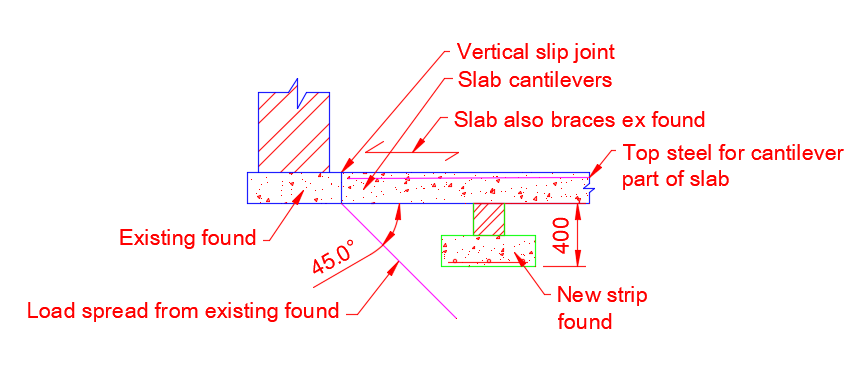
-
Best model acoustic insulation for studs and joists?
Gus Potter replied to ashthekid's topic in Sound Insulation
No wonder you are confused, I do this from time to time as the day job and suffer also. Bear with me.. The way I get my head round this is to think about how a speaker works.. an old one say one up from an Amstrad... take a step back and imagine yourself in flaired trousers.. listening to Santana you may not have been born then but.. there are pros and cons to that too.. the old days were not that great at times.. so be glad you missed it! Anyway at the bottom you had the "woofer".. a big speaker that provided the base.. If you took the cover off you could see it moving... to be able to move it had to move lots of air but realtively slowly. In the middle was a middle size speaker, you can't see this moving but it provided the middle frequencies. It moved less air back and forth but more quickly. At the top was the tweater that was a small speaker. It delivered the high frequency so moved the air a little but quickly. A light weight partition wall works in at least three basic ways. The big and low frequency air movement caused by the woofer, in the modern world equal to you having a low frequency " wind episode from your bottom" is resisted by the weight of the plaster board. The air gap takes out the high frequency and the glass wool the medium. All three layers act together to dampen their frequency response so it almost impossible to separate out each layers and tie that into the stiffness of the wal studs. As soon as you change the stud spacing (and length) any calculations need to be revised as the studs change the frequency response of everything that is attached to them.. As a starting point I would not look to save on the insulation thickness.. go for the 75mm as the labour cost to install is the same. Medium density wool will work fine at 75 mm. Go for at least a plaster board of 10kg/m^2.. but you'll find that standard 12.5mm plaster board just falls short, if in Scotland. To get round this you can use Gyproc Wall TEN or often just skim coat the standard 12.5mm plasterboard.. gives you a much better job than Ames taping. The critical thing is to stop flanking sound transmission. If you can pack the top and bottom of the wall so the sound does not get around it that will really deliver results. Just remember that if you keep making the partition more heavy it may overstress the structure holding it up. If you spend time on the workmanship this will deliver the best result. Ideally this is something you want to do yourself (fitting the insulation) as you will take the time to do it right... few builders take the time to do this the right way.. unfortunately. Lastly if you have wall sockets make sure they are not transmitting sound so insulate behind them. But before you adopt a solution just check with the spark that they are happy and don't have to uprate the cables.. Hope this helps.. keep your head up. -
Wet underfloor heating advice for extension and existing area
Gus Potter replied to dave2612's topic in Underfloor Heating
Good pointer. To expand. I think you are jumping the gun here. Before you get into the nitty gritty of loops, zones etc you need to understand how the wall fit on the floors, the solum structure and the founds below. You are introducing insulation so changing the dew point location. To be brief you could have a house with masonry walls, the internal leaf may have booby traps as it could sit on a built in timberwall plate. You may have a timber frame and indavetantly cause it to rot at the main structural supports.. that will result in disaster.. I kid you not. Post what you know about the floor zone.. if you know little.. stop what you are doing and find out! I like what you are doing have experimented myself on different houses with my own designed UF systems.. in all sort of floors, suspended etc so have been there and worn the shirt.. but the protection of the structure comes first then we get to play with the fun bit.... manifolds, pipe sizes etc. Play safe an get stuck into investigating the underbuilding. Also if you can post a floor plan of the whole house this would help.. you can have a mixture of solid and suspended floors. I have and got round this on ocasion by ducting while appreciating the prevailing wind and what is round about. It may sound like hard work but.. best to put effort in early as if you get it wrong it can be very expensive. -
Can you run rectangular ducting from the attic void under the ridge within the depth of the rafters insulate the duct then drop that down to the first floor ceiling?
-
More foundation fun - straw bale garden room on clay
Gus Potter replied to Nick Thomas's topic in Foundations
Hi @Nick Thomas Really like what you are doing and how you are thinking about making it safe and what not.. to last a long time. But your solum space is..a bit of a mess. I think need to get that ventilated big time or you could end up with serious issues. The bales seem to be touching the retaining wall or close to it. There is no ventilation at that interface.. I think you need at least 150 -200mm of a gap between the bales and the walls. Also you need to think seriously about the weathering details at the retaining wall. Can wind driven rain hit the retaining wall and flow down? The retaining wall will be damp anyway and if you close off the ventilation the surface of the retaining wall it will become more damp. The water gas inside will pass through the bales and if touching the cold retaining wall will condense and wet the bales.. you'll have compost really quickly! Have you thought about spiders / infestation etc ..bugs.. they will love that. Are you sure the straw can be left exposed for say 20 years in the gap at the rear? For me I think you have spent a lot of time thinking about this and then spent more time posting on BH which I really appreciate.. I have learnt a lot from you so it is not a one way street where you post and get slagged off. I hope that once you digest and take a step back you will see where I'm coming from. What about making the back wall a timber frame with wood fibre insulation? Make the panel and stand it up? or something like that? The really weak spot here is the rear / retaining wall interface. I think you need to review what you are doing here and how you are going to achieve the weathering details. Also you should get a good air flow under the floor. -
Yes you can in say a finite element analysis but in real life and on site it often does not work out that way, thus we need to apply some serious safety factors.. and then you find solution is often not cost effective and not easily buildable. I often embark on ideas like this.. and sometimes get things to work.. but then I come up against fire protection / buildability issues for example and I'm back to square one.. but it was fun looking at it..
-
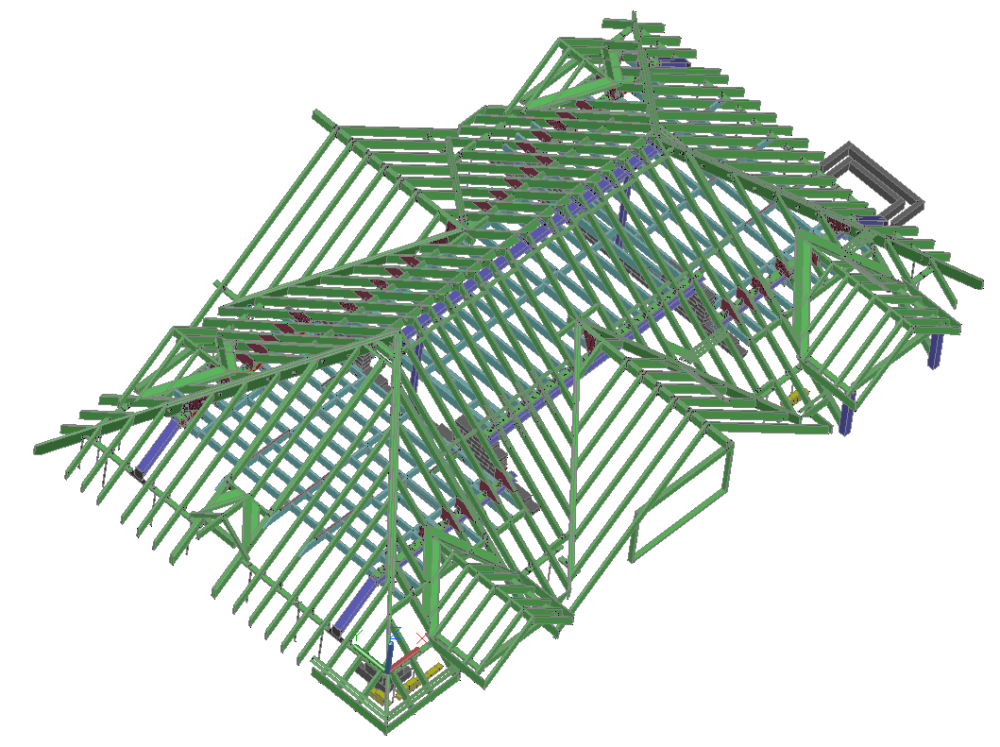
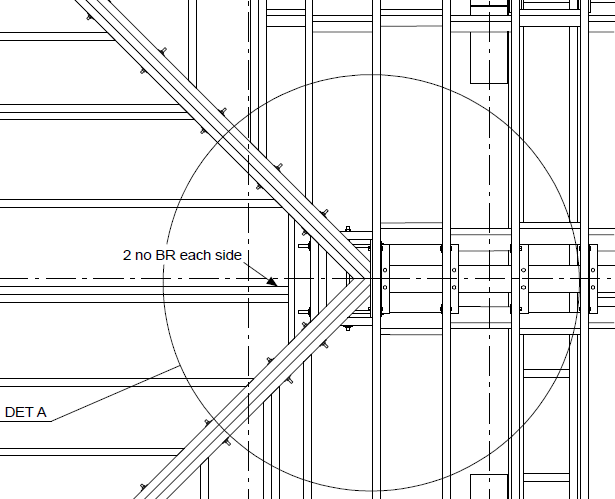
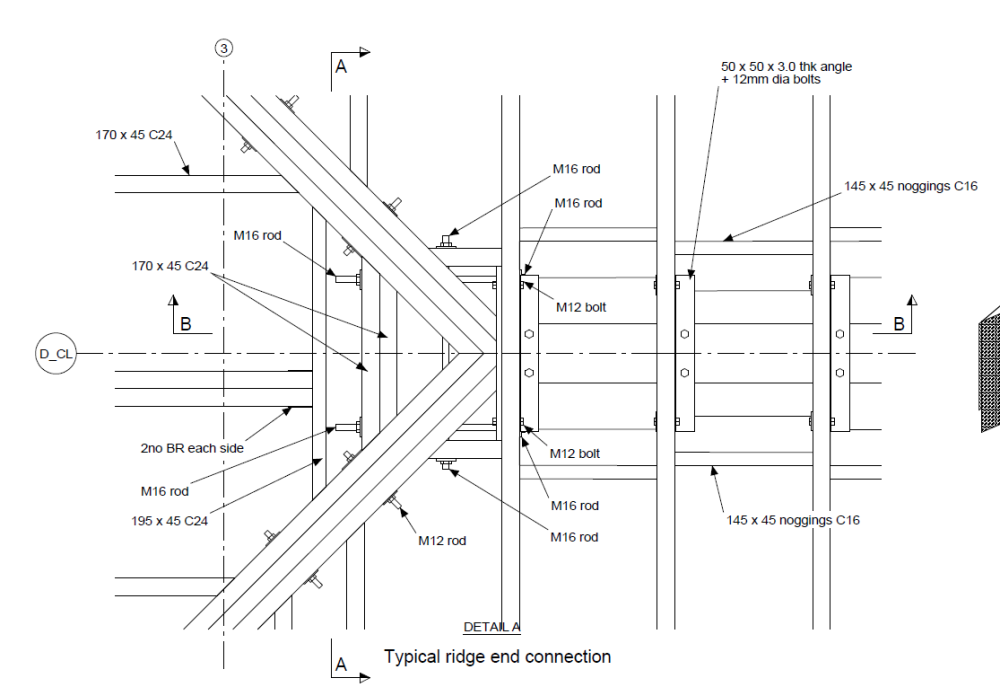
Can see the general thrust of the design, some steels etc. I have not studied in detail but pick out one element.. the roof. You have flitch beams at the roof hips. That is going to be more expensive once you detail that up and realise how difficult that is for a normal builder to put together and build properly. The following is pretty detailed but I hope it gives you food for though in the sense that you need to ask a lot of questions and try and look at the design holistically In other words if we buy a motor bike in parts the sum of the parts will cost more than just buying.. ready to ride away! Below is screen shot of my structural model of a roof I got involved in and improved / value engineered. It's possibly more complex than yours but there is a lot in it that may help you get your head round what is coming down the pipe. The first screen shot is of the overall roof structure. I can see that on your roof plan at the bottom you have some heavier, treble rafters.. I'm guessing this is for a big roof opening / dormer? At he bottom left of the model there is a dormer, a bit smaller than yours but the concept is the same. The main thing about this model is that all the parts are off the shelf, nothing hard to source and a decent builder will be familar with working with the different components and know how they are supposed to be installed. The aim is to go for the simple stupid. Lastly all roofs are different ( the layout and support positions below also drives the roof model) when we get into the fun part of self building so don't take my way as the best way for your project. Below is how I swapped out the originally hip flitch beams for solid timbers and the hips.. they are offset in the vertical direction but I gave the builder the info they need to offset, rather than just guessing. It's actually quite easy to do once you get your head round the roof angles and if you can do a compound cut (a competant joiner/ chippy should be able to do this easily). I know as I used to be on the tools before I was an SE) In the above there are short horizontal timbers with long threaded rods (from Jewson ect). These tie the hips together and back into the main roof. You can see there is no connection at the ends of the hips to the ridge area aNd may wonder how the vertical downwards loads are resisted.. The reason for this is that in practice with the steel between the timbers the connection is so complex it almost stops working. Ask you SE how the are going to detail the flitch beam to ridge connection. Would be interested to see how they do it. For me I'm sharing what I know and how I try and simplify so in the round we stand the best chance of getting it built the we want without costing a fortune. The above is a screen shot looking up from below. Here I cantilevered the ridge beam so we have a simple connection between the supporting post and the ridge beam. Let's break down big problems and make them into simple things that can be tackled one at a time on self builds. The ridge beam has an big steel angle shop welded onto the end.. now we have big ledge to support the hips.. the chippies / joiners can't miss that landing area, even if they cock it up a bit there is some slack in the design. In summary the two images above show how I tie the roof together and support the vertical loads by decoupling the hard things to do on site.. Below are some screenshots to show how the model gets translated into a "paper drawing" for the builder. Incedentally if I'm doing something like this I always give the builder the 3D view and say.. I want it to look just like that! It's also great for self builders (and me) as its helps you visualise what needs done.. and it is great fun! Below there are a few things / ways where you can save money and some food for thought. When we are working with steels supporting roofs the steels themselves are usually not that heavily loaded to the extent that the steel material wil start to fail. Normally as steel is "bendy" it's the deflection that govens the design. This often means that the connections can be made more cheaply in a domestic application. You may see some SE's asking for a "full strength connection. This can involve an expensive welding process and beam end preparation. If the connection forces are relatively low then we can often use what is called a division plate with a bog standard 6.0mm fillet weld. The plate is cut from a bog standard flat bar.. off the shelf. Below shows a cranked beam form the model with a division plate shown as the black bit between the beams. Here we just use standard 6.0mm fillet welds to join it all together. Cheep and chearfull. I did check the division plates would not stick out the roof by the way!. In the above you can see a timber wall plate bolted to the top of the steels. It can also often be shot fired.. ask your build what preferance they have. In this case all the steels came predrilled to make it idiot proof.. I said if there is a hole it needs a bolt. The red bits are plywood gusset plates nailed and glued to the sides of the rafters, there is a timber packer behind these gusset plates you can't see. The reason for this is partly geometric and partly govenernd buy the Architectural design. But in essence this worked on this job to transfer the roof loads down onto the steels while also tying everything together. The L shape brackets are just Simpson or similar stuff off the shelf. Hope this post helps inspire..



-
Hiya. The reinforcement options like the Simpson etc have their limitations and these are reduced further when tackling solid joists. One reason for this is that the engineered type joists are less variable in terms of the local strength.. which is where we want to put nails / screws etc. If you only want to hole one joist with a big hole then look at trimming the joists out.. like a stair well and double the joist up either side for example. If you can't do that then we may plate the joist with flat steels each side but these steels need a hole also and thus up to a point the larger the hole the thicker the plates. At some point the hole becomes too big and even the steel plates won't work. Now the plates will be long. A starting point would be a steel flats 1.0 m long each side and be about 10mm to 15mm less than the depth of the joist to account for timber shrinkage. Here the joists shrink in depth, the steel doesn't so it can pop you floor and or a ceiling. An important thing to remember it that timber is graded at the size it comes out the mill based on the complete section depth and width. Now timber has knots, shakes in the grain etc. It's sods law that where you want to cut the hole will be right where there is a big knot or defect in the remaining grain... and now all the theory can be invalid. Each case needs considered on it's merits. Can you tell us a bit more about what you want to do? This concept works for steel beams where we hole the webs reasonably close to the middle of the section and weld in a tube to transfer the stress around the hole. But I don't think it would work for timber as not least when the timber shrinks it would stress the glue... and then we would need a glue that can really bond timber to steel for structural applications.. and also be able to be used under site conditions?
-
More trenches, holes and crushing concrete
Gus Potter commented on LSB's blog entry in Little Stud Barn
For a self build string lines and a good steel tape are an essential requirement. Also consider a water level.. not technical but it's cheep to knock up and means you can check that either you or the builder are getting the basics right at little cost. Best to get the founds right as you sleep well at night.. you need to get the sleep in early as later you'll maybe be grateful for it! It happens in soils like sand when they are loose. Main thing is to clean out the bottom of the found so the concrete doesn't end up getting poured on loose soil. -
More trenches, holes and crushing concrete
Gus Potter commented on LSB's blog entry in Little Stud Barn
Great blog.. keep it coming! Things I like are how your pics convey thousands of words. I can see the use of your simple and effective string lines. How you break out old concrete. Simple stuff that shows a found excavated and the different layers of soil. For all on BH.. if the sides of your founds don't look so clean cut as @LSB it's ok. Often in poor ground we want the sides rough so the edge of the concrete found gets an extra key into the ground! -
Yes do as as there are loads of folk on here that can give you loads of advise, help and ideas not least.
-
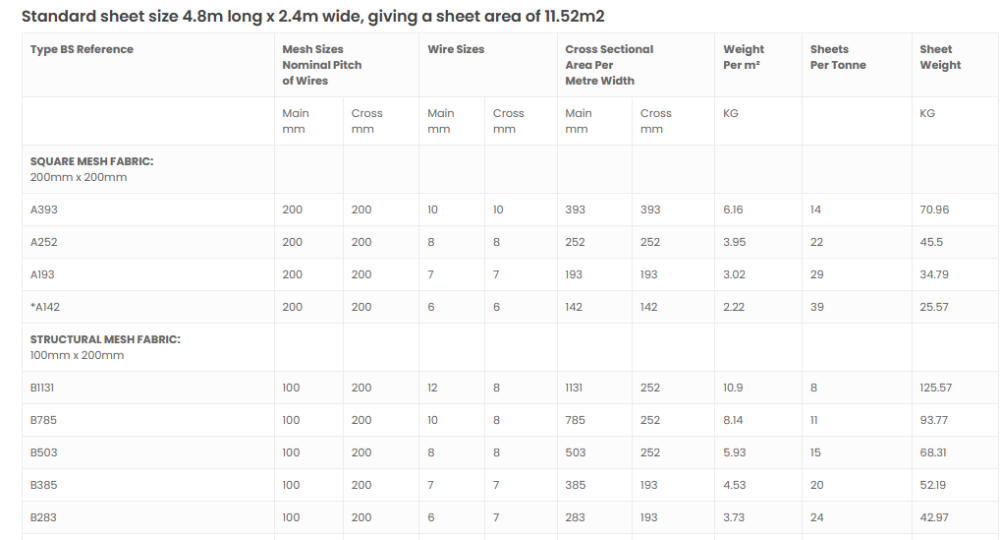
This is a clever solution from @George for common domestic applications, very practical (and once you see why so obvious) and cost effective. You'll be surprised how cheaply you can buy loose bars and how easy they are to cut them on site yourself to supplement an A type mesh. For all here is a bit of an explanation and a bit of "but here is the catch" at times! An A type mesh has a bar spacing of 200mm each way. The table below is a good start to look at. "A" type meshes are usually used to control cracking in slabs, particularly the A142 and A193. These are "non structural mesh applications" which means that if your floor tiles crack then the building / floor will not fall down.. that keeps SE's awake at night if things could fall.. loss of life. Often we use A142 and A193 for small ground bearing slabs and slabs on insulation, sometimes these ground bearing slabs that have less (further apart) movement joints in them... the concrete shrinkage stresses are higher so we use a heavier mesh to give us more space between the crack control joints. Now often we can use say A252 and A393 meshes for say ICF floor slabs, walls and suspended floors. Here the mesh suddenly becomes part of a reinforced concrete member... it no longer is there to just control cracking but forms an integral part of a main structural component.. which is a structurally reinforced concrete member.. like a reinforced concrete beam over a big bifold door opening. Now the design codes require a minimum percentage area of steel reinforcement based on the cross section area of the concrete as this is now critical to safety.. won't fall down as opposed to cracking your floor tiles. This minimum percentage requirement often results is a big jump in the amount of reinforcement you need to use. Often you'll see on BH folk (the ICF world is a case in point) wondering why they have lots of steel mesh and bars specified for what looks like an innocuous slab that others seem to get away with. I hope the above explains that the two different animals. The B meshes are intended for reinforced concrete (structural members) so have closer and heavier bars in the span direction if spanning in one direction, the cross and smaller diameter bars work as crack control and to tie it all together.. so they are thinner and at larger (200mm )spacing. In the right application they are cost effective.. they would not make them if they were not. For all and on BH we want to keep things simple stupid and get stuff off the shelf. Most SE's designing self builds will / should take into account that we don't want to complicate concrete design and rebar as the more complicated the more it will cost on site.. introduce risk that things may not get built quite the way we hope. We will often design the reinforced concrete members simply.. technically over design but in the round most economic for you folks on BH once you take into account labour and material availability. Now if we were designing say a car park or multi story building with multiple continuous spanning reinforced concrete beams we use a technique called "moment re distribution" which means we appreciate the steel will stretch and when it does it sheds load to other parts that have spare capacity so we get more bang for our buck. Now an intrinsic difference between an A and B mesh is that the steel has a different amount of "stretchyness" called ductility. The above may have the info you did not hear which is why they don't want to swap out the more ductile B mesh for an A mesh. I suspect they may not have gone into that much detail.. so keep pushing and posting if you want some feedback.
-
What about the old schooool way where we carefully chain drill the facing brick on the outside, angle the drill bit so the inner leaf hole is a bit large diameter and then tidy it all up with a long chisel. Takes longer but saves all the hiring hassle and that extra cost of the coring bits, the running about and pressure to return the hire. I would try one in a place where it can't be readily seen and see how you get on. Mind you if you have ten or so to do you may get fed up chain drilling. This has a spin off benefit as when you put to pipe in real life it may not work fall wise and line up with the hole!.. so all that effort getting the hole looking sweet will be a bit of a let down! Try a 120 mm dia hole to start, then line up the plumbing and enlarge if you need a flexible gap around the pipe. A scutch chisel should work here to get a start.
-
Good plan. In theory we can design a house with a trussed rafter roof with a big open plan empty space and then infill with non load bearing walls. But we need to balance that against the cost. However at times we may want to design a house where we can adapt it later easily. We pay a little more to create a big space that can be easily altered.. much like how we approach an office development. Would be interested to see what you SE says.. maybe they will give you two options.. a big box that you infill and a box with racking walls Then you can compare the cost difference? You mention a ridge beam.. are you doing something like a 1.5 storey and not a bungalow after all?
-
Appreciate your input, learnt more at my end, admire your skill and knowledge. A big thanks from me.




