Gus Potter
-
Posts
2383 -
Joined
-
Last visited
-
Days Won
34
Everything posted by Gus Potter
-
Thanks for chipping in. I need a bit of help here to understand what I might be seeing. I was wondering.. am I missing something that is obvious.. sometimes you can't see the woods from the trees. That is a good point. To be honest I touched the residue on the plastic lid (then followed all the safetey protocals) It felt like salts that you would get growing out of say masonry. It was like a powder, and not binding together and not gritty fealing. The thing is that there is a lot of it Could be rot but there where no indications of mycelium growth and the assocaited root propegation or fruiting bodies either dead or alive. The roof timbers all looked sound. Yes in relative terms.. the thing for me was that the plastic cover that was lying about had it on top.. so I think it can't have come from below. I have seen lofts where there is snow type stuff lying about but that is often when they have had cavity wall insulation installed. This looks totally different. I'm stuck to identify what this is? If the Asbestos folk come and test it then they may say.. no asbestos. But my Client has young kids so if it is some kind of chemical I can't take the risk and I can't expose the Builder to the risk either.. I have seen what I see and professionally I cant "un see it"
-
Planning are insistent on a dormer
Gus Potter replied to Fallowfields's topic in New House & Self Build Design
Ok to go back to the original post and what @Kelvin is discussing. The process at our design end is logical. Your starting point when you encounter problems is to review what you are doing. You look again at what is within you permitted development rights and identify where you are breaching those. You make a list of the breaches. I know it is a new build we are discussing but I always go back to the very beginning on every project and review what we know and PD rights form part of that review. Next you look at what is round about in terms of what has been built. If you live out in the country it's different from being in a town... but you still can't have a crap design that looks bad. Ignore the technicallities for now, just look at what you see and how different things have been introduced to the built environment. Use your eyes and remember / photograph what you see. This is important as it will form the basis of a planning application... it will also help you to not build a house that does not fit in.. think .. who wants to buy a house that does not fit in? Think about when you come to sell. Is a surveyor going to clock that too and reduce the value? I mentioned massing earlier (too much of one building element for example that dominates the overall look) but there is another aspect to this which is proportion. The different elements need to be propotional to the rest of the building.. your common sense will help you a lot here. If you think about it.. at the moment you want to maximise space / reduce complexity.. but in a couple of years time you may come home and realise that your house looks ugly. Another thing is how you use and introduce different materials. You could for example build a new house that has a part traditional farmhouse look and then add on an "annex" with say a Zinc roof and timber cladding. You may find examples of this locally where you have old 17 centuary houses that have modern parts added to them. Here what we do is to say.. we have the old and "a distinctly different but complimentary style". What we do here is to say.. we are appreciating the traditional design but adding something more contemporary but sympathetic to the 17 centuary ethos. I think you need to do more work on this and look at it in the round as your forever home? If you do this then there is a good chance you'll get what you want within you budget. Now if you can satisfy the above or something along these lines then you stand a good chance of getting the planners to agree. -
That is the reward spelled out in a nutshell. You get a very deep and long lasting satisfaction from it, you don't need to broadcast it as others can see what you have achieved when they visit.. your hard work will speak for itself. You just know you have done something few folk can do. It is your castle, home and unique.
-
That is amazing that you managed to do that. One small stone and the game is a bogey. I do wonder what your house is sitting on? For all, if you are not as lucky as @JohnMo you can sometimes use a steel plate buried in the ground as this gives you a big surface contact area. If you plan ahead you can use your strip found (steel piles give a good earth) to give you an earth in poor conductivity soils. Here you pour your founds but make sure the layers of reinforcement mesh in the found are electrically bonded. This gives you a big contact area with the soil, much more than a earth rod. The steel mesh in the found is protected against corrosion by the concrete. If you get the spark in early they can test to see if you have continuity all round the found. Now if you tie your mesh in the founds together properly continuity should be no problem. This requires forward planning.. but that is another added joy to self building.
-
I think what you are doing is great. I love your enthusiasm for this and in general. You are testing my knowledge which is great for me, appreciate that.. a big thanks from me. As primarily an SE it is important for me to be able to distill sometimes complex things into language that folk on BH can find usefull. Here are something other things to ponder on your drive. You might want to explore using solid timber flanges top and bottom.. basically copying an engineered joist.. but they often use laminated timber. This will simplify the design. You router out a slot in the timber and fit the web into that. I think you will get more bang for your buck this way. Next is your glue. Have a look at Cascamite glue which is a proper structural glue. Lastly for now if you can get a hold of an engineered joist off cut and split the web from the flange you'll often see that the web is slightly tapered so it jambs into the routered slot in the flanges. You may get a fright as often the web departs from the flange easier than you think! But your idea of using the timbers to connect the web to the flange also works.. but it is labour intensive and will need a a lot more thought to get something that is reliable and consistent in terms of how it is put together and has no weak spots.
-
Good question. Yes, new builds partucularly in Scotland have a more onerous set of regulations in terms of compliance. In terms of cost here is something I do. I have a Client who is a property developer. They target bungalows at the end of a street. There are a lot of streets in Scotland that have two storey houses with bungalows parked at each end. The idea was that you had families living in the two storey houses and the granny / grandad lived in the bungalow at the end of the street. Last week we looked at one, this threw up 4 initial options that ranged from renovating, extending side ways and upwards, splitting the plot for two houses or doing two semi detached two storey houses. My Client is going to make an offer next week on the property. Now the demolition and rebuild option saves the vat and potentially there is money to be made if we build new... but that carries a serious planning risk and there is a delay factor when dealing with planning. To be sensible we look at.. can we make money / at least break even by renovating or extending sideways.. that is the back stop position.. you don't want to loose you shirt. If we get the property how hard a fight are we going to have with the planners and what are we going to find that is a risk (as an SE I know there is a bit of a settlement problem in this area for example).. on the upside once we get our hands on it we can then decide what to do. To answer your question.. each project is different so there is no difinitive answer. I would interrogate your Architect / Builder further and make an evidence / risk based decision. The BC regulation compliance is probably further down the list. Funnily a lot of the building regs are really good for you and help you get a good quality house that will hold it's value.
-
"The mathematics of it are pretty simple." I have a graps of basic statistics and probablility but you have the edge on me here. That said I can follow your first paragraph and agree with the thrust of it. "It is the interpretation of the results that is important." Absolutely.. it's like using finite element analysis.. manure in manure out, and all models must be verified but manual fag packet calculation. "So I could design and build a set of identical beams, some for my shed, and some for a new roof on my house. They would both do the same job and be subjected to the same loadings. But the ones on the shed, if they did fail, would have much lower consequences that the ones in a new roof. So to be safe, SEs allow for this and do what @joe90 does, over engineer." No, SE's are not that blinkered and you mention the consequence of failure correctly. Your shed could be treated as non habitable building. If could be treated as an Agricultural type building with low occupancy and say a 20 year design life. If so then we reduce the loading (quite significantly) based on say a return period of heavy snow and a reduced roof access load for maintenance. Houses are mostly designed for predicted loading that could occur over 50 years, Agricultural buildings can be designed on a 20 year snow event for example. Also on an Agricultural building we have often slacker deflection limits as we don't have internal brittle finishes that can crack, doors jamb and so on. If you are going to be designing beams for your house then be careful.. and remember that if you sell someone may ask you to to prove all is ok! If you experiment and gather data on your beams then you could have the same size of beam you have investigated but longer spanning for your shed as the loads are reduced and the deflection limits less onerous. Keep us posted on your experiments.. it lets folk see on BH how these Engineered joists work, the plus and minus points and what you are doing kind of removes this "mystification" where folk are trying to cost up the things.
-
Planning are insistent on a dormer
Gus Potter replied to Fallowfields's topic in New House & Self Build Design
Post some photos of what you have round about and your proposed front elevation. They may be getting hung up on what we call massing.. the roof area looks too dominating and they want it broken up.. but are not actually telling you what their issue is... and this is really common. Once you understand why they are pushing back you can look at your options. You may find that down the road there is the odd Dutch hipped roof.. that softens the angular shape and the massing effect. Also do you have a chimney? these can be used to break up a roof... even if a false one... I know you want something simple and not prone to leaking. but just a thought. -
Is the water table low and the sand bone dry? Did you actually drive one spike in 9.0m? If so is your house on piles or something?
-
They are. On BH there are plenty folk who have done their research and have a good idea what they want already. If you get your Architect or SE in early then they can do almost a watching brief, give you the benefit of their knowledge and sometimes say.. are you sure you want to do that?.. have you thought about this and that and here is a better way for you to consider. I often say to my Clients, (sometimes they have firm, almost entrenched views) see some of the ideas I come up with.. you won't like them, but that is ok as it's part of the design process and don't be afraid to say so. But on occasion they may say .. we never thought of that! Good design often means at the start throwing everything on the table, most of which gets ruled out.. then you concentrate on maybe one or two options and develop that further. From time to time I work with a QS if the Client wants more certainty, but like all things that comes at a price, and as @Kelvin etc have said not all QS's are briliant! As a designer I most often work on a fixed fee. My fee is built up between my Architectural input vs my SE input, two different rates apply depending on the mix.
-
Then by intuition you should get a bit of velocity behind the flow to clear the short 600mm run. Crack open the beers and have a long lie tomorrow.
-
Has anyone got any ideas on this? I have a project; two story semi detached house built circa 1935 with a sandstone exterior skin , probably brick inner skin, no cavity thus it has solid walls externally, internally a set of brick load bearing spine walls. Roof is traditional cut timber with sarking boards. The non load bearing walls on the first floor are lath and plaster on timber studs. What I'm doing is demolishing a load bearing internal wall on the first floor which holds up the attic floor joists thus I need to put in a beam and some other structural support. To intall the beam requires disruption to the first floor ceiling which is attached to the attic joists. I know this about the building. 1 The Client has owned it for say two years. 2/ The roof may have been reslated/ repaired but this was a good time ago, maybe 30 years, possibly longer. 3/ The attic has been lined out but not a habitable space and accessed via drop down ladder. 4/ The roof was insulated with glass wool by British gas.. I can see their warning sign not to walk on the glass wool. I think British Gas stopped insulating lofts some 30 + years ago.. maybe wrong.. does anyone know? 5/ I know that old under slating roofing felts can contain asbestos and they were still used well into the 1980's. 6/ In the last couple of years the roof has suffered from significant leaks and the new owner, my Client has to get folk in to fix what they descibe as a couple of "floods" from roof leaks. 7/ There is no record in the title deeds of the roof having been sprayed for wood worm etc, but that does not mean to say it has not been in the past. 8/ The building has no cavities thus cavity wall insulation can be ruled out. As part of my survey and design I go into the attic and open a small door which lets me see into the roof void.. I observe the following. The above show a white residue on the underside of the sarking and on top of the glass wool. The above shows same residue build up on top of what looks like an old tank overflow pipe. The above shows more residue on the same glass wool but there was also a plastic lid lying on top of the glass wool that has residue in it. The above is closer view of the residue on the plastic lid. Usually I put big warning notes on my drawings if I suspect asbestos may be present, the age of the this house.. well it will probably be lurking somewhere. What I also noticed was that there was a small gap between the sarking boards, could not get good photo without disturbing the residue so stayed well clear. But I could see that through the gap there was some kind of sooty black fiberous material, don't know what it was but it didn't look like old bituminous felt... maybe it was just local.. I don't know. In cases like this I always recommend that an Asbestos specialist survey is carried out.. but I'm naturally curious and want to learn / expand my knowledge. The thing is the residue is quite a heavy build up, so maybe not asbestos... anyway Asbestos is not water soluble My thoughts so far on what it could be are: A/ Is it salts washing off the underside of the roof slates, yes sometimes you do get salts on the slates.. but never seen it this bad. But for this to happen the roofing felt would need to be seriously degraded? B/ The residue on top of the plastic lid means that the residue can't have come from the glass wool? C/ If the roof timbers have had a good soaking has the water washed out possible wood work spray. D/ Has loft space been sprayed and what I'm seeing is over residue from the overspray.. they must have gone to town with the chemicals? The thoughts of BH folk would be much appreciated.
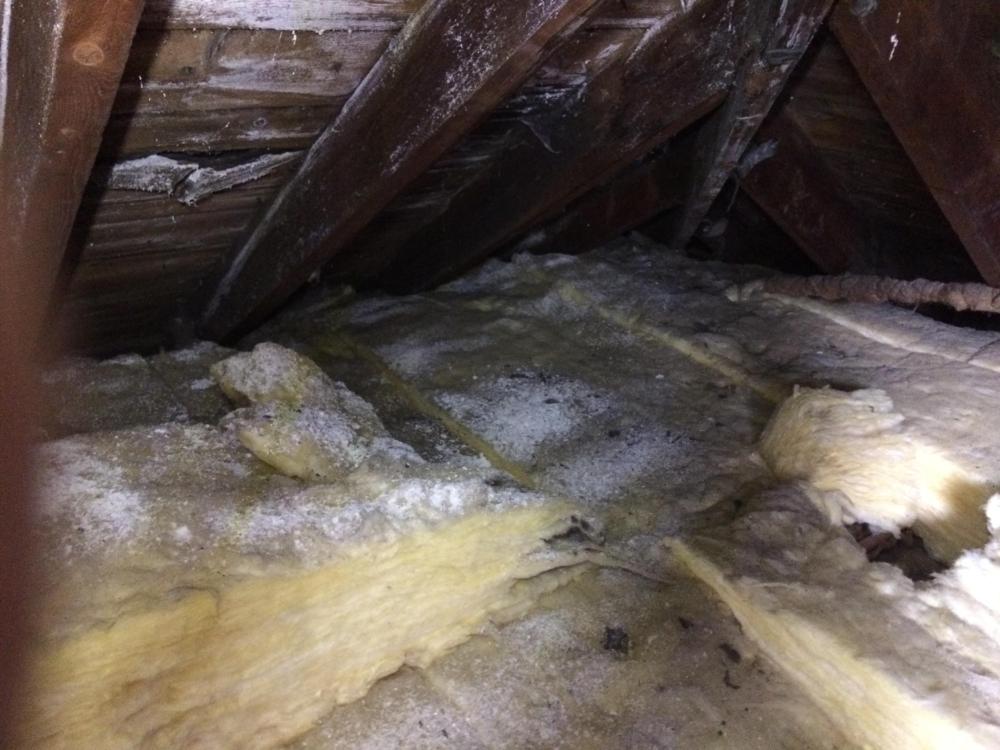
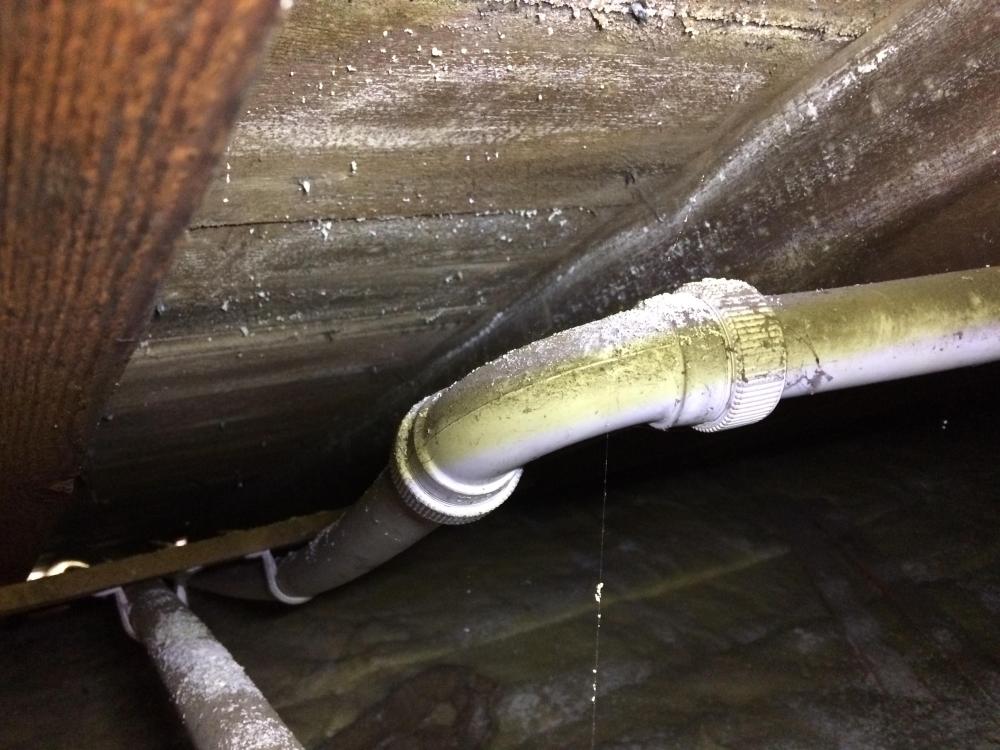
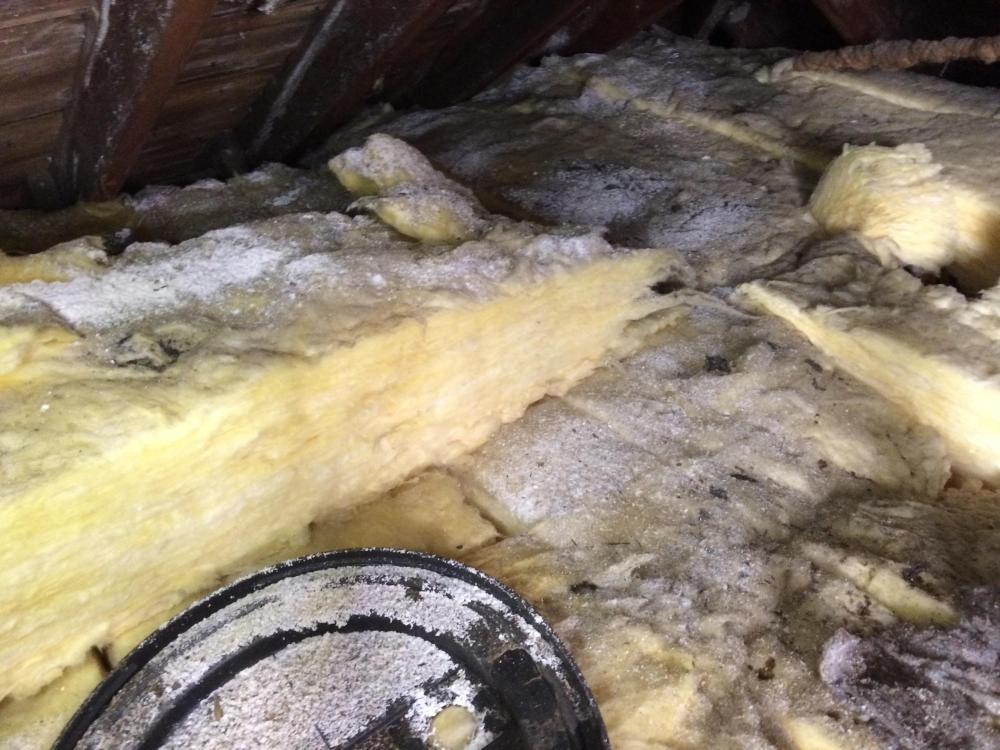
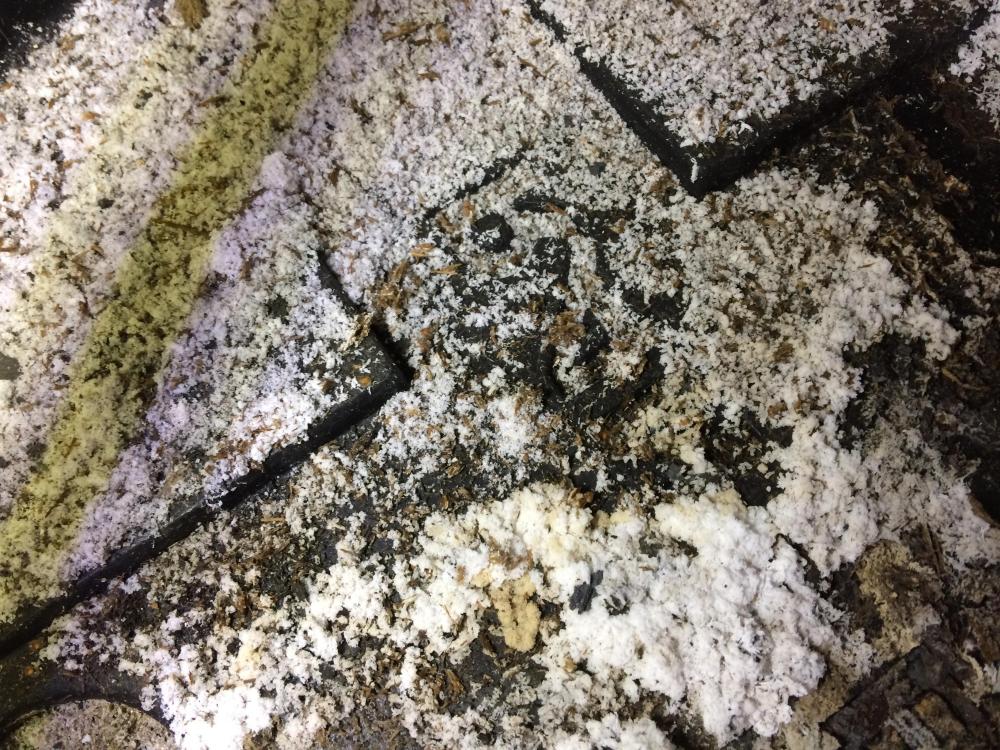
-
It should be fine. I thought you were taking about something 2 -4 m long. The bath should empty fine so long as there is a bit of a drop between the outlet from the bath trap and the start of the 50mm dia pipe.
-
You have understood most of it. "load it till it breaks or buckles" What the calculalations and figures do is translate that into how you determine a safe design stength and how much it will probably deflect by if you then made this type of beam and built it into your house. When we design and test stuff it costs money so we don't test to destruction right away. We try and gather as much info on its behavoir before we destroy something. If you look at the load span tables for engineered joists there are loads of different figures for loading and span. The manufacturers don't test every combination. The probablitlity bit is to do with how many beams you test, like say a pull out test on a resin anchor. If you only test one then it does not tell you much. Test three and you can get a better idea of the spread of results. Test five and you gain more "confidence" and that lets you then reduce the reduction factor. Just call the standard deviation. This make the design more efficient. If you think about concrete many millions of cube crushing tests have been done over many years so there is lots of confidence about the spread of results you get when using normal concrete.
-
Don't worry the big wheel will turn, BH can be a bit of a bear pit at times.
-
It's not really compliant in terms of the regs but if you have a means of rodding the line then if you do get a problem later you can give it a clean. To stop the sagging over time you maybe want to support it every 600mm or so.
-
Hi Steamy. If you want a quick set of section properties (unverified by calculation) I can do that.. I would cheat a bit in that I would draw the cross section in Auto CAD, and use the MASSPROP function.. this gives the I (second moment of area) values, centre of gravity, radius of gyration etc. Do a sketch of the cross section and I'll try and post the results. From that you could work out the stresses in the outer fibres. To do this you would use the same approach as you would do for a flitch beam... timber and steel combined.. but it would be more complex due to the geometry.. I won't do that for you. You are using two different types of timber that have a different Youngs Modulus.. thus things suddenly get a lot more complicated to do manual calculation. If you fancy it you can expand you experiment to calculate the average Youngs modulus using a true central point load as follows: For a simply supported beam the deflection Delta = PL^3 / 48 E* I Delta = deflection in mm, I = second moment of area mm^4 , E = Youngs modulus N/mm^2 , P = your point load (N) and L (mm) = the length between the supports. Use units of N (Newtons and mm as you units) This rearranges to E = PL^3 / 48* I * Delta Load up the beam increments and measure the deflection mid span. Plot a graph and you should get a fairly good result for E if done carefully and you have a good gauge... a tape measure won't really do. Now you can compare your E value with that for chipboard. Now to be safe you may want to divide your E value by 1.96 (Conservative) based on a 95% normal distributon. You could use a value closer to the codes of dividing by 1.5 ish. This would give the the minimum modulus for a transfer beam... no load sharing etc. For stength design you want to apply a material factor to your timber / chipboard grade stress of about 1.3 thus you take your grade stresses and divide these by 1.3 And again to be safe you want to factor up your applied loads by say 1.5 so you multiply your load you have calculated by 1.5. For the strength check you calculate the factored bending moment by using the formula P* L/4 and then calculate the stress using the formula M / Z = stress, Z is the section modulus. You then check that the applied stress is less than the allowable stress. But there is an inherant weakness in these types of beams an that is web buckling over the bearing point so you need to add in vertical web stiffeners over the supports. Have fun and let us know any results of further experiments!
-
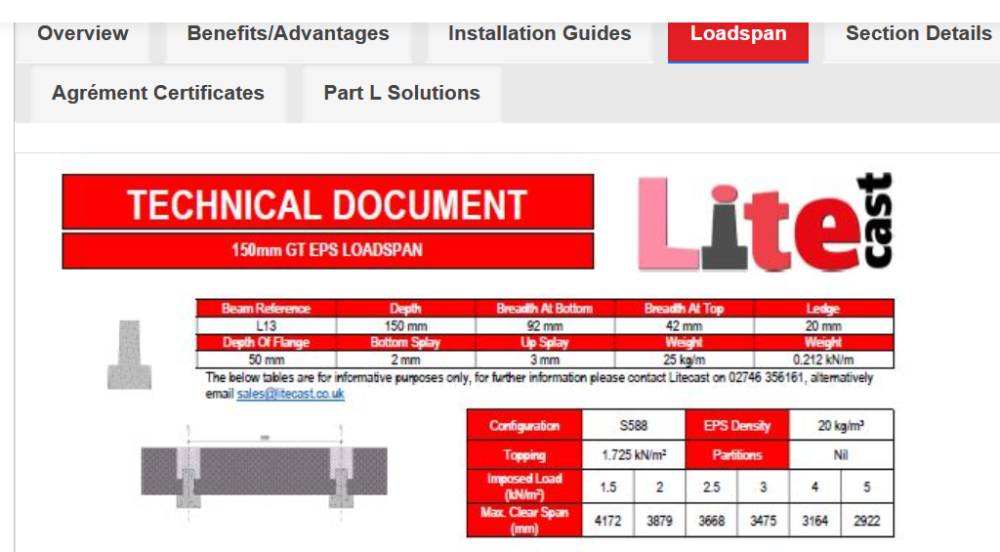
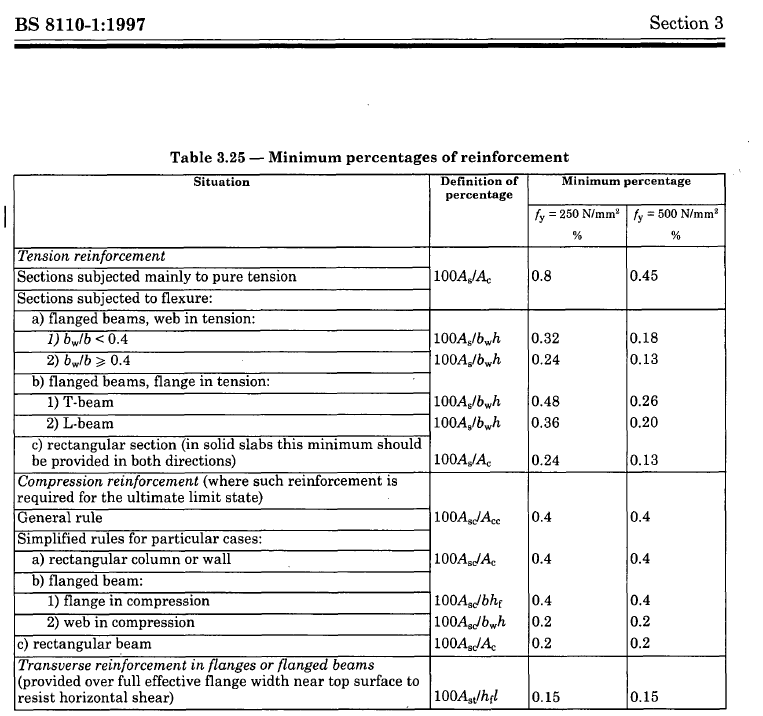
Yes you are correct. The load bearing rails are there to transfer direct loads from walls above. The EPS has no load bearing capacity as it relies on the small lip on the edge of the beams for support. Therefore the screed has to span between the beams.. this makes it a structural slab according to the design codes (rectangular section in solid slabs see below table 3.25 below ). A structural slab needs a minimum percentage of steel. The same rules apply in the Eurocodes in very much the same way. Reinforcement in both directions which is 0.13% based on gross section area. Sometimes folk sell stuff and gloss over the other bits that may have an impact on the overall cost of the design. Ok how does that translate into real life? Say you have a screed 100mm thick. A 1000mm wide strip x 100 mm deep has a gross section area of 1000 x 100 = 100,000 mm ^2 0.13% of that = 0.13* 100,000 /100 = 130 mm^2 of reinforcement per metre run of width of slab. Thus an A142 mesh will do the job in terms of minimum percentage steel. But now we need to check what loads we are putting on the slab as it needs to span between the beams and be strong enough in bending. You also need to work out how you are going to design what is now a structural slab.. is it continuous over the supporting beams or do you treat the slab as simply supported over each beam. This is a dilemma as the design codes don't cover UF heating say in domestic slabs. Now once you do this you just may find that the mesh is not heavy enough as you need some cover to the mesh, you have lots of laps and maybe some UF pipes. At the end of the day you could be putting in A193 or at the top end A252 mesh as self builder. if you want to be really pedantic we can look at the ductility of the steel.. but that is a story for another day and usually we are ok with an A type mesh in this application. If you go for a screed less than 100mm thick it just aint going to fly in terms of practical installation and cost with UF and EPS between the beams.
-
Most cost effective way to get to passive standard using block
Gus Potter replied to CalvinHobbes's topic in Heat Insulation
True enough as the aerated blocks still have less of an insulating effect but you should still get some improvement cf dense concrete blocks. The big thing is your upstand around the edge of the slab. The old regs used to ask for 25mm thickness of upstand around the edge of the slab, I try and go for 50mm thick upstand around the slab perimeter and let the floor finish cantilever if need be. Usually you have skirting board or insulated plasteboard so no big deal with the flooring cantilevering 25mm or so. Here is a question about the THERM software, can you see what value of thermal conductivity it is attributing to the soil? The standard BRE guidance and Eurocodes goes for a default value of 1.5 λ (W/m.K) for clay soils Can you change this value in the software? The model output you show seems to correlate to an unheated ground floor slab where all the heat is coming from above. If you have UF it will be a diferent animal. -
Most cost effective way to get to passive standard using block
Gus Potter replied to CalvinHobbes's topic in Heat Insulation
Good question. There are not least two parts to this. The first is structural. If you look at a lot of cavity wall construction you will see that below finished ground level the cavity is filled with lean mix concrete. One of the reasons for this is that the soil and hardcore inside when compacted exerts a lateral pressure on the walls.. they don't like that. By all means take the insulating blocks down to top of found level. But one way of getting a lot of benefit is, if you have underfloor heating on a ground bearing slab, to carry 50mm of PIR down the inside of the inner leaf to the top of the found. This insulates the edges of the dumpling of soil under the floor slab. -
I took the view that as the exit pipe from the treatment plant pipe went uphill first then down to the stream that it would be running full bore on the upwards run, the treatment plant had a pokey pump. From memory I think I went for the smaller 40mm diameter pipe to make sure it ran full bore with a good flow velocity, enough to push any sediment up and over the crest of the pipe. This is a case where you could over size the outflow pipe thinking larger diameter is better.
-
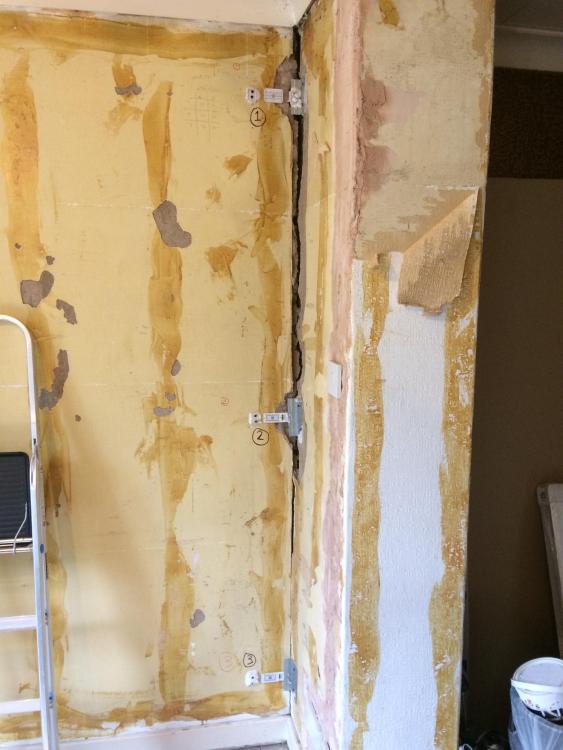
Update on Guses tell tales. Week past Monday I went back to take the locking pins out the tell tales, now they are free to move and the adhesive has set. On two of them the locking pins were binding fractionally. Probably does not mean much as the fixings were probably settling in. I'll wait and see what things look like in another couple of weeks. Have asked the Client to keep an eye on them too and if they see movement to give me a call. That said I warned them not to look at them every day as they will start to live in your head.
-
RAAC autoclaved concrete, what about mannock blocks?
Gus Potter replied to CalvinHobbes's topic in Brick & Block
If your blocks are designed as a normal unreinforced masonry domestic wall then they are a different animal from the problems you see in the press. The problems you see published are when aerated concrete is used in combination with steel reinforcement so they act as beams. Have attached some info from the IStructE for some bedtime reading.. so you can hopefully sleep ok. RAACs-v3.pdf -
Have come across this from time to time. Yes your starting point here is to intially forget the soakaway concept and go for a packaged treatment plant. The cost of these has come down a lot over the years. 300 -400m is perfectly doable to pump to a water course.. you may find that a 40- 50mm diameter pipe works fine. It also does not need to be on a fall. I designed one a while back down Aylesbury way where the pipe went up hill first then down to the water course. The main thing is the dry weather flow in the water course.. SEPA do that bit of the work for you.. so you need to make any offer on the plot conditional on SEPA giving you the OK. The application process is faily simple and not hugely costly, but it takes a bit of time to get SEPA to process it. But I would try and lock in the seller early.. don't tell then just how you are going to resolve the problem in case they do it themselves and gazzump you. Also a PTP does not need to be buried in the ground. If the house is higher and you can get a fall to it then fine. Another way is to gather the soil water from the house and pump it up into the PTP a bit like an external saniflo.. but much better. . You have options here. Yes the plot is worthless so the Estate should be fine (unless they want to knock off 40+ k of the value of the plot.. subject to conditions).. all you need is 750m deep track to bury the pipe from the PTP to the water course. You could maybe do a mound soakaway but these are costly to design.. lots of liability for the designer. A mound may cost 20k+ to get it right.. even then the topography of the ground and area available may make impossible.
-
Good question @George There is a bit more to this story. It started with the Client asking me round to have a look at upgrading a rear extension built say 30 years ago, badly, so it is done now... leaking heat, windows and doors beyond repair... flat roof .. no / negligable insulation. On the end of the rear extension there is a conseravtory that is done but has what look like a good found. Putting my Architectural design hat on I was thinking of knocking down the conservatory down to dwarf wall level and incorporating that into the upgraded extension. For me there is the structural design, calcs etc and the Architectural side. I wear two hats so that allows me to provide a one stop shop. When I went round to first meeting the Client I spotted these big cracks. After talking about the Architectural opportunities I started to discuss how with my SE hat on I would make it all work. At that point I said.. I won't do the job unless we can understand more about the cracking. They told me that the neighbours (semi detached house) had just slapped out their rear elevation and put in a "goal post frame".. I'm thinking I bet their SE has not thought this through and not provided enough detailed drawings for the builder to follow. Maybe I will be pleasantly surprised.. but from experience I know that SE's under the Scotland SER scheme are cutting corners... and I don't want their bad work putting my Client at risk... and me also. The Client mentioned that Network rail have been working near their property.. but I know the location, nipped round to have a look at what they have been up to and concluded that none of their retaining walls have shifted such that they could have impacted on my Client's property to any significant degree.. I had a look at possible ground vibration.. again.. was happy with that. Now given that I'm doing all the design work for the project I itemised the tell tale installation and crack monitoring out at £600.00, I don't charge vat as below the threshold. The tell tales cost about £100.00 ( bits and bobs and me driving about), I allowed £300.00 for my day to install and I'll tie in the monitoring with my visits to do the dimensional survey and when I meet with the Client as part of the usual design process. It will take about six months to do the design / planning and building permissions.. nothing happens fast with the council... but six months is enough time for me to get a feel for any significant movement.. before the big bucks get spent. I have explained all this to the Client so they are fully on board with the approach. They know that it is not perfect but we are doing the best we can in time we have to a avoid a catastrophic outcome... This job is a little different as normally I would often monitor settlements over a longer period of time. But here my gut feeling is that the cracks are long standing and pretty much stopped moving.. but I have my doubts about what their SE / Builder has been doing next door. If they have made a mistake then I should be able to clock this pretty quickly before my Client starts their work.. as soon as they start the neighbours could blame them and me and they are off the hook... as last man on the job gets the blame... or has to prove they are not.. very costly potentially. If I find things are moving then I would dig deeper.. maybe phone up the SE for next door and say.. I'm finding this.. do you want to have a chat? I can't expose my Client to this risk. The rates would be different if it was isolated settlement monitoring.. much will depend on the risk element etc. For me as I'm in at the start of the job and designing it I can make sure I stay away from things like big point loads in vulnerable spots..close to party walls etc so reduce risk that way.