IanR
-
Posts
1841 -
Joined
-
Days Won
6
Everything posted by IanR
-
What's included? Levelling site, foul drains, sub-base, UFH pipes, steel, concrete pour, power-float finish etc??? Mind you, seems expensive even with all of the above...
-
My guess would be roughly 220 degrees or -140 degrees
-
The issue is that there is nothing monitoring the ASHP environment, unlike the inside of the house, rather than the risk level. It's a much lower risk, but if there was a fire you may not know about it until your internal fire alarms alerted you, by which time the fire has penetrated the fabric of the building.
-
Could that have a chilling effect on your external wall? The expelled air will be below outside air temp. I still have my ducts open to the ASHP position and am just considering whether to run another cable to some sort of sensor/fire alarm, but not sure what would be best.
-
The Grenfell Tower thread got me thinking about potential fire hazards around the exterior of my house. I have timber cladding with a vent gap over a timber structure, similar to many on this forum and was quite happy about the fire resistance of the structure from an internal fire, and the protection offered from internal fire alarms. I'd never considered a fire starting on the outside of the property. The only item close to the facade of our house, that could potentially cause a fire, is an ASHP, placed 500mm from the external wall. A quick Google search for "heat pump fire" brought up more incidence than I expected, although it is a little dominated by current Carrier/Bryant recall. My assumption is that it is a low risk, however if an external fire did take hold It could be well established before the house occupants became aware of it. What's the consensus? Does the risk need mitigating, and if so by what actions?
-
Probably worth having a read through this thread: Although it didn't actually reach any conclusions, there's some relevant opinions shared. If you are serious about using a steel portal frame it would be worth making contact with Ed Green at Pentan Architects, who did the Barnhaus concept. While the concept was a competition entry (which it won) and had such things a straw bale insulation and a notional make price of £41K, that concept has now gone forward to actual builds. Around 18 months ago they'd got planning approved on around 4 units for social housing, with others in the pipeline, so I assume some are now built, or well underway. I'd imagine they've learnt a lot going through the process of turning the concept into real builds.
-
The pre-insulated pipe has a relatively large Min Bend Radii. The Rehau stuff we used needed a 1m deep trench to come up vertically through the slab.
-
I used Rehau Rauvitherm twin 32 dia pre-insulated.
-
You need to submit a Prior Notice "application" rather than a Planning Permission application. Much less work. Initially just a a few lines on an OS Map showing foot print, curtilage and extent of land owned within Agricultural Unit. If successfull you'll then probably have a Design and Appearance pre-commencement condition to satisfy requiring elevations and floorplan. Some LPA's insist that all is included within the initial application, but the legislation says it can be dome in two parts. You need to know what you are doing with the PN. There's a lot to how you "present" the building and avoiding making a mistake that may stop any PD development for 10 years. Try a find a local Planning Consultant that's got a good success rate with Class Q PD's
-

Tilt and turn inward opening windows - how to dress them?!
IanR replied to readiescards's topic in Windows & Glazing
I've not got around to dressing them yet but plan to mostly put blinds across the face of the opening, rather than within the reveal. We've positioned ours so that when tilted, the sash does not protrude beyond the plane of the inner wall so that they can be left tilted when blinds are closed. -
Openreach have a developer website with a guide to site registration: https://www.ournetwork.openreach.co.uk/property-developers/site-registration.aspx From where you can fill out a form to register your site: https://www.formwize.com/run/survey3.cfm?idx=505d0400000f0d For me it was very quick. Within a week of registering they'd completed the site survey, and although the area is served overhead, were happy for me to route underground. Two weeks after survey they dropped off 175m of duct and cable (free supply). After I installed duct and cable in a suitable trench I ordered a phone/broadband package off a 3rd party (not BT) and they then organised Openreach to attend site and connect up. IIRC it took around 30 days from order to 1st connection attempt. Took about 4 visits to complete the connection.
-
Should I or shouldn't I go for MVHR?
IanR replied to Archie's topic in Mechanical Ventilation with Heat Recovery (MVHR)
As defined in Part F: I've always thought it was external area (rather than internal), but I can't find it actually stipulate that in the approved document. -
Controlling underfloor heating in passive house
IanR replied to dogman's topic in Underfloor Heating
I'm trying to change the least amount possible from a standard install, but to still allow Loxone to control UFH recirc. Here's what I have being installed at the moment (not yet proven) I wish to exclude the buffer when I recirc so I've added a Normally Closed valve in between UFH pump and buffer plus a Normally Open valve between that and the return. Loxone will ultimately control what the heating system is doing via Modbus comms into the heating controls, but in recirc mode, called by a delta between two slab temperature probes, Loxone will switch on the GP10 pump. If heat or cool is called then Loxone will power the NC & NO valves.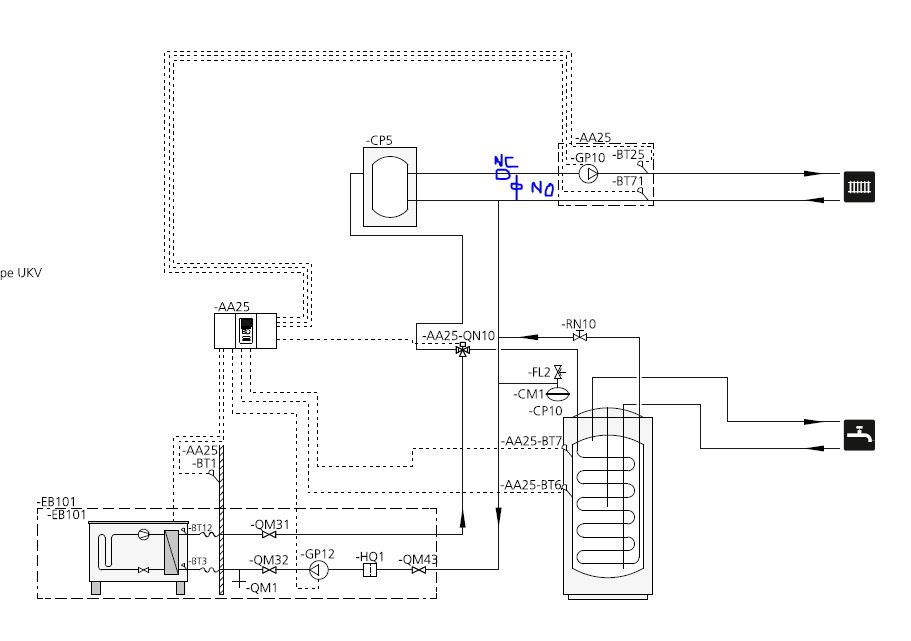
-
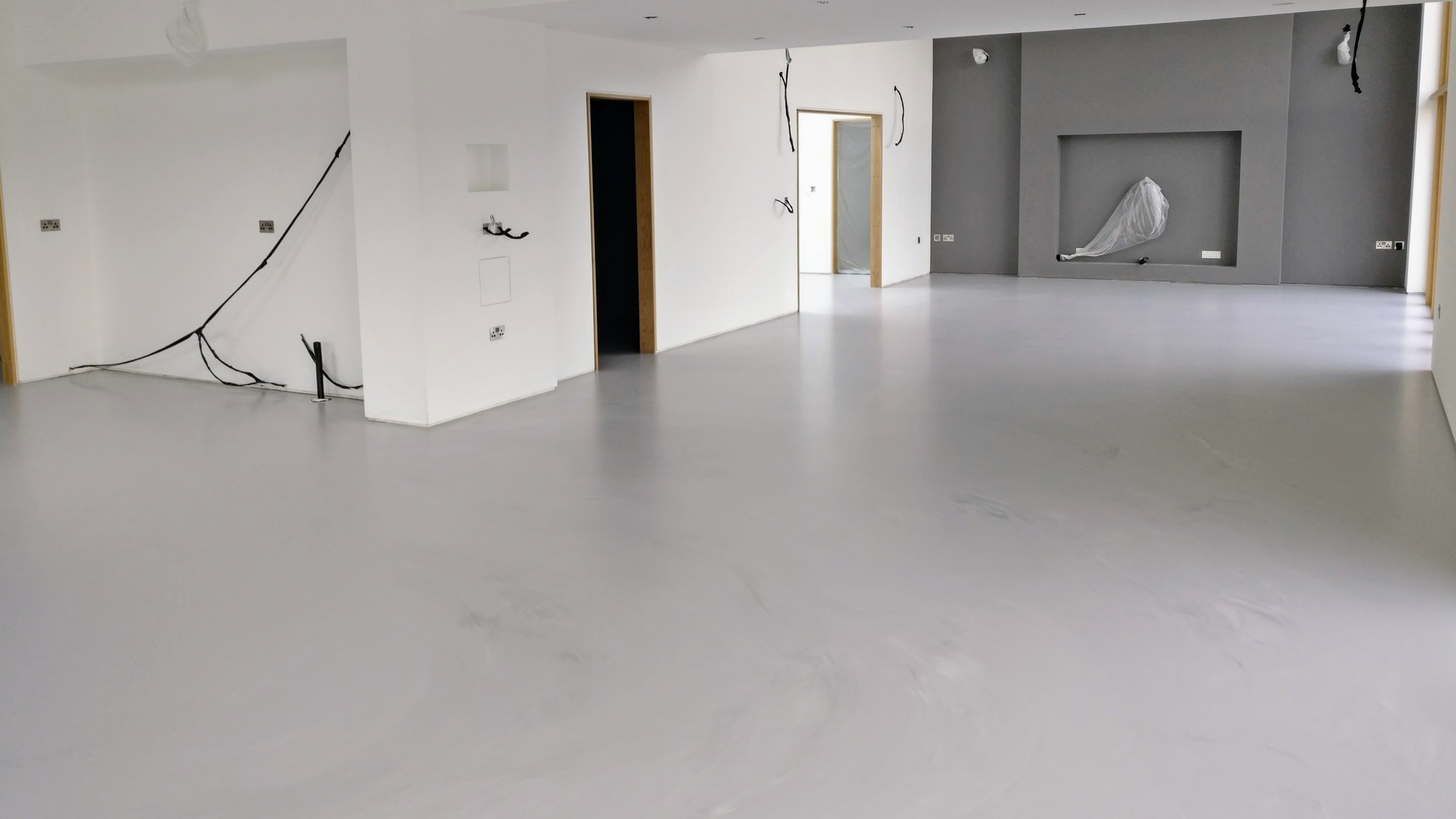
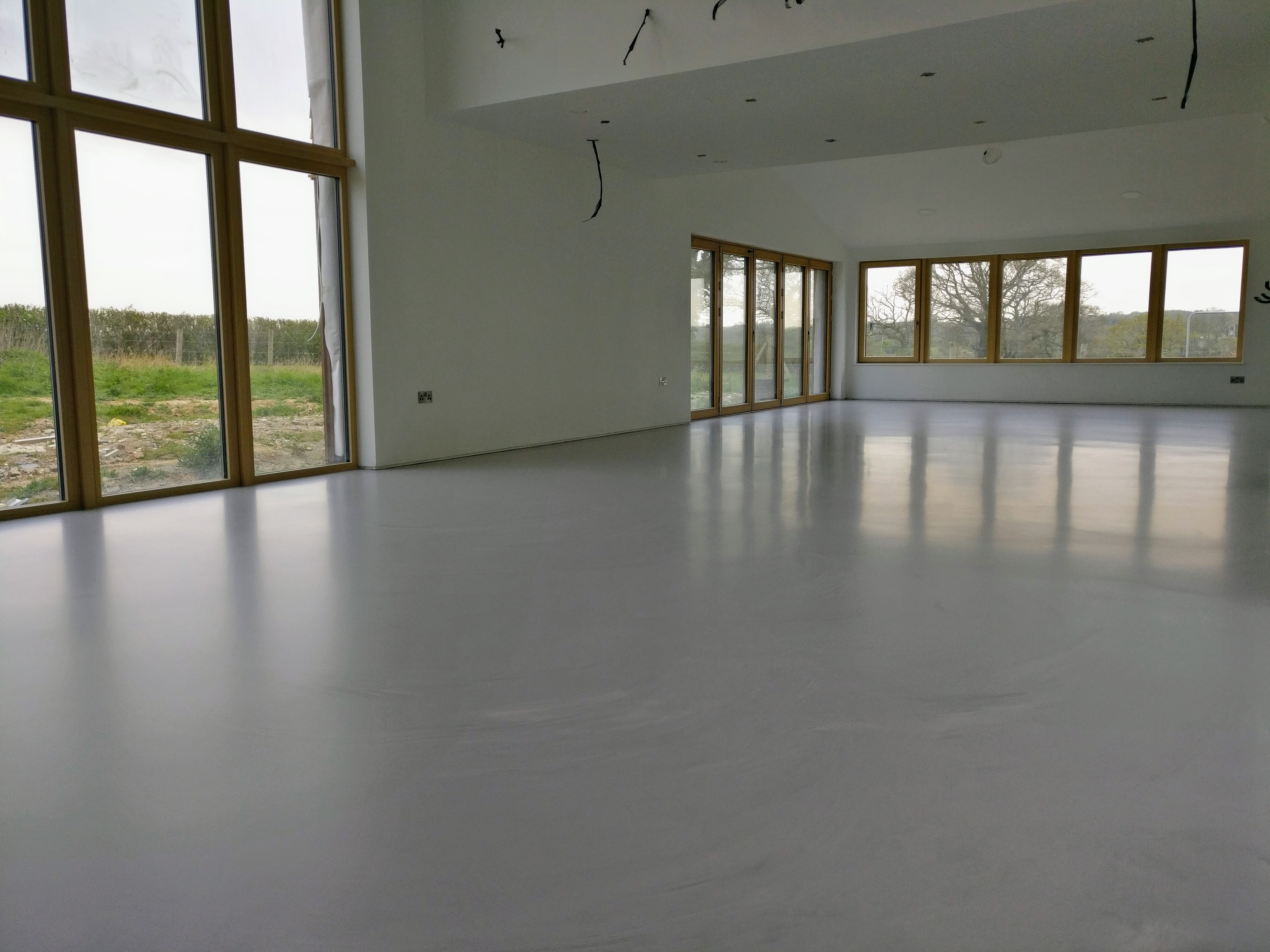
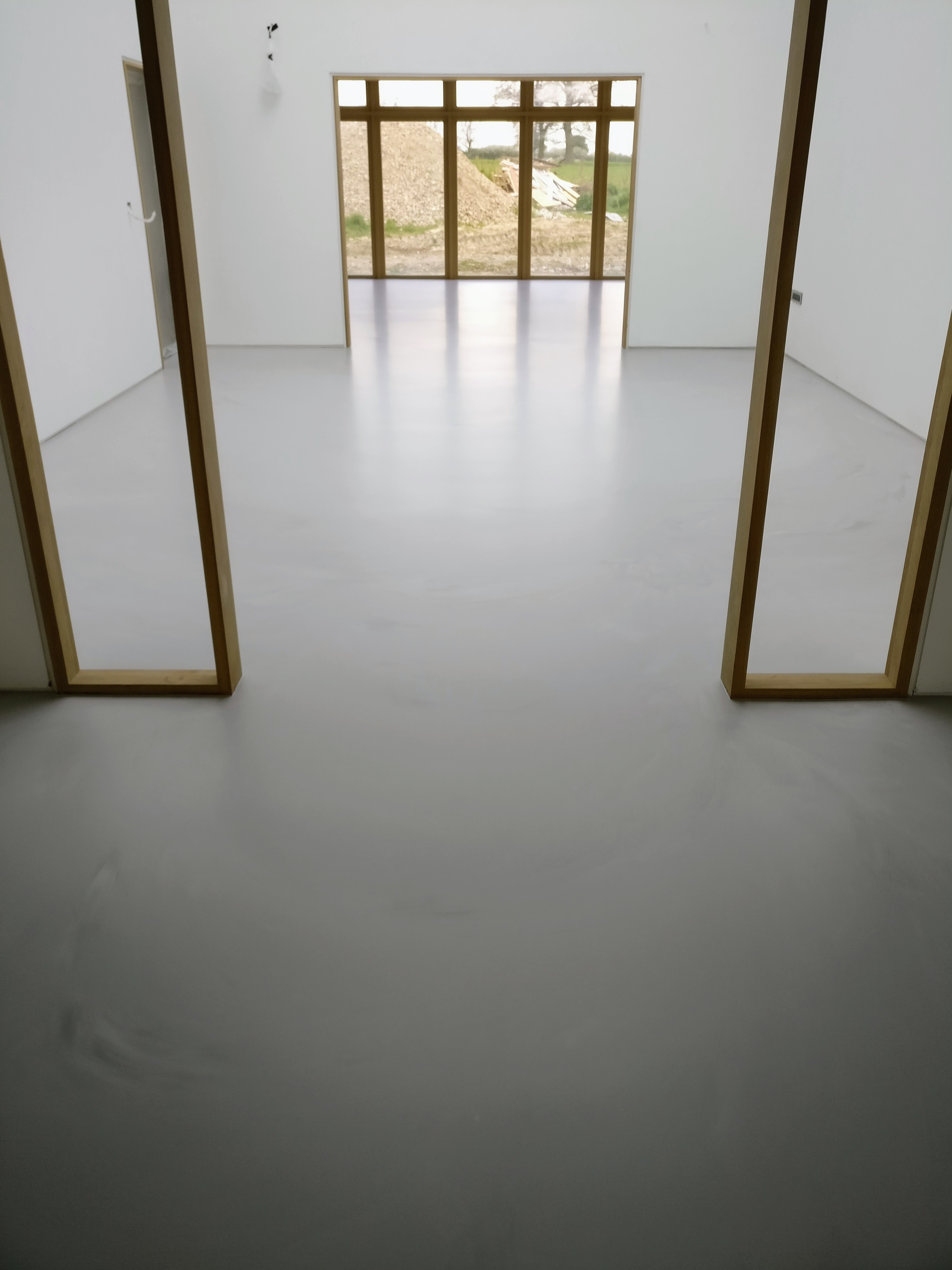
Poured Resin Floor finished and a definite success!!!
IanR replied to IanR's topic in General Flooring
For ours the primer and sealer coats were rollered, and the scratch and body coat were poured and spread by trowel. -
Poured Resin Floor finished and a definite success!!!
IanR replied to IanR's topic in General Flooring
Yes for the Epoxy Primer coat. Not so much for the body coat and sealers. -
Poured Resin Floor finished and a definite success!!!
IanR replied to IanR's topic in General Flooring
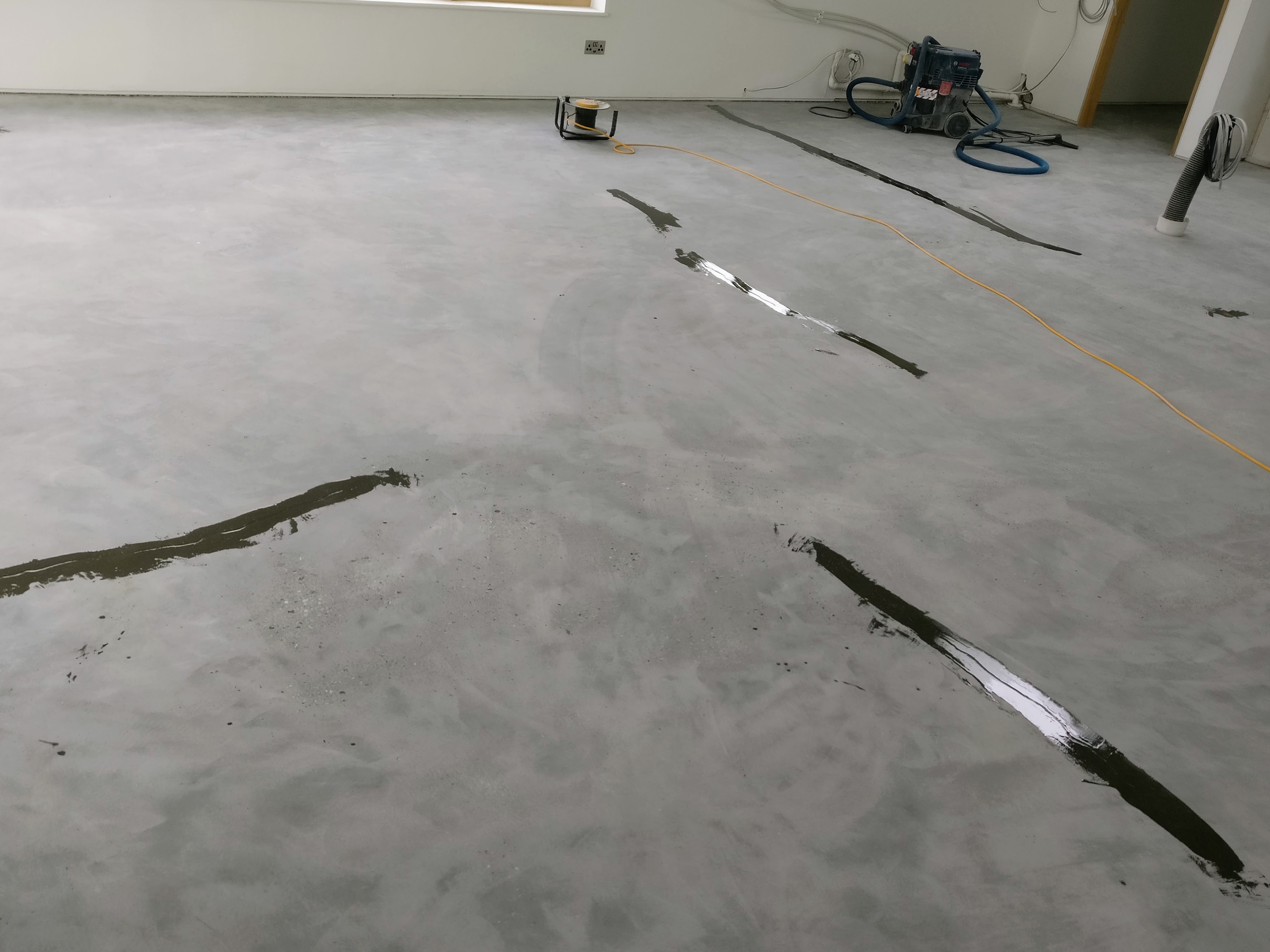
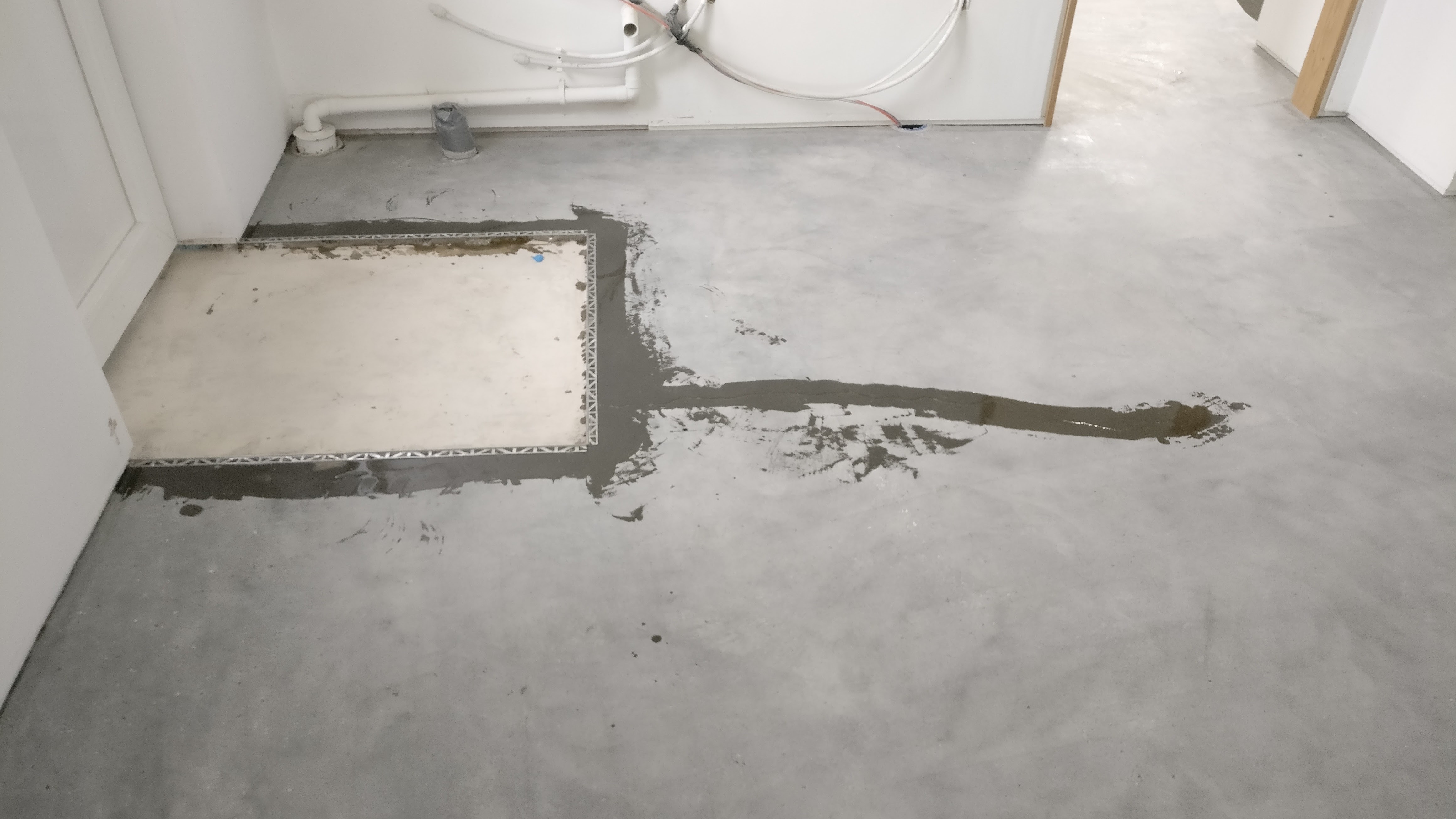
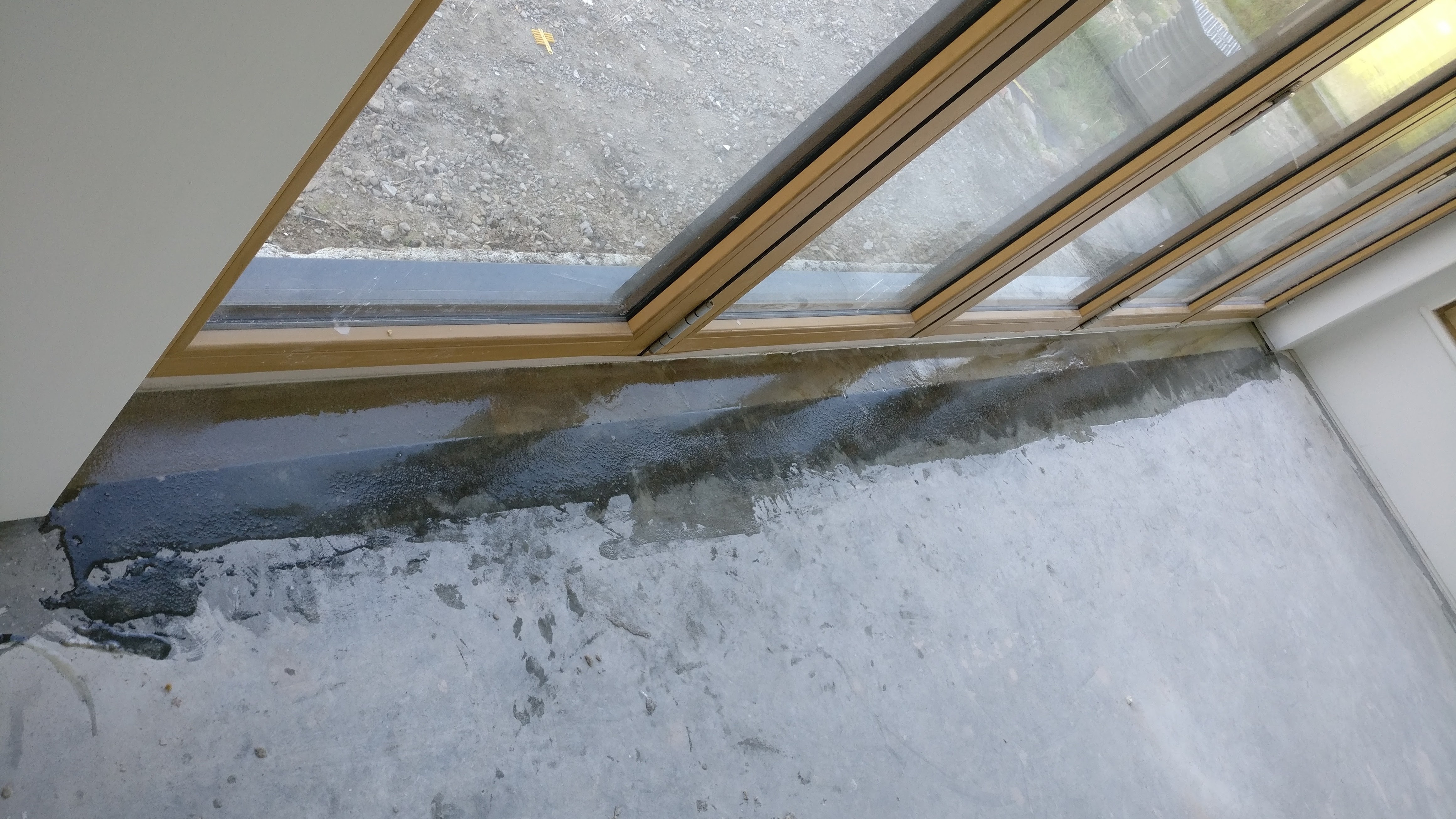
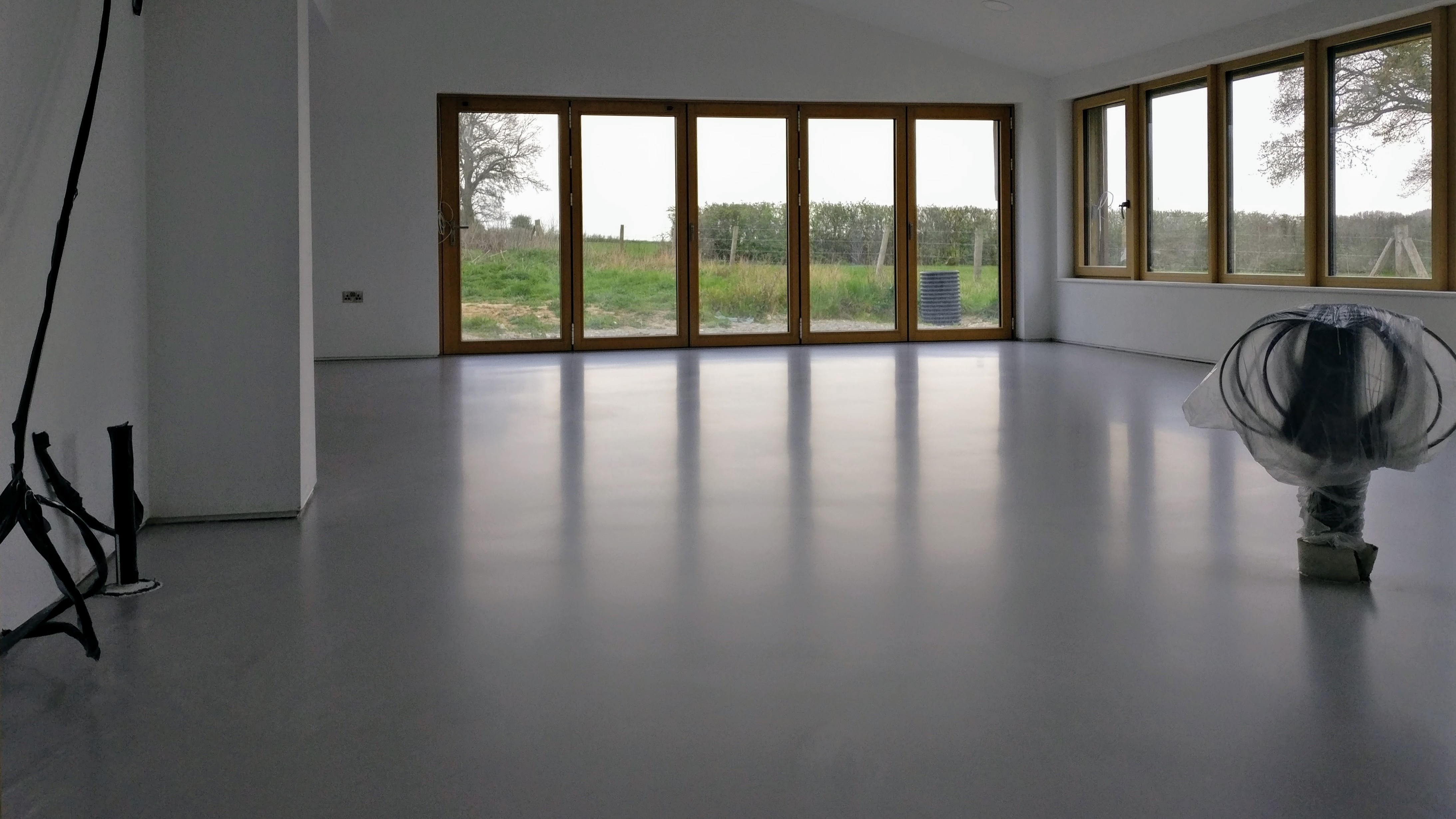
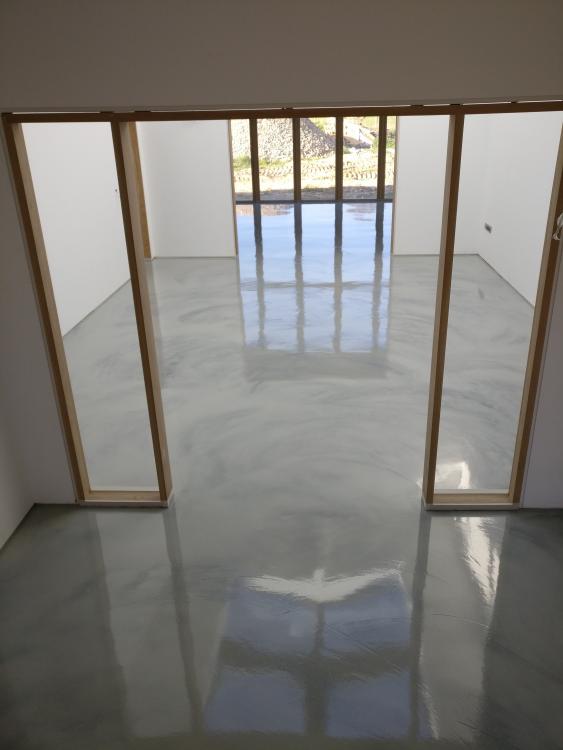
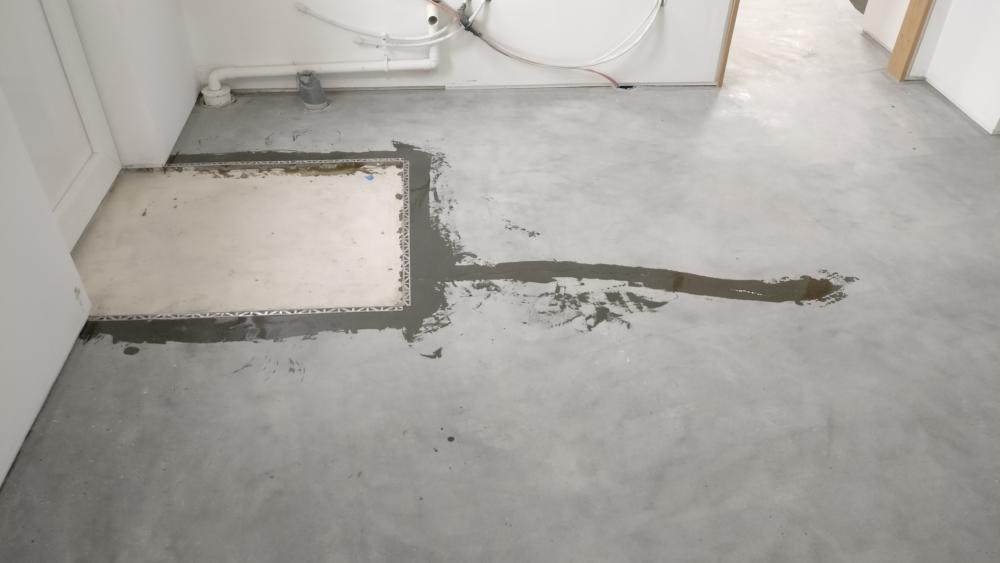
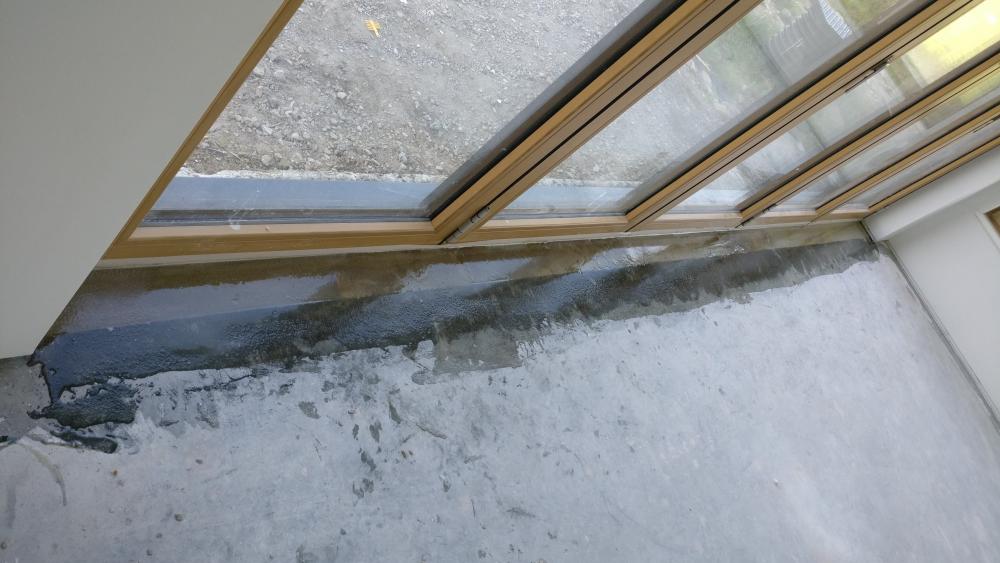
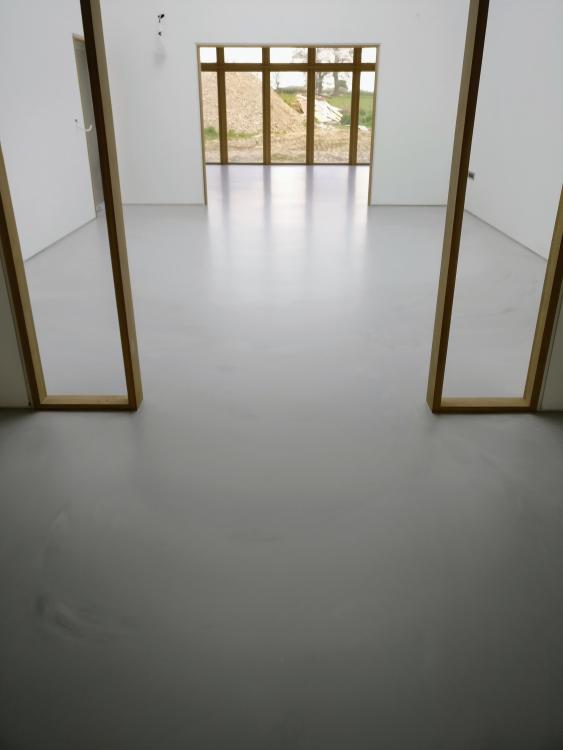
A bit of the process: Recessed thresholds back filled with Epoxy mortar: Slab surface lightly ground and any cracks cut back and filled with epoxy resin Mat wells trimmed with stainless beads which are screwed and stuck (epoxy again) Primer coat (epoxy resin) and then PU resin scratch coat applied Then self smoothing colour coat and two sealer top coats to give the pics in the first post.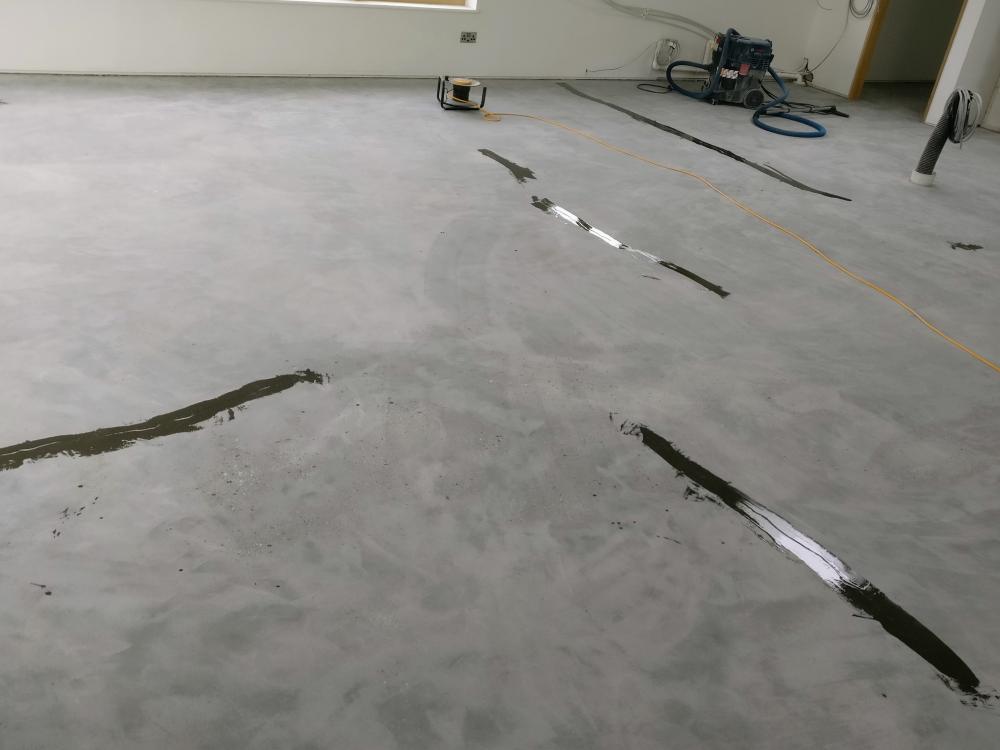
-
Poured Resin Floor finished and a definite success!!!
IanR replied to IanR's topic in General Flooring
Around 4mm -
Poured Resin Floor finished and a definite success!!!
IanR replied to IanR's topic in General Flooring
That's them, I'll update my previous post with a few links. -
Poured Resin Floor finished and a definite success!!!
IanR replied to IanR's topic in General Flooring
Happy to "post in public" as this is one of the products and installers I'm happy to recommend. I believe pricing came in at around £75 / m2 but I will double-check. As I found though you can't rely on a per meter cost to get an accurate estimate. There're are 4 different products used, all from different container sizes and the product supplier directs how much of each is required for any given area. I was at around £85 per meter and added another room of around 28 sqr meters but the price barely moved and brought it down to what I think was £75 per m2. Installers were 3D Royal Floors and I can't fault them. While they misjudged the prep time they caught up with 12 hour days over the weekend to ensure there was enough cure time before my kitchen install starts next week. Ref. http://www.3droyalfloors.co.uk/residential-multicolor-decorative-resin-floors The "system" I went with was from Arturo and is their PU2030 self smoothing floor product. UV stable and flexible. There is an alternative, PU2060 product which cheaper and harder wearing for commercial/retail environments but isn't guaranteed UV stable. Ref. http://www.arturoflooring.com/products/flooring-systems/arturo-pu2030-self-smoothing-floor/ Ours is what they describe as a "concrete look", with a two colour body coat to give some movement to the finish. Again there's the opportunity to bring the cost down a little by using a single colour, which I loved the look of, but my wife thought was too clinical. -
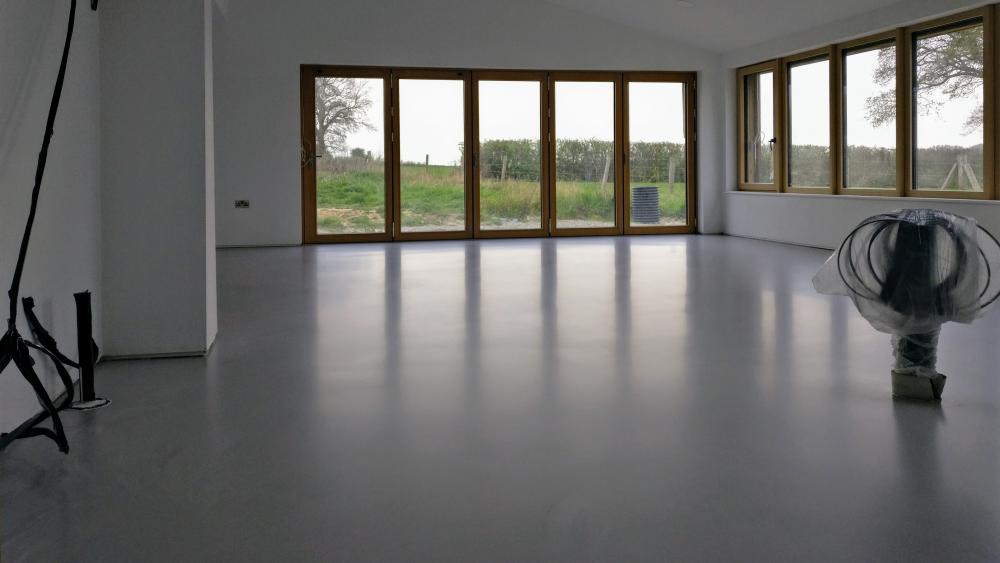
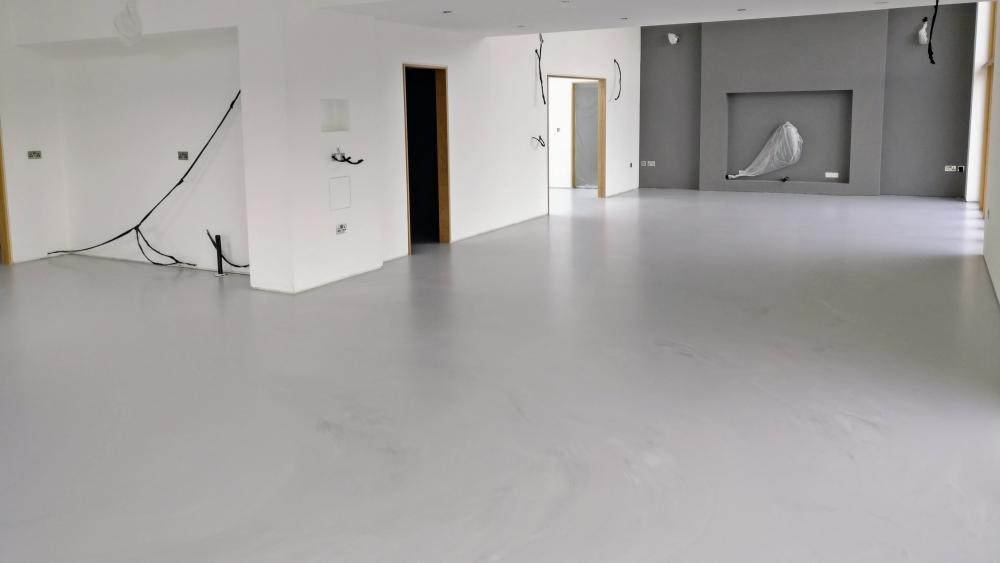
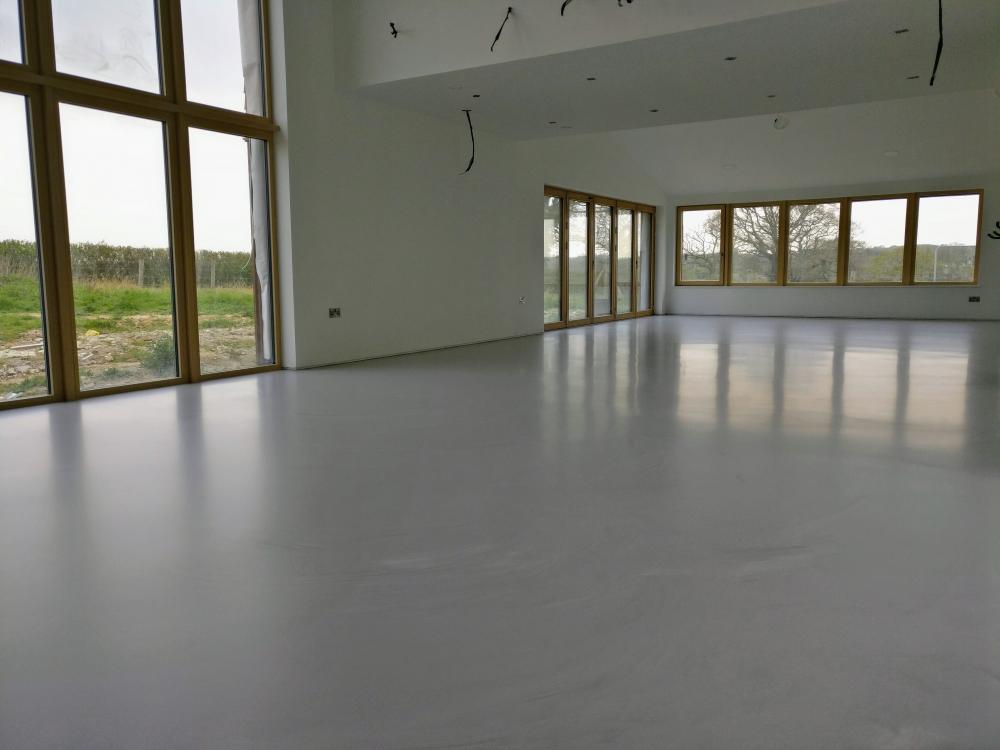
Poured Resin Floors have been discussed here a couple of times and over at eBuild. For our living areas we looked at tiles, micro screed, polished concrete, wood and poured resin options - finally making a tentative decision to go with Poured Resin. We feel we took a bit of a risk with limited options to view the product installed, and only got to view it in a commercial/retail situation. We got quotes from about 6 companies, but only had confidence in two of them and one of those two has, what were for us, unacceptable payment terms so the decision on the supplier took some time but ultimately made itself. The floor was started last week and finished Monday night. First opportunity to walk on it (in socks) was today. Going to leave it another 5 days before covering. I'm glad we took the risk, the finish is outstanding. And glad we didn't go with our second choice of polished concrete as during the light grinding stage, to key the surface ready for the resin, many more hair-line cracks were exposed than we were aware of when it had the natural power-float finish. Great attitude from the installer too, first time they'd installed on to a C35 power-floated slab and found the grinding much harder going than they expected, so the planned 1 day's prep ran to 4 days, but they just took it on the chin.
-
Yeah, vertical loops that go down circa 75m - 100m rely on geothermal energy (and ground water), but not the horizontal loops. You'd only recharge the ground under the slab by ground water passing through, and for the first meter or so of depth under the slab they tend to be drained so that there isn't any water.
-
Horizontal ground loops rely on solar energy to warm up the surface and rain to draw that energy down to the loop to recharge the ground the loop is in during the non-heating season. So I expect there won't be sufficient energy in the ground under the slab for the second heating season, and after a few years you'd have a perma-frost.
-
Is he asking if the EPS insulation has BBA type approval, or the foundation system? Kore have their EPS 80 and EPS 150 products approved by the NSAI for use in ground and under a floor slab, as per the quoted document, but for the foundation system there is no such approval, the buck stops with the Structural Engineer that specified it.
-
There's a lot of rules, you need to do some reading. Residential PD applies to out buildings (detached from the main residence) that are incidental to the use of the dwellinghouse, but does not normally include residential use such as self-contained accommodation. I'm no expert but I believe you would need to apply for permission for Change of Use, and you could at the same time apply to extend. But seek professional advice, you maybe able to extend the games room under PD, and then obtain permission for the Change of Use.
-
So what use does the LPA consider it to be?