
JohnMo
-
Posts
12465 -
Joined
-
Last visited
-
Days Won
179
Everything posted by JohnMo
-
Your heat demand should be low, if going passive or close too. Others have just Willis heater's, for UFH, e7 for DHW. Would be worth doing some cost benefit analysis, compare ASHP. What ever you do keep UFH control simple, no weather compensation, simple or single thermostat etc. Good luck, you will learn a lot. I can recommend Durisol also.
-
Do you need to through the wall? Insulated the internal and external part of the pipe. Can it not go into a sink drain for example instead of outside? If that's the only thermal bridge to worry about your doing well.
-
Been following this topic with interest. So if I purchased one of these. https://www.photonicuniverse.com/en/catalog/full/452-Iconica-1000W-12V-hybrid-pure-sine-wave-inverter-with-40A-MPPT-solar-controller-and-20A-mains-charger.html Some solar panels and batteries. Configured it to charge batteries by utility and/or solar. So when I get a power cut, I switch main breaker for supply to house and other large loads. From there how do I get to use the battery power and also if I wanted to connect a car to keep charge in the batteries, do I just connect to batteries as you would if jump starting a car?
-
When you compare the flow rates of the two rooms what are they? For the shortest circuit the flow rate should be the lowest. This will give the more time to transfer the heat from the water to the floor.
-

Semi-final plans --- feedback/critique welcome!
JohnMo replied to RK6's topic in New House & Self Build Design
Just a bit we found with solar gain, we have large overhangs, which should protect us in the summer, in September and October, with the sun very low, we got loads of gain in late afternoon. -
Wouldn't bother with UFH in bedrooms, bathrooms yes, but may be better with electric UFH and electric towel rads, for summer towel drying. Quote sounds very expensive. Double row rads with fins, are also available, to reduce size of rads. Firstly have they sized everything in line with your heat loss calcs? What are your u-values and room sizes?
-
Semi-final plans --- feedback/critique welcome!
JohnMo replied to RK6's topic in New House & Self Build Design
Couple of this. Lots of glass, great on a plan and looks good, but huge heat loss byin winter and huge heat gain in summer. Not sure how you will meet min building regs in Scotland. Not sure where north and south is on the plan? This will have big impact on solar gain. Same comments on utility and cinema room, as previously mentioned. You That's a huge island in the kitchen, looks about 4m long. Middle bedroom, has big sliding doors and with bed in current location a view of a wall, consider a reorientation of room to same as the other two bedrooms. You have a huge amount of corridors, which appears to be dead space. Have you considered a plant room? I would be inclined to move the whole garage wing to the left, to reduce the length of corridor at the rear of the building. Wall between garage and utility will need to s thermal insulated wall, shown the same dims as internal stud. -
Why do you need more than 2.1 bar? Is there something driving this need, or do want more flow? What is current plumbing set up for hot and cold water, is it a mains pressurised system or fed from tanks in the loft?
-
Do you have a drawing?
-
Do ASHPs work with heat batteries?
JohnMo replied to ReedRichards's topic in Air Source Heat Pumps (ASHP)
Is Sumamp the only people out there, that have a thermal battery that can be charged with water and electricity? -
Do ASHPs work with heat batteries?
JohnMo replied to ReedRichards's topic in Air Source Heat Pumps (ASHP)
Sounds like a 40kW storage heater, with a heat exchanger to transfer heated air to water -
The reality is the costs for the legal side is very site and location dependant and so is getting the foundation in place. So some will elect to have these costs as separate line item away from the "build" cost, other won't. Some will include a kitchen be it a £50k or £5k one, others may not. All depends on what you class a "building" cost. Very difficult sort out, it also makes a big difference if you paying someone to do the build, someone else to project manage etc, or doing loads yourself and getting specific trades in for defined jobs. Professional fees in Scotland will always be different from England, as we have to get planning permission (as everywhere else), then we also have to get a warrant (basically proving your design is in line with building regs), we also need a full structural engineering package and any soak-aways and treatment plants approved by SEPA, all prior to starting building. As you can see loads of variables, but have said that the reality is somewhere plus or minus £2000/m2 all in, incl professional fees and groundwork (plus buying the site). An all singing/ dancing complex design, done by someone else, with £50k kitchen expensive bathrooms, who knows the real cost.
-
Run separately, you may get interference
-
That is stainless steel cleaned up with something that has been used on carbon steel, a grinder for example. The normal engineering way to get this off is with an acid gel. Not something you can safely do at home. The stainless is not rusting. The carbon steel deposited is corroding. A local engineering shop may be able to treat it for you.
-
My GSE trays are mounted direct to sarking boards. You may loose 2 to 5% performance of the hottest day, very little or none at other times. Our sarking boards are normal Scottish ones 22mm thick, approx 150mm wide. Trouble is, if the put the battons as per instructions, but on top of the sarking boards, the slates don't install very well.
-
But the tank would have pressurised from a tank in the loft, and had really bad flow all of 3m head (less piping losses) in an upstairs bathroom.
-
Speak to different structural engineer? Or challenge the one you have. Ours wanted all sorts of steel in our walls, until I challenged him and then he dropped the requirements considerably and to far more what you would expect. Trouble is they take the easy, low risk for themselves approach, because it's easy and requires not thinking out of the box.
-
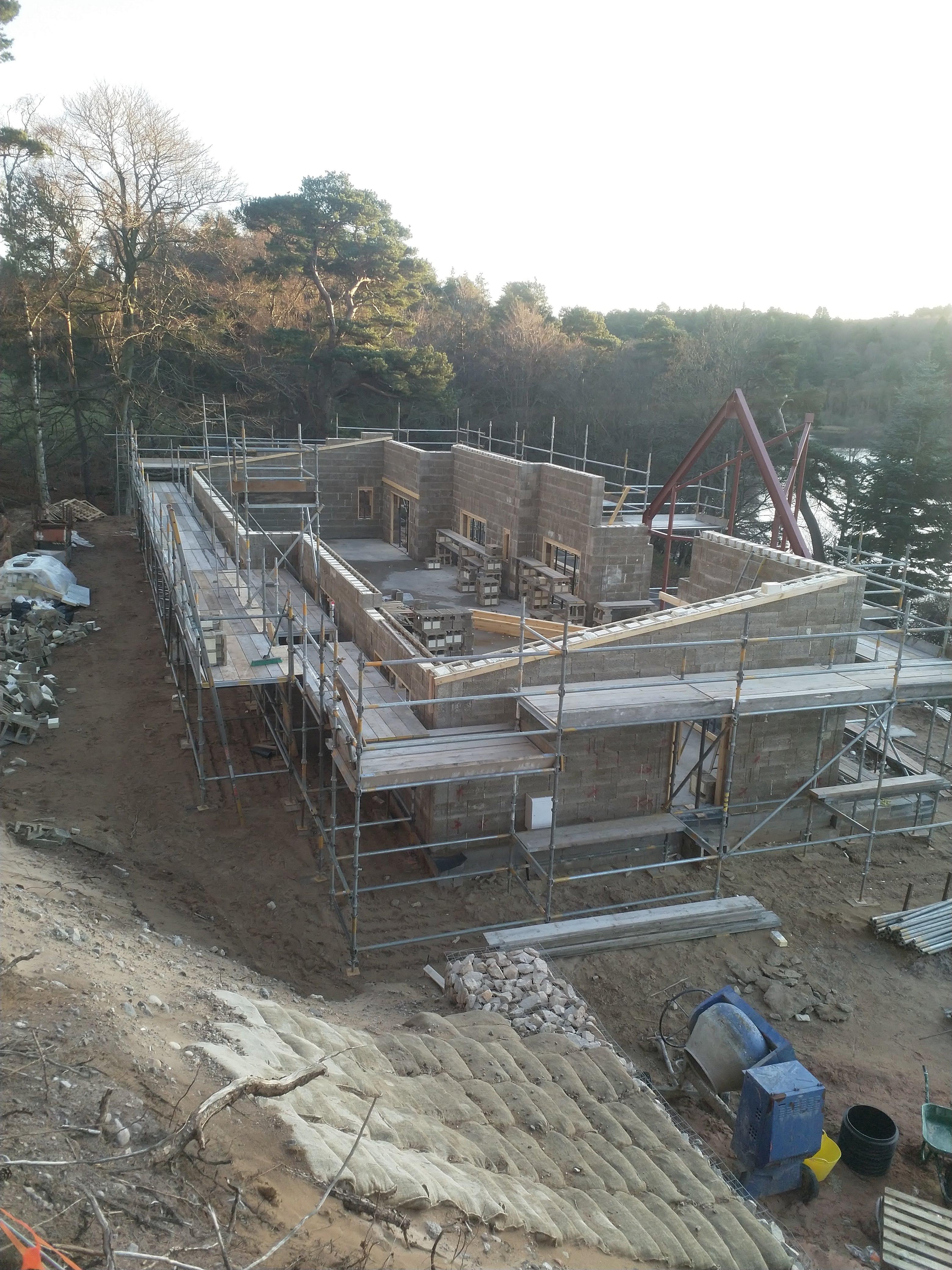
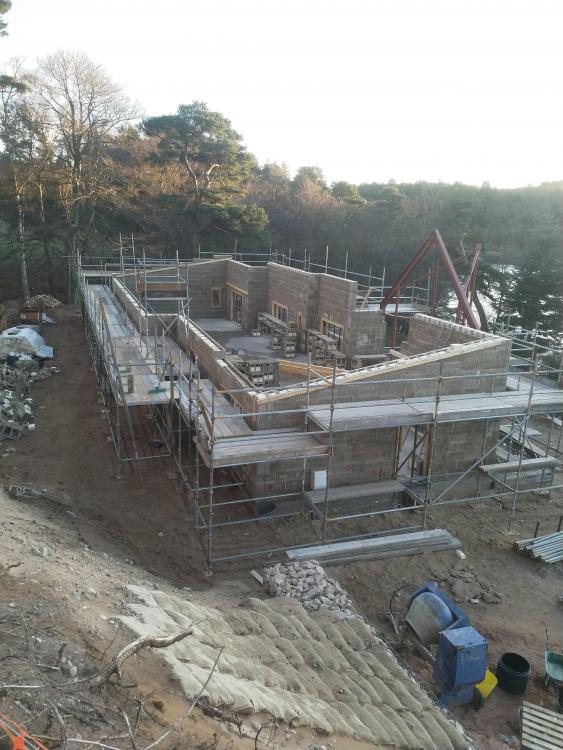
Durisol are an easy company to deal with, their block also easy to assemble. 4 weeks, ready for roof, two of us who had never done it before. 70m long wall, 190m2 floor. Front of building approx 4m tall rear 2.5m
-
Don't think most plumber (there are exceptions) do anything different from what was done in 70s. They still plumb the same way, no reason to change, as no one asks for anything different. Very few use hot and cold manifolds for example, which distribute hot water more evenly
-
Foil insulation worth paying for better performance?
JohnMo replied to Happy Valley's topic in Heat Insulation
Have been on to the two companies websites and downloaded the installation instructions, they include all the approved installation schemes and the expected u values. It tells you where you need air gaps and what depth they need to be etc. -
Mvhr ducting damage
JohnMo replied to Dunny1234's topic in Mechanical Ventilation with Heat Recovery (MVHR)
You could also inject some CT1 or similar, before taping -
Get a magnet, if it sticks it very very low grade stainless or carbon steel. Are there any bolts or screws near where you are seeing rust, if they are not stainless they will corrode very quickly and stain the stainless. These should be replaced with stainless unless they are structural. For painting, clean with soapy water, grind surface clean, clean with soapy water, flush with clean water and dry. Use a multi surface primer and top coat. Same approach used for galvanized also.
-
They are designed to provide a fixed temperature for any given flow, winter water temperature are lower than summer, and manufacturers install a flow restrictor on the water inlet to give year round ok performance, an increase delta T is required in winter; due low cold water temp being lower. Flow when inlet water is at its coldest is rubbish compared to summer, the restrictor gives worsening summer flow also. With a flow restrictor installed flow will be down 10 to 15% on advertised rates. However as with most things they tend to follow the path of least resistance, so open a tap and flow is diverted there instead of the shower. So could be a couple of reasons for the rubbish performance Plumbing arrangements giving biased flow to the outlets closest to the boiler. Shower mixer not responding to change of flow of hot water. It should be an adjustable TCV, so manage the temperature set even with flow changes. So flow rate reduces, not go cold/hot. The easy fix on new build, manifold to individual users. For new or old systems Canetis Superflow on inlet and removal of flow restrictor. This give s 30 deg inlet temp to boiler, giving improved flow. Shower mixer that control temperature not just rate of flow for hot and cold.
-
Listed Building Consent vs Full Planning Consent
JohnMo replied to Paulie_d's topic in Planning Permission
Ask for a meeting your you planning department. Go over the details with them. This should be just a maintenance issue, once you have listed consent, not a change - so no planning needed -
MEV allows multiple extracts to a single outlet. In that case you ventilate the wet rooms and possibly the ones with no other ventilation. The inlet flow would then come window trickle vents and cross flow through the house. Or go dMEV, these have a fan in each wet room and have always running, low energy fans, with boost from light switch or humidity sensor. Put through wall vents (on internal walls) in the unventilated rooms. For this to work you need an air gap at the bottom of all internal doors. You window trickle vents work as MEV. Best to draw your house layout, look at where to have air going out already, where you have air coming in (window vents etc) and then can make a guess at where the air flow to and from, and see what room have no ventilation. Ventilation wants to go across a room where possible.