


JohnMo
-
Posts
12465 -
Joined
-
Last visited
-
Days Won
179
Everything posted by JohnMo
-

Is insulation designed to keep heat in one way?
JohnMo replied to JKami84's topic in Heat Insulation
In theory the same thickness wool will loose about 50% more heat than the PIR. However at 50mm the insulation value is not very good. Are you sure you comply with building regs? Even on the external walls? What size studs are you using? As simple sketch may help. -
Another thread
-
Really depends on how you are building, how many storey etc, there was a recent thread on this.
-
Not sure where the sizing for worst ever case weather comes from. It is only likely for a few hours a year and maybe only once every few years. So pretty meaningless. MCS Standard MIS 3005, requires the unit to achieve 100% of the duty at an external temperature condition exceeded for 99.6% of the year. So you basically ignore those few hours where it could be - lots of degrees. MCS also states supplementary heat is not permitted from direct electric at external temperatures above the design external temperature (“bi‐valent point” or “balance point”), but other alternative auxiliary sources of heat are permitted where this is not reasonable practicable in which case the system becomes a ‘hybrid’ system. Although additional supplementary heat may be required when the external temperature drops below the bi‐valent/balance point, this will occur for very short periods of the year and therefore does not significantly affect overall seasonal efficiency even when direct electric heat is utilised. Heat pump sizing standard rating condition for ASHPs used to be air at 7oC and water flow at 35oC. However, in practice they may be required to produce water at approximately 55oC with design ambient temperatures of circa -2oC. At these latter conditions the output of many heat pumps could be as little as 60% of the output at ‘standard’ (nominal) rating. For example a 13kW ASHP may provide 13kW of heat at 7oC and 35oC flow temperature but it is unlikely to do this at an air temperature of -2oC and water flow at 55oC. The actual output could be as little as 7-9kW and hence, if relied upon for the design of the system, it will be vastly under-sized incurring the cost of expensive supplementary heating and/or lead to issues of poor comfort.
-
nominal mix, ratio of C25 concrete grade is 1:1:2, in which one part is Portland cement mixed with 1 part of fine aggregate/ sand and 2 part of coarse aggregate with required quantity of water
-
https://www.heatgeek.com/how-to-size-my-heat-pump-or-boiler-heat-loss-cheat-sheet/ May be worth running through this also
-
Best model acoustic insulation for studs and joists?
JohnMo replied to ashthekid's topic in Sound Insulation
We used Rockwool flexi, around 30mm thinner that the space we had to fill. So 100mm stud - 70mm, 140 stud - 100mm You don't want it to touch either side of the plasterboard; as it will transfer more noise. -
Hob Extraction with MVHR
JohnMo replied to F113tch's topic in Mechanical Ventilation with Heat Recovery (MVHR)
Recirculation, another thread on this subject, last week. -
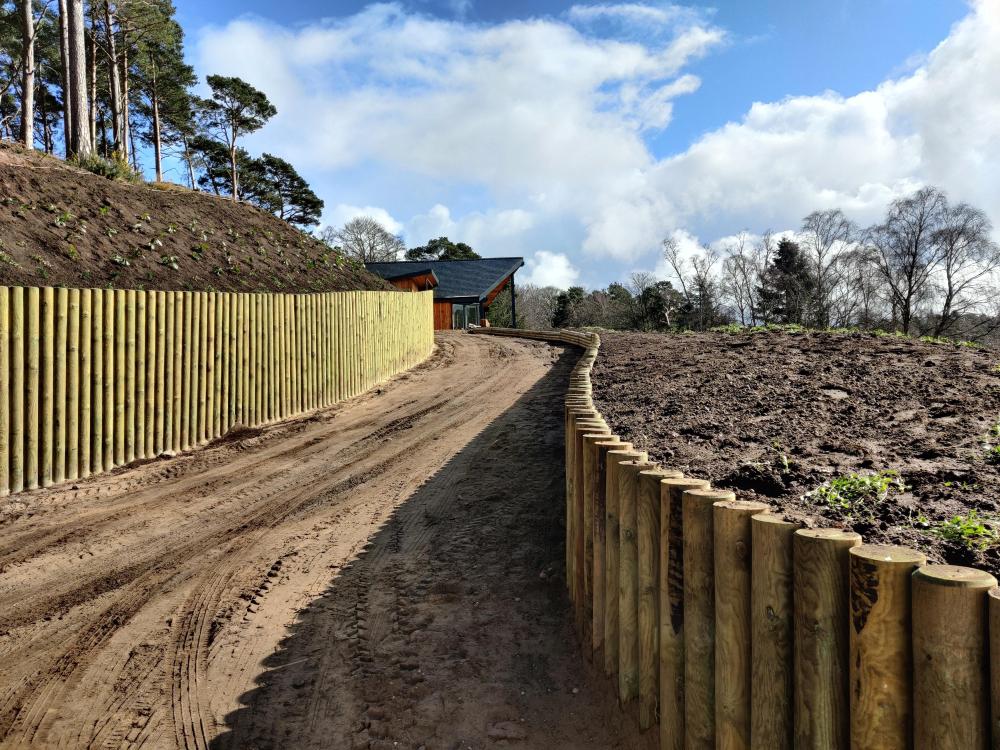
The right side is closer to 1m the left closer to 2m, the soil level is about 200 to 300mm below top of pole of the left retaining wall. There is a flat area about 2m wide, it then rises up 6 to 10m of very compact sand covered in soil.
-
Combined Hot water tank and ASHP - any advice welcome.
JohnMo replied to cbk's topic in Boilers & Hot Water Tanks
If go this route get one with stainless cylinder, not one with an anode, as the anode is sacrificial and will need to be routinely replaced or you will get a failed cylinder quite quickly. -
We used 150mm round posts, about a metre under ground and 2m above for the tall ones, about 900mm above and 600mm below ground for the short ones. Below ground is set in concrete. Membrane is used at back off the posts, allow water out and keep soil from washing out.
-
Where is the kWh price heading in 2022?
JohnMo replied to epsilonGreedy's topic in General Self Build & DIY Discussion
Also shows how out of touch politicians are with reality. Let's remove vat on insulation but only if you also pay someone to install it. They should be paying for TV campaigns that shows impartial information on the benefit of insulation, how to self install, where the best areas are to start installing etc. Same with draft proofing. I am NOT talking let's make it air tight and install MVHR, much more basic level as most the UK housing stock is so poor with regards insulation, that's a cheap fix and a lot of people can DIY that or become informed enough (by TV campaigns) to know what to ask an installer to do. Then paying for it to be UK made and almost given away. -
You are right not to incorporate the cooker hood with MVHR. But you still need to include a kitchen extract terminal within the kitchen to the MVHR. When using cooker extract with MVHR it is recommended to open a window to keep the MVHR balanced. Recirculation is pretty normal when using MVHR. MVHR takes away the steam, cooker hood manages grease. Carbon filter manages smells. I have never had to use the cooker hood above its first setting, using recirculation, as the flow rates are huge. The important thing is to get the height above the hob correct. The closer you get the better the performance.
-
Exactly what I had to do, when I found some instructions online, that is what it also said to do. Normal meter reads how much energy is pulled from the grid, PV meter reads how much is pushed from the inverter, so they are working in the opposite direction to each other, using the same type/ model of meter
-
MVHR - Initial Design Critique
JohnMo replied to F113tch's topic in Mechanical Ventilation with Heat Recovery (MVHR)
Possibly not -
MVHR - Initial Design Critique
JohnMo replied to F113tch's topic in Mechanical Ventilation with Heat Recovery (MVHR)
If it easier to route you can have supply valves near a door, but you have to use coanda supply valves, which are wall mounted near the ceiling. These will throw the air across the room, as the air coming out sticks to the ceiling for approx 4 to 6m. You have baths and showers, the extract valve should be either above the shower or bath which ever is likely to be used most, but position away from doors or windows. All your downstairs supply nozzles are too close the windows and doors. Our longest run in 90mm is about 15m, any more than that you are running the mvhr harder to get the flow rates required and would require 2 supply pipes. Your kitchen extract, I would move further from the hob, otherwise it could get grease laden quite quickly. As said place an extract to make sure it is most likely to remove moisture from the room and not get short circuited, so away from windows and doors. Place supply nozzles so the air has to move across the room to be extracted, again away from doors and windows. Use cross flow through hallways rather than direct ventilation. I found it much easier to install one larger unit and second small unit, this reduced pipe length quite a bit. I have used unsilenced plenums. -
Not sure what you have attached, but it doesn't open
-
We had the same, the generation meter was connected the wrong way round. Swopped over the input and output leads to other side of the meter and all was fine after that.
-
The theory what you propose, may seem plausible but. If the system contains 30l and you have a flow rate of 6l/s, your heat demand is 3kW, your whole volume of water would have 3kW given to it every 5 seconds, it would very rapidly heat up beyond your control parameters. The heat pump would short cycle. 300l would take 50 seconds for the full volume to flow through the heater. So a given amount of heat has more to work on and is unlikely to lead to a rapid heating event
-
My understanding is. You need around 10-15l for each kW your boiler can generate. So if you have a system volume of over 75l you will be ok without a buffer. The issue come if the have lots of zone or just a couple, where one zone may be calling for heat and it's volume is small. One thing you can include in a buffer is an immersion, so if things go wrong you have a fallback heating system.
-
DIY hot water system needs replacing - Sunamp?
JohnMo replied to Nelliekins's topic in Boilers & Hot Water Tanks
1. yes you would have thought of so, but that depends on the flow rate through the coil. If it's flowing too fast the hot water will not have enough time to transfer through the coil. 2. If it's scaled up like the photo of union, be lucky if you get flow through let alone heat exchange. your issue may stem from where the scaling came from, if that is not addressed whatever you change could/ likely to end up the same. your system did work well - then over time performance decreased. From what you have said, may of been down to not enough inhibitor. So nothing wrong with the system design, just a plumber that's rubbish at maths -
We are the same, wood, carpet in bedrooms, tiles elsewhere. Choose what suits YOU, not your architect.
-
I think the main things that screw up heat pumps are the following. Tying operate like a gas boiler, high temp, lots of on off cycles, you need to setup to run at as lower temperature as practical and let it run for as long as possible. One day time temp and a small setback at night of only a couple degrees only (even that is pretty much a waste of time in a well insulated house). Lots of zones, so the heat pump can end up running a small circuit which will end up with lots of short cycling. Have the whole living space as a single zone. I now also run the shower room, utility and en-suites without thermostats, if anything else calls for heat they get heated by default, this is to increase the circulation volume. Heatgeek.com, has plenty of tips of how to balance the system and set up flow temps. Sizing the heat pump too big, always remember, the design heat load is cover a few hours per year, when it's 8 degrees outside the heating system is only doing about half the work as at -3 deg C. If in doubt include a buffer to help prevent short cycling. The other thing about well insulated houses they react quite differently to older houses; our heating is by UFH (we have 300mm pipe spacing - 200mm would have made our system quicker acting), pumped at 30 degrees in concrete 100mm screed, the heating comes on for a few hours and is then off until the next day, with a stable temperature. You really need a simple system, no complex (or expensive) controls.
-
Boiler backup with no buffer tank/low loss header?
JohnMo replied to JamesPa's topic in Air Source Heat Pumps (ASHP)
All the ASHP manufacturers offer hybrid solutions, so may be easier copying their solutions for pipes and valves, instead of reinventing the wheel. It could even be a benifit to use a hybrid controller to get the best performance out the system. Not sure why they would both need to run to stop them freezing up. I assume the ASHP will have antifreeze in it, so it would not freeze, as you have both the ASHP and boiler in the same system (sharing the same antifreeze mix) the boiler would not freeze up either. Also if you are running weather compensation, the heating runs 24/7, but could be setback a couple of degrees only at night. So even less chance of freeze. -
No reason why 50mm wouldn't be acceptable. Which ever brand you use they are doing the same thing to mitigate noise. I think 25mm is the minimum acceptable thickness. https://www.ursa-uk.co.uk/applications/acoustic-insulation-floors-and-walls


