


JohnMo
-
Posts
13292 -
Joined
-
Last visited
-
Days Won
200
Everything posted by JohnMo
-

Mitsubishi Ecodan Air Source Heat Pump - Low Efficiency
JohnMo replied to TimToos's topic in Air Source Heat Pumps (ASHP)
If your heat pump was MSC installed the performance output sheet they gave you with quote is a guarantee of performance. If you are meeting the figures they gave you, you have recall for them to repair / replace at there cost. As a note You cannot operate weather compensation correctly with zones shut off and thermostats controlling temperature. Thermostats and trvs are there only to limit overshoot if for example the sun's out heating the room. -
vent axia MVHR advice
JohnMo replied to David-1712's topic in Mechanical Ventilation with Heat Recovery (MVHR)
I really wouldn't start messing with any settings, as these should all be configured, you cannot just change one thing without messing most other settings. You need to know what you are doing, with the correct test kit. Things you need to check Extract ducts, may have a filter at the extract point. The nozzle just slides out of the ceiling if there is a filter it will be cone shaped. Remove and hoover out 6 monthly replace annually if installed. The main MVHR unit will have filters inside, inspect every 6 months hoover out and replace annually. Make sure there is no accumulation of water. If you have boost switches use these prior to a shower and during cooking. In trickle mode the extract nozzle will just about hold up two sheets of toilet paper -
Static pressure calculations
JohnMo replied to LinearPancakes's topic in Mechanical Ventilation with Heat Recovery (MVHR)
The system pressure are worked out for the extract and supply. The route for extract with the highest pressure drop determines the extract pressure drop, the same is true for the supply. You need the datasheet for your materials, ducts, manifold, nozzles etc. and your target flow rate. From this you should get the info you need. Basically the high the flow rate and the longer the run the higher the pressure drop. -
Noise requirements and planning consent
JohnMo replied to JamesPa's topic in Air Source Heat Pumps (ASHP)
Not sure you have done the calculations. See attached calculation sheet. MCS-020.pdf -
Mitsubishi Ecodan Air Source Heat Pump - Low Efficiency
JohnMo replied to TimToos's topic in Air Source Heat Pumps (ASHP)
There may be a few issues Reducing flow temp to hot water cylinder will increase CoP, store water at a lower temp. Slowly over a couple of days reduce the temperature until the last use of the day starts to go cold, then add a couple of degrees. Cold rooms in the house increase the heat loss in warm rooms as they are experiencing heat loss external and internal. So the heat pump has to run harder to make up the difference. Also you end up making the heating circuit smaller so the heat pump cannot flow at a high enough rate, so suffers frequent shutdowns or short cycles. Both are no good for the CoP. Go on to heat geek and read up on how to balance your heating system. You really want the system to have an open system to flow against, but set the flow rates to get the temperature you want. The thermostat then are set higher than you need and operate as limit stops only, not as temperature controllers. You then need to get your heating flow temperature as low as you can, do the same as the DHW reduce over a period of days, then when it's not heating as you want it bring back a degree or so Can you set up weather compensation? Again have a read on heat geek site. -
Sorry lots of comments as I think your being taken for an expensive ride. I would say the scheme way to complicated for its own good and your sanity. The boiler only ramps down to 7.1kW if you have only a couple zones operating your boiler will be shutting down and starting up like no tomorrow, using lots of gas and provide little or no heat. You need to make sure all the pumps are hydraulically separated, a series of close coupled tees will do. You may need to look at the return flows also. First thing is dump all/most the room stats, they will just cause the boiler to short cycle and use loads of excess gas. Also operating as one or at most two zones will let you remove the motorised isolation valve from upstream of each manifold. The pump will pull the water through as needed. I would dump all the smart stuff and use a single glowworm controller in a central location and outside temperature sensor and enable weather compensation. Then balance the room flows to get the temperature you require. You don't need UFH in the halls or landings, they will get heat from the pipes going to rooms and borrow ambient heat from everywhere. We have UFH in the bedrooms and I would say to anyone don't do it. Way to slow respond, radiators or fan coil, then at least you can implement cooling later when you have a heat pump.
- 1 reply
-
- 1
-

-
No I mean the company called Roof Maker. Airtightness details same as any windows
-
Roof maker also. That what we have. Ours are fixed, having them open would have been an advantage with ventilation on hot days. Only thing to watch is the amount of solar gain you get, can turn a roof room very hot, very quickly. So think about paying extra to limit solar gain, additional coating etc. However your look a sensible size.
-
Bet that was nice
-
Where is the kWh price heading in 2022?
JohnMo replied to epsilonGreedy's topic in General Self Build & DIY Discussion
But we will all know what's occuring on Thursday, or so they have just stated on R4. -
And as they scrape that man from the pavement, his mate kept hold of the panel, but is stuck on the roof and can't get down as he has no hand free.
-
Not heard that one. The other way to look at throttling is A lot of the year you will not get 5.6kW out of your system, even on a good day you will only get 5.6kW for an hour or so. Your 3.6kW should be output for most of the year depending on angle and direction
-
If your panels are on the roof, could you bring the optimisers/inverter inside the roof, then it's just a loft ladder to get at them
-
But 3.6 kW inverter will have a small tolerance for over locking possibly a few 100W not a couple of kW. Then if you want 5.6kW you get into an a correctly sized inverter, but with export throttling. Or you go G99.
-
Where is the kWh price heading in 2022?
JohnMo replied to epsilonGreedy's topic in General Self Build & DIY Discussion
If we are selling overseas they pay market rate for importing the energy, we also pay market rate at time of import into the UK. Just normal commercial transaction. Import and gas electric will fluctuate in price the average price would be passed on to the consumer at some point. They should be able sort that quite easily,as the system has been used for decades. -
Where is the kWh price heading in 2022?
JohnMo replied to epsilonGreedy's topic in General Self Build & DIY Discussion
All they need do is delink the gas price from nuclear and renewables. At the moment the wholesale price of electricity is all based on gas generated electric. Why should the tax payer support extra profits for generators where it costs no more to generate than it did prior to the gas price rise. -
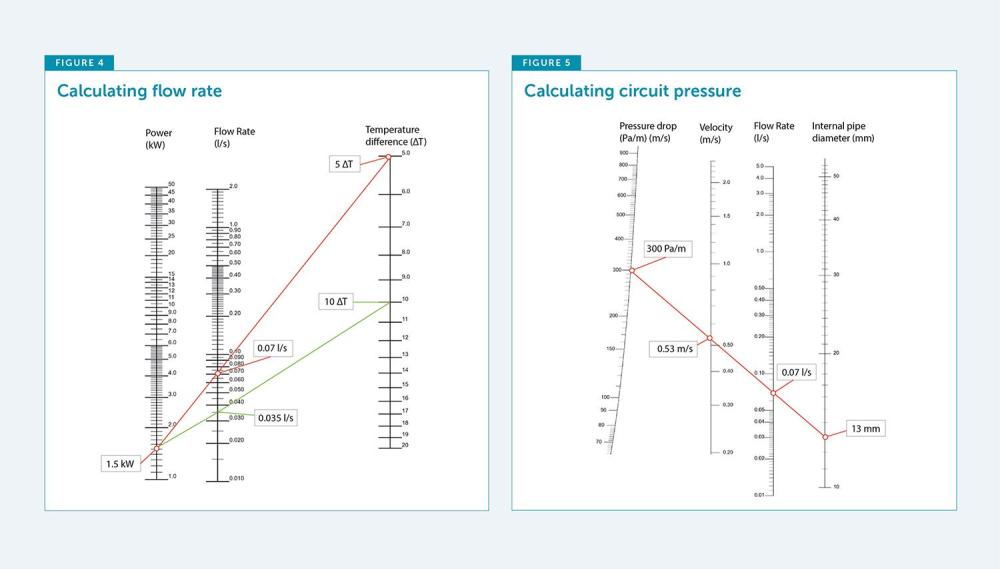
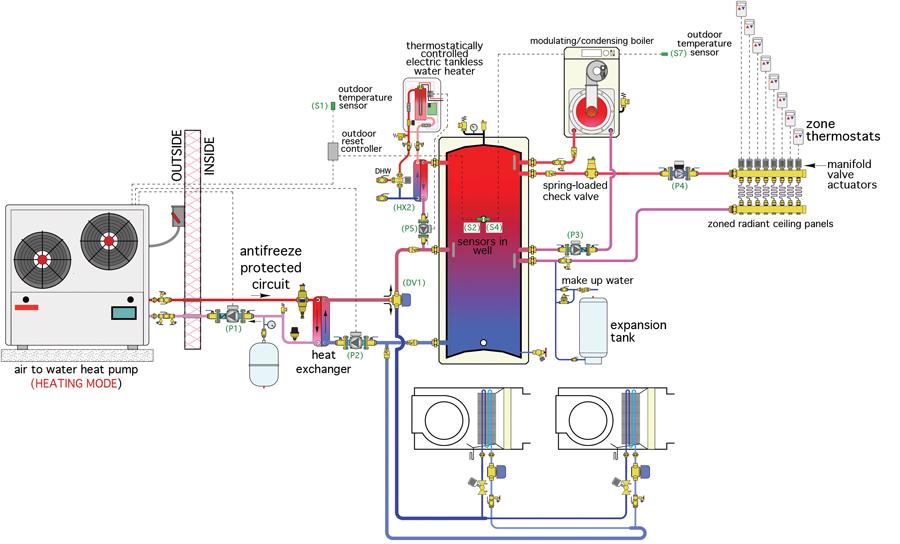
UVC is full of drinking water, so if you wanted to take UFH from that cylinder you would need a coil for the UFH heat exchange. Have attached a thermal store scheme with heat pump. Neither scheme is that good for your CoP. You can use the attached to calculate your UFH flow rates and mean temperature. A big delta T means low flow rates, a low delta T has high flow rates, you can manipulate the temperature to get same output from the floor. As its the mean temperature that determines heat given to room. But there are two ways to heat the slab. Long and slow, or is your screed is deep enough, batch charge at a slightly higher temp for about 6 hours. You can also use the attached with the heating spreadsheet to work out a weather compensation line, just calculate the heat required on the spreadsheet at at +20 and -20, use the sheets to work out flow temperature there a is a just about straight line relationship between the two extremes. Also remember the coldest day is a rare day, most the time the heating will be ticking over with a low demand.
.thumb.jpg.e6f5b10749b0a8b28a782f83356b9791.jpg)
-
130l of water heated from 20 to 45 degs only requires 3.8kWh. 210l of water start temp 65 deg start temp and end temp 45 has 4.9kWh. At 75 deg start and 45 end has 7.4kWh So the higher cylinder temp has a much larger reserve of energy to play with.
-
The diagram shows the boiler control stat is set at 75. But is yours set at 65? The trouble could be the temperature is set too low at 65. So when the UFH calls for heat, the temperature in the cylinder just drops too quickly (not enough capacity in the cylinder at 65) and the boiler cannot keep up, when the temperature drops to far.
-
If you start over compensating things, things start to get bigger, a heat pump that's oversized is not a happy thing. You will start to need bigger and bigger buffer, to keep it happy. The power required gets bigger, more generator run time. A 12kW heat pump will need a flow rate close to 1.7m3/h to stop short cycling. Why not go a hybrid solution for heat and DHW. Heat pump size and use to use down to about 5 degs, then let the other boiler take over. If there is only four in the house, you would be reheating 300 lts of water, if you used 75l each, you seem to be sizing for 6 people.
-
That's not entirely true. They condense once the return is at or below 54deg. It is nothing to do with margin between supply and return. The further the return temp is below 54 the more condensing that occurs, which increases efficiency. Also on the UFH heating the output from the floor is based on the mean temperature (mid point temp between flow and return). So a big difference between flow and return (assuming the same flow temperature) the lower the floor output.
-
Sounds like the designers are very lazy and not doing the job they should. Maybe avoid. Quick question are you sure your coldest day never goes below zero? Jeremy spreadsheet shows slightly lower than SAP (for me), so may be worth looking at your SAP report also. You need to basically size for your coldest day, with no solar gain. Plus you need an allowance for DHW heating. But if your having an oil/biomass boiler it may make sense to run a smaller heat pump for heating only and leave the oil/bio and solar to sort out the DHW. That way you get away with something like 5-6kW heat pump. The benifit of a smaller heat pump is no buffer likely and it energy use will be low and you make use of running on solar in the summer for cooling
-
Can I ask why you are trying to set the delta at 15?
-
No not really. They are set for 4 degs delta T below 30 deg and 7 above.
-
Underfloor flow temperature too low?
JohnMo replied to Squonk's topic in Air Source Heat Pumps (ASHP)
If your needing heating you should be looking at way more insulation. I am in NE Scotland and our house is at around 21 with no heating on. Couple of questions how long is the heat pump running, is it going on and off a lot? How many zones do you have and how many are calling for heat?



.jpg.87d6d75adaec59a22c40fcf0ea8d2464.jpg)
