PeterW
-
Posts
18480 -
Joined
-
Days Won
207
Everything posted by PeterW
-
 I had friends who had the HMRC claim rejected for quite a large amount of "commercial" grade internal walling products as they were not deemed to be suitable for use in a domestic build. The plans showed "stud walling" however they used a composite steel/foam panel system due to Chris having access to the skills to use it through his business. Luckily they taken a lot of photos of their build throughout, and used these to prove the product had been used in the build but it took a lot of letters and reports - HMRC refused point blank to attend site to actually see the product in situ. I know by the end (it took 6 months) HMRC reluctantly paid the VAT reclaim - minus about £6 for a receipt with an illegible VAT number !!
 -
The Vidor intercom needs 6 cores of either telephone or Cat5E cable from the gate unit to the house; the IP (PoE) camera needs the same hence why two are needed. Powerline would work for the camera but it would need a transformer and spur on its own at the gate where currently the only power that is being provided is for a lighting circuit and the gates themselves via a pair of RCBOs. The 16mm is borderline according to Doncaster Cables at 81A and 3.3% voltage drop so will in all likelihood go for 25mm from the meter to the house. Thanks all
-
You can ... and it looks like a teensy tree root when you're digging .... ask me how I know ..! Will swap sides and put 3 lengths of Cat5 in the duct and use SWA for the power. And yes I know I should go Cat6 but I've got 295m of LZ Purple solid copper in the garage ...!
-
Correct..! Meter is at the gate ...
-
Errrr ... you're better off putting the cistern under negative pressure - just add another tank connector above the water line (in the lid...?) and it will extract via the flush pipe. Cutting and welding unknown plastics is a REALLY bad idea ...
-
They don't care .... this is all between the meter box and the house so I'm on my own so to speak. Sounds like putting a 16mm2 SWA direct buried with the CatX in the duct on the other side of the trench is the way to go. Saved me some duct cost ....
-
Thanks both - I had considered uprating to 25mm SWA but then looked at the incomer from the road and that appeared to be 16mm..! @ProDave already got the 100A switch in place. Interesting on the 300mm separation - found anywhere from 50mm (MoD document) to 450mm depending on where I read so that sort of answered the question. Will also look at putting the water at 750mm in the same trench and backfilling just the once ...!
-
We've got to run a Cat5/6 and a phone cable from the house to the gates - a distance of about 27m. The cables will terminate at the gate controls which is next to the new supply point and meter. Sparky is suggesting that for a 27m run we should be using 16mm 2 core armoured with a 16mm CPC in the same duct, earthing the SWA as a secondary bond ( @ProDave, @Onoff, @Steptoe Comments welcome...) Now if it was me, I reckon that the EMF of that suitably earthed SWA would be the square root of bugger all, and chucking a pair of CAT cables (one PoE) down the same duct would be fine .... But is it ..??? I can find various rules on separation in the street, and recommendations as to what to do but not a definitive statement My other option (preferred at the moment) is to bury the CAT cable in some 20mm conduit laid in the same trench but to one side and be done with it. At 100mm apart there should be no issue at all and I can at least get to replace it if needed. Thoughts..??
-
How to detect hot waste water - thermal glue
PeterW replied to readiescards's topic in Boffin's Corner
Yep - waste used to be done in Copper and JTM still do it in some big sizes. If you just want a short length of it though eBay is probably cheaper -
Is that including the side light ..??? Can you pm me the supplier..? And are they double or triple glazed ..?
-
@JSHarris what sort of filter was provided ..?? was it a siliphos one ..??
-
Nice front door - where is it from ..?
-
I use these guys - keyed alike, Master key, all lengths are available. https://www.locksonline.co.uk/Locksonline-EPS-Key-High-Security-Euro-Cylinders.html
-
Absolutely correct ..! Hence the reason to put anti bump cylinders in any Euro locks as if there is no trace of a break in = no insurance pay out ... some little scrotes even use the keys they find to lock the door afterwards ... I've requested our doors with no cylinders - I just need the length and will order them from the company I get all my replacement locks from. They offer a guaranteed key cutting service too so I can get multiple keys. Also have the option of getting either a master key or keyed alike cylinders.
-
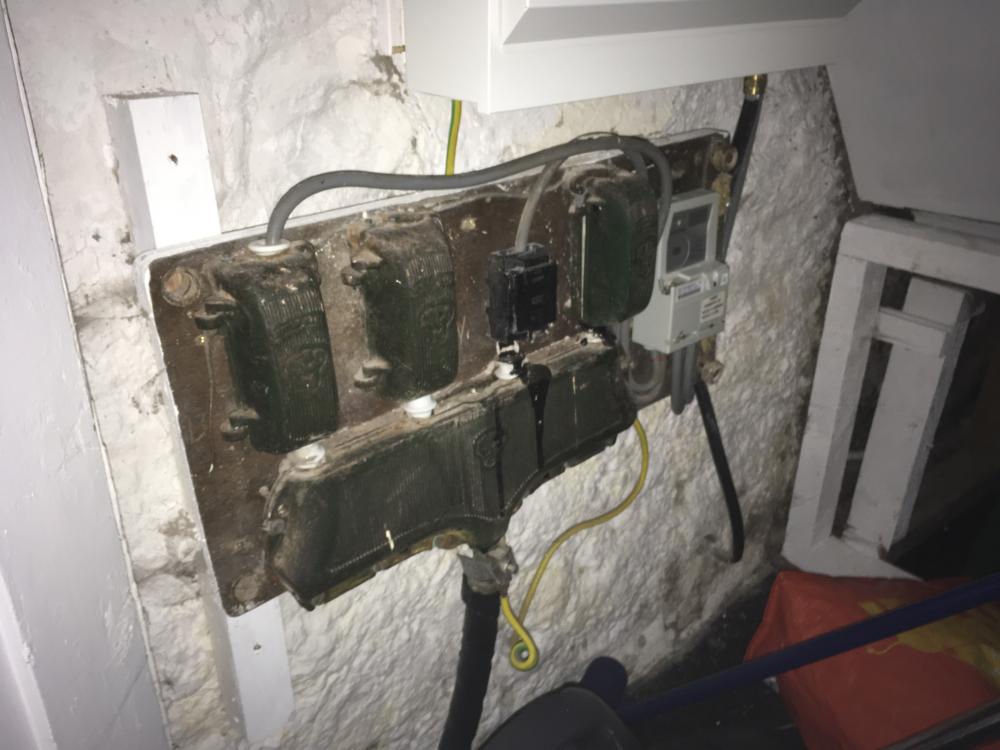
You mean like this beast in the cottage we've got this week..??!
-
No, its not...! Its compulsory under your registration terms, not in law ! As I've said before, a lot of us on here - especially those who have been in IT or consulting - hold or have held PI insurance. Looking at my last renewal in 2012 it was £977 - that was for £5m PI which I was required to hold otherwise I could not step foot into the client that I was working for. Whilst I understand the penalties and the practice guidance in the code is very clear that they "may" investigate, and "may" undertake disciplinary proceedings. May is not a legal term, and this is the issue a lot of us have found with architects and the services provided. What's needed is some way of finding decent architects who offer a service that is priced appropriately and can be independently rated and fed back on. Let's say I use ABC&Co (Architects) and I'm not happy with their work but it doesn't breach any particular part of the guidelines so I have no recourse to the ARB or RIBA - how is anyone else to know..?? Other than word of mouth, it's not something you use on a daily basis but has a significant impact on the cost and quality of one of the biggest purchases you will probably ever make, what is the best way to find a decent architect...?? As you said in your original post, you want to streamline your services to the self build market - this is something the market is crying out for, yet bizarrely there seems to be no way for you to "advertise" that through your own registration bodies..!! If you can crack that, I think you're sitting on a gold mine !!
-
OK... The Architects Code is not enshrined in the Architects Act, its a requirement of the regulating body - there are two things that are a give away on that too. The first is that under standard 8 you are "expected" to have PI. If this was in law, it would be "required". The Architects Act indicates the following : Section 13 of the Architects Act 1997 (“the Act”) requires the Architects Registration Board (“the Board” ) to issue a Code laying down the standards of professional conduct and practice expected of persons registered as architects under the Act. Any failure to comply with the provisions of the Code is not of itself to be taken as constituting unacceptable professional conduct or serious professional incompetence, but it shall be taken into account in any disciplinary proceedings before the Board’s Professional Conduct Committee. So basically if you don't do it, you will get your legs slapped or worse by the PCC. Secondly, this disclaimer at the bottom of the linked page DISCLAIMER: The contained information is for general guidance only and should not be relied upon in place of professional advice. ARB does not accept any duty to advise on the appropriate terms of cover required in specific cases. Whilst I get what you're saying on a lot of this - and those links to the different find an architect page - they are run by the people you pay your membership fees to and are not recommendation sites and have no rating or feedback system within....
-
I think most are Hep2O all the way these days - copper for first metre or so next to a boiler but the rest is plastic all the way.
-
Not wanting to pick holes but that is a standards and guidance statement, not a legal requirement .... I get the point you're making about carrying PI but from my experience the SE is the one that has specified materials etc and calcs not the architect ..? I would expect if you (the architect) expected to carry out project management or warranty work by way of an architects certificate then there is a real need to hold specific and substantial PI. The minimum specified there is £250k, I would hazard a guess that 90% of the self builds on here exceed that by a fair margin. I think this is where the major issue starts with architects and self builders or clients who are more informed of what they want and how they want it done - we (they) are expecting to buy a service that has defined roles and responsibilities with defined costs and deliverables. Where an architect spans across multiple areas (such as project management, warranty, tender management etc) then there needs to be a better mechanism to understand the costs and who is doing what and more importantly what is not included in pricing and specification of services. I've had dealings with 3 architects/ATs in the last 5 years - one major commercial, two residential builds. The commercial one was simple to deal with, told me up front what I was getting for my £37k, and he did what was required. The first residential one was average at best, "quoting" £1450 for a plans submission and sending a bill for £2000 expecting it to be paid; the AT on the other hand took a sketch from a client and turning it into a set of plans for the price agreed, and then offered to pass it to the SE to get it confirmed which would be added on and I got a final bill broken out into the plans, the SE and then additional charges of around £70 I think for SE clarifications. All three of the architects I've listed are on the ARB/AT lists. The biggest issue is that there is no "Trust an Architect" site unlike the one for building trades so picking one is a bit of a lottery - any advice on how to do that would be welcome ...!
-
They also have have a great stair configuration tool on their website too - allows you to design and price your stairs and check it meets regs !
-
Was one of these from memory Tefal Hob
-
Can you explain that one a bit more ....?? I've held PI to protect me for a number of years but in different industries - mostly cover around not bringing major banks to their knees - but I can't see why an architect would need PI if they are not taking on the PD role or are doing the structural design ..? If they are doing structural design elements then they need to have PI as an SE anyway - given its possible for an architect to design something that's impossible to build, is the PI insurance there merely in case you get sued by a client who doesn't like your design ..??
-
Had a portable one in an AirBnB I used a couple of months back - Tefal one I think, it had standard settings for things such as boil water, reheat etc. Dead easy to use and very neat. They just had a one page instruction on how to use.
-
As per @JSHarris you need to understand the basis of the quotation. One thing to look for is the contingency that the contractor has built in - ask the direct question - and then how much contingency you need to add over and above. Check how much is in the costs as "price sum" and also how much they have allowed for general items such as internal doors and ironmongery. For example, I can get a standard white 6 panel door with 2 brass hinges and a barrel lock with brass plate handles for around £30 all in, fitting would be 1 hr of joiner time. So in this instance I would price in around £55 per door. If you chose an oak veneer door at £70 with a decent brass handle it would need 3 hinges and therefore your costs could rise to around £130 per door. Doesn't sound a big rise until you work out there are around 12 doors in a standard 3 bed house ..! Your "quote" has just gone up by £900..! Ask the contractor what he will charge as a handling fee for you buying items too - some add a 10% charge to cover the issue of fitting non standard items. Last thing is to keep a log of all discussions on site - triplicate book is ideal - and you can agree the changes requested and they can be priced and agreed as you go so there are no surprises.
-
Love induction and used it when it first became commercially available in a fully electric commercial kitchen. Very controllable and easy to use. Downside of the glass hobs is scratching them - they are tough but they can and do mark. If you have any Le Cruset or similar then get a sheet of 400 wet and dry paper and stick it to a flat board and just run the pan over it in circles to take off the bits that scratch.