PeterW
-
Posts
18480 -
Joined
-
Days Won
207
Everything posted by PeterW
-
If they have nested then you are out of time as disturbing them is an offence ...
-

Can Anyone Identify this Fungus on my Roof Battens?
PeterW replied to Triassic's topic in Boffin's Corner
I have had a similar growth on dyed and treated battens - Looks like a leaf mould that would grow in any damp conditions and a lot of the battens I’ve seen in merchants are dripping wet and outside. -
Option 1.... But they need to be careful as to how they dig out the pipes and ensure that they don’t cause further damage. You then need a repair coupling and it needs to go into a straight section. Then get it pressure tested, wrapped in insulation tape and then carefully back filled ...
-
Should I fit solar panels
PeterW replied to Russell griffiths's topic in General Self Build & DIY Discussion
@Big Neil right on both counts. -
Should I fit solar panels
PeterW replied to Russell griffiths's topic in General Self Build & DIY Discussion
IFRS and GSE are similar systems. That’s retail list plus about 10% on eBay ... Try Wagner for a price for all the bits - they will design it too... -
Should I fit solar panels
PeterW replied to Russell griffiths's topic in General Self Build & DIY Discussion
@willbish where did you get your pricing as that is pretty steep..? The IFRS system is about £60 a panel from memory based on a 12 panel system. -
It’s just easier than sand blinding and protects the DPM from punctures.
-
Heating system for an ICF house with UFH
PeterW replied to Nelliekins's topic in Other Heating Systems
Not necessarily coil at the top is normally for DHW so needs to be in the 60c zone. UFH can be lower but that tank won’t hold that much heat capacity so needs to be hotter. -
DPM above and below - use 25mm of EPS below the first DPM instead of sand blinding, then pack the PIR in, second DPM and job done ...
-
It’s never coming off again so just a blob of CT1 into the pipe grout and then push and turn the pipe cover. They are pennies so if you do have to take it off in the future then it’s a cut off and replace.
-
Heating system for an ICF house with UFH
PeterW replied to Nelliekins's topic in Other Heating Systems
If that is a standard hot water tank then the coil won’t be big enough to give heat to the UFH loop at 50c. I would up it to 70c and see how the UFH reacts. -
Nope. Just put a thin plastic slip membrane between the insulation and the concrete.
-
LED profiles: why the price spread : recommendations please
PeterW replied to ToughButterCup's topic in Lighting
Errr .... diffused light ..?? Opal diffusers are designed to give a more consistent and less “spotty” light as they merge the light from the LED strips. This can be very apparent if the strip is either very close to a surface above, or is directly visible. Aluminium channel serves to create a structure to hold the strip and in some places creates the correct angle to diffuse the light. -
Most likely your issue then ... it’s tracking the inside of the block to to stone cavity and then under the stone and out. How big is that stone wall ..?? I would take down this side and get the water proofing taken to the blockwork and then build the stone back on top. Sorry ...
-
Just be careful to get that in writing. If it’s one of the well known Self Build brokers they are known for a wide variety of pirouette routines when faced with what has been “agreed” previously ...
-
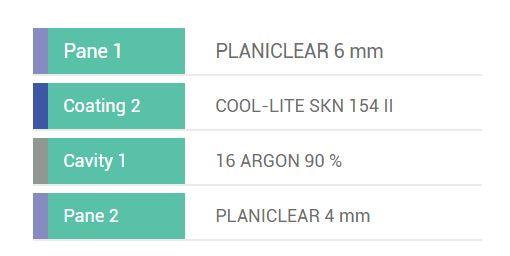
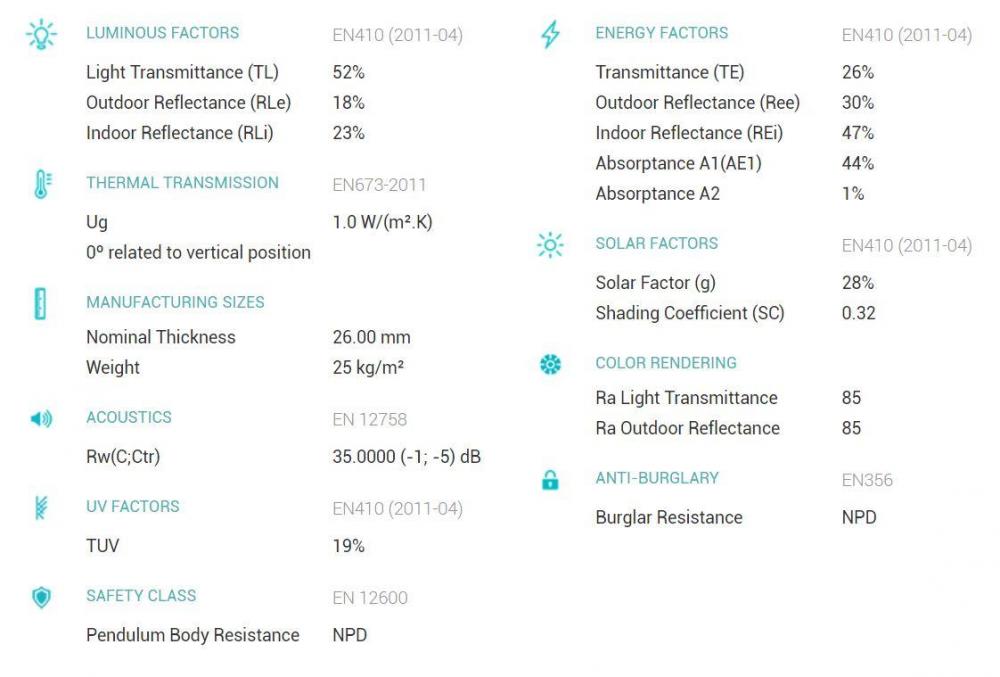
@Jenni there is a spec according to Calumen. Argon helps the thermal performance not the solar. St Gobain have Cool-Lite, Pilkington have SunCool. St Gobain spec is below.
-
So.... you could go for triple glazed and flip the middle pane so you get the reflective coating on the outer side... and then keep the Low-E on the inner as normal. @craig isn’t there a St Gobain standard for this ..??
-
Smoke detectors with WiFi repeaters in?
PeterW replied to Construction Channel's topic in Electrics - Other
If you have a loft space then fit them up there. Cupboards too, even under floors as long as you leave access to them. Wire to a central hub with Cat5 and you’re laughing. Even better if they are PoE (power over Ethernet) as you don’t even need to find a socket for them. -
How far do you want to go ...?? You can make your own using 110mm corrugated ducting, 22mm Hep2O and and 22mm x 19mm Nitrile rubber insulation. You can wrap it in pallet wrap to slim it down a bit and it will slide through. Add a couple of 20mm ducts for cables and you’ll be fine.
-
I’d be inclined to just leave it on in really cold periods as there is no point in being cold in a house ..! Think I worked out that the 9kw I installed recently is using about £1.12 per day on E7 to keep at 19.5c, but that is all overnight heating.
-
More scientifically you need to look at the low for the month. So if you get the Met Office data for your area and look at the min OAT figure, you’ll see that January may be colder than December. I would expect to get to an average, there is a minimum that is 30-40% lower than the mean so you will have at some point a loss of 60KWh on a day. Running an ASHP for the 7 hours of the E7 period (assuming no solar) means you need around 8.3Kw/h input heat, so a 9Kw ASHP would do this with no peak usage. As @ProDave has said though, a 5Kw would work however there is no consideration for hot water provision. @JSHarris spreadsheet is much easier to use btw ..!!
-
That’s one for @TerryE
-
ICF - Plastic ties vs Galv Steel
PeterW replied to Adam2's topic in Insulated Concrete Formwork (ICF)
So it will shrink away from steel in the exact same way..? Also, you could easily damage the galvanising when the pour is underway by the abrasive concrete - that’s of a bigger concern. -
Seriously consider stepping the ground level in too as what then happens is the balcony acts as a brise soleil for the lower windows.
-
ICF - Plastic ties vs Galv Steel
PeterW replied to Adam2's topic in Insulated Concrete Formwork (ICF)
Your engineer is delusional .... Plastic doesn’t shrink at all once moulded, so when engaged in concrete it won’t go anywhere. In the late 1970’s they made wall ties from uPVC, so if his theory was correct then a lot of buildings should have fallen down by now ...