billt
-
Posts
496 -
Joined
-
Last visited
Everything posted by billt
-
They're not old hat, just not practicable or affordable for most properties. In fact the most efficient heat pump on the OpenEnergy monitor heat pump list is a GSHP (https://heatpumpmonitor.org/system/view?id=66), although it's only been monitored for a couple of months, so the SCOP will probably get worse.
-
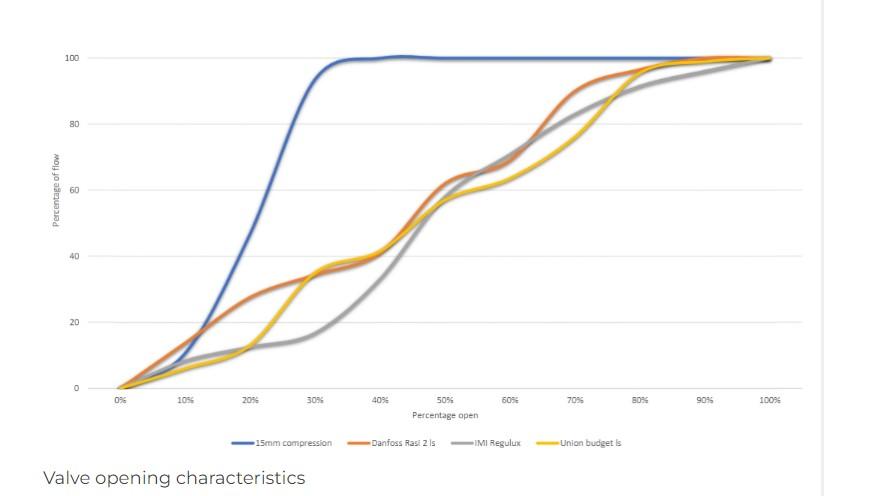
Have a read of https://www.heatgeek.com/what-you-dont-know-about-lockshield-valves/ which includes this graph. I've just gone through this with my new system. I used IMI valves which are supposed to be reasonably good, but I still found that they had to be practically closed before the adjustment started.
-
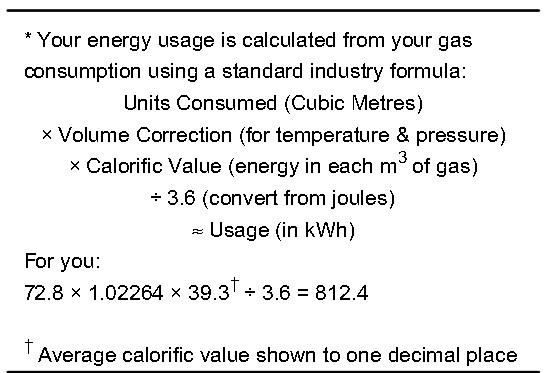
The conversion method is shown on your gas bill; theoretically it varies slightly from time to time. Multiply cubic meters by 11.16 is about right.
-
Solar - Where to start?
billt replied to DazRave's topic in Energy Efficient & Sustainable Design Concepts
The "can't sell your house without one" is certainly a lie. You can sell a house with all sorts of inadequacies. The buyer and seller just negotiate to accommodate the deficiency if it's in any way serious. Of course, building societies and solicitors love to find the slightest excuse to make life difficult! -
Any YIMBYs on here? Keir Starmer is.......
billt replied to ToughButterCup's topic in Planning Permission
Yes, there are lots of panic mongering videos on you tube, that doesn't mean that there is a particularly significant problem with electric cars. There's a much bigger problem with electric bikes, which can be easily modified in an unsafe way, used with unsafe chargers and stored inside a building. Whether lithium batteries self ignite and continue to burn with their stored oxygen depends on the particular chemistry. Many lithium cells will support combustion once a fire has started, but these days a lot of cars (including Tesla, VW and particularly the Chinese) are moving over to lithium iron phosphate which don't self ignite or support fire. Difficulty of putting out a fire in one car isn't relevant to the issue of fires in car parks. Once the fire has spread to other vehicles it will be very difficult to extinguish whatever the power source of the original car. (I don't believe that any of the catastrophic multi-storey car park fires were started with an EV. -
Any YIMBYs on here? Keir Starmer is.......
billt replied to ToughButterCup's topic in Planning Permission
Why EVs? The Luton fire was apparently started in a diesel powered vehicle. The data shows EVs to be less likely to suffer fires than ICE vehicles, (0.001% chance of a fire insurance claim for EVs, 0.011% for diesel vehicles - from https://assets.publishing.service.gov.uk/government/uploads/system/uploads/attachment_data/file/1168956/covered-car-parks-fire-safety-guidance-for-electric-vehicles.pdf p22, although there are a few caveats about that data. The energy released in a car fire is about the same for EVs as ICE vehicles. It's interesting that the regulations for car park fire safety were set in 1968 and haven't been updated, although they're under review. The 1968 guidance was based on research which showed that, at the time, fire wouldn't spread between vehicles. Of course vehicles were much smaller then, made with less flammable materials and used metal fuel tanks. Apparently melting fuel tanks are responsible for a lot of the fire spread in car park fires. (I wouldn't choose to live over a car park either! -
England has lowest quality of housing vs rest of Europe
billt replied to Alan Ambrose's topic in Research Resources
In 2022 there were 965,665 asylum applications in the EU, 243,800 of them in Germany alone. there were 81,130 applications in the UK in 2021 a mere 8% of EU applications. You are Suella Braverman and I claim my £5. -
Low carbon retrofit project in ex-council maisonette
billt replied to abernabei's topic in Heat Insulation
I'm all for insulting my floor. I seriously doubt that there will be much heat loss from a radiator mounted on an external wall. There is no direct conductive path to the outside as there is with UFH so the loss will be much lower. If the house is not well insulated it's much better from a comfort POV to put the radiators in the coolest part of the room, which is usually under the window. Reducing temperature gradients improves efficiency as well; you can reduce air temperature if the room has an even temperature. On internal walls is OK if the property is very well insulated, but this one would not seem to be.. While UFH is desirable in the right circumstances, it doesn't sound like a good idea in this property. -
I used a Drayton Wiser system, which uses zigbee to talk to the TRVs and works without internet access unless you want to control the system remotely. Some clever people have worked out how to get at the data on your local network so you can bypass their app completely if you want to. However I'm going HughFs route and using the ASHP makers weather compensated controller with no independent room control. We'll see how well that works!
-
Any decent inverter will cope easily with the internal heat, which won't be very much anyway. My ancient SMA SB1200s have an operational temperature range of -25C - 60C and will generate a maximum of 110W at maximum output. That's a trivial amount of heat considering the size of the inverter and the heat sinking. A more modern SB5000TL has the same operating temperature range but is more efficient so would generate 138W at maximum output, but it's a bigger inverter so will run cooler.
-
Consumer unit placement and clearances
billt replied to Del-inquent's topic in Consumer Units, RCDs, MCBOs
I'm pretty sure that the only rule about positioning of CUs is that they need to be at an accessible height (switches at 1350-1450mm above the floor) in new builds, it's not retrospective though. Why does electrician B think that it's not permitted? -
Not in the least surprised. Most people who can afford such an up market house won't be in the least interested in running costs.
-
Adding PV, which the OP mentions and 150k should pay for a lot of PV. You can get virtually anything up to an A with PV.
-
Looks like an air separator to me.
-
The easy way is to use Tasmota.
-
Is there a neon indicator? They look the sort of wires that go to a neon, in which case one goes to the N and one goes to the L of the switched output.
-
Heat Pumps: What They Really Mean For You - BBC1 8pm today
billt replied to MAB's topic in Property TV Programmes
The original radiators must be getting on for 30 years old, it doesn't make sense to put old radiators into what is, in effect, a new system. None of the old radiators are large enough or the right shape to be usable in the redesigned system. It's designed for a 35C flow temperature, so small single panel radiators won't do. Apart from that the previous owners weren't very good at decorating so there are various rough paint splashes as well as the odd rust stain. -
Heat Pumps: What They Really Mean For You - BBC1 8pm today
billt replied to MAB's topic in Property TV Programmes
I'm replacing most of my radiators (13), it's going to cost over £6,000. Admittedly one is very expensive as I need a very high output vertical radiator for a difficult room, but a 600mmx2000mm k3 is £570. -
The other difference with propane is that it's denser than air so accumulates in sumps and drains and doesn't disperse as easily as mains gas.
-
Tells me that those instructions are aimed at the US market. They have different rules re earthing to us and seem to demand earthing of PV panels.
-
Understanding bookcases: how shallow and tall can they be?
billt replied to Garald's topic in General Joinery
I too like solid wood and don't like saggy shelves. A very long time ago I made some shelving units, one of which was over 2M high, 400mm deep at the base for LPs reducing to 140mm at the top for paperbacks. It works well with the slight issue that the shelves aren't adjustable so can't accommodate slightly over sized books on the top shelves. When we moved here we had a lot of books that didn't have a resting place. I wasn't going to make anything in the near future so we bought a few Ikea Billy shelving units, fully expecting saggy shelves etc and they were dirt cheap so disposable. In the event they have performed better than expected. There's a bit of sag on some of the adjustable shelves, but nothing terrible. So they're going to stay. Bear in mind that, when filled with books there's not much surface visible, so the need for solid wood is more psychological rather than real! -
Samsung 5kw R32 Monobloc Air Source Heat Pump
billt replied to Jenki's topic in Air Source Heat Pumps (ASHP)
I have the 8kW version. I bought the control interface on the basis that it should be simple to install and just work. No doubt you could get the HP to work with other controllers, however I doubt that it would be that simple. The controller talks to the outdoor unit over a 2 wire data connection and there are no obvious control inputs. Apparently you can control it over the modbus interface, but that isn't cheap. Using their controller has a potential advantage in that it will speed control the circulation pump, if you use a compatible one, which might improve the performance.- 1 reply
-
- 1
-

-
- the windy roost
- caithness
- (and 2 more)
-
Depends on the battery chemistry. If they are LiFePO4 they are pretty safe, it's very hard to ignite them and they don't support combustion in the way that other chemistries do. I would never put batteries of whatever type in the loft. The temperatures are likely to be extreme which isn't good for the batteries, they're not very accessible and there are other fire risks apart from the chemistry. They store a lot of energy and an electrical fault can cause a fire. Mine are outside, I don't want 70kWh of energy storage in the house.
-
Quick question if I can - are optimisers worth it?
billt replied to MrTWales's topic in Photovoltaics (PV)
Yes; the panels were left over from our last house so they didn't cost anything. I've still got 8 doing nothing. -
Quick question if I can - are optimisers worth it?
billt replied to MrTWales's topic in Photovoltaics (PV)
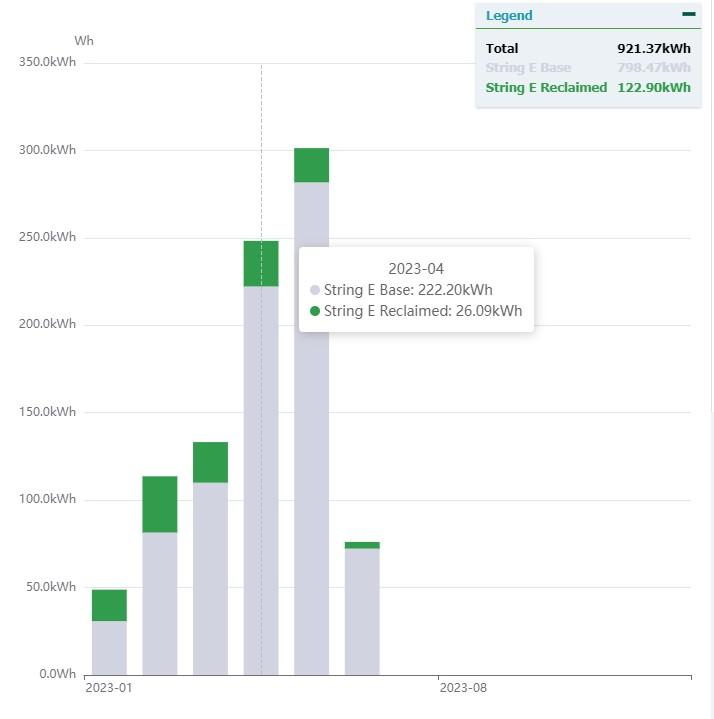
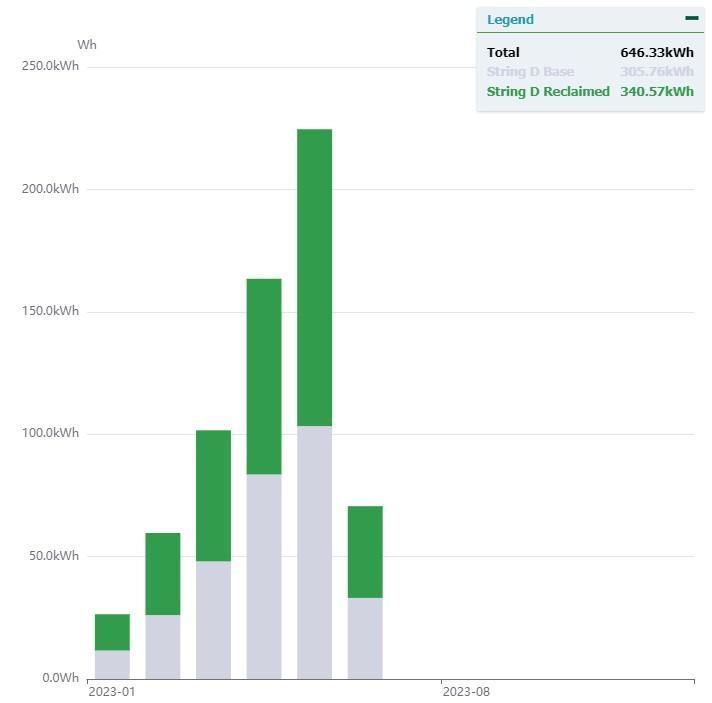
As others have said, it's highly unlikely to be worth while in terms of energy saved. There are optimisers on 32 of our 54 panels. Most don't do much, one set does. One string of 6 panels facing SE has shading on the bottom 3 panels from trees in the morning. I put optimsers on those panels and there is virtually no reclaimed energy Garage has 12 panels on one side with optimisers on 9 panels and shading in the morning and also doesn't recover much energy. The other side of the garage roof has more significant shading and optimisers on every panel. That recovers more energy, but it's not an amazing amount. There are also 8 panels on a shed which face 3 different directions and have significant shading throughout the day. These do recover a noticeable amount of energy. Conclusion, it isn't worth it financially, but for me it is for the monitoring.