
Jump to content

dnb

Members
  • Posts

    581
  • Joined

  • Last visited

  • Days Won

    10

Blog Entries posted by dnb

  1. dnb
    It's about time I put fingers on keyboard for a purpose other than Matlab or Perl. So here is a brief summary of the lack of progress in the woodland. I couldn't pass up a few weeks of sea pay, so progress in May was nil but it was lucrative, helping to offset some of the cost increases. And it gave the scaffolders a bit of time to strike the remaining scaffolding (rather a long wait for this). We're still waiting for the arch windows (another long wait) but all the other windows are fitted.  The house is just about water tight so it's time to look at 1st fix and services. There's still a lot to do, and still plenty of supply problems to navigate.


    Before we did too much work, it was time to tidy up inside. Nic wanted to see what the family room felt like with some representative "furniture" to plot decor and fixtures.

     
    The first big job was to dig the pit for the sewage treatment plant. This all went very well with the digger earning its keep. No, I didn't make my daugher dig any of it tempting though it was. I planned to fit  shuttering ply the next day because there was going to be a week wait for the concrete.

     
    Now for a backward step. It rained more than a little that evening, so I ended up the proud owner of a large garden pond with considerably increased area. Not exactly top of my list of desires.

     
    I got a good start on the trenches for the foul drains. Plenty more to do but at least they haven't turned into canals yet despite the rain.

     
    So I decided to ignore the problems outside for a while since the floor insulation had arrived and was in the way.

     
    Not content with the pool outside, I thought I could make one inside.

     
    But then I thought better of it (got caught by the boss for plotting silliness) and fitted insulation instead.

     
    It turns out that cutting 150mm insulation to get a good clean straight edge is particularly tricky. So I made a table saw. It's a little bit lethal, so much so that a work colleage called it the "death saw". I think it's a little harsh. It's only a sabre saw with a 12" blade bolted upside down under a home made table... Perhaps the sort of thing @Onoff would make? ? It does a very good job.

     
    Finally this month I looked at getting the ducting laid for the water main into the house. Very pleased with getting through 300mm of concrete and keeping the trench straight.

     
    The only snag is that I "found" the water main I intended to use as the house supply. It was exactly where the plan said, but only 200mm deep. Oh well, I like playing with the digger.

  2. dnb
    As usual it feels like progress has been glacial. It probably hasn't but most of the jobs this month aren't exactly visible.
     
    The first job was to construct a cabinet for the switch fuses and electric meter since the old back-to-back meter boxes had degraded to the point of uselessness. This of course displaced the drainage installation activity for a while. I did make some progress here too but we are nothing like finished yet as another tonne of gravel disappears into the ground...
     
    Casting a small reinforced concrete ring beam. The ducts for house and garage SWA in the centre. It turns out that making "model" buildings is a bit of fun.

     
    Construction of the timber frame for the meter cupboard, now known as the Woodlands Folly. All materials were offcuts from the house.

     
    Meter cabinet installed and beginning to fix the cladding. Again, everything is from house offcuts including the slate roof.The meter will be accessile from near the road - covid safe meters might catch on!

     
    Almost finished folly. UPVC soffit and fascia were found in a pile in the woodland  during the summer chainsawing work!

     
    The inside is lined with floorboards since even I am finding it difficult to burn them. Switch fuse units have been fitted to test sizing ready for connection. One for the house to be connected immediately and one for the garage that can wait for the time being. In the fullness of time a consumer unit will be fitted to the back wall so there is accessible power in the folly for lights and car charging.

     
    Nothing like test fitting a consumer unit in a wall that isn't really there... It's a recessed BG unit fed with SWA from the folly. The "wall" can't be installed properly as yet because screeding the floor is one of those little covid/brexit (delete as appropriate) difficulties in the supply chain along with blue facing bricks. But at least I get to have something to look at even if it doesn't do a great deal.  I installed two 2.4m earth rods since there's no PME supply to site and it isn't likely either. The earth test gave 2.7 ohms impedance so well within requirements.
     
    At least the PIR is all fitted, even around all the tricky areas with ducts through the floor. I am considering decomissioning the death saw although it seems a friend would like it to make insulation strips for his roof trusses.

     
    Meanwhile, the same friend wanted somewhere to practice drone flying. This was something I was happy to assist with! These are a couple of stills from a flight showing my extremely untidy site. One day I will have the drains covered up and the treatment plant located in the ground!

    And maybe further in the future I can have a garage too! But the roof still looks good.

     
    Now we get on to some very good news. After nearly 9 months of waiting, the arch windows have arrived!  First the frames. They even fit in the holes!

     
    And then a week later the glass. I now have a little problem of getting some large 50kg glass semi-circles into the attic without a pair of staircases or scaffolding. This is going to be interesting and may involve heavy plant. What could go wrong???

     
    Finally this month it became urgent to get the solar panels doing something more useful than just keeping the rain out. (My connection offer was due to expire!) So I fitted the inverter in the attic on the first piece of house to be boarded. The DC wires still need clips and some bits are decidedly temporary solutions but all of it passed witness testing so it is good to start generating. Another 6kW of solar on the grid just in time for winter.  


  3. dnb
    One of the more onerous (read expensive) planning conditions related to the driveway design and protection of tree roots. We were required to install a "no dig" foundation layer using Core geocells (or similar) after the planners were happy with the site fencing, but before the old bungalow was demolished. Typically the planners said "no" the first time we applied for discharge for no readily apparent reason. I re-applied having done more work for an unrelated condition and they said "yes".
     
    Braced fencing and signage seemed really important to the planners. So I have lots, all bought for bargain price second hand.

     
    We didn't spend much time on site in 2018 or the early part of 2019 because of a perfect storm of family things and working away from home. The winter of 2018 was not kind to the bungalow. there was a lot of rain and several periods of extremely high wind. This redistributed the roofing felt over the lawn and caused the very rotten parts of the structure to collapse. 
     
    Everybody needs a site office! A bargain £250 caravan will do nicely for a while.

     
    Getting a good start on the driveway. Wooden sleeper edging in place and the first couple of geocell panels pinned down.

     
    The first (of many) loads of stone. And my old, but perfectly formed digger. (called Digby)

     
    A little while later we have most of a driveway. The other entrance is waiting for the land drains to be completed and for the small swamp to become less swampy. This is however enough access for the next stage of proceedings.

  4. dnb
    There has been much discussion on the short supply of materials etc on the forum, so I'm not repeating it here. Suffice to say, the progress on the house itself is best described as "hurry up and wait". The upstairs windows are all installed, the downstairs are due to go in when the scaffolding finally goes away (any day now?), and the cladding is completed as far as is possible while waiting for the MVHR and air conditioning equipment. The sewage treatment plant arrives very shortly (thankfully no shortage here) so we have taken the opportunity to find out what is in the garden in order to install the plant and dig an attenuation pond for drainage. We would also like to be able to get to the end of the garden to see what is there!
     
    The view from the road of the house illuminated by floodlights during a late evening of activity while working on the cladding.

     
    Our snowdrops seem to scale themselves to fit their surroundings. We get a good crop every year, possibly because we leave them alone. Maybe I should be wary of breeding Triffids? They aren't supposed to be on the Isle of Wight!

     
    Last year's clearance efforts are still more or less clear. The primroses have taken over somewhat, but that's far better than nettles and brambles.

     
    The stunted pear tree is finally coming good two seasons after removing the Eucalyptus that was overshadowing it. We'll get around to trimming the dead wood at the appropriate time since we missed the opportunity this year. We're hoping for more than two pears this year.

     
    The entrance to the wilderness. We are aiming to clear at least a path to the bottom of the garden established before the growing season fills the place with the usual collection of nettles, brambles, blackthorn and willow. Based on the current growth, we don't have that much time left!

     
    We have a pathway extending at least 50 metres into the garden. This took us three days with a chainsaw, a strimmer multi-tool and a lot of wheelbarrowing.  The sheer amount of dead wood is really not helping the trees - they are spreading past each other and fighting for every scrap of light until the branches get so heavy they break. We are aiming to remove only the dead wood this year so the trees can grow more sensibly and we can see exactly what we have left to work with. There is still a long way to go!

     
    Now to find something to do with the 30 barrowloads of wood.

     
    Maybe some charcoal making? Unfortunately this didn't work as well as we would have liked when the bottom of the barrel perforated in the heat, and we made a lot of ash. Oh well... time for a new plan.

     
    Finally, we are getting near the bottom of the garden. Well, at least within 30 metres. I didn't know we had all these oak trees. They are a bit too close together unfortunately so I doubt they will all stay long term. We did however find two mature oaks that are nicely spaced in another part of the garden. We can't quite get to them yet because of a thicket of blackthorn in the way. That's next week's problem unless house parts start turning up. 

  5. dnb
    My boss says "It's always the windows that go wrong in Grand Designs". I think he might have a point. Not that I'm building anything particularly grand, but certainly about the windows.
     
    This is the outside prior to fitting the large window. The cladding job is going well, so we are hopeful of a good day.

     
    Having spent a few evenings fitting frames in the recent cold snap I think I ought to spend some time with SWMBO on valentines weekend. So I treat her to fitting the second largest frame in the house, and of course some glazing. It's because I'm a really nice person and like to share.
     
    The frame is 2.5 metres tall and 1 metre wide, designed to take a single glazing unit so I was particularly concerned with distorting the long edges as it was installed so we paid particular attention to shimming it correctly. I'm pleased to say that the Alien declared it to be straight and level after the screws were tightened. So concludes fitting the last frame in the first floor. The view of the site will be particularly good from the stairs.


    Now on to the glazing. We carefully plan how we are going to lift 49kg of glass up the scaffolding and swing it into the frame. We have a selection of glazing handles, ropes and platforms set up ready, and then I look at the glass in detail and announce that there's no way I'm fitting it. SWMBO then looks at the glass and storms off in a sulk. Not the reaction I desired, but understandable when you see the bars inside the unit are Y shaped and not straight. 
     
    We then checked all the others, and found another with a dodgy bar, meaning 2 units out of 48 have a problem - not exactly achieving 6 sigma QA!


    I have to suffer on site with SWMBO sulking while we do some other jobs that need doing - all she wants to do is go home and be cross with the local window people, which I can understand, but it won't progress any of the handful of little jobs blocking the big day of seeing the house without scaffolding. I pointed out (in the words of one of the members here) if you can't take a joke don't start a self build. But this went down like a cup of warm sick. That evening we found what looks like water in the oil of the Range Rover engine. Happy valentines day Mrs dnb!
     
    Fast forward to Monday, and the photos arrived at the window supplier. His first words were "Well, they didn't try very hard, did they? I'll tell them to have another go and hurry up about it". I'm happy that it will be sorted out, but it's a bit more delay. We'll get there eventually...
     
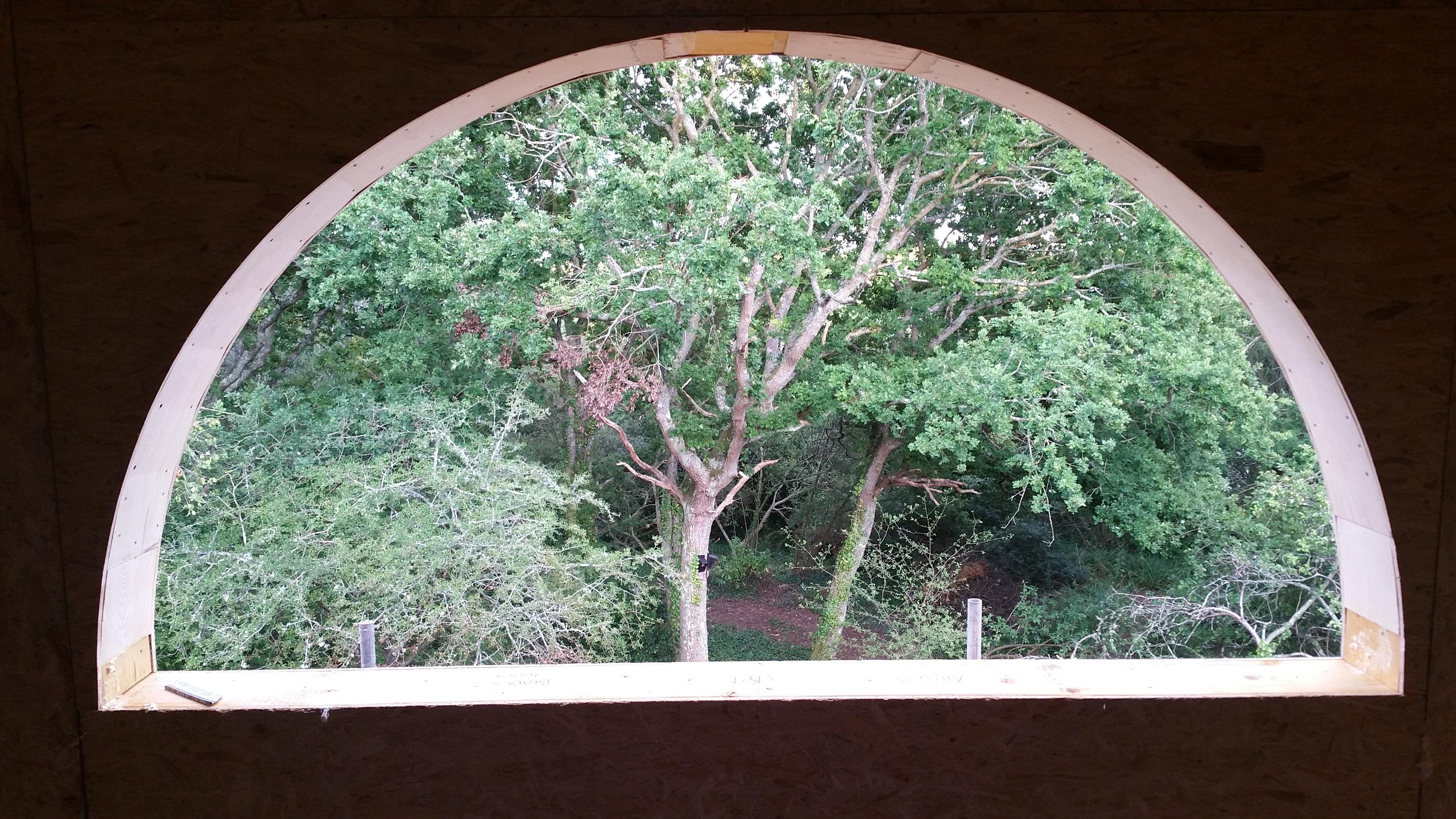
    The last frontier for the cladding before we look at scaffolding removal. There's no point in hanging on to it for fitting the arch windows unless they arrive in the next couple of days. The window suppliers assure me that everything can be done from inside for these. I've always liked this view of the house.


  6. dnb
    I have finished crawling round on the roof so my attention turns to finishing off a few bits of fascia, then battening, fire breaks and cladding. I left most of the battening to Jeff while I put in the first few bits of wiring for the (almost Blackpool level of ?) outside lights and made the last cuts in the fascia ends so they meet the soffits nicely. This ended up as several hours of work, making what felt like tiny progress while the battening seemed to fly along.
     
    This is the fire break and battening surrounding on of the gable end arch windows. Next job here is to install the insect mesh over the top vents and I'm not looking forward to that much because the mesh is marginally more vicious than the autumn insect population and likes to tie itself into gordian knots.

     
    We have had more than our fair share of wind and rain over the last fortnight, so I quickly gave up on the fascia trims because the scaffolding was slippery and I didn't like the idea of gluing plastics when it is likely to be very wet, so I opted to start cladding on the finished battening - it all needs doing! This is the first corner near the front door prior to cutting the excess lengths off.

     
    A bit more cladding done. The priority is to get the gables completed, then we can think about getting the scaffolding down because it's at the point where it is hindering almost as much as it is helping. We now have a scaffold tower to finish off the last few jobs when the time comes. It's beginning to feel like a house now.

     
    I needed to attend work for a lot of this week but was able to escape when I got a phone call out of the blue from my window supplier. I was in there the previous weekend for something else and they had no news, but by Wendesday my windows were in their yard and they wondered if I would mind awfully taking delivery fairly quickly because they could hardly move.  They agreed to my timescale of "Now is a good time" very quickly. Three round trips later and I had 48 pieces of glass and 15 frames.

     
    We opted for aluminium framed windows so that we could get away with very thin frame sections as well as having a reasonable performance. They aren't the best performing window on the market, but they are pretty good and the cost difference would never be recovered in efficiency savings.  Besides, there are easier and cheaper ways to claw back the "lost" performance should it be required.

     
    We elected to store the frames near the apartures they are supposed to fill. The old bed frame and furniture is there to try to get some engagement from my not quite teenage daughter about room layouts and colours. It was partially sucessful.

     
    My first attempt at window fitting. I have put in wedges to hold the windows at the right position on the outside of the building and another to stop the frames tipping back so that I can see how the windows are going to fit before I drill holes and get out the expanding foam, in case I need to change anything with my plans. So far, so good... ... Apart from the scaffolding being in the way again. Only 12 more to go.

  7. dnb
    I give my New Year resolution of updating this blog a bit more frequently until the first really cold snap in February. Simply because I need content, and I can only get this by being on site in the cold when I could of course be sat in a comfortable warm office writing Matlab simulations, sorting through endless sets of test data (I enjoy it. Each to their own...) and drinking coffee.
     
    So the big progress for this entry is actually the paperwork. The structural warranty people have sent me an update and they have finished looking at the design documents I submitted (SE stuff for foundations, SIPS structure, drainage etc) and have accepted it is all adequate for the job. This is quite a relief because I was proceeding at risk by this not being complete before I started significant building work. There was little else I could do thanks to Covid slowing everything down and I always believed the risk to be very small, but even so it is good to not have it there in the background any more. There's still some paperwork to go, but it is for parts of the build that are yet to happen. Maybe I will feel inclined to do it when it's cold at the weekend - I wasn't keen on roofing when the slates were frozen together.
     
    Now for something visual. I've begun to get the fire breaks around the windows installed as agreed with the BCO. I needed to be at work this week, so passed the job to Jeff and he's done a very accurate job. It is beginning to look a bit more house like now - sometimes small things make a big difference. It now shows the windows to be vast. Much bigger than the plans and elevation drawings would suggest. Might have been able to save some money here, but I've lived in a house with windows that are too small for much too long. It will average out as correct over my lifetime if I'm lucky!

     
    I spent Saturday getting the last few solar panels on the roof. I haven't yet bolted the bottom four panels down permanantly because the DC cables are not yet finished. It got cold and dark in a most unreasonable way so I couldn't see to drill the holes for the cables by the time I had done a few other jobs on site that were demanding attention. The house certainly looks the part for a "low energy" building now.

     
    Looks like I have lead work on the list tomorrow. The window frame tops each need a lead cover fixed back to the SIPs.
  8. dnb
    I haven't posted much of late because everything is happening around me in slow motion. Or at least that's how it appears. I am told (by another self builder) that this is fairly normal for this stage. Progress has been limited by shortages of materials (including a supplier going under - wasn't much fun for anyone concerned) and labour shortages - i.e. us both having to do our day jobs! Corona virus is still making self builds difficult. Add to that my recent discovery that at 42 years old, I'm not actually able to do the physical work of two 21 year olds. This was demonstrated by me picking up a very wet pack of roofing battens, putting them on the Range Rover roof rack and then staggering to bed for the rest of the weekend, not attending site after work all week and sitting bolt upright at my desk, causing concern amongst my colleagues still on site that I had started taking the whole work thing seriously.
     
    So on to the progress, and maybe a few pictures so you can tell me what I've done wrong!  
     
    The windows were all ordered in the middle of October. No sign yet, but I am advised of significant delays, so I am hopeful of some of them in very early January. The difficult arch windows will arrive much later because the window maker seemingly forgot how circles work and wanted to make some very expensive hemisphere templates.  We offered to send them a nail, a very carefully measured length of string and a pencil. This didn't go down well but it made the point, and the expensive template was suddenly not required.
     
    Building control have visited the site while we were in tier 1. Nothing much wrong with the house structure or roof. Just a few simple observations to make sure I don't forget to do some things that are on the list but easy to forget.  The battening plan for the cladding was discussed and approved and I now know how cable holes through the structure need to be done - something I've had very mixed advice on from local sources. 
     
    The cladding and battening is (hopefully) all arranged and we should be ready to start this part of the work as soon as the last ridge tile is screwed down.
     
    So on to a few photos of the roof.
     
    First fibreglass valley in place. The BCO was keen we didn't use lead because we have a plan to implement a rainwater capture system at some point in proceedings (especially if we need to demonstrate low water usage - SWMBO gets very disagreeable without her swimming pool sized bath)


    The capping detail of the valley. No idea how to get this to sit nicely - it's just the wrong shape. Hopefully slates will cover it and I won't have to ever look at it.

     
    Not a bad view while I sort out how this dry ridge system is supposed to work. Slates on the left of me, solar trays on the right, and me stuck in the middle with my nail gun and saw... Doesn't quite work as a song.

     
    While I mention solar trays, all 20 are up and bolted down. They do look a bit bigger than I intended, but I've got a single phase 6kW export allowance so I'm damned well going to use it.

     
    First slates on the south roof. It was a bit odd only putting up one slate-and-a-half and one slate on each row. But that's the way it needed to be to get the best out of the solar panels. Otherwise the bedroom roof put too much shadow on the lower right hand panels in the winter.

     
    The bedroom roof finished but for a couple of slates in the corner and seating the gable end ridge tile in place. Still working out how the dry ridge system interacts with the dry verge at the gable ends. There are a few annoying slates where my grading could have been better but overall I don't think it's too bad a job for someone who was afraid of heights until this year and has never done any roofing before.

     
    Sitting astride the bedroom roof. Only one small section of slates to go now. I think I need to wash my gloves though - too much slate dust over everything.

     
    Another 100 or so slates and some solar panels to go, then I can finish the soffits and look at cladding. I need a holiday when the scaffolding comes down.  I am told that digging drainage ditches counts as a holiday. Not convinced myself, but at least it's on the ground.
  9. dnb
    Progress has been made intemittently between the various storms. The guttering is getting a thorough testing some days.
    My friend Jeff has returned to site for a week so we have a chance of getting ahead in the inevitable race against the bad winter weather. Some jobs just go better with more people on site...
     

    Like moving hundreds of slates around!
     

    The 15 metre long north roof very close to completion. Just the top row left to go, and we'll do this from the other side.
    It's going to meet the fundimental requirements of keeping the water out and staying attached to the house in storms and I think it looks pretty good.  But I would arrange a couple of things a bit differently if I had another roof this size to do. Lessons learned for the garage! When all said and done, it's natural slate so there will be imperfections and differing sizes. (I am noticing similar issues on other natural slate roofs the more I look now!) The trick would appear to be to manage them in the grading process so the right slates can get to the wielder of the hammer at the right time - I think a few trapezium shape slates slipped through and we didn't mix the crates thoroughly enough, and errors inevitably accumulate on such a large length of roof.
     

    Small sections are much easier! A lot less distance for errors to catch you out. We just need to remember to attach the top valley section properly before putting more slates on!
     

    This turned up on Friday along with another pallet of parts, a lot earlier than expected. (It's virtually unheard of to get deliveries ahead of schedule here and I'm really pleased because it gave me a weekend to deal with the contents.) I now have 6.6kW of solar panels, some GSE integration trays and several piles of electrical parts stashed in the shed.
     

    I made up a couple of gauge blocks to set up the battens for the GSC trays. This is the first test before trying to get them to the right height on the roof. It's a lot easier when the whole of the battening assembly moves as one piece. I talked the whole GSE battening thing through with my very helpful BCO and he's comfortable with me doubling up graded 50mm slate battens to suit the GSE spec. I also plan to alternate fixings into the pairs of battens so that loading is shared as evenly as possible.
     

    The tray is sitting a little low here. This is when I started to question the measurements in the GSE document - I found that GSE have updated their documentation since I downloaded the first battening plan, and the measurements are all different between the two versions because they take the reference from the other edge of what they term the "reference batten". It took me 2 hours of swearing and cursing before I noticed this.
     

    And when I used the latest document measurements, it all works out! The first three trays balanced in place with a lot of G clamps. It seemed a good idea to go down to the eaves with the panels - it creates enough room for the 5th row on the top and allows it to have a meaningful few rows of slates at the top. Otherwise I loose 1.2kW of panel or have to cut nearly every slate top and bottom. The instructions were clear that it is possible to install the trays this way, but were a bit light on exactly how the bottom flashing works on a vented roof. Got to have something to work out in the week in between puzzling through the hard maths problems at work.
  10. dnb
    A lot has happened on site in the last month. But nothing really seems to look different yet.
     
    We start with the soffit and fascia. A 15.1 metre run, in 4 pieces. Why the house grew that extra 100mm I don't know. I blame the boss and the architect! It can't possibly be anything to do with me!
    What a pain this was to get straight - the process was to cut the splines down to the right size, both at the edge and bottom (the 'alien' was good for this) and then insert some reinforcement timbers to allow the fascia to be nailed at 600mm centres top and bottom. I used a few shims to get it to come out right, but far fewer than I feared.
     
     
    The gable ends were a bit of fun. It took 3 of us to manoeuvre the snake-like soffit flat board and capping fascia in to place. Only six full lengths and four parts to do... Won't take long, honestly.

     
    Next we installed the felt support trays and over fascia vents for the first time. It turns out that my planning isn't infallible and I hadn't allowed for the correct thickness of slates at the bottom of the roof. Oh well, lesson learned.

     
    Testing a sample slate on the roof with the shim in place to demonstrate the loose eaves slate issue was actually fixed.

     
    Still waiting for slates. So let's look at fibreglass valley pieces... I have a few batten offcuts in place to stand on and hold on to in various useful places so I can reach to put up the supporting battens for the valley. I'm now hoping the other side lines up with this one!

     
    The first pallet of slates! A bit of a problem with delivery and quantities, so I had to collect them with my long suffering trailer. The wheels didn't fall off, but it was a close run thing.

     
    The slaves (or do I mean family?) hard at work grading slates. The table was a maths lesson on the Gaussian distribution later that day. Thankfully medium is most common.
    I really need to work on getting the junk pile sorted out too. I have no idea why I have an old toilet and radar antenna on site.

     
    Meanwhile I made a jig for cutting the eaves slates, using the thin slates. Tests have shown the grinder breaks fewer slates than trying to cut them by traditional methods. It looks like I need more practice, but not at current slate prices!

     
    The first few slates on the roof. It's going to take a fair while...

     
    Just over 10% done with this side now. Going to need more slates and more people to finish in anything like sensible time!
    I don't think it's looking too bad so far... Only 1850 more slates to go on the house.


  11. dnb
    This covers the past few weekends of family effort. My friendly builder Jeff is finishing off another job for my electrician (the Island is a small place) so we're been plodding along on our own.
     
    First, we needed to screw down the 50x38 counter battens at 300mm centres. The first pair in place with me balancing on the north side with my new roof ladder.

     
    The battens themselves are to be spaced at 600mm centres, but because we were worried about high winds that weekend we put up every other batten across the whole roof. This should hold the membrane secure for a while. This is the south side where the solar array will eventually go. (Yes, the wrinkles in the membrane do annoy me.)

     
    Battening calls for new toys and ear defenders. I bought an ex demo 1st fix nail gun for a good price. I'm very pleased with it, and nothing that moves when it shouldn't is safe now.
    We are fitting 300x600mm slates when they arrive with a headlap of 80mm. Our BCO has agreed this is sufficient. This makes the batten gauge 260mm.

     
     About half way up now. I'm tired, so it's time for a quick snooze. SIPS is good for this - more comfortable than it looks!

     
    Getting there slowly. Making the joints come out in the right places without a lot of waste is a good game on a long piece of roof.

     
    My daughter is firmly of the opinion that I've built the largest climbing frame on the Island. Just for her amusement.
    We test fitted the first piece of continuous dry verge (aka annoying black snake). I'm pleased we went for this instead of the sectional version even if it is awkward to handle.

     
    A quick QA visit from Griff and Raffe making sure  there's nothing too badly wrong.

     
  12. dnb
    My daughter thought I needed a bit more help with the roof, so came up with this pair of critters. The double act that is Griff and Raffe. What could possibly go wrong?
     
    They can saw the counterbattens...

     
    They can saw the battens...

     
    They can load the nail gun - when they aren't sleeping in the hammock

     
    And they even tried nailing the battening - but to the scaffolding.

     
  13. dnb
    This is only a short update because we've been taking it easy on the house so the boss and I can get some (paid) work done. Will be the school holidays soon - so slave labour will be available!
     
    I have ordered some plain and simple white UPVC soffits and facia from a local company so time to start measuring up and cutting the splines level. More work for the Alien and some string. The plumb line is made from a Lotus Elise crank pulley bolt! Hopefully the soffits and facia will be installed around the middle of next week.

     
    We have some roofing membrane on the roof. About half way there... Just the difficult half to go! My daughter wanted to see the view from the ridge, and who am I to argue? Lets not mention how utterly terrifying this is for a parent! (Even if I was up there moments before!) I have made sure she's been thoroughly chastised over even the smallest transgression when at height and while she's nearly a teenager she will still listen to me over some things.

     
    And what a view it is! This is from one of the gable "hop ups" (Why the scaffolders call them this I don't know. You'd need to be awfully tall to hop on to it.)

     
    Our neighbours visitied. This is the view from their garden. The green membrane does blend in nicely, so I believe the pale green cladding colour is the right choice. There is still some discussion about the grey window frames.

  14. dnb
    I think we are done with going up, so it's time to put a roof on the house. It's fully made from SIPS panels, approximately a foot thick so very little internal structure is needed. We had a little bit of argument on site today unfortunately between the SIPS people and scaffolders, but it was resolved and progress was made. It comes down to differing cultures and a lack of experience of the speed of this sort of build locally.
     
    The front as seen from the driveway approach. It has become quite an imposing building now. The green membrane is somewhat spoiling views out of the windows for the moment. We've decided we will need to acquire a small MEWP like in the foreground for fitting out, as later photos will show!

     
    The rear elevation

     
    Arty shot of the garden from the attic window. Lots of work to be seen out there!

     
    Daddy, I've changed my mind. Please can I have this room?

     
    The "This room" from the question above. The space works better than I imagined.

     
    Trying to show the interesing ceiling shape of the vaulted ceiling in the master bedroom. It gives plenty of scope for hiding discrete lighting HVAC and MVHR without damaging the effect.

     
    We have a bit of scaffolding to complete tomorrow so that roof access is possible for application of the membrane, then it is time to look at my small snagging list. I can hardly believe you can go from foundation to a near water tight roof in seven days! 
  15. dnb
    We have seen huge changes on site in the last couple of days. The SIPS team have worked very hard to keep things on track. I can't fault anything they have done. All the walls are in place now and we're waiting for the scaffolding to have the last lift built so the roof lift can happen, planned for early afternoon on Monday.
     
    Craning the roof panels into the assembly area.

     
    The small part of the L shape roof that goes over the master bedroom sitting waiting to be lifted. 

     
    The front gable end is nearly completed.

     
    The rear elevation as seen from the lower part of the tiered garden.

     
    This is the veiw we'll get when driving in to the driveway. It gives a good view of the lounge and front door.

     
    Steico joists, a few steels and glulam beams for the ceiling of the first floor.  The racking walls are waiting for covering. This leaves me with one or two sections of stud wall to install myself to complete the first floor layout.

     
    The master bedroom. We now have a view on what the vaulted ceiling is going to be like in here.

     
    The other side of the bedroom half round window, looking at the racking wall to support the far end of the purlin.

     
    Here's hoping the scaffolders will show up promptly on Monday morning having been allowed to go to the pub for the first time in an age!
  16. dnb
    We're back at work. The SIPS team are on the Island and have satisfactory accomodation, and the first load of house is unloaded on site. But before the photos of this, there are the last stages of getting out of the ground and interfacing with the SIPS superstructure.
     
    The site foreman early last week doing the final checks of plinth flatness. To the best of our measurement ability all is good - within 3mm in height and 5mm laterally.

     
    First to arrive: A new toy! I used to drive one of these in a previous job a long time ago so it would be rude not to test the equipment on hire by moving some bulk bags out of the way. The controls have changed a lot over the years so I had to resort to the instructions for a minute or two. It's a splendid piece of equipment for the job but the boss tells me I am not allowed one of my own.

     
    A risk was flagged by the SIPS structural engineer surrounding the choice of light weight blocks for the plinth. He was concerned about blocks splitting when the Expressnail fastnenings were used. (I have seen much discussion on the forum about this sort of problem.) We mitigated this by careful choice of blocks by analysing the specification - only 7N ratings were considered, talking to the manufacturers helplines and practical testing of samples. The winning block is shown below. I put in another three nails without incident getting ever closer to the edges with no incidents so concluded that the blocks would be adequate.

     
    The team on site testing levels and beginning to install the leveling plate. All is good - the plinth is suffiicently flat and the blocks are taking the fastenings without incident.
     
    We should see some walls up tomorrow assuming the weather is supportive of lifting. We can now consider the build "out of the ground" and my homework marked and deemed good enough to proceed. I now need to fully apply myself to solve the puzzle of getting windows and slates on to the Island in the hopefully final weeks of the national lockdown.

     
  17. dnb
    There have been a few delays along the way, but now the largest work package is well and truly under way. The last 24 hours has seen the house go from 300mm out of the ground to 2.7 metres.
     
    The front door and stairwell on the left and family room doors on the right.
     
     
    Unloading the second trailer load of parts. Running out of space on site now!

     
    First floor joists going in. With another view of the stairwell window

     
    Inside the lounge

     
    Proof that the SIPS team and I had the same plan. Or were very lucky!

     
    And tomorrow the team are going to install these parts...
    #
     
    It really is impressive how fast the house is going up now.
  18. dnb
    I've not been on site for much of the week because I had plenty of paid work to do, so I left my scaffolders alone. They're getting there. One more morning and we should be good for the first stages of the SIPS installation.
    Finally the boss has acknowledged the house might not be tiny.

     
    This side stays open for the first few days of SIPS installation to allow acccess for the panels.

     
    Hoping for some reasonable weather for the weekend to get the last few bits of tidying up done. Fingers are crossed for everything going well on Monday!

     
  19. dnb
    It's been a while since anyone was on site but family. We've done a few jobs in the last couple of months but obviously made nothing like the progress we originally planned. (Management speak would be "rebaselining the programme"!)
     
    All the beam and block is installed and grouted.
    All the plinth blocks are installed and pointed, placed to an accuracy of 3mm in height and 5mm in the other directions. Hopefully... Waiting now for the SIPS people to mark my homework!
    All the building control paperwork for the foundation stage is completed
    We've finally settled on a landscaping plan for the site and implemented a little of it, mainly to get rid of a few tonnes of spare soil
    Then we spent a few hours tidying up the site. I estimate we've got 1/10th of the woodland "tamed".
     
    The tidy site awaiting scaffolding next week.

     
    The front of the house, looking at the louge. We weren't sure about landscaping levels until quite recently, so elected not to do too much with the exterior bricks and blocks until that question was answered. It makes the telescope vents more difficult but in theory it should be the lesser of the problems. Also note the mistake - some slips got missed in the section under the front door (and at the back too). Oh well, I suppose that's what you get when you foolishly try to race a global pandemic. At least it's not a difficult fix.

     
    Finally, I found a bit of spare time to put a new engine in the wife's Lotus. The old one (with 130k miles) became significantly past its best last year when it lost oil pressure with the inevitable result. Here's the remains of the old one. Pictures of the finished Lotus when it's been washed - sitting in the corner of a building site for ages has done it no good at all.

     
    With any luck, the scaffolding will be up by the end of the month and we will have a SIPS kit on site.
  20. dnb
    I was due to be writing about the happy day when my SIPS kit arrived on the Island, but instead I find that I have closed up the site and reduced outgoings as much as possible because the SIPS team can't be accomodated and fed on the Island given current restrictions, and travelling the length of the country is hardly sensible conduct at this stage.
     

    Just so there is something to see from the site, here is the beam and block floor going in. Close to 1000 blocks and 68 beams placed in 3 days by 3 people and 1digger. The white blocks have good thermal properties and will be used along with a PIR insulation upstand at the sole plate interface to reduce the thermal bridge.
     
    So now I have to find something else to write about. I haven't said much here about the house design and my goals.
    Here are the floor plans as submitted for planning permission. Chris (my architect) and I spent time discussing dimensions and circulation spaces but the overall concept remains to my original plan. The only change from planning to build is that the main bathroom has been flipped so that the large cupboard will double up as a service access.


    These pictures show the elevations (apart from north west - which is really boring). The planners decided I had to have real wooden cladding instead of cedral. Bricks were similarly not allowed.


    You may ask why there isn't a window in the obvious place on the SW elevation. It makes the bedroom layout impossible! The master bedroom has a vaulted ceiling, so the half round window will provide light from the SW and the window on the SE will provide a good view of the garden. I have designed a sundial to fit in the place where one might otherwise have expected a window.
     
    The house will be a SIPS panel build, aiming for a good SAP A rating without "cheating" by putting a vast solar PV power station on the roof. Because of the design of the roof, based on SIPS panels and purlins, the attic space is open. This gives a good amount of space for hobby rooms or allows eventual accomodation of 6 double bedroooms. There is a designed in space for a spiral staircase to access the attic.
     
    There is no mains gas and I am not keen on burning things within the house so it will run on electricity. I plan to fit 6.6kW of solar PV panels (apprx 20) on the southern roof space. This should generate sufficient energy for 60% to 80% of hot water and heating needs. Heating and cooling will be provided by a ducted airconditioning system and hot water by a thermal store or unvented cylinder driven by an immersion heater. I will be allowing provision for water heating by ASHP but initially this seems unnecessary. Similarly, I am provisioning space for a battery storage system but will wait for battery pricing to drop.
     
    I will be installing a rain water capture system and using it for toilets, garden and probably clothes washing. I know the payback is long, but my building inspector is quite keen I make an effort at meeting the water use targets, and this tips the balance and allows the bath that the boss has asked for.
     
    Final SAP rating for the design was 96 (with limited solar PV) and well over 100 with the full 6.6kW.
  21. dnb
    Friday was a near perfect day for concrete pouring. A little cold at first, but by the time the concrete lorries arrived it was warming up nicely.
    The pile caps are all tied together nicely.

     
    The first lorry arrives. Disapointingly they didn't pump the concrete because of equipment availability. One of the snags of living on an island! The concrete was poured into the dumper, then the digger used to bucket it in to the beam.

    Half the long run done. Plenty of "watchers" on hand to use the poker to get the air out. The Driveway will take a bit of cleaning up now!

     
    The finished ring beam. Order says the house is a postage stamp and thinks the kitchen is way too small.

    Another view of our tiny new house.

     
    And now the start of the celebration for completing stage 1. Only three more to go.

     
  22. dnb
    Here goes the next stage. Building the reinforced concrete ring beam. The plan is to build the steel cages off site in a shed due to awful weather, then deliver to the site.
    Lots of things arriving on site! The yellow plastic takes the place of traditional shuttering. Apparently this is faster and therefore cheaper. This will help pay for the huge amount of claymaster I need. It's still a little wet out here so digging might get interesting. We're armed with pumps and a couple of diggers so what could possibly go wrong?

     
    It took a couple of hours on Monday morning to measure out the site accurately, then the team got on with digging and cutting the piles to the right height. The cages started to arrive on Tuesday and installation was swift. 

     
    The kitchen and family room cages nearly complete. The building inspector was happy with the progress on Wednesday so on with the show!

     
    With a bit of luck the concrete arrives on Friday. Then we can open the first of the four bottles of Cava allocated to the significant milestones.


  23. dnb
    The piling crew phoned me early on Monday morning. Can we come to site on Thursday? We're going to be done earlier than planned and we don't want to waste money on the ferry. Fair enough I think - the ferries are silly money if you're moving equipment. It left me a little problem though - the site wasn't graded to the right level and I had no piling mats. They were on my weekend list so they would be ready for Monday when I was originally expecting the piling team.
     
    So a few phone calls later and I had my stone order accelerated and had found a very speedy digger driver for a day and a half. I'm still learning the art of grading with a digger and I haven't got time to mess about. Besides, who is going to walk around with the surveying stick saying "a bit more off here!" if I don't?
     
    Job one was to complete a piece of French drain along the front third of the southern edge of the property. Due to the lack of dumper truck, we improvised a stone carrier.

     
    We skip a few steps now because I didn't have a camera for most of the grading work. The crushed tarmac arrived for most of Wednesday morning and I spread it about until it got dark. I didn't get all of it finished but there was enough flat ground to get a good start on the first few piles. This is after the first 20 tonnes arrived. There should be no surprise that it rained the previous night so I had to deploy a pump to empty the garage footprint lest it turn to a swimming pool.

     
    I spent the morning of Thursday marking out the site with a couple of decent tapes and a laser level. It should be good to 10mm or so all things considered. This is (hopefully) adequate for groundworks. The ring beam will cover the multitude of sins, I am reliably informed by the machine operators!
     
    The first pile hole being drilled. A momentus occasion - we are finally under way with the build. The plan with the piles is to auger down to 3 metres, through the reasonably clean clay to where it starts to contain a lot of chalk particles and an awful lot of water . The anti-heave sleeves will then be fitted (the most expensive toilet roll middles I've ever seen) and an end driven steel pile will be installed to approximately 8 metres.

     
    More drilling and shovelling. The team can work at quite a pace!

     
    Even an attack of super moles doesn't put the team off their game. Most of the sleeves are now installed.

     
    Little did you all know, I am secretly building a multi-story car park. The piles are ready to be hit with the large hammer on a string. Sometimes brute force is the best way.

     
    All piles installed and concreted. Oh and it rained again for a change.

     
  24. dnb
    Day1: The diggers gather like vultures. The old bungalow is doomed now with only one more day of asbestos removal on the inside. The driveway can't be finished until the rain stops.

     
    Day 2: Half the house appears to have gone! It seems there isn't much to it that isn't rotten.

     
    Another view of of the half-a-bungalow.
     
    Skipping a day to day 4: All the house down with the wood awaiting collection. All the asbestos roofing felt has been stripped and removed from site. The pine floor (front of frame) is retained because I can see uses in the future. 

     
    Day 5: Site graded and ready for building the new house. The tall house in the background is a neigbour's self build from 10 years ago.

  25. dnb
    Here are a few pictures of the site from the time we took posession and started to clear the undergrowth and satisfy the planning conditions.
     
    The driveway to be. It makes Range Rovers look small. Only a few bits of tree and detritus to remove!

     
    The boss hard at work during some tree removal work.

     
    The back garden being fenced off after felling a very large diseased eucalyptus.

     
    Another planning condition: Social housing for bats!

×
×
  • Create New...