
jamiehamy
-
Posts
1204 -
Joined
-
Last visited
-
Days Won
4
Everything posted by jamiehamy
-
I lined one wall with 18mm Osb since it was going spare - great for just screwing right Into. I've marked where the studs are behind for anything heavy in future.
-

Is this the chance to buy some new tools?
jamiehamy replied to MikeSharp01's topic in Plastering & Rendering
Senco screw gun has been great - Easy fix Collated screws are duff, the Technofast ones are far better. I've gone through about 30,000 so got a good feel! Also, I recommend a Bessey folding knife. Best knife I've ever used and beats any Stanley. Very quick to change blade. Been using ours for two years and mechanically as good as new. Buy plenty of blades to give effortless cutting! Agree with score, break and run blade up other side. -
It might not work for you, but my planners put me in touch with their Environmental Officer. I contacted him, explained I was a self builder and had never done a Contaminated Land Survey (Desktop) and can he recommend companies who could complete this, which he did (hopefully yours will too and you can get some prices). I might have just got lucky however because the chap then mentioned that the house up the road had something similar and there was no reason I couldn't do it myself - and he could send me a copy of what was completed for that one and I could follow the same format. Like you, there was very little chance of any contamination. A few nights later, I produced my own desktop report and this was duly accepted. But I was just lucky. You'll have to pay your £500 quid to some guy in a Hazmat suit to quickly research historical maps, tell them it was used for grazing, that there is a landfill nearby and this shouldn't present a problem but you must advise during build if you find any evidence of contamination and then send you an invoice for the pleasure
-
Ply. It's what virtually every van in the country is lined with!
-
Stop the boat. A one bedroom flat that needs done up - £437,000. Bonkers totally bonkers. Why people are attracted to London in their droves to live is beyond me. I am there a lot but not a cats chance in hell I'd ever pay that.
-
Getting there! Thanks for sharing the pics, it's a great reference for others in future. Know what you mean about decisions - they come thick and fast (not as fast for us thankfully as we get plenty time to mull). Biggest problem is that you think you've decided something and if you don't order ASAP, see something else too which looks good. We've just tonight ordered the remaining tiles for bathrooms - no going back. We're getting the big rooms skimmed next week. Is the cost of nice lighting perturbing you yet? I don't think I'll ever understand how lighting can be so expensive. Huge gap in the market there I think!
-
The camouflage element works well - completely hidden from view.
-
Structural Steel Fabrication - how wide to search?
jamiehamy replied to Fallingditch's topic in RSJs, Lintels & Steelwork
Revised price seems okay. We paid around £1k for a 5m length for our balustrade - weighed in at 265kgs iirc. -
My planning officer has been great - I told him in advance the small changes I wanted to make and he sad they were all NMV - and then told me not to put in an application until we were finished to avoid multiples i.e put everything in one. I don't think there is a fee for it up here. At the end of the day, as long as you've made a reasonable assessment and not trying to pass off an additional storey as a NMV/NMA, then there shouldn't be an issue.
-
I've got that one - used it for lifting windows and a steel beam. Which has reminded to factor it in to what's going in the garage and where - I need a mounting point for it as an engine hoist...
-
I don't think it would work anyway - you don't want to be clamping down a base channel on top of the GRP - and sealing the full length of a baserail to GRP - destined to fail. I'm assuming (like us) your architect and engineer failed to come up with a decent design for this? J
-
I would say so - yes. What type of ballustrade are you going for - frameless glass or something else? Looking at it now (and probably agreeing that wall mounted would be clumsy here with the gutter), I would stick with my above - take out a section of the grp and secure your timber pad into the BnB - which not only created something to bolt the upstand/base into but provides an upstand to minimise standing water at a complex join. You could leave 50/100mm beween that and the edge where the drip bead is, and create holes for the water to pass through. Does that make sense? That's just my thinking on the matter, others hopefully will have different ideas.
-
hiya, as per @Bitpipes post, is the wall fixing method an option? This would avoid completely the need to interfere with the decking and it's waterproofing and would in all likelihood eliminate entirely any future possible issues with moisture ingress that *could* occur. That would be my preferred option. In our case we have a steel beam spanning across the whole deck onto which the balustrade channel is bolted, however that doesn't seem to be an option here. Might not be an option now if the wall is rendered tho in which case unpicking some of the decking membrane may be your only option. The other thing to look out for will be how the forces on the ballustrade are transmitted into the floor - and not putting pressure on the GRP which could cause it to fail over time. In that respect, rather than putting a timber pad ON TOP of the GRP, it might be better cutting out a section and bolting the timber pad directly, then fixing your stanchions/posts and then doing the GRP membrane over everything and lapped down over the existing GRP covering. That's probably how I would do it - you'll need to factor in how the water runs off. Is the floor flat or have a fall?
-
Cost difference - first thing to bear in mind is that it's not ICF vs shuttering - if this is a basement, then the ICF will also provide your insulation which needs to be factored in. Labour wise, with traditional shuttering you build it up, pour and remove, and depending on size, you may need materials for this i.e timber and ply. ICF tends to work our around £50m2, depending on insulation levels. Polarwall will provide bracing for a reasonable fee - and support with build and pour. Waterproofing - waterproofing ICF is only one part of the big equation you will have for waterproofing the basement - @Bitpipehas provided a really good overview. My mistake with the garage is that I didn't take a holistic view of this i.e i should have consulted a specialist to provide an overall solution. What I'm planning will work, but I would have preferred a more integrated approach and different materials for this. I'm still pondering whether to use waterproof concrete or go with an externally applied product over the ICF (there are a number on the market but do not go with a bitumen based product)- this will lap down and tie in with the slab DPM, however as mentioned above, a traditional DPM under the ground bearing slab was probably not the best option here.
-
ICF would be a doddle if you have strip founds in place - built it up and pour it in. The most important thing is how you water proof it tho - regardless of which option to shutter you use. I've been learning about different products recently and why damp proof membrane is not suitable as the water can track under it as opposed to others that bond with the concrete and properly waterproof it. Worth bearing in mind?
-
that might be a pretty god approach for @recoveringacademic if your volume is not huge?
-
Absolutely spend time getting what you believe through research is the right mix - choose a mix company that will let you speak to the lab (rather than just the sames person) and get a sense of whether they are reputable. But when a jeager full of concrete turns up - unless it's like water or treacle, I don't think there is a huge amount of merit in doing detail slump tests - let's say it's a bit thick - they'll put up to 50litres water in it (answer to first point). If it's too high a slump you'll need to make a call - it's going to go in no problem and will compact round every nook and cranny - and as long as it's not going down more than say 3m will be fine. You're going to give yourself some serious stress trying to turn round a truck full of concrete and any others that are following at 30mins intervals and already en-route from the batching plant. If you want 80 slump and you measure it at 110 - it's not the end of the world. Some companies will be fine with a slump test but it's going to take up time and as I say - if you don't like the results... For ICF, yes you need to be more particular, but Polarwall is pretty robust stuff. And I think Durisol has a far higher slump recommendation anyway. I know @recoveringacademicand @Vijay you're probably grimacing and I don't mean to be flippant - I'm not - I'm a pragmatist at heart but also having done two pours I've realised I fretted too much about the mix when it turned up - it's not the Empire State building and the structural loads are in the grand scheme of it, miniscule. Vijay - Alan always seems to relaxed about concrete but that's because he's done it so often - get the mix specified right and a reputable company to mix and try not to worry too much about whether they mix it right. The problem I had with the garage floor mix was that the contractor hadn't paid enough attention to the mix specification and it got lost in translation - they delivered what they were supposed to as opposed to making an arse of the mix. . As important, if not more, it planning exactly how you will place it - where you will start, how high, where a jeager should take you two, how many you need, where the excess will go, how they will move about the scaffolding, your burst control strategy, tracking the other trucks, where they will stop to off load, how you can stop any excess ending up on the roadside ( @Vijay) - if the trucks cannot get right on site, I would recommend in your case getting cheap ply/osb sheets and placing them where you want the tail of the truck to be, and mark out in spray where they should park - the last thing you want is any overspill or a lazy driver washing down onto the street!), how ) @recoveringacademic) you will get the concrete it - will you use the nozzle or make up something that avoids spillage down the walls?, how will you finish the wallhead - do you need to leave it rough of smooth, how will you place your wallplates if using? Btw - if you turn away the concrete there's a chance you'll not get that batch remade up depending on what time of day. When I under ordered for the walls they told me at first they couldn't get it batched that day as all the trucks were now out, but thankfully they sorted it somehow and got a final 3m3 up to us to finish off. I suppose all I'm saying is get the right mix specified but be pragmatic when it turns up.
-
Sometimes nightmares are real: the insurance story
jamiehamy replied to ToughButterCup's topic in Self Build Insurance
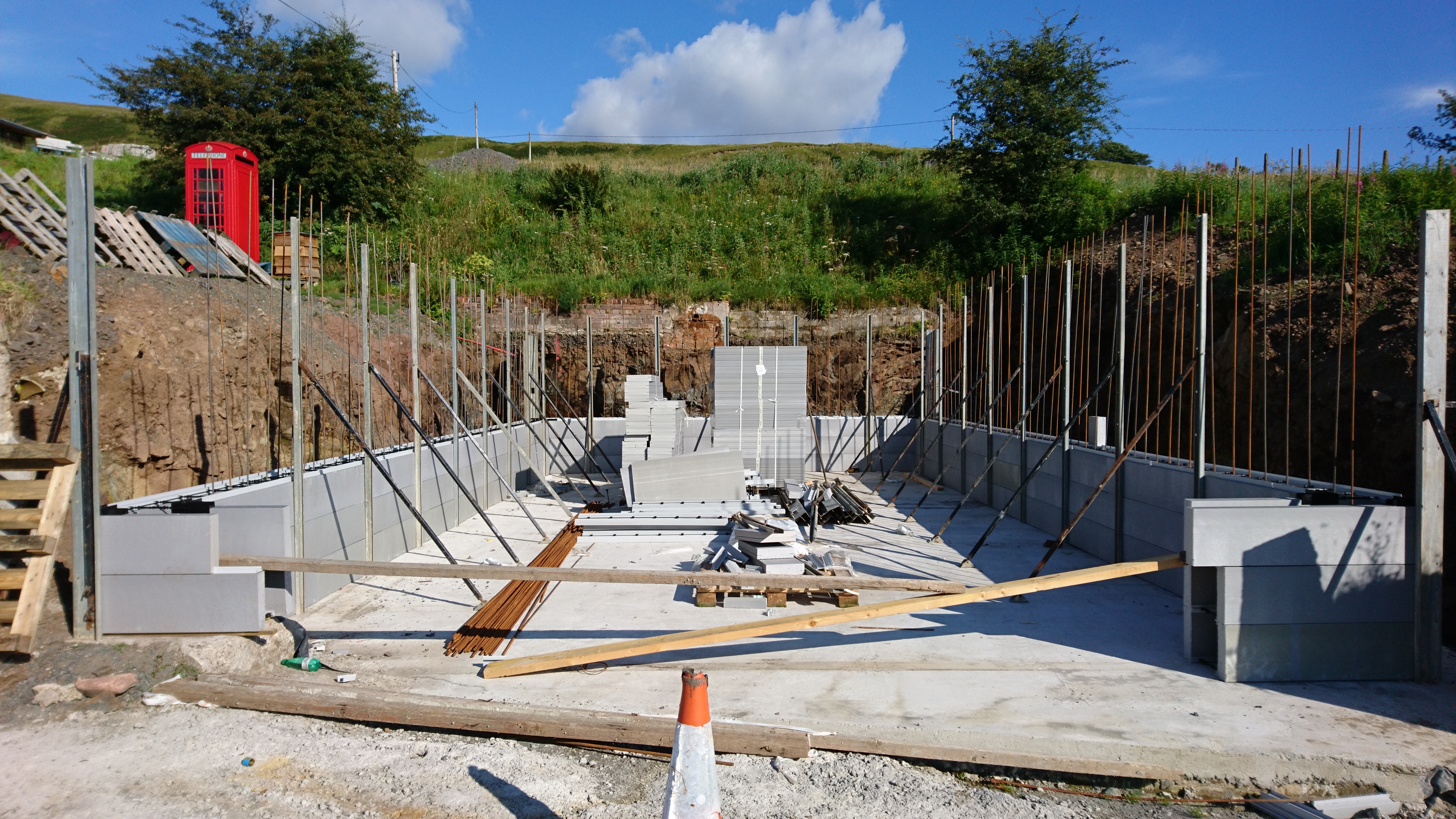
Just catching up on this. My view is its not worth your time to pursue for £1200. Regardless of what anyone did or did not say, it's completely obvious that the gable should have been propped. That includes you boss. Common sense should have trumped here and it didn't - lesson learned. You're unlikely to deal with Durisol again anyway. Whilst I'm not disagreeing with th e principles behind it I think you should drop this all immediately and focus on what matters to get your house built - this isn't helping anything. 'winning' this battle will do what? £1200? I know I'm not sugar coating it but I really think you're energies are not going to be well spent pursuing this - not even as a side show. It was an accident. Someone made a mistake. You know how to prevent it - everyone one here who will ever build icf knows what not to do - you've learned, we've learned and you're about to sack your builder and save multiples of £1200 and have a far higher satisfaction level. If it wasn't the gable it would have been something else - £1200 well spent. Moving on!meanwhile I've just propped the garage walls....!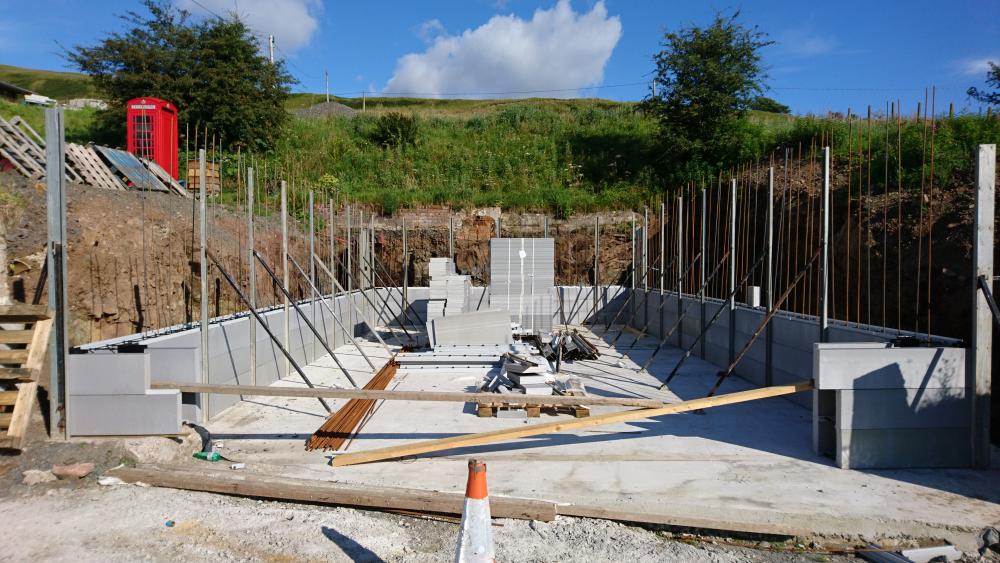
-
Hmm. Our drainage system was similar, way ott - 600mm plastic inspection chambers, highway grade manhole covers etc.. My ground works Contractor suggested things to change to reduce cost, the big one being to substitute plastic 600mm chambers and backdrops to the large round concrete affairs. Saved thousands with that. I asked him to speak to BC to get agreement which they did approve. So there is scope - I never spoke to the SE about it, I went with the contractor and BC.
-
Okay do it. And waste no time. Start tomorrow. And remember with the builder it's your money and your house. You owe him nothing more than you a actually owe. Thanks and all the best but you'll take it from here.
- 59 replies
-
- 1
-

-
- project management
- decision making
- (and 4 more)
-
When do you want to be in by? When do you need to be in by? Are you up for it physically? Do you need a warranty for the build? WHAT DOES YOUR GUT SAY?
-
Sorry. My post probably wasn't the clearest . The example I saw was a timber cabinet that was solid blue or green I think - but the grain was fully visible. The chap said is was lacquered rather than painted. I really liked the look but didn't know how easy it was to do.
-
But can that be done in a colour? I want it either grey or blue.
-
So let's start with the problem statement- You are casting a concrete wall in two pours. You want to join the two sections to ensure no horizontal movement? Solutions- 1 - drill and then resin bond pieces of steel reinforcing bar vertically on the top of the first poured course to be covered with the final pour thus providing the horizontal interlock. Given that the rebar is in a vertical hole it can't move horizontally anyway so not clear on resin benefit here. 2 - drill an oversize hole, say 20mm wide and 300mm deep. Pop a 12mm x 600mm piece of rebar in prior to pour. Pour concrete and gentle vibrate to ensure concrete gets down the hole and once concrete has gone off you have an interlock. Ensure at least 40mm concrete cover of the rebar all round. 3 - do nothing. Between the top of the first pour not being smoothed(which is fine) and the holes in the tops of the icf, you have a very good key already there and once you pour the concrete there is not going to be any horizontal movement anyway. If you chose to recast the lintel, you need to place a new piece of horizontal rebar - you can sit this on a piece of concrete at either end, can really be any old piece, although when laying founds you can buy chairs for this which mean they become a part of the founds/slab that are the same material unlike say a wooden chair which might deteriorate and cause a weakness.
-
I put some on each end to hold in place until I bonded it properly - plan was a full glue and screw- thankfully I didn't do it all at once or there would have been holes everywhere! If it doesn't work out I'll just paint it fully. Got a few pieces left over, so can experiment first :-)