Bitpipe
-
Posts
4118 -
Joined
-
Last visited
-
Days Won
53
Everything posted by Bitpipe
-
Is he going to inspect to ensure that the staples etc are 'to spec'? My guy came out a few times, first to look at the steel work before the basement concrete pour (did a few quick measurements to check steel was per SE plan) and was happy enough about the quality to not want to see more. Next visit was when the frame was erected - at this stage, windows were in, roof tiled and exterior rendered. He had a few comments on bolting together sistered joists but that was about it. Next visit was before cavities were closed and the last visit was a few months ago as a pre-final inspection. I'll get him back for the final look around once all glass balustrades are in - this is the outstanding item.
-
Ordered a bunch so will see what they're like. I see that a bit of dust has made it past the filter onto the paper cell in the centre of the unit - has anyone taken that out for a clean?
-

What does First Fix really mean?
Bitpipe replied to ToughButterCup's topic in General Self Build & DIY Discussion
Just cut the ends off the old HDMI and use it as a fancy drawstring -
What does First Fix really mean?
Bitpipe replied to ToughButterCup's topic in General Self Build & DIY Discussion
For me, FF is everything before the cavity is closed with PB. Broadly agree with the services priority above but rather than taking a strict linear approach, after doing some preliminary planning for each set of services, we got the electrician and plumber (boss) on site at the same time and did a walk around of the site identifying any places where there would be a contest for space (I represented MVHR ) and we agreed alternative routes for a few things to make life easier all round. Because of steels, etc, we had a few 'highways' where lots of services needed to run but it got figured out in the end. MVHR can take up a lot of space if you have a high concentration of ducts coming together and the required bend radius can be a challenge - a poorly placed soil pipe can really bugger your plans. What you want to avoid is giving one trade carte blanche to do what they want and leaving the follow-on trades to figure out how they can live with what has gone before. Of course, if you have a detailed mechanical plan for all services prepared at the drawing stage then you can ensure that your construction has been designed to remove as many conflicts as possible - however these can be expensive to prepare so not everyone does it (and not every trade follows it) - plus you may change your mind about some things as the true internal shape of the house comes together - I know that our ensuite bathroom layout was constantly evolving until first fix commenced. Other things to consider - Data & AV requirements - cat 6 cabling for entertainment, media and old fashioned networking (computers, printers, wifi repeaters etc..). Don't rely on wifi to connect everything - if something is unlikely to move (TV, printer, workstation, STB, xbox etc..) and it supports wired ethernet then put a hard wired connection in - especially if its a high bandwith and delay intolerant service (like video). - Ducts for HDMI cables - we have a TV and media cupboard with trunking in the wall between them to avoid cables on the wall - speaker cables for surround sound (consider new innovations such as Atmos, 7.1 etc..) - Telephony (super old school but handy to have) Socket location for occasional or seasonal use like hoovering / ironing / xmas tree lights) etc. Guarantee is that however many 13a sockets you make provision for, there will always be one missing right where you need it. Double check your door opening orientation and make sure your light switches are in a logical place. Security system (sensors, alarm unit & keypads) Security video (perhaps use cat 6, is PoE a requirement?) Doorbell / Intercom / access systems (esp. if there are gates to be opened) Electric UFH power and control -( a last minute decision for us, had to pop some already tacked boards off over a weekend to make provision) Heated mirrors in bathrooms Drawstrings if the ducts are not dead straight (even if they are), always amazed at how hard it can be to thread a relatively stiff cable down a duct without it getting stuck. The old bit-of-sponge-tied-to-fishing-line-and-sucked-through-with-a-hoover trick is very useful. Noggins/ply for wall hung items such as mirrors, sinks, TVs etc - unless you are using fermacel or are plying/osb the whole wall. Double check the furniture measurements too - I totally cocked this up for bathroom sinks as I didn't check where the fixings actually were and despite putting in a huge noggin, only just caught the top of it. Pocket door frames. Support for stairs & banisters if fixing to wall is required. We had to rip out a slice of the hall wall, reinforce and re-plaster after realising that our chosen stairs were effectively cantilevered on one side and needed substantial support. Another part of FF that I forgot to budget for was joinery to enclose pipes, ducts, cisterns etc that sat proud of existing cavities in the studwork - turns out there was a lot to do there. Top tip - measure everything you ever want to find (or avoid drilling into later) and mark the dimensions clearly with a sharpie, making sure you allow or discount for FFL. Then photograph everything. Then photograph it all again and once more for good measure. Maybe take a video too and pan around. Can't count the number of times I have consulted these images to check what's where. Inevitable the detail I really want to see is just out of shot. Luckily our electrician is practiced at his and I've called him for help finding something totally unrelated I need a cup of tea and a lie down now - this thread has resurfaced a lot of trauma... -
Our local BM was quite happy to let me take a slate tile for this purpose, doubt a brick or two would break the bank...
-
Interesting - I had all the doors open while balancing the system as there was lots of running from room to room. Would be interesting to see if whoever is currently balancing their system can measure this effect to see if it's noticeable or negligible in the readings.
-
We have 826mm doors mostly and went for an 9mm gap, can't say you really notice it at all. We have hard flooring (Karndean, resin, wood) throughout. Our pocket doors still allow a lot of airflow around the sides when closed (we don't have nylon brushes as they are 40mm doors in a 45mm gap) so we didn't trim those. Given you balance the system based on the airflow immediately entering or leaving the terminal, I don't see how open/closed doors will affect readings.
-
Starting to think about MVHR
Bitpipe replied to MikeGrahamT21's topic in Mechanical Ventilation with Heat Recovery (MVHR)
Noticed a bit of a smokey tang in the bedroom last night but no worse than if we'd had a window open, soon disapated. If I see that someone's having a bonfire then I just turn the system off for an hour or so. -
UFH in slab or screed, eps or pir insulation?
Bitpipe replied to Tin Soldier's topic in Underfloor Heating
It's quite straightforward - you get your SE to calculate the point loading of the structure and then choose the EPS that meets or just exceeds it. http://jablite.co.uk/wp-content/uploads/2016/01/Jablite-EPS.pdf -
I saw those, was wondering if they were any good! They just seem to be missing the tabs and the little wire leg at the end, any issues with that? Gary at BPC will do a pack of 5 pairs for £29 each all in, for the branded ones.
-
After a year of operation its time to replace the filters, old ones are starting to get work from the quarterly vacuum cleaning. They have taken some abuse as our intake / extract are 1m above ground level (MVHR is in basement) so dust from surrounding works has got pulled in. However now we have paving, that should no longer be an issue. BHP, who we got the unit from, seem the cheapest, any other recommendations?
-
Yes. it has a gully at the bottom that's linked into the soak away that serves the land drain around the basement. Our 'concrete box' is actually four sides of a cube (bottom and three surrounding verticals - it's not structurally part of the basement as that would compromise the insulated envelope. It butts up to the 200mm insulation on the basement itself and was made from standard (non waterproof) concrete - really it's a means of getting the necessary external steps to ground level and we figured we may as well make a feature of it, the RWH was a bit of an afterthought. Tanks are now full after the recent rain and the overflow is working nicely. Filter sock is catching a lot of fine particles and has proved easy to clean out (turn inside out and rinse under garden tap). Just need to obtain and install a pump now.. and then deck over the top.
-
I really advise this, not only do you get inspiration and advice but you also get confidence to do it, plus its a good way to pick up trades and suppliers and avoid mistakes that others have made.
-
Funny, that's when we parted company with them too (same architect). Discharge of PCs is easy once you have all the facts in hand (depends on your conditions, we had 19 I think) and if you use a decent independent BC then you should have no issues - teh detailed design from MBC was sufficient to satisfy them and the rest was pretty straight forward (water calcs etc..).
-
UFH in slab or screed, eps or pir insulation?
Bitpipe replied to Tin Soldier's topic in Underfloor Heating
Is there a shortage? Does this mean I can finally cash in on the 5 sheets of 200mm EPS70 in my garden? Almost as good as Bitcoin... -
We had a similar shock when our potential PM produced a (paid for) cost plan that came in way above our budget, was prepared by a QS and all the calculations (areas, lengths etc) were laid out in a big excel spreadsheet. PM wanted 10% of the build cost to oversee and bring in on or under budget. At this point we politely parted company and struck out on our own. The cost plan was a great tool though and I used it to set and beat every price contained within by a significant margin, more that 30-40% in some cases. Where we overspent, it was discretionary (kitchen, stairs) and to achieve a high end finish. Also dispensed with the architect after we had planning when they asked for £10k to discharge planning conditions and do BC drawings (even though MBC were giving me detailed drawings and cals as part of the package). Did the PCs myself and dealt directly with the independent BC. No issues. We lived on site (which also saved a small fortune, 18mo in a caravan with wife, two pre-teen kids and cat was an experience) and PMd it ourselves, aside from the groundworks package and MBC package, every trade was employed directly by us (usually on recommendation). Prior to this I'd not built anything more complex than an Ikea wardrobe. I now have a 6 bed 400m2 passive house with full footprint basement, the wife, kids and cat are still here as is most of my hair, although its slighty greyer. You will drink lots of wine. This site and its predecessor was invaluable, as are the people who contribute. I tackled a few simple jobs myself (MVHR - self builder rite of passage) but left everything else to the experts. Sourced things like bathroom fittings (from Megabad), MVHR tiles, flooring, doors, skirting etc. and only had the trades supply the more basic materials where they got better rates or it was too much faff. Unless you live very remote from the site and have zero time to spend on it, I'd seriously consider it. What exactly are the architects doing for you from this point forward? What's that complicated that needs PMd to the nth degree? Our MBC package was very comprehensive, they left a fully insulated airtight shell with all internal stud walls up, service void battened out, floor deck laid etc - make sure other TFs are giving you equivalent or price in the difference to make it a fair comparison. BTW, I can recommend a great electrician in the Oxfordshire area - very experienced with passive builds and the neatest dwangs you'll ever see - PM me if you're interested.
-
We had this challenge on the kids bathrooms which are back to back. Plumbers concern was that if done incorrectly, flushing one loo would cause splash back in the other. In the end we needed to ensure adequate separation of the individual wastes (and therefore the loos) to ensure they both had a decent drop before coming together in a Y - part of the issue was the depth of the wall between them. Meant we needed to build out a small partition in one of the bathrooms.
-
Always reminds me of this song.. Warning - contains spiky 1970's Belfast punks.
-
Repairs to scratches on powder coated aluminium
Bitpipe replied to lizzie's topic in General Self Build & DIY Discussion
I've used my local MagicMan with great results - we had a few nasty chips to a matt resin / stone bath and a large crack to a gloss sink (similar material). Both invisibly repaired. While he was here, I had him touch up the oak veneer on a door (joiner's chisel had slipped) and a small scratch to a wood effect foil covered alu door. They seem to largely charge by the visit so I'd wait until you're done, no more damage is imminent and itemise all the jobs. We also had a few deep scratches to an external alu frame plus a large blob of GRP topcoat that needed repair my window fitter got a guy out who did car resprays - he filled the scratches (2 part filler) sanded it down and resprayed - we had a small can of repair paint from the window firm but if it's a standard RAL they should be able to source. Looked perfect also. -
Perils of self-building. Concrete in my tea
Bitpipe replied to ToughButterCup's topic in General Self Build & DIY Discussion
As anyone with a MBC build knows, when the Warmcell insulation is being pumped then everything gets coated in it - tea, sandwiches, pets etc... -
Hmm, I omitted these when building my rainwater tanks - doesn't seem to leaking but I'll retro fit none the less - do I need to scrap the 32mm MPDE pipe I've already used and start again? I've plenty of it so no hardship...
-
Vacuum cleaner recommendations?
Bitpipe replied to Jeremy Harris's topic in Kitchen & Household Appliances
We have an old Miele Cat & Dog cylinder that's about 15 years old, still working fine but casing is a bit wrecked and it's now the standby machine. We bought a new Miele C3 a year ago upon moving in and it gave up the ghost last week - looks like the bag had not fitted properly and dust had got into the motor - I stripped it down as best I could but could not get it going so it went back to John Lewis under their two year warranty and was replaced with no issue. However that model is discontinued so we've upgraded to their new bagless model (Blizzard CX1), interestingly it's subject to the new EU motor size restriction so is 900w but this model is still a Which best buy.. I can see older more powerful (1200w) models still available, however given we've only got hard floors (Karndean, resin and wood) I think it will be fine, plus the reduced power consumption and heat output will be welcome also. Will see how it performs. -
Was a timber and stone merchant at local garden centre on A4, can provide the details. Landscaper is still surprised at the price as he's never seen it much cheaper than £45 a m2. Not sure if it's impermable - quite expensive at £33 for 12m2 but I guess it's lower effort
-
-
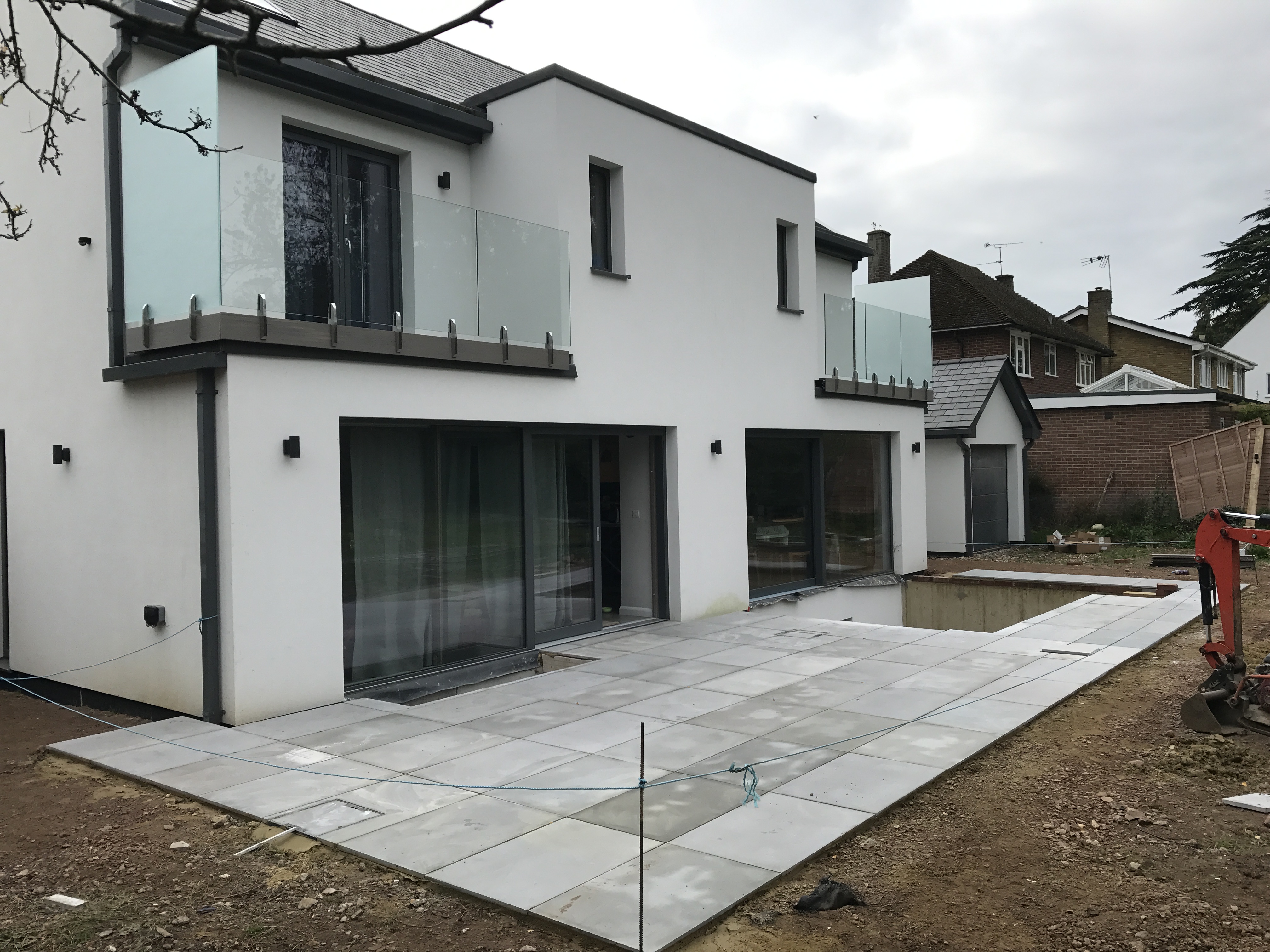
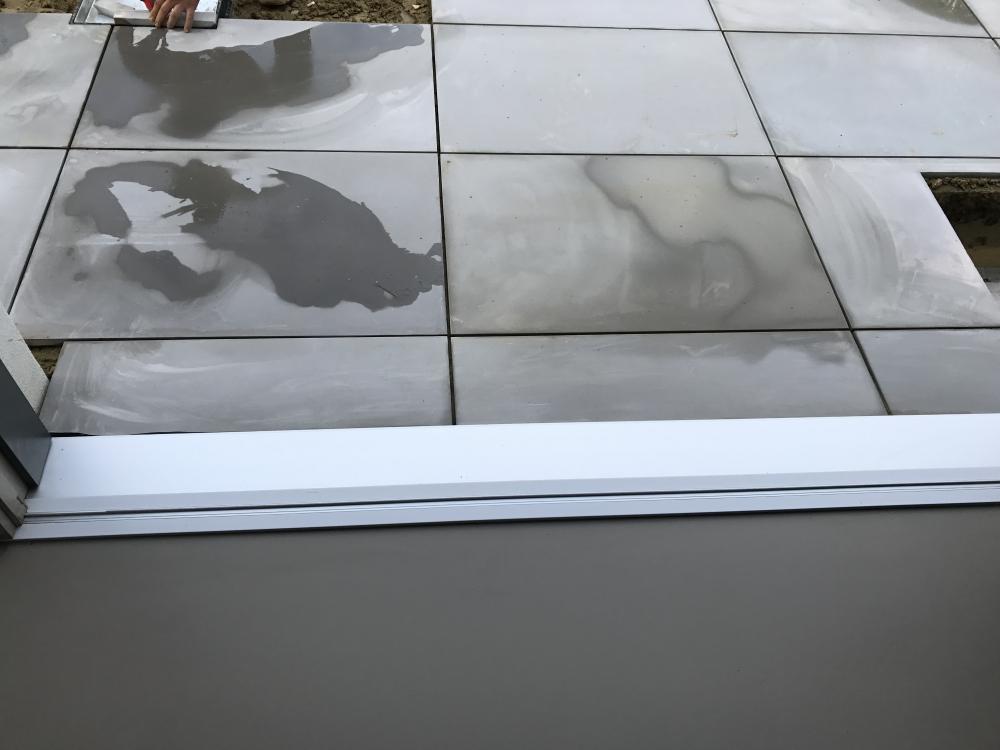
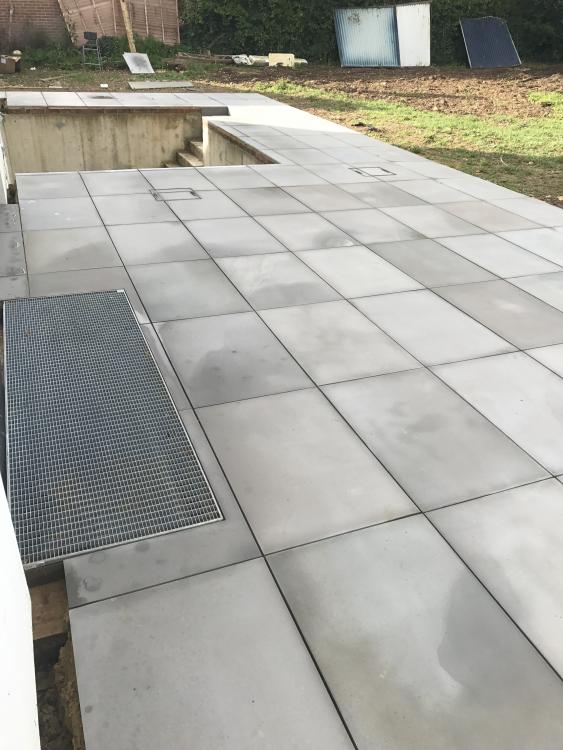
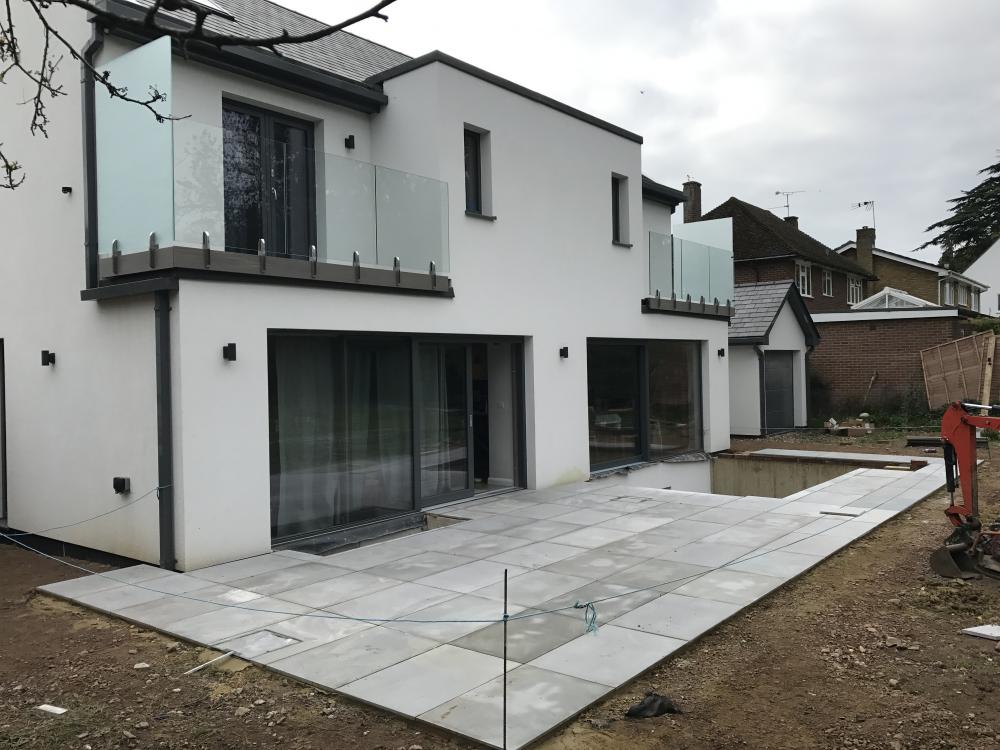
We have just had our paving laid around the perimeter of the house. Now need to grout it! I got a great price on 600mm x 900mm x 20mm smooth platinum grey sandstone slabs (£30/sqm) and the landscaper laid about 100m2 of them on a sand & cement mix (with SBR). Opted against brick bond for a more contemporary look with 5mm gaps and while it was more fiddly for him it looks great. Standard paving grout (such as Easy joint) is intentionally porous but the landscaper is concerned that because the slabs are so smooth underneath, any water ingress and frost may loosen the slabs over time so he's suggesting a more impermeable grout such as BAL widejoint - this is stated as suitable for external use (such as pools) even more so if you use their GT1 admix. I've decided to do this part myself, any tips or advice? Not sure if this is best done by just ramming it into the gaps or to use a applicator gun. --- About the paving... we laid them flush with the house entrances and maintained a 100mm separation from the render horizontally and 200mm vertically. Once the channels are cleaned of muck, i'm applying 200mm of grey Ubilflex to the exposed external EPS and will then fill the bottom 100mm with a decorative stone to act as a french drain. Because we have a basement, there is a 1m perimeter of clean stone cobbles as backfill with a land drain at the foot of the basement so it's very free draining. Patio also falls away from house in all directions. BC and the render firm approved this as acceptable. To tidy the EPS plinth prior to paving, I applied an additional 25mm EPS to 200mm depth all around, lapping the DPM from the frame down under the new EPS. This new EPS also covered any exposed timber where the outer leaf of the frame slightly overhung the original basement EPS. Where we paved up to doors, the DPM went over the top of the stone and has been trimmed back, will run some sealant along those edges to keep water out. Garden will be graded and laid to lawn in a few weeks, then a deep breath and we start to plan the front of the house - just getting quotes for electric gates and resin bonded driveway...eek.