Bitpipe
-
Posts
4118 -
Joined
-
Last visited
-
Days Won
53
Everything posted by Bitpipe
-

Finally finished the front garden.
Bitpipe replied to Gone West's topic in Landscaping, Decking & Patios
Amazing - we're just doing landscaping now (over a year after moving in) and its amazing the difference it makes. Can I ask where you got the Gridforce in the picture with the turf arriving? -
Our render firm wanted cills on first also. Held us up a week as they were the wrong RAL and had to be sent off to be powder coated again.
-
We have a wet UFH system on our ground floor, which is suspended timber construction (as we have a basement). Used alu spreader plates stapled to the top of the joists, however we have Pozi joists so notching was not an option for the loops that cross over the joist (every other loop) - after a bit of head scratching we realised that the floor deck we were laying on top was 22mm thick and the pipe plus clip was only 16mm so we just left out a strip of floor deck where the pipes crossed over the joists. The final floor was resin laid on cross laid ply (9mm & 12mm) so we just needed to be be careful as to where screws went when laying that. Before insulating & boarding the ceiling under the floor, I spent a day stapling the undersides of the spreader plates to the OSB deck above to ensure they met as tightly as possible. All told, there is over 50mm of buildup between the pipes / plates and surface (22mm OSB + 9mm ply + 12mm ply + 4mm rubber crumb mat + 6 mm resin) so the response time is slow but the heating works fine (on the odd occasions it comes on).
-
Just got my renewal from the previous insurer and have now called GSI and confessed all Waiting to see what they come back with - I should have my completion in a month or two when a last piece of internal glass is installed so need to factor that in also.
-
Recommendations for a good structural engineer.
Bitpipe replied to Dee J's topic in General Self Build & DIY Discussion
Yep, we used Mike to do PHPP and a cost estimate when we were deciding between ICF and TF. Given we went TF, I PMd the project myself and brought it in 20+% under his estimate. Small world indeed! -
Recommendations for a good structural engineer.
Bitpipe replied to Dee J's topic in General Self Build & DIY Discussion
They were recommended to us by an ICF firm we considered early on in the build, who took us to see this http://www.leathwaite.co.uk/riba-south-award-2017-winner/ at an early stage of construction. -
Recommendations for a good structural engineer.
Bitpipe replied to Dee J's topic in General Self Build & DIY Discussion
We used a good practice in Bath to design our basement and spec other site works (drainage etc..). They've renamed but Ruth and Tara are still there - mention the basement in Maidenhead http://www.buildcollective.co.uk/ -
MVHR Location Issue
Bitpipe replied to worldwidewebs's topic in Mechanical Ventilation with Heat Recovery (MVHR)
Stack it up on some bricks just now, decouple from wall and see what effect that has before you do anything more radical. -
Just to add, we bought one of those fancy Dyson hot/cold fans for our time in the caravan (hasten to say we wrangled a staff discount from a friend, extortionate otherwise) and it's been used now and again in the attic rooms when we have a guest staying over. With a highly insulated airtight house, any heat you inject tends to hang around - the only challenge is getting it where you need it. Convection works very slowly with low temp UFH which is why our upper floors remain a few degrees cooler. Again, make sure you have a plan for managing overheating - this will be your main issue. By luck we had designed large electric Velux at the top of our stairs / atrium that are pretty effective stack ventilators at night but we still need to do more to control solar gain in the evening.
-
My render was done in Dec / Jan - just needed to be above freezing and not raining for 2-3 consecutive days.
-
We did more or less exactly what Jeremy proposed and we have a large 400m2 house over four floors (basement, 2 above ground, room in roof). Passive MBC timber frame and basement. No heating in basement, UFH on ground floor (which is timber suspended, not concrete), cheap electric mats under tiles in bathrooms and wet towel rads. Nothing in room in roof. Basement temp never really changes - ground floor is comfortable and bedrooms are 2-3 degrees cooler (which we like). My plan B was to tap into the towel rad circuit and put a small rad in each bedroom, but this has not been necessary. Your main problem will be overheating in summer - plan for that instead (external window blinds etc..).
-
Vacuum cleaner recommendations?
Bitpipe replied to Jeremy Harris's topic in Kitchen & Household Appliances
Nick, remember what happened last time you tried to sell one of the kids... -
How to build a rainwater tank system from IBCs?
Bitpipe replied to Bitpipe's topic in Rainwater, Guttering & SuDS
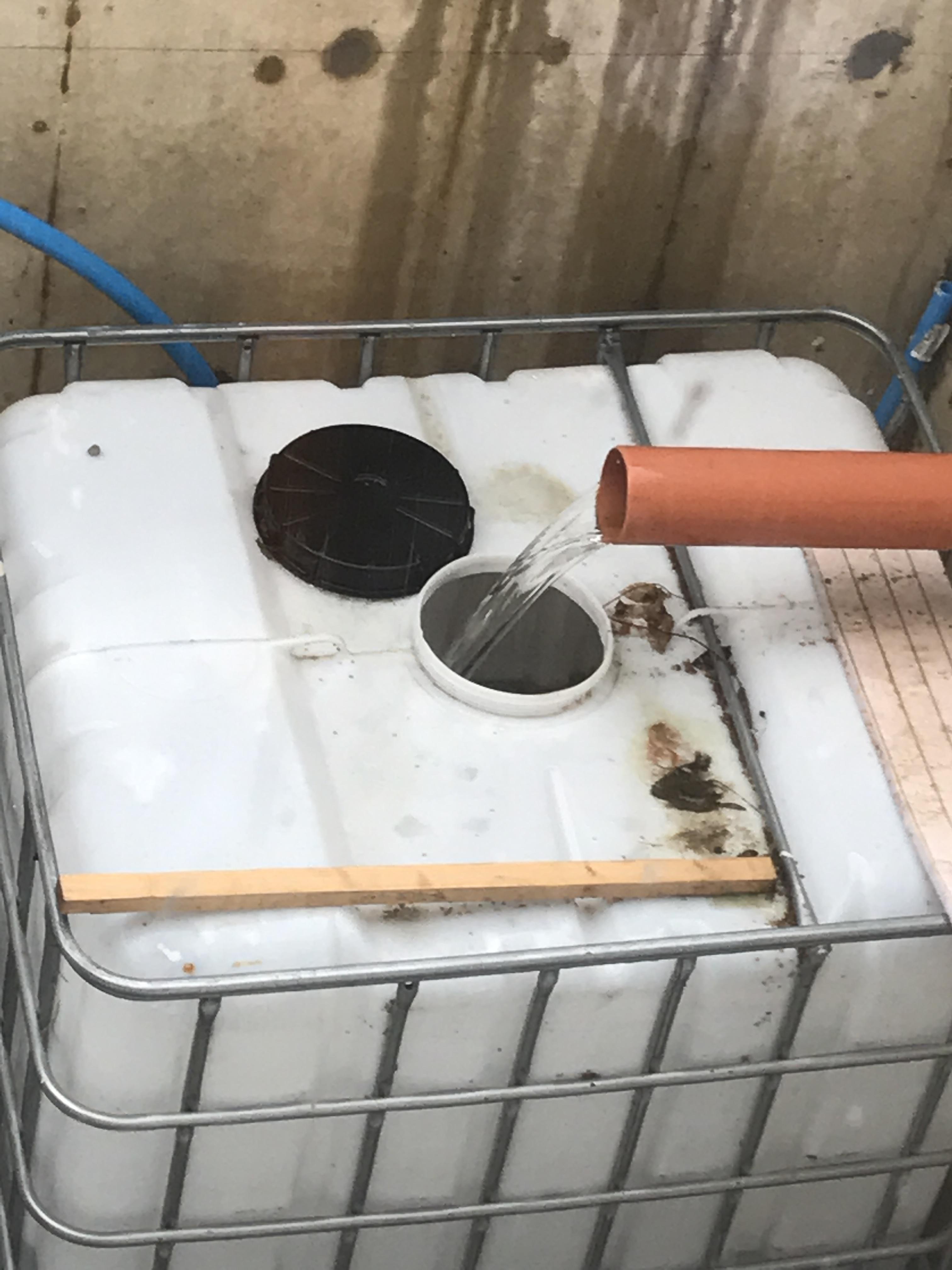
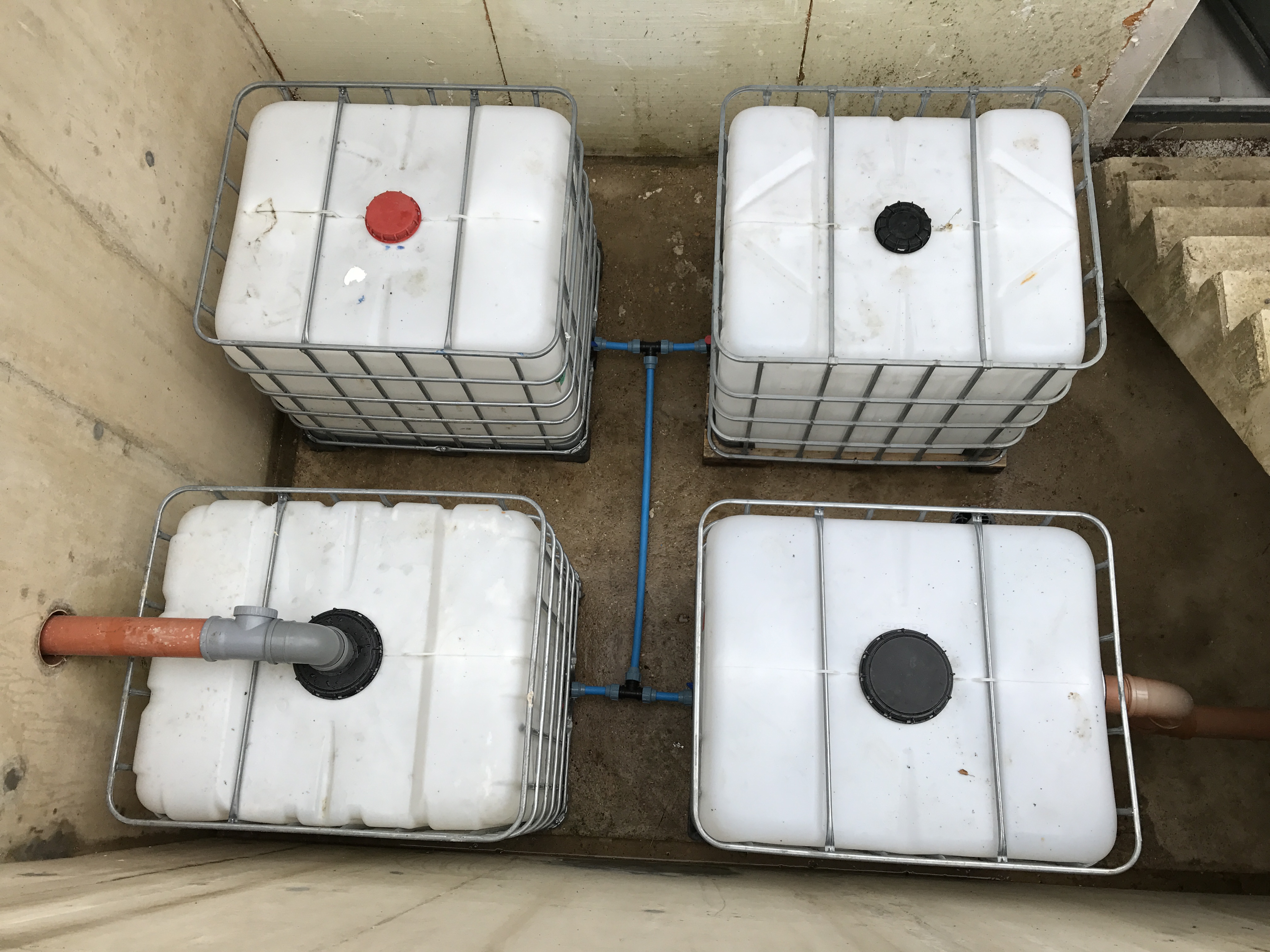
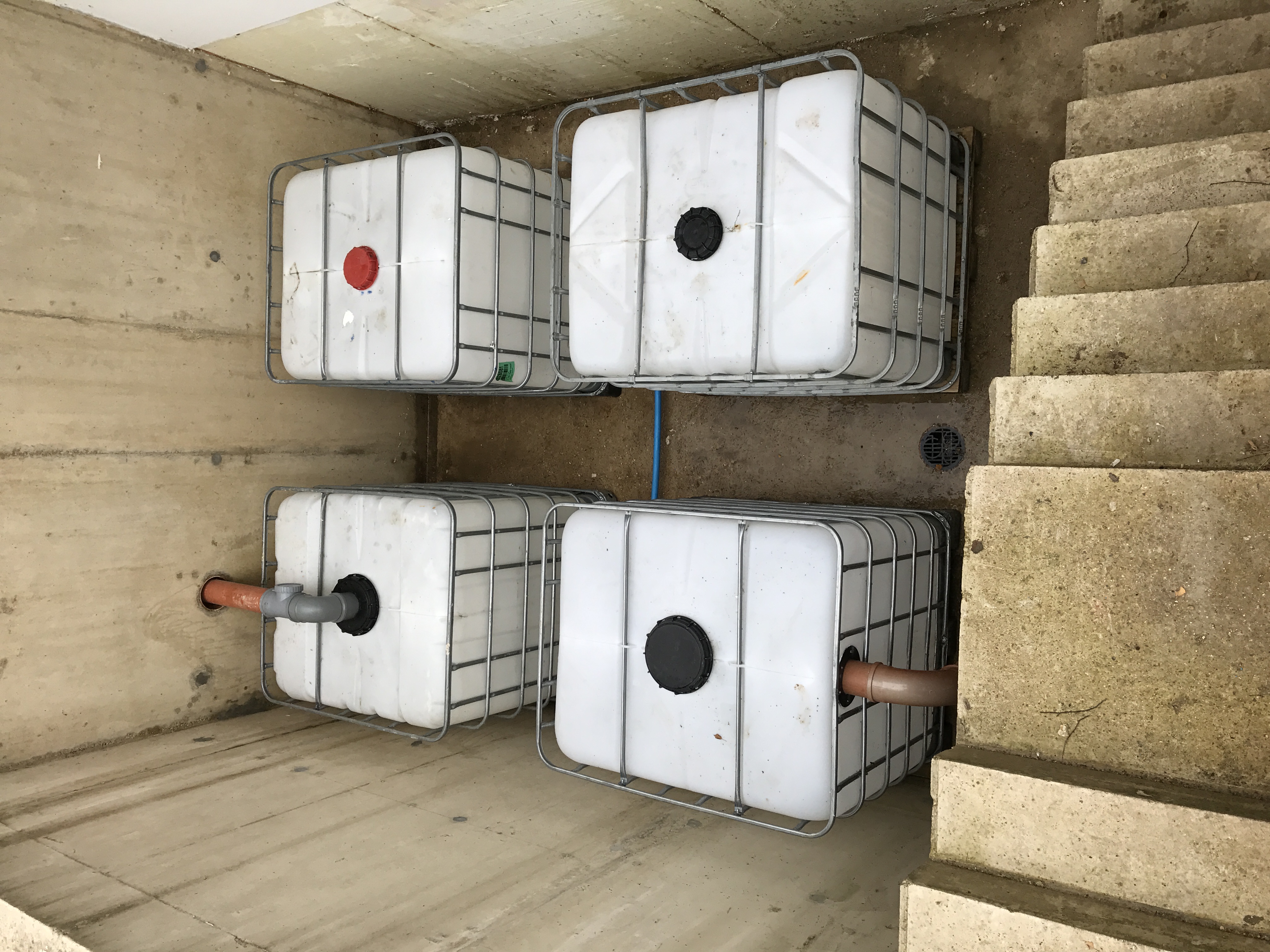
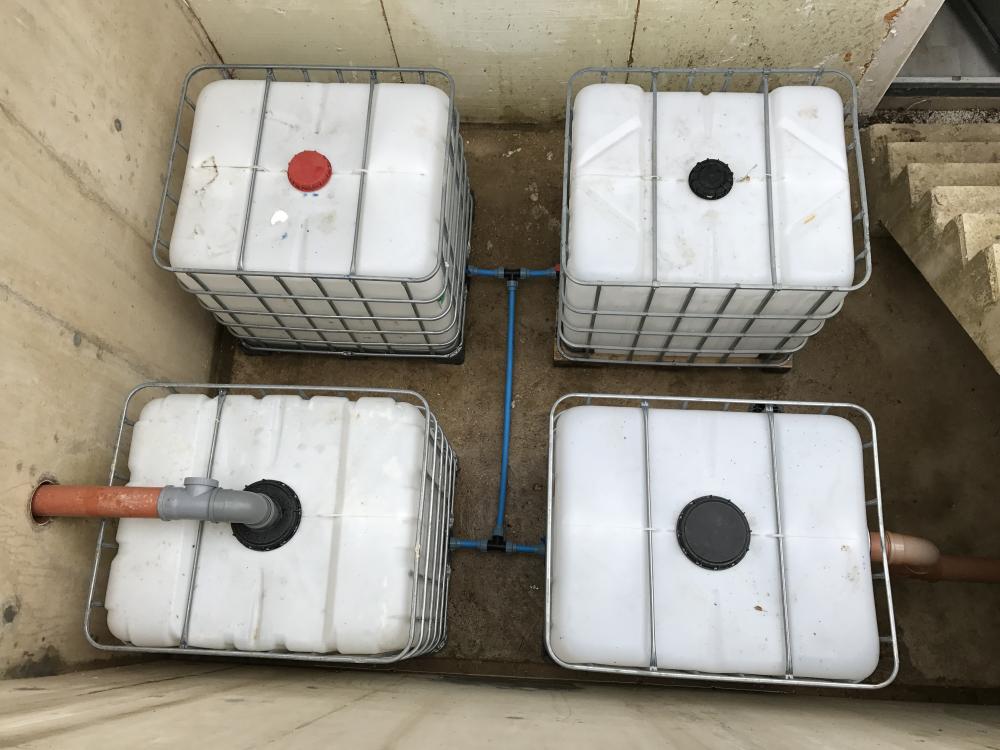
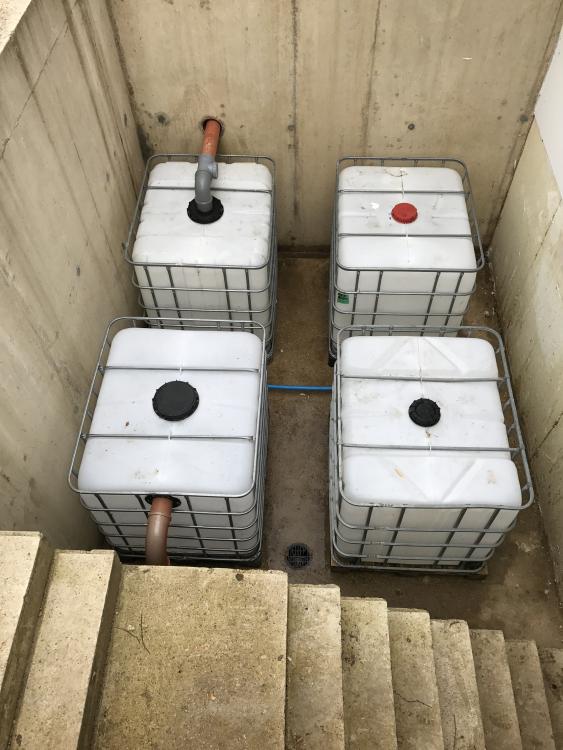
And we're done. I was waiting on the grey inlet filter and fitting from Germany - the combined fitting with the vertical terminal was too tall for me so I went for the inline (with sock inside) and the adjustable height inlet. Frank at fn-technik.de was super helpful, highly recommend his fittings. Only took a day of messing about to do all the fittings - seeing how watertight it is now. Just need some rain.... although the first pic shows how much I can collect during a good downpour - won't take long to fill them! Next job is the waterproof socket for the pump and the pump itself. Will extract from the tank with the red top. One last challenge is getting the extract hose out of the concrete box - may just have a wall mounted tap on the inside. Then I can get the deck built on top. Many thanks to @PeterW for all the advice and links!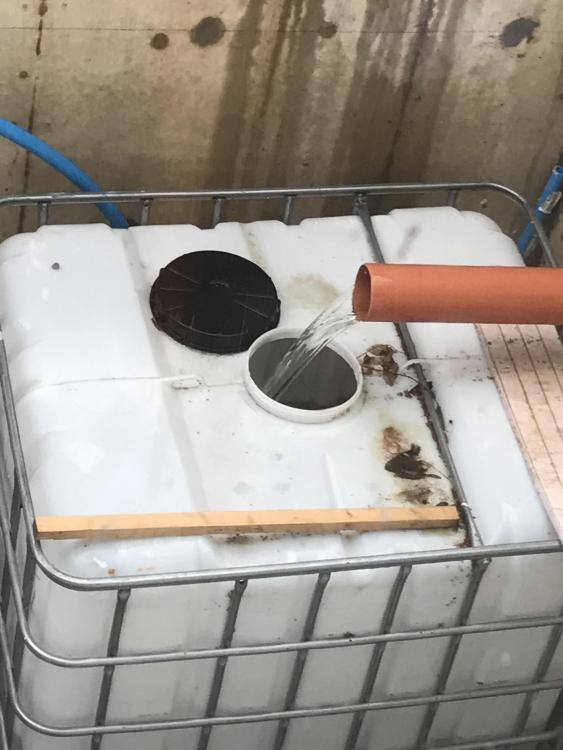
- 50 replies
-
- 4
-

-
- rainwater
- harvesting
- (and 1 more)
-
Vacuum cleaner recommendations?
Bitpipe replied to Jeremy Harris's topic in Kitchen & Household Appliances
We also have a Miele. They're fairly compact and pretty indestructible and maintain good suction even when the bag is almost full. Treated ourselves to a new one when we moved in but the old one (must be pushing 18 years old) is still going strong and is now the basement / building vacuum. However, I couldn't resist posting this... http://newsthump.com/2017/03/29/dyson-begins-work-on-new-10000-watt-vacuum-cleaner-for-proud-brexiters/- 81 replies
-
- 2
-

-
- vacuum cleaner
- hoover
- (and 1 more)
-
Help with Completion Certificate on Existing House
Bitpipe replied to AliG's topic in Building Regulations
Actually maybe he did say 1:10, I was surprised at the general principal and relieved that I didn't need to cut a hole in my newly GRP'd flat roof. We're second to last on the run so are ok -
Help with Completion Certificate on Existing House
Bitpipe replied to AliG's topic in Building Regulations
My BC said I didn't need an external SVP as the neighbouring houses both had one and he said that one was needed per 5 dwellings on the same sewer run. We have Durgos on the internal stacks. -
Did it online, was only presented with questions on the building construction. Cant see anything in the policy documents.
-
Building into a sloping site. Methods and details.
Bitpipe replied to Dee J's topic in General Self Build & DIY Discussion
I may be being simplistic here but I'd expect the insulation layer to follow the horizontal and vertical elements of your substructure. You will need to spec the insulation to deal with the point loading - in our case under the slab was EPS200, sides were EPS70 as no vertical load was presented onto them by virtue of the MBC timber frame design (inner leaf is load bearing and sits on slab perimeter, outer leaf is not and rests on insulation) and the load from the backfill was negligible - we are a flat site. They way I did it was to oversize the under slab insulation to create a 'toe' around the slab, covered in membrane and the team built off of that as it it was solid ground. Underneath was 150mm compacted type 1 and a 50mm layer of sharp sand to get a nice flat surface for laying the blocks. They don't need securing as they're quite heavy and wont slide about. When the walls were cast, the vertical insulation sat on the slab insulation toe and finished flush with the wall top. Used lots of low expansion foam, a decent gun and soaked the concrete and EPS before application as that improves adhesion. Small electric chainsaw used for cutting (messy!) but I tried to minimise cuts, especially on the EPS200 as it's quite solid. I didn't need to, but you could wrap the external insulation with waterproofing membrane if needed. Whether this approach works for you really depends on the design of the superstructure and where the insulated layer is there - you obviously want them to line up so there is a continuous insulated layer around the whole house. The render system projects about 50mm off the outer leaf of timber frame so below that I am currently dressing the exposed EPS 70 with a 200mm strip of 25mm EPS, tucking the DPM between the two layers, and will finish this with a 200mm strip of Ubiflex (lead substitute) which will provide a rodent proof barrier. Others have used aluminium strip (the type used to form guttering) or UPVC fascia boards. -
I ran the site insurance for another few months and then got a standard B&C policy.
-
I read the policy pretty comprehensively and did not see anything.
-
We've been in our house a year and still not got completion from BC, external works and some internal glass has been holding us up. Have taken house insurance and currently re-mortgaging without being asked by either (mortgage surveyor was only interested in defects warranty, so far just been asked if I have it - not had to provide anything). The only way to reduce the water calculation is to choose taps & showers in the tool that have a lower flow rate. You could also consider the impact of flow restrictors in the worst offenders, however as above it's a fairly pointless exercise as even if you did fit them, you could just remove them immediately after inspection - not that these things are ever checked. Rainwater harvesting (even if just for garden use) also reduces your total. Re MVHR, look in the tool hire threads to borrow an anemometer and in the MVHR threads for tips on how to do it. There's a checklist of items in the Part F documents (most of these are very obvious) and you need to meet minimum extract rates for wet rooms on boost and min supply volumes per m2. Also system needs to be in balance. Takes about a half a day of running around to do, not that difficult. Capture your readings in a spreadsheet and create your own acceptance cert in word, sign it off as yourself as the installer
-
Starting to think about MVHR
Bitpipe replied to MikeGrahamT21's topic in Mechanical Ventilation with Heat Recovery (MVHR)
Another one here. We have wet towel rads in the 3 upstairs bathrooms and together with the electric UFH mats under the tiles, they keep the bedrooms at a comfortable temperature. I used cheap mats from eBay (there's a thread somewhere). Our UFH came on today for the first time since Feb and that was because the front door was open while the electrician was doing some work. -
Building into a sloping site. Methods and details.
Bitpipe replied to Dee J's topic in General Self Build & DIY Discussion
I will say that few contractors seem know much about external insulation but they do know how to build watertight structures appropriate to the conditions, insulation is not that hard to DIY. Rather than go to a specialist basement firm, get your architect and / or SE to do the design and then talk to ground-workers and/or concrete structure contractors. I simply laid a slab of EPS 200 blocks (as speccd by SE) covered in membrane which they built off and then applied EPS70 blocks to the sides once the concrete was cast. This created a 'wrapper' around the basement, mimicking the MBC insulated slab design, and the insulated timber frame structure sat on top. An alternative is to use ICF but you will still need to insulate under your slab first.- 21 replies
-
- 1
-
-
- undercroft
- retaining wall
- (and 1 more)
-
I always enjoy finding what i was looking for yesterday while looking for something different today.
-
SE will have done the calcs but always worth challenging. Our basement walls & slab were 300mm but we had a lot going on with rebar - as an open box it needed a lot of strength. Often wondered whether having a concrete top would have saved us money in the long run (thinner walls, less rebar, no steel web to support house vs cost of a concrete top). They did spec EPS 300 for under the slab but I negotiated this down to EPS 200 once we analysed the point loads etc, saved a few £.