


Tosh
-
Posts
176 -
Joined
-
Last visited
Everything posted by Tosh
-
I've just ordered some, the Triton TT Vapour Membrane 20l tubs. Think they do 5l ones as well. I got mine from here http://sumpsandpumpsdirect.co.uk if that helps.
-
so true...before we done our pour I tried taping up all the nibs on the top of the blocks to try and prevent concrete filling them up. I got some fibre reinforced tape which wasn't too bad, it did the job but was far from what I would say really sticking to the EPS.
-
@Russell griffiths that's very interesting, thanks. I didn't use it in the end but was planning to on another aspect of the job. Will look at the Triton instead. ?
-
very true, Blackjack BBA cert covers use on insulation
-
we thought about doing a pour up to the top of the 1st course of ICF then coat it with this stuff or similar, then build next lift up to 1st floor followed by 2nd pour.
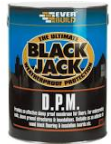
-
yes there's been plenty of those..............unfortunately some have been successful! ? Hindsight a wonderful thing. I pondered whether to use it, in the end had to come up with something to appease the BCO. Uplift of a couple hundred quid to the 1st load of concrete achieved that so seemed a good idea rather than some other solution for DPC. I did contemplate just black jacking the top of the 1st course but that would mean changing the approach i.e. 2 x visits to 1st FL rather than 1 x visit. Pump/labour etc which would have gone close to extra £1k.
-
yes we're fortunate that we're really close to the quarry and I used to work there as well so know the lab staff. They pulled some samples from the batching and tested them for me which was all good. We were using a 200mm core ICF and, along with the right mix e.g. 10mm agg etc, could get good flow around all the nooks and crannies. Its been interesting as we've had to cut back the EPS to do some fixings that the SE insisted had to go direct onto the concrete and we've not seen any honeycombing anywhere.
-
We recently done trenchfill, then a course of ICF to GFL. 1st course filled with waterproof concrete as our DPC. Others are correct in that Sika won't warranty their admix in ICF method. I spoke to them directly and that's what they said. However, they also said that's not to mean it won't work. The only reason they won't warranty it was because they can't check it hence eluding not to the ICF itself per se but the quality control of the installation which they can't check like normal formwork which is removed and can expose any honeycombing. So we paid particular attention to ensure the mix was delivered per the spec along with careful pokering. That still leaves the detail at the top of foundation/bottom of ICF as @Russell griffiths mentions to deal with - in our case we've used an external waterproofing membrane up to ground level on the ICF and lapped over the top of the trenchfill to take any groundwater away from that junction into the land drain. Overkill possibly but for £500 of materials I'll rest a little easier.
-
Not sure about that. What I'm saying is that you can purchase metal off the shelf zinc or aluminum tiles or sheets for example hence a DIYer could purchase these without all the specialist equipment needed for SS. You would still need to cut these components at junctions just like any other finishes but they're still made in the factory at predefined sizes. I know there are some products like Tata/PLX etc that offer this but I was referring to non steel based products.
-
Multitool will be very slow........could you pry the timber slightly and use a recip saw
-
We went for Nudura mainly because we could get a mixture of assembled and unassembled units, the later meant we could wrap them around the steel columns which the planners insisted we kept. At the time there weren't any other systems that offered that flexibility. The product has been great in terms of quality however if I were building a house without these obstacles I would definitely research the market. Amvic was better on price but didn't offer the unassembled units. Initially we looked at Durisol, which meant a slightly different approach to our superstructure build i.e. building walls between the columns rather than encasing them as we've done now, but their pre-sales was so appalling that I just gave up in the end. Nudura was dead easy to use but it didn't eliminate the need to understand all the other construction interfaces e.g. drainage, finishes, flooring, etc etc, something you need to consider with any ICF. This is where someone with design experience of your chosen product will pay dividends. Same goes for choosing an engineer. Nudura support was ok but not great, comes down to the distributor I think as I'd imagine they all provide online literature/videos which incidentally there's plenty of for Nudura. The guy that sold me Nudura said he felt he didn't get the support he needed from the company hence why he moved to a different ICF.
-
How many sqm of ICF can you build in a day?
Tosh replied to ZacP's topic in Insulated Concrete Formwork (ICF)
It took me and the wife around 4 x weekends to put up 7 x courses of Nudura. Could've done it a lot quicker but had awkward cuts to make around steel columns and acute angles on a couple of the corners. Probably took the same amount of time again to brace it all - don't underestimate that bit, its a real ballache. On day of pour had the pump/operator, 1 x man on the boom, 1 x man on the poker and me and the wife running around checking/backfilling bracing. 30cu of concrete (5 x wagons) started at 09:00 everyone walking out the gate by 16:00. No blowouts but a slight 'bulge' on one corner, maybe 20mm out of plumb but nothing you can do about it on the day. Go home and decide what to do about it another day, you will have stressed enough just getting to this stage. -
Or a site attendance register knocked up from excel and ask them to sign in and out each day. Most trades should of come across this in their life so shouldn't be a surprise if asked. I also think a site diary is a great thing to do assuming you or an agent is about to witness work all day. Will prove very useful if things do unfortunately go pear shaped. Keep a record of weather, deliveries, work done, etc. Simple bullet points can be enough.
-
Our site is 5 miles from the nearest exchange and no site of any fibre for the foreseeable so anything is future proof, can't get jack crap at the moment. NB we're in rented atm so using state of the art internet ?
-
All the buildings are no more than 30m away and I'll be running u/g duct. Tbf I haven't costed it all up in detail so we'll see but from a tech point of view I can't see the requirement just yet. As long as I have some way of upgrading easily enough in the future and if I do rip the copper out then hopefully it will still be worth something at the scrappies ?
-
I've thought about this as well but like you can't see the need just yet. Only reason would maybe be where you had lots of power cables sharing conduit with copper with potential interference to the end device maybe. I was thinking of running our copper through conduit as it may make life a little easier in the future to swap to fibre i.e. use the cat6 as a draw cord for the fibre. We've buildings across our site and even then I'm not sure if fibre is the way to go as I'll need media converters or switches with sfp at each end.
-
I very much doubt they have any claim on the land itself but they own the poles/cable. If its not bothering you or hindering anything to do with your build then I'd just speak to the utility company and use the absence of a wayleave to negotiate a sweeter deal for the new supply to your house (assuming you buy it). The wayleave will be to install (appreciate in this case its already there) repair and maintain their eqpt. It will give them a right to access the land so just bear in mind e.g. is the land boggy/wet so could easily be cut up by 4x4's, you could prescribe a route across the fields they have to follow to get to the eqpt so to limit any damage to your crops, grazing and/or stipulate which gates they access etc.
-
I had the same issues with Powys CC. Planner never answered our calls or replied to a SINGLE email for 7 months. Then after I escalated it to the head of planning he sent me an email saying he was leaving the council in 3 days time so would leave it to the next bod to review! They are totally incompetent. They say they are overwhelmed with applications but half the problem is they create the burden upon themselves with ridiculous interpretation of the policies they administer. I couldn't help laughing in amongst all the frustration though. When some of the locals were asking why it was taking so long for me to start on site I told them the planners were being unresponsive and that I'd emailed the local councilor to try and rally some support. They laughed and said ' you'll be lucky, our councilor? he's a 80 year old farmer, he doesn't know what email is and hasn't got a computer'. Explains why I never got a response from him!
-
Visqueen do various thicknesses of combined radon/dpm materials. Go through the building regs and it will guide you to various sources that will help you determine what radon level you're dealing with and measures to take e.g. barrier or barrier and sump. I'm using r400 and utilizing the old inspection pit as a radon sump as we're in a 'severe' area. BC has approved that.
-
Agree with everyone else. Just note that to warranty the product then you need to follow the manufacturers recommendations for the build up and use an installer accredited by them to install it. I would suggest that anything outside of that and you're on your own if anything goes wrong i.e. corrosion. Appreciate steel/aluminium is not so fickle as say zinc but you get the picture i.e. moisture build up on the underside of the SS. I also looked at the permosec stuff but again some manufacturers approve of it, others don't.
-
Yes £10 for panel/feet/clips is very good. Best I've paid is £20 for the same on facebook marketplace. Helps if you have access to a trailer :-). If you don't want them for long might be worth hiring them, last time I enquired (18mths ago) they were £2/wk.
-
We had a quote for PLX which overall worked out about £65/sqm IIRC. This was about 2/3 the price of zinc with aluminium slightly cheaper than the zinc again. As others have said does your quote include substrate? Not sure what the requirements are for warranty on PLX. PLX is coated steel therefore not immune to rust if you undertake any drilling etc and the exposed steel is not properly treated. The thing with metal quotes from my own experience is that typically the contractor looks at the overall square meterage and works out a price for that. Then they look at the linear items such as verge, soffit, valley, gulley etc etc. and add a price for that on top of the overall square meterage rate and add them all together. There's more work, skill, waste etc on the linear items hence I guess why they price them separately. And whilst all will quote I did have one contractor who would work on a remeasure from their quote at the end of the job so you pay for what they actually built but at the rates submitted at quote. Make no bones about it though - metal roofing can be an expensive job unless you're using off the shelf formats in nothing other than steel. I notice that SIG zinc and copper are now offering fabrication in the UK. I guess that will bring benefits for contractors but whether those benefits translate to cost savings for the end customer will remain to be seen. Hopefully so.
-
170m2 for the roof and 120m2 for the walls, all SS.
-
100% agree! I watched this with first hand experience of their pain. Our steel frame barn was built in the 1980's and the planners wouldn't less us demolish it. Not in conservation area or anything - they just said it had to remain to fulfill its status as a conversion and taking it down would be new build in the open countryside which was against policy. You won't even see the steels after the build as they'll be buried in the walls. I gave up fighting after 12 months as we just wanted to move on with our lives, but you're right, how many people has that been the tipping point for in terms of their mental health etc. I hope the planners watched that program and squirmed uncomfortably in their chairs! And then the SE probably protecting his PI with underpinning those columns. Makes my blood boil.
-
We're based in mid Wales and had a few quotes. They mostly ranged in the order of £90-100m2. I got the feeling a lot of them weren't interested in us what with being a domestic client, they seemed more interested in commercial stuff. The one we've ended up agreeing to do the job is from Scotland believe it or not who came in around £75-80m2. I asked them how they can come all the way to Wales and still make the job pay to which he replied that they do jobs on some of the Scottish islands that are more difficult to reach than Wales! He did say that the bulk of the job is based on the Zinc spot prices though which does makes their quotes quite reactive to market movements in the commodity.


