Iceverge
-
Posts
4487 -
Joined
-
Last visited
-
Days Won
32
Everything posted by Iceverge
-
Our neighbour recently externally insulated his old stone farmhouse. The workmen often had to make a few attempts to find a stone to drill the fixings into however the end result was quite satisfactory. With this approach all the existing wall would be inside the dew point so moisture is much less of an issue. I know sand and cement is considered vapour closed but in older buildings the use of cement could be so frugal that the wall might be considered vapour open. It's a case by case thing unfortunately. What exactly is the current moisture issue? Is it wind blown rain from the outside? Or a high water table forcing moisture up through the walls? Or cold walls allowing the humid internal air to condense on them?
-
 You're inviting a world of misery on yourself by making the wall more noticeable. As it's beside the drive any clean finish will get filthy immediately and then demand constant upkeep. Before you get tempted try to paint a bit of board white and stand it beside the drive for a few wet days. It'll soon put you off. As said above straighten out the coping stones with a string and a bucket of morter. Give the drive a good brush. Most of our impression of tidiness comes from a neat "floor"! Consider a line of flowers/shrubs on top if you want a bit of colour.
 -
Is there a risk of it overheating and over pressurising the primary water in the store in the meantime? These require a pump and a power source as I understand albeit with better utilisation of the volume of the hot water in the store. Also as the house is only 2 occupants for the majority of time the volume issue would be less important vs time of hot water to taps. A coil in tank would strike me as a better solution in case of a powercut. Rural Ireland here and can sometimes be without electricity for 1-7 days in a storm. Not a practical option I'm afraid as the walls are structural and no other easy location exists to house a larger store..... I think....... I'll have another look later. It's used for cloths drying, cooking and company so I think any suggestion of removing it will be vetoed sharpish. Good point I suppose it's only a couple of ports. Would this be ok for Primary water to and from the Oil Boiler? Is there any method of reducing mixing in the store when using a pump?

-
Air Source Heat Pump in Stone House
Iceverge replied to Bemak's topic in Ground Source Heat Pumps (GSHP)
Unless you have a gigawatt array discount any sort of solar for space heating. It's been tried widely and if it is big enough to work it's typically very uneconomical. Do you have any idea of how much oil has been used to heat the house in the past? -
To watertight only, or go all the way?
Iceverge replied to Mr Blobby's topic in Project & Site Management
Time over again I think banging the superstructure and the "passive" elements over to someone like MBC would have been the trick. It was €35k more however. I reckon we would have saved 5k of engineering fees,a year of rent and extended my life by 10 years not having to fight concrete floors and blocks for services. Also gut feeling is that blown cellulose ( like our attic) out performs EPS beads in real life for comparable thermal conductivity. Maybe because it's less susceptible to wind blowing through it. Airtightness, thermal bridging, structural engineering, UFH pipes all sorted sharpish. Nice easy service cavity and posi joists left behind to make the services a breeze. The b*lloxing involved with fitting anything with a reasonable degree of precision to a concrete house would break your heart. Windows manafactuered to a millimeter get hammered into place and foamed within an inch of their lives. Outsourcing so much of the key stuff to a trusted third party leaves heaps of time to take on very DIYable stuff like MVHR and plumbing. -
To watertight only, or go all the way?
Iceverge replied to Mr Blobby's topic in Project & Site Management
705k!? That suggests that the build is either very very large or has some very expensive or bespoke finishes. If you are planning on something pushing the boundaries to such an extent as a self builder I would consider revising the house to something more manageable unless you have a background in project management, construction and a deep expertise of all fiddly details. Our house was 1/3 of your budget and I had researched it to death. Probably 4 years worth. It was still a huge undertaking and that was with the main contractor organising all the trades. (Sometimes a good thing, sometimes not). Also if you are pushing the budget now I would consider revising the design. The main reason for me to consider self managing would be to control the quality and enjoy the process. You may or may not save money depending on how much your time is worth. We paid a builder about €220k from a mortgage of €300k but in the end we spent every penny on all the other stuff. That was our 3rd set of planning permission trying to get it "right". -
Oh, if anyone has a coil in tank 300l TS at 60deg would it fill a bath?
-
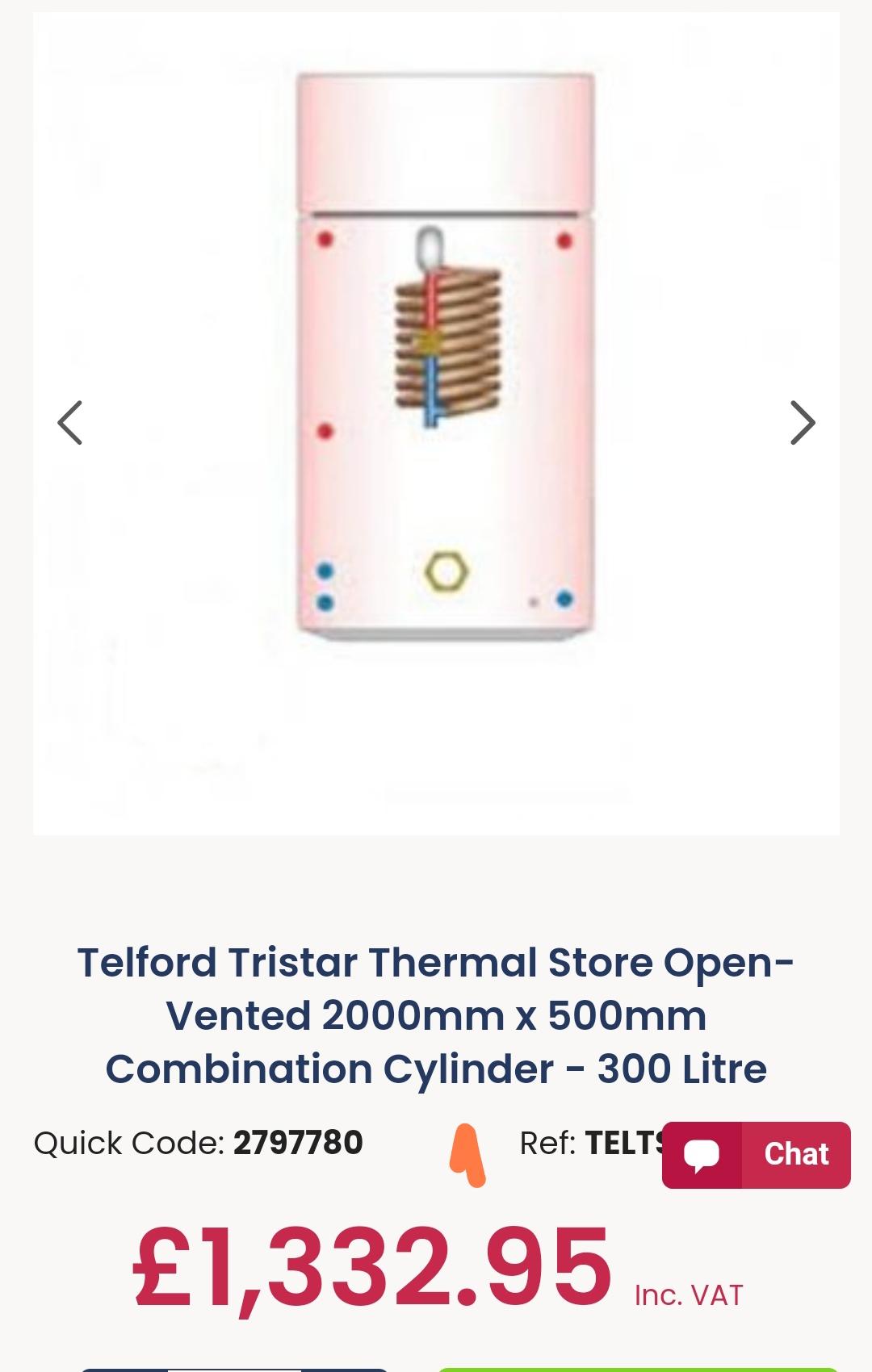
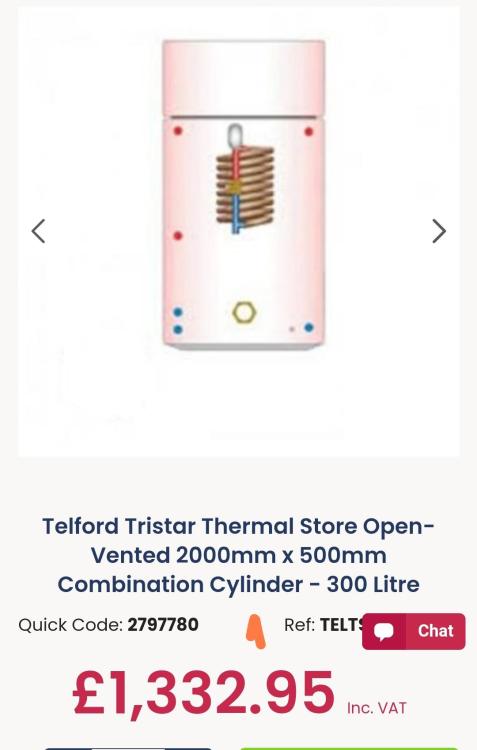
@markocosic that sounds similar to the idea I had. With thermal stores as I understand it the bigger the better however the only suitable location is 630mm wide hemmed in by block walls. I could probably fit a 300l one like this. I'm not aware of any tanks with a stainless steel coil. Where might I find such a unicorn!? Heat pump is beyond the budget and oil boiler is in situ. TBH the wood cooker gets used so frequently that I doubt the oil will be used often at all. As a distant idea a solar PV divert could be used down the line. @JohnMo The idea of a pressurised heating system didn't occur to me and am fairly unfamiliar with then. I guess it's just a case of an expansion vessel, and pressure/temp relief valve a filling loop? Alternatively I could make do with the existing attic header tank for the heating with a coil in tank for it I suppose.
-
Any takers? At least is Multilayer PEX-Al-PEX suitable for taking water from an oil boiler to a thermal store?
-
Air Source Heat Pump in Stone House
Iceverge replied to Bemak's topic in Ground Source Heat Pumps (GSHP)
Good Point @ReedRichards If you are heating any building continuously it doesn't matter what kind of heating system you have as long as the heat provided exceeds the heat demand. However unless you have a very low demand house this will be prohibitively expensive and wasteful of energy. Response time will becomes important for most houses but especially those with poor insulation and intermittent heating. ASHPs work most efficiently when the flow temp is as low as possible, therefore to have an efficient system you would need really huge radiators ( or fan assisted rads) to have both a low flow temp and quick response times. Maybe an oversized A2A multi split would be better. -
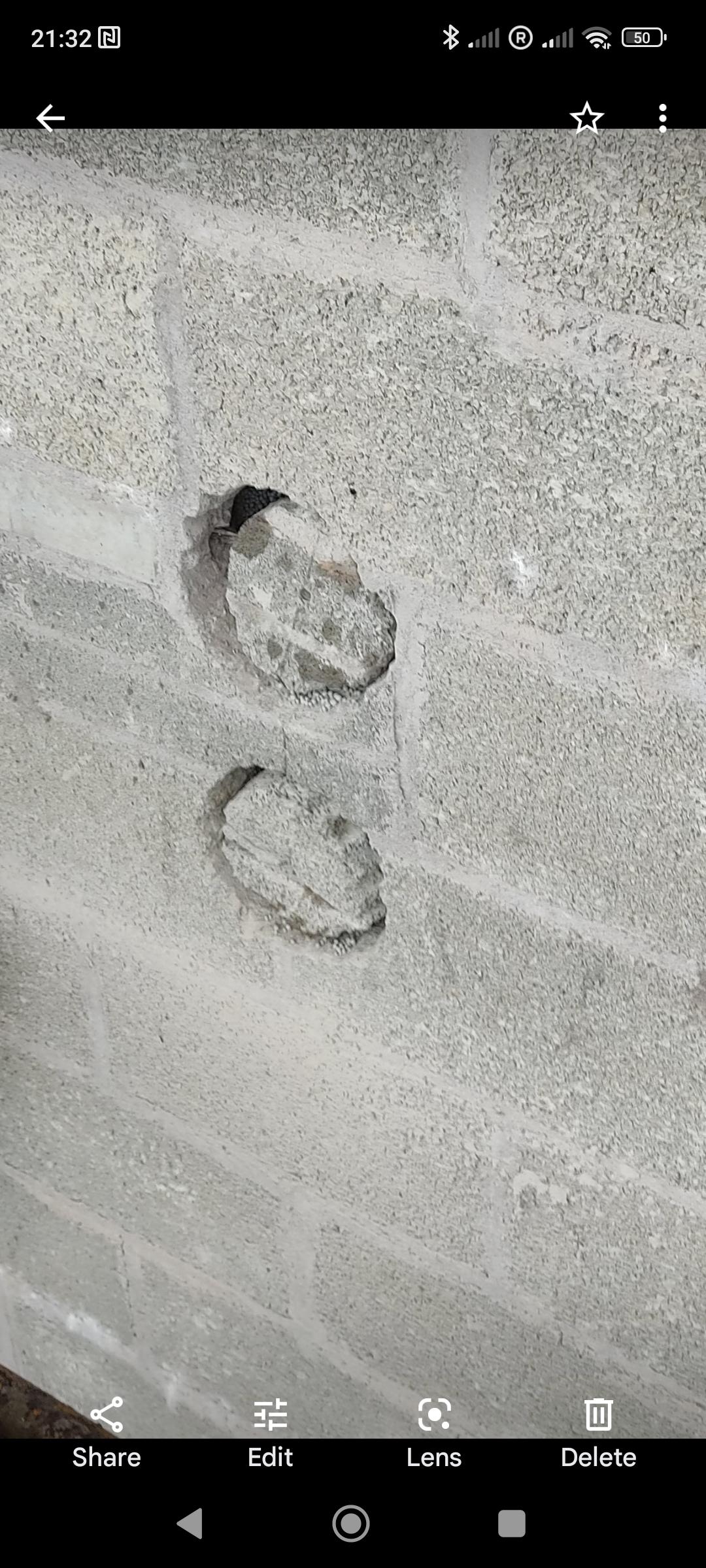
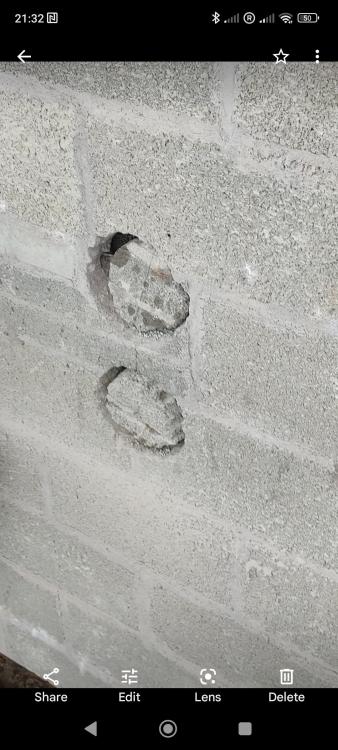
I pilot driled all the ways through. Then stitch drilled from both sides and chiseled out to finish. didn't have a 200mm core and love suffering. It was a PITA. all done pre plastering. Made the hole good with some sand and cement and airtightness paint.

-
+1 for ripped MDF
-
Any experience of Liniar upvc windows?
Iceverge replied to Barryscotland's topic in Windows & Glazing
Veka Softline 82 here. Happy. However that's only the profile. Make sure you get a spec on the glazing and importantly the ironmongery and mechanisms too. -
We use direct electricity for everything 2 adults, 2 small kids. 10kwh/day for electricity for water heating. Install decentralised MVHR rather than a stove. It'll cost less and save more energy over the year unless you're constantly running the stove. There can be house insurance issues with stoves these days. Some underwriters require a certified sweep and will increase the premium if you have one.
-
Less bathrooms. ( 2+ ensuite) A main bath and a shower/wc is fine. Make it smaller 130m2 vs 185m2. Downstairs bedroom from day 1. Not a provision for a later conversion. His and her's office spaces. His and her dressing areas/wardrobes. Timber frame with natural insulants vs concrete. Much more sympathetic and carbon negative. Built in carport. Solar PV from day 1. Insulating external shutters. Floor drain for spills and leaks in all wet rooms. Narrower stairs . 900mm vs 1000mm Veranda for Shading. 2000*1900mm tilt and turns at 500mm sill height in the kitchen vs 2000*2400 sliders. Half the price and less heat losses/gains. Less tricky threshold details. Things I would do again. Passive House. 3G PVC windows. French drain, Cross ventilation to all rooms. Tilt and turn windows for stack ventilation. Simple electrics. Sockets pendant lights, a good wifi router and a few TV cables. No TV in the Kitchen. 100% Wool carpets. Amtico tiles. High Ceilings. Simple rectangular shape. No fireplace. MVHR. Airtight. PVC guttering + fascia + soffit. Very simple heating system. 1 x Electric Rad. Very simple Never leak roof. ( A hip roof with no holes for windows, chimneys, cables etc and a healthy overhang 500-600mm. )
-
I'm proposing to do something about the water system in my parents house. The system as currently stands is a mishmash of pipes and systems installed since the house was built in 1951. Water is provided by a well that is quite acidic, copper cylinders typically only last about 5-10 years. It feeds some of the cold taps directly from the main pipe from the pump and some via a gravity tank in an upstairs bathroom. Hot water is provided by a 120L direct copper cylinder heated on a gravity loop from a Rayburn 355sfw with a 16Kw boiler. Again distributed via a gravity fed header tank. Central Heating is from a 25 year old Firebird Popular Oil boiler to rads with a header tank in the Attic. Showering is done by an electric shower fed from the mains. Current issues are. 1. The high cost of oil in heating an old house. 2. The Rayburn is lit "religiously" with free timber daily for cooking and DHW. However the water in the copper cylinder is frequently approaching boiling temp with risk of scalding and damage to taps etc. It has a steel backboiler so water is brown from the hot taps, running DHW directly through the boiler is corroding it also. 3. The attic needs insulation but as it contains header tanks that may need moving/replacing we're holding fire on that. 4. The well water corrodes all copper and brass fittings eventually. 5. The Electric shower forms the vast majority of the electricity bill while most wood heated DHW goes to waste. The ideal system. 1. Have a hybird system that allowed the oil and/or rayburn to provide hot water and heating. 2. Remove all tanks from the attic. 3. Replace the current mix of piping with Hep20. 4. Switch to a pressurised system. 5. Move the cylinder downstairs to free up space for an ensuite upstairs. 6. Retain the Electric shower. My proposal. 1. Bring a new 22mm MDPE pipe directly into the house from the well. 2. Run it to a cold Hep2O manifold for radial cold water distribution. 3. Install a DHW "coil in tank" thermal store on the ground floor above the level of the Rayburn. 4. Run the Rayburn on a gravity circuit. 5. Connect the Oil boiler to the store on a pumped circuit. 6. Connect the existing CH loops to the store and have them operated by a temp switch near the bottom of the tank. 7. Run Radial hot water pipes from a new Hep20 Manifold and a thermostatic mixing valve. Issues 1. With a combi tank the thermal store header/expansion would be below the level of the upstairs rads meaning they'd need to be decommissioned. A header tank in the attic could solve this but I like the tidiness of a combi thermal store and consider it safer in a location where all leaks can be drained outside easily. Also I don't want to have to cut joists (6x2" at 16" cc) to fit a new tank up there. 2. Thermal stores are harder to get in Ireland then than the UK and may be expensive. 3. Access to existing pipes etc, (not Buildhubs problem I know) 4. Infinite funds not available and might need to be completed piecemeal. 5. What options are there for running primary water loops other than copper. I gather Hep2O/pex isn't an option however copper would be very hard to retrofit. Please critique my plans.
-
Air Source Heat Pump in Stone House
Iceverge replied to Bemak's topic in Ground Source Heat Pumps (GSHP)
I remember reading somewhere, maybe one of those Scottish documents, that old stone wall have significant thermal resistance but only if they're not damp. A low temp heat source like an ASHP works well with a very insulated house that is continually heated. A strategy of intermittent heating would be better with a house of high heat loss. If you get a period of steady temperatures, overnight probably with no wind, you could plug in a few electric rads and see what the house temp stabilises at with all internal doors open. Then you'd know exactly your house heat demand. Eg if it was 10 deg outside, 15 deg inside and you had 4kW worth of rads on full blast then you would have a heating load of 800w/deg for that condition of windiness. -
To watertight only, or go all the way?
Iceverge replied to Mr Blobby's topic in Project & Site Management
If you're part time I would manage the build myself, especially passive block build where the details are very important right from the off. Specifically the continuity of insulation, mortar droppings on cavity ties, airtightness at first floor level, thermal bridging at thresholds and window openings. If you don't have an excellent contractor here you'll struggle to convey the message to the tradespeople and end up doubling your work to rectify it. Alternatively if you can find a supplier/builder who can guarantee passive standards in writing I'd happily use them to watertight. As you are part time I'd put a padlock on the gate of the site any day you're not there. The quality and care of the work can deteriorate rapidly if there's no site supervision present as most trades assume that speed trumps quality in my experience. Our build took 21 months and I'd estimate that there was about 20 man hours per week done. Easily covered in 2 days per week for 2 people. Get a reputation for paying promptly and well. Finally concentrate on doing the management not the jobbing where you can avoid it. You'll burn out otherwise. Good luck! -
Good work. Nice to see progress. Is there 2 x ensuites on the first floor master bedroom or is this a typo? Thinking of the somewhat fierce temperatures that have been around recently I'd think carefully about overheating. The SW facing rooflights will be a real culprit. Maybe bin them or include external blinds. The large sliders/French doors will be easy to shade with brise solail or a pergola. Other than that it all looks well I think.
-
-
Have you consider just using adhesive to stick them up there? I don't know what would be best. Something that sprung to mind is fire regs with exposed joists. Again no idea what the gospel is here either
-
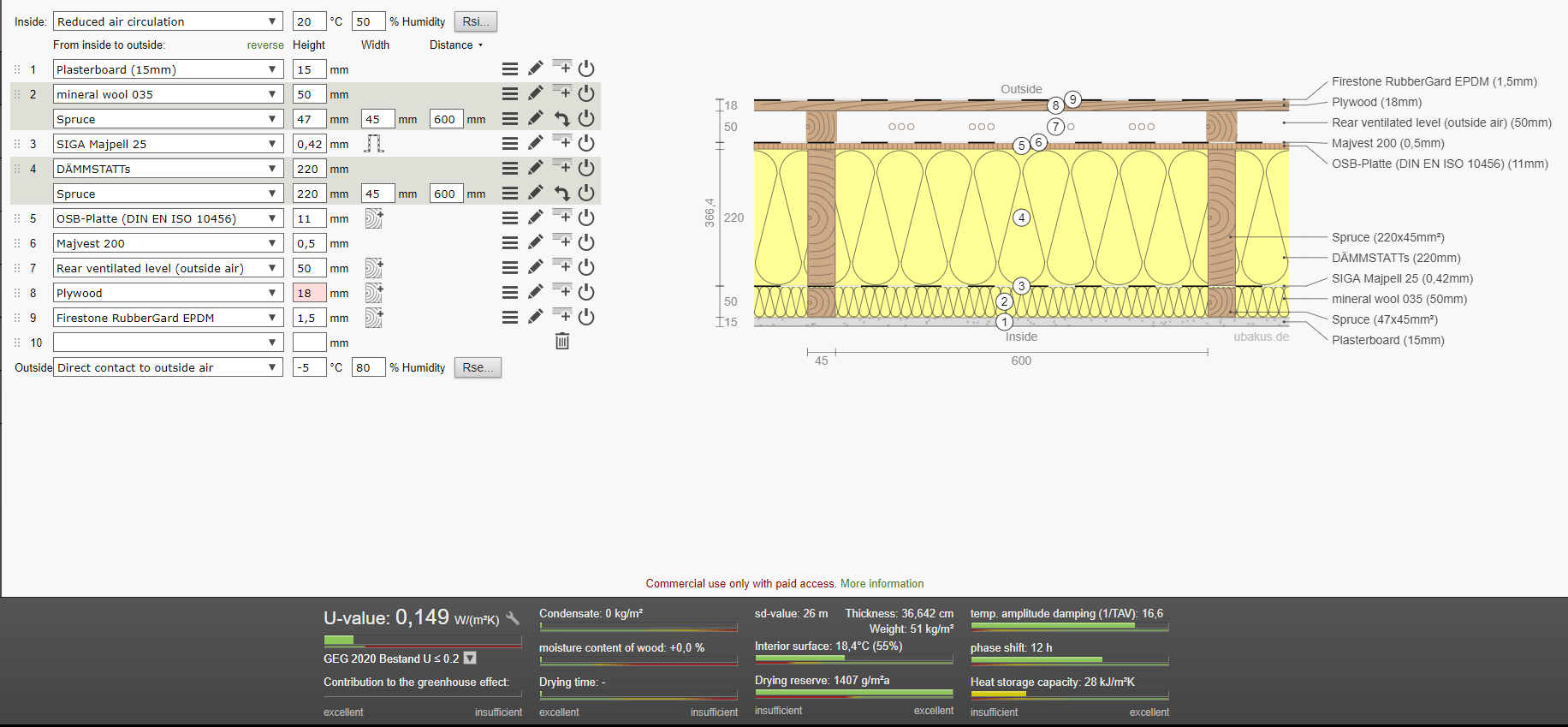
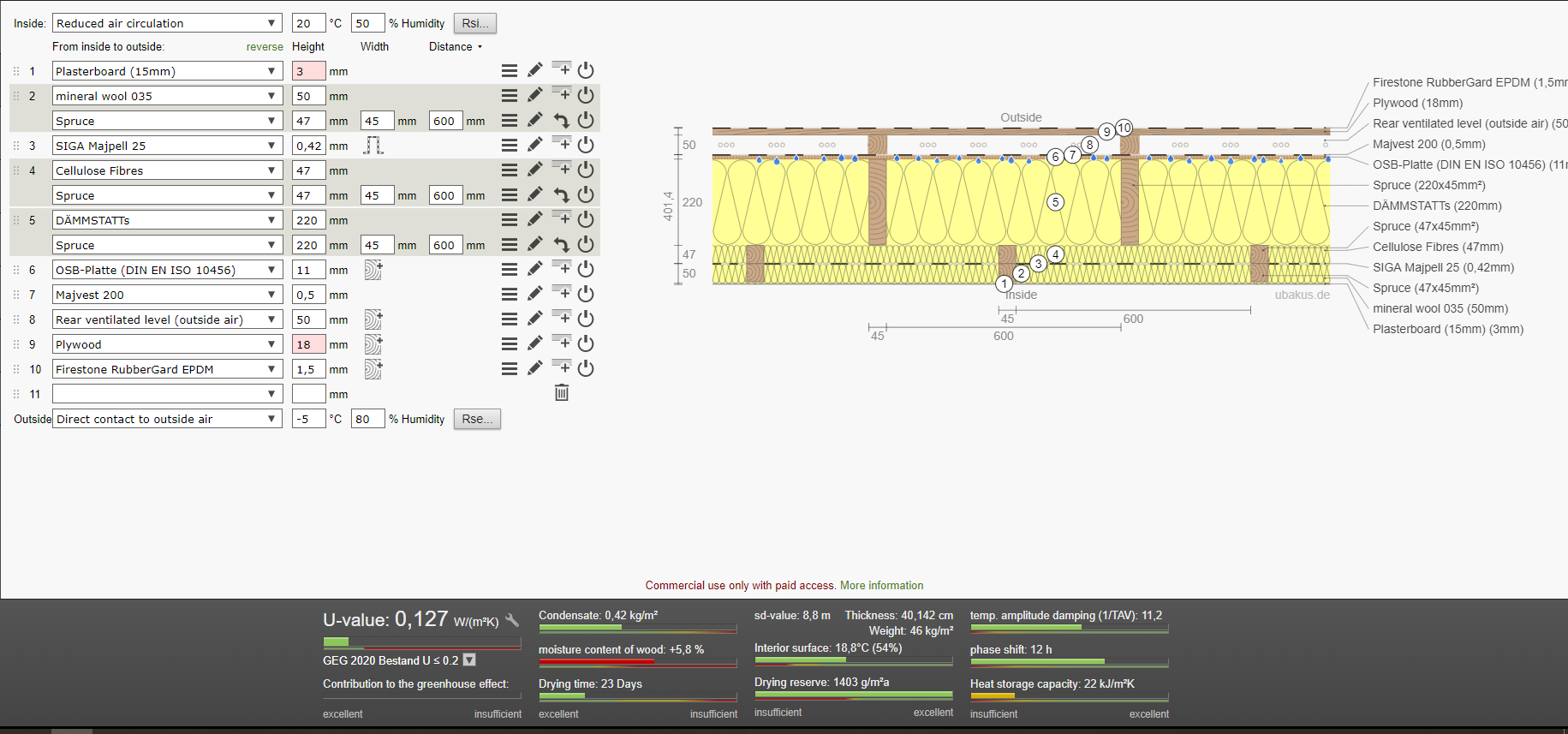
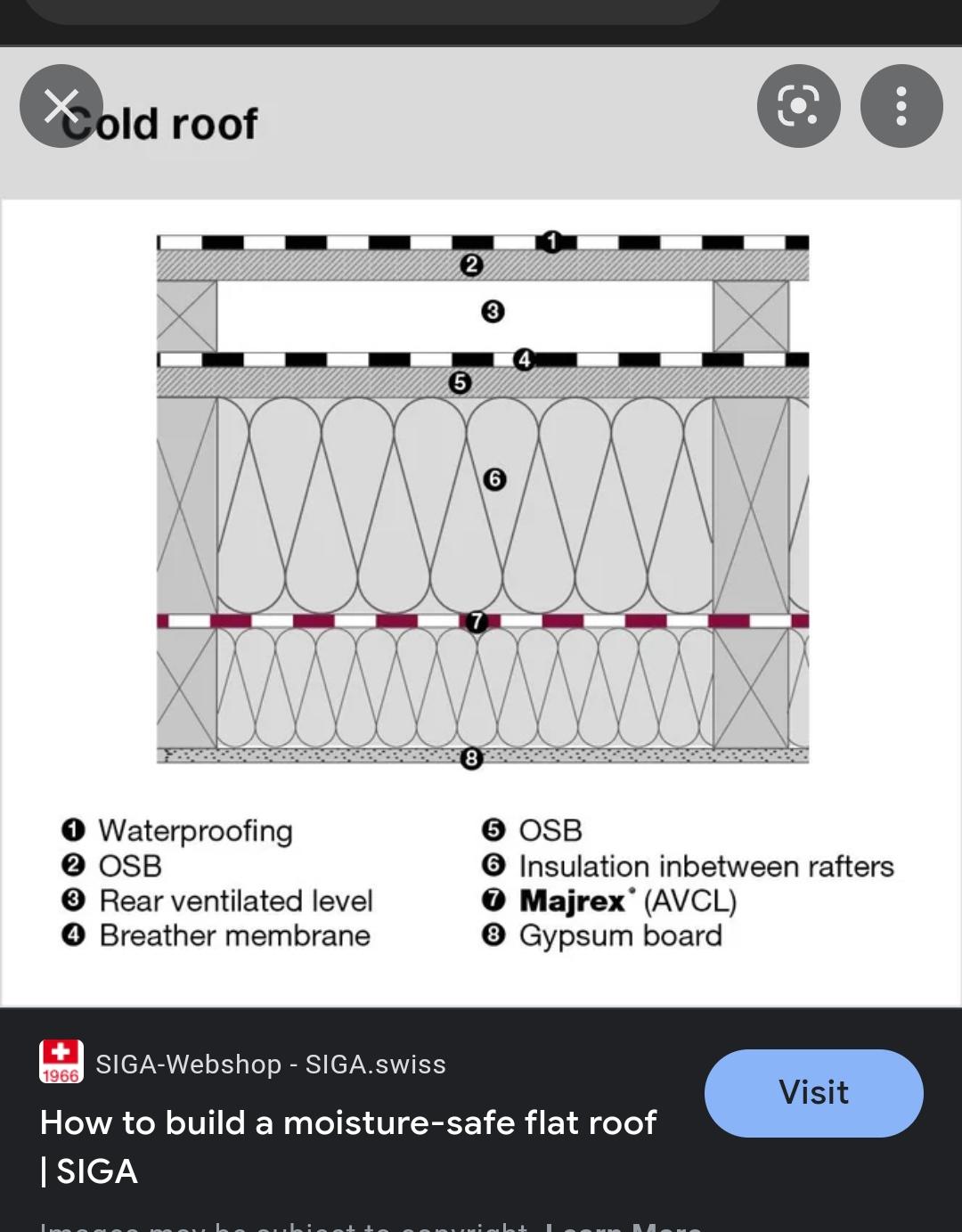
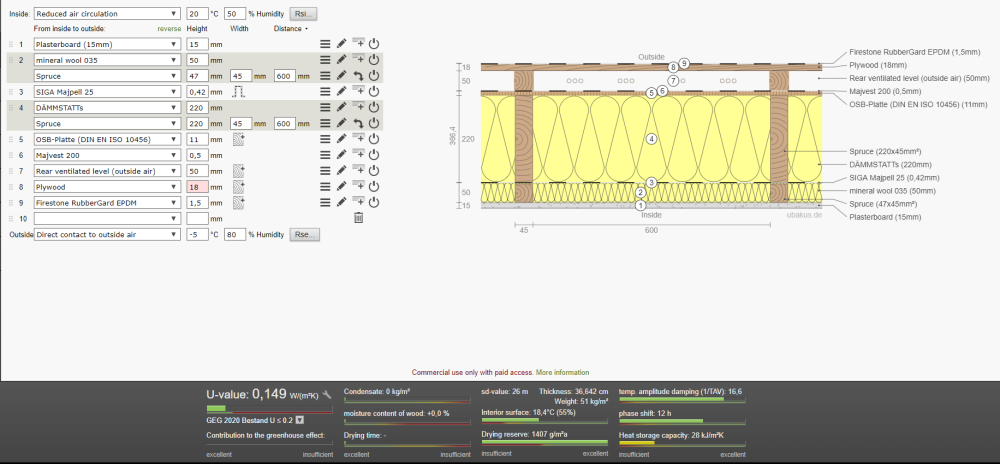
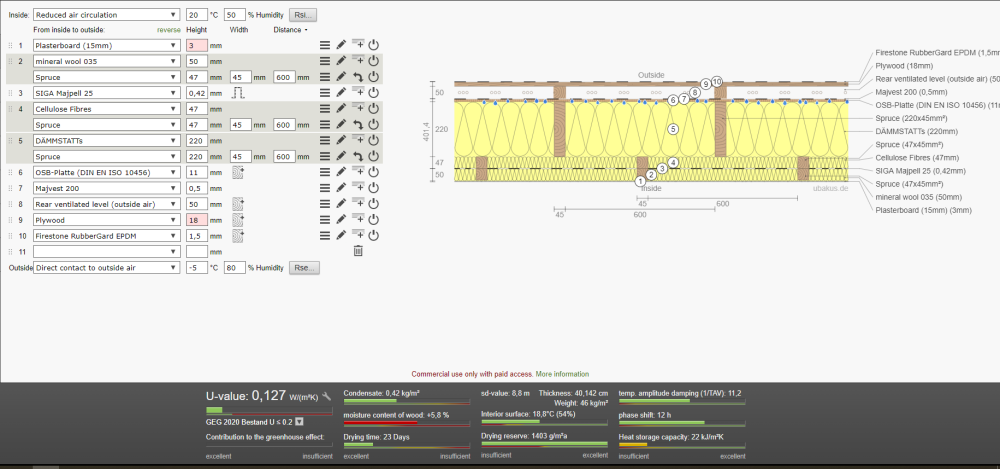
I've re-read your post.... My idea for something cheap and good. EDPM OSB/PLY, 50mm battens for ventilation layer, Fully taped breather membrane. OSB 225mm joists filled with blown cellulose. Vapour control layer. 47mm battens at 600cc for service cavity with 50mm batt insulation. 15mm plasterboard. U-value about 0.15-0.16. To upgrade the U-value counter batten above the VCL with another 47mm batten and increase the layer of cellulose. Should be a U value of about 0.14 with excellent airtightness and decrement decay. Thermal bridging etc All nail gun friendly too and no exotic expensive materials. I would avoid the faff of furring strips and slant the whole roof if you could live with the aesthetic of a slanty ceiling.
-
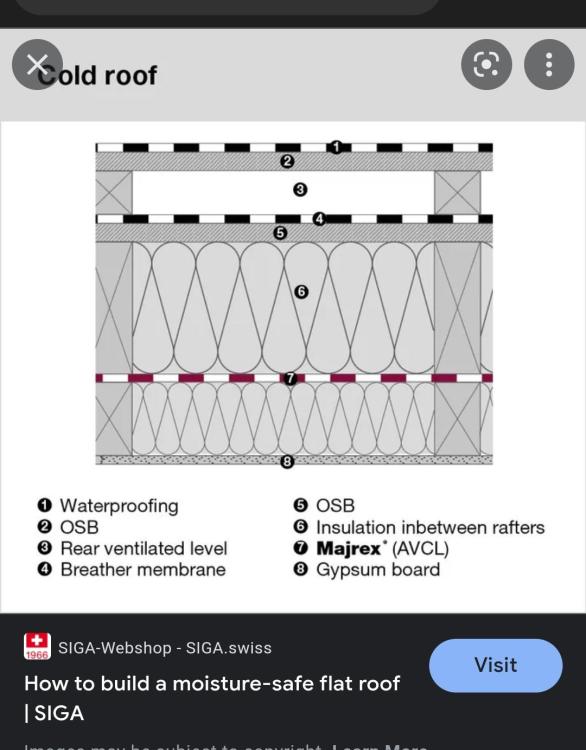
There's one.
-
Any pics/sketches/diagram's of what you propose? It sounds like a hybrid approach. If you could ensure a robust airtight/vapour control layer and a fully breathable build up outboard with a ventilation layer between the final roofing and the sarking I would see no problems. I'm sure the "it'll rot to pieces" brigade will be along soon to correct my erroneous ways. Have you considered blown cellulose between the joists? Perfect fill, cheap and excellent in almost every way otherwise. I think Siga have some details. I'll check......
-
Excellent work. It should give a COP of 4 for heating according to the interweb. I'll be watching with interest for updates as it's on my (maybe) Todo list for our place.