Iceverge
-
Posts
4487 -
Joined
-
Last visited
-
Days Won
32
Everything posted by Iceverge
-

Airtightness vs bugs
Iceverge replied to puntloos's topic in Energy Efficient & Sustainable Design Concepts
Plenty of window opening here for us so we get some creepy crawlies. Flies,I think they're cluster, seem to bash against the glass of closed windows until they die. Otherwise they get trapped inside the first seal of the window. Vacuum cleaner takes care of them. Happily bees and butterflies seem to be better at finding their way out again. I've never seen any moths, earwigs or woodlice. The spiders have come in the doors mostly I think. Don't mind them really, they're good tenants, don't bother with our food. Don't make annoying noises and help take care of other pests. Give it another month when all the doors and windows will be closed and there'll be nothing really. Theres no nice warm and moist areas for them to live. The usual cracks and holes where the heat of inside and dampness of outside meet don't exist. The stable dry and warm environment even in inaccessible areas just doesn't suit little creatures I think. -
Mitigating Risk With Upfront Payments To Timber Frame Companies?
Iceverge replied to thefoxesmaltings's topic in Timber Frame
Stick build could be framed and roofed in a week with a good team of chippies. As to build quality, some of the TF manafactuered to a millimeter hype is just that. It's an operator placing a stick and banging home some nails to make a panel in both cases. I've heard tales of a roof being 100mm out of plumb with a "precision kit". Both can be done wrong and done well. -
That is exceptionally low usage. About half of ours in our passive house (2 adults + 2 kids) DHW about 3.5MWh and space heating somewhere about 3MWh. Just keep the boiler going for now. If it packs in completely direct electric might be best considering the very limited payback window. Alternatively if an ASHP would plug into your rads as is, with a new cylinder there's nothing to stop you taking it with you in 5 years time when you move out.
-
Have a read about @TerryE system. Some searching will be needed on your behalf but it's well worth it. It's a very measured look at this exact topic.
-
Maximum length of different worktop materials
Iceverge replied to Post and beam's topic in Kitchen Units & Worktops
Laminate is typically the longest with 4.1m the norm. We have a joint in ours. TBH it's a fairly small worry. Some of the stone resin products look fine jointed. If you really want jointless you could get cast in place concrete tops or welded stainless. -
Been there have the T. Block built passivehouse, cavity wall, EPS beads. Plug in rad for heating. Words of caution. 0.3 ACH is difficult. You'll probably need to do it yourself. I was pathological to get there. A true window install of 1.1w/m2k without overwapping external insulation is almost impossible. Windows are routinely 5 times worse than a wall for heat loss. Also EPS beads real life I suspect are closer to a k value of 0.04W/M/K.For a 200mm cavity work on a U value of 0.2. Passivhaus 20deg is not warm enough for everyone, in every room. Our house lives closer to 21/22 which will have an effect on your bills. With no central heating you rely on air-circulation to even up temps. If doors are closed ,ground floor rooms will cool down if the never get any sunlight. More so if you have windows. Equally, overheating, west windows are the worst as they're a pig to shade. A small room with a closed internal will get hot at any time of the year. Finally and most importantly you may or may not have to co-occupy with other humans. Passivhaus goes out the proverbial triple glazed window when you have a gale howling through the hallway for an hour a day as the front door is permanently open. Likewise if you open ever window for 24hrs a day in a heatwave you will have overheating. If I'm home alone the resistance rad on a timer with open internal doors works well. Kids+partner add so many variables in real life however......... you may want to spend £500 on UFH pipes just in case. TLDR. If you plan on having windows and/or non scientifically fundamentalist lodgers an active heating/cooling system might be prudent.
-
Laying bricks/blocks isn't rocket science. However even with practice I couldn't do in a day what an experienced bricky could do in a hour. It's almost definitely not a place you'd save money. Time used procuring items at knock down prices is far better spent. A good few members have saved handsome four figure sums by pouncing on large ticket items on eBay like heatpumps etc. Plumbing with Hep2o is straightforward as is MVHR install with radial ducting. Painting, tanking bathrooms, fitting insulation, plasterboarding are all DIYable but far more important is keeping a good eye on coordination, budget and quality. Nobody cares as much as you do.
-
Can you get a small pvc sill to take you over the concrete sill? As it is a fixed window just using straps to hold it in place should be fine. Alternatively get a hammer and break out the old sill then fit a new precast one to your tastes. If you're brave you could also just pour one in place. Take a hammer to the existing one and get rid of the top 50mm. Then shutter the outside with some ply and some PIR in the cavity which can stay in place afterwards. It'll take a few days to be strong mind you.
-
This unfortunately, insulation floating around in a swimming pool kept in by the DPM with a concrete lorry impatiently waiting to pour.
-
Protection of ICF blocks in foundations
Iceverge replied to Joey's topic in Insulated Concrete Formwork (ICF)
I just had a look. You're right, it makes no difference for the actual heat loss. Thicker insulation will make a smaller psi number for the external thermal bridge but this is all soaked up in the calculations anyway as you'll have more external area with a thicker build up. Our EPS Graphite was 0.031 vs 0.022 for PIR ( if you believe them!) It was about 2/3 of the final cost for us to use EPS vs PIR. Obviously that may differ depending on where and when you build. -
I'd get rid of the bottom DPM, it's not achieving much apart from trapping water in your floor buildup.
-
Protection of ICF blocks in foundations
Iceverge replied to Joey's topic in Insulated Concrete Formwork (ICF)
Also drop your DPM below the top layer of insulation. This will allow you to staple the UFH pipes to the EPS through a thin slip membrane. -
Protection of ICF blocks in foundations
Iceverge replied to Joey's topic in Insulated Concrete Formwork (ICF)
I would counter @saveasteading and stay with the 350mm. Probability use EPS. A literal bigger chunk of insulation will reduce your geometric thermal bridge Spread over the lifespan of the building ( maybe 500+ years) insulation is tremendous value. As for the EPS below ground level I would consider installing a drip and then some slates neatly glued to the EPS below that. Mainly for rodent and impact protection. An external French drain would ensure the floor and walls stayed dry and any backfilled gravel would be a belt and braces to keep the slate in place. -
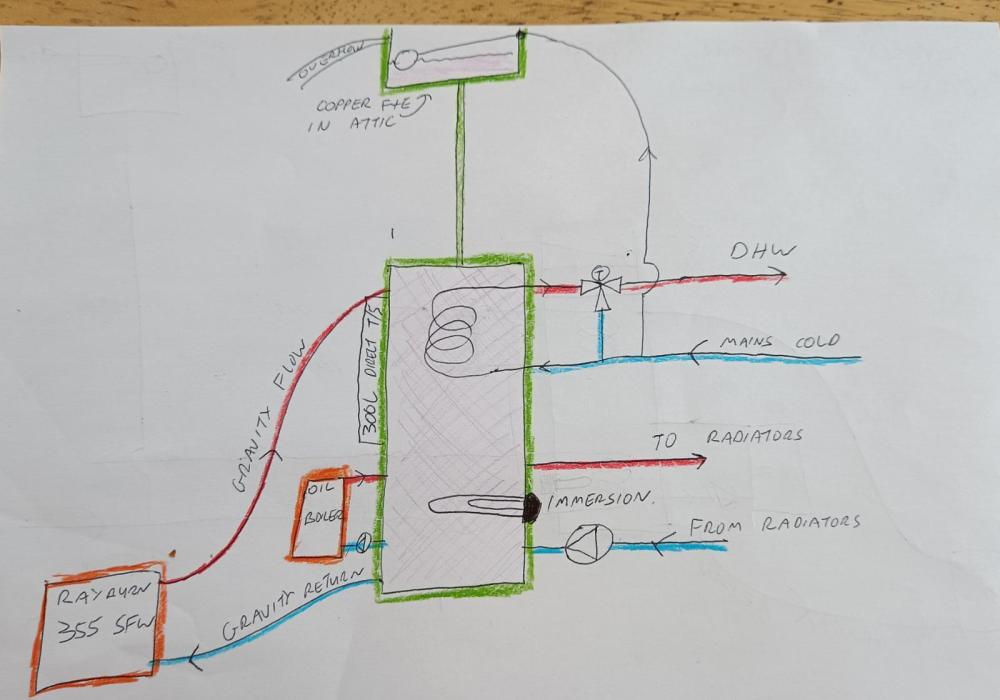
Lol, It's all going to be turfed out into the garden shortly soon anyway! Further measurements have concluded that a combi thermal store would be too tall to allow the gravity return to be above the bottom of a direct T/S .I've revised my plan to put a new copper/galvanized header tank in the attic and run the rads directly from the store whilst dispensing with the existing F+E for the CH. Does the above system look logical from a plumbing point of view?
-
Maybe a primatic cylinder?
-
No mains, just a pumped well so not an option in a powercut.
-
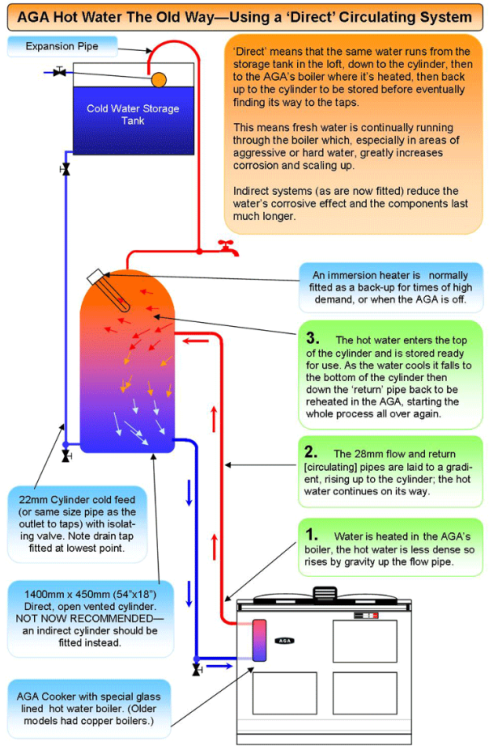
Yup........"The Old Way" however with a non lined steel boiler = Brown DHW 🤢
-
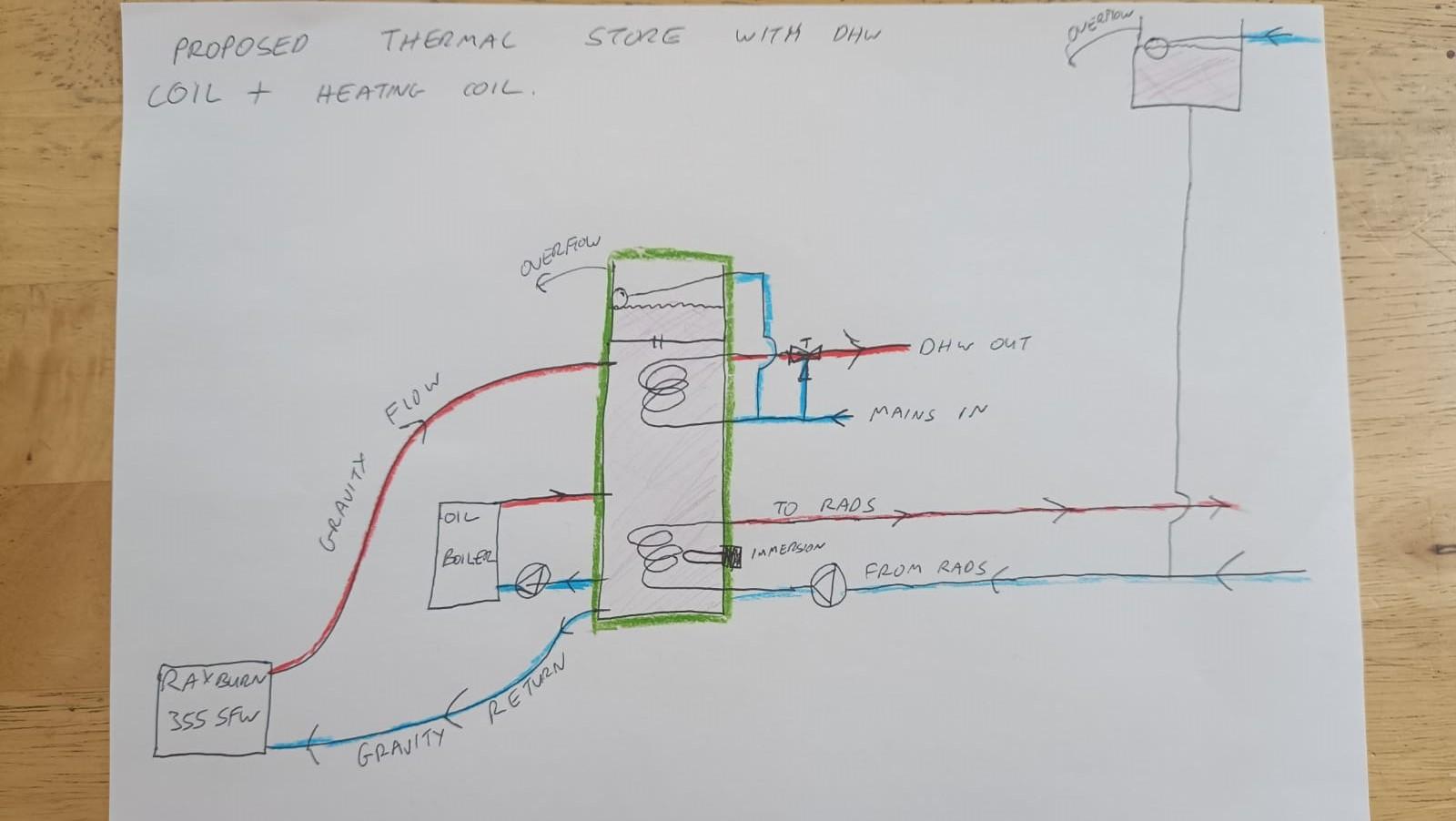
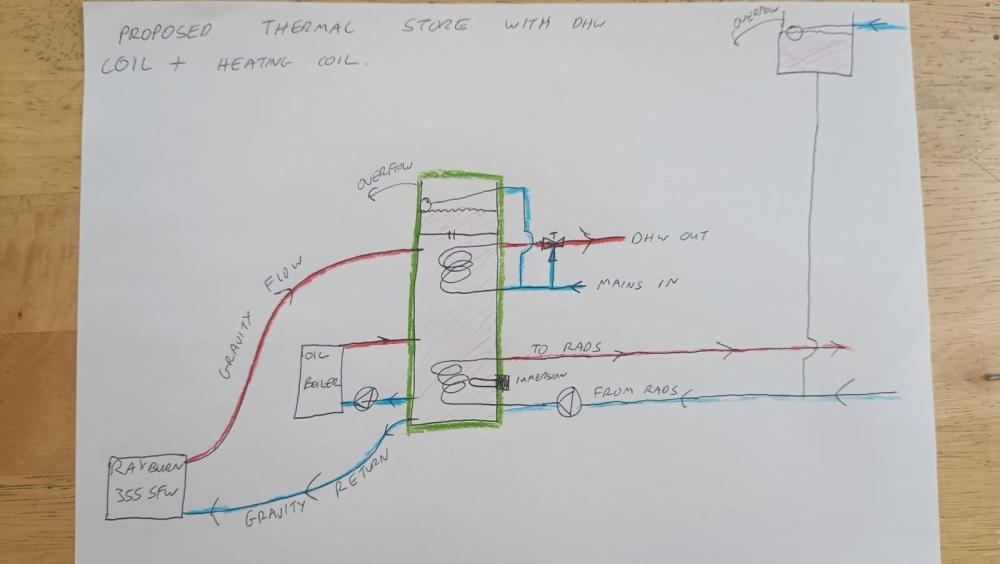
Proposed Upgrade. 300l Combi type thermal store. Rayburn on Gravity direct Circuit. Oil Boiler on pumped direct circuit. DHW coil with thermostatic mixing valve. Heating Coil to accommodate upstairs rads using existing F+E tank. All commentary welcome.
-
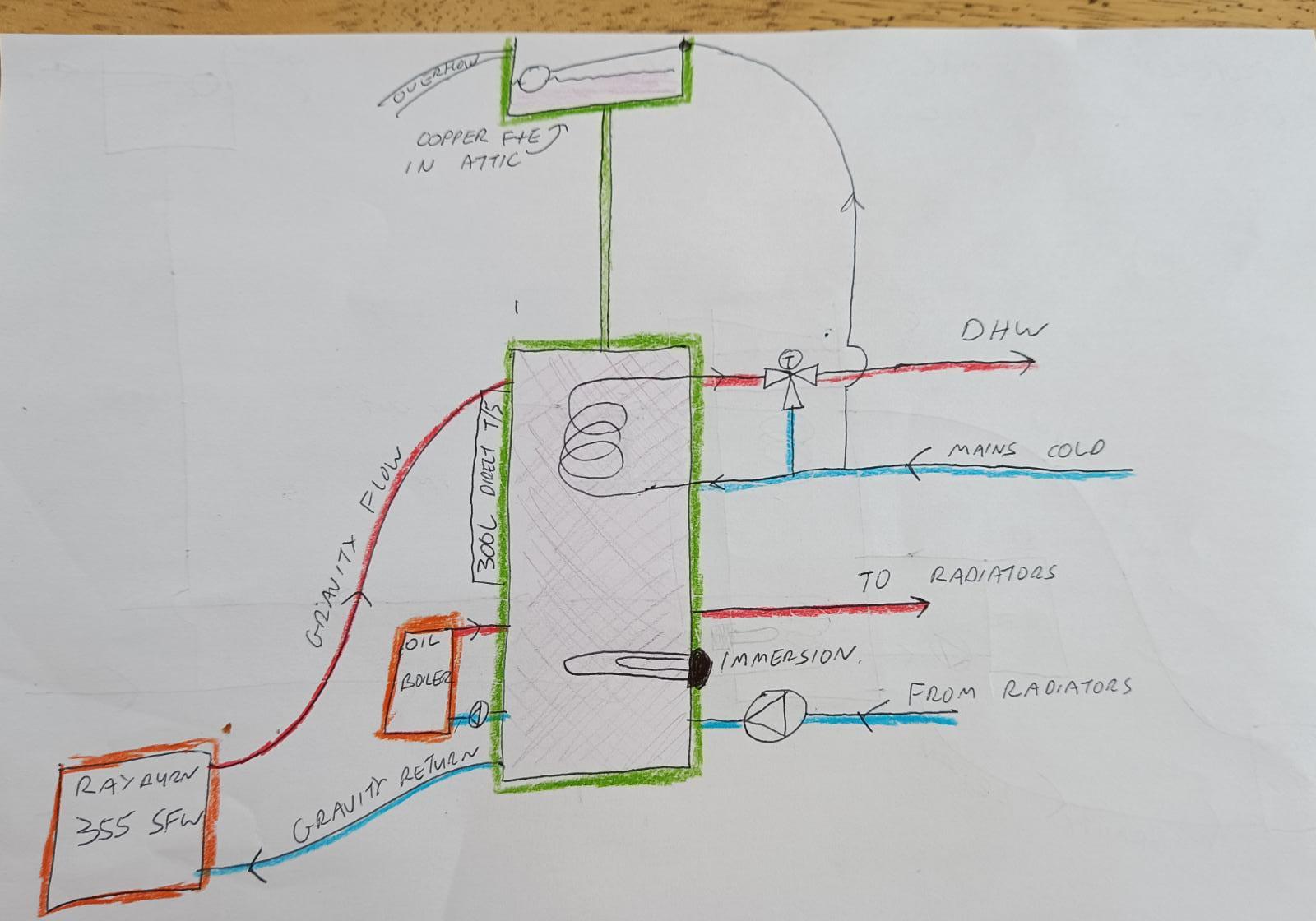
Right now on to the DHW. There is a wood fired Rayburn 355SFW model. That feeds a direct copper cylinder via a gravity circuit. This in turn is fed by a fiberglass F+E tank. Here is a diagram of what I think is happening. Hope that helps clarify where we are.
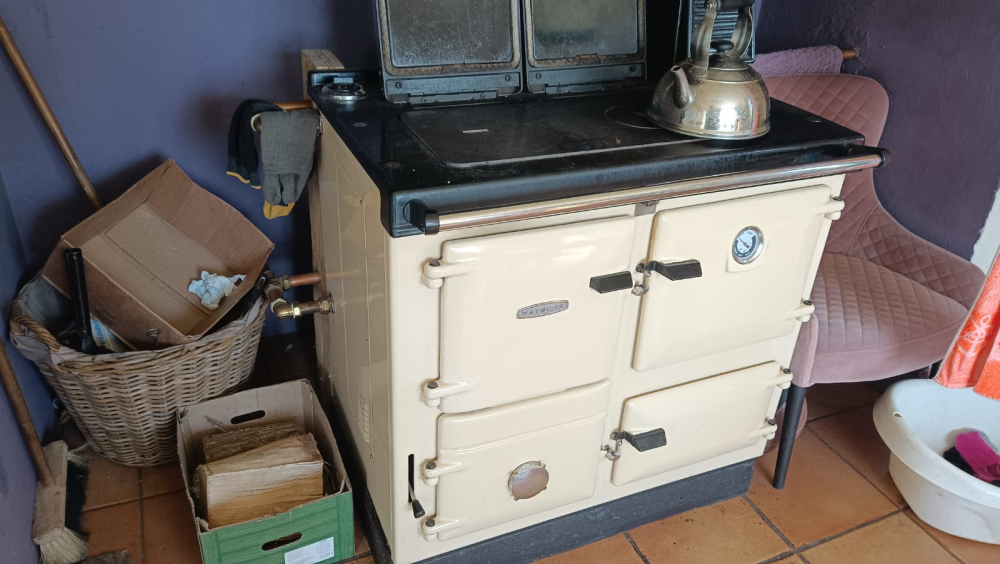
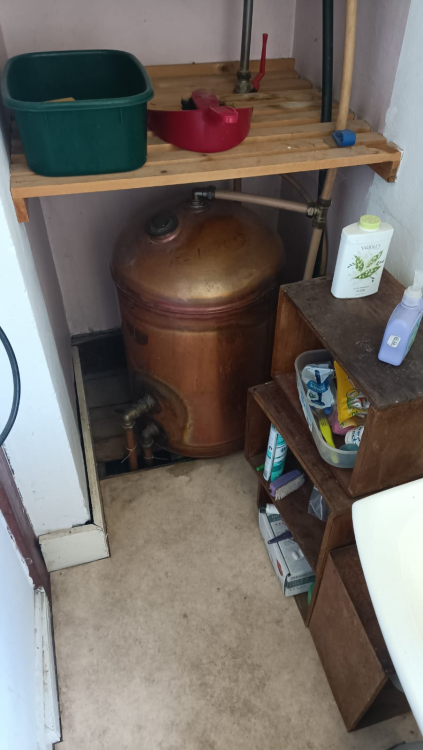
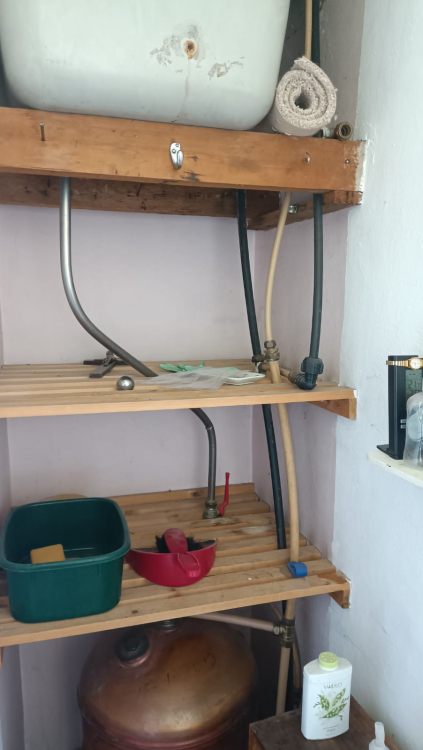
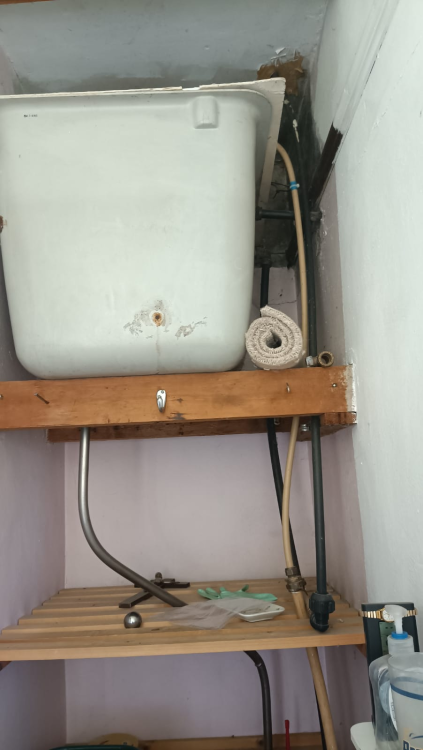
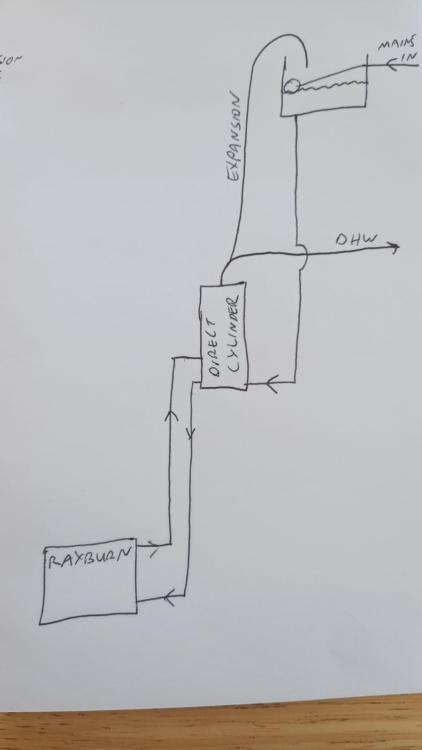
-
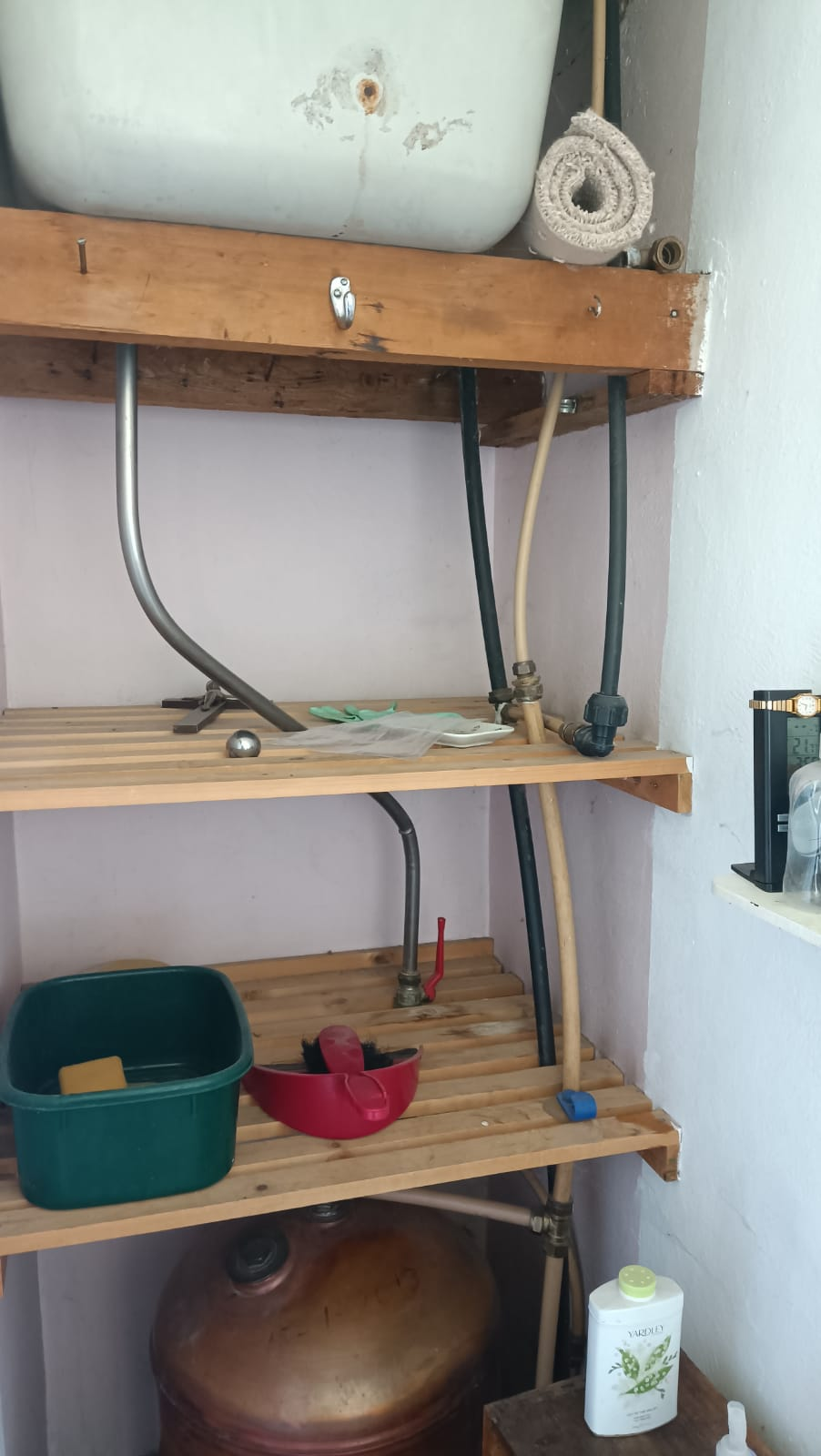
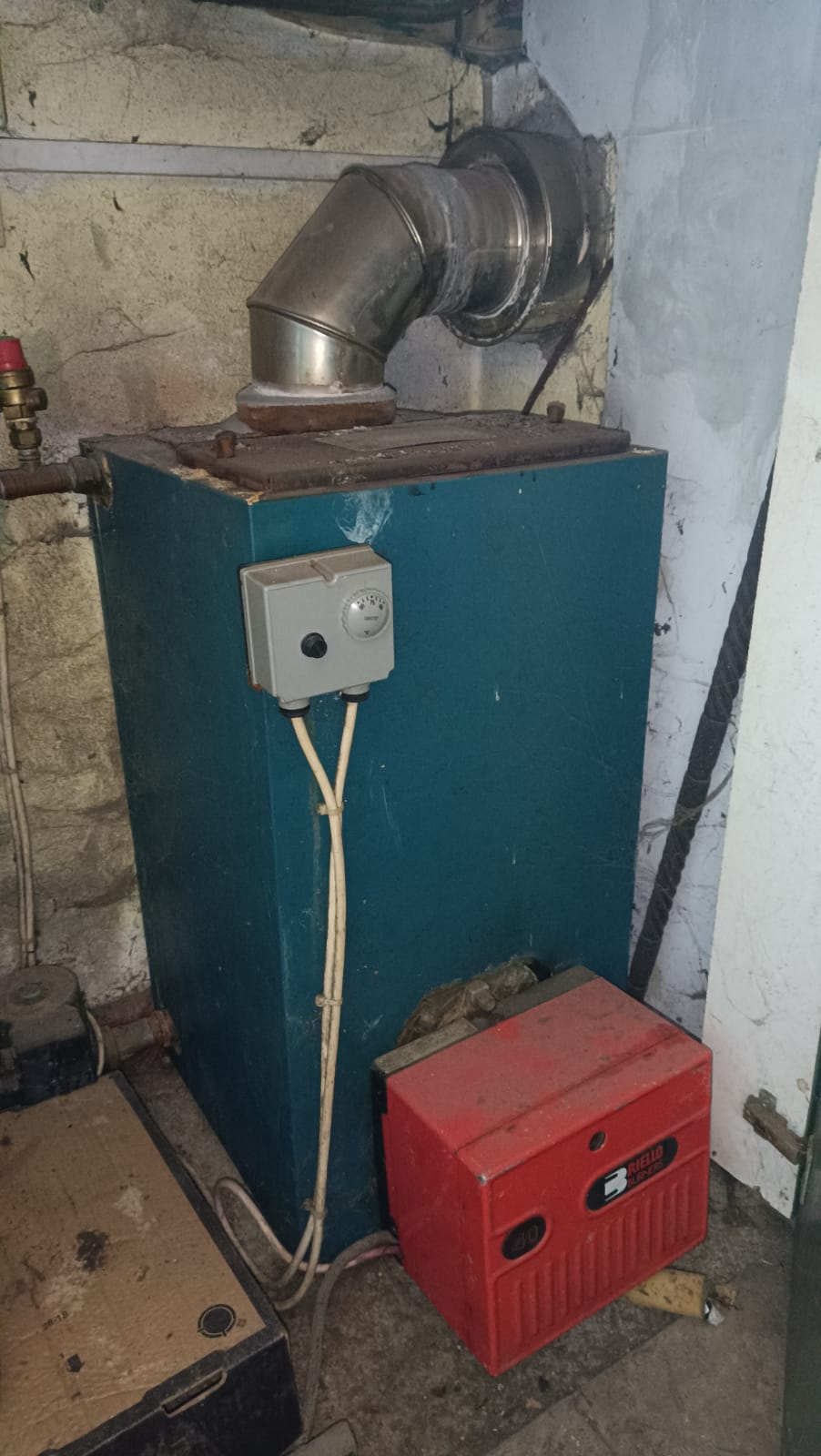
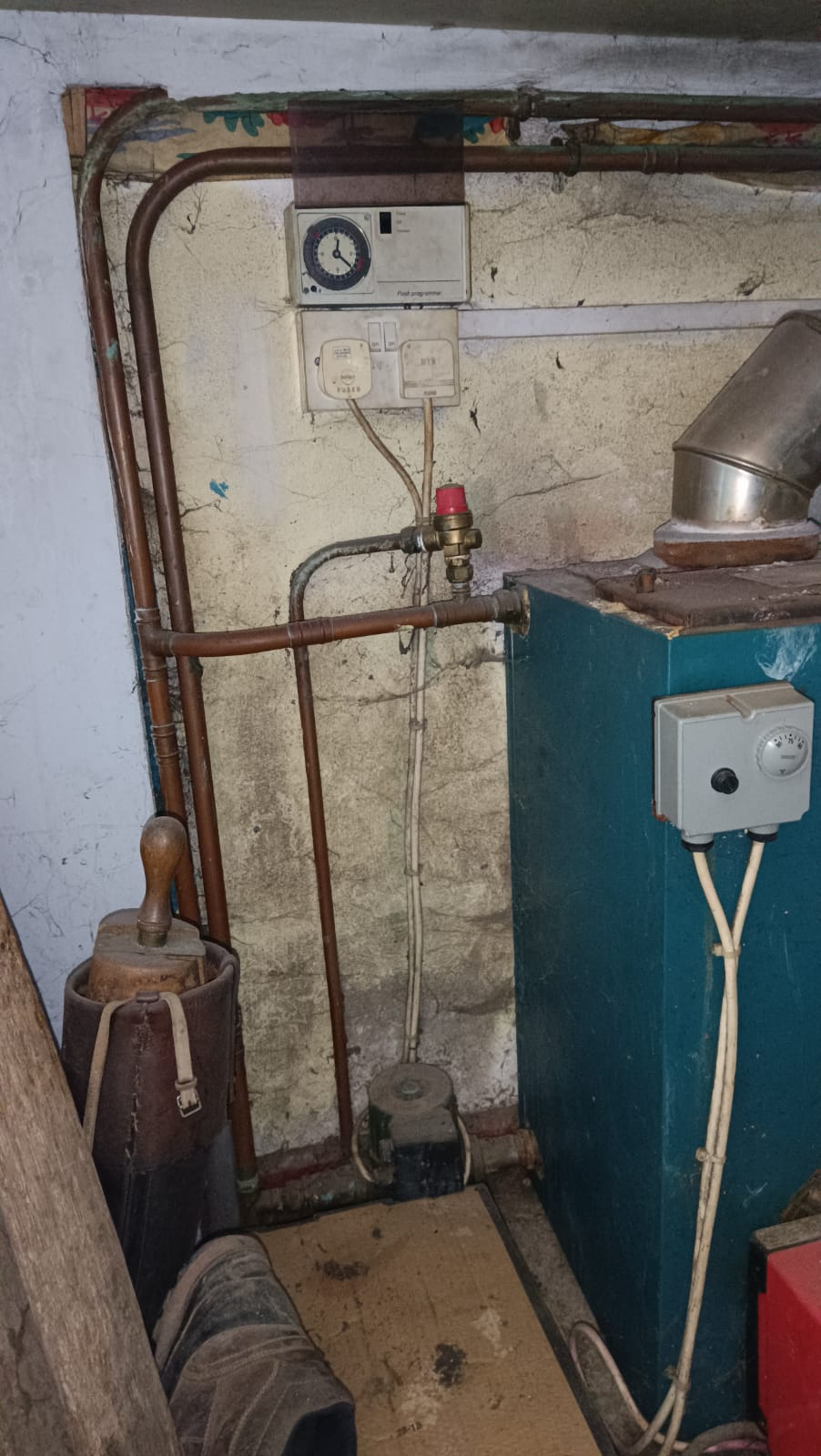
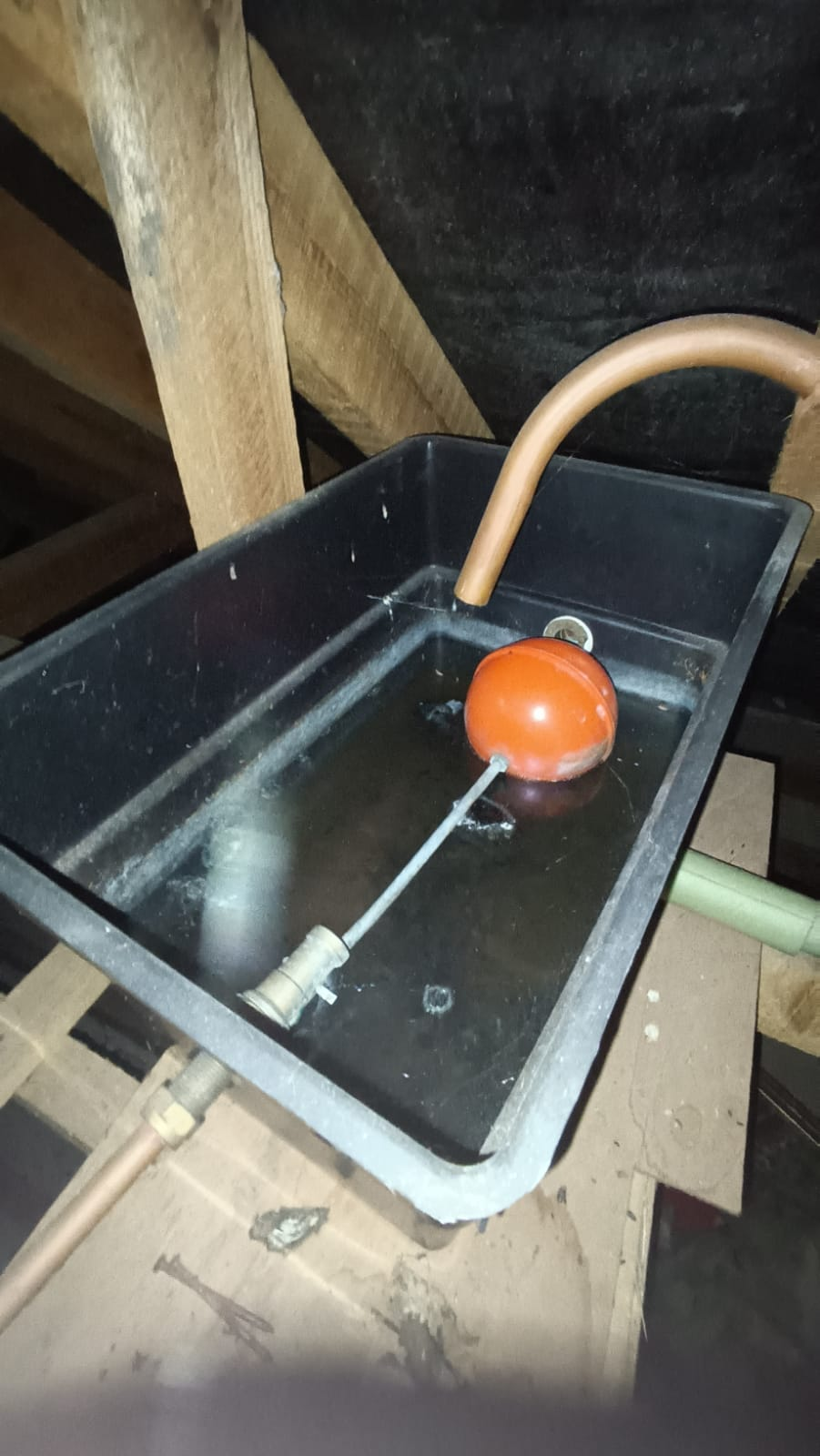
Ok, here goes. The central heating is worked from an oil fired boiler. Feeding 5 Rads downstairs and 5 Rads upstairs. It is kept topped up by a Tank in the Attic. Here's a Sketch of what I think it looks like
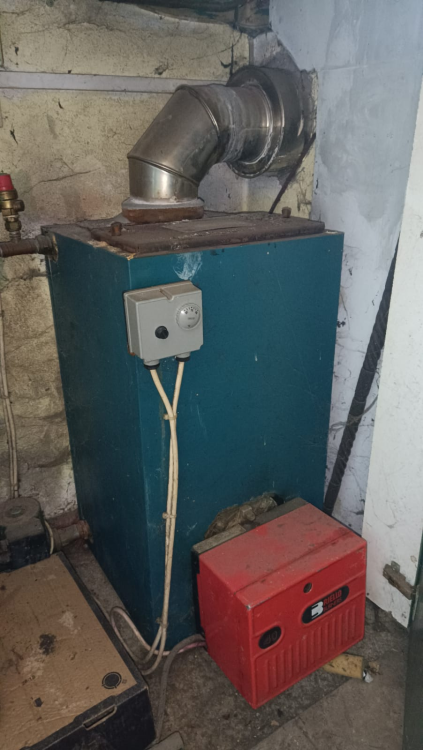
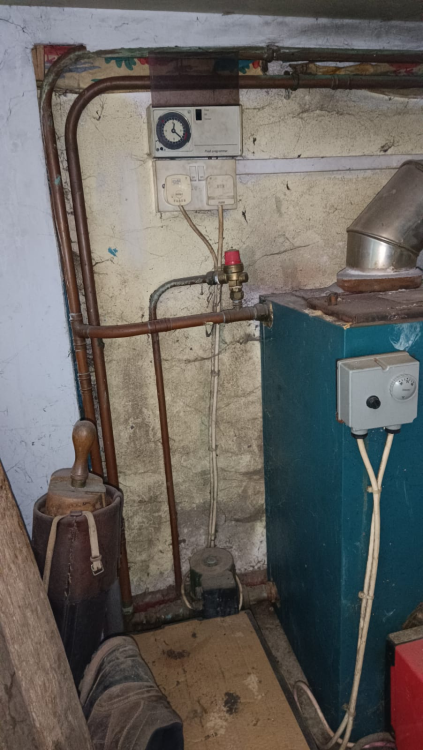
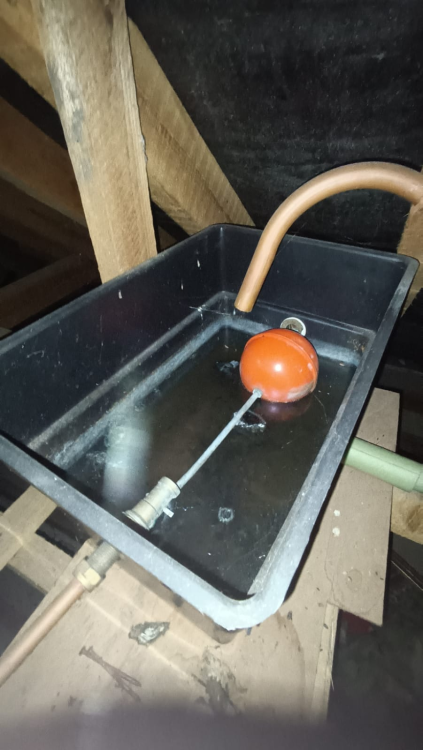
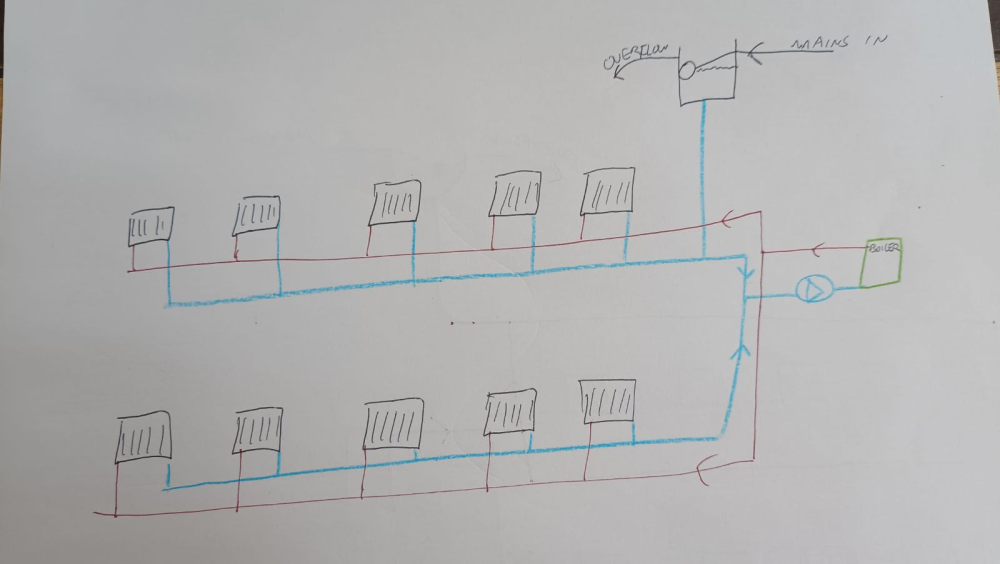
-
Wet plaster. Look up the Denby Dale house on You Tube. Some excellent videos there. Also double your insulation values.
-
Sorry for the delay, work were making me work for a change! I'll have a go at some pics and a sketch later if I can. That will explain all.
-
That sounds very dear, £90+Vat per m2. I bought Douglas fir for about €14/m2 ex vat in Ireland. That covers a lot of maintenance and woodstain. I would agree with @ETCthat a composite material look out of keeping as the house ages and it doesn't. I would ring local sawmills and buy the most durable timber used locally and put the rest toward a good maintenance plan.
-
Exhaust Source Heat Pump is what you're after. Some cheapo Chinesium ones. No reason to believe they don't work. Some more expensive ones from known brands. Panasonic etc . @Thedreamer has a Joule and likes it AFAIK. Beware the heat needs to come from somewhere, usually inside if that's where the air is exhausted from. . Your space heating may increase during winter (depending on current ventilation strategy).
-
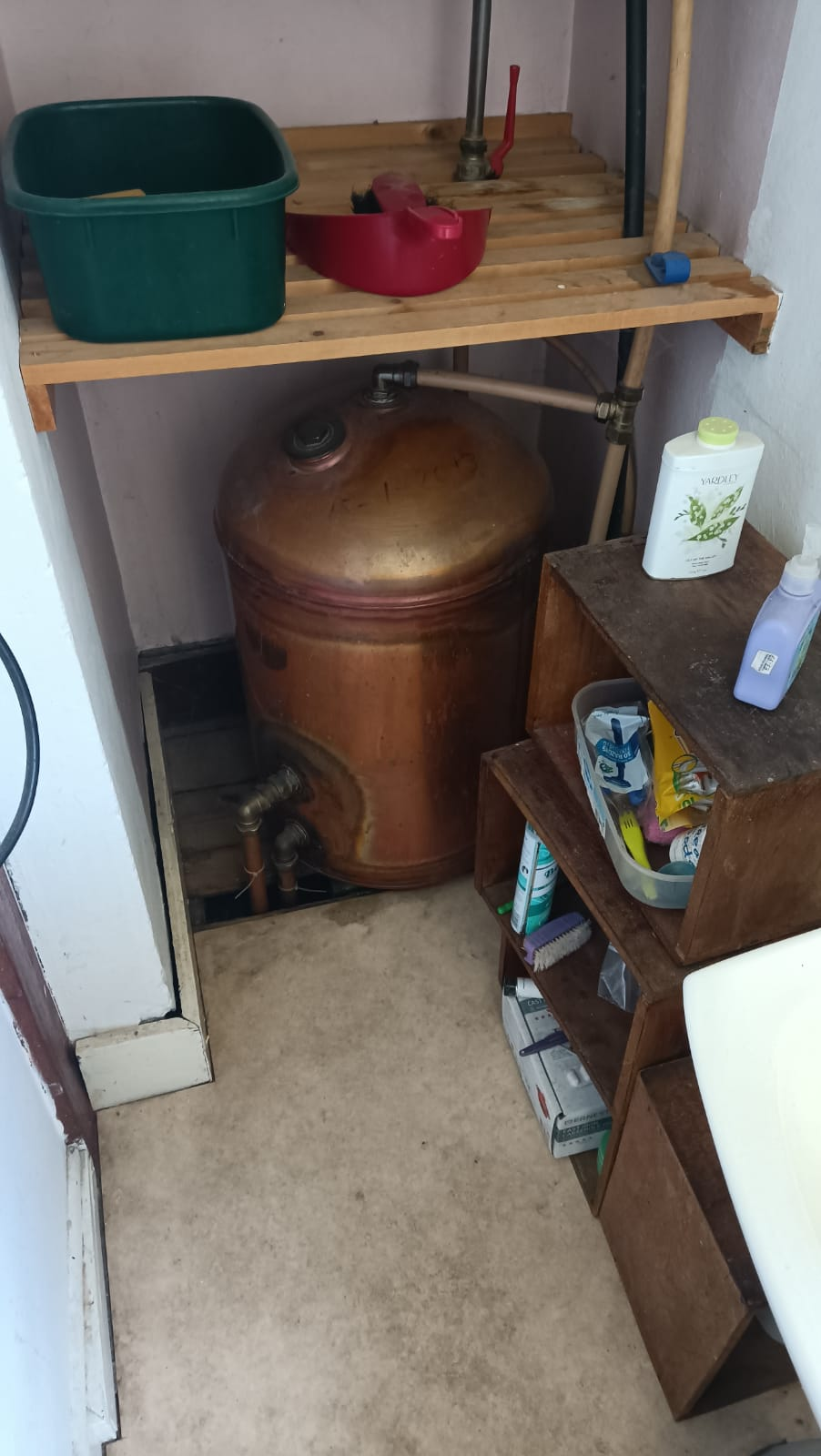
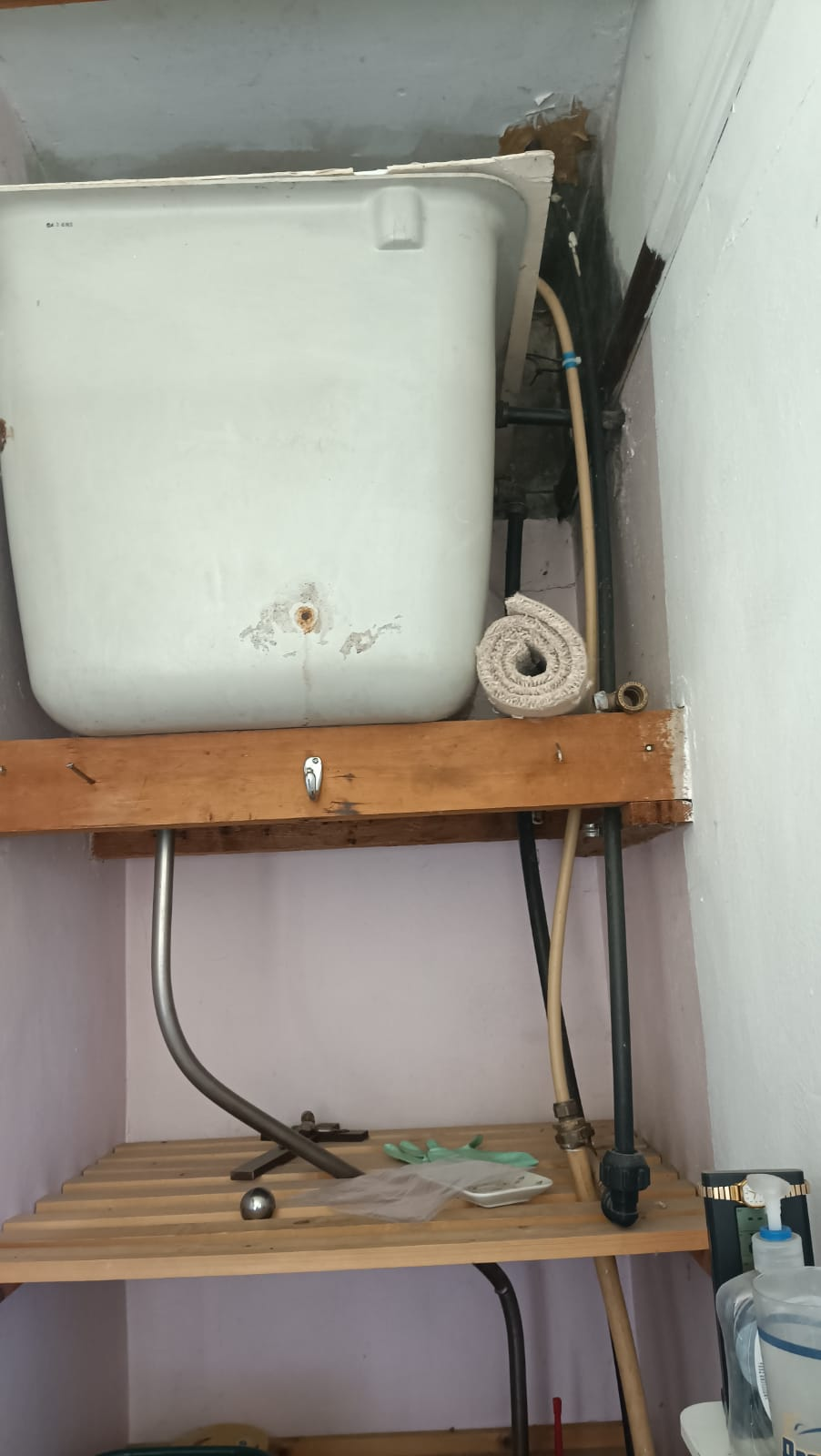
Thanks very much all for replying. There's really no excuse for not getting the water sorted. My best mate installs softeners plus treatment units! Must organise a water test asap. The current one is fibreglass, is that acceptable? Aware of the dangers, I think there was a terrible case somewhere in SW England a few years back I think when a tank came through the ceiling. Hence wanting to do something about it. Also it forms some of my motivation of wanting to keep all stored water downstairs in a tanked cupboard with a drain to outside. It was originally a 1950's system with a copper boiler in the Rayburn where all the DHW water went through the rayburn and a direct cylinder. The swap for a newer (but still 2nd hand) rayburn with a steel boiler last year has caused brown water from the hot taps and no doubt corrosion of the boiler. A bodge that needs fixing. Is a pressurised heating circuit much more resilient to corrosion etc than an open vented one with a header tank? I'm fond of the idea of a header tank over expansion vessels as a low maintenance system. Theres an existing W/C with space for a shower if we remove the Copper Cylinder upstairs. Theres a shower in existence downstairs at them moment and a room that could be a bedroom so thats not a huge concern. The cupboard downstairs is 630x950mm x 2650mm high. Its adjacent to an external wall with a void in the floor (used for an open fire bellows originally) That could be used for a new feed to the house. Its also directly below the upstairs W/C. The cupboard is 1.5m from the Rayburn laterally and the 3rd wall backs onto a wall where pipes could easily be routed to the oil boiler. It really is ideally placed but just a little tight. Ok how about this. Well water > Water softener New MDPE pipe routed to direct combi TS + Hep2O cold manifold Rayburn > TS Oil > TS TS > Downstairs Rads only. TS > Blending valve > Hep2O manifold. CH to be operated by Temp switch near the bottom of the TS to ensure that CH doesn't cannibalise DHW. If CH needed just fire the boiler or Rayburn and once the DHW portion of TS is hot then CH will spring to life. Slower yes but simple and should ensure DHW is protected? The rayburn will defo be copper piped primary to TS. Is there no more flexible option for the primary pipework from the oil Boiler as this will be tricky to route? Oh one more question. Is sludge lightly to banjax the TS connecting it to a set of old Rads and a steel boiler that is rusted internally on the Rayburn?