
Nickfromwales
-
Posts
31384 -
Joined
-
Last visited
-
Days Won
346
Everything posted by Nickfromwales
-
Probably best to get a second opinion
-

Comparing lengths of impact drivers
Nickfromwales replied to Construction Channel's topic in Tools & Equipment
@Construction Channel And for the 1st prize..... The welshman takes gold Dont let the door hit you on the ass on the way out -
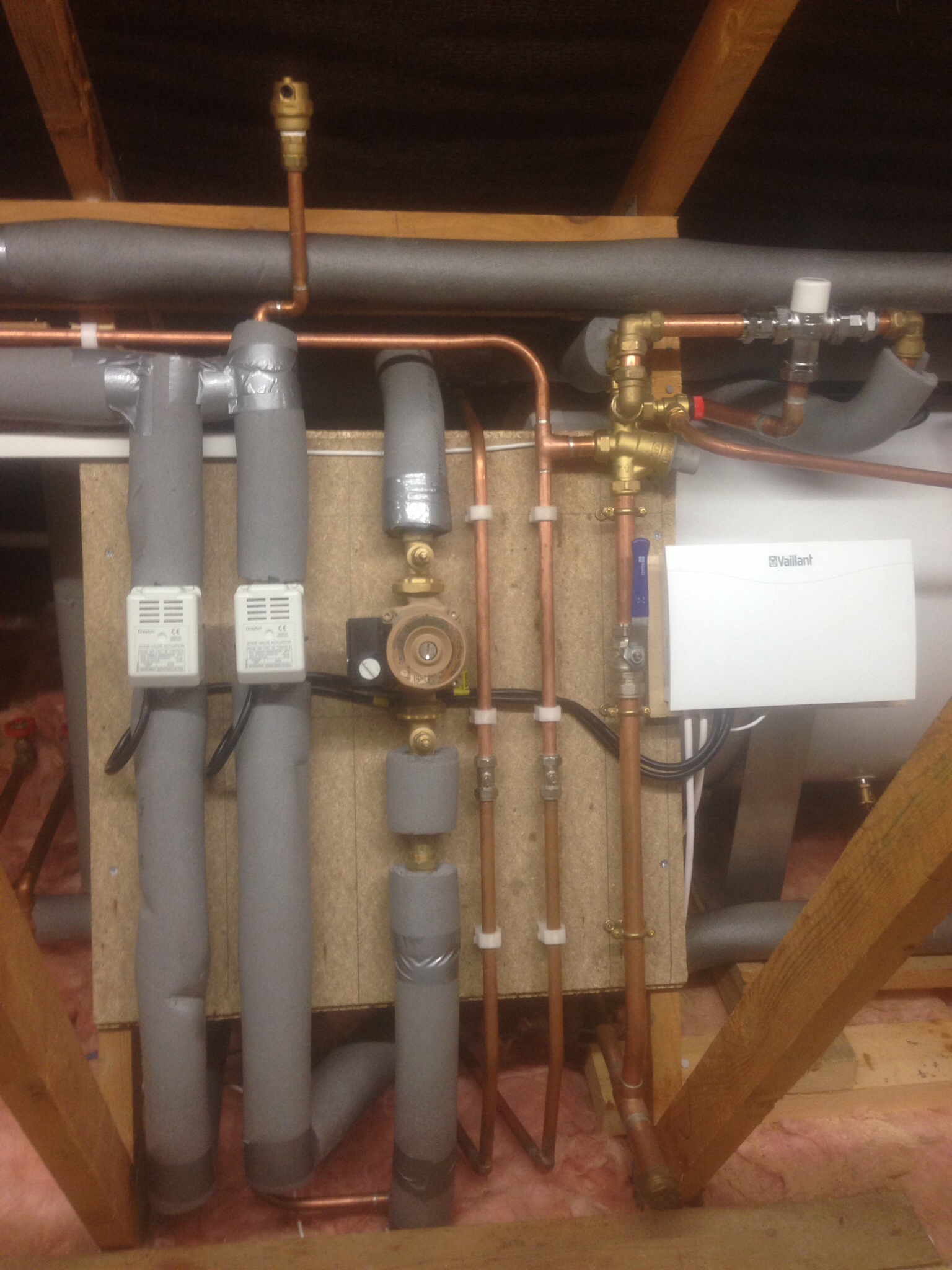
Its a TS so there is no variable load. The boiler has one of two targets to attain. In DHW 'summer mode' we've set it to heat the top of the TS to 65 iirc so the boiler ( which is now a dumb box on the wall set to do as its told and nothing more ( practice differs slightly from the theory as its logic tells it to modulate as it hits the drop off point )) and therefore should just go at full wallop until that stat clicks to satisfied, where it should go into overrun and then standby. Likewise with the lower stat, just it takes longer to get there., but its set to a lower temp as its all UFH eg lower grade heat, plus we wanted the solar to have some input as soon as possible. A big kick in the C@@k is the DHW pump, when running, fires the spillover heat from the DHW PHE directly into the lower 1/4 of the TS ( even when in summer mode ) so lovely roasting hot water is forced into the TS and causes the swirling that gave us the previously posted temp readings of hotter in the middle than the top. Go fecking figure that design I was half tempted to redirect that return back into the midriff but there weren't enough days in the window we both had. TBH we could have stayed there another 3-4 days yanking and tweaking, but it wasn't worth the "investment" as it will never be right without some serious 'material' alterations. Without picking this apart for its failings, it works, so a result afaic. But its still in the back of my head that we walked away without hitting 100% ( instead we left more than reasonably happy that we did what we could with what was there ). In a PM I called it "polishing a turd", guess ill never make it to the parish council "More tea, Vicar?"
-
Boffins corner for you two please?. I left school nearly two decades ago, and I'm not going back .
-
It's quite a clever boiler with 6 stage triac based heating output from 0 - 100%. It measures flow and return and indeed modulates quite ( if not too ) well.
-
If heating is called for, even for one room, the TS will take instruction from the lowest of the two cylinder thermostats eg 'winter mode'. The boiler will fire and go straight to max output as its trying to now heat the whole TS whilst heat is also being drawn out of it simultaneously. The reason the boiler sometimes lights and modulates quite quickly is that its in 'summer mode' ( DHW only ) and taking instruction from the upper cylinder stat, therefore the return temp gets up much much quicker and allows the boiler to drop its output accordingly, exactly how it should operate for the months of the year where space heating isn't required plus ST is generating too. If your drawing heat then the boiler is doing exactly what its been told to do eg replace it as quickly as it can, and as its not a gas boiler we don't need to worry about the temps of the return ( no need to maximise condensing efficiency therefore ). Another reason we've purposefully set the boiler to come on at full wallop at the first hint of duress is that the boiler is only 24kW and is, in my estimate, at least 50% undersized, so it needs to stay ahead of the curve to stand a chance of allowing the TS to do what its been asked to. In reality it should have had a ~35kW gas or oil boiler instead, or possibly the same electric boiler but its big brother ( 40KW iirc ) as the boiler thats there is definitely going to struggle if it gets dialled back from max.
-
Bath Surround / Boxing In, and concealed pipework
Nickfromwales replied to Onoff's topic in Bathrooms, Ensuites & Wetrooms
? ???????????????????????????? -
The HP installation kits seem very expensive for what they are. What did you pay and what was included if you don't mind me asking?
-
Understood. Just a cool or cold return means you've dumped every bit of heat in that's available. A lot depends on the pump speed.
-
"and make sure that my build not only gets out of the ground but stays in the same place once it's done"..... Always a bonus . Great news.
- 2 comments
-
- 1
-

-
- piles
- commencement
- (and 5 more)
-
@ProDave Were talking about £25 more for a much better coil. I thought it was a no brainer TBH ! I certainly can't see a disadvantage.......anyone? It's what I'd go for, thus squeezing every drop of heat out.
-
You mentioned the boiler. Is all hot / cold / heating already encompassed?
-
Why not make a small clear plastic upstand and use that instead ? Some stiff clear plastic from retail packaging may do it. Be prepared to buy a new shower if pulling this lot apart isn't easy from the outset. Also be prepared for the lowest tile to come away too if any moisture has got through the silicone and to the plasterboard.
-
Crossed with Ed
-
Driven rain / wind etc will find its way in. If there is finished internal work then you need a 100% wind / weathertight 'roof' so make the call. What's the difference between matey-boy and your quotes?
-
You just did then In fairness to Andy, he's kept me aware as the news has hit him, and I assume he's now got the unenviable task of systematically sifting through a lot of customer enquiries, in the order in which they were made, to convey this information. Im sure it's a crease that will be ironed out accordingly, but I expect there will be a significant delay in rectifying the issue and turning it around for production.
-
Inch by inch
-
A bump in the Sunamp road..... Communication received from AndyT as of the last 24hrs. Quote from an email..... "A hold has been put on the PCM34 due to a corrosion issue with the type of metal used and the hot salt and I should add that this has not been the case with the PCM58. I am sure that you understand that we must allow the chemists to investigate why this has happened and come up with a solution. When I know more, I will naturally let you know however in the mean time you might want to consider a plan B." @le-cerveau, are you aware of this yet? The above information is all thats known for now, so please, no deluge of questions here as @AndyT has promised to update on the situation as and when he is in a position to do so. Thanks in advance.
-
Quite simple. Stare him in the eyes and say "perfect opportunity for you to prove them wrong, isn't it?" and let him know your 'review' will be warts as well as praise. Dont give him any more ground than he has already taken from you, thats not the direction you want to take. At the very least you need to stand firm, but as said, id look at gaining a few inches, one at a time. More presence, daily breakdown of where he's at, all ongoing communication reiterated in emails, and that'll send a message that if he drops the ball he's accountable.
-
Ok. As you like a deal Dave ( ) you can have the 300L HP UVC with the 3.3m coil for £875, OR, you can pay the £898 and Trevor will give you a £150 upgrade to the 4.5m ( iirc ) high recovery coil just mention who you are and the forum. The MyTub listing is NOT for a HP UVC, plus is more expensive for the equivalent that Trevor would supply if he was asked to provide that cylinder in that listing. They're just 3rd party re-sellers, and the mention of the HP coil in the description is just click-bait mate. I'm posting you a mini crowbar on next day delivery so you'll be fine to get your wallet open Watch out for the Kamikaze moths !!!
-
Bath Surround / Boxing In, and concealed pipework
Nickfromwales replied to Onoff's topic in Bathrooms, Ensuites & Wetrooms
None of the ones I've done have leaked Use a colour matched silicone, not grout, in those areas and Roberts your muvvas bruvva. Tanking is obligatory, but he'll already have a tanking kit so can brush a bit on there without breaking the budget ( bearing in mind a full tanking kit can be had for change of £40 . ) The pockets set a room off, fill your boots Clive . -
Could I just add, that when you and your builder next discuss things, you ask outright if "there is anything else". I wish I could get away with, with my customers, what he is getting away with, with you. Dont feel daft and not post here, that WOULD be daft. Maybe let him know that this episode is being logged online with an audience of 1000's and you'd really prefer not to drop him into the bubbling couldron of boiling fat that is an online / social media slaughtering. That would make me poop my kegs. No need to mention where, as there are many hundreds of forums where you "could" execute such an action. Time to stop being a kitten and get your tiger claws on . Get weathertight and then get a fresh, firm grip on things.
-
I'll be on it like a tramp on a kebab. .