
Nickfromwales
-
Posts
30346 -
Joined
-
Last visited
-
Days Won
297
Everything posted by Nickfromwales
-
Lol. Just remembered it’s @PeterW‘s reamer
-

AndyT ( Andy Trewin ) formerly of Sunamp
Nickfromwales replied to Nickfromwales's topic in General Alternative Energy Issues
With the additional benefit of no hugely over-complicated installation, associated paraphernalia, and no need to have a G3 annual inspection for life. Pretty damn fine, from both a plumbers and an owners PoV. ? -
I use my Bahco spanner with the jaws fully opened. In and two half turns and job done. Shame that the previous ‘mate’ plumber couldn’t afford to buy her own reamer on her £80 an hour wages
-
Hi Steve. The problem you will have is generating the high grade heat that you’ll need for space heating, unless you intend to / already have seriously upgraded the insulation and airtightness of the existing fabric of your home. DHW ( domestic hot water ) is a no brainer so I’d try to assess what you’re going to do for heating first and then compliment that with the DHW setup. If you can improve the house enough to lend itself to say oversized lower temp radiators then you definitely would be able to go for a heat-pump, but to go to a SA ( Sunamp ) unit(s) for space heating will have its problems. It’s do-able, but the issue is getting the kW input vs the kW required, especially when it’s the depths of winter. The SA units with an ‘e’ prefix have a 3kW immersion heater, and they don’t do a bigger one, so to get, for eg, 18kW of space heating via direct electric > SA you’d need 6 x ( albeit the smallest in the range will suffice ) SA units to get the conversion capacity. An option for you may be an electric boiler, fortified with the PV + battery storage system, but that would be a hell of a load to try to offset. If you’re happy to munch through electricity then without improvements I’d say electric boiler + SA for DHW.
-
Can we have a pic of the end of the fitting ? It should show flat edges on the circumference. I said pump assembly not pump Union ? Large cabernet? ?
-
If you'd have rung Wunda today before 6pm they'd have dispatched for a delivery tomorrow. As for your guys not rating either Wunda or ( astonishingly ) Grundfos, then the title of this thread summarises nicely. Grundfos are pretty much the industry standard and feature on every single one of my jobs. The flat face has the nylon washer against it and the nut tightens against the pump assembly Union. That cause the lot to tighten up. If the nut freely slips over the fitting it has parted company with then it may be damaged or slightly oversized, but the norm is a nut and flange which have flat spots to allow the nut to slip over and become captive, then the nut will rotate flat and tighten up without coming off. Check with Wunda, as I really can't remember.
-
The idea was to preserve the cold air as the ceilings are high and the runs, at least a few, are quite long. The exhaust runs aren’t insulated. ?
-
Central Heating Manifold system
Nickfromwales replied to MikeGrahamT21's topic in Central Heating (Radiators)
It maybe ok for now but unless 100% vertical it will fail I assure you Chop it out now as the air will vent into the rads anyhoo. ? Be good to see some pics ? -
STROMA certification.
Nickfromwales replied to TheMitchells's topic in Regulations, Training & Qualifications
Yup. Got my £5 worth of day glow coloured post-it notes and tags etc ready to tag the high frequency stuff. A few good YT vids with good advice re the exam which is time limited. Says to flag answers that you've guessed so you can answer the ones you know, quickly, and then in the remaining time you get to go back to the flagged ones and reference the book to correct them. A few sparkies out there who aren't fans of the fast track schemes but if it's a good enough filter to recognise competent people then I'm a fan. Without core electrical knowledge I wouldn't have got through the first phone call in fairness. Fell asleep 55 pages in last night. Lightweight -
Hi and welcome. Youll find a wealth of info here but you’ll need a weekend for trawling just to scratch the surface. Ask away!
-
....new eyeballs. Please don't try this at home, folks.
-
My gut feeling is the wet product shouldn't get to the frame at all. Foam for the bulk of the underbelly, cut flush and then a tape so the frame and whichever wet product is used will never convey anything to the frame. Assuming these have been packed and mechanically fixed, there will deffo be a void underneath and a path to atmosphere. Have the fitters detailed the outside of the frames at all at the footer? Pics please! Remember that the frame will separate from the product ( SLC / other ) and airtightness will be lost. The frames need to be taped to the floor afterwards so you'll probably need to have tape continuing from the frame upwards to the underside of the threshold, and then a full width run of tape applied to the underside of the threshold but with at least an inch or so exposed ( so sticky side up ) so you can tape down onto that and the slab when the wet product has cured / dried fully. It will be a PITA to do, but I'd try and remove the backing from one half of the AT tape ( 2" wide tape so 1" strip of backing removed lengthways ) so you can ( clean and dry first ) stick to the underside of the threshold and leave the backing layer protected tape showing 1" out ready to peel off and tape back to with the final 2" strip of AT tape. Ultra SLC can be put down in 50mm layers, so I'd look to fortify that with 10mm aggregate and use that. That should ensure a void-free filler material and flow nicely into every nook and cranny. Beware, that if you leave a pencil sized gap under the frame its bye-bye SLC and it'll all just run out of the slab and onto the ground outside. Foam the ? out of it first
-
I use the force, and cut all mine blindfolded. Honest.
-
STROMA certification.
Nickfromwales replied to TheMitchells's topic in Regulations, Training & Qualifications
£200 on books ? I hope one of them has a bloody happy ending ? Nightime reading ?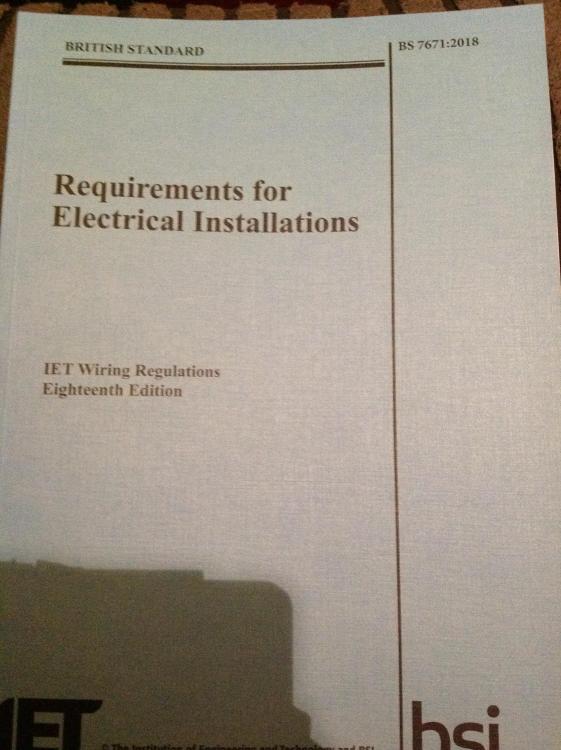
-
@vivienz What's the provision for damp course / wet to dry transition from atmosphere to slab? I'd have thought the window fitters have done this before, but of all the level threshold stuff I've seen there has been a rubber type membrane that the window / door has been sat on which is turned down at the outside threshold and upstood at the inside. Do you have pics of before / during fitting? My concern would be a too wet / runny mix migrating outward under the frame, so maybe the first step would be to inject a high expansion foam to seal, from the outside back through under the frame, and let that cure before back filling the slab from inside. Remember the airtight detail needs to be high integrity and last the test of time at these few junctions and that needs a plan, and a beady eye to execute it effectively. ?
-
IVT Ecolane ASHP - any owners out there?
Nickfromwales replied to readiescards's topic in Air Source Heat Pumps (ASHP)
Nope, as the PCM34 is a pre heat for DHW ( feeding into the second PCM 58 eHw SA unit ) as well as the ASHP buffer, it must stay heated during any occupied let. The ASHP keeps the PCM 34 heated, as per the DHW timeclock setting, and it toggles in / our as energy is required. It gives a jump start to the Ufh when it calls for heat as a buffer and will ( eventually ) accept pv. The 34 will get heated and then stop calling for heat until a time comes that energy has been consumed from it, eg in the evenings when baths and showers / dish wash etc are all being used, where it will then ask to be replenished, but otherwise it will just sit in the ‘charged’ state. The PCM 34 gets heated as per W plan where DHW ( the PCM 34 ) is given priority over space heating. All this allows the ASHP to reside at one low mono temp for max cop and preheating the water going into the PCM 58 nearly doubles it’s DHW capacity. As a biproduct of running space heating, the PCM 34 will also be heated as it’s a buffer, a bit like the old systems where you always had DHW and then DHW & CH but no option for CH only. Clear as mud ? -
Just to be awkward...... I am of the opposite opinion where I would routinely have the accumulator on the output side of the softener. I would fit a robust double check non return valve on the output side and have the accumulator full of softened water to guarantee high flow, softened, water can service at least two showers at any one time without suffering any noticeable pressure drop ( subject to the run times being suited to the design capacity of the accumulator ). Re the hard water outlet at the kitchen sink. If you have a boiling water tap then the remit is usually to feed it with softened water as per the MI’s. I suppose it’s down to the water quality after your chosen softener spits it out ?
-
Bit late to it. Went to the NSBRC today for a strut around and meet a couple of bods. A decent range of stands there.
-
I always mire bond the trims on ( but I don’t go pulling on them afterwards! ). The fact you’ve CT1’d or siliconed is enough of a waterproofing measure. You won’t get these watertight like a submarine, but you may die trying by all means I just retro seal any obvious gaps with the appropriately coloured silicone, rubbing it in with my finger and wiping off the excess with baby wipes. CT1 multisolve spray finishes cleaning up and gets things immaculate, after 24 hours. Fwiw I’ve accidentally bumped trims off many times so they will indeed come back off. The mitre bond is just to hold it until the tile adhesive / other is applied for final fix.
-
Your doing fine, remain calm. Grout WILL save the day I get my kegs in a twist on nearly every job before grouting it. The mitres will be ok after a whiff of grout. Chill winston.
-
Quite simple. Just T out of the cold main AFTER the softener and run a large bore ( 32mm ) MDPE out to where the garage / acc’r may end up. Just cap that off and leave it for later.
- 19 replies
-
- 1
-

-
- accumulator
- mains pressure
- (and 1 more)
-
Agreed. Just goes against the ( my ) grain to have the 15mm restriction in 22mm line. A changeover setup to make it an ( emergency ) diversion device would be ok and I believe a lot of 24 hr fast food restaurants do so. My ex apprentice used to do that in KFCs. They accepted low flow during duress eg until the UVCs could be repaired, but meant they could keep trading. I’d say for a couple without children etc it would be fine, eg no different to a decent combi.
-
The only problem is the low flow rate ( 15mm connections ) vs the very high flow rate from the UVC that would be feeding it. A bit like someone standing on the garden hose and you see the drop in flow, except it would be permanently there.
-
For cooling you just arrange the motorised valves so that they align the ASHP flow and return solely and directly to the UFH manifold.
-
Why is my hot water tank making a noise?
Nickfromwales replied to ProDave's topic in Boilers & Hot Water Tanks
Last one I had issue with was a non return single check valve on the hot return. As it was directly after a 90o bend the water was causing the valve to oscillate and just moving it a few inches further from the bend made it go silent. Funny thing, water ( or hydraulic dynamics ? ).