
Nickfromwales
-
Posts
30353 -
Joined
-
Last visited
-
Days Won
297
Everything posted by Nickfromwales
-

Temporary heat source for UFH: Willis heaters
Nickfromwales commented on oranjeboom's blog entry in Kentish RenoExtension
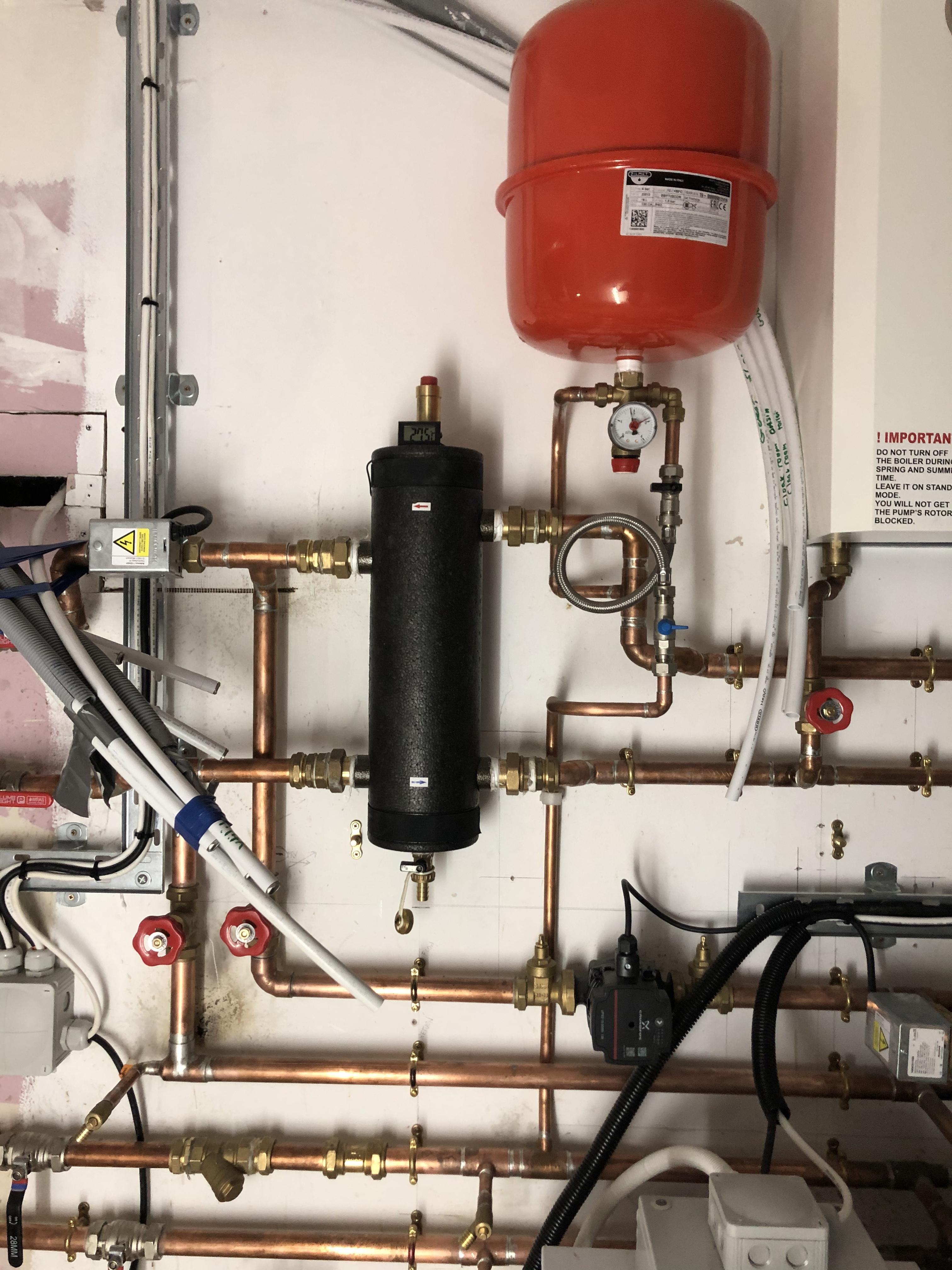
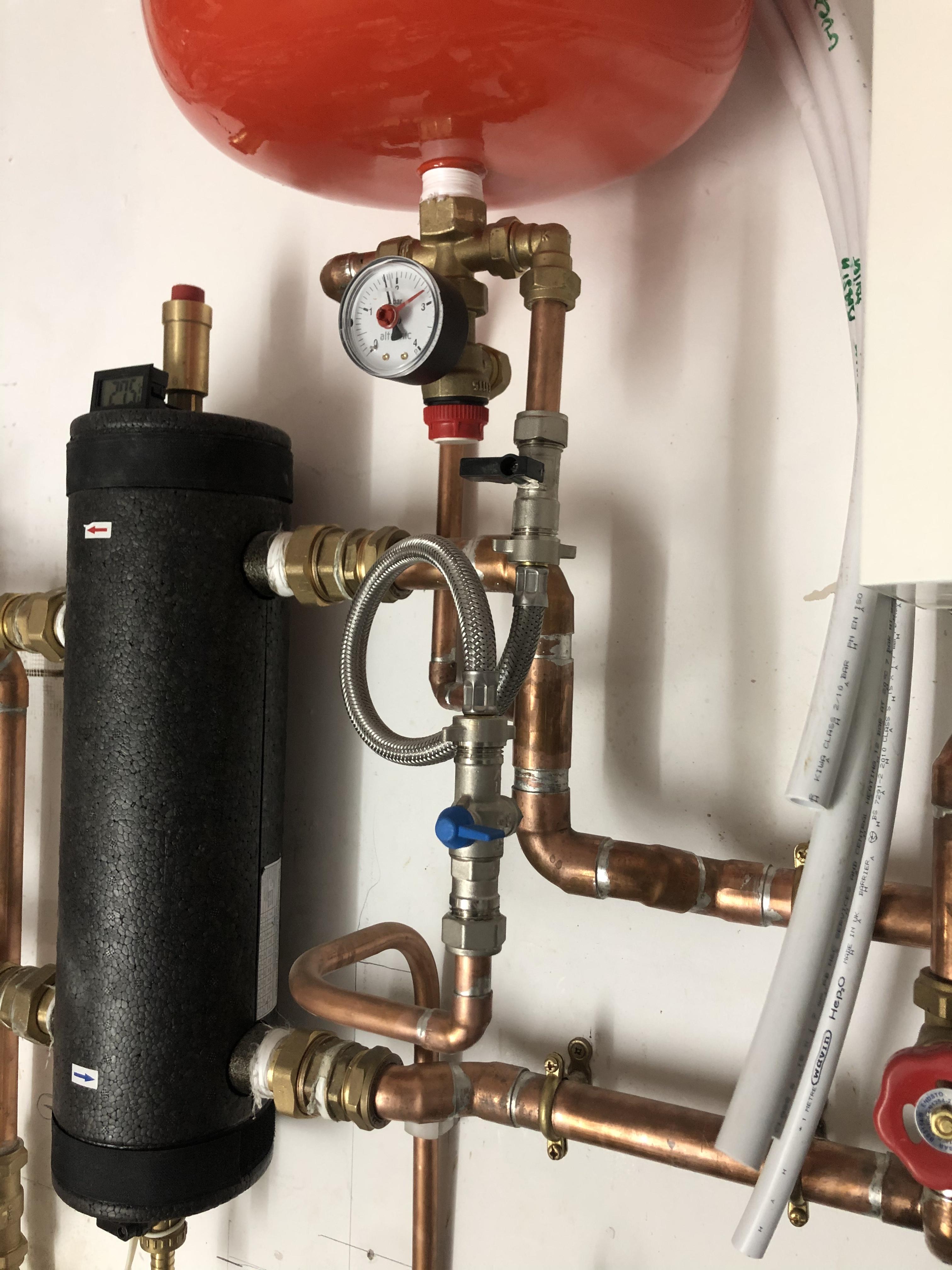
Yes, it’s time / volume / temp that dictates the permissible discharge regs. Also, iirc, all modern plastics can tolerate high temp for quite long durations. That’s how communal UVC’s ( dozens of them ) can be connected to a foul water riser without issue. Some more pics of a sealed / expansion setup. PRV yet to be connected. That’s the port at the rear of the angled brass union with the small red cap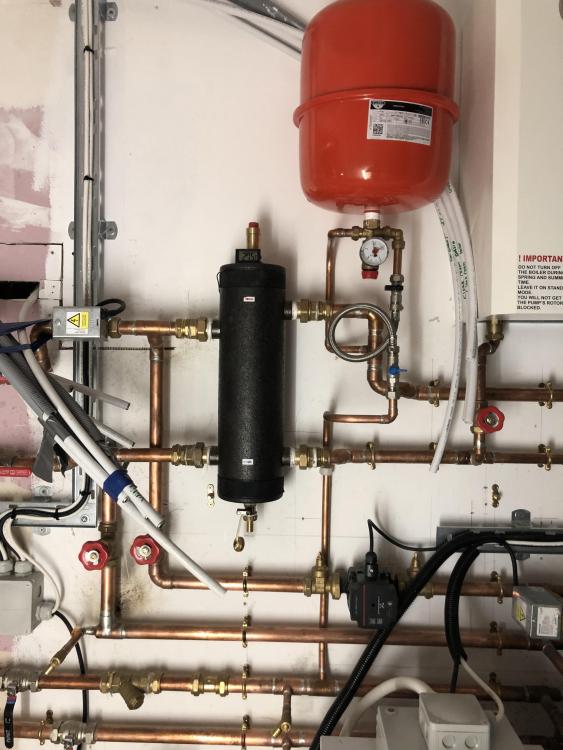
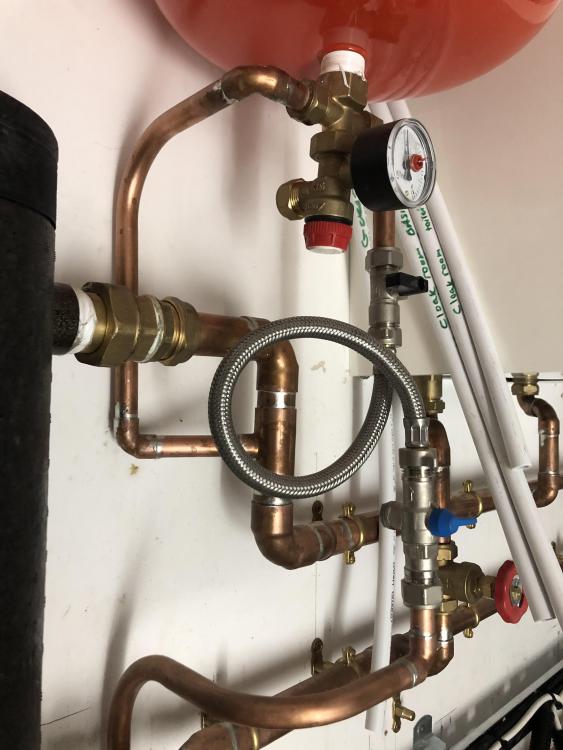
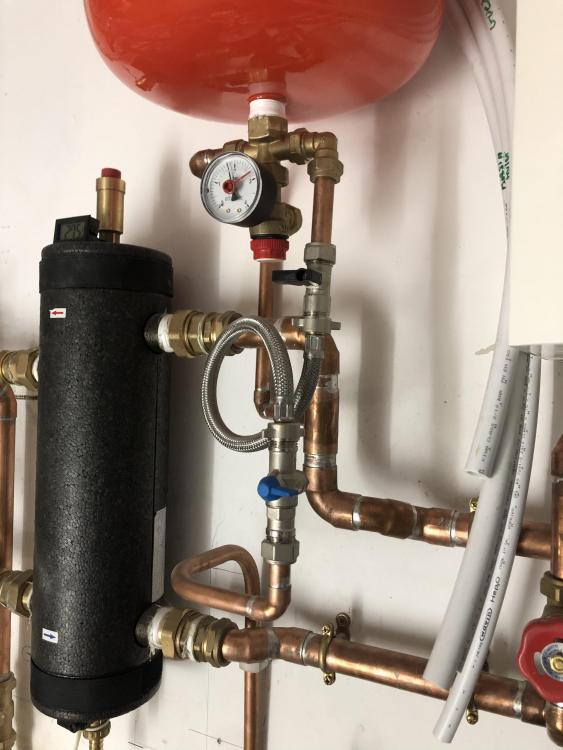
- 159 comments
-
- 1
-

-
- willis heater
- ufh
- (and 1 more)
-
Temporary heat source for UFH: Willis heaters
Nickfromwales commented on oranjeboom's blog entry in Kentish RenoExtension
B is the 3/4” female union that the expansion vessel screws into..... A is the pipe that you want to tee into. -
@Russell griffiths Will this be facing true south, or can you get an E/W or E/S/W array? I assume it’ll be mono pitch to match the house though? We’ve not long done one which was 135m away from the garage, where the AC batteries and CU2 reside, and that’s spewing electricity out. No issues with remote install whatsoever. As said, just hook into the garage CU, but, knowing you, I’d put a 25mm2 SWA between the house CU and the garage to allow you to run some big stuff in there too. Don’t forget the laundry room will need a decent supply also, so allow for a 16mm2 to that too. Price hike in buying bigger cables now vs future costs of up-sizing later are pennies . Also consider people coming with EV’s so the outside feeds will then be future proofed against that too.
-
If the stat says it’s up to temp then it won’t come on. Try turning it to max ( 30oC ? ) and report back after 24 hrs.
-
Consumer Unit research, what can I ignore?
Nickfromwales replied to epsilonGreedy's topic in Consumer Units, RCDs, MCBOs
That’s how I used to populate CU’s on my bread & butter work, eg where an all RCBO board wasn’t cost-effective enough for a client but they still wanted segregation. For me, it’s now ‘all RCBO’ or nowt. Just way too many plus points to consider going back to split / dual arrangement. -
Quinetic do dimmers too. If you use all IP67 switches ( for no official reason ) you get the single push ( reactive ) type switch and they’ll all match. Also, these all look the same when used in 2G / 2-way arrangements. Eg you don’t end up with one switch ‘on’ one switch ‘off’ alongside each other. Acceptable for normal human beings of course, but OCD freaks like that kind of thing
-
Agreed, but I was more than impressed by these Quinetic stuff. Utterly faultless and a fantastic solution. I use them to put light switches inside bathrooms ( like on the reverse of a free-standing bath ) to switch between main and feature ‘relaxation’ lighting whilst taking a dip. Last place I used one was behind 300mm of waterproof reinforced concrete ( so a bit of a cage ) and it was on the inside of the garage wall. Transmitter ( switch ) was about 25-30m away at the carport and it works flawlessly. I really didn’t expect it to work so well in such an adverse s situation, but work it did, and still does. Connect up the receivers and take a walk with the switch. You’ll be surprised how far away they’ll still work.
-
Cut the back out of the 2G to get 2x rcvr in there.
-
Maybe put a 2G box alongside the required one and put the receivers in there with a 2G blank plate over the 2G box?
-
Are you and @Onoff related by any chance? .........?
-
Have a read here;
-
I always use clear CT1 to do the fundamental sealing, for waterproofing etc, wiped back to the point it’s not noticeable, and then apply the most minimal bead of silicone I can get away with. Silicone doesn’t last much more than 5 years or so, after being wiped / cleaned etc, so I treat silicone as a sacrificial, cosmetic seal rather than the fundamental and cosmetic seal this chap seems intent on creating in one go. A good video for ‘DIY / daily drivers’ but not what I do. The last thing you want is for silicone to get a hairline gap and start letting water in constantly, whilst you carry on bathing / showering x times a day and the water is merrily soaking into the house structure for the duration, undetected. I’ve done loads of insurance jobs where the room looks immaculate but the studwork and plasterboard are completely turned to mulch. That’s been solely down to tiny amounts of water being absorbed by the fabric of the house, day in day out, over a number of years. One job where I could literally just squeeze the 4x2 and wring it like a sponge. Two bathrooms back to back so the bath hid the leak from the en-suite shower until the downstairs ceiling eventually gave up the fault. Finished that job on a new years eve, ( just as their guests were arriving I was getting shown out via the ‘staff exit’ ), and not even a cold beer or king prawn in breadcrumbs made it in my direction. ?
-
Mixed bag here because I’d have recommended using a flexible waste to alleviate such a baptism of fire. FWIW, a large number of tray-specific traps come with a flexi and in some of those instances you have to use it. Ive been fitting barrooms for a 1/4 century and I’ve never had a come back from a flexi. They are thinner walled, they do have grooves / undulations, but it’s just water and no solids so, apart from a build up of ‘human / soap fatty scum’, ( which builds up in a rigid waste pipe JUST AS WELL I ASSURE YOU ), there is no issue using a flexi at all. If it’s out-stretched then it could benefit from being supported, but after that I’d never say it was to any detriment whatsoever. If the supply waste pipe is rigid with no movement X/Y/Z then you will need to be mm perfect in the execution. No twist, and finished plumb and flush to the waste hole and aligned dead centre. Good advice given about mocking this up dry, but some fittings will bind and not allow you to push them home as they will do when lubricated with the glue. Gaining 2-3mm over 2 or 3 fittings ( during re-assembly ) will put you off centre. Beware
-
Might get some T-shirts printed up.....?
-
+1000
-
Thermal inertia ?
-
Dead man walking.......
-
Yes, but largely because ‘most’ generic types of heat source cannot deliver low enough amounts of heat in most situations. Therefore the heat on / heat off cycles aren’t sympathetic to short windows of heat injection. That is amplified by the emitter then mimicking those peaks and troughs. All comes together for a not-very-nice end result. Been to lots of property’s suffering from this, especially retrofit.
-
Put it in the bin dave, it lasted 16 years lol!!
-
Yes, but it’s a coarse statement I agree. Just recounting every job I’ve been on with thin screeds vs the ones I’ve been on with thicker / more substantial heat density (?) / thermal inertia. Totally different jobs with hugely differing results. Most of the issues are with managing the heat delivery to the manifold, and then getting it emitted from the slab ( screed ) in a comfortable and effective way. Lots of customers complained that it was either too hot or too cold as the over / undershoot was almost unmanageable. Paper exercises are one thing, reality from practical experience is my church, so I can only recount what my actual experiences have been with the different disciplines.
-
Go for 100mm of EPS, then 100mm of PIR rigid foam type insulation above that. EPS is cheap as chips and will make a huge difference to the naff bit of PIR your BCO will ‘insist’ you install If you stay at home, then 100mm of screed will serve you well, as the thicker the slab, the more like a heat battery it will perform. Thin screeds need higher temps for longer durations, and the hysteresis is terrible in comparison to thicker ‘slabs’. Plus they don’t hold heat for very long either. They do heat up quicker, of course, but you only need to use a timer and learn how long it needs to come on for before affecting the room interior and vice versa. Eg with a thicker slab set it to come on sooner than you need, but also to turn off sooner as it’ll keep emitting heat until it cools off. It’s all dependant on what / how you’re building and how good it performs, so a bit tricky to call in a few posts.
-
What’s the boiler flow temp vs UFH flow temp? Is it quiet when starting from ‘cold’ then gets progressively noisier as the UFH temp rises to the TMV set point?
-
Don’t pay your trades up till they have finished
Nickfromwales replied to nod's topic in Floor Tiles & Tiling
.......a thing of beauty ?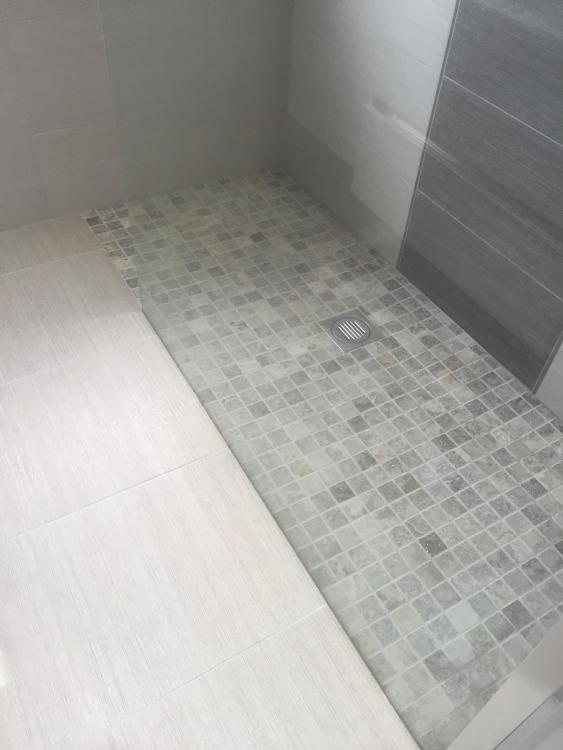
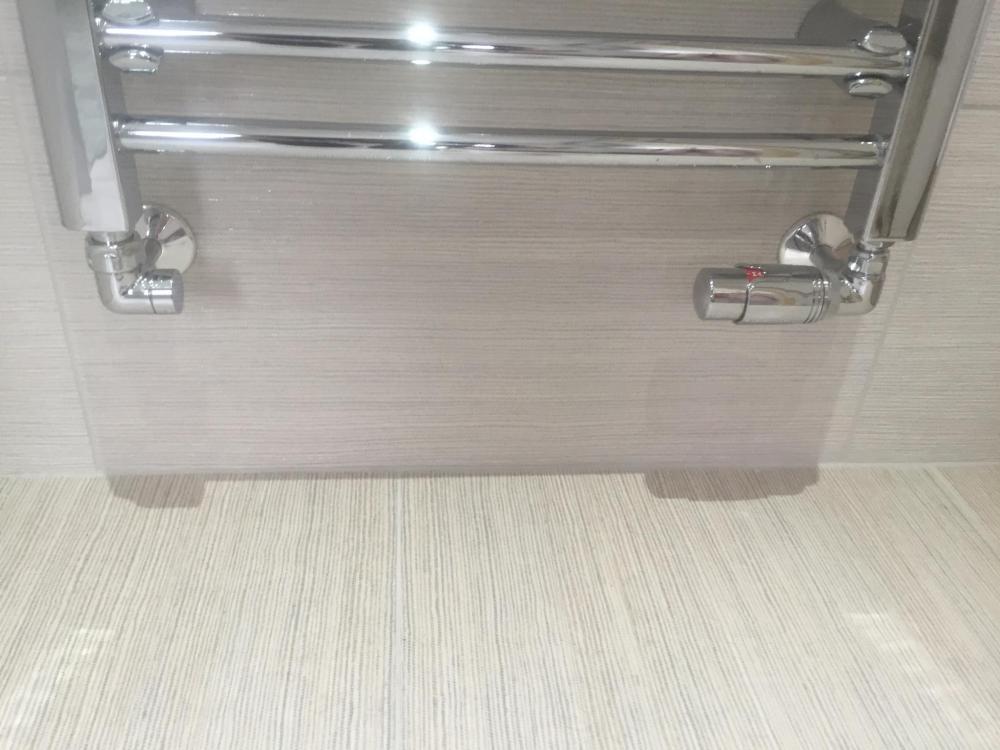
-
Don’t pay your trades up till they have finished
Nickfromwales replied to nod's topic in Floor Tiles & Tiling
That’s what tape measures are for ? You don’t plonk a house down and draw around it for the foundations -
Don’t pay your trades up till they have finished
Nickfromwales replied to nod's topic in Floor Tiles & Tiling
Floor first baby. ?