


Temp
-
Posts
10690 -
Joined
-
Last visited
-
Days Won
43
Everything posted by Temp
-
Can PIR go between rafters in a warm roof?
Temp replied to Jilly's topic in House Extensions & Conservatories
My understanding is that it _might_ be possible to put some insulation between and above on a warm roof construction. However doing this moves some of the rafter towards the cold side so a condensation risk analysis should be done. It would also be advisable/essential to install a vapour barrier below the insulation. I recall reading that about a 1/3rd of the insulation between is about the maximum you can do. -
You could also try asking on the HMRCs own VAT forum. I posted a link somewhere. Make sure to point out its part of the demolition process needed to allow construction of a new dwelling and ask if it should be zero rated under section 3.3.4 of VAT 708. I would be inclined not to include the quote itself. Just refer to it as the cost of taking down the overhead power line to the old house being demolished.
-
Cannot reclaim VAT for any labor, should be zero rated to you. I would argue its demolition. VAT 708.. 3.3.4
-
who enforces an old (1940s) restrictive covenant ?
Temp replied to Rob Wisbech's topic in Party Wall & Property Legal Issues
+1 They have to get written to the benefit of whoever owns another piece of land not just an individual named person. -
What thickness of insulation are going for?
-
Yeah, no ventilated void needed a warm roof construction. Note for someone reading this in 5 years time... It's possible to have a "warm loft" with a "cold roof construction" and that would have a ventilated void.
-
Help required understanding Inverter settings
Temp replied to Solarexploits's topic in Photovoltaics (PV)
I'm an electronics engineer but not familiar with this system at all. My interpretation would be that setting 13 is the battery voltage at which it switches from utility back to the battery. So let's say there is no Solar at all... The battery will deliver power to the load until the voltage falls to setting 12 (eg battery nearly empty) then it switches to the utility/mains. When the battery voltage recovers to setting 13 (nearly full?) it switches the load back to the battery. Therefore I would expect setting 13 to be higher than setting 12. One problem with this theory is that the battery voltage isn't always a good indication of the state of charge. It works better for lead acid than lithium or similar technology 12 and 13 probably shouldn't be two close together otherwise it might oscillate between battery and utility/mains. For example when the load is connected back to the battery the battery voltage will drop a bit even when it's full. That drop shouldn't take it below setting 12 or it will switch back to utility/mains, the battery voltage would then rise above setting 13 and it will switch it back to the battery.. repeat. I might be totally wrong ! -
PS The membrane should be a vapour permeable type. I've used VP400 in the past and it's strong stuff.
-
That is one way but check the membrane manufacture allows it in contact with OSB. I think Kingspan do one. Otherwise fit counter battens and then the membrane allowing it to drape between them. This is to allow water to run down under the tile battens rather than potentially pool above them.
-
We were allowed 1.5m deep trenches in clay after an inspection pit and soil report. House a few doors down was told they needed piles and they ended up going very deep.
-
UFH advice on 100mm concrete downstairs and 50mm screed upstairs
Temp replied to KillyfadNewBuild's topic in General Flooring
For tiling they recommend allowing 1 day per mm of thickness. So 100 days downstairs and 50 upstairs. I would always use a flexible adhesive and BAL is probably the best brand (also for advice). What type of screed? Some anhydrite screeds need special care to remove a laitance that forms on the top before tiling. -
Some of the bricks in the arch look longer than standard length bricks?
-
Further.. It might even be possible to prove it with maths. Eg show that with the normal 135L/person/day fittings and rainwater recycling you will draw less than 110L/person/day averaged over a year from the mains.
-
One possibility might be to appeal the Condition on the grounds that its not needed to meet Policy SP10 of the Local Plan because you are installing a Rainwater Recycling System.
-
No its an option at the planners discretion. See my post above.
-
Eg Valid options are.. Cold Loft with Cold Roof Construction Warm Loft with Cold Roof Construction Warm Loft with Warm Roof Construction
-
Its the old confusion between.. "Warm Roof" or "Warm loft" - insulation between rafters rather than on the floor of the loft. and "Warm Roof Construction" - meaning the structural members are on the warm side of the insulation.
-
Do you meet the rules for the Ecology Building Soc?
-
Put a bucket out in the garden and give it a go. Think there is probably enough acid in rainwater to keep it streak free.
- 19 replies
-
- 1
-

-
- clean windows
- hard water
- (and 2 more)
-
The relevant bit of the Building Regs is Approved Document G.. So yes it is a more stringent standard than otherwise. Never heard of it being a problem for lenders. One option might be to ask the planners if they would remove/replace the condition if you install some sort of rainwater recycling system. Even if only for flushing loos. Propose your own ambiguous condition. What does the SPD SP10 say about rainwater recycling if anything? We have an underground rainwater recycling tank but its only used for garden/car.
- 20 replies
-
- 2
-
-
- building regs
- water consumption
- (and 1 more)
-
Indcative pricing.. http://www.mcbrick.co.uk/our-price-list
-
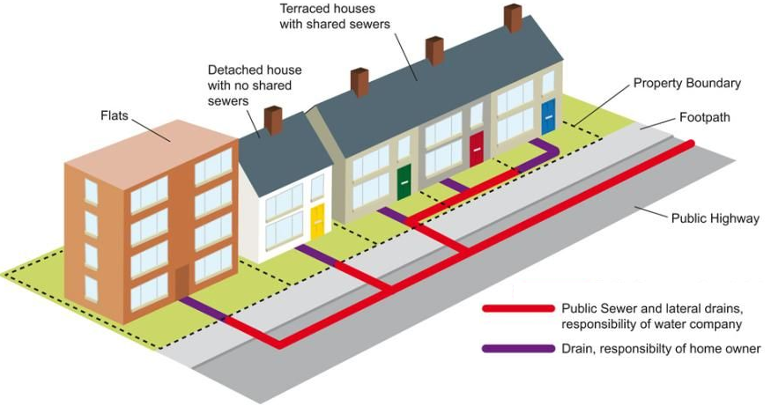
So is the main sewer backing up? I would notify the water co that the main doesnt appear to be coping when it rains . Tell them you think it might be partly blocked and you already had yours inspected. Remember the rules changed a few years ago so they are responsible for more of the network.
-
What sort of brief did you give him to quote against? If that has everything well specified then you can "accept the attached quote on the basis of the attached Request for Quote" keep copy yourself. Otherwise perhaps see if he will visit and talk you over what he proposes as you walk around. Write notes so you can confirm with him before accepting the quote. It's also worth trying to see a job he's done before or is currently on. The one thing that bugs me is the way some plumbers just throw the pipes in at all angles and just "make it work" rather than having neat well planned pipe runs.
-
Essential to cap any pipes or something will get in even if only spiders.
-
When I needed duct the place I got it from asked if it was for the incoming supply which he knew the DNO wanted to be a particular type or outgoing to a shed which he said could be a cheaper twin wall. That saved a few £.

