


pdf27
-
Posts
387 -
Joined
-
Last visited
-
Days Won
1
Everything posted by pdf27
-
Slightly random observations as my head isn't working very well today - treat with caution!: Garage looks quite close in size to a double garage, but not quite - and you don't appear to be using the space for anything else. From the 3D rendering you could probably keep the ridge height the same and just bring the eaves a bit closer to the ground to get room for 2 cars. As @le-cerveau points out, it's a good location for site services, maybe storage, welfare etc. during the build as well if you finish it first. If I've got myself aligned right, the double desk over the landing will have both chairs facing a wall, with a window between them. That window faces over the main view, but the sill looks quite high up so when seated it might well be that all you can see is the sky rather than the view over the hills which would seem to be one of the main attractions of the plot. You've got two doors to pathways at the side of the house but none to the back garden. Where are you going to be going to from them - the back garden or the paths? There appear to be acres of empty space in the middle of the kitchen. I'm not sure what works for you, but that wouldn't suit me. Downstairs shower/toilet looks really cramped to me, and the arrangement of the large cupboard next to it looks really awkward. Swapping that cupboard with the MVHR would give longer supply and return ducts in need of insulation, but more usable floor space and would ensure that your ductopus is in a more convenient place for the upstairs floors - I like the suggestion of putting the en-suite back to back with the main bathroom, and doing so would allow you to steal space for a duct run right over the revised position of the MVHR.
-
Yes. That's why I've been very careful to reference everything to a standard. It might not be the right standard to build to (an entirely different question which I'm trying to avoid in this thread), but it means that I can get much closer to a solution-neutral problem statement. In any case, the 10W/m2 is a comfort rather than energy-efficiency criteria, and the 60 kWh/m2/year for everything is the energy efficiency one. I've read the blog posts several times - I don't agree with all the design decisions but I think your logic and thermodynamics are both excellent. Is the 7 W/m2.K a measured value? That's rather a lot higher than I would have expected, and is worth remembering. My cousin has what I **think** is a Passivhaus in Hamburg, where we've stayed several times - we both like it a lot. Question: has anybody on here got a house with UFH in the slab and a radiator in the UFH duct running off the same water temperature as the UFH? It won't deliver much heat with the water at 25°C, but there might only be a tiny amount needed: At 10W/m2 there would be a ~25°C temperature difference between inside and outside. Reducing that to ~23°C upstairs means that the heat load is only 9.2W/m2 - meaning a 0.8 W/m2 supplemental heat requirement is needed to bring the temperature up to 20°C. Assuming 0.3 air changes per hour with a 2.4 m ceiling means that there will be 2.4 x 10⁻⁴ kg/sec of air movement, assumed to be 3-4°C warmer than room temperature. That's a heating power of 3.5 x 2.4 x 10-4 x 1010 = 0.85W/m2. That's spookily close - it's a very crude calculation since it doesn't allow for ventilation losses, etc. but it does suggest that a wet duct heater running off the UFH circuit might well be enough to make up the difference between upstairs and down almost completely, at least in cold weather when over-ventilation is a problem. In summer you can probably just turn up the flow rates and accept the slightly higher ventilation losses. Why not leave the MVHR in standard mode and just post-cool the inlet air with the main heat pump? If the inside of the house is cooler than the outside you still gain from the heat exchanger, and it makes the MVHR heat pump redundant.
-
Provided the water is not too cold (say 19°C) that shouldn't be a problem. The major concern is over-ventilation, but that's mostly a winter rather than a summer problem so it might well be acceptable (since bedrooms being a bit cooler in winter isn't a real problem).
-
Pretty sure there is - the power values quoted match up for that being a total.
-
10 W/m2 is an alternative Passivhaus certification criteria, setting the maximum permitted heat loss per square metre of internal area at the design low temperature condition - averaged year round will be far lower than this, and is catered for by the alternative 15 kWh/m2/year condition. 15 kWh averaged out over a year is 1.7 W equivalent - note that this is looking for inherently low-cost ways to meet the requirements for Passivhaus certification, not low cost ways to build a comfortable home that is very cheap to run. The 20 W/m2 is what the underfloor heating would have to deliver at the design cold condition in a two storey house if it is only fitted into the slab - 10 W/m2 for the ground floor and 10 W/m2 for the first floor. It's essentially a plant sizing condition which sets either the pipe spacing at 25°C or the flow temperature at a given pipe spacing to deliver this amount of heat - important if you're using an ASHP. One of the potential problems I personally have is that my wife is extremely sensitive to variations in temperature, and as a result we will need cooling in summer. Extending the UFH circuit upstairs will solve this, and make the heat pump's job a little easier too - I'm still trying to work out if there are cheaper ways of doing the same thing though. We'll certainly run the UFH water through a wet duct heater which will give a watt or two of extra heating/cooling, and some sort of electric towel rails in the bathroom too I suspect - I really don't know if that will be enough in our particular case though, and it's one of those that you can't retrofit later. Upstairs UFH is a lot of money for what you get though... I'd be very worried if I was coming to different conclusions to everyone else on here! If you look at the Sheffield Solar data, it's pretty rare that you'll have several days on the trot with little or no generation above the plug load requirement over the course of a winter - limited to December and January, pretty much. To me that means there is the potential to significantly exploit the thermal inertia of the house and thus reduce the fraction of energy taken from long term (seasonal) storage.
-
OK, so having dealt with the first of the two criteria (15kWh/m2/year or 10W/m2 at design cold condition - essentially the comfort limit) it's time to take a look at the second, Primary Energy use: The key thing to take away from this is IMHO that storage of electricity is heavily penalised - as is the use of gas in any way. This is where the behaviour of the heat pump / hot water control system gets really interesting, particularly the smart grid functionality. A house which is well insulated and has quite a bit of heat capacity (i.e. has a high decrement delay) can actually store rather a lot of heat energy relative to demand. A 150 mm concrete slab, for instance, has a specific heat capacity of 880 J/kg.K - if you're willing to accept a 2°C swing in the internal temperatures, then given a density of 2400 kg/m3 that's 633,600 J/m2 of energy stored. At a design heat loss of 10 W/m2 (i.e. 10 J/sec.m2) that means it will take 17.6 hours for the energy in the concrete slab alone to soak away - in reality you're looking at 2-3 days in even very cold weather before an unacceptable temperature drop should be seen thanks to all the other material storing energy present, provided you're willing to run the house a little bit warmer when the energy is available. Going for thicker walls and smaller windows will help with this. The fundamental point here is that the COP/SPF/TLA of choice performance of the heat pump isn't actually that important - the critical thing is IMHO whether it is easy to automatically turn up the thermostat when clean electricity is available. Doing that shifts from "short-term" or "seasonal" storage (probably mostly the latter, I suspect) to "direct use", with a huge gain in system efficiency - far greater than you will get by messing about with different defrost strategies. Incidentally, this also means that storing hot water for extended periods of time (either in a big cylinder or something like a Sunamp) has a similarly big benefit. Increasing the effective size of the hot water storage, either directly or through the use of shower heat exchangers, etc. when coupled with some sort of smart grid programmer will potentially mean that even resistance heat will have quite a high effective SCOP compared to a gas boiler. This is also where including PV in the building gets very interesting. Sheffield Solar has downloadable data showing the national installed amount of PV and generation in half hour increments since about 2015, which combined with degree-day data to give some idea of the ratio of electrical consumption to output can be used to make a crude spreadsheet model of how much of it can be used for heating and hot water (if you're using a resistance heater like a Sunamp the calculation is vastly easier). The one I've been playing with uses the entire south facing roof for PV and essentially just trips a relay to turn the thermostat up and bring the heat pump on when there is enough power being generated, but even there given how most heat goes to hot water something like 70% of energy consumption for heating and hot water over a year comes from PV. From this I think the conclusions are: The energy stored in the structure both as heat and hot water makes a serious difference to performance. A high decrement delay structure is very valuable - we keep coming back to a cellulose insulated timber frame - and everything you can do to increase effective hot water storage helps too. A shower heat exchanger looks like a very good idea indeed since this both reduces heat consumption and increases the effective size of any given hot water storage device. PV is heavily encouraged by the new Plus/Premium standards, but PV on the building is also the only way at present you can really guarantee that you're directly using primary energy since you know when you're exporting energy to the grid. That means fitting PV should effectively make a big improvement to the PER factor. Smart grid controls also mean a lot, again by pushing up the PER factor. SG Ready controls on a heat pump would be my preferred route, but even immersion heater controls such as those found on a Sunamp or Immersun-type device will help a surprising amount. None of these are particularly expensive, but all help get away from the idea that the windows are your primary heating source. One thing I don't know, however, and haven't been able to find out is whether the latter two are actually catered for in the standard - I think they should be, but that doesn't mean that they necessarily are.
-
That's actually exactly why I was quoting a full set of curves for one unit, rather than trying to predict the consumption of a particular unit: because it's a set of test data under standard conditions, it gives reproducible curves which show what happens when particular variables are changed - in this case flow and outside air temperatures. In this particular case it gives a qualitative understanding of the impact of flow temperature on the thermodynamic efficiency of the cycle, which is essential to understanding how the system as a whole should be optimised - something SPF doesn't give you because I haven't been able to find equivalent data for SPF at different flow temperatures on the same unit. As it happens, I'm not altogether convinced that SPF gives all that accurate a value in any case - I really need to do a long post covering that however, which will follow on after this. I was writing it, but it got eaten while I was out at the park with the kids. Essentially the problem is that it is written around a situation with no PV and with a short time constant/low decrement delay structure - true for legacy structures but not necessarily a new build. The thing is, Lego is almost infinitely customisable and yet all the models are made from a relatively small number of parts. The key I suspect isn't asking someone to "rework the design so we can make it" but asking them "please make me something a bit like this as cheaply as possible", while being aware of the key cost drivers (e.g. thicker wall insulation versus more glass) and designing for low cost with these at the earliest possible stage. One thing to be aware of is just how hard this is to do in practice - manufacturing companies have legions of people doing this and still make an utter pig's breakfast of it frequently.
-
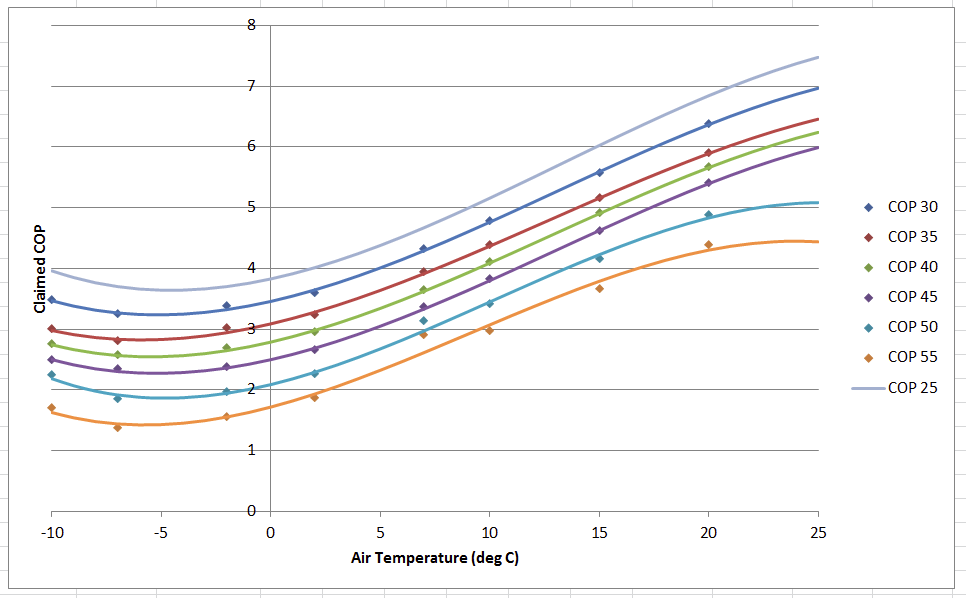
It's one of those things that should be a big surprise and isn't: outside of the automotive industry, engineers actually tend to be pretty bad at designing for low cost manufacture (it's called the Toyota Production System for a reason) and nobody else really does it at all. Fundamentally there are a large number of competing things that you're trying to optimised, and optimising for low cost inevitably means crippling something else. It might well be best to follow a three-stage approach: Architect comes up with the general concept - size, shape, etc. Timber frame company is selected and adjusts the design to fit with their standard detailing and build procedures. This stage might be a little tricky as most design to a U-value of 0.15 in order to minimise frame costs - however I suspect the optimum is to improve the frame performance in order to allow for poorer-performing (cheaper) windows. Timber Frame design is run past the Architect again to check for any aesthetic or functional problems, and plans submitted for approval. The key behaviour is to ensure that the design considers how to build it at a very early stage, and is optimised for the chosen build system. The two skills are very different, however, so it is unlikely that you're going to come across someone who is good at both. That's a very painful calculation because measuring it in Watts requires accurate knowledge of exactly when the power will be required. If you have an insulation system with a long time constant (i.e. high decrement delay) then the heat capacity of the house will be high relative to the losses and it's really easy to shift the consumption of heat around in time to match availability. When you do this, there is essentially zero marginal generation capacity required, but you do consume energy (already allowed for in the PH standard). If you have a short time constant, either because of the insulation system chosen or simply because it isn't very good, then how storable the power you chose to use is becomes important. With gas there is a huge amount of capacity in the system to deal with exactly this problem, and you move back to an energy consumption problem (the cost of a gas well is pretty much all capital, amortised over the total amount of gas extracted, so power isn't a terribly helpful metric). With electricity the time of use does matter and this is somewhere that the PH standard (while much improved) really doesn't fully account for the problem. Having said that, the current charging system for electricity in the UK essentially doesn't penalise use at the wrong time of day for low energy houses, since they tend to have low electricity consumption and so can't benefit from E7/E10 very much due to the higher standing charges. I fully agree with the concept of "fabric first", but I think it needs to be reinterpreted slightly. "Fabric" should really be "things that are difficult to change" rather than "things which form part of the structure". Changing the size of a window is quite hard, but replacing 2G with 3G isn't at all - as all the double glazing companies out there prove. In fact it's probably easier than fitting PV (especially roof-integrated PV), since the access is very much easier and safer. Heating systems are something else that should really be treated as part of the fabric, but generally aren't (note: "heating systems" rather than "boilers"). I posted this graph in another thread last week, but it's very relevant to this: This is COP data extracted from data published for a 5kW Samsung ASHP, and extrapolated for 25°C flow temperature (the unit can do 25°C, but they don't provide performance data). The key point is that shifting from water at 50°C to 25°C roughly doubles the COP and halves the consumption of electricity for heating over the lifetime of the house. You'll often find comments suggesting that it's just fine to use radiators and a heat pump in a Passivhaus because the heat demand is so low. Perfectly true in so far as the low COP won't hit your energy bills very badly - but if the design objectives are comfort and low energy consumption then it becomes a critical factor. The physics are very simple here - if you want a small dT between water and air, you either need a very high heat transfer coefficient (blowing a lot of turbulent air over a warm surface, essentially) or you need a very large surface area. One is very noisy and probably costs quite a lot of energy in the long run, the other is dead simple and is regularly used - wet underfloor heating. Achieving this shouldn't be too hard - very crudely, at 10W/m2 the floor needs to be 1°C warmer than the room air to pass this much heat on by natural convection. Carpet is ~0.25 m2K/W, so for a 20°C room air the slab needs to be at 23.5°C: challenging for underfloor heating, but realistic if the pipe centres are close enough together - things get a lot easier at 19°C, for instance. It should also be noted that the 10W/m2 value is at the design cold weather condition - it would be straightforward to apply weather compensation to increase flow temperatures in cold weather. Essentially in this case you'd end up with a straighter operating line as at colder temperatures you'd lose out on the performance recovery slightly due to increased flow temperatures. Anyway, apologies for the slight digression there, but the point is that densely-fitted underfloor heating pipes (possibly upstairs too as this will roughly halve the power density required and so reduce the flow temperature target) should be treated as part of the fabric - they're a pain in the neck to retrofit, and are a key part of the building performance. By comparison the windows probably shouldn't be since they are easy to change.
-
Mostly, yes - although the components should be standard to the factory, not the house since that is where you get the economies of scale. Doing this is likely to mean you over-design on the insulation (since it is pretty cheap), enabling you to use standard sizes of windows rather than trying to tune them for the house. For example, if you're doing a timber frame structure using JJI joists, you would do everything in the building at the 400mm or maybe 450mm depth. That adds a bit of cost to the timber compared to an optimised structure, but you take engineering time out of the calculations and the part count goes way down. It also means standardising the windows to a small number of sizes (basically picking from a menu to ensure that there is enough daylight inside) - it needs to be remembered that in a lean design you aren't trying to optimise the details, but optimise the build cost. That is likely to mean that you aren't trying to design for "just enough" or "optimum size": you're overdesigning on cheap components to allow you to underdesign on other parts and still meet the targets. Doing as much as possible using standard techniques in a factory is absolutely critical though - the impact of specialisation is something which goes back to at least Adam Smith, and it also means using standard detailing, standard components, etc. to ensure that as many as possible of the raw materials and subassemblies used are factory made in volume too. This, incidentally, is why I think timber frame or possibly SIPs (depending on the tooling requirements, which I'm not familiar with) is the best way to go for a "lean" design - it maximises the amount which can be done in controlled conditions and allows for maximum standardisation of parts.
-
In my day job I'm a mechanical engineer, and one of the big themes is how you work low cost (be that build or continued operation) into the design from the very first concepts. Some of it is well known (the Toyota Production System, Kaizen, Just In Time, etc.), but other aspects not so much - for instance each bolt is assumed to cost £1 in lost time, etc. so you should design out fasteners whenever possible. Some of you may be familiar with this graph: It doesn't quite apply to buildings, but the fundamental concept that cost is committed to extremely early in the design cycle, far earlier than 90% of people normally realise does apply. Since it directly applies to what I'm hoping to do in a year or two, I thought it would be interesting to apply these principles to the Passivhaus standard, and see where the logic takes me. Please feel free to jump in and rip this to shreds - I'm trying to ensure that I have a good grasp of the fundamentals driving cost when talking to my architect in the near future, since cost is one of the major hurdles for us. Fundamentally the Passivhaus standard has two requirements - one for heating (15 kWh/m2/year OR 10W/m2 at the design condition) and what is effectively a limit on imported energy. Historically the limit on imported energy has been very hard to meet, leading people to follow the 15 kWh/m2/year criterion and this has led to very well insulated houses where high performance glazing is used to provide a lot of the required supplemental heating. However, with heat pump performance having drastically increased in the past few years and PV becoming very cheap I'm not at all convinced that concentrating on this requirement is still sensible: PV and a heat pump can essentially be used as a controllable diode, shifting solar heat into the building when needed, while the improved heat pump COP means that the penalty from no longer using "free" solar heat from the windows is smaller. Interestingly, the 10W/m2 is much closer to a comfort criterion - achieving this means everything has to be well insulated with no drafts or cold surfaces anywhere. In cost terms the two approaches are quite different however - the energy criteria encourages the use of (expensive) high performance windows with increased area, while the power criteria encourages the use of relatively cheap, thicker insulation with less glazing. Heating system capital costs are also dominated by the peak heating power, while at anywhere close to 15 kWh/m2/year unless you're burning banknotes you won't be spending a lot to keep warm. From this I think a number of conclusions follow: The use of the alternative 10W/m2 criteria should be the starting point unless other design criteria (e.g. wanting large south facing patio doors onto a rear garden) mean that a lot of solar gain has to be inherent to the design. Wall, roof, and underfloor insulation need to be as thick as possible without affecting the cost very much. When the current aircraft carriers were being built the RN followed the mantra "steel is cheap and air is free". Cellulose insulation costs about £10/m2 of wall area to increase the thickness by 100mm and depending on the timber frame system used the associated timber costs should be quite modest. If I'm interpreting the PHPP modelling done when we were hoping just to extend and refurbish our house correctly, the energy impact of going from 300mm to 400mm is about the same as shifting from Part L minimum glazing to quite nice triple glazing. Use glazing to provide light and make a room a nice place to be, not to provide heating. This is likely to reduce total glazing area (and hence cost), and possibly help slightly with overheating. If going this route, the requirement for heating will be increased. To avoid this turning into a wall-of-text, I'll address this in a subsequent post if there is any interest.
-

MVHR - Geothermal Brine Heat Exchanger
pdf27 replied to Barney12's topic in Mechanical Ventilation with Heat Recovery (MVHR)
It isn't all that difficult in theory - the physics is well understood and fundamentally it's an inverter-driven pump plus a couple of valves, only one of which (the EEV if fitted) is in any way complex. Problem is it's a lot of work to do properly, and anyone who has the skills and free time would probably end up as a contractor doing exactly that for a living. -
Sounds like a good case for micro-inverters: they're a lot less affected by partial shade, AIUI the output goes from all panels being affected by the shade to only those actually in shade being affected by it. The other obvious point is how does the shaded portion of the day compare to when you would be likely to be using the electricity?
-
MVHR - Geothermal Brine Heat Exchanger
pdf27 replied to Barney12's topic in Mechanical Ventilation with Heat Recovery (MVHR)
Probable, but there isn't any easy way to work out how much you would save doing this and they may not be able to spot when all the ice is gone. Easiest just to assume it's all melted with internal heat to get an estimation for power consumption. -
UFH pipes in the walls, not floor? Silly idea?
pdf27 replied to Dreadnaught's topic in Underfloor Heating
Duct heating has the virtues of being cheap and simple (=reliable) compared to just about anything else, but is never going to give quite as good control as something like a wet underfloor system which has lots of heat capacity and will inherently spread the heat around the whole house more evenly than something which can only supply heat over the MVHR ducts. It depends what your priorities are and how accurately you feel the need to control temperatures. One other option to consider would be mini-split air conditioners. They're very popular in the USA for Passive Houses (the US has their own Passive House institute that uses a different spelling), typically with one or two head units. Again, cheap and can provide cooling, and should be pretty reliable but depending on your house design shifting the heat around may be a challenge. Finally, don't assume that because you don't have a slab you can't have underfloor heating in a screed - plenty of systems out there that use a screed on timber floors, and you could even make it fairly thick to give quite a bit of heat capacity if you wanted to. The only real limits are the built up height of the floor (which might be getting quite big with insulation and 100mm of screed!) and the strength of the floor joists. -
MVHR - Geothermal Brine Heat Exchanger
pdf27 replied to Barney12's topic in Mechanical Ventilation with Heat Recovery (MVHR)
Good point. TBH I haven't paid too much attention to the very low temperature behaviour as that's an extremely rare occurrence in my part of the UK - worth paying attention to for system sizing considerations but not worth worrying about heat pump efficiency at. There may be other second order impacts as well (e.g. air density increasing), but you're probably right that humidity is a significant suspect. Errr... do we actually have test data to back this up? The amount of heat being applied to the ice to melt it is exactly the same amount of heat that was extracted from the water in the first place to freeze it. Additional heat will have been extracted from the dry air passing through, so all you're theoretically losing is the pumping work done to extract heat from the water to form ice in the first place. At 5°C, wet saturated air contains 0.0054 kg of water per kg of air, reducing to 0.0038 kg per kg of air at 0°C - so you're extracting 0.0016 kg of water per kg of dry air cooled by 5°C. Doing so extracts 5050 J from the air (Cp for dry air is 1010 J/kg.K) and 534 J from the ice being formed (333.55 J/g over 1.6 g), for a total of 5584 J. Assuming a COP of 3 in perfectly dry air, the heat pump will require 1861 J of electricity do to this, for a total heat supplied of 7445 J. If the ice is then melted using only heat from the house the 534 J from the ice will be lost, the effective COP will be 5050/1861, or 2.71 - about a 10% hit. Annoying, but only about equivalent to increasing the water flow temperature by 2-3°C. You'll see a bigger impact on a foggy day (water content in the air is above saturation level), less so on normal days when the air is below the saturation point. -
MVHR - Geothermal Brine Heat Exchanger
pdf27 replied to Barney12's topic in Mechanical Ventilation with Heat Recovery (MVHR)
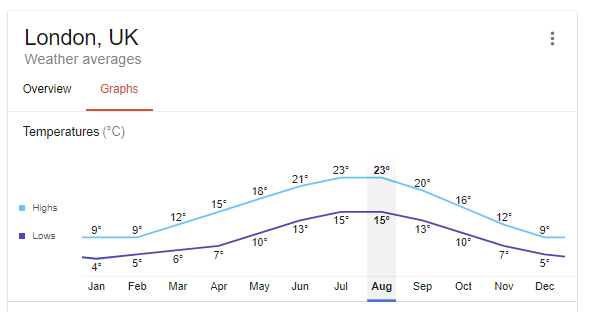
Actually, I think that's looking at the wrong problem, or rather installers tend not to understand the problem. Fundamentally, heat pumps are limited by the Carnot cycle - where the most critical parameter, temperature difference, is outside the control of the installer. This is taken from published Samsung ASHP data, with a 25°C line extrapolated since the pump can run with an output temperature of 25°C but no published data is available. It appears to be pretty representative for most modern heat pumps, but probably assumes perfectly dry air. This illustrates two key points: Performance - whether measured as SPFH2, COP or anything else is critically impacted by flow temperature. There is a lot of concentration on the heat pump behaviour, but the single most critical thing is improving the insulation and fitting a system which can provide heating with a very low flow temperature (both are required together, realistically). If put in at the design stage of the sort of house most people on here are looking to build, I think 25°C flow temperatures are entirely realistic. Higher flow temperatures or poorer insulation, and the maths is rather different. Even the COP at 55°C is really rather good in warmer air temperatures - and the UK is actually quite a warm place. Taking London as an example (yes, I know it has a heat island effect - but it also has an awful lot of people living there), you'd be spending 6 months of the year achieving a COP of nearly 4 on your hot water, dropping to 2 or so in December and January. The point is that the SPF value for hot water should be a lot better than the EST figures suggest, because they're mostly taken from people with big heating loads which are predominantly in cold weather - hot water use is spread out over the year, and so the average dT will be much lower than the SPF figures at 55°C would suggest.
-
MVHR - Geothermal Brine Heat Exchanger
pdf27 replied to Barney12's topic in Mechanical Ventilation with Heat Recovery (MVHR)
http://passivehousepa.blogspot.com/2012/12/earth-tubes-heating-and-air.html is worth a read on this - they've used corrugated PVC pipe which is slit at the bottom, which provided they're above the water table means that condensate will immediately drain out of the pipe. Instinctively that's a far better way of approaching the problem for me than silver coating, sumps, etc. In any case, people really need to have a think about what one of these units actually does before getting too excited about what it does. It's essentially a very high COP preheater for the MVHR - which itself is a 90+% efficient heat exchanger. So the biggest single impact of fitting one is that it will significantly increase the temperature at which your MVHR discharges air to the outside world. In colder countries this is actually worth quite a bit since it eliminates the need for a defrost heater on the MVHR, but in the UK climate the power used by one is trivially small so not worth worrying about. If you're only using it in winter for pre-warming air, of course, you won't have any mould issues due to the lack of condensation. That just leaves the summer cooling/dehumidification. Problem is, at normal ventilation rates it doesn't actually provide very much cooling at all - and increasing the flow rates requires a much larger/longer tube than you would otherwise need for the same impact. Compare the price of an earth tube with that of an extra PV panel which would provide the power for quite a bit more cooling, and I think the maths is pretty clearly against it. Actually, I'm not convinced by that: if we take an average-ish UK house (100m2) insulated to Passivhaus standards, it will need ~1500 kWh/year of heat and going by the Clark/Grant paper ~3,000 kWh/year of hot water. That would take 5,000 kWh/year of gas or roughly 1500 kWh/year of electricity (varies with a number of factors like air temperature). That's £284/year for gas or ~£250 for electricity going by the fuel cost values in SAP10: essentially no difference in running cost. Gas is cheaper for bigger or higher consumption houses, but the standing charge starts to hit you very badly in small or very well insulated houses. If you have PV and use the Smart Grid functionality on the heat pump, then the break-even size of the house with gas is likely to go up a lot due to the dominance of hot water in the total requirements. The difference in capital cost between a gas boiler or a small ASHP is also pretty small - particularly for monobloc units which are probably easier than a gas boiler to fit and mean there is no need for mucking about arranging for a gas connection to be moved. IMHO, this means that if you have a cooling requirement then ASHPs probably beat mains gas for any properly insulated structure that isn't stupidly big, and even if you don't think you'll ever need cooling they're probably worth considering for any house below about 150m2, more if you have PV. We're planning to rebuild our current house and replace it with something at about Passivhaus standard of around 180m2, and despite the fact that we're on mains gas at the moment we're planning to shift to heat pump only with no gas connection. This is largely driven by the desire to have some sort of cooling (my wife is from the USA and grew up with air conditioning, so hates heatwaves here). I've been playing around with the numbers for a while and I really can't get anything other than a small ASHP to work - the requirement for a second system to provide and distribute the cooling if we try any other way of doing it is just a killer for the economics. -
Total energy consumption per m2 per annum
pdf27 replied to NSS's topic in Energy Efficient & Sustainable Design Concepts
That's one of the places where just providing bills falls down - humans have a strong tendency to take improved efficiency as comfort, rather than cost savings. If the sort of thermal comfort acceptable in the 1950s were applied to a Passivhaus, they really wouldn't need any heating system at all. -
Total energy consumption per m2 per annum
pdf27 replied to NSS's topic in Energy Efficient & Sustainable Design Concepts
Maybe not the best comparison - excluding subsidies (FIT and RHI), you're at £4.78/m2a: all the work you've put into the fabric is only worth as much as the government subsidy for some of the additional technology you're using. -
Total energy consumption per m2 per annum
pdf27 replied to NSS's topic in Energy Efficient & Sustainable Design Concepts
Wrong side of London for you. Plus there are two of them, and I want a big discount when one starts school the week after next! -
Total energy consumption per m2 per annum
pdf27 replied to NSS's topic in Energy Efficient & Sustainable Design Concepts
Works out at about £5/hour for the time we pay for - 2 kids, one of whom has been getting the 30 hours a week free. There are really strict limits on staff/child ratios for younger children, and once you add in everything else it's actually pretty reasonable for the south-east of England. Should come down a lot in a couple of years when the youngest starts school - until then we're struggling a bit financially. We want to rebuild the current house, but right now the finances are a trifle stretched... -
Total energy consumption per m2 per annum
pdf27 replied to NSS's topic in Energy Efficient & Sustainable Design Concepts
Electricity & Gas ~£1800 Water £180 Council Tax £1800 Childcare ~£18,000 ? -
Total energy consumption per m2 per annum
pdf27 replied to NSS's topic in Energy Efficient & Sustainable Design Concepts
Yep, 15 kWh/m2/year or 10W/m2 peak demand (AIUI you can choose either criteria, but they typically come out pretty close to one another) are the delivered heating values, measured as heat. Essentially they're the "comfort" side of the equation - if you're that low (roughly) you won't have any problems with cold draughts, variable temperatures, etc. The 10W/m2 is also set by the practical limit for heat delivery via the MVHR system at no more than 50°C (the burning smell limit) from resistance heat - a cheap way of doing things but I'm not convinced that it's a particularly good one. The 120 kWh/m2/year primary energy in the older version of the standard is the environmental impact side of the equation - they've now essentially translated it into electricity (sorta) from primary energy and revised the targets to be quite a bit lower to match the earlier standard, more or less: PER is essentially a way of trying to match supply and demand of renewable energy by penalising use when there isn't renewable generation available. If you're using it at the time of generation it counts as 1 unit of power used for 1 generated. If it's in short term storage (heat, battery) it's a bit less, if in long term storage (electricity to gas) it's a lot less. They then add in country-specific factors to allow for when demand is likely to occur versus what resources are available (so Norway will be just fine with all the hydro - the UK will be worse with lots of wind, and somewhere relying only on PV will be hit very badly I suspect). -
I demolished your house, but I'm not moving the debris!
pdf27 replied to laurenco's topic in Demolition
I think there is one key difference with the saving - we've shifted from lower house prices & sky high interest rates to higher house prices & low interest rates (something I suspect is no coincidence). The amount people can afford to spend on a mortgage hasn't changed much, but the multiple of income it covers (and hence the multiple of income you have to save to have the same effect) has increased. I think that's maybe an underappreciated impact among the older generation, in much the same way as most of the younger generation's minds boggle at the thought of the bank manager telling you how to live your life. Combined with rock-bottom interest rates for savings it makes saving towards a house significantly harder - I certainly couldn't have bought my first house without a lot of assistance from my family, despite having been saving like crazy for 5 years (living in someone's spare room and being in the TA so I didn't even pay for food most weekends and had no time for hobbies). If we do rebuild the current house (very, very close to pushing the button on starting the process now) it will only be possible through borrowing a very substantial amount of money from my siblings -
I demolished your house, but I'm not moving the debris!
pdf27 replied to laurenco's topic in Demolition
I'm in that age bracket (37) and there are a whole bunch of interlocking impediments: Cost - unless you're very well paid and have support from your family (I'm fortunate on both counts) you're going to be in a shared ownership flat or at best terraced house. That's a reflection of the ratio of house prices to earnings, and of the fact that young people start out with minimal savings, relatively low salaries (compared to later in their working life) and often a lot of student debt. Self-building an individual flat is rather hard. Related to this is deposit size - getting a 100% or 95% mortgage is hard, getting one for a self-build project is much harder. If you're not living in a caravan on site (may not be possible for a small site), the rent requirements will bring down what you can borrow further. Refurbishing somewhere is much easier financially - the houses that need it (typically where an older person has lived for decades without doing anything, and has now died or moved into care) are easily found at the bottom of the price range, and the work required can be done incrementally on a DIY basis. We originally planned to do this with our current house. Finding time to work on it is hard - it wasn't too hard on our first refurbishment, but now I've got a bit more money and can contemplate something a bit more ambitious I'm married with two young kids (2 and 4). They, of course, also soak up a lot of my income for childcare. The reality is that we can't do very much of the work ourselves because of this - and that pushes the price up further. Young people tend to be quite geographically mobile, and will follow the work far more than older people who are settled with families. Problem is, that means you're likely to relocate every ~5 years (i.e. about the time it takes for the full self-build process), and you're also disproportionately likely to be working in London or the South East where land is much harder to obtain.- 192 replies
-
- 2
-

-
- demolition
- cowboys
- (and 2 more)

