RobLe
-
Posts
234 -
Joined
-
Last visited
Everything posted by RobLe
-
Yes, maybe a good idea. That relay serves two purposes: one pair of contacts is used at low voltage, it tells the software ‘Call4heat’, the software checks there’s flow, nothings too hot or cold, confirms it’s not short cycling. The other contact has the compressor routed through it. I could just omit routing power through it, use an ssd to switch the compressor on/off directly via software….rely on my software being ok 🤣 It lasted a year sparking, I reckon it’s fine now there’s no spark.
-
Those reversing ones are interesting! Do they reduce humidity as much as a regular SRHRV ? I ask that, as it seems to me they are a bit more like an ERV. As they breathe out, I expect moisture will condense into the ceramic core, to evaporate again and come back into the house when it breathes in later? Anyone know ? Asking for a friend with humidity issues. Here’s a random one I found: https://ventilation-system.com/series/twinfresh-easy
-
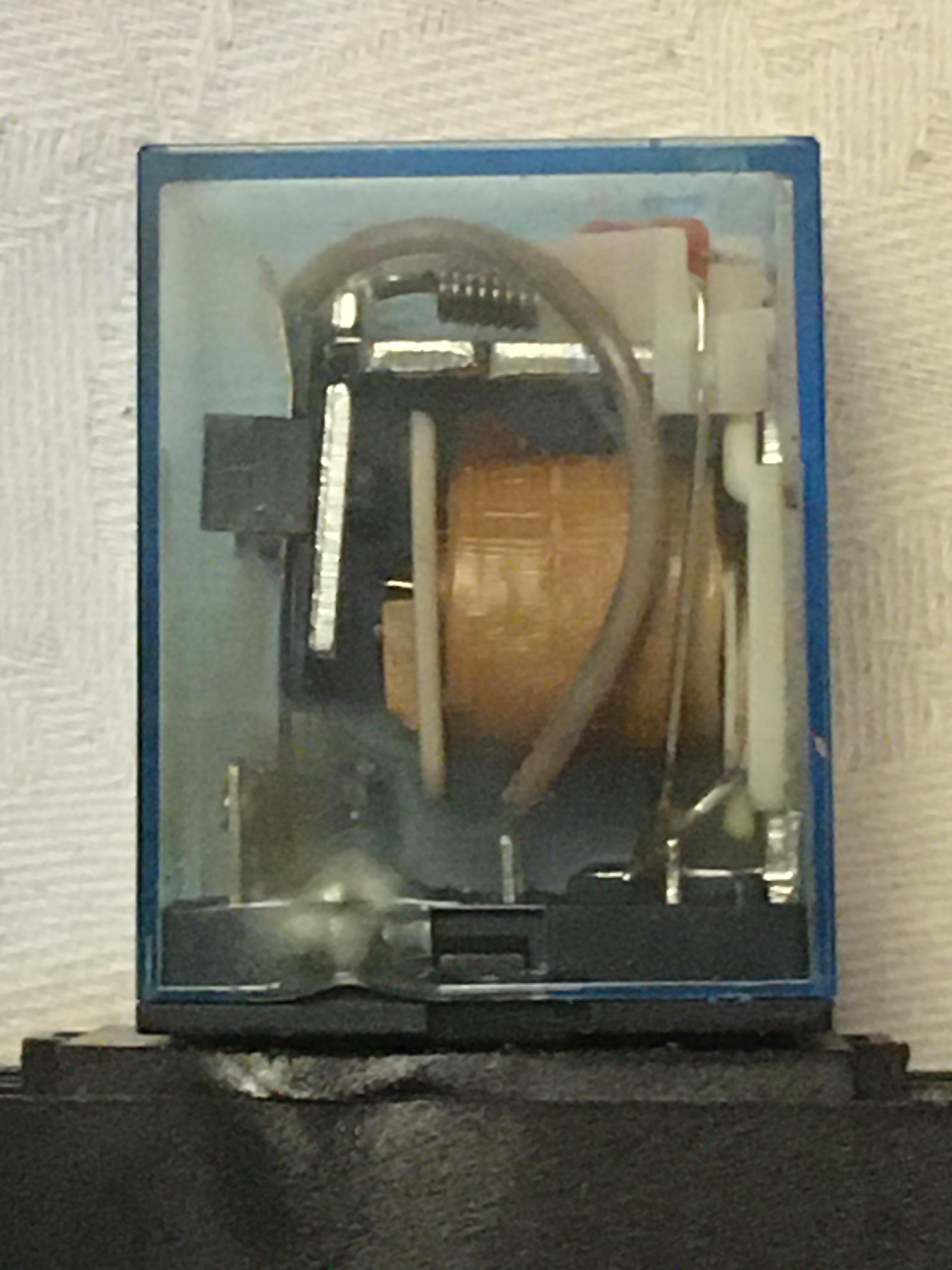
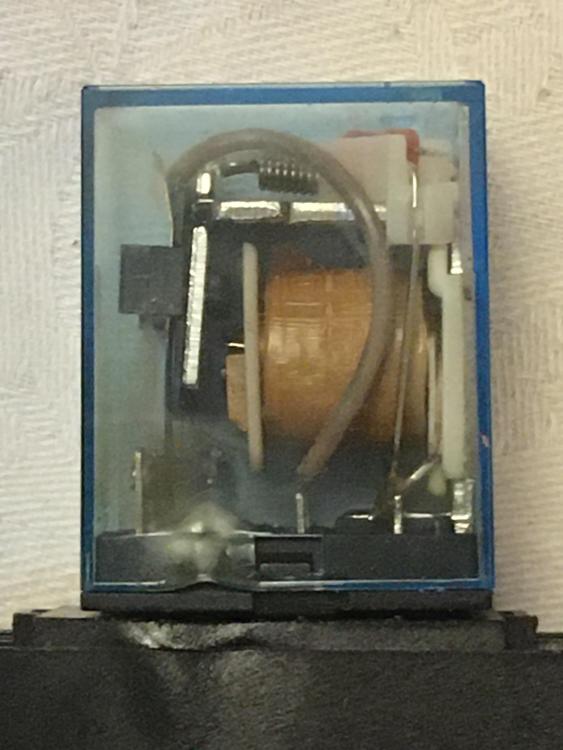
The compressor didn’t turn on a few times recently - everything else worked, the relays clicked, but no compressor, COP=0.0 reported, system power draw of 60W - just pumps. Gahhhhhh. The compressor is powered via the contacts of 3 relays in series - call4heat, pumps, and compressor itself. It’s done like that to be sure the pump must be on if the compressor is, even if the controls go wrong - it’s all controlled by my rubbish software after all. Anyway, after about a year of switching, the call4heat one had failed - that’s the one that usually does the turning off and gets the spark. Turns out I should have fitted an RC series snubber around the contacts to save them from the spark every time the relay switched off. Here’s a pic of the old one. It still works 50% of the time in that state! I replaced relay+socket, and put a series combination of 47ohms+100nF across the compressor and a MOV across it too. It seems to work, I can’t see a spark now when it switches off. I’m glad I caught it early, the house temperature didn’t really suffer. Obsessively looking at the COP is helpful after all 🙂
-
By accident*, we have some old car batts charged up by 600W of solar panels, and available as 12V and USB charging in a couple of rooms. I even fitted a wall plate with car cigarette lighter type sockets in it - the idea is that there are lots of 12V useful things out there that could plugin. So it's got a USB C charger in it - in a power cut we'd get a bit of light, and be able to charge a laptop. I like the resilience nature of it, but I'm not sure It's worth any more effort. It's also wasteful of PV; most of the time there is spare unused capacity. Went for 12V, as I had 1 batt free first, then another, it's not like we have heavy loads for it. They're independently fused then paralleled. My prediction for the future of elec lights wiring by the way, is that lights won't be hard wired to wallswitches. As MortThePoint mentioned, you can make a switch last almost forever with a battery in it.... it will be cheaper to do that than wiring it in. *free batts, and at the time wasn't allowed to wire any more PV into the mains.
-
These guys will sell U=1 planitherm DG units online - just make sure you measure up what you have accurately - wrong sized glass is useless! 25 yr old DG units are almost certainly U=2.6 ish, with a cold edge, and sadly there is no fix for that, but you can replace it: https://www.sealedunitsonline.co.uk/ Well done for trying repairing, not just throwing away and buying new stuff though! I replaced the DG units in our pvc frames 10 years ago with planitherm 1 DG units. The frames are over 30 yr old now, all are still fine, plastic is good in the right place, terrible in the wrong place. Better than fine - I drilled them in lots of places and injected foam insulation whrever possible - just be very careful not to fill any required drip path or airways cavities.
-
Not sure I really agree. A modulating heat pump can only modulates so far. I agree that inverter ashp generally steady-state operates around 30% to 100%. But I expect that the 0%->30% or 0%->100% transition will be gentle; the inverter will almost certainly ramp the frequency and voltage up from 0Hz 0V to 50Hz 240V over a second or so (rather than ~50ms for an old non inverter unit) - it's normal procedure for an inverter driven AC motor, it's one of the primary advantages of having an inverter, to avoid the clunky turnon. If it did just startup at 30% instantly it would put a strain on the compressor, and a strain on the inverter. I think we might be talking slightly cross purposes though? I think: 10min cycle time: Old issue to do with non inverter heatpumps Buffer volume: issue to do with A2x heatpumps needing to defrost AND reducing short cycling for better efficiency
-
I've seen that before - so far as I'm aware it used to be to do with heatpump lifetime. Every time a fixed non inverter compressor turns on there is a considerable mechanical jolt, which stresses the brazed joints to the compressor, and eventually these will fatigue fail. I think 10mins, so 6/hour, is a "rule of thumb" - systems turning on/off more than this are increasingly likely to fail in an unacceptably short time, leaking out the magic gasses. I accept that this may be a bogus explanation for todays A2A/A2W inverter designs - surely they slowly ramp up, entirely avoiding this jolt, so it won't matter at all? I think it's a legacy still from older non-inverter heatpumps, and is only likely to really apply to non inverter mostly W2W units. Rapidly turning on/off is likely to not give great efficiency; but neither is using the ridiculous immersion often built into the heatpump! The minimum water volume for an ASHP is more now to do with coping with defrost so far as I'm aware - the heatpump "reverses" briefly, sucking heat out of the circulating water to rapidly defrost.
-
Calculating for the use of sand for a thermal store.
RobLe replied to Marvin's topic in Boffin's Corner
Sadly I think 50,000J is only 14Wh, not 14kWh. That’s a big old weight you’ll need. -
Any electronic component experts? SMD identification.
RobLe replied to ProDave's topic in Boffin's Corner
😬 Have you desoldered it? If not, are you sure it’s bust? A bav99 series diode might be placed with one part used, the other shorted out. That’s because the part might be used elsewhere, and it’s cheaper to reuse than introduce another diode type. Can you label the diagram (1,2,3, and which is shorted or a diode). Desoldering them is tricky without busting them mind. Why is it bust (diodes don’t usually blow by themselves…)? -
Stick a sheet of clear polythene flat up against the wall. If the issue is condensation, you will get condensation forming on the room side of the polythene. Perhaps water is getting into the cavity, and puddles on the dpc, slowly leaking in? Is it in one spot, or all around the room ?
-
We have a wireless front doorbell switch. The outdoor unit power is scavenged from the act of pushing the button, no batteries required.
-
I made a crude windspeed monitor, using a couple of small temperature sensors and a resistor. The resistor is glued to one of the temp sensors, and left on, I think consuming 100mW continuously so that it warms up that temperature sensor a bit. How much it warms it up by, depends on the windspeed. I calibrated the response into m/s by comparing it to a nearby weatherstation. I wanted it so I could try and correlate home heating versus windspeed.... I haven't found a correlation at all. I did find one versus light level from a solar panel 🙂 Nb: we have an air tight house with MVHR, likely why windspeed didn't seem to matter. Maybe if I had infinite time I would plot these things out.
-
10 years ago I made a cheap diy version of this, which fits over a window. It's pretty simple to do, well in the diy category I think. It's a car radiator fan and a piece of plywood - I picked up the fan from a crashed sports car on ebay, and a fixed 15V 16A supply. I guess you could use a car battery or a charger, something in the 12-15V region, at least 10A - depending on the fan. It works best to fit the fan blowing out of the house, so that any leakages pull air inwards, which is easiest to detect with the back of your hand. I used it to help make our house airtight, ready for mvhr some time back. If all of this goes well, you can also measure the leakyness - this involves measuring the pressure and the air flowrate and getting all technical. TBH this is less useful than finding and fixing the faults in the first place. I've taken the fan to lots of houses since then - generally the result is >10ACH. Attached is a pic of the fan in place, duct-taped to upvc window frame in an open window. Keep kids away and check it's super secure, don't want it making a bid for freedom, especially if it's like the one in the pic with no fan guard.. ouchy. Places that generally leak: lofthatches, sockets, ceiling roses, between floors(generally not plastered), skirting, pipes through walls (not sealed), behind baths, toilet overflows, doors, windows, windowsills, boxed in pipes ...
-
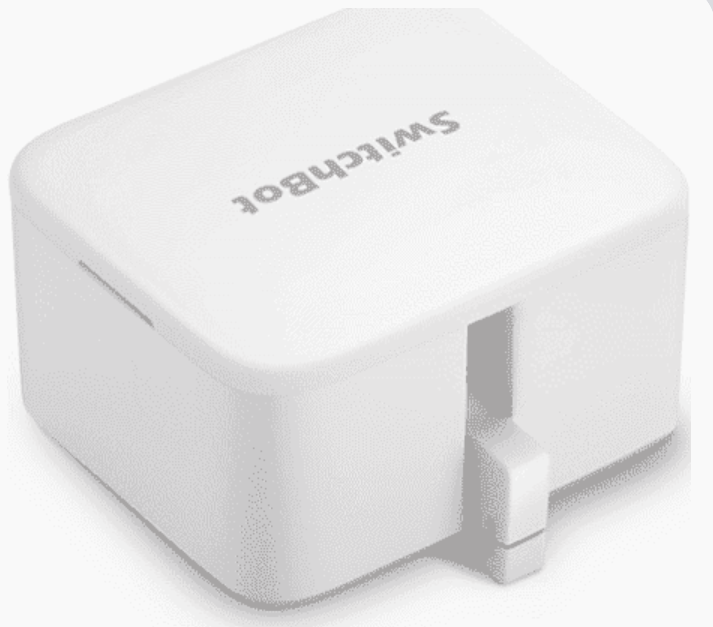
How about a switchbot? Battery operated, app and timer controlled:
-
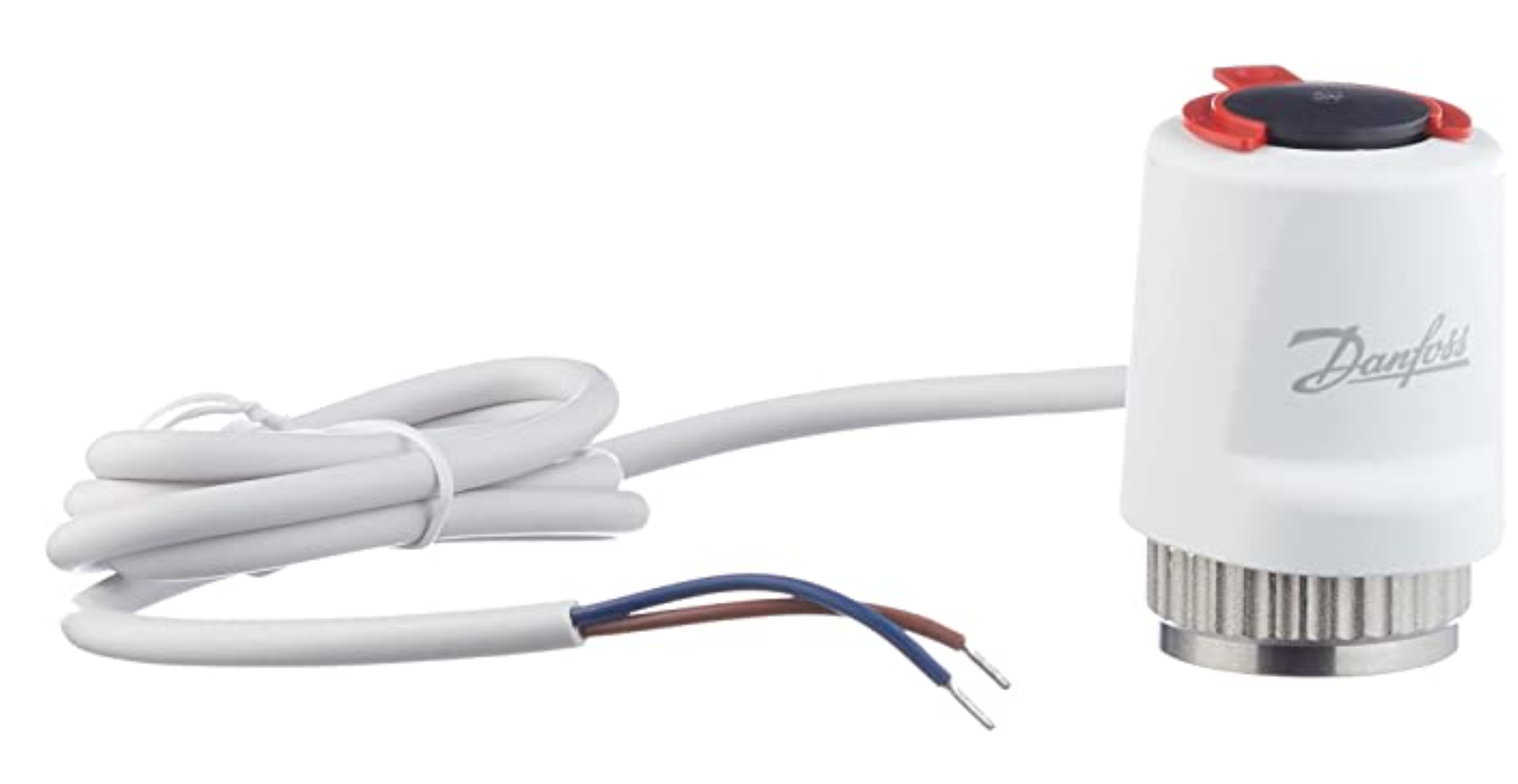
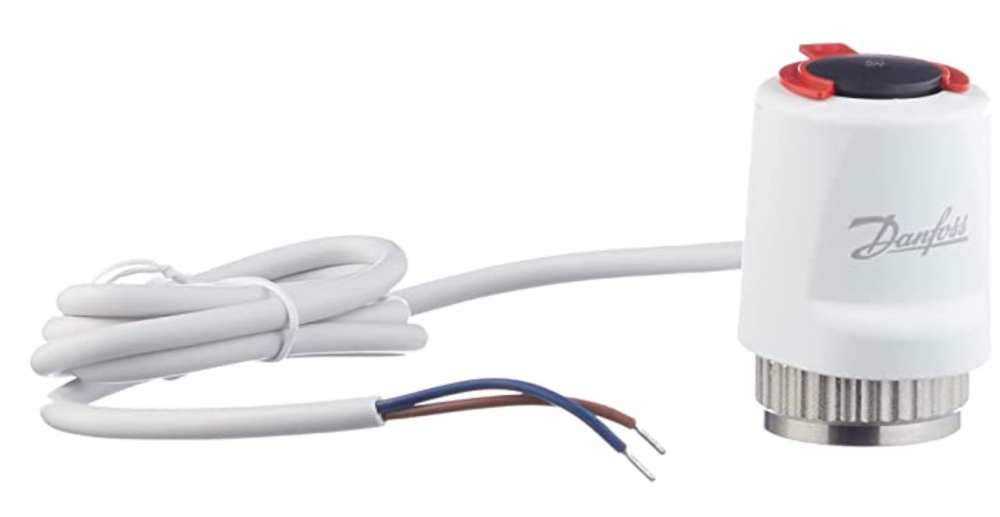
Updates - the heatpumps on again, as it's getting colder! I added a bypass heat exchanger to the heatpump, which could allow some summer cooling - ie. groundloop bypassed via the extra heatexchanger to radiators. TBH it's a bit rubbish, it can pull out 500W average over a 48 hour period when I tried - barely worth the complexity. The issues I had with it are that by the time it's needed the ground has heated up quite a bit as my coils aren't that deep. Also our radiators are 1-pipe so only any good at convecting hot water, not cold, from the supply pipe that runs around beneath them. Not that we are really in need of summer cooling, it just seemed like a freebie. It uses the same thermostat, inverted to NC rather than NO as a control for the system. I guess the "COP" is good, it's 60W of pumps and controls, extracting 500W out, cooling COP of 8. I improved the heatpump startup considerably - originally as a simple on/off unit it used an internal NTC element to give it a soft start, now it has a step-start with a relay instead. I had my 5A heatpump fuse "wear out" after ~2000 startups previously, and I hope that dropping the startup current will prevent this occurring again. The I2T drops from 60A^2s down to 20A^2s with this change, it makes a huge difference. Both the NTC and step-start are options for the compressor - I'm not inventing stuff, just reading the datasheet! Increased the maximum run temperature, needed for DHW. It was 50C, now it's 55C, and slowly gets the top of our tank to 46C. The 200litre tank isn't "heatpump ready", and only has a 0.42m^2 coil - I think this is just about ok as the heatpump is only 2.5kW - if it was more powerful, this small coil would be a significant issue. There's an immersion to get it to 65C once a week, timed just after the heatpump has finished. Added a run cap to the startup coil, in addition to the normal run coil. The compressor datasheet says this improves COP by 5%. It's a bit marginal a difference to be sure if it's true of not, but I'm a believer! Total electrical energy for heating+DHW our 4 bed home 6Dec2021-10Oct2022 is 970kWh, which I'm very pleased with. Added some silent 2W danfoss valves to stop a few rads heating up when the DHW is being heated:
-
22 years ago, we had a load of work done on the house, yes it was a while back! The plumber used grey plastic push fit joints and bends onto copper pipe, there were maybe 20 or so of them. I think they have a rubber O ring and one way metal barbs inside. I don’t know what type, he said he used them because they were quick. Over the years about 5 have leaked, randomly. They start slow, the leak gets worse and worse… The inaccessible one behind the bath leaked for ages before I found it, made a mess of the ceiling, grrr. Soldered copper, or a crimped joint for me.
-
External Insualtion - How to calculate U-value for 1930's house
RobLe replied to lstevensuk's topic in Heat Insulation
I think 90mm is just enough if you get the best platinum EPS. I tried calculating, using the best EPS I could find: EPS lambda =0.031W/mK, so U = .031/.09=0.3444 W/m/K Google says a standard solid wall has U = 2.0 W/m/K, this gives a tiny improvement, giving an overall U of: 1/(1/2+1/0.3444) = 0.294 W/m/K https://www.insulationshop.co/90mm_grey_polystyrene_ewi_graphite.html I'm with Iceverge though: Max out that insulation, it will hardly cost any extra - it's the labour that costs. We went for 150mm, a friend for 200mm. -
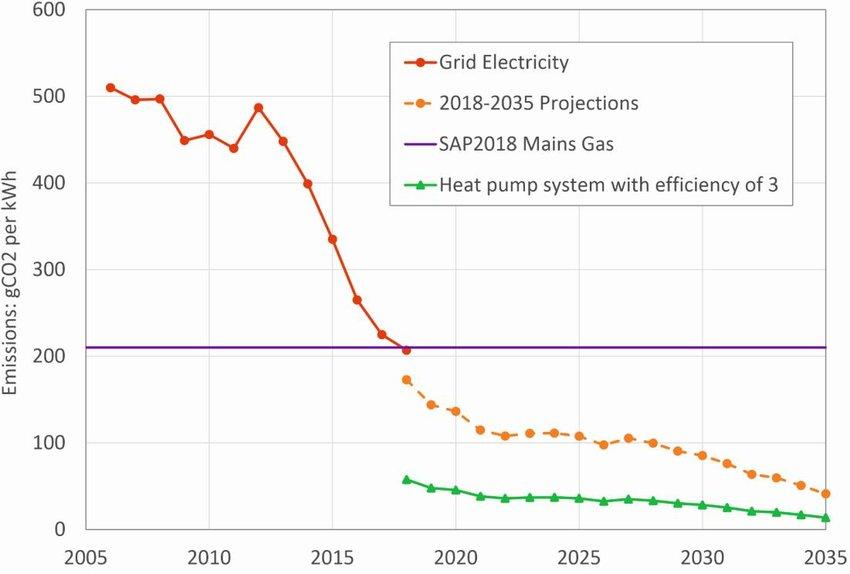
I'm sure we've all seen this graph, but it's so good I have to stick it in 🙂 Data: grid electricity data from the Digest of United Kingdom Energy Statistics (DUKES); projections from BEIS (2018); mains gas from BRE (2018)
-
Our DHW tank itself was extra insulated with sheet insulation cut and glued into place to form a box, poly beads poured in behind. There's still plenty of excess heat from valves and pumps and stuff to dry socks with. But now socks don't get lost round the back of the cylinder:-)
-
4 or 5 of us here, but all light shower users, 220l tank heated to 45C generally, 60C every couple of weeks. Seems fine, rarely lacking oomph. People sometimes check the temp on a display prior to showering - I think if it were more effortlessly capable it might encourage longer and longer showers 🤔
-
ASHP is the power of the water pump enough for the radiators?
RobLe replied to keyser's topic in Air Source Heat Pumps (ASHP)
An ashp heatexchanger has an f-gas or similar undergoing a phase transition at constant pressure, hence constant temp. If the flow of water is so slow that you get a 20C deltaT, I think the phase transition will have to occur at the hottest temp of the water (neglecting superheat), so the cop won’t be as good as at a higher water flow limiting that temp. Gas boiler energy transfer is not dominated by a phase transition so it’s the return water temp that counts, so a bigger deltaT is ok and won’t hurt the efficiency so much. I think. -
Mitsubishi Ecodan Air Source Heat Pump - Low Efficiency
RobLe replied to TimToos's topic in Air Source Heat Pumps (ASHP)
The most important factor determining ashp efficiency, is the flow water temperature from the ashp. I suggest that a temp sensor be fitted here, if there isn’t one (the heatpump may show this). Most installs of ashp have a buffer tank, so it may be that this flow temp is a lot higher than necessary for good home heating - the under floor heating can allow very high cop figures, but not if the ashp makes a high temp which is subsequently regulated down. Generally, ‘Good’ efficiency is expected if this flow is below 45C, poor at over 55C. My guess is that the flow temp is generally high. Measuring the kWh of delivered heat is difficult to do accurately, so it’s also possible that figure is poor quality, and more heat is delivered than you think. -
Solar powered sewerage biodigester ?
RobLe replied to Jimbouk's topic in General Self Build & DIY Discussion
2KWp of solar vertically mounted in an unshaded south facing location(fence!) will give on average 3(winter) to 5(summer) kWh/day of energy. You can get panels 2nd hand cheap sometimes. Suggest using a regular grid tie inverter into your consumer unit (sparky job just for the last bit) and inform the dno. You’re already on E7 type tariff, so the pv replaces expensive elec. Without a battery system or expensive pro install any unused(by you) power is exported free, but later you could add a cheap immersion diverter and get free hot water. -
Most mvhr units spend most of their energy exchanging air that is not stale, either because people are out, or in a different room. If you have in/out ducting to all rooms with CO2 duct monitors, you could ventilate only occupied rooms, which would massively reduce the air movement requirement. I understand that you’d like an enthalpy heat exchanger, to keep moisture in the house- an important idea at the air flow rates you are considering. You could improve efficiency by adding an extra, possibly conventional, heat exchanger core on the ‘outside’ pipes of the enthaply heat exchanger. I think this will effectively add the two total heat exchange areas together, increasing efficiency. Heat gained into windows is best prevented, rather than battled, I think.
-
Bit of a faff caulking just before you remove the skirtings. Decorators caulk will work short term, but it will quickly go stiff and crack, so fine if it's really just a year. Acrylic will last longer without cracking, and yet be paintable. My experience of houses is anything you can't see will generally be worse than you'd like. I expect behind the skirting there's no plaster, and plenty of holes in the brickwork. In our 1963 house between floors there was no wet plaster, and there was plenty of airflow. Behind wooden panelling there were gaps I could get my hand in! All kitchen pipework that went outside leaked. All windows leaked around them, none were foamed into place. Our sockets leaked. Upstairs ceiling roses leaked. Loft hatch leaked. Kitchen extractor leaked (now it has a double flap valve). Obvious question - sure you want iwi not ewi?