RobLe
-
Posts
234 -
Joined
-
Last visited
Everything posted by RobLe
-
A cop of 2.5 is fine for dhw, although it’s a fair amount of total heat used. Do you need to reheat the tank so often? There’s a lot of pipe and tank loss from dhw heating. We heat ours just once a night, in the cheap slot electric. Space heating is a poor cop, likely indicating your rads are running hot. What is the heating flow temperature (I’m guessing the installers set it high). In the ideal world when you touch a rad you can barely tell it’s on, ours run at 32C.
-
Eco eye data logger? Been around a while, you can pick up 2nd hand ones for £25. Logs to sd card. Measures current, and capacitively voltage - so you get power factor correctly but it doesn’t know the actual voltage. https://m.facebook.com/marketplace/item/1402792330508024/?ref=search
-
Equipment required to monitor Vaillant heat pumps
RobLe replied to JamesPa's topic in Air Source Heat Pumps (ASHP)
I'd recommend MID certified 3rd party metering, with a bare minimum being a cheap inline MID certified elec meter. I'd never trust the manufacturers data. I'd be too concerned they "guessed" sometimes, or failed to include pumps, fans, etc. Glad to hear you might be getting a heatpump sorted! -
The only thing I can see that would be different if you re-bought upvc, is that the glazing clips now are internal. The pic in the first post looks like it’s got external clips, which can be removed from the outside, so perhaps a weak spot for a burglar. I suspect most burglars break in, rather than bringing tools to undo the window though. A friend of mine painted his upvc, it looks surprisingly good. He used special paint for the job (no idea what).
-
The sill is there to prevent repetitive drips onto the wall face, which might leave unsightly stains. As there’s a stone sill below it, why do you need another one? Nb: The upvc sill has a little gap above it, which will allow an air path to the edge of the sealed double glazing units, keeping them at low humidity which ensures a long life.
-
Samsung Gen6 ASHP, 40kw used in a day (HW only)
RobLe replied to Andeh's topic in Air Source Heat Pumps (ASHP)
Perhaps the heatpump doesn’t actually measure consumed electricity, but estimates it based on software expectations. If the immersion is bust, it could keep trying, never achieve much, but believe it has used lots of energy in the process. Next time you want to give it a go, check your main house elec meter before and after, as a sanity check. -
30kW PV, All electric heating, is this mad?
RobLe replied to DevonBarn's topic in Photovoltaics (PV)
I think elec storage rads on Octopus Go right now work out a similar running cost to gas or an ashp. However - they are an easy retrofit solution, so my crystal ball tells me there will be a lot more retrofitted, and a lot more elec cars, so the predictable 7.5/30p price ratio will reduce due to this. Given starting from a clean slate, I would have some sort of wet distribution system, rads or underfloor. You can use go for now to heat a huge tank somewhere, or have an ashp in future if go vanishes. This all assumes the elec load can be taken in a 4 hour window. If you’ve only got single phase that’s quite an ask - 80A gives 20kW*4=80kWh storage, allowing 80kwh/24h =3.3kW peak thermal losses - what do you expect? Buying ‘Green elec’ right now I think is like recycling and carbon offsetting - wishful thinking (I do them, but don’t hold out much hope). Whatever happens, I think you will benefit from 3 phase. -
There’s very little performance difference between refrigerants with fluorine (F gasses) and natural ones without (R290 - propane, R600 - butane). R290 is in fact usually touted as more efficient and capable of higher temperatures. F gasses worsen global warming, but are in general less flammable so preferred by a/c installers. I think most manufacturers are moving towards the natural refrigerants, as F gasses are phased out one by one due to GBW issue. There are minimum room sizes allowed for a given charge of R290, so that if it leaked out, it would not form an explosive mixture.
-
Insulated plasterboard: 15mm PIR + 6mm Magply - any issues
RobLe replied to bmj1's topic in General Construction Issues
I’ve used 9mm magply, it’s great stuff, water resistant, fairly tough. Mechanically similar to the same thickness of plywood. The easiest way to cut it is score it to cut through the glass mesh and snap. Seems a lot of faff for 15mm of pir mind. I used it as floor, does plaster skim stick to it ok? -
MVHR loft install help
RobLe replied to richo106's topic in Mechanical Ventilation with Heat Recovery (MVHR)
If your installing in a cold loft, then all the pipe runs from mvhr to house are at house temperature, and they should all be insulated just like the house is. We use short runs of (thinly) insulated flexible pipe from the mvhr unit down to solid uninsulated stuff that is buried under fluff. Our mvhr is mounted on the breezeblock gable end, you cant hear it. I think the key to keeping it quiet is generally keeping air speeds down - so either large diameter pipes, or lots of them. We have generally 150mm dia pipes and room vents, but just one per room generally. I used the same ‘tecsonic’ insulated flexible stuff to join to most room vents, and it works well - claims to be sound absorbant. Ithink it does work, as one room uses a semirigid joint to the room vent, and there’s a definite rumble out of that vent that I noticed (nobody else has mentioned it, could be I’m just super sensitive.. fix it one day, maybe) -
There's always a delay while a G100 inverter load matches. It's a second or so, maybe there's a standard out there somewhere. Anyway; if you had loads of G100 inverters at home set to 0A export and turned off a big house load (lets say 100A!), there will be a short duration 100A export causing overvoltage of the grid. Where we are the grid voltage is set "high", so that people can pull more current than they can push in, and it just about stays within bounds. There's not a lot of leeway - it gets to 250V here when it's sunny. (Don't know if above is why they care, just a guess)
-
Kingspan K108 lists sometimes as 0.018 or 0.019, eg: https://www.insulationhub.co.uk/product/kingspan-kooltherm-k108-100mm-cavity-board/
-
What’s the lambda for the aerogel ? I don’t think the blanket stuff typically used is as magic as the solid spaceage (silly price) stuff ! And compare it with regular PUR, which I have seen as low as 0.018, though it’s mostly 0.022W/K/m. Consider VIP (vacuum insulation panels) perhaps? I think these are better, but tricky to use as they come in discrete sizes. I’m not sure why they’ve not taken off. Digikey have some, I think they get used in high end fridge freezers (ours has them). Eg this one for 1off cost £51, 600x600mm, 25mm thick, U=0.18W/m/degC. You’d need 100mm or a bit more of PUR to get that. Nb, I had to convert imperial R to metric U values, I think I got it right, pls check! I’ve not used the stuff mind. https://www.digikey.co.uk/en/products/detail/panasonic-industrial-devices-fbd/CNRZZB78400/9558502
-
I’d hoped to be able to cope with water in the underground loop of our small gshp, but had to add glycol as it started to freeze up a year ago. The flow dropped from 20lpm down to 14 which I had been expecting. I hadn’t expected that the heat exchangers would be less effective; the propane:water exchanger had a 3C drop which increased to 6C after glycol was added. When manufacturers quote a COP, is that with water or glycol, as it makes a difference.
-
I usually use a large kitchen knife, just to reduce dust. It does squeal sometimes though, ear defenders! Whether saw or knife, a wide blade helps keep the edge straight. Japanese pull saws are thin, wide blade. Spray a bit of water then foam gaps, the water helps foam stick. If you use too much, leave it to set, then cut it off.
-
It’s definitely the outer pane of glass you should drill, if you want to demist an old DG unit, at least in the UK where we internally heat our homes. 6mm ish diamond drill, the type for tiles might work… good idea to get the spare ready though:-). It’ll shatter if there’s a kite mark meaning it’s toughened mind.
-
Do the failed wooden DG units have an airspace around the rubber DG seal, which is connected to outside ? No idea why, but damp near that rubber seal over time causes it to fail. We’ve got an old wooden front door, used to be single glazed, I upgraded it years ago with DG with an air gap around the DG (just packed the DG up with plastic spacers, and fitted it centrally) and then angled holes drilled to allow low access to low humidity outside air. Took ages to rout out the frame for the thicker window, then thin wooden beads to finish. Only wish I’d got better softcoat DG with insulating spacer….. I just bought what was offered at the time, so U perhaps 1.4.
-
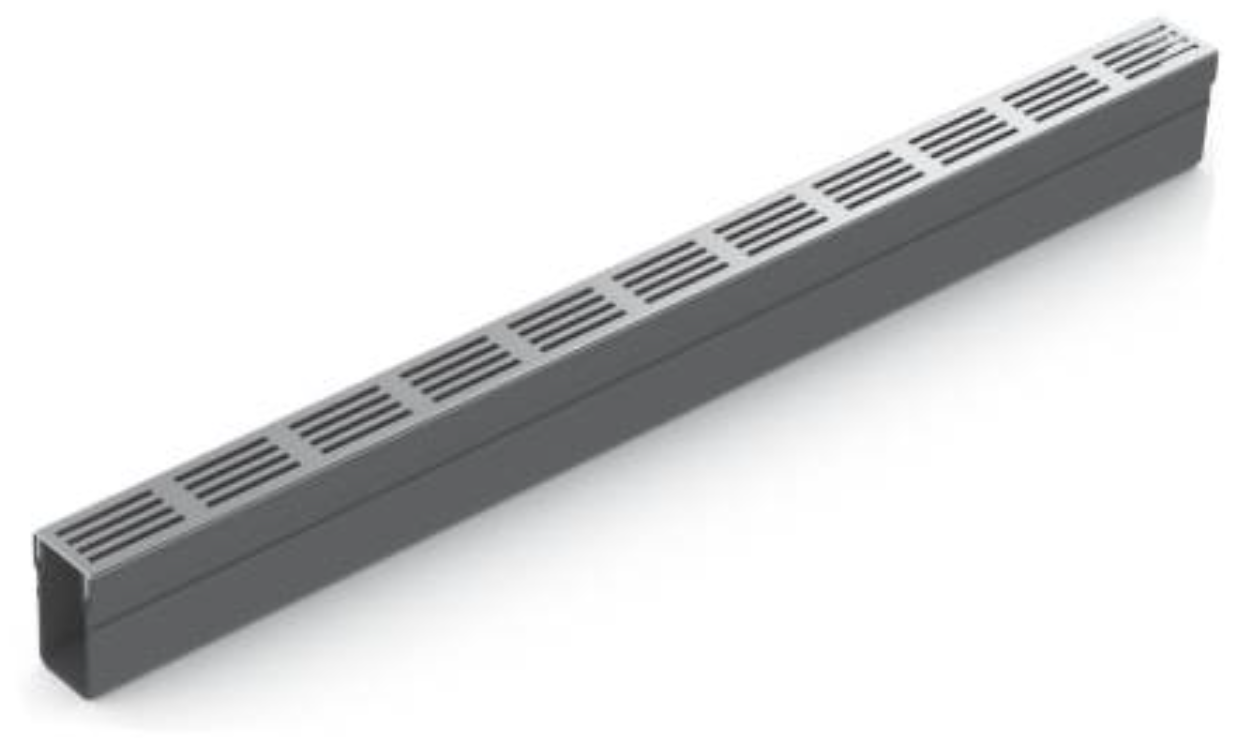
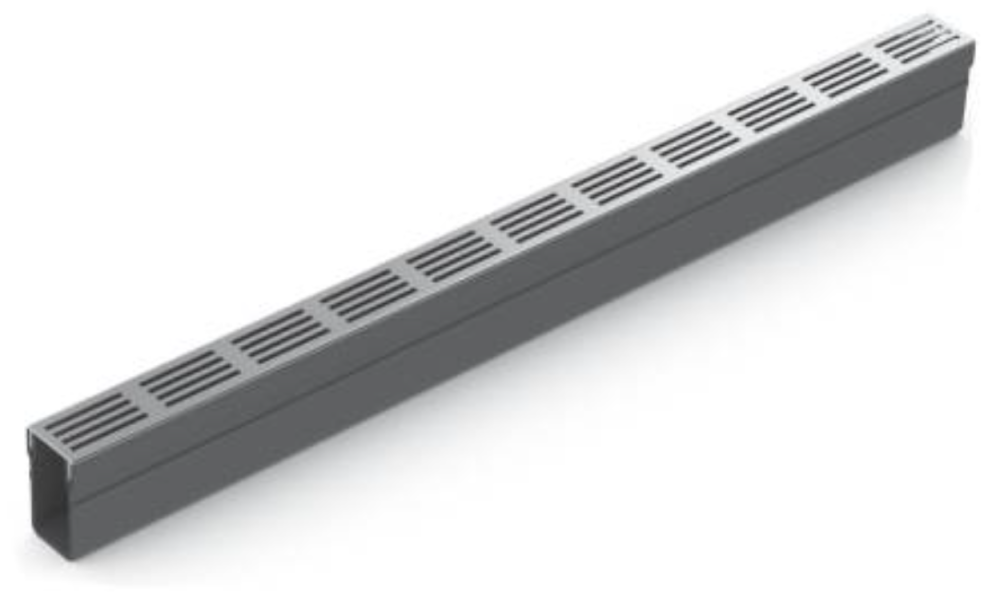
ACO drain - does that mean something like this at the threshold of the house? Presumably it just needs to drain anywhere except into the house - it's a last resort to keep dense low lying garage gasses or liquids out of the house.
-
Generally people aim for 50Pascals of air pressure, which is 50N/m^2. That's equivalent to the pressure exerted by just 5mm of water imbalance. It's not a lot! What I would suggest though, is have the water in a loop all indoors, then measure the height difference between the levels. The ends of the pipe need to be at different pressures - so put one end indoors, the other end outside, and make a loop with fluid all at your side. You can put the pipes at an angle (say 45degrees from vertical), so it's easier to measure as the fluid levels are further apart, even though the height difference is the same. I'm glad you said it was food colouring 😝
-
We have induction, it's great! Used to have gas, wouldn't go back. The only thing gas does better, I have been told, is heating the whole of the underside of a curved bottom wok, rather than just the base. Allegedly makes a difference with aggressive wok frying. As an aside. we got a particulate detector a while back - the who says the yearly mean should be less than 5ug/m^3 of 2.5um particulates. Burnt toast, frying aggressively, can both send it crazy, giving >1000ug/m^3. Gently frying with oil, normal toast, boiling etc, it's safely below 5.
-
How to retrofit insulation at intersection of cavity and ceiling
RobLe replied to sam's topic in Heat Insulation
Our house, 1963 build, didn’t have cavity closers either. As part of the Ewi process, I had scaffolding up. I took up the bottom two rows of concrete tiles, folded up the membrane, easy access then to fix it how I liked (glued insulation in place with expanding foam glue). -
If a house is continuously occupied, then insulation is best placed externally. Or in a very wide brick cavity. Either way, you'll end up with a high thermal capacity. Thermal capacity is then desirable - fewer overheating events, easier to "ride through" a cold snap. On the flip side - if you only use the house 10% of the time, high thermal capacity is wasteful - it's cold at first, it costs money to heat it all up, and that's all wasted if later you're not there! IWI is then more appropriate.

-
EPC is rated B and the site say for space heating energy estimate to 406kWh & water heating at 1730kWh per year. The EPC space heating figure is very low, I’m wondering how to square that up with not managing to heat the place at that flow temperature. Could you take a thermal pic of the rad, but find the hottest part of it - is that pretty much the boiler flow temp? Rads generally have a temp distribution over them. Could you log the gas meter, and read again in 24 hours? Also take a pic of the meter, it hopefully says what the figures mean (kwh/m3/ft3). Are your neighbours, left right up and down heating their flats - You’d notice with your thermal camera?
-
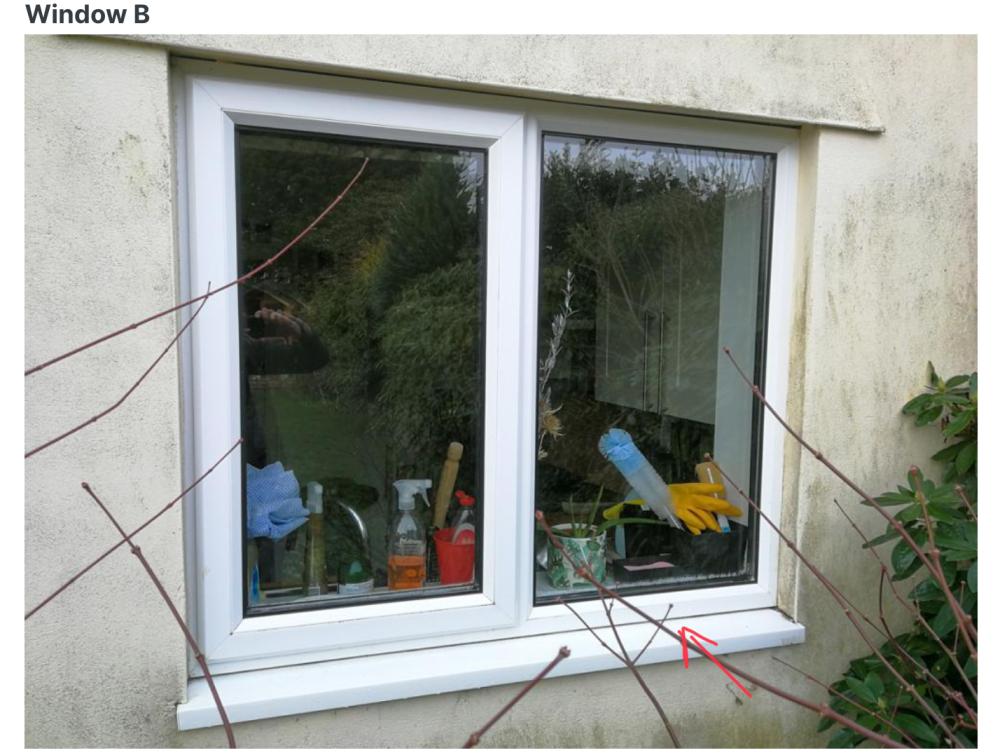
Double glaze sealed window units need an external air path to the edge seal. If you block it, then there’s a risk the seal will fail, and the window will eventually mist up internally. This is either from water leaking in from outside, or humid air leaking in from inside. I think from the pictures, the air path is between cill and the main unit - piccy below with red arrow. I’ve got similar, and I kept that opening clear for that reason. When I removed the glazing from ours (swapped for high spec), I could see small holes drilled at the bottom of the frame internally so the airspace around the dg seal connected to outside via that slot. Totally agree with the rest, and method of foam+sealant.
-
While the electricity used by a heatpump is easy to measure, heat is not. I recommend an external MID certified electrical meter on the heatpump (they’re only £20 for single phase) as a minimum, and consider external heat monitoring (more difficult). The ‘insulation performance gap’ is worth googling; maybe there are details wrong? While mvhr can be very efficient with ‘sensible heat’, it does not recover any of the latent heat of evaporation of water - so I believe every kg of water that evaporates indoors takes 0.68kWh of heat to get rid of, irrespective of the mvhr(anybody confirm?). Once your home is that well insulated, user differences start to have more impact I think. Curtains, doors, windows, how much solar gain, activity ? Now is the time to borrow a thermal camera. Get a little training/find someone who’s used it, look for any hot details outside, and/or cold inside.