RobLe
-
Posts
234 -
Joined
-
Last visited
Everything posted by RobLe
-
@JohnMo You're entirely right, it is for that reason. I found a ref to the same fact in a book that I've borrowed on heatpumps. Annoyingly despite being a 400+ page book on heatpumps it didn't go into any more detail than that, so I'm left to speculate, and maybe you know more which would be great! I made my own heatpump that has been running fine for 6 months with no heater (don't think I'm an expert, all just diy).... ahhh - a bit of googling before posting works wonders - there's a wiki article on it, I think says we're both right "crankcase heater": "A crankcase heater is an electrical component in a compressor in an air-conditioning system, heat pump system, or chiller system. The crankcase heater is normally on all the time, even when the unit is not running, though temperature sensors and set points may turn it off when not needed. A crankcase heater's sole purpose is to prevent refrigerant migration and mixing with crankcase oil when the unit is off, and to prevent condensation of refrigerant in the crankcase of a compressor. The crankcase heater keeps refrigerant at a temperature higher than the coldest part of the system."
-
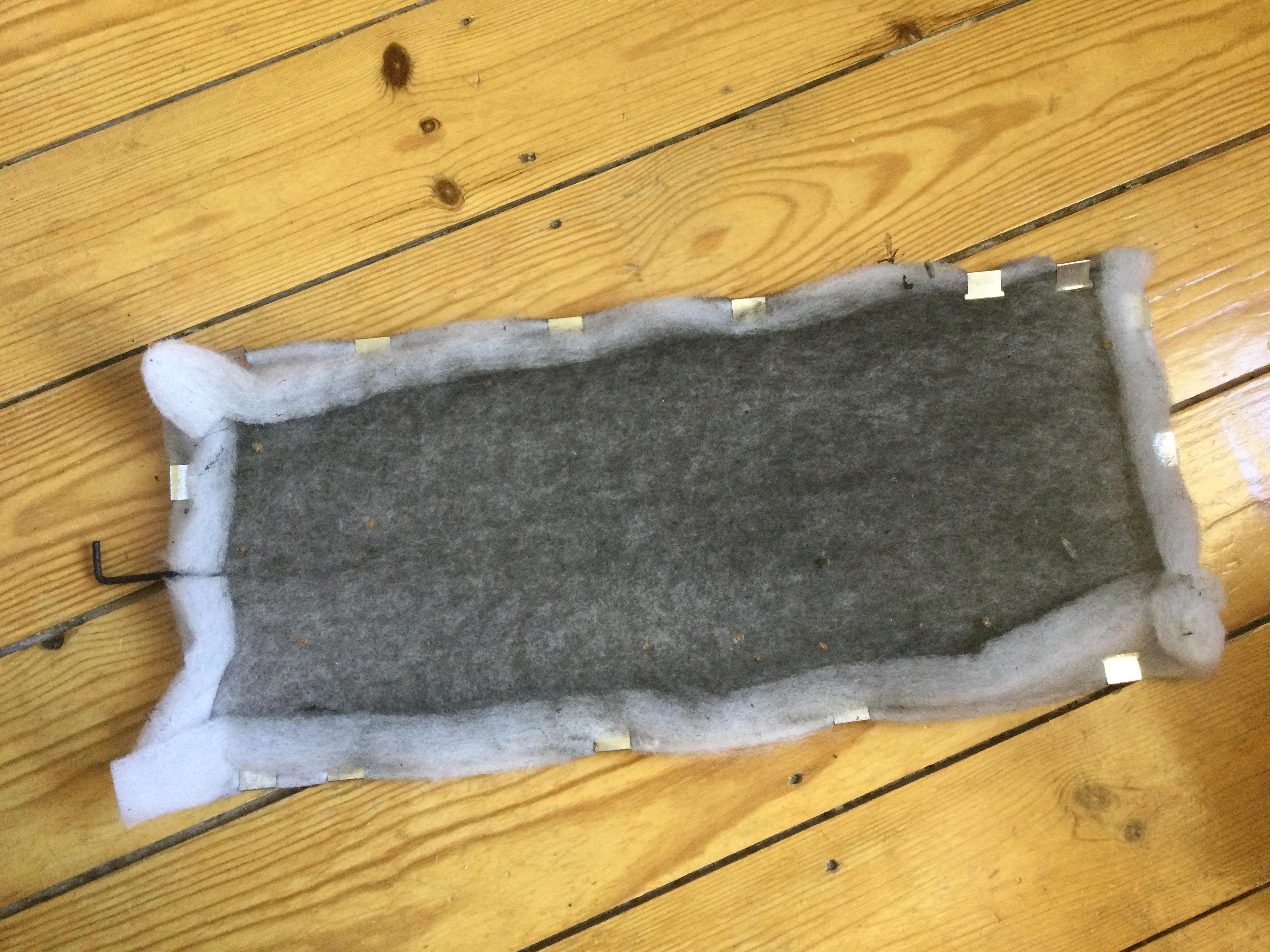
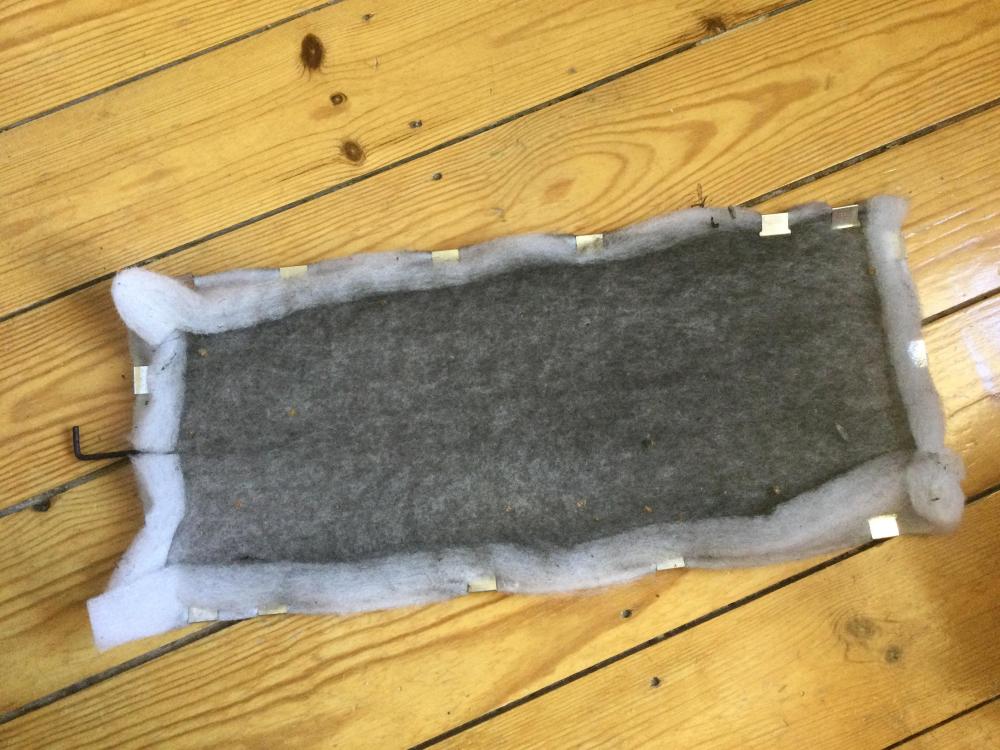
Our VA sentinel kinetic plus bh averages at 100m3/hour. When we’re in it’s more, when we’re out it’s less, it goes up and down based on humidity and CO2. The filters get changed every 3 or 4 months - that’s when it starts nagging. I pull out the old filters, take the fabric off the metal frame, clip on a new bit of fabric with ‘supaclip’ clips. Piccy of an old one about to be changed:
-
We have a Monarch Midi, I think we got it ~10 years ago. No trouble, diy install, still works fine. It feeds the hot water system, also the shower cold and washing m/c. Not the dishwasher just because the plumbing was awkward, and it has it's own anyway. All our cold taps are still normal, so any are good to drink from. The amount of salt it uses is directly proportional to the water through it, so avoiding toilets and cold water taps seems a win. We got it to reduce dry skin irritation when showering, so that was the focus. Only slight irritation with it is the pregnant plug charger runs warm, and total standby power is 6W. The plug is AC out, so it would be hard to improve it.
-
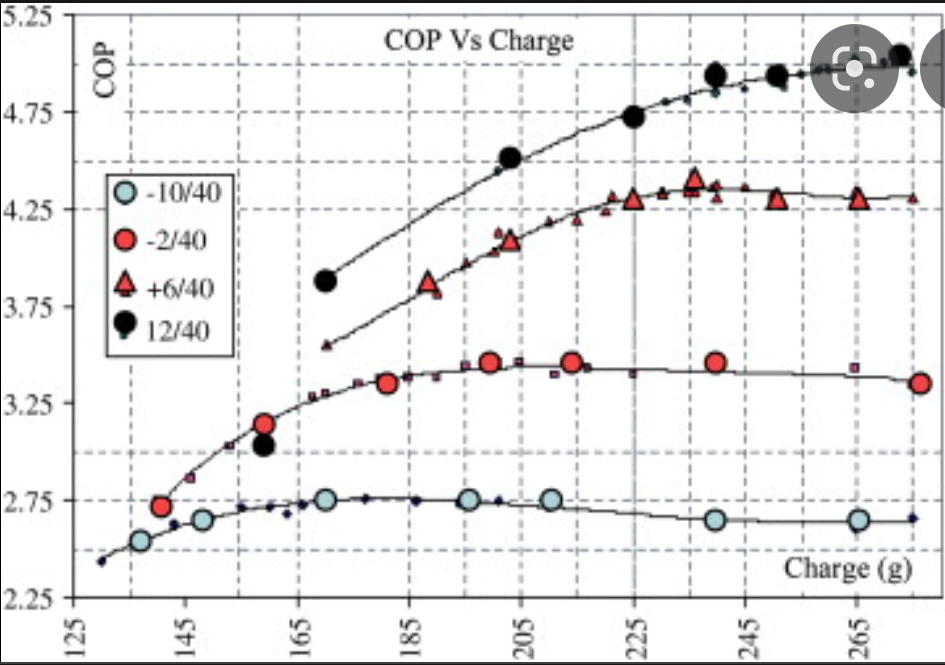
@Marcocosic Some insightful points there, I think you know a lot more about this than I do! There's many things that I did wrong in retrospect, down to basic not knowing how to use a water:water compression joint. Only after making 12 or so of them for the groundloop distribution manifold, did I realise that I needed jointing compound for a leak free fit. And you shouldn't fit the pipe all the way in, or you can't keep tightening the nut later. It's like I'm making it up as I go along...Gah. Anyway - yes, please come and visit, cast an eye over it sometime! address pm-ed. Yes, it was great fun to do! So many new things to learn how to do... it's hard to find technically interesting and useful projects, and this ticked both boxes. Raw water worked a lot better than the glycol, I wish it didn't need the glycol. After you mentioned alcohol, I looked it up - you can buy denatured(undrinkable) alcohol a lot cheaper than the glycol I got. Hmm, maybe I should've done that. If it has a major overhaul one day I will replace the heat exchangers with bigger ones, I think I can scrape back ~4C between them if I increased from the current 24plate to 60 plate. The ones I got allegedly are working pressure 16bar, I've seen some that say 30bar. They're £30-£70 each, for basic ones. I followed that link for the swep throttle connection thank you! - I think the suggestion is that the tiny cap tube to BPHE joint is critical, and the internal shape should be always increasing in volume. Hmm, you may be right, I'd not heard about that, but it makes sense. Doubt mine is perfect there:-(. I don't know how much a better throttle(EEV/PRV) would improve things - I don't think they're common for low power compressors, but maybe it's a future improvement? I did see that mcs doc, it was very helpful. I sized our system from it, so it should be no surprise we need glycol I guess. Somewhere I saw a paper on water v glycol in gshp systems - I think the conclusion was that in countries with higher mean temps than the UK it was worth adding a bit extra groundloop pipe so that water could be used. In colder climates there's hardly any headroom before freezing, so the extra pipe length needed becomes longer and longer and so uneconomic. Our rads are certainly not perfect - I know the system works better if I increase the internal pump speed to full, but I've not characterised "better". Most of the rads are in a 1-pipe arrangement, some in a 2, bit of a hodge podge really. The 1-pipe means that they will never have been usefully flushed since being fitted in 1963 (1 pipe means every rad has a permanent bypass pipe, and the flow is only convection in the rad). I could probably improve them quite a bit by doing that one day - simplest I think would be to add 22mm wide bore valves to every bypass pipe, then I can do a conventional powerflush one rad at a time. We have powerflush fittings already I think - I remember it being done 10+ years ago by a plumber, but I know now it cannot have done much due to the 1-pipe. It all "just works", so not a lot of incentive to rip it out and replace with 2 pipe everywhere, mess and pipes chased all over, no ta. Our heat measurement system uses a flow meter, which I think is accurate, and two temp sensors on the water pipes inside the house. The temp sensors seem significantly better than the spec.... but the spec is +/-2C over their range! I've ordered some significantly better ones, and that should help enormously when they arrive - when being the operative word, as I ordered 4 months back, and they're still waiting - so many IC's are late/unavailable these days. If I can measure the COP accurately, then I can see exactly what improvement changing pump speed has, or insulating the pipes in the HP itself (not yet done all), etc. And what improvement flushing rads has too. It's satisfying to have verifyable improvements. From memory the superheat was always in the 4-10C range, the 4 times I measured it, but I am at the mercy of the accuracy of my gauge set, and how well the temp probe is connected. If I get better COP measurements going, another technique is to slowly increase charge until the COP stops improving at the operating point? Below is a graph (random googled graph) - I've seen this sort of thing before. The graph does seem to imply that as the cold side gets colder, the optimum charge is lower - I should bear that in mind. Would a TXV/EEV avoid this optimal charge varying?
-
Operating it is fine, it uses the same controls we had before for the gas boiler - a honeywell timer in the airing cupboard and honeywell thermostat in the hall. Not that anybody other than me ever set the timer, but it's standard. We have an mvhr too, nobody else would bother changing filters, we have a water filter, same again, solar water - it would just be decommissioned without me if it broke, PV - nobody else would notice if it bust(it hasn't). Green tech needs maintenance or at least mechanical sympathy, it's not as obvious as a telly if it breaks. Maybe without me, Mrs RobL would notice these things.... I think different people have different priorities, I never remember birthdays:-) Insulation is great in comparison, it doesn't need maintenance. If the heatpump itself got bust, and I wasn't there, that is awkward. If we keep the gas boiler forever, that could be used instead, Mrs RobL has been taught how to swap back - it's 2 water valves and a 3 way rotary switch. Of course to keep this backup we'd be paying a connection charge for gas, maybe £150/year just in case. Maybe we should, it's a simple backup that's already there! I doubt a refrigeration engineer would fix it if it were bust, do they generically exist? Or is it a specialist repairing/replacing one specific manufacturers kit. My experience of "product" is generally I buy it, and after 2 years I'm on my own repairing it. If I get in touch with the manufacturer they really just want to sell another. Ranty point about our Nissan Leaf - it has the oldest battery firmware, which incorrectly reports low SOH and is allegedly a free firmware change to fix. After getting in touch, they have sent several texts, emails, even a card... to get a new car.... no firmware update is in sight yet though:-(
-
I think the heater is intended to keep the compressor above the evaporator temperature, so that liquid phase refrigerant doesn’t accumulate there, which could damage it on turn on. Under normal cold weather conditions the compressor is hot anyway as it’s being used - compressors sometimes stipulate minimum airflow over them to cool them down or they run too hot. I’m not sure what is ‘too hot’ though, specs I’ve seen just state fanspeed! If an inverter model is run continuously, is the issue completely avoided - is it then only an issue for intermittent cold weather use? Most heatpumps seem to have immersion backup elements built in - I’d be disabling that ‘feature’, just in case. Our old (greenstar 18ri i think) gas boiler used 10W standby, i have no idea why. There was just a hot bit of circuitry inside it, all the time. No legislation on standby I think is the reason.
-
You’re too kind everyone, thanks! I’ve diy installed most green things - solar thermal, mvhr, ewi, and made lots of smaller stuff - hot wire eps cutters, ach testing, but this is the biggest home build. The electrics is close to my day job, it could have been done much simpler with just ‘relay logic’, but I’d not get the logging or the COP display. I like the cop especially - it’s an easy ‘everything is ok’ indicator, no need to look at all the different flows, temps etc if the cop is normal. I’ll go take a look at the standby thing!
-
Ok, I started another thread "Diy GSHP", there's a mega pdf there that I'd already written in the colder months. Get a big mug of tea and enjoy!
-
Attached is a rather long description of the ground source heatpump that I built at the end of 2021. It's completely diy - two 2nd hand fridge compressors(one for vacuuming down, one for the HP itself), bits of bent copper pipe, etc. I've encapsulated it as a pdf so that it hangs together in one thread, and should be an easier read. Thanks buildhub for a big filesize limit! I started out knowing vaguely what I wanted to do, then watching every youtube on R290 compressor systems several times, googling it, reading stuff on "Ecorenovator" etc. The youtubes are especially useful, watching people do things right - or wrong! I've been quite nervous about the safety aspect of R290 (propane) as the working fluid, and anybody who tries anything like this should be too. Propane is a great working fluid - it's not an F-gas, it has a GBW of 3, while most F-gasses are 1000+. But it burns well, so must be treated with great respect - used outside and kept away from flames and electrics. It was quite a steep learning curve - I'm ok at soldering copper pipes for plumbing, and regular electrics, but there was a lot to learn to make it work. Which it does, and we are happy with it - Mrs RobL doesn't accept any low temperatures in this house! There have been minor niggles (a fuse blew, lots of weeping compression joints in the water circuit before I watched a youtube on how to do them right). All the issues have been easy to fix, and I'm comfortable with the idea that I can fix them rather than wait for somebody else. DIY-GSHP-RobL-June2022.pdf
-
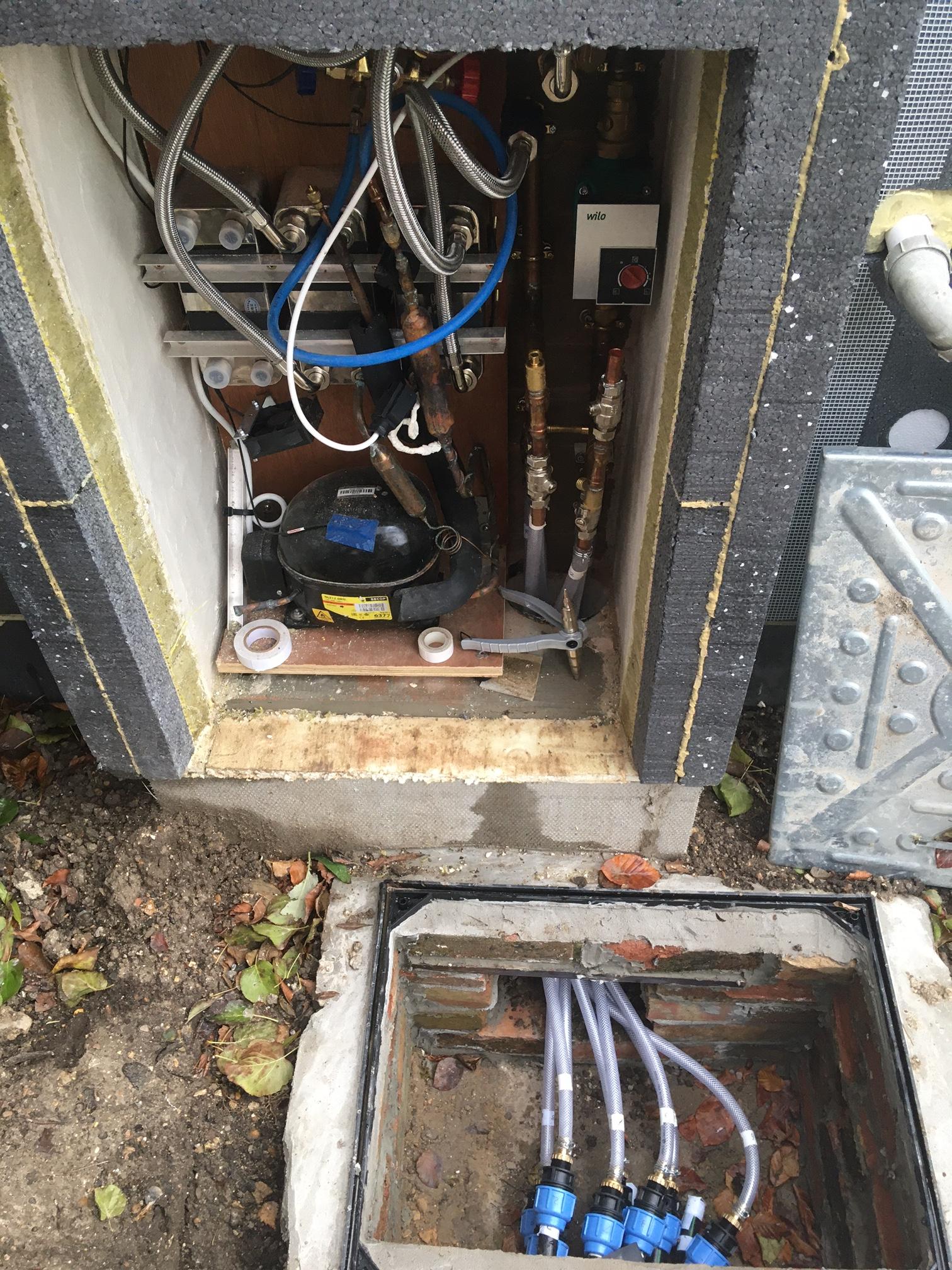
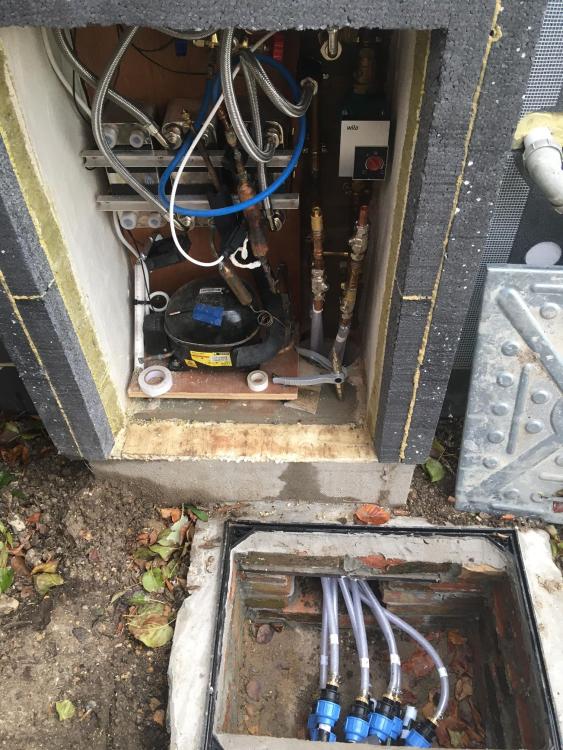
Here's a pic of ours, been heating our house 'since Dec last year. Diy....maybe you can tell that from the piccy! It uses ~200g of R290, not an F-gas, but lots of care is needed. It lives outside, but inside the ongoing garage EWI to keep it a happy temperature all year. We still have the gas boiler plumbed in - Mrs RobL needs a year of heatpump use to be convinced we can disconnect. I say she needs more faith. It's 600W in, ~2400W out. Ish, as it's very hard to measure accurately the heat out. Standby loss is 2W from a micro logging stuff, there's no heaters, no immersion nonsense, no fancy clever stuff, just on or off and a few safety checks (flows, temperatures). I reckon it cost: £500 for the bits you can see and £1500 for the stuff under the ground you can't. And "some" time, which is of course, free:-)
-
We have a PV system on FIT, and we’re also on a V2G trial, where OVO choose when to charge and discharge the car, we pay to charge it, they pay us for *anything* we export, including solar:-). We had to tell the fit provider to stop giving deemed export, but still fit. I think you can get fit, stop the deemed export, then sell the actual export as measured by your main house meter, if it is good enough- ie. measures in and out accurately like ours.
-
You’re probably right. But it seems shortsighted - that the protocol doesn’t include it, I’m confident that engineers could make it efficient at much lower current too. Maybe it could be offered ad-hoc as an extra! I’ve seen a few people try to direct charge EV cars from solar panels, and basically you can’t, because the protocols get in the way. There’s a u-tube of a guy who does charge from PV off grid - he slowly direct charges 12V batteries, then uses an inverter to charge the car at a constant higher rate. It works, but he has all that extra weight and inefficiency of extra batteries.
-
The standard J1772 socket on electric cars is usually used to home charge. It’s got a protocol for what the pins do - mains AC is presented to the car, and a 1kHz squarewave is applied to a control pin which tells the car how much current it can draw. The lowest current the protocol goes down to is 6A. At 240V thats 1.4kW, it would be lower power at 110V. It’s frustrating the protocol doesn’t go a lot lower, enabling slow PV car charging.
-
While the osb adds strength, it is damaged by water - I’ve not seen a BBA cert for osb below epdm, or am I not looking in the right place? Not that there should be any water, but it makes me nervous too, wood in that cold location. As I’ve done quite a bit of ewi-ing, what about this layup: (Outside) Epdm Ewi basecoat+glass mesh, around 4mm thick total TR27 VCL Clearly it’s more work than osb3tg4. It’s cheaper and can’t rot, not as tough as osb but I think tougher than 4mm cement board due to mesh, and can give a step free finish. There will be a week delay, waiting for the basecoat to fully dry prior to epdm. Thoughts?
-
Modern roofs have a breathable membranes under the tiles, while older ones will have a non breathable one. Does that make a difference for how likely the timbers are to rot?
-
My understanding of compressor heaters is that they’re needed under fast cold-> hot temperature transitions. That is, after it’s been cold and warmed up, the compressor being a big heavy lump remains cold for a while, and so is likely to have liquid phase A/C fluid inside it while there is gas phase everywhere else. My understanding is that most compressors could be partially damaged starting up like this, so it’s safer to prevent it from happening by warming them up before turning them on. This generally translates to keeping them forever warm (gah), so a vampire load. It must be possible to heat only when needed though, even if this means a slow startup. Is there a scroll/reciprocating compressor difference to this though? As far as I know Ashp don’t generally state standby consumption, which could be quite high.
-
In the case of an old exiting FIT system, with an added battery - a friend of mine has had another company propose replacing the existing working inverter with a hybrid inverter + batteries. I assume they propose this as the install is simpler, but they touted it as better for him as his old inverter was ‘nearing it’s end of life’ - I say tosh to that btw, electronic wear out is not accurately calculable for an individual install. This solution could be used for timeshifting and so ok - but surely the battery could be charged by the grid too, via the meter in reverse, then back to grid. It all seems very dodgy to me that, the simple FIT meter wouldn’t calculate (power in) - (power out) but instead just tot up the output ignoring the input. I don’t think the company that suggested it knows all the facts, nor would it clean up the bureaucratic mess it had made.
-
It’s definitely worth getting an IR thermometer, they’re only £20 or so. I think even that could identify a significant issue - eg one wall or roof section 2C colder than another. IR cameras cost quite a bit more, but are sometimes available to borrow for free - eg Cambridge Carbon Footprint will lend them out in winter for this purpose. I’d expect cold draughts to be worse downstairs than upstairs, ‘stack effect’ tends to convect that way. Good luck, and keep at it! We must get better in the UK at actually putting insulation in! There should as standard be a check, and not just a paper excercise - I’d like yearly kWh fuel use to be logged, and available like an EPC or mileage on an MOT.
-
DIY hot water system needs replacing - Sunamp?
RobLe replied to Nelliekins's topic in Boilers & Hot Water Tanks
That's hotter than we've ever kept ours - lower would reduce hard water precipitation and improve boiler efficiency. You won't get as many showers out of it, but a 30kW boiler could easily play catch up with a single shower output. -
First year Heating Energy Use in Passive(I hope) House
RobLe replied to Iceverge's topic in Boffin's Corner
Hi Iceverge - I second the idea of directly measuring the heating electricity. Knowledge is power! Am I right in guessing your rad on a timer operates during the night cheap rate? I notice that a simple rad or storage heater on Octpus Go night rate will be a similar cost to an ashp during daytime, as Go has a 4x price difference. The ashp always saves more CO2 though. As to the EPS - I think the 0.03 stuff is "platinum" EPS, with carbon bits in it. The blacker it looks, the more carbon, lower the lambda - I've used stuff that was 0.034 (grey), and 0.03 (black). The 0.03 stuff got noticeably warmer when left in the sun during construction. There's no clever gasses, I don't think it loses capability as it ages though? -
We have TRVs on all rads, but I leave all downstairs ones full open so there is a guaranteed heat load, and the thermostat is in the central hallway. We have a well insulated house (1.6 kW peak loss), so internal air circulation equalises any temperature imbalances. Bedroom ones are adjusted by user preference. Rads are original 1963, but loads of insulation means they are now ‘oversized’, flow temp of 32C generally. I’m a believer of insulation first, low flow temperatures, clever smart controls last.
-
The three phases are I think independent, from your perspective. That is, you could pull in 3kW to charge your car, but if the batts and PV are on a different phase you will be importing and exporting simultaneously on the different phases, likely the import rate is lower than the export rate and you will lose out. I'm not aware of consumer phase balancing equipment, which could fix the issue. I suggest you split the battery amongst the phases, and also split your loads. If you will find one of the phases needs more than the others, it might be helpful if you could move a batt over in future. It's a lot simpler in a straight single phase system! Maybe you only need to use 2 of the 3 phases? Also - if you do get a hot tub, get massive amounts of insulation for it! I bet they are an energy hog. Can it be solar thermal heated ? Or a cheap pool ashp will give a cop of 4 in summer.
-
What controllers and inverter did you get? Are you planning trying to match house loads when your PV isn't enough? We have V2G, which has worked very well in lockdown. The wife's gone to work with the car again though, the V2G doesn't work so well without a car connected...
-
Solar PV & battery installation on the cheap!
RobLe replied to Solarexploits's topic in Photovoltaics (PV)
MPPT = maximum power point tracking, PWM = pulse width modulation. Yes, you can have both - and I would expect any decent PV-> battery system to use both techniques. Be aware that super cheap ebay jobbies claim MPPT, but are not. I'd expect the batt controller to cope with up to some current of panels - don't fit more, a cheap thing may just overheat and die, and make sure the Vmax of the string is ok for the controller too, or the magic smoke will come out for that reason too. I'd put fuses on the batts - It sounds like 12V+12V in parallel with 12V +12V - I'd use 2 fuses, one for each 12+12 series pair, close to the battery terminal. Don't chance shorting those batteries out, it would be horrible. A 3kW inverter will want to draw up to 120A from the batteries, but don't rate the fuses that way; they are there to protect the cable, so should be lower than the cable can cope with to the inverter. How do you distribute the inverter AC power, is it all regular mains plugs and sockets ? Just because it's not mains, it will have plenty of current and probably no RCD, so take care. -
I was the lucky recipient of a UPS a while back - a friend said it was bust & gave it to me ....it wasn't, it was his fancy PC all along. Strangely, he lives up North near lots of power stations, but gets regular blackouts. Anyway, it's 500W, £98, by Schneider, and claims to last 170mins with a 20W load. I tried it with a power meter on the input and a mains fan as a load, and I'm surprised how good it is: Plugged in UPS no load, just trickle charge took 2.5W fan running from mains took 22.3W UPS + fan took 25.6W Didn't miss a beat when turning the mains on/off, and seems pretty efficient in the usual "pass through". Who knows how long it would actually last left on forever though. I can't remember our last power cut here mind.