


Marvin
-
Posts
2389 -
Joined
-
Last visited
-
Days Won
3
Everything posted by Marvin
-
@Buffs, what is the kW rating of the inverter you are using?
-
 2014 04 09 Kudox Steel Panel Radiators Technical Data.pdf This may help.
 -
The only reason I ask is because a previous client was informed that they weren't allowed 2 front doors due to planning.... Marvin
-
Does that mean 2 front doors?
-
The smaller the U-value the more thermal resistant.
-
Yes. Hense the higher the power to energise the hotter it gets. ..
-
Capital Gains on self build value increase
Marvin replied to puntloos's topic in General Self Build & DIY Discussion
My CTA (chartered tax accountant) says you need everything going to the address including council tax and all mail for at least 6 months but best for a year if you want to avoid HMRC challenging it. Your warned. Best advice is to seek advice from a CTA covering all your circumstances! Good luck M -
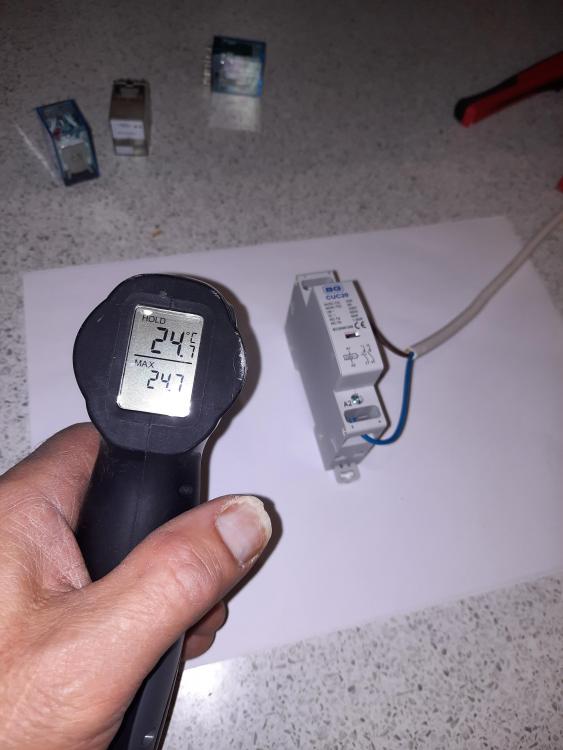
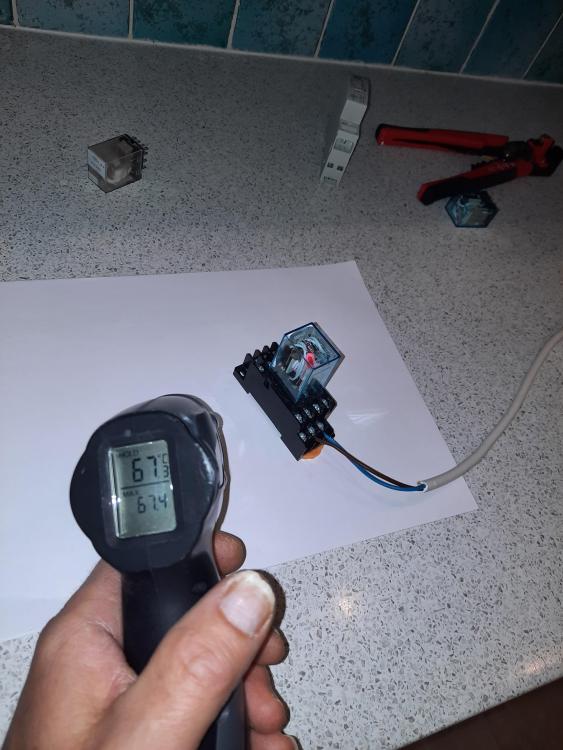
No. This was the bottom plate temperature. Hotter than the rest of the relay, measured up through the surround.
-
Decided I'm not going to mess about with the PID settings. ? However the adjusting of the weather compensation will be done to suite our home requirements. The aim is to control the temperature in the buffer tank, bringing it closer to the water temp required to keep the house at the right temperature, whilst still cycling for at least 10 minutes of heating by spreading the temperature stops, if you know what I mean. This will be achieved by trial and error. We're running at 35C set 37C top and 29 min and were quite hot. The weather compensation sat at 40C with the present external temperature.
-
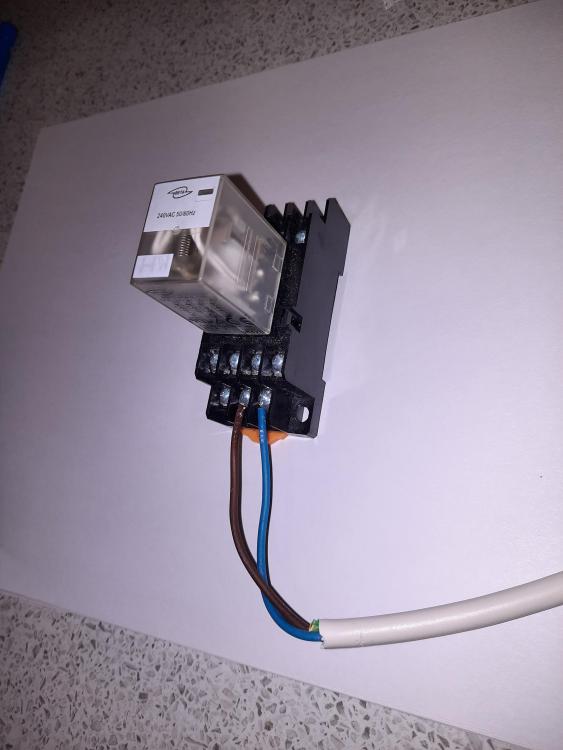
Your reply is near enough for me. Thank you. The "hot OMRCIT ones" were from china. The Beta ones I have had for some time.... The heat in the OMRCIT ones travels along the connectors to the terminals where the cables connect and I have measured over 70C just sitting on the kitchen side! Shut in a steel box with several in a row, with a load crossing the terminals, I think they would rise even higher and may melt the wire sleeving, even using heat resistant wire, so I am not going to use them, especially when they could be energised for hours at a time!
-
Thanks for that. Anyone: If the coil resistance is 15.92 kiloohms and the voltage is 220 to 240, what is the Wattage? Is it about 3 Watts???
-
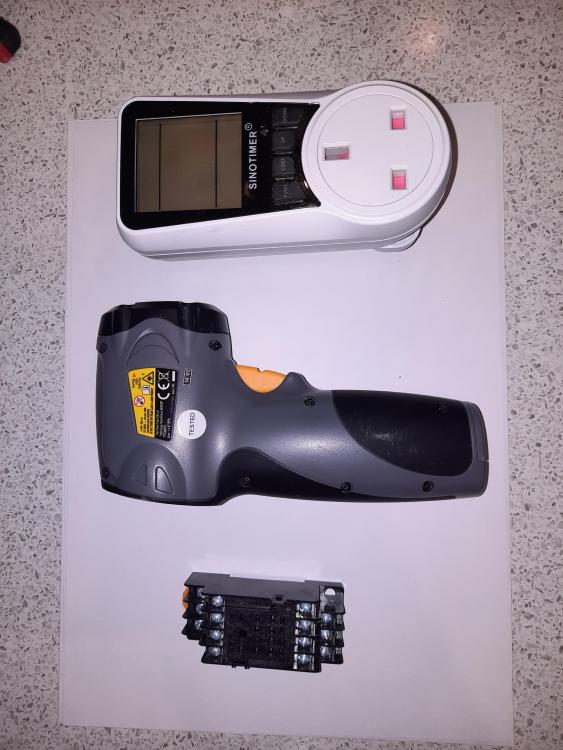
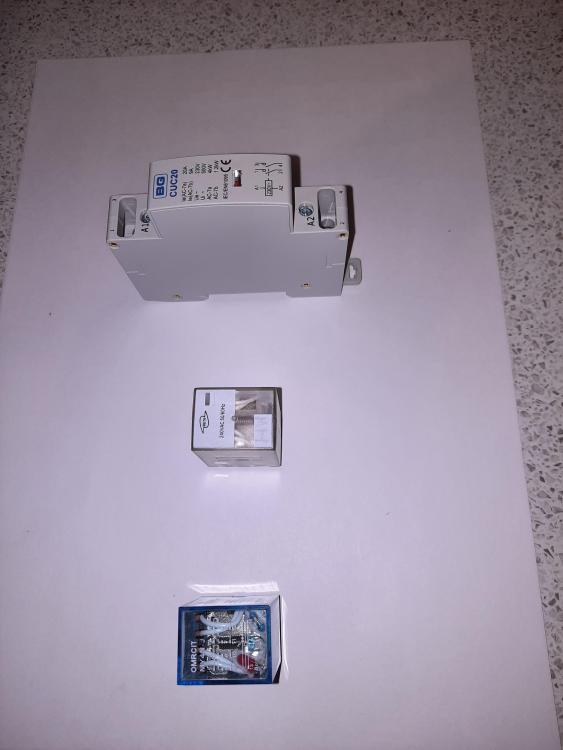
Have been going through relay alternatives for my heating controls. Realised that some relays would be energised for hours and wanted to see how they coped. So here are my test results and questions. Thanks for looking. Equipment: Relays I'm testing: Results: My results based on ambient room temp 23C. All relays not under load. All relays 240v coils. BG CUC20 Watts when energised 2.2 steady. Temp after 10 mins 36C BETA Watts when energised 1.7 steady Temp after 10 mins 35C OMRCIT Watts when energised 4.7 to 4.1falling Temp after 10 mins 67C This one has a neon. Is the high temperature of the OMRCIT, when not under load, a concern? Bet you can guess which one cost the least.
-
It would be good to lower the pump speed, if possible, if the system still works at the lower pump speed!!! If the flow is too slow, when all radiators are fully open some may not heat up. (however this could also be a fault/ or the change caused by the slower water flow, with the balancing of the radiators) Radiator balancing: Water is lazy. It will take the path of least resistance. If all the radiators are fully open on the lockshield valve and TRV sides you may find that the majority or all the water flow will go through the nearest radiators only. When the lockshield valves are adjusted correctly the flow to the nearest radiators has as much resistance as the other radiators and so they all heat up. However, be aware, changing the pump flow speed can upset this balance. Generally speaking it is an on site / individual system assessment. You could try the "turn the pump down one and see what happens" routine. Good luck M
-
Hi @ValleyBoy1958 Firstly, ignore the type of boiler you have, bypass valves are about the water pressure. As you say, as the pump circulates the water around the system the TRVs cause the pressure to build up as they close thereby reducing the flow around the system. The theory is, set right, that the bypass valve will open when the pressure increases to ensure there is enough flow for the pump. Yes. The setting of the valve is an individual thing: Set the bypass at 0.1 bar and the water would probably circulate through the valve and may not reach all your radiators depending on the resistance to travel around the system. Set the valve at 0.5 bar and the water may start to make noises when few radiators are open. So the challenge is to find the right level. I would shut all the radiators except the one furthest away form the boiler and run the system with the bypass valve at 0.5 bar. Does the water passing through the one radiator make a lot of noise? If yes reduce the number on the bypass valve until the noise reduces. If no, open the bathroom radiator and shut the first radiator and do the same again: Noise? No? ok, Yes? reduce the bypass valve further. Its really trial and error. Your pump may have 3 speeds or be modulating so lots of things come into the mix. You cannot get into too much trouble adjusting this if you follow the above. Many people will have other ways to set it..... Good luck Marvin
-
Yes and as our place is expected to be cool in summer, we will probably want to have a shower at the same temperature, and the loss of heat from the tank would be about the same as its all insulated.
-
Thank you for this.I had the key but didn't know what it was for. I will have a go next week.
-
Yes. After discussions with the boss, we think that we will turn off the weather compensation option and use the manual setting for the temp of the heating water.
-
https://www.planningportal.co.uk/info/200130/common_projects/51/solar_panels/3 amongst other rules for off building set-ups Only the first stand alone solar installation will be permitted development. Further installations will require planning permission. No part of the installation should be higher than four metres The installation should be at least 5m from the boundary of the property The size of the array should be no more that 9 square metres or 3m wide by 3m deep
-
If you spend a little time using this tool it will help you to understand a lot more about what results you will achieve from your system: https://re.jrc.ec.europa.eu/pvg_tools/en/tools.html First thing to do is to scroll on the map all the way down to your property. The results will then be based on the solar gain at your position on the planet. Play around with the options and you see what happens. For a 4kW system in December, where I am, will produce about 3kWh a day on average.
-
Yes... my main challenge is that I am trying to use the "weather compensation trickery" to only effect the heating/cooling and not the hot water.
-
+1.
-
+1. It cost us £360.00 inc VAT for our distribution network operator (DNO) to confirm that the local electric system could handle the 6kW potential our system could produce. Furthermore the DNO would not take into consideration a CT clamp limiting the system output. The maximum output was assumed to be the maximum of the Inverter. (These assumptions by our DNO may not be the same as your DNO). The response from the DNO took 2 months and they advised that they aimed to respond within 3 months.
-
Would someone please confirm my understanding of how a PID system works on an (my) ASHP and if I understand correctly what changing the settings would do. A proportional–integral–derivative controller (PID controller) adjusts the output rate to avoiding excessive over shooting or under shooting of the set point when changing the temperature to meet the set point. . The Kp setting would be the difference at which the controller would react (mine set at 5C) The Integral setting would be how long before the controller would act (mine set at 200s) The Differential would indicate something to do with the relationship between 2 PIDs? (mine is set at 0s) As I tend to understand that the ASHP "runs" most efficiently when at the lowest temperature to achieve the desired result, and for at least 10 minutes a go, I was trying to understand how altering the PID settings would effect this optimum aim. My guess is the answer as what to do with it would be "Don't touch it"? Thanks Marvin
-
Not fok that's hot then?
-
Worth digging more than 200mm under floor joists?
Marvin replied to House man's topic in Introduce Yourself
Digging down to 800 inside could cause heave if you know what that is... My understanding of heave is like you pushing your foot down in a muddy field: the ground squeezes out under the load letting your foot down and the ground up around the sides, only on house foundations this happens slowly. Also you have lateral pressures from the ground around.... Not sure about frost protection or water creating an under floor pond, or finally, what use the gap would be? It's usually used forairflowto keep the area dry.. . Good luck Marvin




