saveasteading
-
Posts
10897 -
Joined
-
Last visited
-
Days Won
93
Everything posted by saveasteading
-
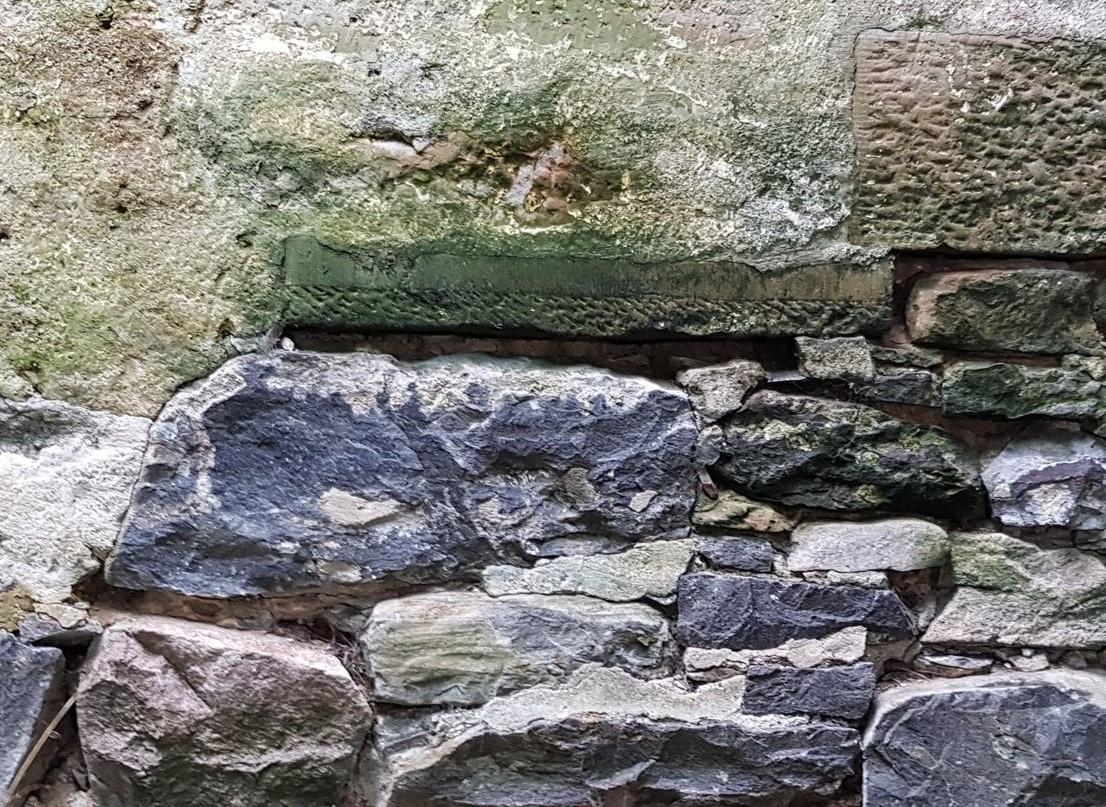
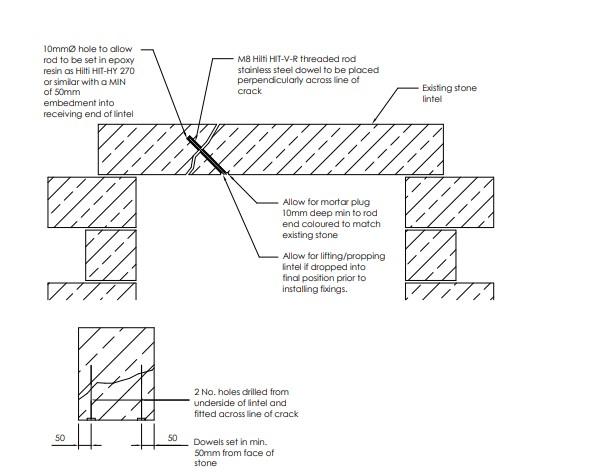
To expand the same subject, we have 2 ashlar concrete lintels which have cracks. they are in line with the outer skin of masonry only, with the remainder supported by very hefty oak lintels. My proposal was to jack the stone up the 1mm or so it has displaced, then drill through the oak into the granite and bolt them together (no rubble). The Engineer's proposal is to drill up through the crack and bolt it back together. Again I am reluctant but not so much so.....if it works. We have found a good mason, so he might have experience or views...he hasn't seen this......but there are more of you and with a variety of experience. Any thoughts?
-
Serious practical advice there, thanks. I might invite the specifier or his boss to do the first fixing: show me how it is done. The core at that point might have a nice big stone that can't be drilled because it displaces, or be all mortar and bits. There are so many other unknowns though, such as what does the back of that outer stone look like. With some serious tape measuring we can assess that there is a substantial stone there, so that we are not too near an edge. But we can have no idea what depth or contour it will have. Indeed will it be intact or perhaps cracked. Will it be thick enough to take a 50mm hole without punching through the outer face, or pushing the stone out. In any case I don't think it is good building practice. . Where there is any sign of movement we may be shifting the stresses somewhere worse. Where the risband joint shows no distress we are encouraging stresses, and the wall is not built as a structural wall, simply as a divider...If there was no wall there, there wouldn't be an imagined issue. If we are to do this, I would have no issue with simply fixing to a selected big inner stone. The bond created because of the 3 layers is surprisingly strong, to the extent that one area of local collapse by damage, still has an overhang of rubble wall. There are far bigger issues with the design we have received, but this is one hurdle before dealing with the others.
-
It is tough, resists the screw head and pulls tight. I used the official screws as it was for a shower and i didn't want any corrosion.
-
 I'm really interested because I have never pre-tested, and the tester has never been prepared to look for improvements, when the test is 'good' but I want superb. So you found some major leaks and haven't sorted them yet, so minor ones still to be found? Do you go round with the smoke around window perimeters, skirtings, covings etc? Did you tape over extract fans/drains?
 -
450 long into a hole that is filling with bits. Perhaps possible with a rigid tube first to guide the mesh in. but then we are leaving a much oversized hole behind.
-
Exactly. well...one of many 'exactlies'. I might snip a drawing but am wary of being seen to belittle the consultant.
-
It is for a resin bolt, glued to the 50mm penetration in the outer skin....somehow. Actually, 50mm is very shallow as you discount the first 25mm as standard practice, and so the pull-out load capacity wont be great.
-
By what means? wetted finger or smoke?
-
a 450mm long 10mm bit is likely to bend a bit as there is only perhaps 6mm of common core after deducting the spiral. Perhaps there are stiffer ones....bend before you buy.
-
It is. There is a cross-wall of the same construction, but it is not bonded (new term for me 'risband joint'), so the Engineer we have had to engage has said it must be tied. The solution is a 1m long x 75 plate bonded to the inner wall, then a short return onto the outer wall that has a bolt through it and glued to the outer skin. Then there is a similar butt joint at a main corner, where the same is proposed. In my mind this will simply transfer any loads further along the wall, but it isn't the biggest deal. Then there is a facade with arches that have joggled to a new shape. the proposal is to us similar ties linking the existing first floor joists to the facade, either within the arch stones or just above them. My understanding is to leave arches well alone as they adjust to movement....but hey ho.
-
The wall is 600. Plate on the inside, hole but no epoxy on the inner 200 skin, ditto the 200 rubble, 50mm into the outer skin. All-up that is approx 450 of hole, of which the last 50 is the fixing. But the stones are anything but regular, especially on the inner face. In reality the only way we will know if we have hit the outer skin is if it feels like solid stone and is approx at 400mm, but the skins vary in thickness a lot. It isn't what I would do, as I can see much more practical methods, but the SER has to be be allowed through or the warrant will take forever...... I am seriously hoping for a pragmatic Building Officer, as I don't cut corners but do know about reality as compared to drawing office (been in both, currently in the former) For a 24mm hole, the NickfromWales method will need a lot of £50 drill bits from Highland Industrial Supplies. Might be the way though, and the bits will be used again. Torque.....lots of it? or sds?
-
Sounds worth a try as an experiment at least.. Not sure what you mean about starting with diamond then going sds. In most cases the hole and fixings will be concealed by inner stud construction. THe intention is 2 hold walls together at unbonded corners, and to tie a facade back to an existing floor. More gripe about that later perhaps. On 2 cracked lintels they will be very seriously on show....I may ask separately about that.
-
I was thinking diamond, but how long will they last? the ones at screwfix etc are fine for tiles and worktops. But through multiple stones of, very approximately, 200mm? I have had commercial drillers do maybe 60 holes for foundation bolts with the same bit, and very quickly. Perhaps worth buying something of that class, as it will be too drawn-out to use a specialist. Also I know from experience that the hole must be just big enough for the bolt, or epoxy disappears by the box. Most of the holes reuired are thriough the 200 inner skin, then through 200 rubble and then fixed only to 60mm of the outer skin... I fear that real life may get in the way of drilling through rubble with 40% mortar....and how to get the epoxy, even with a stent, to the outer skin......insert tube perhaps?
-
We are being required to fix lots of metal plates to the original granite wall, with bolts of 16 and 24mm diameter. I don't agree that it is all necessary or appropriate, but have little choice in the matter. I'm used to drilling in concrete but not into granite, mostly boulders but some ashlar. How hard/brittle is it? Any tips?
-
So we are going to committee..
saveasteading replied to deancatherine09's topic in Planning Permission
This is how it goes. (I have been at many planning meetings, in 4 different councils. Spoken at 2 on behalf of our client, OR recommended our client speaks rather than me. Spoken at 2 on behalf of the parish council. If they will allow you to speak as well as your representative, IF you are confident of yourself and of the content being interesting, then I recommend you do so. The planners do the hard work and make the recommendations, but can be overturned by councillors whether they are sensible or not. This doesnt apply if the councillors' objections are invalid, but can come down to opinion. The councillors turn up and chat, and most look at the agenda for the first time. They will vote according to either going along with the councillor who backs it, (or against it) and the general feeling of the meeting. The presence of the applicant can make a big difference, and only by speaking do they know you are : there, a genuine applicant not a developer, care. You have 3 minutes which is like a moment. write down your points, edit, edit again. Read actually out loud and with voice projection and then edit again. Better to make one point well than fill the time for the sake of it. For example, just say how important this is to you and your family and how you have done whatever special things to make it sensitive to the area, and sit down. the objectors might send someone to speak: all the more reason that you do. It is good to get your own councillor to speak for you if you can. Be mindful though that they also represent the objectors. If they are prepared to, then normally another councillor will second it, and their mates go along with it as they don't really care about your area. They will not ask you any questions: the meetings do not run like that. Any questions are to the planning officer. Even if you don't speak, be there and sit at the back and wonder at democracy in action...and perhaps despair. -
Grangemouth oil refinery's waste heat goes to the town. Not so convenient with power stations, esp nuclear ones. They really should build the next nuclear PS in London or Surrey, as that would allow for heating the city.
-
Struggling with timber to steel
saveasteading replied to Pocster's topic in General Construction Issues
I read it somewhere. Safety from the beam melting when it gets to 300C, and also protection from looking at an ugly beam. Why not just paint it if not bothered? Red is good for showing that you are proud of your beam. -
Struggling with timber to steel
saveasteading replied to Pocster's topic in General Construction Issues
What's wrong with doing it properly? easier with 2 layers anyway as the first is usually a bit wobbly. Ok, pedantry over until Monday when it will become vital to your safety. -
That has all been done , and a web search should find it. Do I recall 25% combustion inefficiency and up in smoke*, then 25% as friction/ cooling, 25% gets lost along the line, and 25% reaches end user? * That perhaps includes energy used to get it to destination). Re line losses, apparently that is why Denmark has multiple small power stations as well as wind turbines all over, as they feed into the grid close to end use. On cooling: I was privileged to have a nearly full tour of Dungeness. From 12 stories up there was a view out to sea, and the cooling water created a maelstrom perhaps 200m diameter. The amount of water and energy was unsated. Likewise a tour of a coal power station many years ago, that included going into a cooling tower. Opening the pedestrian door required a huge heave and apparently cost ££/second in lost efficiency. All that heat being thrown away and nobody had a better solution.
-
Struggling with timber to steel
saveasteading replied to Pocster's topic in General Construction Issues
So the bottom board can screw to that? Then plasterboard as fire protection? 2 layers grey or one layer pink. -
Discount Offers of the Week
saveasteading replied to Ferdinand's topic in General Self Build & DIY Discussion
Assuming that is good quality then that is a good price for temperature controlled tool. Keep the receipt as I have had very good and very poor stuff with that badge and others from Lidl. -
Struggling with timber to steel
saveasteading replied to Pocster's topic in General Construction Issues
Low-tech is often best. You can glue the board onto the bottom flange, and is tidy to lap the side boarding over it, and glue or screw the lap. -
Rockwool 0.032W/m.K batts....coming soon apparently
saveasteading replied to Thorfun's topic in Heat Insulation
Faulty calculator there R=4.68 U = 0.21 .21/.23 = 0.91 -
Rockwool 0.032W/m.K batts....coming soon apparently
saveasteading replied to Thorfun's topic in Heat Insulation
I would like 9% improvement in product or efficiency any time. That makes the whole project 9% cheaper, right?. -
Rockwool 0.032W/m.K batts....coming soon apparently
saveasteading replied to Thorfun's topic in Heat Insulation
But the same logic apples to any product. But if that really is for batts, not rolls, then I reckon they are fitted with fewer errors, as they have to stack closely or they go out of module and create more work,,,so are done properly . usually. And 0.03 / 0.035 is an improvement of 9% which to me is good in any product.