saveasteading
-
Posts
10897 -
Joined
-
Last visited
-
Days Won
94
Everything posted by saveasteading
-
 This is Engineer territory. Get the feasibility checked now before committing further. If I recall you are putting 2 storeys on instead of one, and the condition of the basement needs checking.
 -
Except the strimmer with a plastic blade......the blades break too easily and the motor burnt out. I bought the new model which seems very much better. All my other Erbauer are great though (once you have the batteries, may as well use for all tools. For things like hedge cutter it is so convenient to just pick up without getting leads out. If I had to pick one brand regardless of cost it would be DeWalt (or Stanley which is same company), (excluding Stihl, Hilti and Fein which are too specialist) For certainty and value, nothing wrong with Wickes except small range, and I would buy more Erbauer (reads as German but made in China)
-
I didn't realise how good a chopsaw was until recently. Apart from convenience it does a much better job than I ever could do by hand. So recommended for anyone doing a biggish project, I have this one which is cordless so needs one or more batteries, and the bigger the better. it is handy being able to move it with the work and rotate for long timbers, and no cable trailing. No problems with this at all up to 4 x 2, except it won't go back in the box and takes up room. As far as brands go, I now avoid own-brands except Wickes which have always been powerful and reliable. Some of the lesser known names at SF and TS are actually proper companies so are ok.
-
New build floorplans - opinions welcome
saveasteading replied to Indy's topic in New House & Self Build Design
Really? The dozens I have had to work with only judge valuations by similar buildings in the area. A better than average one may know enough to say that it won't influence the sales value much or at all (unless the views are great) . Either somebody loves the house or doesn't. But if you want it and plan to live in it then you should do it. Round here a balcony is a place to put the bike and hang the washing. -
New build floorplans - opinions welcome
saveasteading replied to Indy's topic in New House & Self Build Design
I am catching up on this thread and saw your picture. A very clever solution, on the first assumption that a green roof is wanted For the view from a balcony the green is a justifiable able decision I think. Otherwise I am not a believer. But the idea of a perimeter of stones is excellent. The green stuff really has to stop well short of the edge for various practical reasons (access/maintenance) The membrane has to be special anti-root stuff except it can't stand UV, hence the stones. The stony area will also allow some movement of water as in a french drain. The stones look good too, and are no heavier than the green area. I like it...in your circumstances. -
Insulating a pebbledash solid wall and damp concerns
saveasteading replied to Ben Weston's topic in Heat Insulation
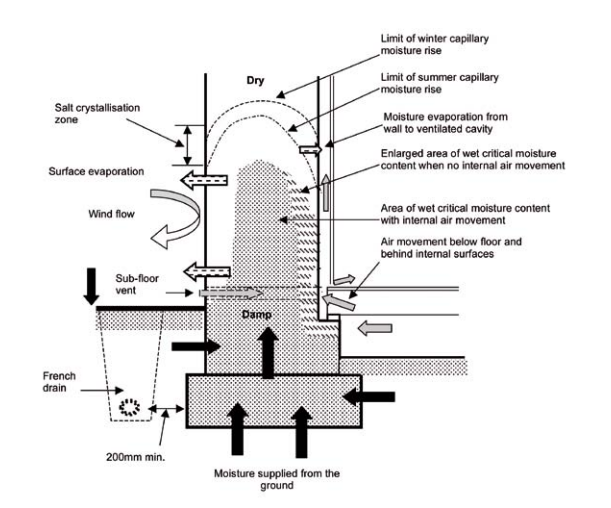
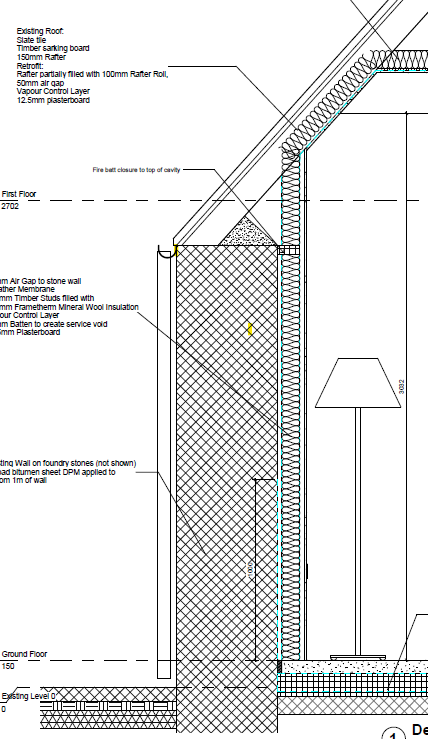
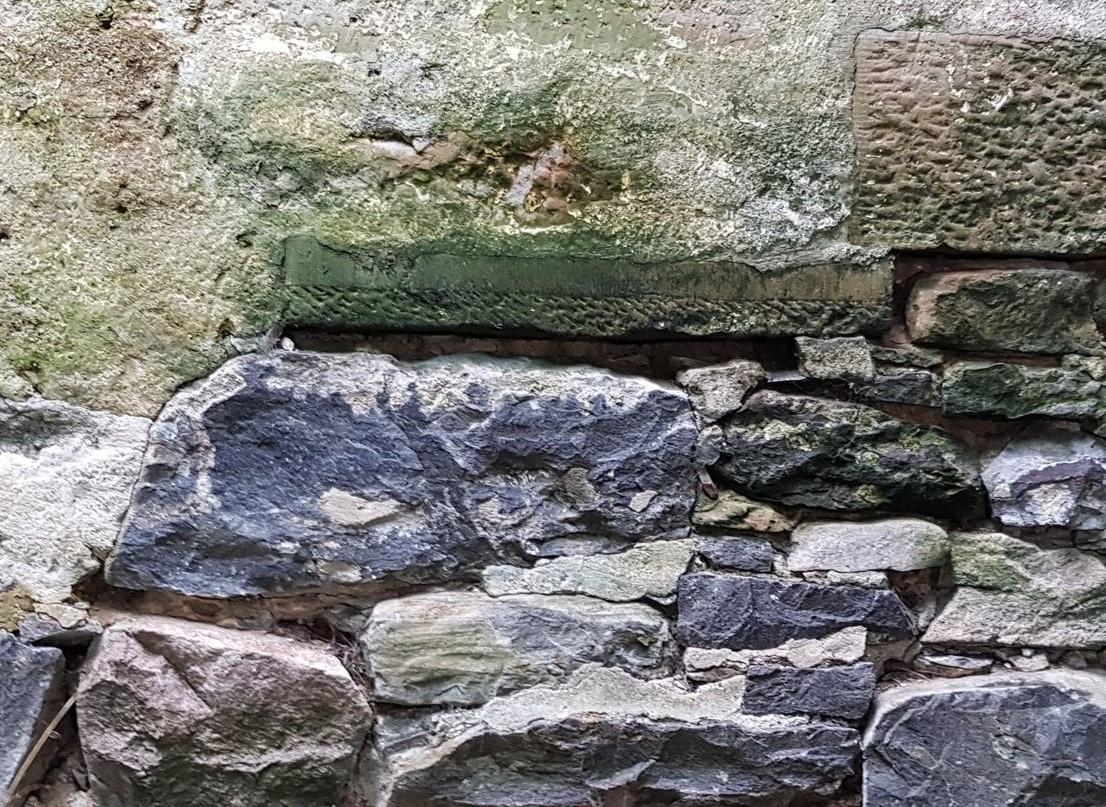
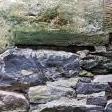
Thanks. I put option 3 in especially for you. I should emphasise that the wall is wet now because bits of roof are missing and there are no doors or windows, no gutters or pipes, and no drainage. There is an open central courtyard which likewise has no drainage....and rain leaks in on both sides. well we have just stripped of the decades of cow 'sludge' and found clean sand, and so that is now 'draining' too. If it wasn't for the ground being porous sand for 15m depth, and on a hill, I think the building would be long gone. (for those interested, we have 17seconds/mm soakage rate.....which couldn't be better.) So an inch of rain is gone in 10 minutes. The first site I have had with no puddles or mud. We will fix the roof and put in doors and windows, gutters pipes and drains to soakaways far away. Walls will be repaired, pointed and rendered. So the water will only be from driving rain, plus of course dampness from the air. Most of the stone is granite which is impermeable, Of course the mortar is lime and can absorb water. The wall will no longer be wet. You will gather that I still see some merit in encasing the wall on the inside only at the very bottom, where any dampness will be at its highest. The front face can vent and so can the remaining 2-3m on the inside. I have seen that this is a recommended detail for steadings in Aberdeenshire, for near identical construction. Does it have any issues?....no idea. Meanwhile another Highland contributor has been made to put lots of vents in through the wall, so all thermal benefit from the masonry (which is significant) is lost in the created draught. Does this detail work? no idea. Yet another blogger has said that their cross walls carry draught from one side of the house to the other, and there is no need for any forced ventilation. They cant all be right, and the solutions are mutually exclusive. Hence my proposed compromise, made safer by the superb ground properties. . There shouldn't be much dampness and it should not condense....the time it takes for any water to permeate through 600mm should be enough for a change in weather and the air to draw it back outside. what does stay in may drift downwards through the core, where we will contain it until it wither dribbles out to ground or evaporates outwards. would 1/2m work better? or 250mm? at some height the risk or benefit of a liner becomes minimal. SimonD Also, is the ventilation between the suspended floor and iwi cavity a continuous gap along the junction, similarly at the ceiling? Yes it will be, all the way to the roof where there are timber sarking boards with gaps. I don't want to put holes in the walls to force this draught as I believe that there will always be some air gaps and movement. Ideally there could be a moisture and temperature sensor in the cavity and vents would open and close as necessary....opening an a nice sunny or breezy day, and shutting when miserable. But that won't happen. I should also emphasise that the area has low rainfall around 700mm pa. I still welcome hunches as well as approved detailing and especially any proven successes or failures. Thanks for the interest....and really am listening. -
MVHR ducting routes...
saveasteading replied to BartW's topic in Mechanical Ventilation with Heat Recovery (MVHR)
It shouldn't, as joists are designed for strength and also to a maximum deflection which memory says is 0.03 x span. Although the reality will be of spreading a walking load over more adjacent joists, so yes, you are probably right. -
Aco drainage - how to connect?
saveasteading replied to BobAJob's topic in Landscaping, Decking & Patios
Some of them interlock, some don't. Do you know which model yours is? -
a pressure washer will take all that off.
-
ICF and Insulated Raft Junction
saveasteading replied to PaddyP's topic in Insulated Concrete Formwork (ICF)
Have I misunderstood? I thought the cement board was all that was exposed after cladding. -
The Woodland Trust do a 'Scottish' collection and a 'Wetland' one, which seem good value. We suspect you just have to discuss tree planting with a mobile phone nearby for them to facebook ad you next day. I am pressing for some coppice planting as will be very efficient for firewood cropping, but am not prevailing. We do have some ancient woodland, but nothing new as deer eat all new shoots.
-
Rationel passed the enquiry to them and I had already emailed them. Nothing. Will try again. What do you think of my £/m2 approximation? btw we have been to Stevenswood in Inverness. 3 makes of upvc and one of aluminium , which is "Real". I hadn't heard of Real before, but the examples on display were very nice, with elegant sections and robust construction and thermal break, and the prices sounded ok. (supply only) I vaguely recall £1,300 for a 2g fully glazed double door.
-
ICF and Insulated Raft Junction
saveasteading replied to PaddyP's topic in Insulated Concrete Formwork (ICF)
I think it will melt the eps! I only meant to paint the cement board. I have done this for years on exposed block footings below cladding (so only 2 blocks high and hidden apart from 150mm or so. It is effectively unnoticeable and all water is repelled. -
I'm looking at windows at the moment. Timber does need maintenance, hence aliclad, but a local (recommended) supplier makes them with an oven paint finish. aliclad used to be very expensive so I assume has come down if you are all so pleased with it. Rationel told me they had passed it to their supplier but ..silence. Other companies make ali-clad too but don't seem responsive either. I have looked at and admired Rationel for years (and stroked it at exhibitions) but the price was horrendous. As above....weatherproof and coloured ali outside, lovely wood inside. Aluminium has a substantial thermal break, and lots of cells in the cross section...the published u values are good. Have found some high quality nearby at last. My rule of thumb for a quick estimate used to be (custom-made and fitted) upvc £350/m2, aluminium £400/m2 , wood £450/m2, aliclad wood, £600/m2. Any updates on that?
-
Insulating a pebbledash solid wall and damp concerns
saveasteading replied to Ben Weston's topic in Heat Insulation
Does silence mean 1. Nobody knows. 2 Boring question. 3. I've told you already, are you not listening? 4. Give it your best shot and report back ? btw, in the doc referred to by Roger440, they show a canal wall as proof that rising damp does not exist. This wall will be built in very high quality engineering bricks with waterproof mortar, so it isn't the best argument. If they were normal bricks they would be wet for a few courses above the water, and probably green with algae. Roger440, any further thoughts on my pragmatic addition of the internal liner to 1m? that is a downpipe btw, not external cladding. -
Hadn't thought of that. Get building!
-
ICF and Insulated Raft Junction
saveasteading replied to PaddyP's topic in Insulated Concrete Formwork (ICF)
Assuming your overclad comes nearly to ground, then rain will drop off and run away, and only the very bottom of the cement board can get wet. I think I would paint the bottom (exposed area plus 100 above and all the way down) in black bitumen paint, 2 coats. this then looks like a narrow shadow in finished form. (Blackjack or eq, £25/5l tin.) -
That sounds expensive, but is to them too. Such claims do not reach the high court until reviewed at a few levels, and can even be thrown out at the last minute, on the basis that this is not a good use of the court's time/ should have been negotiated elsewhere. I would guess the court cost might be £10-20k if it goes that far, and you would get most costs back as long as you win. An expert lawyer should give you a forecast of the likely outcome. I would be surprised if a court over-ruled the planning appeal unless there was a blatant disregard of a written principle. Is it bullying or red mist? Has anyone said you must hold up the works? If so, then I think you can state that you will seek reparation for abort costs, when you win. If not then what happens if you lose?
-
SIPS or ICF
saveasteading replied to jimmy_stocks's topic in Energy Efficient & Sustainable Design Concepts
No, as most of the material cost is the foam fill. It is simply an expensive product to manufacture, transport and hoist. You are paying for quite a bit of factory time, with all the costs that incurs. I have no experience of building with it, but have researched and had quotes, and it was always easier/cheaper/better another way. BUT it comes into its own for simply shaped buildings of ideal dimensions, and will be quick on site which has a value to some clients. Also some people simply like it, and there is reduced scope for build quality problems. -
Except nissen huts and the modern farm equivalent....very cheap for keeping the rain out, but not appropriate for housing.
-
Spain import Californian almonds for their speciality products (marzipan and turron, and a soup I have forgotten), while thousands of hectares go untended. I think almonds in shell are worth about E2 /kg , so not worth the attention.
-
Got me looking again, as I have had a few designs to take over where chimneys were not above fire places, in two different positions according to different views and other space anomalies. This doesn't happen if the cad programme is in 3d. This may have occurred here too. The isometric does not tie in with the cad drawings (one chimney has disappeared, which perhaps you have already mentioned.) And I just noticed that the tapering lean-to. This sort of detail is usually functional, to squeeze an extension into a tight space. I think it is here intended to provide quaintness, but it has no internal wall under it so needs a very big beam to support both roofs and the upper floor. Also columns to support the beam, will spoil the lines in or out. The living room needs other steel beams too, which will intrude below the ceiling. I suggest the lean-to is omitted as it will be stunningly expensive floor space that could easily be elsewhere. h18Ant I am being philistine again but my usp is understanding value and buildability, and I hate to see projects go wrong, and it is better to have an achievable project than cut quality and scope later. Before committing to a metal barrel, have a word with the cladding producers to see if any are prepared to bend to that radius, and a joinery or steel fabricator about the barrel structure. I would ask your architect very bluntly if they have considered how this is built, to please show any columns and beams that may be required, and do they know a source for the barrel structure and cladding, and for the tapered bricks for the chimneys (which are more conventional on the cad drawings), and does it fit with your budget (they may say yes but it will be your risk).
-
Caberflor osb factory at Inverness imports trunks from Norway, this sort of size.
-
Insulating a pebbledash solid wall and damp concerns
saveasteading replied to Ben Weston's topic in Heat Insulation
Returning to this supposedly expert study... When we took on this project I assumed that there would be any number of how to do it/ advice /even stated methods in the regulations. Far from it, and it seems that different councils and inspectors even have their own (differing) expectations Currently I propose to avoid any drilling of holes through the 600mm of wall, to maintain the physical and thermal barrier, then apply 1m of bitumen sheet to the bottom metre inside, and leave the remaining 2-2.5m exposed. then a 50mm air gap. Inside this a timber frame filled with insulation, and sealed on the outer side by a breathable membrane, and the inside (before boarding) with an air-tight membrane. AS far as I am aware this is not exactly specified anywhere else, but nothing else is either. The air gap will be continuous to the roof sarking where it can breathe. Where does moisture come from? Not a lot up from the ground as it is granite and dampness doesn't rise far (as discussed earlier). Roof and gutters will carry away 99% of rain that currently dribbles down the walls. the ground is pure sand so it won't be wet around. pointing will be repaired or tided. So the wet is only from driving rain (which will run down the wall) and general moisture. Before any of that gets through 600mm it should be dried by the air and wind. Any and all advice and speculation welcome.