
saveasteading
-
Posts
10897 -
Joined
-
Last visited
-
Days Won
93
Everything posted by saveasteading
-
To all interested parties, these reference documents from SimonD are excellent and I recommend some study . Have now started on this one and even the introduction shows that they are a good balance of academic and practical. https://www.changeworks.org.uk/sites/default/files/Solid_Wall_Insulation_in_Scotland.pdf the first page starts thus: Solid walls perform thermally better than current energy modelling assumes (i.e. they have lower U-values when measured in situ). This means that the potential financial and CO2 savings from SWI are often less than predicted – the implications of this could be considerable. Then it goes into the conflicting subjects discussed above..... one of .the main lessons seems to be how different constructions and exposures will perform. Everyone is correct, and now we have to juggle the relevant factors. Again from the document: More research is needed into the impact of SWI in increasing risk of moisture and condensation, and how this differs with different types of insulation, property construction and location I wish I had found these docs a year ago...................I found other good ones but these are ideal. I am now thinking that referring to these documents should be helpful in convincing the Building Officer of the chosen construction methods, where no standard exists.
-
Agreed . There are gaps at all PIR joints and the panels are likely to joggle a bit in windy conditions. Sticky tape will likely lose its stick over years, Plastic sheet can harden and crack...I know it shouldn't in the dark, warm conditions but I've seen enough inappropriate plastic failure to doubt quality.. We are doing much the same and I am planning on investing in a reinforced aluminised membrane. that will need tape over joints too, but at some stage we have to say 'enough' the scrim will keep the membrane intact, and is also easier to handle. Under £1/m2 I recall with some shopping around.
-
Can anyone help me to design our foul waste system?
saveasteading replied to Omnibuswoman's topic in Waste & Sewerage
They can't if you can show that 100 suffices. who does the calculations? -
Can anyone help me to design our foul waste system?
saveasteading replied to Omnibuswoman's topic in Waste & Sewerage
I think you need a professional. (Drainage is a particular skill....lots of people can work out pipe sizes, but getting the best solution for you is cost related too.) I am, and drainage is a speciality, but I would not give more advice without seeing the site circumstances, and then the advice is likely to be as above. Percolation test, (diy is fine for feasibility) and also get a quote for mains connection and the drain to it. It is sometimes cheaper to pump sewage, even downhill, when the distance is long. This is because the pipe is much smaller diameter and can wind around the driveway etc and to the final connection, without manholes. I thought the small area of land was the main problem but now see you have more. Poor percolation is a challenge, and may not be feasible at all for soakaway, esp as you already have the rainwater to deal with.....but it may work. In theory the stuff coming out of the treatment tank can be nearly clean....think about combining with rainwater after treatment, but that needs advice too. If your rainwater lagoon was to overflow, where would it go? -
Can anyone help me to design our foul waste system?
saveasteading replied to Omnibuswoman's topic in Waste & Sewerage
I have heard this said before, but a 100dia pipe can go at 1:80 and that makes a huge difference to the depths of the pipes and the digester tank. I think 1:40 is perhaps deliberately conservative in case of imprecision. -
Firstly apologies to all re my typing above. I pushed send as my dinner was arriving. A big practical suggestion above, that we must take seriously is the initial drying of the walls. They are wetter inside than out where the roof holes are not yet sorted. so we need the roof on asap, then the summer can do its best and we delay inner lining and vapour and esp moisture barriers. There was 4 inches of snow on Friday.....proper weather. Absolutely stunning scenery.......as seen by daughter's photos as I am somewhere warmer. For general interest, we await SE report to attach to our Warrant response. I am not on the Scottish database and my reports and designs don't count until they endorse them. Slightly nervous about what they will require, but so far most of my suggestions have been accepted on the drafts we have seen. I will redraw my current proposal, and perhaps will think differently while doing that, and submit for marking.
-
Now if Nod was to ask the rep to visit ProDave to see the issue, and report back on why that won't be a problem on 200 houses.....and sort the issue at the same time, then there are lots of winners.
-
Quote this to Austria, with no names, if Nod permits. I am nervous about using renders that work in central Europe/ the Alps as it is a very different weather.
-
Problems with Baumit.com thin coat render system - part 3.
saveasteading replied to ProDave's topic in Plastering & Rendering
The head office people would probably be very concerned to hear about this problem with uk weather, and the adverse publicity in a specialist public forum. Perhaps give them a link in with you expression of disappointment . -
Thanks again to everyone for this information. The dcouments recomended are eccellent, and emphasise the many aspects to be considered, and the many approaches to resoilution. the https://historicengland.org.uk/images-books/publications/eehb-insulating-solid-walls/heag081-solid-walls/ document is amodelof clear layout and explanation...I think i habve to print this and mark up all the applicable issues. I note among the many suggestions are the two close to my own (and some of your) current thoughts. Bighouseproblems.....my apologies if my input seems to be hijacking your original post, but it seems to apply to both of us, with differences of course in materials and probably ground conditions.

-
New build floorplans - opinions welcome
saveasteading replied to Indy's topic in New House & Self Build Design
I like the porch. It is such an unrecognised means of retaining heat in the house. It is rather large, but so is the house. You could retain visitors in it if they fall between the 'go-away' and please come in' categories. Yes it is expensive but this sort of house needs some 'wow' from outside and this is it. A trick of architectural design is that a building is usually favourably noted for one thing....and that may be a colour or the main front feature. You will feel good every time you see it. -
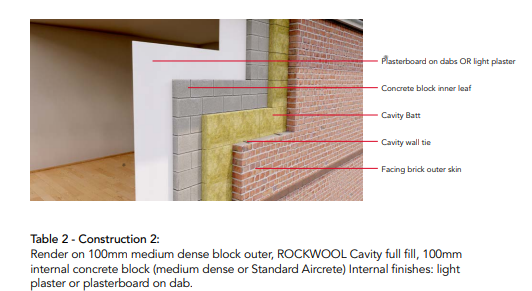
No it isn't, as we want to retain the character. Strangely there are very few constraints from the planning permission, but it is our desire to maintain the appearance as much as possible. The eaves don't overhang at all, with just the slates reaching the existing and future gutters. There is so much useful and admirably pragmatic information above that I will review it tomorrow without the beer at my side. The referenced documents will take a little longer. Just one follow-up query to lob back for now. The cavity fill rockwool detail. In what way is this fundamentally different to our situation? Brick skin in the Rockwool standard detail, as compared to existing masonry. Full fill cavity batt, touching the outer and inner skin. Applies to both. Block inner wall as compared to stud wall filled with insulation, but new build to probably have vapour barrier and airtight barrier. Plaster finish as compared to plasterboard finish. ((I have liked and specified full-fill insulation for many years, mainly because it is idiot-proof. (Bricky cannot leave empty drinks cans in the void because it messes with the 'bond' of the insulating slabs. Bricky can't drop snots of mortar into the void and bridge the cavity). Perhaps it is my combination of designer /contractor as I am surprised that it isn't more widely used.)) I have realised in doing this, that many people in the industry don't know about the product and assume that there has to be an air-gap, whereas the wholepoint is that there is no air-gap, no air circulating, and no dampness crossing. And to tick off 2 things that occurred re previous messages. 1. risk of the dampness freezing in the outer wall because it will be cold....It has been exposed to the weather, in and out, for 20 years, and was a draughty shed for 120 years before that. 2. Salts forming.....again it has been there for 140 years and any salts will be long gone. Admission Dew-point......Not something I fully understand, in the context of where is the moisture coming from, where will it go, and is that a problem? More thought and study required. I will return after study. Perhaps together we will resolve the issue for ever. The 'Buildhub' solution.
-
Yes Simon has sent some very relevant references. Your suggestions to date would suggest that nearly all farm buildings are incorrectly converted, and the architects and building inspector's are wrong too. I am analytical, and need proof so if you have any, I'd be grateful
-
I'm grateful for this and previous links. Other than this, everything I have read suggests an inner timber structure, containing insulation, and wrapped with vapour/airtight barrier. I can't see how the above extracts allow this standard industry construction, of full-fill cavity insulation. attached picture. This statement is rather shocking. Where does it come from? I think 600mm of 3 core masonry is reckoned to provide 0.6 in itself. Thinking while typing..... if there is no air gap, then there can be no evaporation. .
-
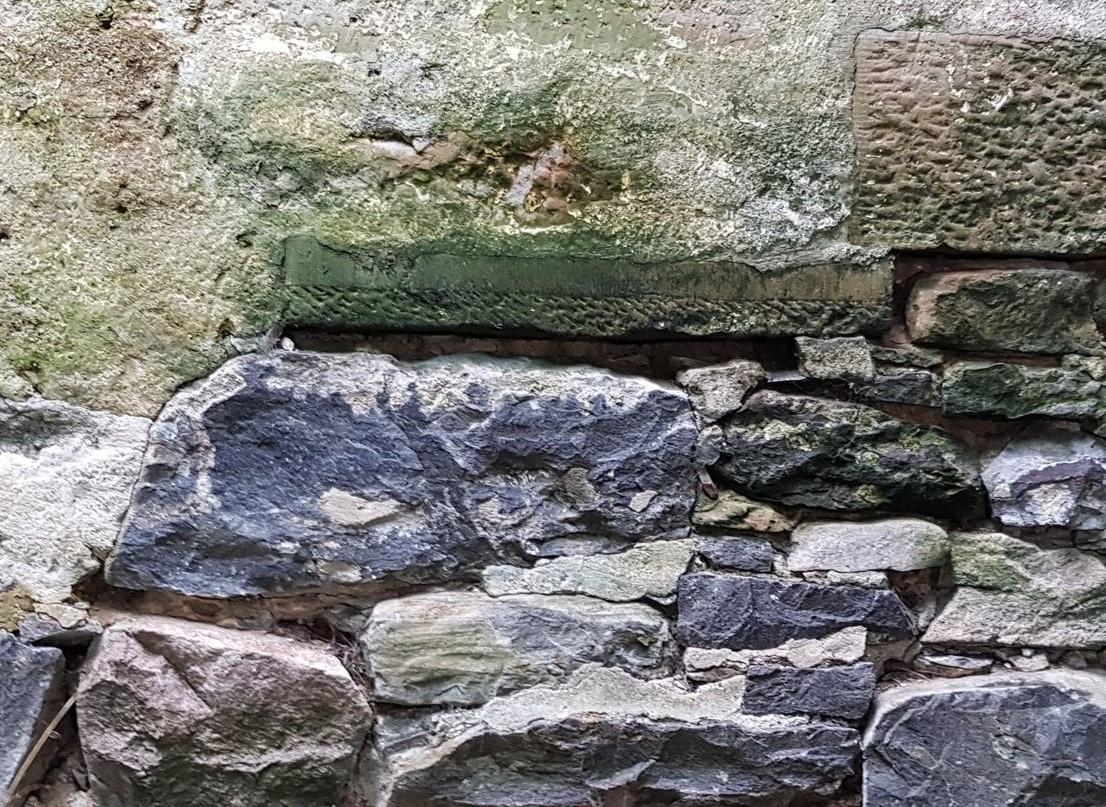
And an internal. There are 4 wings like this and an inner courtyard. This shows the hole in the roof where grain was heave in.
-
As you ask... Until this last year I knew very little about stone buildings, but rather a lot about modern buildings. I expected to find readymade reports with the obvious solution for converting a stone farm building into residential. No, there are many expert reports, and any number of firmly held views, but they vary considerably. My findings include. Lime mortar is essential for breathing as well as for allowing movement. Not a problem. Granite is brilliant at not absorbing any rain, so most rain runs off. ditto not absorbing general dampness. Dense sandstone almost as good. The 600mm wall construction includes a central core of rubble which is 40% lime mortar, and this helps control dampness and heat loss. The insulating effect of a thick masonry wall is very much better than the standard formulae allow. Problem dampness in such buildings fizzles out at about 1m above ground level. (All the above dependent on good lime mortar and drainage.) Conflicting views include: To keep the moisture out of the building, add a 1m layer of bitumen tanking to the inside of the wall. (Aberdeenshire references). OR don't do such a silly thing, as it keeps your wall damp, Encourage inward air movement through multiple holes in the wall base, venting through cavity to eaves. (Argyll references, incl Bldg control) OR Don't do this as you are losing all the insulation benefit of the masonry, and bringing damp outside air to the inside. Use warm batten method, as all the evaporation will be outwards. OR Don't do this as it is better to have an air gap and air flow. BUT the latter will encourage evaporation inwards to the warmer void, which would otherwise permeate outwards. And there is more. The conflicting 'solutions' lead me to believe that I am as right as anybody else. Right now there is a decent roof except for a few holes and farm access points, so water gets in and the inside of the wall (stone) is wet in areas. (I am ignoring the areas of major damage through neglect, that we will rebuild in timber). There are also 5 cart entrances and the weather whips through them. Gutters need repair as do areas of the wall. When repaired, the rain will mostly be carried well away. Driving rain seems to be uncommon, but may wet one wall at a time. Most of course will run to ground, which happens to be ultra-permeable. No rising damp, even if such a thing exists (see other discussions). Some damp will soak into the mortar joints (after passing through the external lime mortar parging) ( 2% of the face area??). It won't go very far in but would eventually reach the core where there is the 40% mortar to act as a holding area. Then it will be drawn outwards again as the face dampness evaporates, or downwards towards the permeable ground. Will much of that then travel through the inner skin? I don't think so. A picture for interest.
-
"Eaves" confused me. Have read again and see you mean " like the eaves" . So do your way.
-
Bighouseproblems, can we go back a bit. Sandstone front. How thick, how formal/rubble? Any interna lining? brick rear. Ditto. I will read up on "warm batten" as this is the first I have heard of it but is what I am thinking of. Re earlier question, I am proposing cavity batt as used as full fill insulation, so is not going to absorb any moisture. From recent reading, a masonry wall with lime mortar is going to breathe outwards. I can't see that encouraging evaporation into a warmish internal void is a good thing.
-
Insulating a pebbledash solid wall and damp concerns
saveasteading replied to Ben Weston's topic in Heat Insulation
Can you summarise for us all please? -
I am going through the same thought process. I am returning to my original inclination to not leave an air gap. Instead to fill that space with waterproof cavity batt. Thus there is no air flow sucking away the condiderable thermal benefit of the stone wall. The external wall can breathe outwards. No possibility of damp (?) And improved insulstion.
-
You should do whatever the manufacturer shows. However: The extra tile props up the upper tile in the same way that every other tile is propped by the one below. The line is better to look at, and the slope does not increase into the gutter. Also extra weight against the wind at a vulnerable edge.
-
Best Underlay for laminate on a garage floor
saveasteading replied to JKami84's topic in Garage & Cellar Conversions
Ok so it is printed timber look plastic on an hdf base. Therefore moderately damp proof...probably. Best use a plastic based underlay -
Best Underlay for laminate on a garage floor
saveasteading replied to JKami84's topic in Garage & Cellar Conversions
What kind of laminate? Wood or plastic? -
I did a pm to mac because of the sensitivity, but not a lot of use really wjthout the full context. It is always a complex jigsaw of lapping and underlapping, while ensuring that the corrugations don't get in the way of flow, yet allow a seal. Perhaps easiest to cut all the touching sheets to length top and bottom. This may require additional battens. There is then less to think about, less to go wrong and less twisting of resisting elements. Cladding can be overclad, as long as it is sealed at every joint and is taken to the next flashing, eg ridge. Order plenty of spare sheets when there are openings, as even superb cladders make mistakes on openings..and there aren't many of them around.
-
Check the building regs re stability of walls, as the returns may be stabilising the walls. If that seems ok then still check with your dedigner.
