ProDave
-
Posts
30862 -
Joined
-
Last visited
-
Days Won
427
Everything posted by ProDave
-
How small do you want? I think the most important thing is being room sealed. We bought a Mendip Stoves Churchill convection model with log store underneath. It was chosen for looks rather than anything else. It is rated at 4.5Kw. We did look at the little Springdale 3KW stove but SWMBO just thought it was so small it would look silly in a reasonably large room. One nice thing about the Mendip, is it takes both primary and secondary air from the external inlet duct. Some only take primary air from that and secondary air from the room so not truly room sealed. In spite of popular belief we don't "overheat" with the stove on. I think that is largely due to a fairly open layout with a good convection path to the stairwell and upstairs rooms (as long as you leave the door open) and the stove seems to run well at lower levels so less than it's 4.5KW rating a lot of the time. To choose the stove we simply visited all the retailers in the area to see what they had, and this one was being offered at a knocked down price as ex display and it ticked all the technical requirements, and SWMBO liked it. It is also the first stove I have had that truly keeps it's glass clear.
-
Setting up / balancing my MVHR
ProDave replied to ProDave's topic in Mechanical Ventilation with Heat Recovery (MVHR)
I have also just found this old thread on buildhub In that thread there is a link from @HerbJ to a spreadsheet for his MVHR comissioning. But no reference to how the target levels were determined (e.g each bedroom has a different design rrate) What is still missing is how, under Scottish building regs do you determine the target flow rates. Ever felt you are banging your head against a brick wall? -
Setting up / balancing my MVHR
ProDave replied to ProDave's topic in Mechanical Ventilation with Heat Recovery (MVHR)
Why did you get bumped up? My understanding is as long as you keep renewing you stay on the version of regs when the building warrant was issued. Next May I will be doing my third, and hopefully last extension. -
Setting up / balancing my MVHR
ProDave replied to ProDave's topic in Mechanical Ventilation with Heat Recovery (MVHR)
Thanks Peter. Does PHPP only concern itself with the trickle rate and is not bothered by any boost rates? -
Setting up / balancing my MVHR
ProDave replied to ProDave's topic in Mechanical Ventilation with Heat Recovery (MVHR)
Building control phoned back. Only to say he needs to speak to someone else who won't be available until Monday. So that's my plan to get this wrapped up this weekend gone then. I have had a look at the more recent 2017 Scottish building regs. For MVHR they still refere to BRE Digest 398. They do separately mention DMEV (distributed mechanical ventilation) and quote the following Kitchern 6L/s continuous, 13L/s boost Utility 4L/s continuous, 8L/s boost Bathroom 3L/s continuous, 6L/s boost. I don't think those apply to mvhr though. There is also reference to CIBSE Guide 2:2001 section 3. I'm off to see if I can find that. I suspect the reason most are not asked for any paperwork, is the fact nobody know what it should comply with. -
Setting up / balancing my MVHR
ProDave replied to ProDave's topic in Mechanical Ventilation with Heat Recovery (MVHR)
Thanks @Ed Davies That will help later on for setting it up for PH levels. Still no help on BR values. I tried speaking to the local duty building control officer but he only agreed "yes it is not clear" and has gone away to find out and I am waiting for him to phone back. -
Setting up / balancing my MVHR
ProDave replied to ProDave's topic in Mechanical Ventilation with Heat Recovery (MVHR)
Briefly, what are the PH ventilation levels needed for normal trickle and boost? Like many that is what I will aim for after completion. Back to the immediate building regs compliance. I have scoured the 2013 Scottish Building regs technical standards manual and it is far from clear. The only reference to boost extract levels are the normal extract requirements of 60L/sec * for a kitchen, 30L/sec for a utility and 15L/sec for a bathroom. But these are the normal levels for a simple extract fan and trickle ventilation. No mention of MVHR * the 60L/s is the requirement if the extract is not through the cooker hood. If it is via a cooker hood it is only 30L/s All it says about MVHR is refer to BRE Digest 398 which thankfully a simple search finds was available as a free PDF download. All that says is the trickle ventilation rate should aim for 0.5 Air changes per hour. No mention of boost requirements. So going back to our spreadsheet, if I try and aim for those boost extract rates then my jitchen fails now by a long way. I can increase the boost fan speed further if I need to. Calculating my house volume at 433m3 so 0.5 ACH comes out at 216.5m3 per hour which is 60L per second for the whole house. I am well short of that. I will try later with increased fan speeds and some adjustment of the ducts, but at the moment I feel somewhat in the dark, not really understanding what Scottish building regs actually want, particularly with regard to boost extract rates. This is where I am hoping someone else in Scotland who has done this might help? -
Setting up / balancing my MVHR
ProDave replied to ProDave's topic in Mechanical Ventilation with Heat Recovery (MVHR)
So this exercise is more about me knowing is is correct then. -
Are they doing the internal fit? If not, stairs are not in the scope of their supply.
-
1.4 for the roof would be terrible. Are you sure that was not 0.14 which is quite reasonable?
-
Do i have to retract the fact that i called him a W"%ker
ProDave replied to Big Jimbo's topic in Planning Permission
Be careful. could the CIL exemption trigger "starting" the development and so kill the existing PD rights? -
Urgent MVHR help needed
ProDave replied to vivienz's topic in Mechanical Ventilation with Heat Recovery (MVHR)
Not all mvhr units are over complicated with computers and communication protocols. Mine is basically a 4 speed fan, with volt free contacts to select the speed, and simple timer and relay logic for selecting boost speed. -
Sounds like the A82 in the summer (motor caravans) or most of the roads in mid Wales at any time of year (twin cab pickup incapable of more than 40mph)
-
Setting up / balancing my MVHR
ProDave replied to ProDave's topic in Mechanical Ventilation with Heat Recovery (MVHR)
Make your intention to borrow it on this thread and you will be put on the list -
I did with the floor. that ony made it marginally easier to remove the over spill grout.
-
The BH loan anemometer arrived today. I could not help having a quick go round to see how things are. Background, the MVHR was set up "by the seat of my pants" when we moved in 18 months ago. By that I mean I just sent the inlet / exhaust vent restrictors wide open for those with long pipe runs, and closed them down somewhat for vents closer to the MVHR. It's a radial system. I downloaded the spreadsheet on the anemometer loan thread and just input my values to that. My spreadsheet is attached No 1 observation. This is set up for English building regs. I am in Scotland. I obviously need to go and look up if there are any differences in required ventilation rates here. Has anyone on the forum done a version of this spreadsheet modified for Scottish regs? Observation 2: Kitchen is failing boost extraction rate but other rooms are way over. Some adjusting of the vents should easily sort that out. Observation 3: Whole house trickle rate is way too low. Like many others on here I want it to run at the slowest rate possible. I will probably have to increase the trickle fan speed a notch to get this to comply and (cough) reduce it if I am happy to "under ventilate" Observation 4: My total inlet and total extract rates do not match. Again I am sure adjusting the restrictors will sort that out. And a general observation. That spreadsheet is WAY WAY more simple than I expected. I thought I would have to be calculating each room volume and working out a target ventilation rate for each room based on it's volume. The bottom line is what is the building inspector going to expect to demonstrate compliance? is it really as simple as present this spreadsheet with all "pass"? Willow_burn_Ventilation.xls
-
So just fit an ASHP under permitted development then? As long as you choose one that will do cooling. If cooling is your only need does it matter that it will never be used for heating? EDIT: Ignore, just read the post above.
-
Putting the mixed grout into a used / recycled sealant gun tube will be on my "to do" list for next time.
-
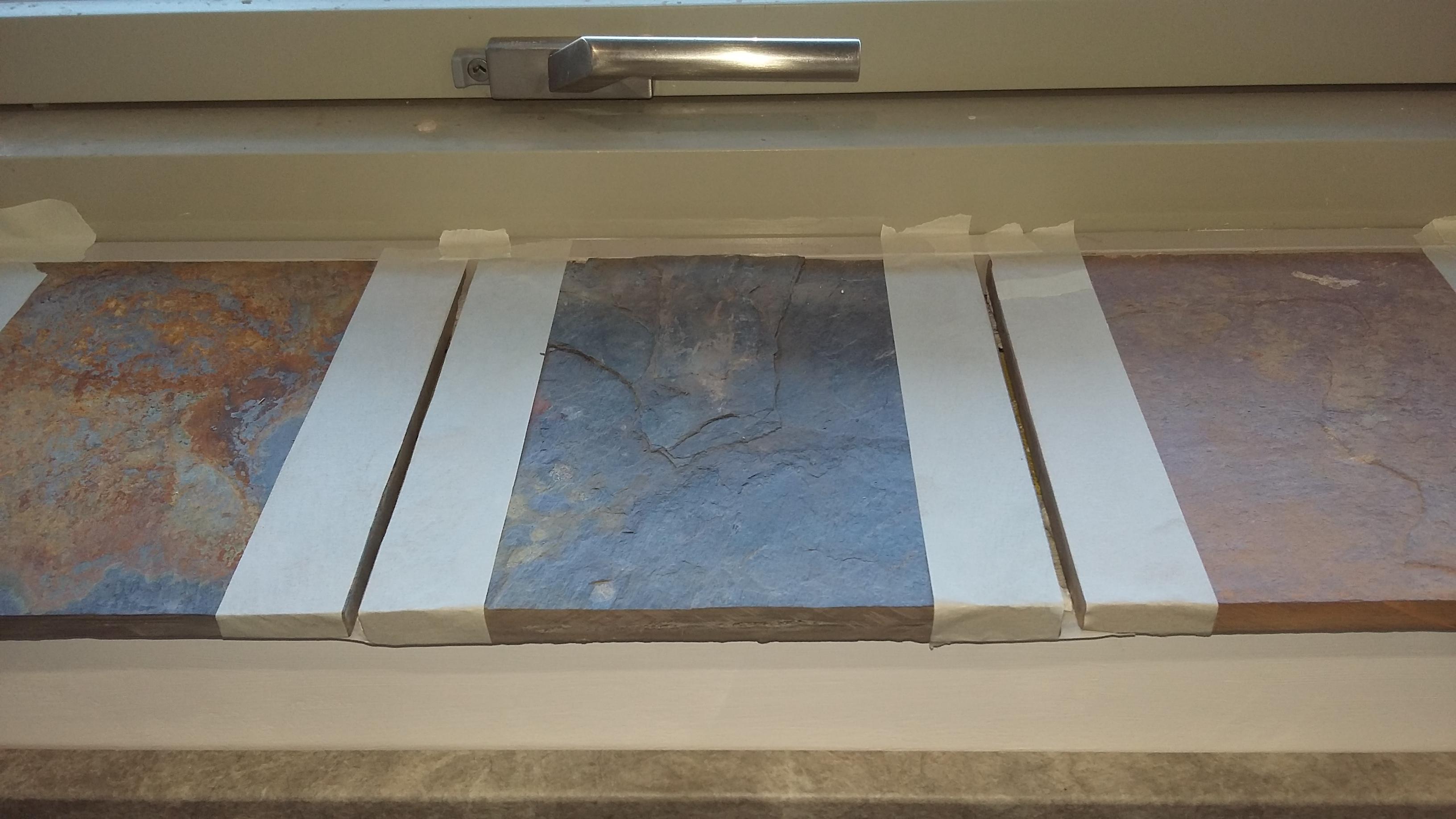
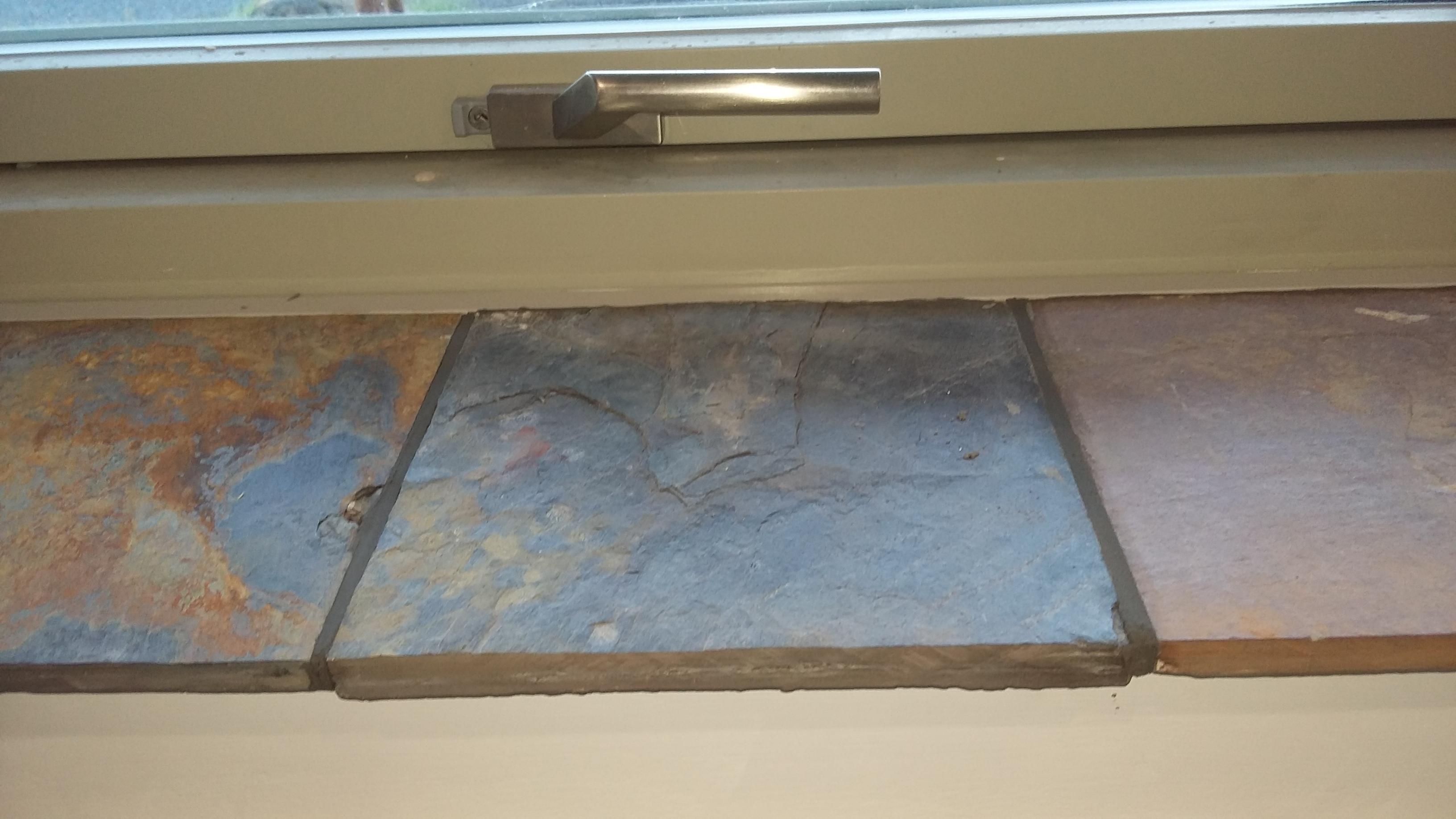
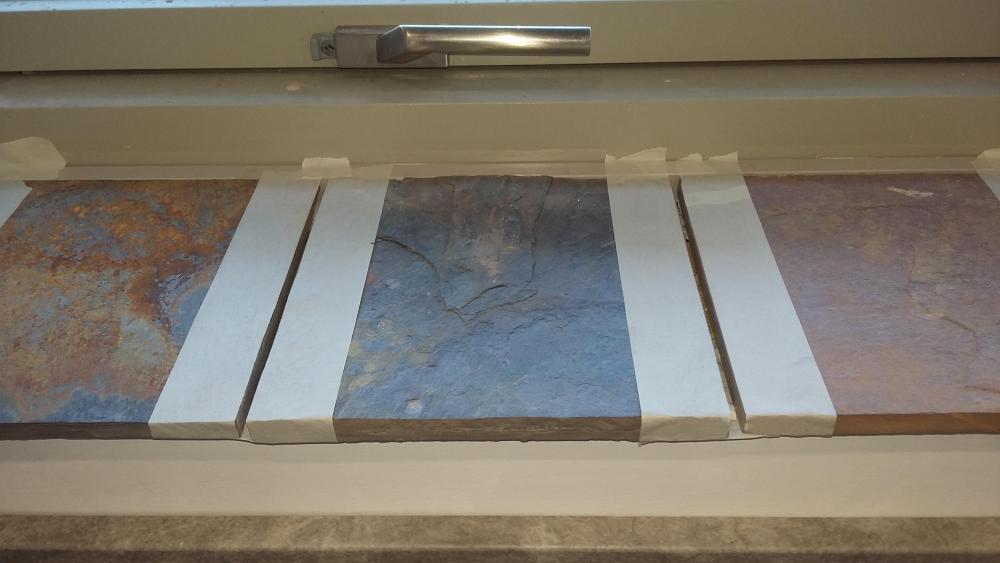
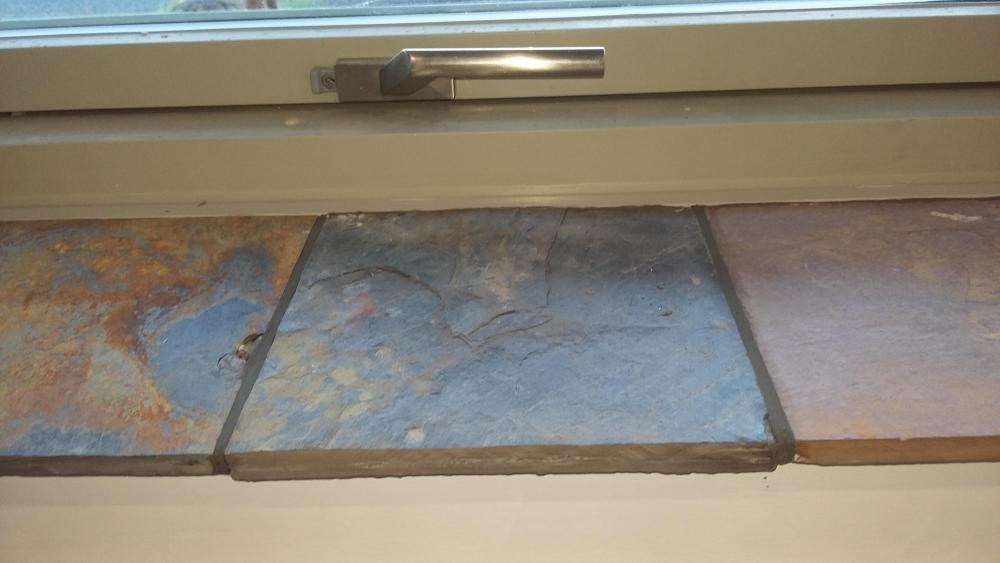
Grouting tiles is a job I hate. Whenever I have done it, I have always done it what I consider the "normal" way that is to fill the joint accepting some will get onto the face of the tile and you then have to clean that off. Not so bad with glazed tiles but a pain with stone. Today I was tiling the utility room window sill using up left over slate tiles from doing the floor. I only had a series of short gaps to grout. So why not mask them? I have never seen anyone suggesting the use of masking tape when grouting. It could be a bit tedious masking all the joints of a large area, but I thought I would try it: Apply the grout, wait for it to go off a bit, smooth the joint then before it is completely dry, peel off the masking tape. No scrubbing or removing grout from the face of the tiles. Has anyone else tried this? Why is it never mentioned by anyone?
-
Do i have to retract the fact that i called him a W"%ker
ProDave replied to Big Jimbo's topic in Planning Permission
So there is a useful message from this. If you get PP for a new build or extension, that removes your permitted development rights, that removal only takes effect when you start the development. So build all the outbuildings you want now, before you start, using the PD rights on the existing structure and you have neatly circumvented the removal of PD rights. -
You still won't fit really heavy stuff to OSB bit it is certainly useful. I used 11mm OSB behind the plasterboard in my garage for that reason and it works well.
-
Why not put both cables to each light switch?
-
It's not going to. I think their intention was pretty clear, not to allow it to claim residential status of any sort as a separate unit.
-
We have 300mm of rockwool under ours. In most of the downstairs we have engineered oak flooring. The hall and utility have chipboard then ply then slate tiles. Both of these work well. In the bathroom we have chipboard, tanking membrane then porcelain tiles. This does not work as well. I wonder if the tanking membrane is a good insulator?
-
The standard wording is they grant temporary PP for the static van with the condition it must be removed upon occupation of the house. I did not want that. Where the 'van was going was alongside the house and not in front of the building line. So I pointed out that on the day of completion I could remove the 'van and immediately replace it with an identical one in an identical position as a permitted development garden outbuilding. Their response was to ammend the condition to state that "residential use of the caravan shall cease upon occupation of the house. What they are trying to avoid is the 'van being let as a holiday home or similar, or creating 2 dwellings.