ProDave
-
Posts
30862 -
Joined
-
Last visited
-
Days Won
427
Everything posted by ProDave
-
Solid wood floors over wet UFH - bad idea?
ProDave replied to Omgiamgoingtobuildahouse's topic in Wood & Laminate Flooring
Engineered boards are available in different thicknesses. Use a thick one and it's a structural board, capable of spanning between joists so no need for a sub floor. -
You can’t build here. There are no shops nearby.
ProDave replied to Jaqueslecont's topic in Planning Permission
If they applied that rule here, the Highlands would be deserted again. We have no footpath, no street lights, 3 miles to the nearest shop and no public transport. It's bloody brilliant. If push came to shove I could cycle to the shops (but it's uphill on the way back) I would prefer to walk, along the riverbank. -
york council house new build
ProDave replied to Simplysimon's topic in New House & Self Build Design
The first house I bought, a brand new 1 bedroom house had that silly parking arangement of a car park at the end of each row of houses with allocated spaces. I absolutely hated it, both for security, and a right pain if you needed to work on your car. The No 1 priority on my list when moving on from that house was my own driveway with a garage or at least space to build a garage. That alone ruled out 90% of the houses that agents were sending me to view, to the point one agent labelled me as a "time waster" because after a certain number of viewing unsuitable houses I had not bought one. -
Solid wood floors over wet UFH - bad idea?
ProDave replied to Omgiamgoingtobuildahouse's topic in Wood & Laminate Flooring
I went to the local flooring material shop in town. They took my requirements, sent of for some samples so I could see them in the flesh, then ordered what I needed. I am not sure flooring is something I would want to buy on line without seeing it for real. -
Solid wood floors over wet UFH - bad idea?
ProDave replied to Omgiamgoingtobuildahouse's topic in Wood & Laminate Flooring
Ask the floor supplier for something they guarantee will be okay with UFH. That will almost certainly mean not solid oak, and whatever you choose will be narrow planks. Our last house had 90mm solid Maple and that was okay. (Present house has 190mm wide engineered oak and is fine) What have you got against Engineered boards? -
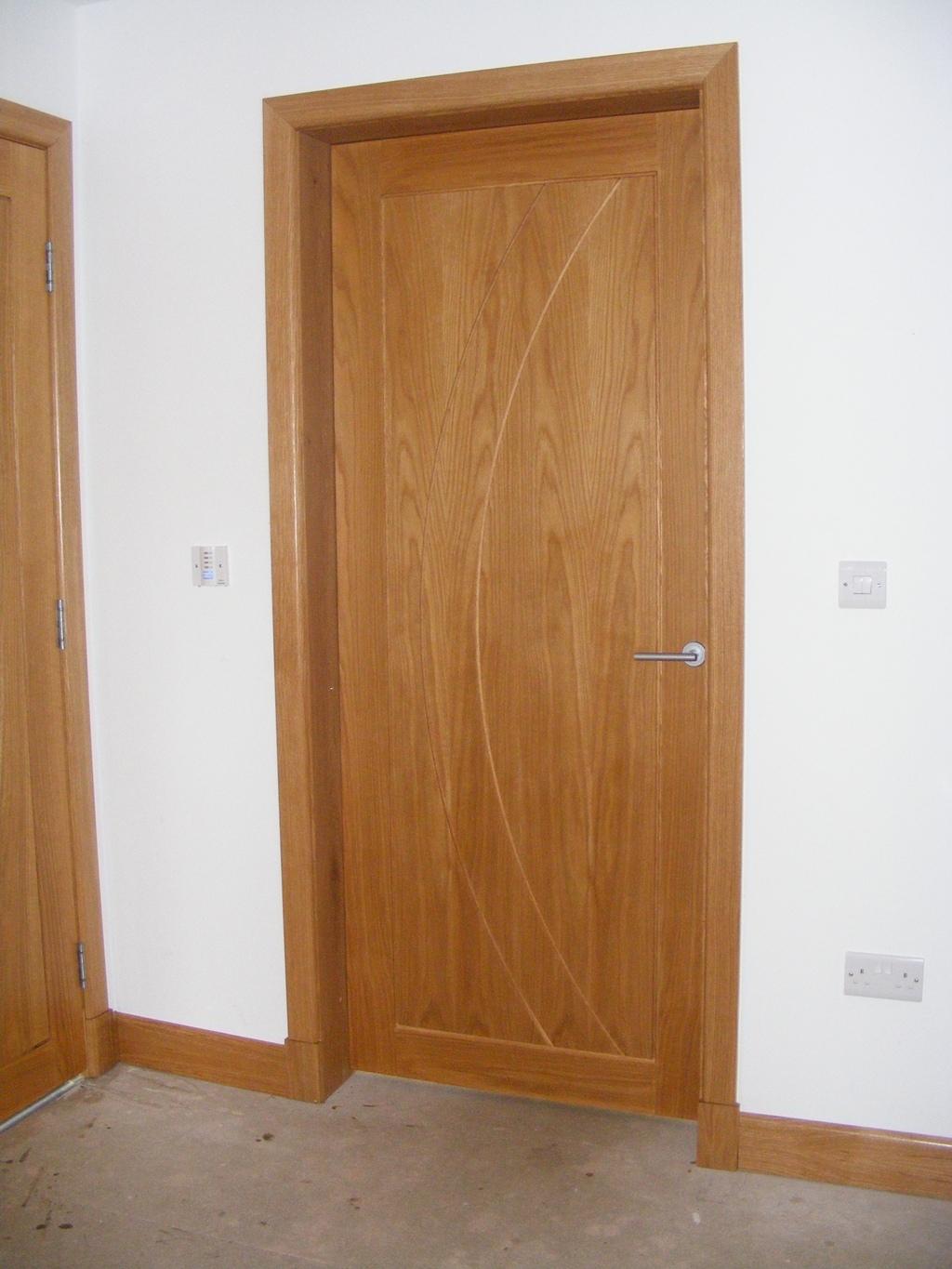
862 wide I think or there abouts. The awkward thing was i had not realised the frame maker had made all the internal doorways quite tall so we needed 2040mm tall doors which really limited the choice.
-
A poorly made crimp connection. Look at the one that is failed, there is a gap at the front. Look at all the others, solid. It's a manufacturing fault but probably out of warranty. It is fixable if the case is not too badly melted from the outside, just needs that wire link replacing.
-
Building Supplies Online. Cheaper than any of the local merchants could offer.
-
No, those are more expensive XL Joinery doors. The downstairs ones have half moon glass panels.
-
Simple Oak veneered skirtings from Howdens and matching oak veneered architrave. Simple and un fussy. All oiled with Osmo door oil.
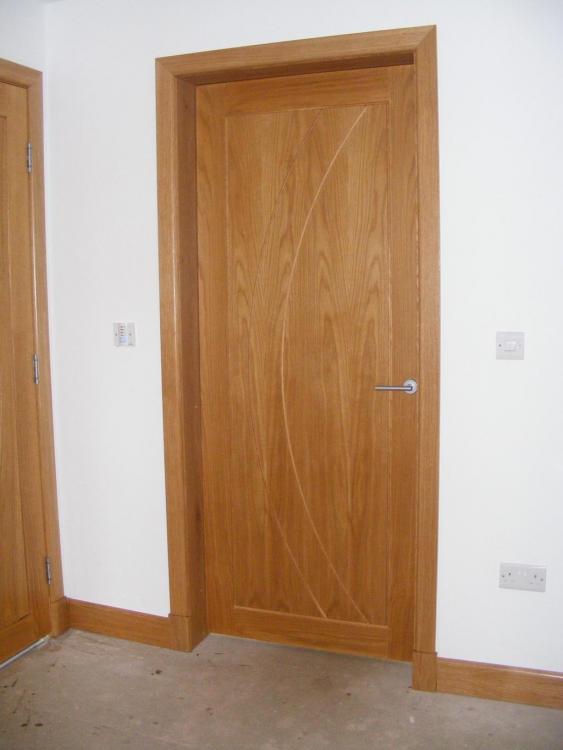
-
Do you actually need a buffer, if the UFH is only ever going to run when the whole heating system is on and other rooms are being heated by radiators? You might want a plate heat exchanger to separate the crud in the existing heating circuit from the UFH but then that requires the UFH to have it's own little header tank or small expansion vessel as a separate circuit. What are you doing to control the UFH temperature? I see no manifold or blending valve on your sketches?
-
SWMBO buys beans and grinds them herself to use in a cafetière. I just buy ground coffee in a bag and use a Bialletti percolator. All these individually packed things are just over priced and a waste of packaging plus you need a complicated machine to use them.
-
I am afraid I have reservations about this proposal as well. Planners tend not to like you going beyond the building line of the side street which this clearly does. Do you have PP for the front parking? I am a little surprised that was granted right next to the corner. The new garage will be awkward to get a car in,lets be honest you have no intention of that. I am not convinced the stairs to the third floor, disjointed from the main stairs will meet building regs, but that is not a planning matter. conversion to a gable end will be out of keeping with the other houses in the area. I am not convinced this particular house is the best candidate for a side extension.
-
Make sure you have plenty of extension leads then!!!!
-
If you have enough data, can you tether your laptop to the mobile? You then get a few hours on the lappy depending how good the battery is before you need to start the generator. Boil the kettle pre power cut and fill several flasks. Will your neighbour let you go and attend to keeping the fish warm?
-
How long is the outage? What sort of generator? I am guessing a portable one you will have to run an extension lead to plug in the router and computer? And hope the fuel tank lasts long enough to last a whole day. They will sometimes install a big trailer mounted generator in the street, they did that here at a care home when it was going to take 2 days to repair a power line that was down, but I doubt that is what they are proposing for you? Or phone in sick tomorrow?
-
york council house new build
ProDave replied to Simplysimon's topic in New House & Self Build Design
Interesting idea. I fear it will be over burdened with restrictions, red tape and hoops to jump through. And the "cars banished to the corner of the site" would prevent me from even thinking of it. -
I have a TF house. It does not move, creak or in any way feel flimsy. I chose this as I wanted every part of my wall make up to be insulation. So Insulated timber frame with external insulation and render. Very low energy house.
-
I am very cynical about MCS installers who seem to charge more than many might say is a fair labour rate. BUT you have to counter that with you are paying £4K for the install but will get a total of £13K in RHI payments. This example does seem unusually high, some quotes we have seen, the RHI payment barely exceeds the install cost.
-
Are you wanting to keep stained glass? Same design or something different?
-
I would have used my lathe.
-
What temperature do you run yours at?
ProDave replied to recoveringbuilder's topic in Underfloor Heating
We were away for a couple of weeks only returned at the beginning of this week. the weather turned cold while we were gone and averaged around 10 degrees. So when we got back the house was cold, so we put the UFH on and lit the stove. that warmed things up quickly. Now the house is back up to temperature the heating is not coming on much. I think what this shows is how much the house keeps warm due to incidental heat of us just living in it, but of course with 2 weeks with no people, no cooking etc allowed it to cool down. -
Or if BC fail it, tell the contractor that did the roof to rectify the issue at his expense.
-
Empty Plot vs. House to Demolish – which option?
ProDave replied to bpk101's topic in General Self Build & DIY Discussion
It all depends where you are. empty plots are cheap enough and easy to find up here that I doubt a knock down and rebuild would make financial sense as there is no way you would find one as cheap as a bare plot. but in some areas the only way to find a plot is a knock down and rebuild. -
What temperature do you run yours at?
ProDave replied to recoveringbuilder's topic in Underfloor Heating
Been on for 1 week here. Today topped out at 8 degrees outside but more like an average of 7. And 0 sun so no solar gain. You would be doing very well indeed to not need any heating with that outside temperature. I would say it is colder than normal, in previous years I have not turned it on until November. Perhaps I just lit the stove instead.