ProDave
-
Posts
30862 -
Joined
-
Last visited
-
Days Won
427
Everything posted by ProDave
-
Is this a national problem or just some local issue? I have been waiting weeks for planed Oak to finish my door frames, I keep getting told "4 weeks" I tried to buy some decking material, no treated 6 by 2 joists, I bought the last two 5 by 2 joists. No decking planks in any of the merchants or the sawmill near here. Most merchants are almost out of all types of construction timber. One told me "it's stuck in quarantine at the ports" More work on hold, waiting for materials. I seem to be doing a lot of that this year. I might get desparate enough that I go and see if B&Q has any.
-
Window Design & MVHR
ProDave replied to Oz07's topic in Mechanical Ventilation with Heat Recovery (MVHR)
We open windows in summer to cool the house down, and hear the birds and the stream etc. And every room needs an opening window, otherwise where do you put a spider that you have just caught? -
Window Design & MVHR
ProDave replied to Oz07's topic in Mechanical Ventilation with Heat Recovery (MVHR)
For me, the only change to windows than MVHR made, is none of the windows need trickle vents. Ihe amount of openings are determined by building regs and preferance. I would not want a room without an opening window. In summer it is nice to open windows for various reasons, and if they are decent windows then when shut they are sealed. I would make it all a choice based on what you like in a room and the only thing mvhr affects is no need for vents in the windows. -
I like a simpler life. I would just edge the last bearer with a sacrificial strip of wood spaced off slightly, and extend the lawn and accept the deck is now slightly smaller.
-
Ah ha yes, your own solar PV powered pumped storage system. @Onoff will come and install it for you,
-
One of my more unusual jobs was wiring a public toilet on an off the beaten track location. It was a composting toilet, and the wiring consisted of a 12V battery charged by a solar panel and a small wind turbine, to power a fan to ventilate the toilet, and power an LED light on a motion sensor. the silly thing was building control still insisted on an EIC for the wiring. So something like that and an LPG instant water heater, think caravan equipment. Something like we have in the static caravan that will do up to 10kW water heating. Ours was a Morco.
-
Backfilling Trench along Boundary
ProDave replied to shbrooks's topic in Landscaping, Decking & Patios
Gravel or pebbles will roll and exert pressure on the gravel board. I would say irregular shaped quite large rocks that can be built up almost like a dry stone wall exerting little pressure on the gravel board. -
Scotland is easier for self build, partly because it is a common thing to do and partly because there are always plots for sale at reasonable prices. But take a look a mid and west Wales, some pretty cheap plots there as well.
-
Hi and welcome. Yes this is a doable dream in your location. I am off to visit relatives an hour south of Aberystwyth. I am sure, just like every previous trip down there, I will drive past a number of derelict farm houses on small holding plots, at least one of them for sale, which would fit your self build in the middle of nowhere dream.
-
If you have not already done so, take a look at https://lifeattheendoftheroad.wordpress.com/ The guy that lives off grid at the north end of Raasay. What he does not know about off grid power is probably not worth knowing.
-
I am doing my access ramp in timber and needed some non slip decking boards. The ones that have a non slip surface moulded into two of the strips on each plank. As luck would have it one of the merchants had some, which was a good job as nowhere I have yet tried has any of the ordinary decking, there seems to be a general timber shortage around here at the moment. So I needed to cut a load of 1 metre long strips of this non slip decking. I started using my chop saw. Very quickly the chop saw blade started getting hot and bothered, and I got the first 4 lengths, 16 1 metre planks, cut before the blade would have it no more. I thought nothing of it, it was an old blade that had done lots of work, so was probably on it's last legs. I didn't have a spare so i ordered a pack of 3. They arrived yesterday. I fitted a new blade this morning and started chopping planks again. It was not long before it started struggling and I just about managed the last 12 planks and this new blade is goosed. So just a heads up, if you are planning on using this non slip decking, don't expect an ordinary timber saw blade to be much good. I am not sure what you want, but something substantially more robust.
-
I did mention ptfe tape and CT1 earlier in the thread?
-
I thought a certificate of lawful development is basically an admission that you got away with something for long enough that it can't be enforced. e.g i thought you already had a caravan there that has been in residential use for a certain number of years. If you had the lawful development would allow you to replace it with a new one. Are you saying it's an empty garden at the moment? tread carefully, I am not sure a certificate of lawful development will be issued. Are there any other options for drainage? e.g a stream?
-
Hi and welcome. Have you looked at treatment plants with a pumped output to pump ap to a drainage field at a higher level?
-
What will you use as your proof of completion? the certificate of lawfulness just says you may do it, not that you have completed doing it.
-
If the person that installed that flue pipe is going to issue a HETAS certificate, let them finish it. The issue become the distance you must maintain from that flue to combustible materials, and how you would seal it all to maintain your air tightness. For a twin wall insulated flue that distance is typically only 50-60mmm but will be much greater for a single wall flue, something like 3 times the flue diameter? Perhaps you could bring a section of stone wall out to finished wall level as a feature behind the stove? Stoves in general like a warm flue, so I would not like to say how well it would work with what I suspect will be a very cold flue (i,e, no insulation)
-
I self consume almost all that I generate. If I had qualified for export payments, I would have been paid less than £15 so far for export. How much extra would I have to have paid for an MCS system? How long would that small export payment take to pay that extra cost?
-
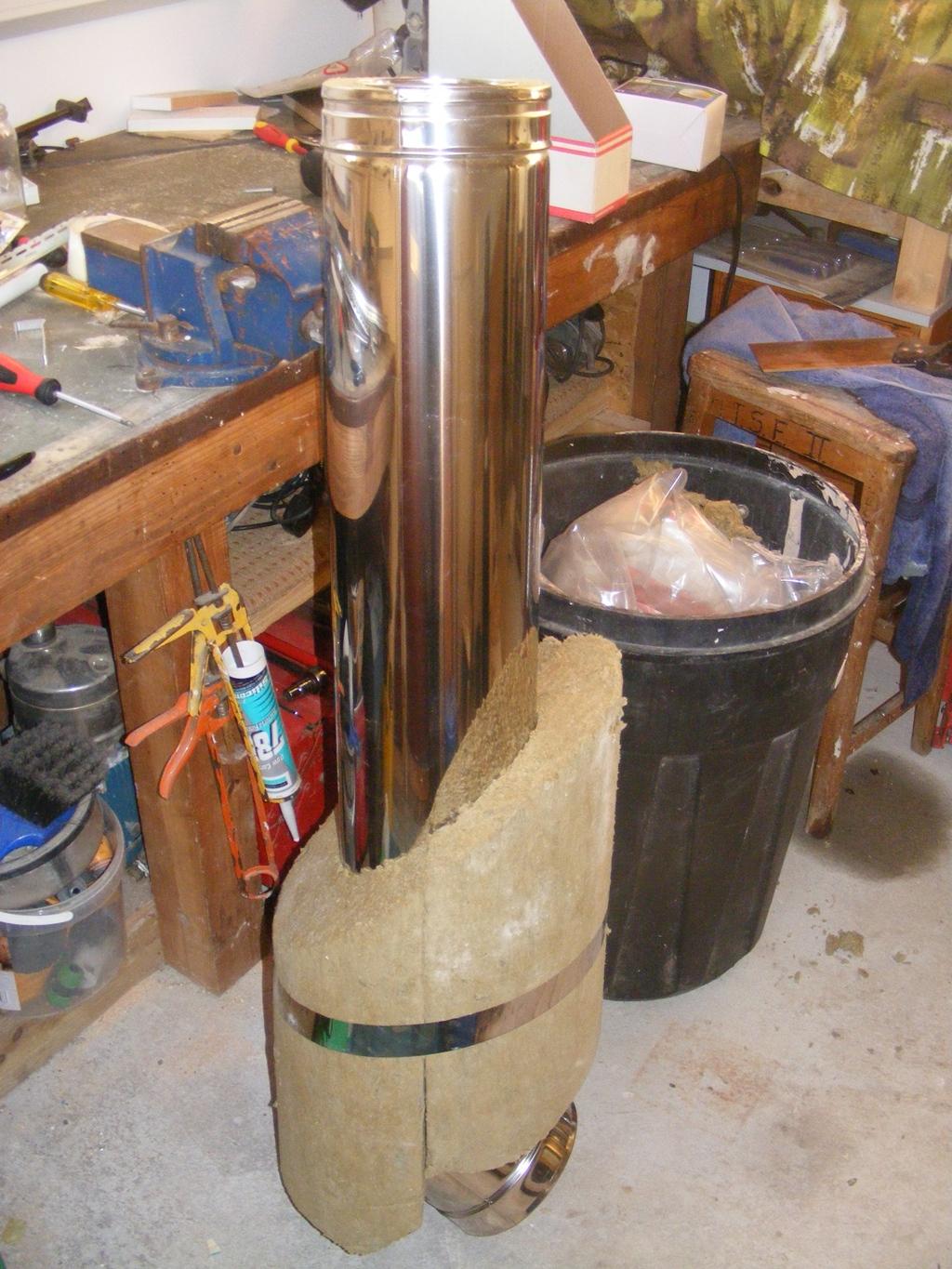
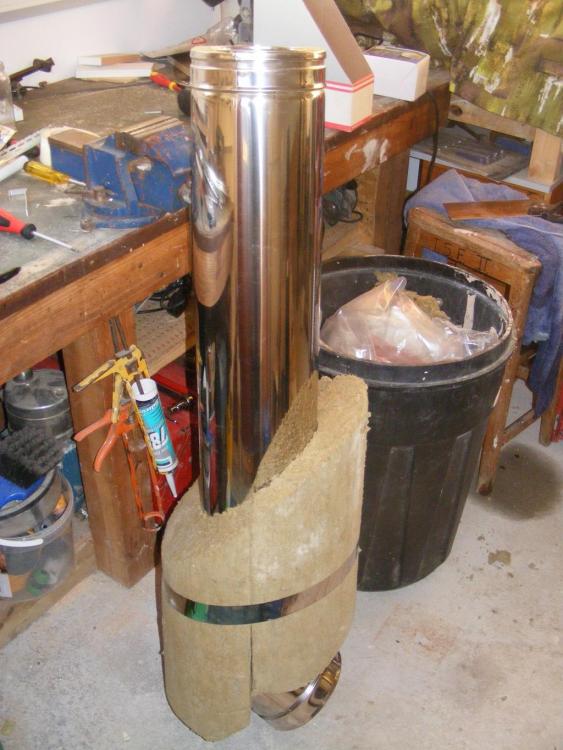
I used an insulated sleeve sold at flue-pipes.com This was for a roof penetration. By definition, because it was sold as such, it must be made of a non flamable material so is okay touching the twin wall flue pipe. And it is okay for anything flamable to touch the outside of the sleeve as that then meets the minimum distance from the flue to flamable materials. So you would seal your air tightness layer to the sleeve. Problems you need to solve: It needs to be twin wall not single for this. How to join the twin wall to the liner up the chimney. Would that need to be done in such a way that it can be inspected?
-
Site investigation report - central Scotland
ProDave replied to Bigdeadbadger's topic in Surveyors & Architects
We were never asked for anything like that (surprising given the history of our site) Percolation tests for drainage are something you can do yourself, so that just reduces any professional work to contamination issues. What was there before that makes the planners think there might be contamination? -
Topographic survey - mandatory or nice to have
ProDave replied to Internet Know How's topic in Surveyors & Architects
Before I even bought my site, I (with the agreement of the owner) had designed the outline of the house that would fit on it, and marked out the outline of the house on the ground with pegs and marking tape. For detailed planning I surveyed the site myself, measuring heights of important points using a laser level with reference to a temporary bench mark I created on a post. I even planned a landscaping plan marking out finished heights at spot places, using up all the excavated soil from the build to make the site less sloping than it was originally. The most critical thing to work out is the drainage plan as water must run downhill so you need to be sure if say you are having a treatment plant that there is a downhill route from the house to the plant to wherever it will drain to. At no point did I feel any need to pay someone else to do this for me. -
I am more concerned that he has not laid with much of a bond, i.e. i would expect each block to overlap the one below by half a block, not just a short distance. Which was there first? the wall or the door frame? Have you put a spirit level up against the wall? It's normal to make a door opening slightly large and to pack the door frame. that gets hidden by the architrave.
-
1930s property with void under the floor, needs filling.
ProDave replied to Mol172's topic in Foundations
I would say it is pointless doing the work until the drain issue has been solved. This is summer. Drains should not be overflowing in summer. In the mean time I would be collecting all the concrete blocks and other heavy items I could find and place as much weight as I possibly could on that man hole cover in an attempt to at least limit what comes out the next time it backs up. If you do go for the solid floor option, then make sure the contractor does the job properly and installs floor insulation in the process. Done properly with all the right damp proof membranes I cannot see why it should cause you damp issues. Assuming the new floor will be the same level as the old so will not bridge the damp proof course. -
1930s property with void under the floor, needs filling.
ProDave replied to Mol172's topic in Foundations
As others have said, replacing wooden floor with solid floor will not stop the property flooding. It sounds like a job for your house insurance. Whatever happens it has been flooded and needs proper drying out and reinstating. If your insurance was involved they would have an interest in trying to find why it flooded in summer, and what can be done to prevent it again. Is there a long history of flooding or is this something new? -
I now know why I have seen some properties with what is basically a dry moat all around the boundary with adjoining land. To take such occasional flood water away where it won't do harm.
-
So a compromise in this case: Tile the floor before you fill in the missing bottom half row of tiles?