ProDave
-
Posts
30862 -
Joined
-
Last visited
-
Days Won
427
Everything posted by ProDave
-
 12th post in this thread Sometimes google does a better job of searching than the forums own search feature.
 -
Covid has changed things. I used to get monthly visits from the council fax man, first to see if we had moved into the caravan and then to see if we had moved into the house. The last time I saw him he got his file out that contained loads of photographs and he dropped into the conversation this was his 23rd visit to the site. Since Covid, I have not seen him. And my email to tell him we have moved out of the caravan and into the house and we now need to delete the caravan from the valuation list and add the house to the valuation list has gone unanswered. I don't mind still paying band A council tax but feel sure we will get hit with a bill backdated until completion when they eventually wake up. I remember in Jeremy's case the valuation officer viewed the house and although not finished declared it should only take 3 months to finish if from that stage so that is when they will be billing him from.
-
planning Planning in principle before I purchase the land
ProDave replied to Dave_madl's topic in Planning Permission
Yes, you don't have to own the land to apply for planning. You might want to make a formal offer though, to stop the seller just upping the price and selling to someone else once you have obtained planning. In my case the previous planning had expired 30 years ago. So having agreed the price, I made a formal offer through my solicitor to buy the plot subject to obtaining planning in principle. I then submitted the planning application and when granted the sale proceeded. Had planning been refused the contract would not have been binding and I could have walked away. If you don't own the land there is a standard form you have to fill in to notify the land owner that you have applied for planning. -
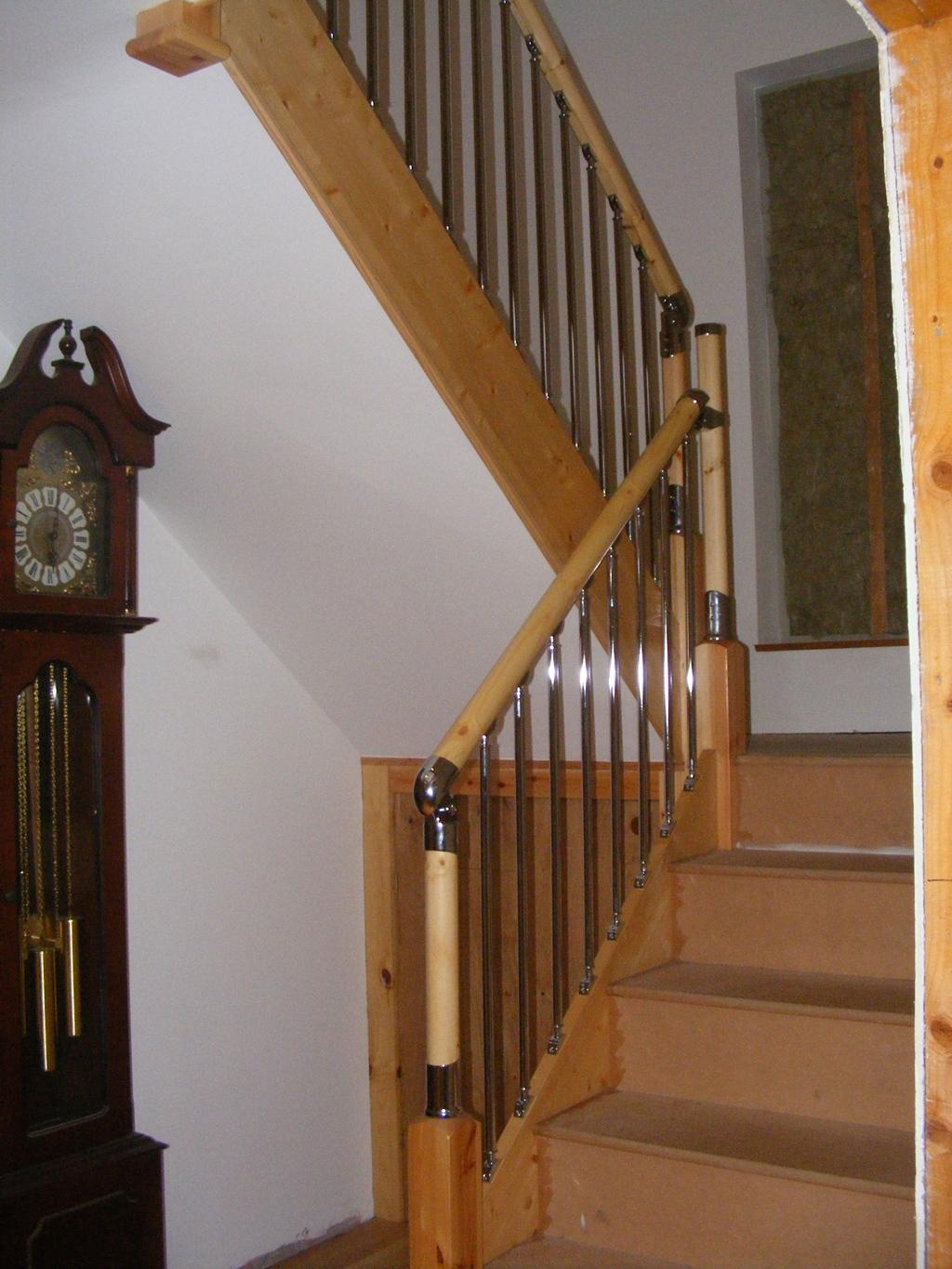
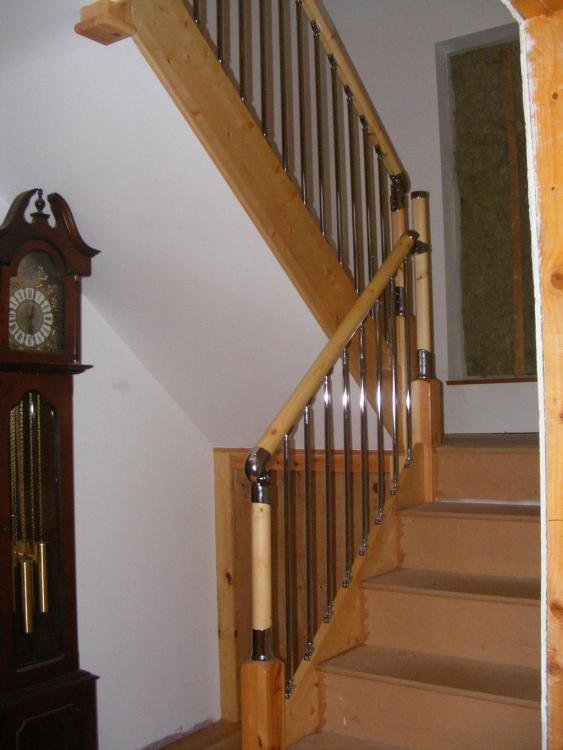
So you have to have wooden spindles and handrail? If you used something like the Burbidge fusion system that we used, you would only have a dwarf newel post that need not stick up much above the sringer, then a much more slender post above that.
-
We got ours passed with a 900mm standard banister and spindle set inside.
-
The basics of a stove are for burning coal you want air in at the bottom, often referred to as primary air. For burning wood you want air in at the top of the fire box, often referred to as secondary air. At our last house, the stove got a crack in the glass that gradually spread, until a little corner of the glass broke off. This meant there was an extra hole in the door, very close to one of the secondary air vents. You would have thought this extra hole meant there was too much secondary air that you could not shut down and the stove would be uncontrollable. But strangely it had the opposite effect and the stove became very much under fired and hard to burn. Solved of course by a new glass for the door.
-
Do local plumbers or builders merchants not stock it?
-
Hi and welcome. Just don't mention "thermal mass" and you will be fine.
-
In Scotland you are not supposed to occupy a house until you have completion or a temporary habitation certificate. A Temporary habitation is provided by building control on request. For that they had to do and inspection, and made is do a few things that they deemed not ready. We also had to provide the electrical certificate, gas safe certificate and unvented cylinder G3 signoff.
-
Is Planning Permission invalid - site area reduced
ProDave replied to beefybash's topic in Planning Permission
In the Highlands there is a general presumption against building in the "hinterland" but there are then some exceptions to that. One of which if the current use of the land is "garden ground". So getting permission for one house on a large plot makes it more likely a second will then be allowed later. -
Understanding building regs about stoves (Scotland)
ProDave replied to ProDave's topic in Stoves, Fires & Fireplaces
I have just had my completion certificate. Building control did show a lot of interest in the stove, but in the end the questions boiled down to "is the stove HETAS approved" and they were concerned that it looked to be too close to the wall. Providing them with a copy of the manufacturers installation manual confirmed that it was HETAS approved and that we exceeded the manufacturers minimum distance to flammable materials from the back of the stove. They were satisfied with that. -
Confused on electricity supply needs and ASHP
ProDave replied to pstunt's topic in Air Source Heat Pumps (ASHP)
As above 16kW outpur heat pump should be fine on single phase. Make sure on your electricity application you state it is inverter driven soft start. -
Yes, we made sure there was always a bowl of rat poison under the 'van. They never got into the 'van so not a direct bother to us.
-
Did this thread have a time warp? There we were in October 2020 discussing @jen and mark about to move into their statique. And here we are a year later in Oct 2021 sounding like they are just about to move in. Am I confused? Have you been in the 'van for a year or did things get delayed? Yes I did clad the skirt of mine with timber, insulated under the floor and insulated the pipes. Then we spent the year of the "beast from the East" in ours and late one night the water froze. Cue half an hour lying on my back under the 'van in a blizzard with a hairdryer thawing the frozen pipe before it burst. Caused because a mouse had eaten about a foot long section of the pipe insulation so that bit was exposed.
-
Yes never admit to occupying an incomplete house. Of course we did not occupy ours until we had the temproary habitation certificate.
-
Site Purchase Advice - Self Build Newbie
ProDave replied to Ballyboy50's topic in Introduce Yourself
Drainage will be key. If no mains, 0.3 acre is probably too small to fit a house, treatment plant and soakaway. Who owns the field sloping down to the marsh? That might prove useful for drainage. If owned by the vendor seek a wayleave or similar allowing you to install a soakaway under it (you don't have to own it to do that) But if that is the proposed option you would need a percolation test done so it might be a plan to seek that now. -
Stick to your guns that you submitted the claim within 3 months of the date you were made to believe the valuation to have been done and it it was in fact done earlier that is internal politics within the council who chose to only notify you some time later, and you had no way of knowing it was done earlier. If they accept that fact, then the other question is irellevant. It does make me angry this time limit thing, why should some paperwork mix up like this disqualify a claim. Hoping sense prevails and they accept what you say
-
Plenty of people post their plans for discussion. Like many I started off designating a room as a "plant room" In reality it only houses the MVHR unit and a few valves and a pump for the heating. A monoblock ASHP needs next to nothing inside and the HW cylinder was relocated to the corner of a bedroom (where one day it will be boxed in as an airing cupboard) to get it closer to the taps. The "plant room" is now better used as a workshop, that happens to have an MVHR unit in it and a few bits and pieces relating to the heating.
-
So they have refused this claim. If you are not successful appealing this, then surely you will get another go within 3 months of getting your completion certificate? Note on that. My completion certificate was dated as the day I applied for it not the day it was issued. If they took 3 months to issue it........
-
Is Planning Permission invalid - site area reduced
ProDave replied to beefybash's topic in Planning Permission
The person who might be on thin ice here is the guy that bought half the plot and built the house. If the planners come back and enforce the original plan to be built, including incorporating the existing buildings then he will be forced to do something with buildings and land he does not own. That could get legal and messy. Your objection to any further planning permission should be along the lines that planning was granted for one dwelling incorporating the existing buildings and that has not been done. Had the original plan been built there would be no spare buildings now left to convert. It needs someone to frame that sentiment in proper planning terms. -
Ha ha. I play with wires normally. Pipes and wet things is a side line.
-
Site Purchase Advice - Self Build Newbie
ProDave replied to Ballyboy50's topic in Introduce Yourself
Contamination of the land from the former use is one obvious thing to check. The water tap does not mean it has it's own supply, that could just be a long pipe from the farmhouse. Get a quote for a proper water supply. Likewise electricity, there may not be any spare capacity. And probably the biggest is drainage. Is mains drainage available? If not is there sufficient land capable of supporting a treatment plant and the soakaway needed for it. -
Contract with BT as your PROVIDER and request a NEW line which is usually a fixed charge of about £65. THEY will then arrange with Open reach to connect the new line. Once connected switch provider if you want to.
-
IF you keep the cylinder in the garage you WILL need a how water return circulating system or your hot water delivery times will be stupidly long. I would put the HW tank in the house as close to the main points of use as I could so as not to need a HW circulation system.
-
Go on just buy him a VSD. Change of £200 for a Parker that I just fitted to a friends wood turning lathe.