


willbish
-
Posts
741 -
Joined
-
Last visited
Everything posted by willbish
-
Thanks all, suspicion confirmed. Email heading their way. Seems I can forgive myself for occasional sloppy work but that doesn't yet extend to others!
-
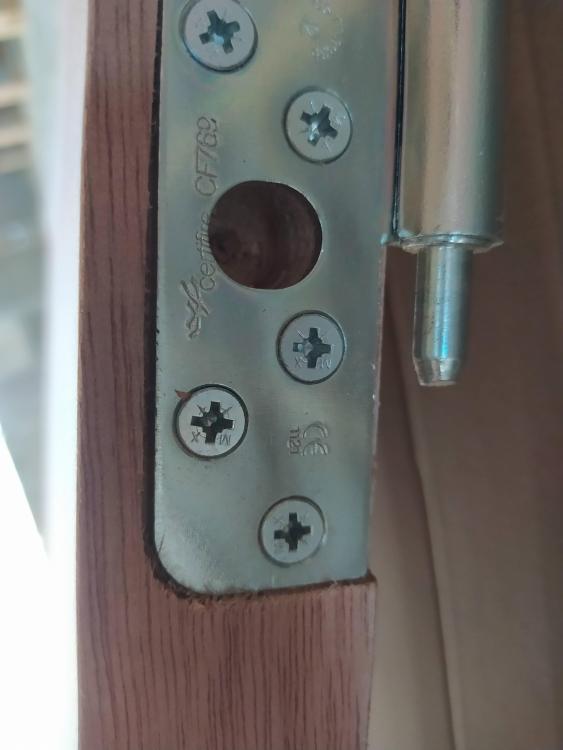
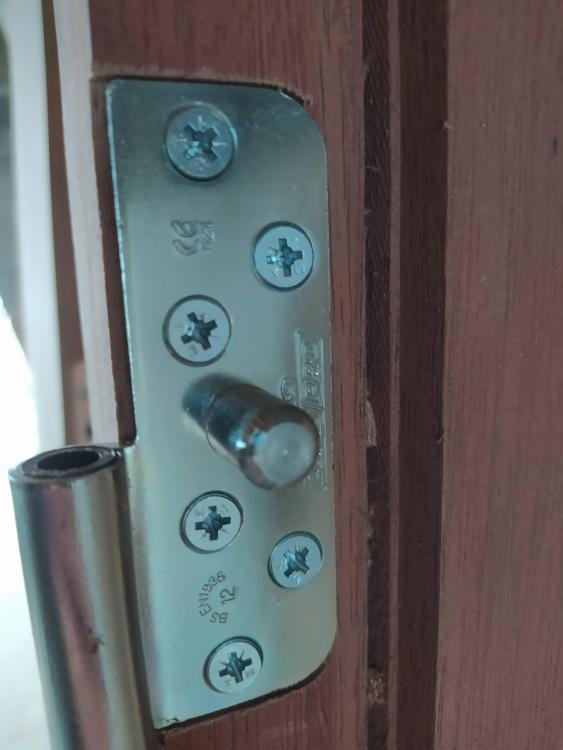
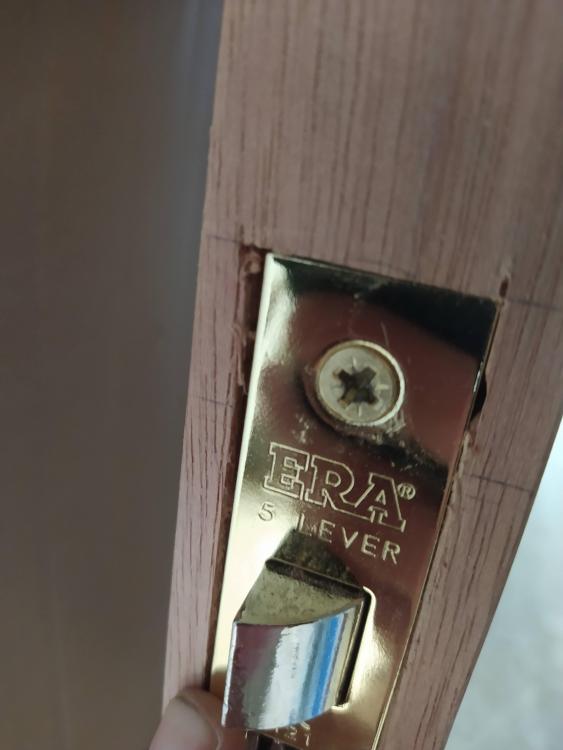
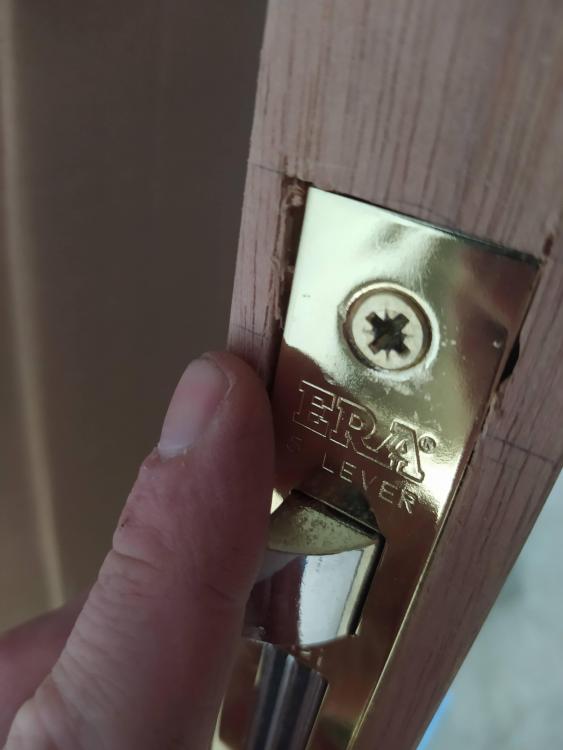
I took delivery of a prehung doorset from an online door retailer. Is this quality a bit below standard? I was expecting them to use a jig and router but it has been hand chiseled. I reckon I could have done as good a job myself despite only having done a few hardwood external doors.
-
If you use a sarking board and then a modern membrane on top the ecologist can't see the membrane from inside the attic space.... Not that I have applied this approach ?
-
25x50 but doubled up where necessary. I found the GSE instructions unnecessarily complicated with regard to batten spacing. If I remember correctly, the only figure you really need is the 'additional line' which differs depending on which size panels you have. Lay down extra battens if the mount fixings are unlucky enough to miss a batten.
-

MVHR with active cooling
willbish replied to worldwidewebs's topic in Mechanical Ventilation with Heat Recovery (MVHR)
Looking at the price of either of those I would only want to fit if you definitely have a calculated need for it. I am going to fit a simple duct cooler https://www.bpcventilation.com/cold-water-duct-cooler-range 1/3 of the price, run by ASHP -
MVHR with active cooling
willbish replied to worldwidewebs's topic in Mechanical Ventilation with Heat Recovery (MVHR)
Ahh so you're ducting goes outside the thermal envelope, then that makes sense. I cant imagine that cooled air inside the ducts will be cold enough and moving fast enough to cause condensation on the external surface. But some real world reassurance would be nice! -
MVHR with active cooling
willbish replied to worldwidewebs's topic in Mechanical Ventilation with Heat Recovery (MVHR)
After reading elsewhere on the forum I had thought that insulating post manifold and cooler would not be necessary but now I am not so sure. As the duct cooler can drain condensate, then the ducting after the cooler will be warmer than the cooling surface and prevent further condensation. What sort of air temps are you expecting inside your ducts? -
MVHR with active cooling
willbish replied to worldwidewebs's topic in Mechanical Ventilation with Heat Recovery (MVHR)
Do you intend on insulating all your mvhr supply ducts after the duct cooler? -
To be honest I doubt you'll find one, but that shouldn't matter. I went through the same process in Bristol and could only find one who had previously done an insulated raft. Any competent groundworks team should be able to prepare a base to a suitable standard ready for the EPS given the right spec. As far as I know Isoquick will always assist with laying the EPS onto prepared ground which ensures it will be right.
-
£145/m2 with as much DIY as possible 108m2 footprint of raft That's for 300mm deep Isoquick (discounted when purchased with Logix) 32m3 concrete 300mm deep Pump hire Tonnes of rebar, two layers of mesh and perimeter cages A bit of labour on pour day 50 tonnes type 1 Roller hire Excavator hire Diesel for the machines DPM and tapes 10 tonnes 2-6mm clean limestone Muck away 22x 10t farmers trailers Few sundry items Doesn't include any drainage, ducts, mdpe plumbing etc
-
Anything smaller than a square gully hopper
willbish replied to willbish's topic in Air Source Heat Pumps (ASHP)
This is the set up I've got Patio drains left to right ASHP pad drains right to left Little gully between house and pad to take condensate to soak away. I'm contemplating bodge: set square hopper in slabs covering 80% of the 110 pipe but not properly connected...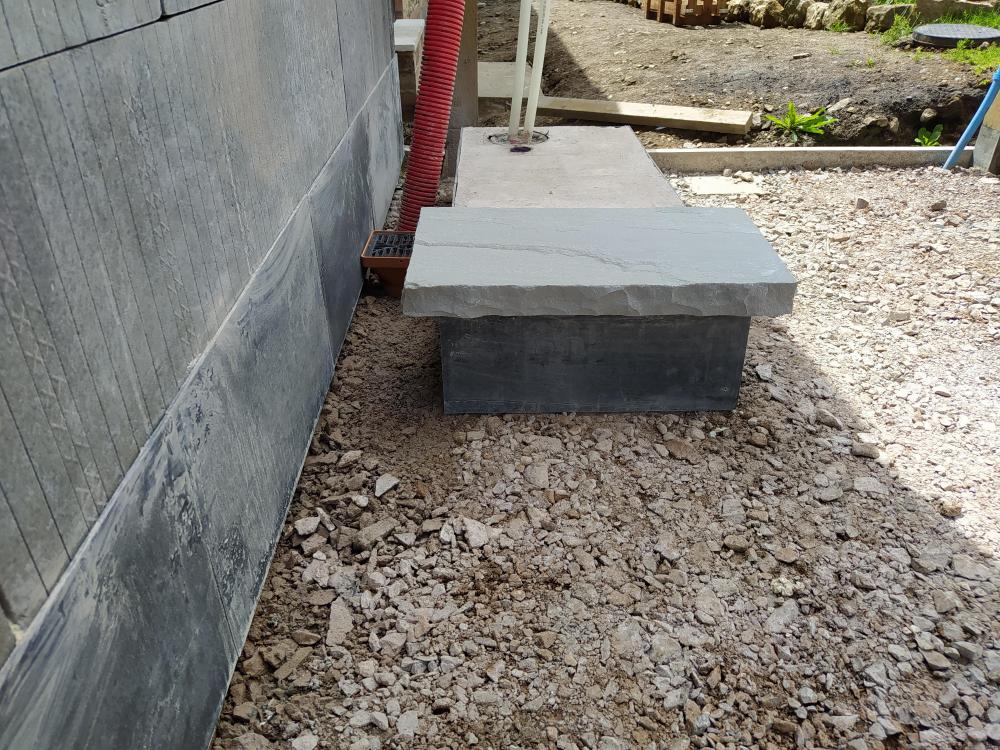
-
Anything smaller than a square gully hopper
willbish replied to willbish's topic in Air Source Heat Pumps (ASHP)
At least it isn't in reverse yet! -
Anything smaller than a square gully hopper
willbish replied to willbish's topic in Air Source Heat Pumps (ASHP)
MVHR condensate is all sorted, this for the heat pump outside. I thought they all just kind of leak water rather than have a connection -
Anything smaller than a square gully hopper
willbish replied to willbish's topic in Air Source Heat Pumps (ASHP)
@joe90 have you connected your condensate drain directly? I thought most ashp's dont have a connection for the condensate, they kind of just drip on to the ground -
Anything smaller than a square gully hopper
willbish replied to willbish's topic in Air Source Heat Pumps (ASHP)
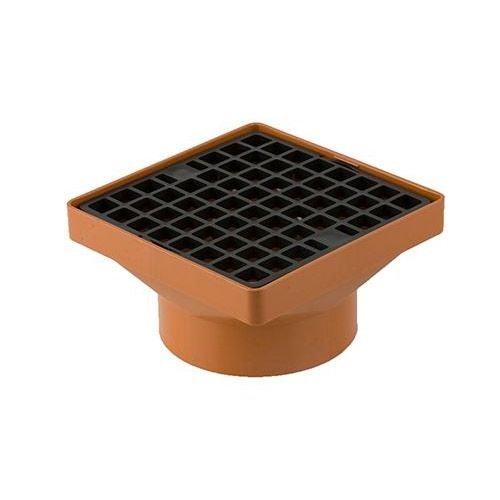
Thats what Im looking around for now, perhaps I should stop! https://www.plastics-express.co.uk/underground-drainage/drainagecastings?product_id=2445 -
Very tight for space and I cant quite get a square hopper on top of 110mm pipe without being all cockeyed. Is there anything narrower I can use? This gully is for ASHP condensate only, so could I use an adapter to a 40mm waste pipe and connect directly to the condensate drain?
-
CIL response timiing
willbish replied to LSL's topic in Self Build VAT, Community Infrastructure Levy (CIL), S106 & Tax
You have accepted liability of the cill and it looks like no exemption is required as no charge is applicable. Charges being based on increase in floor area. Does their calculation of a reduction in floor area seem accurate? -
If your ground conditions allow, no reason why not. But if that's the case why bother with the strip footings as well. Do the whole foundation as an insulated raft. The size of your footprint requires some intermediate support and cannot rely on perimeter footing alone hence the strips running through your slab. I'd guess your SE is just doing it the way they know best. Without changing SE's, it might be a bit late to redesign as full raft. What insulation is currently specified? You might need to change to EPS 300 if you want it to bear on the ground and support the structure above.
-
I submitted my G99 Form B over the weekend. Felt a bit odd crossing out 'accreditation / qualification' and writing 'self installed' but it seems to have done the trick as I received a positive response back today and reinforcement works will be scheduled soon
-
Joiner made front door....will it be airtight?
willbish replied to Stephen Aitch's topic in Doors & Door Frames
I have had a joiner make our front door. It's not yet installed so I can't comment on how it performs just yet. The joiner was responsive to the challenge of making something airtight and thermally efficient. I visited a few showrooms to take photos of the seal details and found tech drawings online. I think the door will perform very well during the airtightness test. With regard to thermal performance I think it will be a slight weak spot, although we used a triple glazed sealed unit and 50mm PIR sandwhich filling there are areas where there is solid timber.- 12 replies
-
- 1
-

-
- passivhaus
- mvhr
- (and 1 more)
-
Windows are doing my head in (and not Microsoft for once)
willbish replied to Reiver's topic in Windows & Glazing
I will be positioning my windows 60mm in from outside face of ICF plus thickness of render using a ply box to fix through into the concrete core. In hindsight I think it would have been preferable to use a plastic board like stokboard instead of ply Splayed reveals are possible with ICF, Ive got some EPS mouldings on order which will be foamed in and rendered over.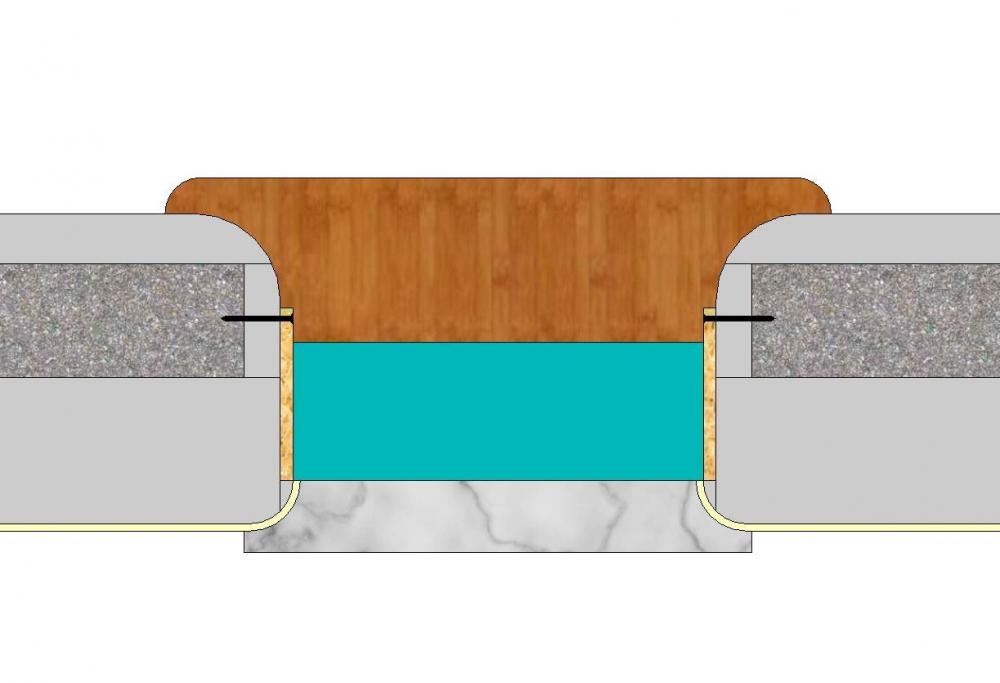
-
I don't have much of an over hang on my gable. So after the concrete was poured I fixed a rafter to the outer face of the ICF, mechanical fix. The OSB sarking is nailed to this outer rafter and then barge board fixed. @deuce22 is a large overhang necessary? You could extend the ridge steel out beyond the outer face and the wall plate too. Assuming the rafter length does not require a mid span perlin. However you do it I think you will be introducing some pretty significant thermal bridging.
-
I will be putting mine in an outside bin store. There's plenty of space there and it will sit next to the accumulator. The store is uninsulated but adjoins the house. I think it will be sheltered enough to protect from frost..
-
Ufh, look at these plans please.
willbish replied to Russell griffiths's topic in Underfloor Heating
I think 100m is the approx maximum. A little bit over seems to be okay. Yes as much as possible but some variation inevitable. Your manifold is fairly central so I see no reason for a second manifold. Exactly what I did, but some bunching was still required especially if you can't/don't want to run pipe under internal walls. I'll try to dig you out a copy of my DIY plan. It's a bit simpler than your set up because the UFH is in the raft fountain. I also went for even coverage under the whole ground floor and my internal walls were blockwork so ignored internal layout when designing the layout. -
I've not heard of any minimum time between pours. Considering how long it takes to strip all the bracing and supports (1 day at least), then build the next story (perhaps a week), finally adding bracing & supports (another day or a so), then confirming pump availability and concrete. I think there is no chance you could be pouring onto concrete that isn't cured even if you've got a large team of builders.





