


mike2016
-
Posts
647 -
Joined
-
Last visited
-
Days Won
4
Everything posted by mike2016
-
I thought I'd start a topic on cooling specifically. Although it's been covered as part of other threads I wondered what the options are for new builds and existing houses in this area? I've seen some great ideas in other threads: Underfloor & ASHP cooling MHVR cooling option SunAmp to precool rather than preheat? And of course opening the windows at night When night time temperatures are too high to make opening windows useful, what then? Do we get dehumidifiers and air conditioning units like other countries? Shading to prevent solar gain is of course paramount during the day - also blinds, breise soleil, window film to reduce G value, adding trees, walking around stark naked.....! What have people been doing this summer to keep cool and purge the heat? For my current house I'm just using blinds during the day and opening front and rear windows when I'm around too. Regularly 27 degrees in the bedroom overnight however. In the new house I'll have blinds, breise soleil, velux windows in the roof I can open but that's it. I would like to have other options but I can't see myself buying an ASHP at the minute, just MVHR. Thoughts?
-
Well, there's another house opposite a little further down the road with damage to their side window recently so I'm going to speak to them and see what happened. It might strengthen my case as their gable window is 7 meters from the wall, mine will be only 1. I'll have CCTV as a mater of course for my own protection but hoodies abound and it won't repair the damage. I can get bulletproof glass if I'm forced this way to at least limit the risk of damage but it will be interesting to see how this pans out. The tree, well, I've to access underground services and put in two car parking spaces, if the root system gets damage and the tree becomes a hazard I'll have to take professional advice about site safety and do what's necessary. Funny though - I'd love to keep the tree and I'd love a glass atrium window but the realities weigh against this...... Thanks everyone!
-
Thanks - the tree protection was different to what I thought. I'm thinking about the roots which will be under the ground where the new car parking spaces are to go, the planners are more likely talking about the Heras protection quoted here. Good distinction to understand, Thanks! I think the fact that the old house has no windows is a good case to point out along with some other things.....
-
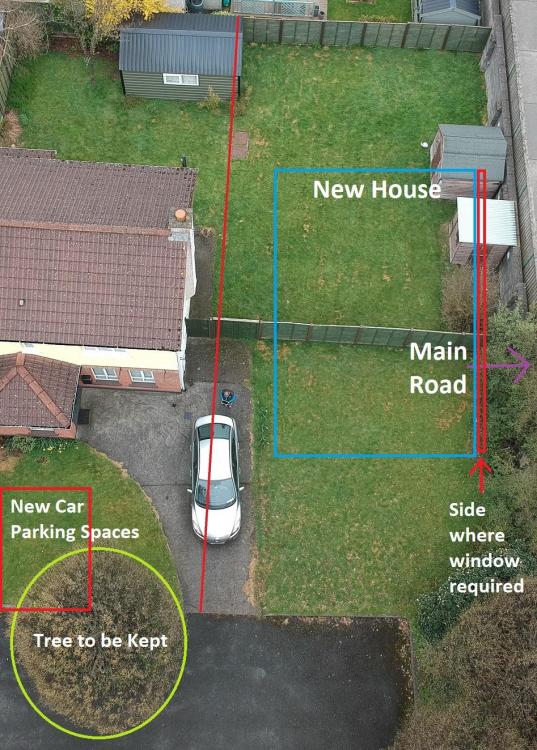
Hi, I just got planning permission but there are two conditions I'm concerned about: Revised plans indicating windows facing a main road in the interest of promoting passive surveillance The existing tree to the front of the site shall be retained and protected, both above and below ground, from damage during construction works The first relates to a decision I made to NOT have windows on one side of the house as at the weekend it's frequented at odd hours with late night revellers, late night buses letting people off and a nightclub up the road. All the bus stops on this road are now plexiglass instead of glass for years due to vandalism. My worry is of course my new house would be the closest of any house on that road and attractive to a stone being thrown or two. They say windows plural - I could put on in a glazed atrium for the living room / vaulted ceiling, would love to in fact but it will be too high up to see out of. Plus the existing house has NO windows on this side either! The bedroom would provide a window you could look out of but it would increase the traffic noise. Nothing may never happen but there's a pedestrian opening opposite into another housing estate and a pedestrian crossing beside that and groups of youths often congregate there. The cost of replacing a window cartridge and access to it after the build is done and scaffolding is down will be tricky. The second relates to trees put down by the builder in the estate 20 years ago. They grow up and out (don't know the variety) and are often cut down after 20-30 years and replanted according to a local tree surgeon. The risk is I've to put in two new parking spots in the front garden of the old house nearby and the root system may be disturbed causing damage / loss of the tree. I don't see how I can protect against that without raising the level of the new parking spaces? Roots are 600mm below the surface I'm told and the parking spaces are right by the tree which is over 6 meters high. I can reinstate a mature tree if all fails but not sure the planners would be accept that. Interested in thoughts if you'd had to have similar discussions with your planners and how to tackle these issues in a sensitive & appropriate way. Thanks.
-
Planning Permission Granted! After trying to ring the planning department on the day of decision at around 4pm and not getting through I resolved to wait until the next morning. At 5:03pm I get an email indicating that planning had been granted. I'd forgotten I'd subscribed to any activity on my planning application! Now, I've still to see the official notification letter with conditions etc but thankfully it was plain sailing. No objections, no requests for information. I took the planning site notice sign down yesterday (could've taken it down 3 weeks ago if I'd realized) just as a nice woman and her two young children was checking out what it said! Anyway, that task is now done, stage 2 finally over! I've an appointment to meet with the Architect again in August as that's the earliest due to holidays etc. I used https://www.estimators-online.com to get a quote just to see what costs I'll be looking at. I know there will be some differences, not least exchange rates but my last Quantity Surveyor estimate is over two years old at this stage. Plus estimators give a much more detailed breakdown which allows me to see quantities so I can replace standard plasterboard with Fermacell for instance and work out the difference. They email you the report as a PDF but you can grab the Excel from their website afterwards and make adjustments if required. Cheap enough and gives me something to prepare against before August. My main worry in building next year is the increased costs - materials and labour keep going up. Will I be able to build the house I want or just enough of a shell to convince the bank its habitable so I can move in and upgrade as I go? I can get a revised window quote as I've opening sizes from the PHPP. There's a few timber frame companies, some just do the frame, some can do everything. Brexit may play a part though with the timing of the build commencing after March next year most likely. So if I have a NI or UK based supplier, SunAmp, MBC, Kibroney etc lined up I'll have to have a plan B just in case, like most businesses! MBC pulled out of the Irish market but I spoke with someone there on Friday and he said they have started requoting again. There's a small irish timber frame company called Shoal timberframe that the Architect recommended. Not seen their stuff and it's a small outfit. Not sure they do foundations though. Anyway, this is where it gets detailed and interesting! I've a lot to think about as I need to decide what elements I'm happy to do and what I'll leave to the builder. Part F of the regulations in Ireland are under review and ventilation may have to be installed by a "competent person" so can I do the MVHR and ducting or will I have to pay someone else? As time slips you bump into these changes and have to adapt your approach. So my site is shown to the right of the red border above. I'll have to shunt the metal shed out the back (painful) about 3 feet to the left. The other two sheds are being demolished. I'll be bringing some of the services onto the site before I sell the house in advance of the build. Electricity should run all the way past the front of the site but I'll want to confirm this. ESB here don't do temporary supplies in Ireland unfortunately. Water is the one I may have to get done as there's a hydrant to the right of the tree in the bottom left corner but after I sell the house I want to be sure I can access it. The pipework may not go much farther. Broadband sweeps though the garden of the house in the bottom left of the photo. I'll bring that onsite and see if I can get it tested so there's no need to dig things up again after I sell the house. The driveway will be split and a new double one created on the front garden of the existing house to maximize the site space I'll be keeping. It all adds to cost unfortunately. I'm not sure if I'll get insurance for those groundworks as getting public liability on the site itself (after I sell the house) to cover me until the build starts will likely be expensive so having a full self build policy for a 12 or 18 month term would make more sense. So, the next few months are about the figures and seeing if I can afford to build with the funds available. Added to that are: Further Architect fees (2 stages plus Assigned Designer, Assigned Certifier regulatory stuff) Development contributions (@ €10K) Legal Costs associated with selling house, discharging old mortgage, taking out new one etc Service Charges (Electricity €2K, Water €2K, Sewage €3.7K, Broadband €120) Initial Groundworks in advance of self build mortgage (credit union loan) Self Build Insurance & Structural Warranty (€1-2K/€3K) There's a good self build exhibition in September in Dublin so it will be interesting to have more serious discussions with some of the exhibitors there this time. One of the factors I'll have to watch out for is the maximum self build mortgage I can access. Most banks will only lend you 80% of the build costs. Now I'll own the site so I hope this will cover that 20%. Some banks also want to see a 15% contingency fund in place. The bank will determine how much a 3 bed detached house is worth in my area and after taking my salary x 3.5 I'll either be able to afford the build or be way off it! Also I've to get permission from my current mortgage bank to sell the house minus the side garden..... I'll be holding off any groundworks until this is all clear to me and how much maneuver room I have. There's no point doing the new driveway etc if next year I'm told our costs have gone up another 5% by the builder and I'm left swinging! Anyway, I'll have to sit on my hands a bit longer and do as much due diligence as possible and see if any builders come back interested from the tender process before making up my mind. I've always thought that until the first wall panel goes up I won't actually believe this is real. It's all paper and numbers and has been for so long. Here's hoping if it's to be it's to be and thanks to everyone on this site for their advice and support!
-
Reasonably close, 8-10 feet in some cases, 15 feet in others to get the whole house. It should be possible to get a good shot from within most driveways I'd imagine.
-
Wow, Thanks! Great to see the details....
-
Got any close up photos?!
-
Sounds perfect for my tenant situation, what about kids though....? Not a problem but down the road I assume the euro cylinder could be remove / swapped out with a blank? Thanks. Ahaa...I think you meant swap the handle with blank ones.....gotcha...
-
Hi, I'm thinking of what internal door locks I'll need. For bathrooms I was going to use a lock you just turn on the inside (no key required) and it displays red/green on the outside, like in hotels etc. I'd also make sure it can be overridden from the outside though using a flat head screwdriver in case of emergencies, thinking my in my old age passing out on the loo..... For the bedrooms though I plan to rent out one or two rooms. I don't mind having a fixed lock you can turn when you're in the room for privacy but should I allow a setup using a key that a person can choose to lock from the outside when they are away? I can keep a master key so at least I can access with prior agreement.... What about if a family with kids buys the house? Should doors be lockable - if there were keys they could be removed and kept somewhere safe, whereas the fixed thumb lock could be a problem with kids. Thoughts?
-
So I only need one of those CO detector things?! Great!
-
Don't forget a fire blanket for the kitchen and CO2 detector if you have a stove / gas appliance etc. Know where the main water, gas and electricity breakers/cut offs are. Place trampoline under master bedroom window etc....(!)
-
Hi Nick, Just on this: "If you NEED an accumulator then it would be best off outside so it stays cold, rather than attain house ( ambient ) temp, and fitted in an outhouse or other frost protected location" Why do you need to keep it cold? Thanks.
-
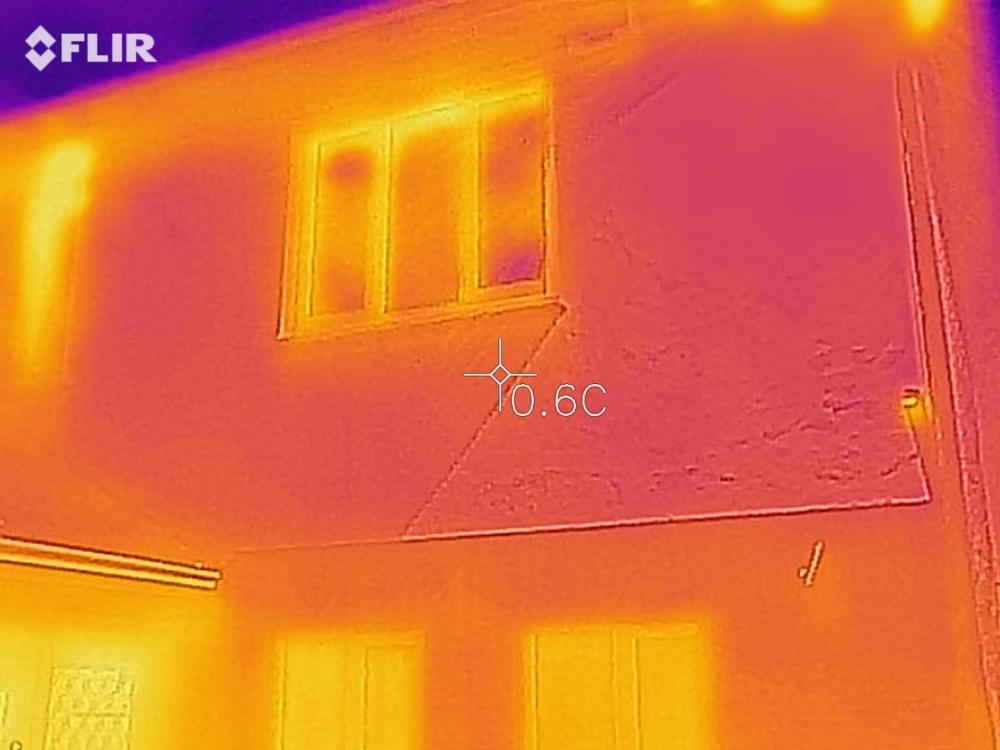
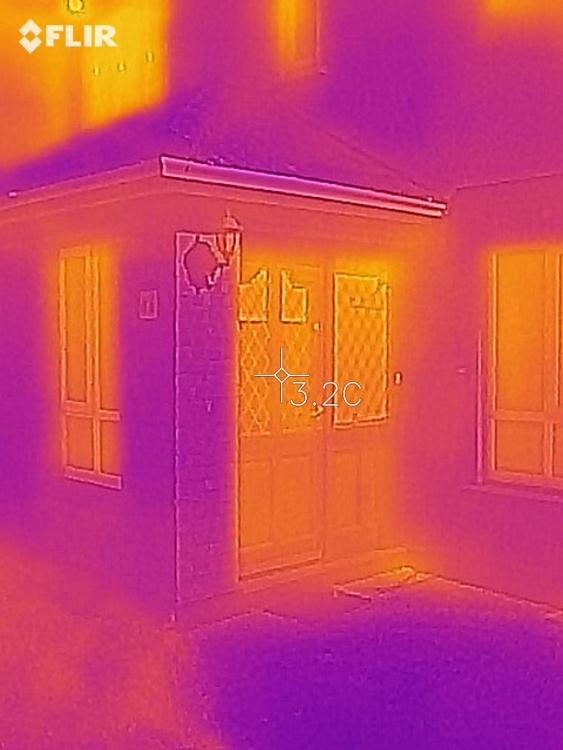
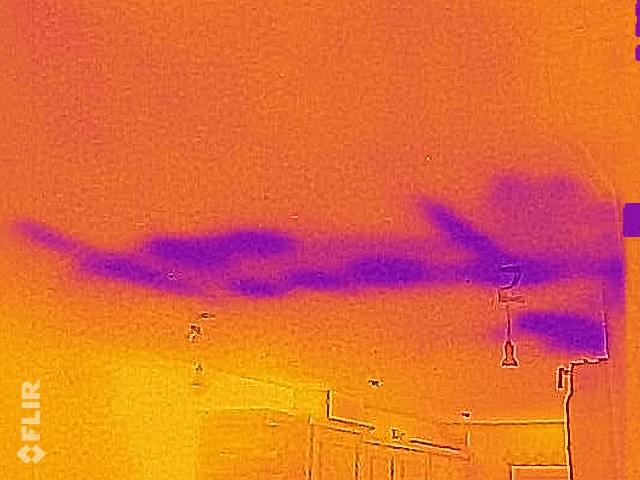
I bought a Flir One for my android phone. Very nice, just had to get the right dongle (On The Go) adapter when I changed phone to USB-C. The newer one can swivel 180 degrees as some phones reverse the USB connection. Resolution is poor but good enough for the task, great for getting temperature measurements and for comparisons / gradients / cold bridges.
-
Thanks Folks, Interesting discussion as always. Sounds like I've never lived in a modern house! The main reason I thought I'd need an attic tank is a buffer against mains loss and to provide a header. I have my doubts that I'll have space in the attic to fit one but that remains to be seen. Like the idea of a drip tray. What, there's NO guaranteed leak free system out there?! We get about 1 - 1.5 bar when the mains water is running but they drop it occasionally to annoy us. I've never been in a house with anything other than an open tank . My current house has loose styrofoam placed over the tank as a cover, I bought a proper lid since and insulated the bugger. By the way, the squirrel finished giving backstroke lessons last Tuesday....I like the idea of a cold water accumulator, 300L sounds ideal....will look into an alternate location rather than the attic - why not ambient temperature though? I could put it in my shower I suppose but I don't think that's what you meant!! How are the two vessel plumbed? In line or parallel? I plan on having separate hot and cold water manifolds too.....interested in how these are connect to the pressure vessels in your case? I'm building a small house and the manifolds will be nicely situated on the side of the house where all the taps/showers are. Good advice! So I'm after a buffer mostly but want to ensure multiple points of use together don't cause too many issues. This is down to pipe diameter / pressure then? Thanks!
-
Hi, A friend rang me up and suggested, why don't you put your mains water tank elsewhere than in the attic? It's standard on the continent he said, only UK/IRL do the attic tank. New houses here in Ireland don't even install an attic tank and rely on mains pressure only but I'd prefer a buffer as they regularly drop pressure and it gives a reserve if water is cutoff for any reason. But back to the suggestion, I've heard a plumber tell a story about a house where a pipe came off the attic tank and the occupants were out on holidays, water was coming out under the front door. The plumber was next door finishing a job. So naturally I'm keen to avoid this! I'm planning on building a timber frame so fire and water damage are high on my list to mitigate. I spotted this which might help: https://www.greentherm.ie/product/rbm-stop-leak-brass/ I know there's no guarantee against a leak, I can install leak detectors but it still worries me....I plan to use Hep2O to minimize junctions...SunAmp for hot water, manifolds etc. So, back to the main question - Attic Water Tank or place it somewhere else outside the main house (but insulated of course)? Thanks!
-
The Build - Timber frame erection
mike2016 commented on Redoctober's blog entry in Our Journey North of the Border
What a beautiful thing!! -
Which way is South?!!
-
Try google project sunroof which is now open to the UK and see if it recommends 8kW of panels on your roof and how much it would deliver per year. Chinese import tariffs to EU finishing in August which might offer itself up to lower prices. Check prices on a few sites. How are you going to prioritize car vs sunamp? Are you going to add a battery? If you've lots of south facing roof space going for more cheaper poly panels makes sense rather than a small number of more expensive mono ones but see what deal you can get. Saw a video recently where they recommended a battery first, then adding PV later, with E7/10 of course....One USA guy got a load of cheap panels off a repo but I think they must lease PV a lot more over there than the UK...
-
I've been spending the last week or two chasing banks because of a clause in the Self Build Costing Template - "*Standard Timber Frame Structure with traditional block exterior". I've found they nearly all have a timber frame line in their stage payments due to front loading of the mortgage when using a factory built house, but they all without exception carry the clause above. I'd not queried this up to now but decided to chase it. I've enquiries out now with several banks but so far only 1 persistent customer services lady has gotten back to me with the news that they are happy to lend for a "pure" timber frame as it's common now and they are A Rated alongside masonry. They are looking for a 15% contingency and a max 80% LTV in their particular case so I'll have to do my sums. They are the second cheapest in terms of interest rates which is great but once built I should be free to switch down the road hopefully. The main thing is that there is at least one lender I can go to to avoid having to build block work around my house just to keep the bank happy! The other thing I've started looking into is insurance. Timber Framed houses are seen as a higher risk compared to Masonry. They claim it's two fold - higher fire risk and higher repair costs. Say I pay 325/yr now on a masonry house, that will go up to 550 at least for an equivalent timber frame. There are specialist lenders that might do better but I can see 550 turning into 1000 by the time I retire which reduces the benefit of a passive house low running costs somewhat. Maybe by then the market will have equalized of course as more timber frames are built but we'll see. Something to think about anyway. It's not enough to sway me away from TimberFrame but these are the peripheral considerations I need to bear in mind. Anything in the build method that increases ongoing expenses or limits my ability to switch between lenders later is a concern. Over half way through planning permission. No sign of any objections which is great. Looking forward to the end of the month to see what the decision is or any requests for information come up. I'm hoping to crack on with the tender process if it's positive so need to manage my savings carefully to allow for that. My plan is to go to tender Q3 2018 and Start building Q2+ 2019 after I sell my house but we'll see. Things often take longer than you expect! Finally I've been enquiring about self-build insurance and when to start it. I'll have three phases: Realignment of new driveway onto old house / Bringing services to site / Creating new boundary fence between existing property and site House sold - need public liability on site only Commencement of build on site I'm getting different advice from various providers. Some reckon I can use the contractors insurance for the first phase above, then a 12 month public liability policy on the site followed by a full self build policy for the build when it starts. Others recommend a longer (18 month) self build insurance package for all 3 phases. You just have to avoid a cessation of works clause when it's just the site and you're waiting for the build to start (3-4 months in my case due to placing order for timber frame and lining up a builder once house sale completes). So working on clearing the site, building a site shed and keeping a diary of works would keep the policy from lapsing. You're then covered at all stages from your builders insurance proving inadequate or if I get injured doing some jobs around the site. I've to check that the builder has both a combined liability policy for the public and as an employer in addition to contractors all risk. The second covers you if the building is 99% completed and burns down. Notably theft is the number one reason for a claim in this country. Once the build is finished there is a cessation of works clause so I'll need standard home insurance cover ready to take over at that stage. I don't think a 12 month public liability policy will work out good value so I'll probably opt for a self build policy but just need to decide if it should kick in after I sell the house and I'm left with a site, or if I start it when the groundworks commence before I sell (Driveway, services, boundary preliminary phase). I'll shop around anyway and think about this further before deciding.
-
Hi, I've been looking at the self-build costing templates from the main Irish (ROI) Banks and while most offer front loading for timber frame they all, without exception state "*Standard timber framed structure with traditional block exterior". Now with something like an MBC timber frame I'd go for Aquapanel and K-Rend but that's appears to be a non starter. Just wondered if anyone has encountered this before from ROI lenders and if there's any way to avoid changing building methods / concrete-mageddon above the foundation later? I think a lot of UK lenders are more flexible. I've made enquiries to a few banks and am waiting on their response. If only one or two are amenable it also creates a problem selling on the property or switching banks later to get a better % rate. Thoughts appreciated.
-
FYI - I was just reading about this system: https://cleantechnica.com/2018/05/18/the-rachio-intelligent-irrigation-controller-has-saved-users-29-billion-gallons-of-water-to-date/ It's been saving water for a few years and although, apologies, not related to the actual delivery aspect of what you asked about, might be worth considering?
-
When i queried this with Rationel I was told 7-8 weeks.
-
My planning permission is now submitted and I've a reference number and everything! So, there's about 5 weeks waiting for objections and then 3 weeks where the planners will come back with questions / start examining the submission. Then you get a preliminary approval with a 4 week cooling off period before the final official permission is granted, with their contribution bill! Once granted, I'm planning on some preliminary groundworks on the current old house to realign the driveway and access water and broadband services so I don't need to dig up that front garden again. I checked and I can issue a commencement notice but agree to only pay a portion of the contribution fee (nearly 10K) until the main build commences. I'll have water connection charges to pay also but they are changing their fee structure in the next few weeks to standardize it across the country which puts the price up unfortunately - that's how it goes! I reviewed the final drawings presented by the Architect before they were submitted and noted that they called out some details which I wasn't expecting. Plus there was a legal letter I'd to get signed and witnessed by a solicitor to state I own the site which was a surprise and required getting a quick appointment (section 97 statutory declaration). In case this helps someone else who are reviewing their drawings, these are the areas I called out in mine: PVC gutter and downpipes - I indicated I'd prefer aluminium if budget permitted. Would stating PVC prevent me from this option later? (They removed the reference to PVC) Timber Gates 1.5M high vs boundary wall of 1.8M - The current side gate is 1.8M so I asked them to raise it Concrete boundary wall - Currently all boundaries to the neighbors are concrete posts with timber fencing that slots between them. Overheating - I'd suggested stretching the porch overhang (zinc) over the downstairs bedroom window and assumed they'd reduced the height of that window. Turns out they just raised the height of the overhang! Plain black roof tile was listed - The current houses have red concrete tiles that have weathered very dark. I was wondering if we'd need to go with red tiles but this colour would be less jarring to the neighbors! A brick finish was listed - We're going to fake it with K-Rend so I wanted to check we weren't forced to use brick slips. Strangely enough the Architect wasn't aware / forthcoming about this technique and was discussing actual brick slips until I got talking to a K-Rend guy at a self build exhibition. I'm sometimes surprised by the little things I've picked up on this forum and doing research that I assumed the Architect would know about?! I asked about a Green roof on the rear roof the use of a roof overhang shade the upper windows - The response was cost, weight factors and pitch are working against a green roof here. An overhang would require structural loads from wind to be taken into account so we're sticking with louvres which are a better fit for my budget. I figured this would be the answer but better ask I say than wondering what if... A friend suggested removable Louvres - They are in hardwood so one concern I had was maintenance over time. Maybe stainless steel would be better. Again hardware louvres was the term used in the drawing so I wanted to check I could use a different material later. Hardwood timber should be ok though. We'll see what the options are closer to build. Attenuation vs rainwater - I'd seen some other planning submissions and their SUDs report favour water butts. I hope to install a rainwater harvesting tank underground if the budget permits. The drainage layout specified didn't have any provision for same but the Architect has since added in a reference to a concrete rainwater harvesting tank which I hope I can afford to install. Solar PV - they forgot to add the 8 panels on the south facing roof / reference them there but I asked about adding more panels out the back garden. There's a 12 square meter limit for solar panels and you can't reduce your free garden space below 50 square meters. They indicated the ground mount array could be dealt with later so I'll look into this at a later date. Basically I read every detail on each of the documents to ensure understood them as much as I could. The docs may trigger questions from the planners at some point. The questions will incur an hourly charge by the Architect to respond to. The Stage 2 fee was paid prior to submitting the plans and they are posting me out a full set including some A1 printouts which will be nice to hang somewhere! I'm still waiting on the DWG and BER/DEAP XML files I requested so I can use these when discussing heating, ventilation etc with a few suppliers. I got an A2 preliminary BER but can increase to A1 with a few extra solar PV panels (6 x 270W in total) and we've got 8 panels allocated so we're good to go there. The PHPP results prompted the Architect to recommend radiators over underfloor heating. I've already discussed the overheating issue. They seemed content with 5% which in the current climate context I thought was surprising. I asked them to change the climate data to London and it shot up to 13% (because I think that's where we're heading). I'm more worried about overheating when it's warm than heating when it's cold. We've since got it down to under 1% (local climate data) when allowing for opening of the roof lights. I'm happy enough with that for now. I might tinker with the glazing G values at a later date. The treated floor area is a bit misleading as it's a 108 m2 house but I still can't believe the heating load figures. I remember the architect saying there's about a 500w peak heating load for this house. I've a 2kW electric oil-less heater sitting beside me here on the old house just to warm my office/bedroom! So, this week I'm talking to builders, timber frame suppliers and visiting one or two sites to line up reputable tradesmen I'll need down the road. I've also sent off the plans to a few companies for quotes on MVHR, Underfloor heating and timber frame prices. Then I can start to hone in on those areas and shape some choices. I received strong recommendations on one timber framed provider but haven't been able to get in touch with the key person. Hopefully they'll get in touch in due course as I'd like to visit one of their sites to understand their approach as they don't show their detailing on their website. Another company can do a turnkey solution. The only issue is they have extensive site pictures where they use two courses of concrete blocks above the foundations and sit their timber frame on top of this. I'm concerned about thermal bridging as a result but hope to visit one of their nearly completed houses to see if this is the case or not. They have some other examples of a passive slab I'm more in favour of so I may not be looking at the most applicable examples! Brexit as always plays a part as my build commencement may be 2019 so I have to be careful about supply / support from the UK in that context. There are some excellent companies in Northern Ireland I would like to employ but I may have to reconsider those until we see what happens in March next year. So, that's this phase almost complete. Just waiting on permission now and then can see about how to shape the next stage from there.....!
-
Great advice all! I've been talking to a few builders / timber frame providers off the back of recommendations only and plan to get out to visit / see their work while I wait for planning to come through. I'm happier that I can specify a preferred timber framed provider despite what the Architect stated so I'll be sticking to my guns there. Then I plan to be onsite every day to check as far as I'm able that there is no messing around. Getting that tender specification right sounds like I should pay careful attention there.....





