


mike2016
-
Posts
647 -
Joined
-
Last visited
-
Days Won
4
Everything posted by mike2016
-
interesting - thought it might be the copper end causing this - I have some spare hoses so I might give one of those a shot and see if it helps......Thanks!
-
Hi, Very basic question: I've been fitting new innards to my cisterns to replace the old ball & cock valves with a dual flush system that has a built in overflow. Going fine so far but ran into a problem adding a valve to the cold water inlet on one of them. I've decided to add a valve by using the one built into a flexihose. I cut the copper pipe to size and used steel wool to clean off the paint. But....I've gone through 3 olives now and think I've squished the end of the copper pipe a bit at this stage try to get a good seal that doesn't leak. My latest attempt used additional PTFE at the head of the pipe just in front of the Olive but it's still weeping very slightly. Any further tightening just kinks the nut at a wierd angle. What are my options at this point to get a good seal? Replace part of the copper pipe? Last thing I want is for this thing to blow when I'm away for a few days! Thanks!
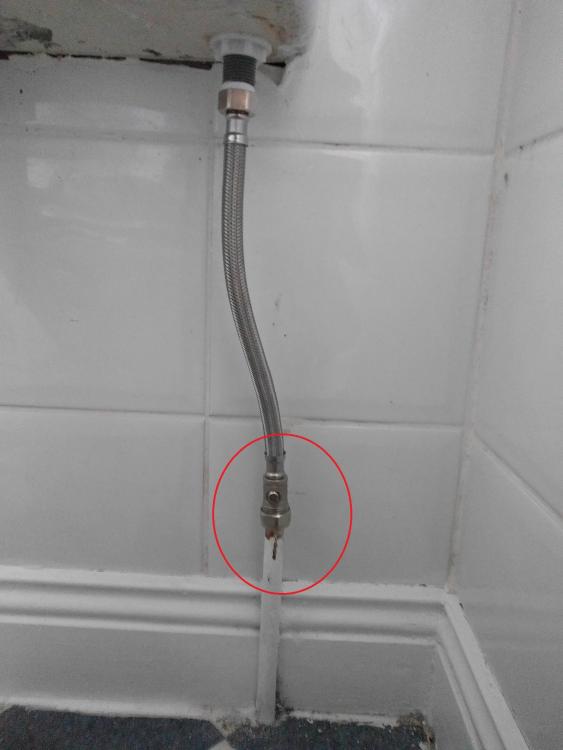
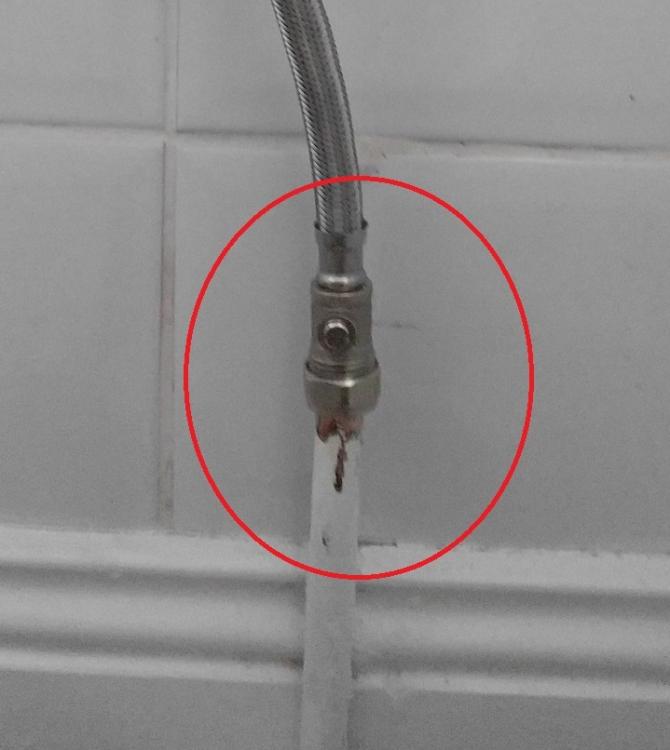
-
Cheers - I actually used a lot of premade Polyfila smoothover after trying my hand at wet plastering and not really getting to grips with it. I've a similar job on a bigger scale on the living room later this year!
-
Thanks Folks, Just finished off the wooden floor and the room is done, a first for me!! Appreciate the advice! (Sealed & Painted)
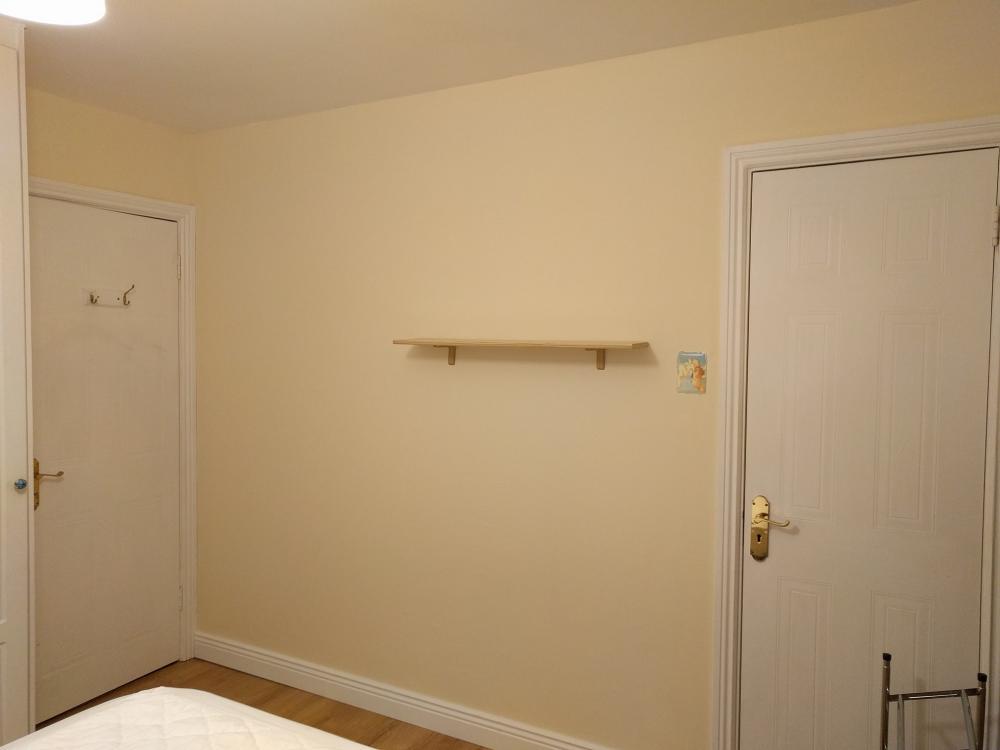
-
Hi, You could just ask the sparks to run the cable and you can do the termination yourself later? Just decide on the number of points, where you need them and where you will aggregate them (Internet router, media center etc). I installed 6 x CAT6a runs last month, retrofitted using fibre glass cable rod guides from the ground floor to the attic for 4 x cctv points and 2 to my bedroom. Cat6a comes in stranded or solid. I purchased solid but kinked one cable in the attic. My cable tester said it was ok but the POE CCTV camera failed to work. Had to rerun it. I'd go for stranded myself next time as it's more tolerant of kinks during handling. I assumed I could terminate the cable in CAT6a plugs but the solid core was too large, ended up buying double sockets and punching the cable into those using the colour guides they provided. Cable was around €100 for 100m and each double socket about €26 ea to give you an idea. I prefer wired internet for security and love the CCTV setup around the house. The cables can also be used once in place a number of ways: RJ11 for telephone, RJ45 for voice over ip, hdmi adapters or wire it differently to get 2 connections using 4 wires each only out of each cable (non-duplex) or as already suggested a cheap switch, like a 4 or 8 way power adapter if the traffic won't overload things. Wireless is still a good solution but generally the ISP's wireless is crap and you're better off replacing/supplementing their wireless with a dedicated device that has lots of aerials! All in all, it's certainly a job you could take on but better to do it before second fix or it can get messy pushing the wires around! Youtube has lots of videos on this and getting wires around stud walls etc.
-
What, the noise of wailing women has disappeared?!! I missed this!! I've chosen an Architect who is a passive house certificate designer and has a good track record in Ireland so I'm already paying a premium for that but at least it's a fixed €€ and not a %%. That said I doubt I'll ever go for full passive certification. There's no price premium for it if you sell, not even for the fact that it's a passive house or the comfort levels it provides in todays' market. I wonder if you can get the plaque on ebay?!
-
Hi, I went downstairs last night just before going asleep and noticed a damp patch on the kitchen ceiling. I got on a chair and it was definitely wet and covered a a few m2 area. Water was bubbling the paint on one of the walls. I turned off the mains and headed upstairs to figure out what was wrong. The area under the master bathroom toilet cistern was wet. I opened the lid and saw the water level was higher than normal. Not so high as to flood out of the top of the cistern but it was over the height of an overflow pipe. The pipe was "crimped" at the top but when I checked the exit point there was nothing plugged into it! So it just drained all over the floor of the bathroom. I've been living here for years but never realized this was put there by the builder decades ago until now. The reason the water level rose more than normal is that the ball cock was loose and allowed water reach a higher level than usual before it cut off. I've strapped the ball cock in a closed position and I'm planning to replace all 3 sets in the house (9l cisterns) with a more suitable dual flush alternative. This is the only cistern with an overflow, albeit one not going anywhere....! So, What's the best way to deal with this overflow pipe? Cap it top and bottom, remove or just plug the outlet where it exits below the cistern? Finally, any advice re: water damage to kitchen ceiling and wall? Do I let it dry out or at what point do you pull things down and re-plaster? I've downlighters so I'll need to isolate them until things dry out. Thanks
-
self build mortgage Mortgage Timing
mike2016 replied to Highland Newbie's topic in Self Build Mortgages
That would normally be an architect - signs a form from the bank and sends it in. The bank then pays out the associated installment. There may be other professionals allowed sign the form but check your local Regs for that. All those Professional Fees add up! -
self build mortgage Mortgage Timing
mike2016 replied to Highland Newbie's topic in Self Build Mortgages
Hi, You can use the value of the plot / and or savings as the deposit for the mortgage as I understand it. The mortgage application paperwork shows the stage payments and what is included - they are mostly paid in arrears. You will be expected to pay the first set of bills with your own funds / deposit and then start drawing down on the bank's funds. You starting paying % on the amount drawn down. Once the final stage is completed you convert to the fixed rate or variable rate negotiated. So, unless you need to draw on funds to get the initial foundations completed, you should be mortgage free until the spring but you should carefully plan your cashflow and ensure the builder and large ticket items like window deposits are catered for. Are you clear who will be signing off each stage as complete? There are some nicer mortgages which pay in advance (There are none where I'm based!). I've just been approved for a standard mortgage and the process was quick enough but the life insurance took a while to organize, medicals etc. If you have all your paperwork in order get it in now, the decision normally stands for 6 months and can be extended with some newer bank statements / payslips etc. You just need clear costings breaking down each stage. A quantity surveyor can help with this, lots of PC Sums as they call estimates for certain areas like Kitchen's and Bathrooms. Best of luck! -
Best of luck! I'm 2 years out from my build but hope it's an MBC one too. Looking forward to the pics and hollywood handprints in your floor slab!! Find a red robe and wander onto the slab when it's done to do a floor blessing ceremony while chanting to really raise their eyebrows! Don't forget lots and lots of biccy's!
-
Hi, I want to remove all wallpaper from the house and replace with paint. Unfortunately after stripping one of the bedroom walls I found out that the original builders just slapped wallpaper directly onto the plasterboard without a skim first. The wallpaper was subsequently removed in later years and replaced with newer wallpaper. What I'm finding is that after using a steamer the backing of one of the wallpapers is still present. If I damp an area with warm water and try scrapping the backing away I end up removing the plasterboard lining (circled). I've started so I may as well finish but are there any good options besides getting the walls skimmed or removing all the backing/glue by hand (tortuous!)? I was thinking of a shellac based primer on top of the backing, with plasterboard tape for the seams and some polyfilla on this and any rougher areas? Thanks.
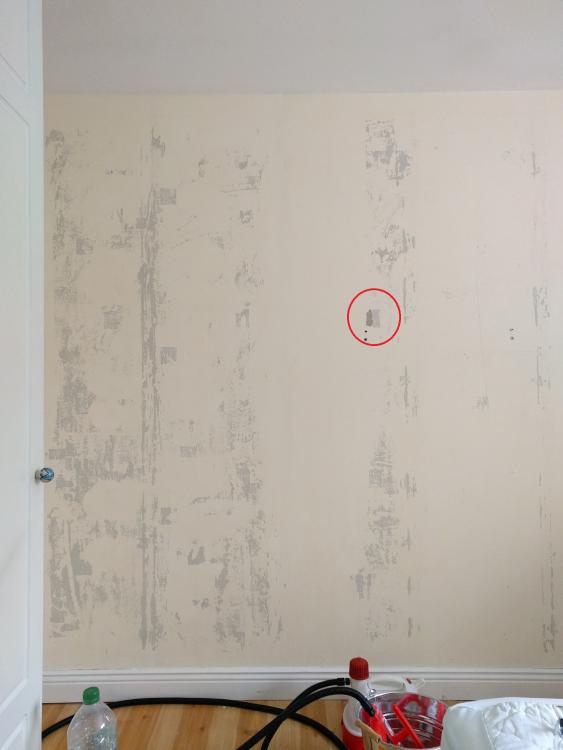
-
Thanks Folks! Think I'll poke around the shed and see if there's any leftover paint from last time and not get too carried away around specialist paints. Good enough to cover over what's there. Cheers
-
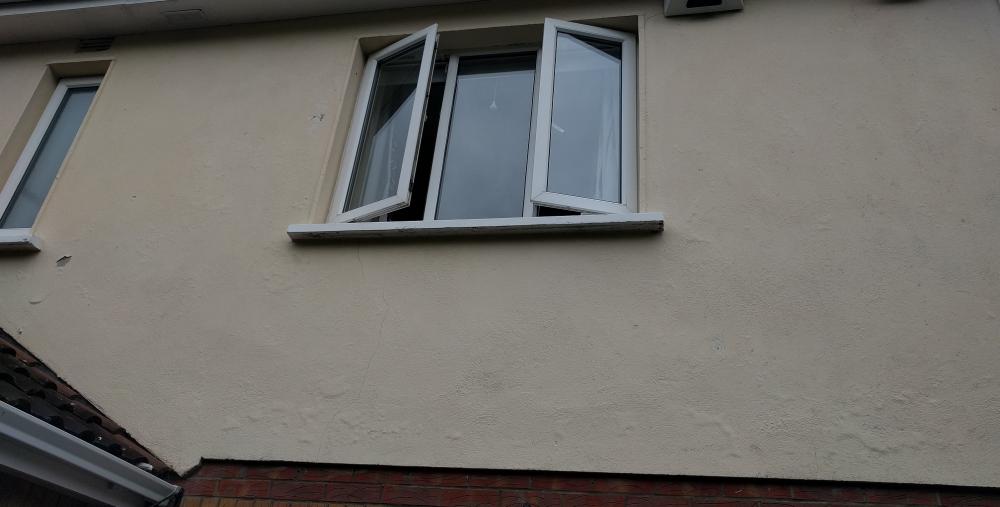
Hi, I'm looking to repaint the exterior masonry walls of my house over the summer. I'll wash down the walls, scrape away the loose paint etc and fill the cracks. After that I've found a vast range of interweb advice over which paint (& possibly primer) to use - Pliolite/Silicone/Acrylic/water based/oil etc. I don't necessarily want to seal the wall (cavity block construction) if that could prevent the wall breathing and cause moisture problems inside. What paint have you had success with and what should I aim to use in my case do you think? Thanks!
-
That will give you flashbacks in the supermarket isle in the years to come!!! Hope you added loads of brown sauce to 'em?!!
-
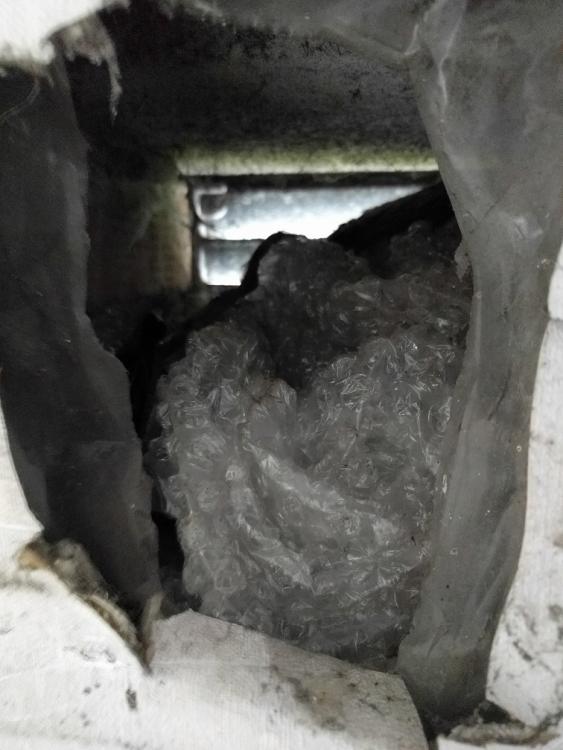
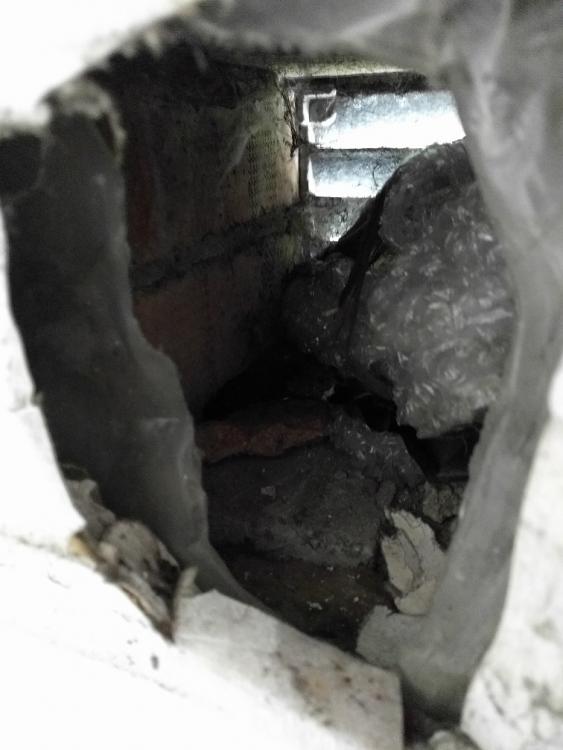
Thanks all, The house has gas fired heating and chimney with a gas fire in the living room fireplace (never used). There's no trickle vents in the windows except one at the top of the door in the living room leading to the rear garden. I'd say you're right- the bubble wrap is a previous occupants attempt at reducing the noise from a main road outside. Just all seemed a bit rough and ready when I had a look. Wondered if wavin pipe would be worth putting in the vents? Not sure about blocking it up, gets very stuffy (CO2 heads to @2,000 ppm) and with the traffic don't like leaving windows open due to noise. There are a few draughts from one or two windows mostly due to age, original PVC double glazed units. At least I didn't get any four legged occupants staring back at me when I cracked it open! oh - forgot to add - you can see the Cavity Blocks top and bottom and they are open to the vent channel......
-
Hi, Looking for advice. I'm currently living in a 20 year old semi detached house. The walls are Cavity Block with internal dry lining. I'm looking at the air vents to make sure they are open and allow air to flow. Two immediate issues found were: One upstairs bedroom has an air vent visible on the outside but there is a fitted wardrobe right up against where you would expect to see the grill inside! The living room has two external air vents but only one appears inside. The other has slight discoloration on the wall where you would expect to see the grill. I decided to look behind the air grill in my bedroom and found it partially blocked (See Pics). It has brick lining to either side and the cavity block structure above and below. As I sleep here this is the most important one for me to solve - how should the inside of the air vent be correctly lined as it looks like a bodge job currently? Would any change impact the cavity wall's need to breathe? I hope to fix my bedroom up properly first, then do the same for any others that are in a similar state before figuring out what to do for the first two I mentioned earlier. What was the builder trying to do with the bubble wrap anyway?!! Any advice appreciated & Thanks.
-
Simplistic answer but would a coupler of smaller cheaper pipes work better at flood levels rather than 1 or two expensive larger ones? You could offer a % £ contribution but that might lead to some legal muddlement but if it gets the right solution in place....? Would a pump to force higher levels of water through upset the person at the far side? Is there anywhere further up the source where excess could be diverted when over a threshold?
-
Hi, I'm thinking forward to what type of Electrical connection to apply for down the road if my self build commences. The Electrical Board in Ireland offer 12kVA for Standard Domestic and 16kVA for larger Domestic houses or ones with Heat Pumps. The reason I'm thinking of a larger supply like Three Phase is primarily for future proofing should I get an Electric Car. I would also get Night Rate Electricity so the price of charging overnight is less. if I could afford it a battery like a Tesla Powerwall 2/3 so I can offset the dearer daytime electricity would be ideal. Anyway, with three phase I could get 20kVA or 29kVA & fast charging for newer cars with their increasingly larger capacity batteries. My work travels all over the place, it's not a fixed point to point. Knowing I can fully charge at home overnight and top up in transit offsets the risk the destination has no charging facility. So, what do people have in their homes currently and is three phase the way to go or overkill? There's not that much extra cost for a new connection I've found but the site is in an existing housing estate so it may not be possible to supply the necessary current without a lot of digging (worst case)....I'd still like to know if it would be worth the trouble. There's no change to standard domestic appliances I'd assume, just a different meter/fuseboard? I would get something like a pod-point S22 capable of using the additional capacity. I'd still like to get some solar PV going but have limited roof / garden space in the design.... Anyway, any thoughts on Three Phase for EV Charging or other benefits of having it welcome.....Thanks!
-
Nice alternative, I'm taking a break from grass for a while I think - fed up cutting it all the time. Cheers though and thanks for the info on the rubber gaiter.
-
The Rain in the Lane, Is caused mainly by the Drain? Sorry.....probably low on coffee here...!!
-
Thanks for the news on the gutters, makes sense when you say it, just different from normal houses I'm used to! I've seen pictures of those Aquacell crates used in car parks etc, didn't know they were used in Domestic installations! Is this all the way around the house, or just the driveway? Surprised they are below the level of your foundations, but then I've not seen a build close up yet......Cheers!
-
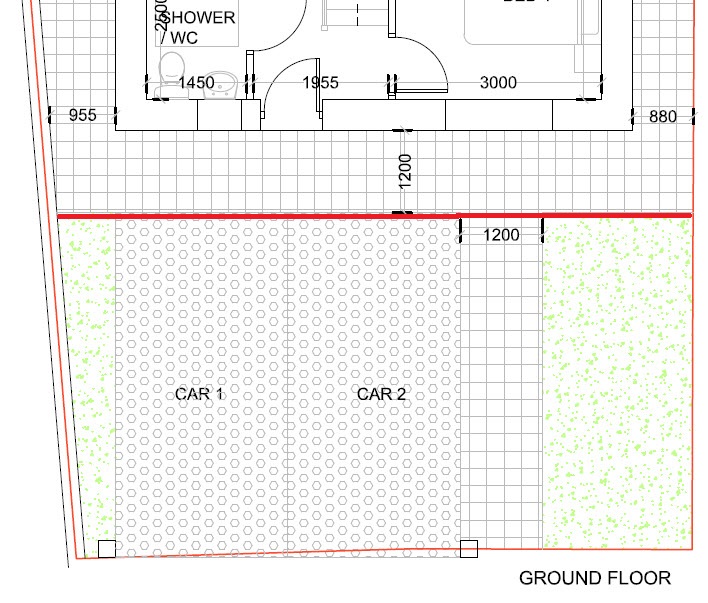
Hi, I've looking at the design of a driveway in a new build. The size is 6 meters deep from the street to the front of the house and 8-9 meters wide. There is a slight slope down from the street level to the front of the house. I'm planning on diverting the house gutter downpipes to an underground rainwater tank at the rear of the house. There are just two things I need advice on if someone can help me: How to ensure run off from washing a car, or any fuel/oil leak doesn't go down the downpipe drain mentioned earlier? Use of permeable paving - is the driveway too close to the house so using this would create a risk to the foundations? I'm guessing I need a separate channel (possibly where I've marked in RED) to capture any run off from the driveway and divert that directly into the storm drain, otherwise I'm risking mixing fuel/oil/detergents getting into the rainwater storage tanks. I'm keen on permeable paving but from what I've read they don't recommend it close to a house. I'm doubtful if 1.2 meters is sufficient (The wheelchair access area around the two spaces below). I'd need to understand where the water goes once it soaks through the permeable driveway aggregate so it's channeled to the storm drain correctly. I can always do a concrete driveway and build a channel into it to capture runoff but wonder about other options.....? Thanks!
-
Automist Fire Suppressor
mike2016 replied to Ferdinand's topic in General Self Build & DIY Discussion
There was a northern ireland based company doing watermist who estimated @ £3K in late 2015, but when I went to meet them at an exhibition late last year they never turned up to it or returned any phonecalls.....! I've kept a link to the following article as it appeared to offer an alternative who would travel to ireland if I could afford it, more expensive however: http://www.cjwalsh.ie/tag/water-mist-system-or-a-sprinkler-system/ This is the company that the link in the article now redirects to: http://www.orangefiregroup.co.uk/low-pressure-water-aqua-mist-fire-suppression-system.html No affiliation and I've never talked to them as I doubt I can afford to incorporate it without loosing my roof....water of a different kind would be my problem then! I've done a good bit of searching but in Ireland anyway, they are all targeting commercial and cost 5 figures + I suppose if it became law like in Wales for domestic new builds there would be lots of suppliers and costs would be more competitive. I'm just going to have to stick with my 30 minute fire protection plasterboard etc where I can.....and gloop watergel on all my internal surfaces.... Update: added Wales into my searches as there are several companies operating in this area there, one covers the whole of the UK: http://www.imist.net Might be worth checking out! -
Certainly worth reconsidering, easier to change lines on a page! The original Architect worked up a design along those lines but we parted ways and it felt a bit too much like a goldfish bowl? I've a cut through to an adjacent housing estate right outside the front so there's a lot of foot traffic. When I'm working from home I'll be upstairs in the "office" but want to retreat to the back of the house at other times. We've allowed some light via Skylights and an interior window at the top of the stairs. I'm thinking about another window on the right hand wall of the open plan area to catch the morning sun but being honest it is marginal vs the layout you've suggested which would be better for natural light. Something to think on!
-
I got the notion last week to start up a Blog on buildhub after enjoying the advice and knowledge everyone had contributed over the past year (or part thereof) since it launched. I've been on a journey to finding my own home for about two years after renting for the last 20. I thought I'd summarize where I'm at and how I got here to help others hovering around the same place and to spur them onwards to achieving their great dream too! So, where am I exactly? I've completed Stage 1 - I've a developed sketch, floor plan and it's been submitted to pre-planning who are happy with the design. I'm currently working on securing a contract on the land subject to planning permission before Stage 2 which is applying for same. Sounds easy when I put it like that! It wasn't but I've arrived at a place where I can visualize the spaces and have more meaningful conversations as I figure out answers to the multitude of questions that go though my head. I've found some great resources (not least this website!) - The Housebuilder's Bible & The Sustainable builders bible to name but a few. I've been in Dublin, Cork, Belfast, London & Frankfurt at exhibitions around renovating, housebuilding and lighting to speak to experts and get an idea of what's out there. Hard to believe that two years ago I thought all houses were built "more or less" the same. Then I discovered Passive Houses through a customer and my world was tilted - it's never been the same since! I used to ignore places like Screwfix, Wickes etc as when renting there's not much you can do to a house, the investment is lost the minute you move out. But now I'm taking a wander around and weighing up different kitchens, bathroom fixtures (my jaw dropping at some of the prices!) and figuring out what I actually like. Working with the Architects who developed the sketches I'm displaying here was interesting in itself. They have a very good track record on Passive Houses in Ireland, one of the main drivers behind my build. My budget is tight however so a 89 square meter two bedroom house is what we're aiming for. I got the Quantity Surveyor costings recently and we're just inside the budget I'd set so I'm happy so far. There's still a LOT that can go wrong of course but one step at a time....! The front of the house is facing just off south, 220 degrees or so therefore the open plan back of the house is going to be darker and colder. We've still to get DEAP/BER/PHPP done which will probably drive some changes but I love the vaulted ceiling idea in the quieter rear living space and will be interested to see how things progress in 2017. I don't know where I'll be in a year, if I can secure that land contract then off to Planning Permission I go. As I've said to many people I'll keep ploughing ahead until someone says no....! I'd say I've spent about 10K so far on the Architects, Surveyor, QS, attending exhibitions etc but the expertise I've connected with has turned my dream into something with potential that shows. I'm tempted to run ahead and get more done without the land contract in my hand so I can submit planning sooner but with Christmas around the corner, I think it's time to back off, relax and little and take a breath. I've enjoyed reading the other blogs when they reach that build stage, where dreams meet reality. May I one day be able to contribute my own story into that Library..... Mike





