markc
-
Posts
3826 -
Joined
-
Last visited
-
Days Won
22
Everything posted by markc
-
 Yes it’s possible, find a good local joinery shop or you will need to make a template for them to make a new door and frame to fit the arch.
 -
I was trying to work out why the need for 300mm for a flashing?
-
Feedback re workmanship on new roof
markc replied to Manchester123's topic in Roofing, Tiling & Slating
Everything can be fixed, but did you ask for the roof to be levelled when asking for a quote? A strip and replace is very different from strip and replace writhing tolerance “xyz” etc. from the pic it looks like a 60’s or 70’s building so the finished job is pretty straight. -
Good morning and welcome
-
Preventing water running off side of slab and being trapped
markc replied to maxdavie's topic in Timber Frame
I must be missing something here, it usually rains during construction and it’s not a problem, if you pull a dpm up with water inside them you are creating a dam which will prevent water draining away -
Good afternoon and welcome, 30 yrs! Wow, now that’s a marathon renovation.
-
To watertight only, or go all the way?
markc replied to Mr Blobby's topic in Project & Site Management
Crane doesn’t have to be mega bucks but can be. what do you need to lift and to where? Roof trusses, ridge beams etc. are all fairly light but bulky, a mini crane or spider platform with winch will do them easily. if it’s bricks and blocks these could be put around the back before access is prevented. A little ingenuity and forward planning can save a lot of money, hard work and stress -
Not possible without a lot of complex joinery to form a rebate/frame around the arch, you could then add foam draught excluder and a brush strip along the bottom.
-
Sorry folks, I really must read a thread before commenting, I saw this and thought it was a poured concrete retaining wall, looking back I now see it’s a block wall and giving way in a number of places. Forget paint or slips, as others have said, good clean and tidy up or you are looking at pulling it out and replacing altogether
-
Whenever I want a frameless glass door or screen I go for 10mm minimum
-
It’s either plain water or water and a bit of PVA. Not for strengthening, stops dry surface sucking moisture out of the mortar
-
Good clean to get good adhesion and paint will stay on for a lot of years, also easy to freshen up with a re coat. Whatever you use will collect dirt because of location
-
Pressure washer, hosepipe ban? masonry paint for a white or coloured finish?
-
Problem with going with off the shelf window and door frame dimensions is the glass door, it’s size and thickness makes a massive difference to the bending moment on the frame, also which side it is hinged on. Happy to give frame section suggestions once you know the door size and weight. for instance, the door I mentioned earlier weights around 90 kgs, much more than a fire door
-
Still individual panes fitted into the frame,
-
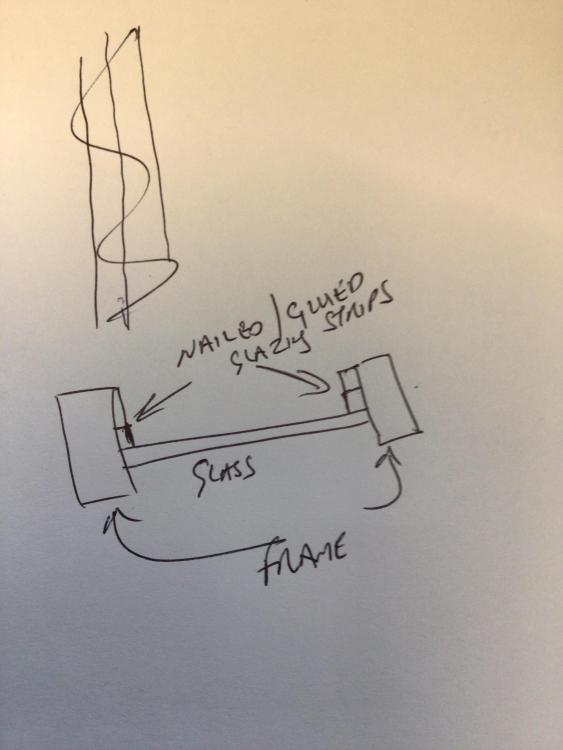
No need for rebates unless you are a skilled joiner/cabinet maker, simple frame with halving joints at intersections, add glazing strips afterwards. Glass is going to be the expensive part as it needs to be toughened. Glass doors can be bought online, ladt one I did I ordered off eBay or glassandstainless.com actually I have a 10mm thick toughened door at home (Barnsley)
-
Got to agree with you
-
UFH temp is low so engineered wood is no problem at all (temperature used to cure the glue during manufacture will be way above floor temp)
-
I would glue only, screws are leak and leach points. solvent based contact adhesive .. Screwfix no nonsense is exactly to same as bostik
-
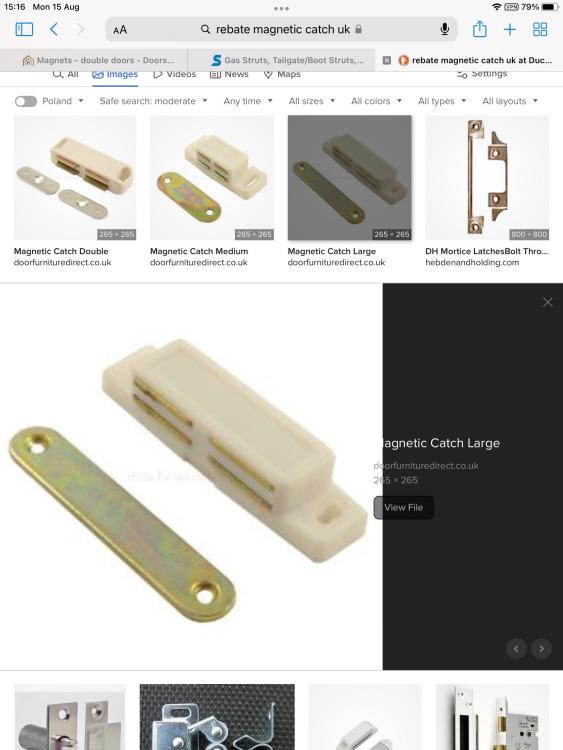
A few possibilities available, main point is very well fitted hinges so the doors have no spring in them. this allows small magnetic catches to be used that can be hidden in the rebate/stopper. Easier if frames are not rebated so you can add the stop after fitting doors and catches
-
As it’s a lean to then there are no ridge beams required and I would want a lot of glass so i would go Larson truss side walls for ease of insulation and services, ledger fixed to existing wall with timber I beam rafters, a couple of big roof lights and a eaves beam over the full width sliding doors
-
I’m guessing internal? Do the doors swing both ways? (I’m going to regret wording that … que posts from certain members) what are doors and frames made of?
-
Anyone else completely lost on this thread?
-
Protective Multiple Earthing
-
Sounds very like us, we don’t advertise, we dont cold call, we dont follow up or chase anyone. I’m technical Director and have often been referred to as the Sales Avoidance Officer but our customers respect an honest opinion.