Carrerahill
-
Posts
2132 -
Joined
-
Last visited
-
Days Won
10
Everything posted by Carrerahill
-
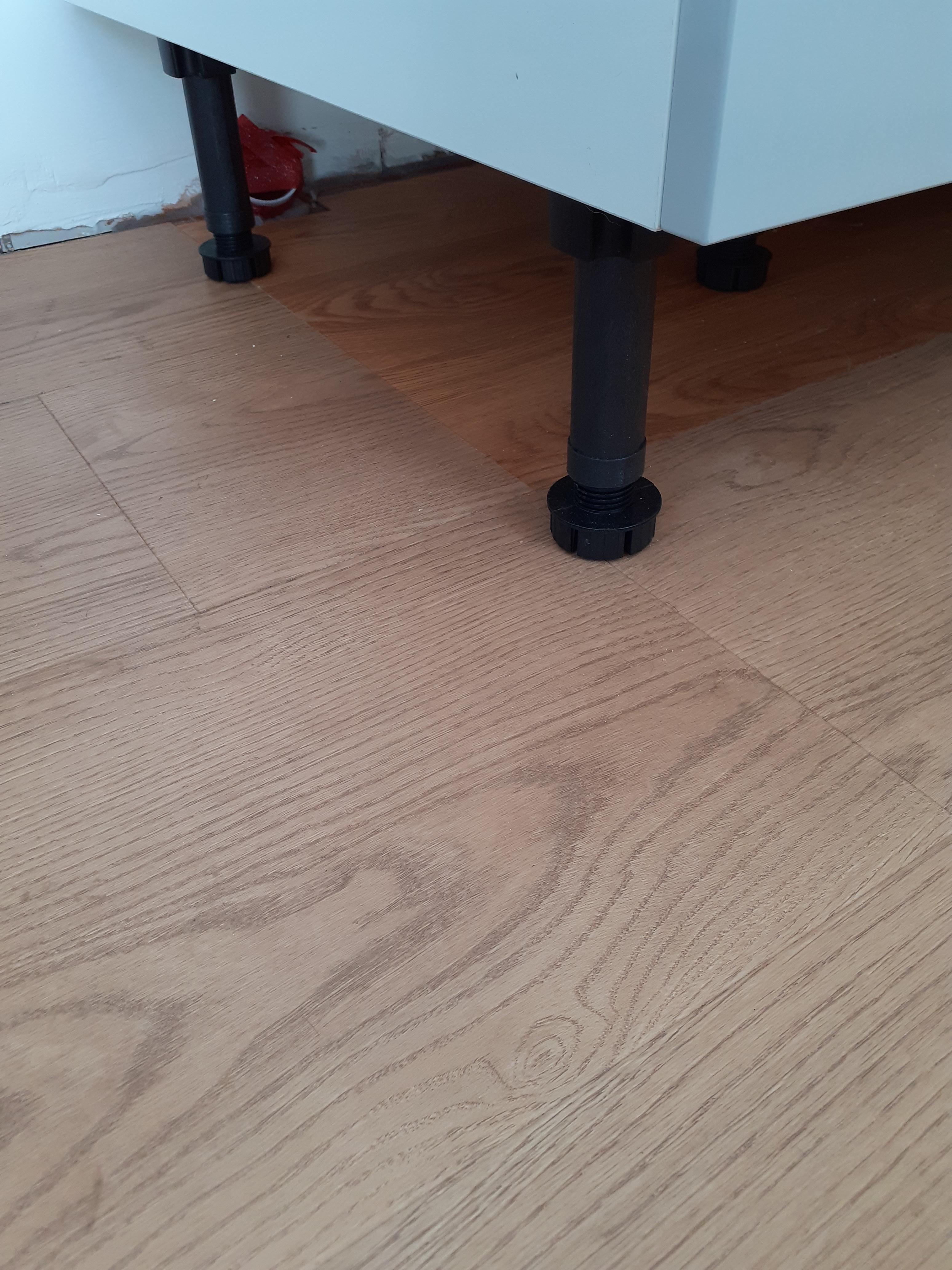
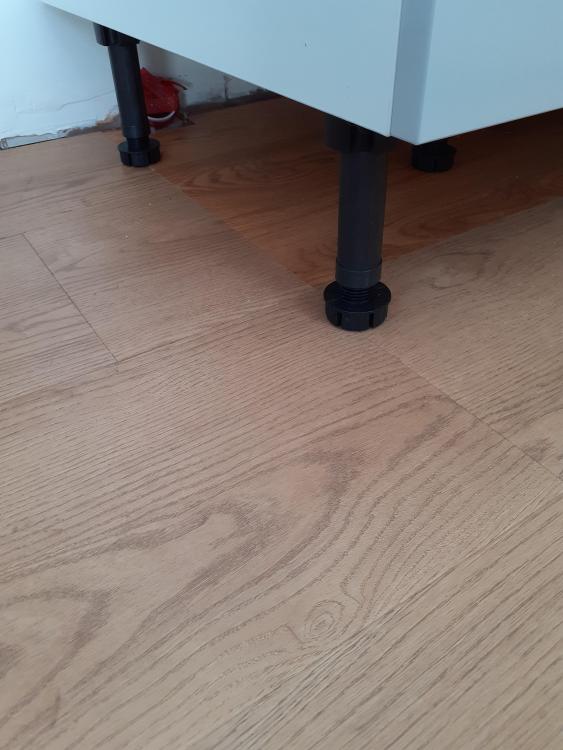
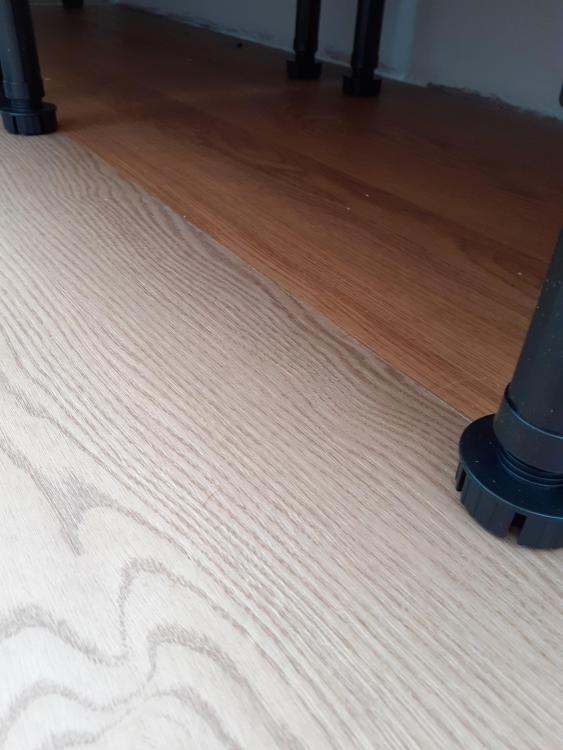
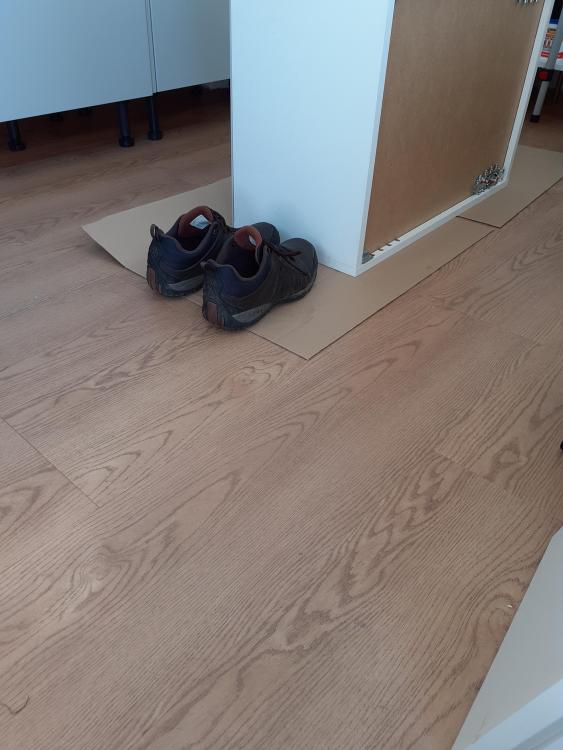
@SuperJohnG thanks for the reminder, sort of forgot about this post. Here are some photos, you can see where I went from the Amtico to the Vusta stuff for under cabinets, I am glad that I did it this way.
-
Planning requirement for 1.8M panelled fence?
Carrerahill replied to Topic63's topic in Introduce Yourself
How do the council even know about it? Are your neighbours on the other side and possibly beyond them happy with it? Is it a shared fence between you and neighbour? If so are they paying for 1/2 or are they at least being consulted? If so and everyone is happy then build it. I have a 2.2m fence behind my garage, neighbour and I wanted it, we built it. Council would only ever see this fence if they were behind my garage on in neighbours garden and even then they would have to notice it, take offence and do something about it. I think all to often people give planning the option to comment where frankly they can get knotted. I do no condone upsetting people, putting up buildings, sheds etc. decking or fences that are going to upset or cause issue but if all parties impacted agree and there is no issue I see no reason why planning would be involved. -
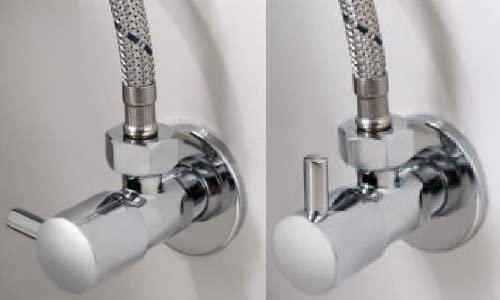
I watch an American plumbers YouTube channel, and the same as on the continent I see a lot of nice little wall mounted chome isolator taps that the flexi's come from and go into appliances, taps etc. Things like this: That is listed as a designer isolating valve, on Amazon, king of the cheap import tat (2 people have commented that they "exploded" and flooded properties - I could have told you that simply by the listing and the lack of decent info!), I am not filled with confidence, I want quality, Pegler, Hep, JG etc. at least WRAS approved stuff, I won't even buy the unbranded isolators from Screwfix, for the sake of a few £'s I want the recognised brands. I just feel that when mains water is involved you want to know it will stay in there, you wouldn't buy unbranded electrical kit so I think plumbing is the same. So, these sort of valves are not really done in the UK, we don't really go in for this look it seems which is a shame as I think it is a nice neat option and works well. So has anyone found good little isolators like this?
-
Connect a drain pipe into my house sewer pipe
Carrerahill replied to Jojo's topic in Waste & Sewerage
It will need to be designed, approved and inspected. You will need an inspection chamber as you cannot have a corner or T underground without access. It is all doable though. Assuming the connection is on your land, personally, if it was me, and I am not proposing you do this this, I am just telling you what I would do, is work it all out (I am in consultant engineering and have access to civil engineers and specifically a water engineer!) get a good design put together and implement it - I'd do it to the highest standards and photograph it all. I would then forget all about it and let it do its job. -
At the stage where I will be thinking about taps, I was just going to go for a bog standard kitchen tap, but a boiling (near boiling) water tap has been on my mind. I work from home, I drink a lot of tea and I cook a lot so I use a lot of boiling water I'd say. I have some questions if you could collectively answer that would be great. Running costs what are they really like? I assume if you go on holiday you switch it off, how long does it take to heat up the tank if you have switched it off? Does it require only a cold feed? If I wanted to run the tap warm to wash my hands does it generate it's own warm water? This would be good for us as our boiler is some distance away (although I will shorten the pipe runs when the ceiling comes down in the old kitchen) so instant warm water. Apart from Quooker are there other decent brands to consider? Zip seem to appear a lot in commercial spaces.
-
For my garage I just let the concrete boys float it with big blue, left it like that till the bleed water disappeared and I put a very fine broom finish on it with a 3' soft bristle broom, it was pitch black when I did this so I am glad I didn't attempt to float it or I would have been working by headlights! I am happy with it. I the float finished the edges at the door. How smooth do you want it and do you have a reason for it being smooth? A fine broom finish is pretty smooth really. You could always just let him float it with big blue then let the bleed water go then get out there on boards and hand trowel it smooth if that's what you want. The guy isn't going to care, he just wants to do the simple option, I can't see him taking offence that you want to take your floor to the next level.
-
I'd crack on as you are and at the end of the build when your snagging you can decide if you want covers made up. Looks good what you have done though! When you build something yourself, you suddenly discover that every daft little issue sticks in your mind, if you had paid someone to do it, you would probably not notice most of them. I get annoyed over such silly things, 6 months later I forget or don't even notice it anymore.
-
This idea is best if possibly the most expensive, but I like it as it will create a better drip edge over the cladding rather than down the cladding.
-
Wait, possible brainwave - what about you remove that piece you have photographed, rip it full length so it is only as wide as the top section, then you could run a piece of cladding edge pieces (or make something if need be) horizontally below the sill then run some verticals below it, make it look like a feature.
-
Could you for example put a slight bevel on the top edge along all the pieces so it looks right, and then a little grey silicon and some touch-up paint on it? Alternatively can you adjust anything to get the cladding closer into the wall?
-
Do you have touch-up paint for the cladding?
-
Nozzle size, have you checked that? My brother invested about £400 in some all singing all dancing Wagner (that I am due to borrow soon) and I think it nearly ended up in the skip several times over, after months of literally detesting it, but using it as he felt the price was too high to ignore it he discovered (via mainly North American sites) that the nozzles he had with it were not ever going to work correctly for his paint. He got a new nozzle to suit emulsion he wanted to spray and the next thing I hear from him is that the Wagner is the best thing since sliced bread. So now he has worked it all out I am looking forward to a shot!
-
Change: Electric Shower Feed to Attic Radial Circuit
Carrerahill replied to mike2016's topic in Power Circuits
10A would do you!! I'd just go for a 20A MCB, 6mm radial up to a suitable junction box, 2.5mm out and then create a ring or radial. It is certainly future proofed! -
Change: Electric Shower Feed to Attic Radial Circuit
Carrerahill replied to mike2016's topic in Power Circuits
You have a couple of options, 2.5mm would really need a breaker of 20A - you could go 32A and use 4mm cable (clipped direct) if you think your loads are likely to exceed this, however unless your planning some heavy duty electric loads up there I suspect you will be fine with 20A. My whole ground floor main ring is 20A (no idea why it was put onto a 20A) and I have never had an issue. Also note, that just because you exceed 20A you won't automatically trip a 20A breaker. Over current protection at this level is about heat generated in cables, 6242Y cable (twin and earth) has a max operating temp of 70° - so let's say you load up the circuit a bit and it sits at 45°C - that is fine, the the breaker is designed to permit this, this is thermal overload protection, so it is actually perfectly acceptable to, for example, load a 20A breaker at 25A for a period and nothing will happen. The thermal protection of a B curve breaker is that at 1.25 x the rated current it will take about 15 minutes to trip, 22A for about an hour and a half etc. -
This gives me hope. All I need is a builders bag of all in one!
-
Hmm, what to get on with…?
Carrerahill replied to Dreadnaught's topic in General Construction Issues
Doing this tonight! -
Hmm, what to get on with…?
Carrerahill replied to Dreadnaught's topic in General Construction Issues
This was me on Sunday trying to level the kitchen cabinets! I used the 1800mm level to level up 3 units together, that suggested it was about level, decided to fire up the Bosch laser level and ping out a horizontal line to skim the top edge of the units, my thinking is if it is literally just on the face and skimming over the top literally showing dust sitting on the top of the uprights and brace pieces that will let me check the whole unit and not just the front face, the level would suggest the 1800mm level was about 4mm out. Hmm. -
This is pretty much the make-up I used, only difference being I used ridged 100mm insulation within the 2x6's. As you say it leaves a decent service void. 2x8 blocking was added where I felt necessary to allow simple fixing of things to the walls and to give a more solid feel at various sections of the wall such as near doors which may result in the wall getting a thud.
-
Matchstick wood is used by the production builders these days but doesn't make it good or right. I'd push, if this is your build and maybe your forever home I'd think about it. See what others on here think.
-
I'd say there are fairly few drawbacks to a 400mm centres stud work concerning the end result, the issues are probably more for likes of insulating, depending on how they are going to insulate it will mean more pieces and more cutting, something I would have not enjoyed when it was the PIR insulation. There will be a slightly reduced thermal efficiency as you noted but this will no doubt be mitigated. I personally went for 145x45mm (2x6) for my TF, I went for 600mm centres but placed noggins and blocking at key locations to give a more solid feel and to help with attaching things to walls like TV's and kitchen cabinets and hooks and pictures and shelves all sorts. 140x38 CLS does seem a bit less sturdy than a proper 2x6 so could be why he wanted the 400mm c/c.
-
Exactly my thoughts. The OP is now into the realms of a substantial sub-mains here, something that shouldn't really be thrown together, this needs careful consideration and design before implementation.
-
Freestanding metal sink: recommendations?
Carrerahill replied to ToughButterCup's topic in General Plumbing
https://adexa.co.uk/Commercial-Sink-Stainless-steel-1-bowl-Splashback-600mm-Depth-600mm-Adexa-ST145A?language=en¤cy=GBP&gclid=CjwKCAjwpqv0BRABEiwA-TySwSTa-z1HW9IZ-y5LqO9z0rWh5nvAAYcB3n3gc_8MbeIiAL4dib-wBxoC6-AQAvD_BwE -
Internal waste fittings: push or solvent weld
Carrerahill replied to ToughButterCup's topic in General Plumbing
I love solvent weld, I use it for most waste runs and use a compression where I need to have the ability separate something or may need into it. You cannot mix solvent and push-fit without the adaptor pieces or a compression fitting. I did a lot of push-fit waste years ago and compared to solvent weld it feels a bit inferior. I always put in screw in blanking ends too - T here and there with a plug seems like a good idea for getting in in the future for blockages, I also always try and engineer enough pipe between tight joints so that if needed, I can cut it off hard up against the fitting I am removing and still have enough of a stub of pipe left I can weld another union on. -
Small galv nails are specifically sold for this. They need to be corrosion resistant, technically plasterboard screws would work but the heads need to be burried deep enough they don't cause issues with the plastering but without breaking the bead.
-
Just checking...