


Gus Potter
-
Posts
2388 -
Joined
-
Last visited
-
Days Won
34
Everything posted by Gus Potter
-
Never fitted them on my own house for the following: They start off working great. But. 1/ The kids get lego in them. 2/ They are manky as you can't get into hoover out the track. 3/ You have a thick wall. 4/ We don't live in Japan so the while they may look great in isolation? 5/ What will happen if you are the one who gets a duff set of bearings.. what is you strategy for fixing the running mechanism.
-
Reuse ICF EPS for cold roof insulation
Gus Potter replied to Dunmow's topic in Roofing, Tiling & Slating
If you have a lot then you could flog them. Neat SE / geotechnic trick is to use EPS blocks outside a retaining wall. This reduces the earth pressure on the wall in cases and can result in significant savings. It's a long storey but if there is any interest? -
Another boiler size question
Gus Potter replied to Barryscotland's topic in Boilers & Hot Water Tanks
Barry.. I bet you that at some point 20 C is not going to cut the mustard! Anyway before you set your hat on 20 deg C check what you need to do to comply with the Building Standards. Cut yourself some slack and make sure you can heat the house up from time to time above what you may want on a day to day basis. Also remeber that is is no fun feeling unwell and you can't just heat the house up.. see man flu.. horrible. You are going to spend all this money.. have a fab kitchen.. other stuff no one else has.. why, when it gets really cold here in Scotland (-20 deg C yes happened in Lanarkshire not just up North) not have a bit of spare capacity to keep you all warm. That is the great thing about Scotland is that it can get really cold and that is when you can come back into your castle and think.. did we not do well! -
Another boiler size question
Gus Potter replied to Barryscotland's topic in Boilers & Hot Water Tanks
Nick Thank you for you posts.. learn something new all the time. I posted this a while ago but I made a DIY temporary UF manifold.. it's working great although I had a pro plumber to do the boiler as I was out of my depth with the gas. I've not touched it since getting it working about a year ago.. few controls.. just shows you how simple a UF heating system can be.. and cheep to maintain. Less valves, electronics.. it's good cost effective engineering. If you are not bald with the above have a look below. xxx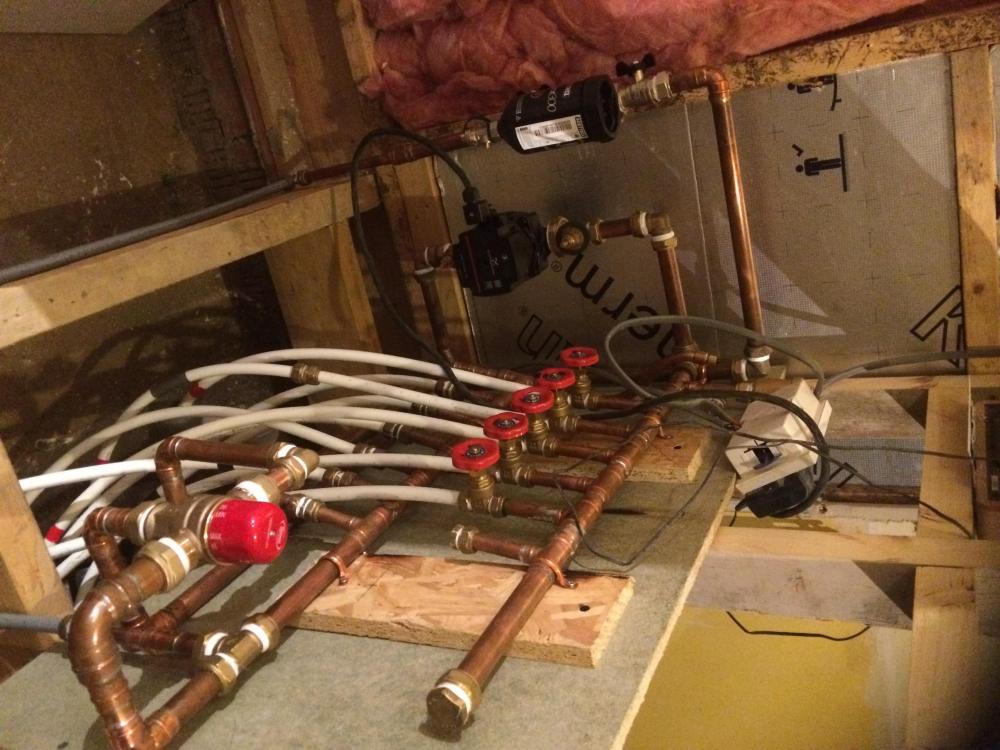
-
Another boiler size question
Gus Potter replied to Barryscotland's topic in Boilers & Hot Water Tanks
Ah.. then if it's a new build then it probably will be ticking over. A few personal thoughts.. Now one decision I made was to say to my self.. hey look Gus.. do your best to get the place well insulated. That cuts down the normal Monday to Friday running costs. But the whole point of putting in this work is to create a place we can enjoy not just during the week but at the weekends. It's also important for kids.. they need to be able to feel that a house gets warm and cold from time to time.. how are they going to cope when the go away with the school.. or move later to a flat where they have a more testing environment ? I'm Scottish based so we like to party.. we have a big piece of glazing we can open to the outside elements. We also have a front door that gets's opened and shut as folk come and go. We like to have a few fags when we party.. so the windows are open too! We cook and eat stinky food! Now a heating system that can't be cranked up is not for us.. I'm a designer and while I talk to Clients about energy performance the best designers dig deep and explore how their Clients want to actually live and if they want to be able to show off their new home... have a party / dinner and folk are warm. Once you start digging then folk are not so keen.. when you say.. hey every one will have to wear long johns by the way if the want a fag and open the windows.. or if you have cooked some thing stinky.. or have say Stinking Bishop cheese which I like.. but few do. Another point is that my Mum is 93 years old. She does not appreciate a fancy heating system if she can't come to visit and the place is not a good 24 -26 degrees. Barry have a look at how you really want to live and take it from there.. you can still do great stuff that will give you a cracking house. -
Another boiler size question
Gus Potter replied to Barryscotland's topic in Boilers & Hot Water Tanks
That's a good start Barry. As an aside I have a 1955 -1960 ex council house that I have.. been experimenting with, some regrets a times, on the other hand some parts are working out well. It has a mixture now of underfloor heating and radiators. New gas condensing boiler but just popped my head outside to see a huge plume of steam.. so maybe not condensing that well but the gas bills seem to be going down. We are still living in a building site but still happy. You starting point here is to see how well you can insulate the existing bungalow. You could look at external wall insulation, I'm not a great fan of filling cavity masonry walls as often with ex council houses say you have .. yes timber wall plates bedded in load bearing masonry.. they are only 3/4 of an inch thick but they are there! So you have to be really careful not to do something that causes them to rot. Next look at insulating internally. The big thing is the floors. On paper when you say go the the Kingspan U value calculator increasing the floor insulation does not appear to have as much bang for your buck as say doing the roof. But have a look at the gaps under the skirtings and around the edges of the floor boards! You'll be amazed at how much warmer you can make the place by cutting out the drafts and adding a bit of insulation to the floors. Now taking this (above) into account you are splitting hairs regarding boiler sizing. What about asking the plumbers if they can provide a boiler that modulates / can be adjusted between the two values. Do the work and insulate / make air tight carefully. Then if you feel the boiler is coming on too often and then shutting down (cycling) get the gas engineer to adjust the burner controls? -
Hello S_M Don't worry about trying to discern between the two offerings at this early stage. Just get as much info as you can. Try and get used to the jargon first, take a qualatative view. All these companies make it difficult if not impossible for you to make a direct comparison.. don't try and second guess them at this stage. Remember that the online quote systems etc are just a way to get you interested. By all means look at other things like spread sheets.. but again just learn the jargon.. dip in and out. Once you get a better feel for the terminology turn back and look at what you want to build. It it something that is say a very standard off the shelf offering.. like buying a TV or do you want tweek the design, have big glazing openings, open plan? Also, where are you in the country.. top of Scotland or in Kent?, what kind of ground are you building on, how well do you want to insulate the property? To get the best response from BH you may want to post more info..yes you need to give something to get something back. A lot of folk won't often want to share their spread sheets as they are particular to their own project.. they can be really dangerous to use on you own project which may be a diferent animal. It's all doable! Just you need to keep doing the work to make the savings. Hope this helps.
-
Also look at Peter's suggestion if you can. If you are diving by Stirling then nip into see Sterling Precast in Spingkerse Ind Est (different spelling). The factory is amazing, try and get a tour, then go for lunch. Last time I was in they were very helpful, make a good job too!
-
Another boiler size question
Gus Potter replied to Barryscotland's topic in Boilers & Hot Water Tanks
Was wondering single storey or double storey house? -
Are they decorative? Casting them yourself is an art and tricky if you don't have the right gear and curing process. The edges will tend to chip too unless you set chamfers inside the mould.. not look good. lastly you could also get salts appearing on your home made coins.. not a great look either. Can you describe what you want to do in more detail. Do you have cement bands round your windows. You can step the banding at the corners so they look like coins.. takes time to set up the beads but it can be done. It would maybe take a day per corner to set the beads. You can buy precast coins that are 120 /130 thick and you render into them but with the supply problem this may get you out a hole?
-
@canalsiderenovation Joined BH about a couple of years ago, maybe a bit less and caught the end of your project. Enjoyed reading about your journey.. even though it's a day job for me! Oh.. and the walk in stuff looks great. Delighted for you.. Enjoy your new home and well done..
-
LPA Missed Deadline on Non-Material Amendment
Gus Potter replied to harry_angel's topic in Planning Permission
I'm not an expert on English Planning as Scottish Based.. But in Scotland a domestic Planning application costs £202. What would happen if you just submitted a fresh application, take the punt and see what they do? Explain that you felt forced to submit a new application as you had no response and you felt that this was the only way to get a reasoned response to your non material amendment ( called a non material variation in Scotland). Never tried it though..just a thought. That would put them in a bind if you caveat it this way. Harry yes you can try and leveraged but if you have burnt your boats already by playing hard ball then frankly you are stuffed and need to suck it up. If you have spent a bit of time building relationships and engaged with the planners early on then it should be easy..- 17 replies
-
- 1
-

-
- planning
- planning permission
- (and 1 more)
-
"I'm female so I think this increases chances of happening as I've read so many stories about this happening!" I my career I have met an awful lot of blokes that are brain dead. They can't multi task for example. I too have the odd brain dead moment, perfecting multi tasking is a struggle as I'm a bloke so speak from experience. It's not a so much gender thing these days.. it's just a lack of understanding and pride in the job. The trick is to write down on a bit of paper the things you want to ask. No matter what stick to your guns and don't let them side track you. Stick to the list. You can just copy and print off parts of the BH posts if you can and say.. can you answer these questions. If you feel vulnerable then ask a friend to attend. But make sure you hand over the list of questions. If they refuse to accept the list then that is their issue, offer but don't force.Then if you feel that the meeting has become aggressive ask them to leave immediatly. Say to them.. I feel uncomfortable as I feel you are being aggressive so get out of my house! But don't think I'm not going to chase you for your shoddy work..as a parting shot let them know they are far from being off the hook. Do not elaborate.. let them mull it over. Don't muck about. Sometimes getting chucked out of a meeting can crystalize a builders mind.. especially bullying builders as they realize that the Client may well be holding a bigger stick than they first thought. It gives them time to reflect and from time to time they come back with their tail between their legs. They may not of course but if so better to know this now. If they don't come back then you have the option of getting a new joiner to screw up the plasterboard, they will know a plasterer probably and you will get it finsihed for xmas.
-
Hello James. Hope this helps.. it's a bit of a ramble but hopefully you can pick out bits that suits your predicament. saying that it seems you are offering an olive branch which is the right thing to do... morally and legally. Legally is the nuclear option. Although hard to do take a step back and ask yourself.. why has your neighbour felt the need to take legal advice.. it may of course not be formal advice she has sought and paid for! For example you could be a member of the NFU (Farmers Insurance) who offer a free preliminary legal advice service. Look back and think.. is this reaction from the neighbour a symptom of some thing else.. this is the key to resolving disputes like this in an amicable way. You need to look at your own behavoir.. make sure you are / have been acting reasonably while you have been living next door.. tough but..that's what you need to do. Do this and you'll then have a sound footing to progress as you'll know you are not acting unreasonably. To expand..take a step back and think.. what may we have done that has precipitated her action. After many years in the construction industry I have learnt that the best way to go forward is to take several steps back. It may well be that you are having this issue due to something that is unrelated.. that is neighbours for you but it's often the key to defusing a situation. Try and unlock this. You may need to eat some humble pie.. but in the long run that can save you a lot of stress and reduce your financial risk. In terms of you taking proactive measures to treat on your side of the fence. 1/ Question one is.. are you absolutely sure it's not dog wood? I have seen some surveys that have declared knot weed.. but it was dog wood. 2/ It's not clear who may be responsible for the source, you with your imported soil or the neighbour. I may be that you / neighbour have a bird feeder and a mallard duck has just dropped by for a free meal and had a bit of the rhizome root stuck to their feet which has come off and grown where it can. 3/ In terms of you treating it. When it come to litigation on stuff like this a court will often look at who was most proactive in attempting to resolve a situation. If you are a domestic home owner the courts cut you a lot more slack than say if you are a hard nosed developer. If you can show you have made a reasonable attempt to mitigate the intrusion then this falls in your favour. I would suggest that you write / talk to your neighbour and explain that in the best interests of both parties you are going to say spray with the weed killers that are avialable from B&Q in order to prevent the situation getting any worse. Invite her to suggest alternative measures. Acknowleged that your relationship has broken down to some extent but that in the long term you wish to live comfortably side by side in a harmoneous way. Explain that while you disagree on who is responsble it is prudent for both of you to mitigate the risk. Now it may be that your neighbour is also lurking on BH. If so the same rules apply to you! Fail to engage with James94 and you are on shaky ground!
-
How to drill holes through my external wall for the big MVHR ducts?
Gus Potter replied to Dreadnaught's topic in Timber Frame
Good spot.. learn something new here every day here! -
Vent Axia internal humidity
Gus Potter replied to Pocster's topic in Mechanical Ventilation with Heat Recovery (MVHR)
Can you not just open the window.. sleep on it and when you wake up.. bingo you'll have the solution? -
Hello TryC. It's a shame you have to post about this. To cut to the chase. No matter what folk say about dot and dabbing to hold up ceilings the bottom line is that for it all to work each layer needs to be able to carry the weight and for a ceiling not to fail due to the added vibrational effects. It is possible to dot and dab ceilings but often the ceiling is a concrete slab. It's not that common now but you you used to see it a while back. In your case it looks like the dabs are stuck to a painted ceiling.. probably emulsion paint. This is the weak spot and no supplier.. say British Gypsom is going to warranty this. From an SE point of view.. it either needs to come down or be screwed to the joists. Unless the installer has access to load tables / test information that says it's ok to stick stuff to paint! It's not going to happen.. if it does I'll donate fifty quid to BH. Once screwed it will be safe but it is probably going to crack. To stop this you'll need a good quality scrim tape of a good width, a plasterer that knows their stuff.. they may say it has to come down as I'm not putting my name to that. Sorry to upset but best be safe.
-
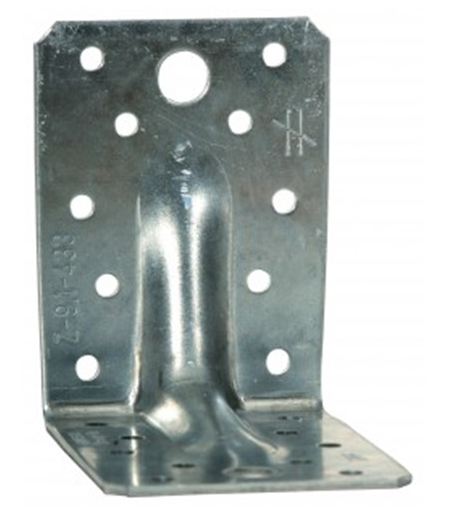
These are worth having a look at. Also Sabre fix do a similar product and a few others. Often I'll spec these on an extension where I'm using the roof to stop a long TF wall moving at the head horizontally, either outwards when you get wind suction, inwards when wind pressure and in both cases you can get quite a bit of wind uplift with a shallow pitch roof. You put one bracket each side of the rafter (still with the birds mouth to get the bearing of the timber) staggered so the nails in from each side don't clash. One good thing is that these brackets have a manufacturer declared performance to resist load in three directions. For an extension the extra cost is marginal compared with the savings you can make else where from time to time. I agree with MG about the skew nails but in this modern day an age your there are fewer joiners that actually know how to skew nail properly. Most just use the nail gun, the wrong nails, don't really take care to look at the grain of the timber at each junction.. they just hash on. The brackets are more idiot proof.

-
Yes agree and someone could be badly hurt, even worse. Always add mechanical fixings right through into the timber joists.
-
Selecting DHW cylinder for ASHP + solar thermal
Gus Potter replied to muhrix's topic in Introduce Yourself
This does my head in.. Not you Iceverge it's the formula! Yes I'm a philistine but I want hot water to come out the hot water tap! If you go to parts of Africa the air is that hot 40 deg C plus, I have lived there! If you have towels to sterilize, a greasy pan to clean after frying a Mars Bars you need 60 deg water! Fine if you can live this way.. you can also spend money on a boiling water tap.. but it will take you an age to fill a bucket of water to clean the floor after the dog has left a message. Yes I recognise there is no free lunch here but from my experience your average member of the public when buying a house is not going to be too keen on purchasing your house when the water temperature is the same as what comes out of a cold water tap in parts of Ibiza? For the self builder looking to improve their asset value and make it attractive to a wider market if you wish to sell on.. keep it simple stupid and save your money. Insulate the house to death, detail the design so that you don't get condensation that compromises the structure. Find the right way for you for extracting energy from the outside.. that may be your local gas / electricity supplier or ASHP/ ground pumps / wood fire stoves etc. Also balance this against how much heat comes in during say the summer and how how you get rid of that. -
Hello MG_Wales Welcome to BH from me as a kindred spirit! Gus
-
Selecting DHW cylinder for ASHP + solar thermal
Gus Potter replied to muhrix's topic in Introduce Yourself
Hiya muhrix. You'll find lots of different takes on BH.. the great thing about BH I find is that you get loads of ideas, food for thought and friendly support. To get the best out of BH, just keep asking questions. But try if you can to provide some detail on your particular circumstances. This way you'll get the best feedback. I'm definitly not an expert on ASHPs compared with some of the other members of BH! -
Selecting DHW cylinder for ASHP + solar thermal
Gus Potter replied to muhrix's topic in Introduce Yourself
I'm a bit of a philstine.. My sister lives on Tiree. She has a big house used as a B&B with lots of demand on the UF heating and hot water. The house is served by twin ASHPs all facing the prevailing wind which pretty much blows all the time. Temperatures rarely drop to a level ( say below -4.0 deg C) where the pumps really need to work / think hard. They cycle fine on the defost mode and so on. They also have a big water cylinder and the controls are pretty simple. Any excess heat energy is contained within the building envelope any way so it's trapped inside the building. Have a look at what is outside your house, sheltering effects from the wind and so on.. think / start / review from the basics.. is the location right? Am I going to get good air flow outside without the fans having to work too hard? It's easy to neglect this. Often you can't see the woods for the trees.. you know you want one but don't carry out a full review of your design.. often because you don't want bad news. The design of ASHP's is an iterative process just like Architectural Design. Yes the tank (Tiree) may be over sized and the controls simple but when you look at the long term costs in terms of maintenance it's a no brainer. If you have the environment in mind remember that if you make your system complex every year at least one part is going to go faulty.. person in a van to fix..plus often top up of inhibitor.. parts will fail just before or during the xmas period so you'll get no points here. Look the simple stupid option, some times it's cheeper / more practical in the long term to over size say the HWC but keep the works inside simple. Keep the controls as simple as you can. Yes it's tempting to get carried away at this stage but once the novelty has worn off and you get back to normal life or want to sell the house on.. imagine trying to explain to a prospective buyer how the system works! I would go back and force yourself to look at how simple and stupid you can make this. Compare the costs over the long term then take a view on what suits yourself.- 25 replies
-
- 1
-
-
- ashp
- solar thermal
- (and 2 more)
-
After 7 years ; moving in ….
Gus Potter replied to Pocster's topic in General Self Build & DIY Discussion
Fantastic news. Always have enjoyed reading your posts. Look forward to season 2. Have you considered updating your avitar to reflect.. you have finished / reached practical completion. Is season two the snagging? or do you have something else in mind? -
Hi Jilly. Looks like you are really making progress... remember your posts about protecting steelwork.. Can you set up your LPG system based on you getting an ASHP later. Yes buy the LPG combi boiler but set it up to emulate an ASHP although temporarily running at a higher temperature. You can get a cheep boiler to see you through to the next stage, a regulator and a couple of 47kg bottles. Make sure you get it serviced.. may be able to sell on later second hand to another BH member? In the grand scheme you have taken a lot of time /care to insulate the house so even though you may spend a bit more on the gas you'll have no standing charge for a mains gas connection. The main thing is to plan it so you don't have to lift floors etc later? Also, if you do it this way you can enjoy the bathroom and so on.. waterfall shower with plenty water? filling a bath in jig time .. clean your teeth and not wait that extra time for the warm water to arrive at the tap..(yes there are some on BH that clean their teeth in cold water but I'm a philistine) it means that you can enjoy the things you have bought now rather than waiting till later.. yes it may cost a bit more on gas.. but you deserve a bit of luxury surely? Just thinking out loud.

