


Gus Potter
-
Posts
2383 -
Joined
-
Last visited
-
Days Won
34
Everything posted by Gus Potter
-
Now do you want to go the whole hog and make it building regs complaint and get planning approval for it? If you do so it could add a lot of value to the house?
-
What a topper of a response!
-
But I love her to bits and she is my sole mate. Anyway my wee car just looks like a standard car to me. Kwick fit said it might have be "modified" I think they were referring to the sound system.. I'm an old raver and like old school techo music.. the sounds are great.. like the frosties ad. Sometimes Techno music helps my creativity as an SE, other times classical music. Very happy for my best pal to have the posh car. I do worry how much it will cost if I prang my wee car.. but "we buy any car.com" don't put much value on it anyway.
-
Tell us what they are. There may be some fire boundary conditions or other reasons. It's not build hubbers job to second guess? Are there any fire boundary conditions for example? Yes we do but you are not providing all the facts and drawings. Do this and you will get some free professional advice and adivice from folk that have done it DIY and worn the tee shirt. Think about this.. you are asking BH folk to help you break the law and potentially put other folks lives at risk. Have another go at asking for help and free advice... everyone will cut you loads of slack and pitch in.
-
I've got a Seat Ibiza... that I use for my SE surveys... and it goes like stink to my surprise. I thought it was a run around.. I've never looked under the bonnet and it just looked like a wee small car when I bought it. Can't understand why it goes faster than I expect. Wife has the posh car and it goes a bit faster and that car seems to be a points magnet.
-
No mincing from ETC here on the pointing and I agree. NHBC recommend 40mm of a drip which is what I spec as sometimes the render etc are a bit out of line. Your starting point is to work out how you are going to insulate the reveals, cills and head of the window. Then make sure you can fix the window securely and last make sure it is all weather tight with DPC etc. It's OK to mount a window on the outer leaf. Velfac windows adopt this principle. Have a look at their detail.
-
Hiya. If you want a bit of moral and technical support give me a call and we can chew the fat. Text me first as you know Im a bit of a deafy.
-
Float or glue engineered flooring over chipboard with UFH
Gus Potter replied to gOBO81's topic in Wood & Laminate Flooring
I'll post a photo at some point so you can see where you advice was implemented! Thanks again. Do you want to come up and work in the Glasgow area? -
That makes sense. I presented the maths but your reaction time is slow so yes you will probably not stop and still hit folk with enough force to hurt them.
-
It's hard. There are so many shades.. nightmare!
-
We're featuring on Grand Designs next week 🎥
Gus Potter replied to thefoxesmaltings's topic in Property TV Programmes
If you want a bit of free advice make a contribution to BH that reflect what you have learnt... Say nothing here that you have done so. The mods are very discreet and professional.. it will stand you in good stead. There is an old storey about business that involves a young and old bull in the top field and some young cows in the bottom field. Its vulgar so will not complete.. look it up and mull it over. That is good to hear no cash deals. Any advice you can give for build hubbers re negotiating would be hugely welcome. What you have not addressed is my question about the things that normal folk can't access. You are on the telly.. insta etc. It would be great to hear that you have done this straight off the batt without weaving in any other business interests you have. If you have done so then loads of folk would love to hear how you have been innovative business wise to make your dream a reality by marrying up all the skills you have. There are loads of young, skint but hugely talented folk on BH that have the same dream as you. Maybe you can give them some tips for free? You are clearly media savvy. I use my own name on BH as you, appreciate your commitment. I am a designer as a day job and a past ( the baldy patch and sore hips are telling me something) self builder. Now our Kev.. I suspect he may be a Build Hub lurker? BH is the real deal not for profit set up.. the cumulative knowledge on BH is exceptional.. we have Lecturers that teach folk like Kev.. highly experienced Contractors, all the professions from Architect, Geotech folk to SE's, glazing specialists the list is endless. Then we have all the folk at the sharp end of doing self builds, going to exhibitions and passing on what they have learnt. Maybe Kevin will come on BH? There are a lot of professional designers on BH who would love to get his advice. Myself not least. -
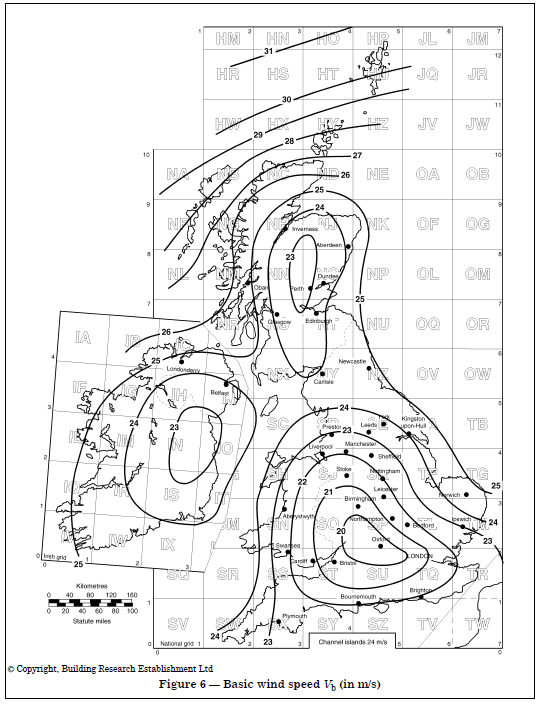
I hope not! Of course.. voluntary work is so good for the soul. Ok the maths. I'll relate this to wind load on a house then cut to the chase about driving at hwich I'm a bit not Nigel Masell.. more like Rowan Atchinson.. enough knowledge to be dangerous but without the cash to excecute well. Excuse the spelling and grammer please. Simplistically the wind load on a house is related to the speed of the wind as we know for life experience. The general equation is air mass x the wind speed squared. For interest ( if you have nothing beter to do) I've screen shotted a wind diagram from the BS design code. . For the non mathematical often we can simplify maths by removing things that stay the same.. say the weight of your car. This lets us quickly compare like with like even though the number we get at the end does not equate to say a true real life value that we could then use to design a roof truss say. We can call this a qualitative analysis. In Oxford the basic wind speed is 20 metres per second... about 45 miles per hour (gust speed).. Build Hubbers.. do not use this as a value for your design.. as it then gets modified a lot. In the North of the country it is say 27 - 31 metres per second. Using the equation.. force = mass x velocity squared the two results can be compared in a qualitative manner. That said I hope the wind diagram helps you see how things could change for your house design depending on where you live. If you have big areas of glass then its a consideration.. is the glass and double glazing going to be ok if I live in Cornwall say. The mass of air is the same (except in the far north and the Hebrides where it is rarified by Whisky fumes so is a little lighter) so the "Energy ~ = mass of air * wind velocity squared. Just say the mass of air is 1.0 something units 1.0 * 20^2 = 1.0 * 20 *20 = 400 units. In the North it's 1.0 * 27^2 = 1.0 * 27 *27 = 729 units.. nearly double the force! When explaining to other designers about wind behavoir I often use the car velocity / breaking distances model as an example as most folk can relate to it. If you hit a kid when driving at 20 mph the energy you hit them with is similar to the wind. Your car = say 0.75 - 2 tonnes.. but it's the velocity that causes a lot of damage. Say your car weights 1.0 unit of measure. At 20 mph the qualitative units are mass of your car 1.0 * 20 * 20 = 400 units. At 30 mph it mass 1.0 * 30 * 30 = 900 units. In other words that extra 10 mph matters a lot. The extra 10 mph has more than double the energy. Now it's known that the survival rate for humans rapidly decreases when the intensity of the energy delivery increases if you get hit by something. This is what we call accelerating or braking if you are in the car. When folk go to the moon they get accelerated by a rocket but slowly. Now the driving courses are intended to make sure you stop before you hit anything.. as a kid could then get slowly rolled over by the wheels of you car at 1 -2 mph. The main thing about the above it to recognise that with a small increase in speed you need to exponentially decrease the rate of acceleration. To be frank.. if you hit someone at a couple of miles an hour you are unlikey to cause them organ damage. But as above the collateral damage comes from then running them over with your car or causing them to fall over and then damage their head say from the fall. Now if you are in an airplane.. the guy / doll up front has a big interest in not crashing at any time! At 150 - 300 knots a bit of difference in relative ground speed is not going to make any difference to you not getting squished. The last thing they are wanting to do is to make contact with anything solid or semi solid in the air.
-
We're featuring on Grand Designs next week 🎥
Gus Potter replied to thefoxesmaltings's topic in Property TV Programmes
Well done both. There is as expected a wide spread of comments on BH. Grand Designs enthuses people to think and encourages. Do you know what it actually cost you? The builders would chew your hand off to get their sign up on the scaffolding. Did you do any cash deals with the builders or discounts that normal self builders can't access etc? I know you have to say no or you'll have the tax man chasing you! What other business relationships exist.. see you are on insta for example. It would be great to hear you are a Nurse say and hubby works for the council cleansing department as it would really show the C4 audience what can be achieved if you are just an ordinary run of the mill type. Have you or are you making a donation to BH? -
Float or glue engineered flooring over chipboard with UFH
Gus Potter replied to gOBO81's topic in Wood & Laminate Flooring
It's a dilemma! Over the years I've done a few UF systems and each time I learn something new, improve where I can and adapt the design the based on my learning and what new on the market. The house we have at the moment is a 1955 house with suspended floors. We took the back off it and extended out to form an open plan space. The extension is a concrete slab on PIR on grade. But the floor levels in the existing house vary and as they are now forming part of the open plan space we have a mix of materials forming the floor. Timber / concrete and a level variation.. it's small but it is there. Also the existing house solum is sealed with tar and a bit compromised in places thus we have different moisture levels. All of the above results in movement between winter and summer which is noticeable.. if you are inclined that way to have these thoughts. For this house I floated the engineered flooring on a 2.0mm thick layer of foam, just the bog standard stuff. If you jump about on the floor you are aware that the different parts feel more solid than others. But again I'm always "monitoring! most folk wonder if I'm ill when I mention. Now fair enough the foam insulates and makes the UF less quick to respond. In the odd spot where the floor levels were a bit off locally I added some extra strips of foam as a packer. But we have lots of rugs and so on which do insulate the floor much more so than a thin layer of foam. If you lift a rug the floor is much hotter under. We have a bathroom on a supsended joisted floor. The tiles are these large format ones. The UF pipes are in a screed on PIR between the old house joists, no spreader plates. A while ago I posted about this and @nod as always provided some great advice. I followed it and sure enough after almost two heating seasonal cycles no cracks in the tiles. Thanks @nod! The main thing was the use of a decoupling matt. When I first started messing about with UF these products were not available.. mind you neither were large format tiles available to the DIY market at an affordable price. Now when you read the fine print of the flooring suppliers you nearly always breach their T & C's in terms of what you need to comply with. One it the temperature range. Where you have UF pipe conjestion the floor can get quite hot at times cf other areas. I just accepted that is was nearly impossible to comply for our house so took a pragmatic risk based approach. In summary I did think about glue the floor down. But then I though what happens if I get a leak in the kitchen sink say . Lifting any damage glued down flooring could be a nightmare! We have had a plant pot that leaked water and did not spot. Some minor damage has occurred but I know I can easily fix the floor if need be. -
Have fun. Good design is very much an iterative process... so many things you can do. Sometimes it's easier to say.. we don't want that and that can help narrow down the field a bit. Alway sleep on stuff and let you mind work away over night. I've still go bits to finish off in our own kitchen.. just waiting for the time to do it. One think though. The sink is under mounted and not expected to last as long as the worktops..I hope! The worktop is Silestone and the cost of that makes you less inclined to change it. All the worktop fitters said you need you sink in place and we will stick it to the top of the sink with our super strong resin / glue. mmm.. how do I then replace the sink if we crack it say and not risk damaging the worktop? What I did was to say.. fit the worktop with no sink. I then build a timber cradle, took it to bits again, lifted the sink up from below and siliconed it into place.. then reassembled the cradle. Now if we want to relace the sink all we need to so it to cut the silicon bead and drop the cradle... well that is the theory!
-
The right compactor for Geocell floor???
Gus Potter replied to eros_poli's topic in Tools & Equipment
Yes type one is aimed at good compaction and achieving density. Add a little cement content and you have a lean mix that forms a lot of the sub base of our motorways. I think Geocell is much more like a single size aggregate.. like railway ballast. Now as an SE I should be using some technical terms.. but my best answer is that for Geocell which is pretty much a single size material it just needs "shoogled" into place. Thrashing it to death with say a 10 tonne vibrating roller will just damage it. I've specified this stuff and the results (feed back) so far are good for the loads I want it to carry. Goecell is not new in terms of material composition. It's stable, not frost succeptiable for example. It is bulky and a bit of a shit to shovel apparently. The top of it is a bit rough so maybe needs a bit of blinding. I'll leave the last bit out as this is my IP property. Now @Alan Ambrose for example. The NHBC put a limit on hardcore fill for rafts foundations at 600mm.. and this would apply to say EPS and XPS material on hard core. I wonder if Goecell have ideas o how thick thierstuff can be? Their stuff is not heave prone, not frost prone and has insultating properties. This has got me thinking.. can we do rafts with lots of Geocell and little if no EPS or EPS where we need to go deep to avoid clay and tree root heave for example. Now Geocel is light weigth so on bad ground we dig out some crap stuff and replace with a lighter structural fill.. now we further reduce the soil loadings. I'm just chewing the fat here folks but BH is at the cutting edge of things. -
Slate and a half in valleys, advice needed.
Gus Potter replied to bluebellcottage's topic in Roofing, Tiling & Slating
Slating is an art and traditional craft. It gob smacks me how often folk claim to be slaters but don't realise how slates in valleys and at roof verges need to be tailed. It not just for appearance it has real meaning to prevent dripping and compromising the lead in the valley and the verge. When cutting a valley slate you pop it upside down and cut the tail the other way up so the regular rain water does not drip on the the valley lead.. is uses the miniscuse principle and trickes down to the bottom of the valley where the thick lead is. These are traditional skills. it also protects the sharp edge of the slate forom frost and maitenance damage. The natural bedding plane of a slate is not suited to getting cut by a diamond saw! At the roof verge we do the same so the water is shed back into the roof rather than rotting the verge. These things are the basics of slating that were drummed into me and apprenticies. Folk think.. hey I've got a slate roof and it will last longer than concrete tiles.. well it won't unless you know these things! Whoever slated this valley is not slater and you would not get anywhere near my house!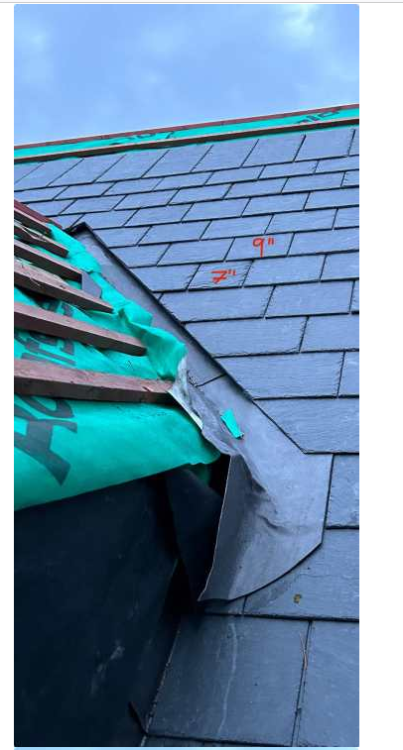
-
I love the amount of work you have put into this as a concept. This is improtant as you have sat down and identified the type of house that would suit you and the internal spaces. For me Perthshire is stunning. Some of my family lived in Perthshire the rest now on the inner hebrides.. the white beach is the end of their garden there is no fence just the sea. The critical thing is the services and that is going to have a big effect on the overall build cost. Once you start to live in rural Scotland there are other costs.. travel.. just to get a pint of milk.. don't underestimate these. Take your car for a service.. you may not get it back for a week! But the land prices in Perthshire have rocketed but olocal services are still expensive. What is still affordable is Argyll for the self builder on a budget.
-
Hiya. There is a lot of well meaning advice here in the posts above. I do this as a day job and you are inviting trouble. I see this all this time and folk end up in a nightmare! There are maybe one or two SE's on BH who know about this stuff.. the rest are.. it's not their day job. I can't see all of the roof truss layout but I'll hazard a guess that some of your intermediate walls are non load bearing. Now it looks like you have ground floor extension with a beam over.. if you change the loading pattern you could over load that beam for example that allows access to the extended part. You are playing with fire here. Just say you come to sell the house and a surveyour sees you have made alterations to the attic. You won't be able to sell the house... even if you think your alterations are sound. You'll need an SE to sign it off. Please do this right and pay an SE for advice. Aye but this is let's say putting a bit of a gloss on things more often than not! If loft zone want to get in touch with me them I'm all ears! I would love it if they have a good economic load bearing and compliant solution as I could sell this day in and day out and sign off on it too! I keep pulling these folk up about the shite they are selling for say fink truss aplications. Some of them approach me to sign off their designs. OP and there are a few of these loft boarding folk proposing insultating with spray foam insulation so we need to have a look at the dew points so your roof does not end up rotting away! Now your basic distributed design load on a modern lightweight roof truss is 25 kg/ square metre applied to the ceiling chord. There are other loads but for now. Add 11 kg/ m^2 for your flooring leaves you with 25 -11 = 14 kg tops depending on the truss spacing.. Most of then are selling on the basis of 25kg.! Now take the insulation wieght off this. Then go back to the truss manufacture and ask.. can we insulate out our loft and floor a bit of it.. if so how much load can we put on the new floored bit! Now some of these loft folk are saying.. we can give you a bigger hatch.. now you are cutting a structural truss. Just look at the sizes of the bit of wood! Even as a lay person you must be able to see they are slim and slender. Now just say you are going on holiday to Spain and the window in the airplane is a bit small. I pitch up and say.. no problem pal.. I've brought my Dewalt and I'll just cut this tiny wee rib out as it is so small it can't be doing much, fit a new window bigger from B & Q and you be good to go!
-
Hiya. Happy to give you advice where I reasonably can. But I need to see all the drawings, a panoramic set of photos of the house, any adjacent houses and all your drawings and ans SE calcs you have. Without that information can't say much more as no one else can on BH. If you take the plunge you'll get loads of help from all sort of folk.. from SE's and seasoned builders with 40 plus years of exerience for example.
-
Here is part of my structural work and my wifes interior stuff.. we have yet to finish it off. This is an ex council house that we have extended in East Kilbride. The photo below is taken from my old phone so take it as it is. Key points we resolved. The hob is in the island. The grill in the ceiling is connected to a 125mm duct and the extraction unit fan is mounted outside in the external soffit. The fan I robbed from a Client that was chucking away an old kitchen extractor.. and delivers 600m^3 extraction.. is sucks like a devil and is pretty quite. The two pendant lights you see over the hob will set you back £ 500 plus.. but when offset with a standard extraction unit the lights were a bargin. What you see is part of an open plan space. I started out as a builder.. then became an SE and evolved into a "desinger". The challenge for me is to marry good practical design with good cost effective engineering at an affordable cost and do something special! Now over the last couple of decades I've seen folk wanting these massive open plan spaces as these have been all the rage. But for most families with two kids and a dog they are not that great. Kids and so on want much more pricacy for example.. our work patterns are changing. Our house is designed so that the social spaces are clearly defined. We have opted for other spaces that allow us to work from home, have a space that is entirely different. It's not for all but it is worth a think about. Here is a diferent view. The wall cabinets at the far end are from the 70's and sit off the floor.. The dining table is rosewood with space for 12 when extended.. the chairs contemporary. While the interior design may not be to your taste some key features are the shadow gaps in the vaulted ceilings. I set them myself and did the plastering but it allows us to easily change the decor in a weekend. You'll notice some boxes in the ceiling.. there are some pretty big steels hidden there.. but we accepeted that and use the boxing in of the steels to define the different spaces all be it open plan. Pick a kitchen that is not going to go out of fashion. Mine can be easily changed! Gray is not a good investment. If you look at my photos it may give the dry heaves! but think.. how easily could Gus strip that down and totally change the theme in two weekends.. and that is why I do this as a day job and you could be left with a crap gray kitchen!


-
Topographic survey question
Gus Potter replied to Lincolnshire Ian's topic in Surveyors & Architects
Well done Ben that brief looks pretty good. The cost is middle of the road. Yes you'll need to pay the vat but hey ho. Make sure you meet them on site. Come armed with tea/ coffe and buns and a list of anything else. If near a road get some level of manholes etc, water toby cover levels and so on. Seriously and extra hour or two on site at this stage can save thousands later. From my end once we get into the detailed design we often need levels for obscure things.. it causes delay an uncertainty. Uncertainty = added cost and as designers we need to be conservative when there is a lack of quality information. Most folk want to help and will spend extra time if the Client engages. You can also get the gossip! and that can be invaulable later on. The gossip is things like what other sites have you seen nearby when work gets underway.. the ground.. who is the water board guy.. is he / she a wanker or pragmatic? As an SE I often refer to annecdotal evidence to back up some of my design decisions! If you feel they have engaged offer to pay a bit extra! Usually folks will say thanks but don't need more money! or just say and extra hundred in cash will cover it! To put this into context.. if you can save one day for a chippie or ground worker on site at £250.00 per day you get your money back! At this stage of the design you want to aim for the best quality of information you can get. I see this all the time on BH where folk skimp at the beginning and pay dearly later on. I'm not pelting folk self building as have done it myself when I was young. It is really hard to get the basic design info cf going to TF companies and so on for a guide price adding up the sums and hoping for the best. -
The right compactor for Geocell floor???
Gus Potter replied to eros_poli's topic in Tools & Equipment
Well done you for going for Geocell. I've worked with / designed for another member on BH using this as an option to EPS / XPS but in a slightly diferent context. All reports back so far are good! Can you post some detailed drawings and your target U values and edge details of what you propose. To be clear.. that means all the details. I'm interested but I'm not here to guess about what you want to do.. it's part of my day job as an SE and hobby so if you want a hand then please provide more quality information. Just as an aside.. The WYE system here: https://www.mikewye.co.uk/product/glasscrete-floor/ Is for a breathable floor. Now if you are on clay and you compact the shit out of it then you no longer have a breathable floor unless you ventilate at the sides big time! Love what you are doing, excuse the brevity! -
Great comment. I'm working with someone at the moment who has decades of life experience, a technologist who can easily grasp both structural and Architectural design concepts. They are managing the design process very well. I'm chipping in with a bit of SE design stuff and being a bit of a devils advocate in terms of the over all design elements of the project. Also like many self build the design evolves particularly say in terms of drainage / buildability = cost. I think it can be helpful to have someone who does design as a day job who you can call up and chew the fat with.
-
Just asking.. any chance of a free pizza?




