


IanR
-
Posts
1857 -
Joined
-
Days Won
6
Everything posted by IanR
-
The savings would cover an additional circa. £35K on the mortgage, and that's without lenders starting to offer preferential rates or cash-back for EPC A & B properties. It's taking time, but Banks are slowly coming round to better lending options for higher performing homes.
-

Stamp duty
IanR replied to Matt1455's topic in Self Build VAT, Community Infrastructure Levy (CIL), S106 & Tax
If it is truly gifted, and no money is changing hands, then no Stamp Duty is owing. There could be CGT owed by the person gifting you the property, based upon the notional value (£20K you say). If the current owner used it as part of a working farm there should be some level of CGT relief. Lot's of rules around this, definitely best to take advice. The "gift" would also incur Inheritance Tax if the gifter was to die within 7 years. Look up the PET rules, as there is also relief on this, over time. I'd suggest a professional valuation before it's gifted and before any Planning Application/Class Q is submitted. Once developed/converted, there still wouldn't be stamp duty owing, but there would be Capital Gains Tax owing and possibly CIL (owing at the start of development). If it became your primary residence, once developed, it may become exempt from CGT, but you need to be carful about the timing of the sale of your existing property, to ensure that also remains exempt from CGT. If you develop/convert for a house for yourself, and live in it for 3 years minimum, it may also be exempt from CIL, but you need this agreed before you put a spade in the ground. -
Vaillant Arotherm in open loop, with buffer
IanR replied to Peter269's topic in Air Source Heat Pumps (ASHP)
Just to say, not all ASHP pumps are internal. My Nibe has no pump within the ASHP housing, the pump is placed in the house, by the 3-way valve. I also have a sperate pump, in the house, for the emitter circuits. I'm not discussing this one. -
Vaillant Arotherm in open loop, with buffer
IanR replied to Peter269's topic in Air Source Heat Pumps (ASHP)
That is a good question, and one I've made assumptions on. I have a 4P Buffer and and external ASHP pump. The buffer doesn't have any temp sensors that are part of the control system, and I assume the pump doesn't either, so to measure the return temp I'm assuming the water needs to be pushed back from the buffer to the ASHP. I've assumed the pump periodically runs, without starting the compressor, to circulate the buffer water through the ASHP and confirm the return temp. Then once the return temp is delta T + hysteresis below target flow temp, the compressor comes back on. But, I've not witnessed the periodic circulating of the flow and return, without the compressor active, to know this is actually happening. My pump ASHP pump definitely does not run continuously, and of course for some of the time is pushing water to the DHW circuit, not the Buffer. -
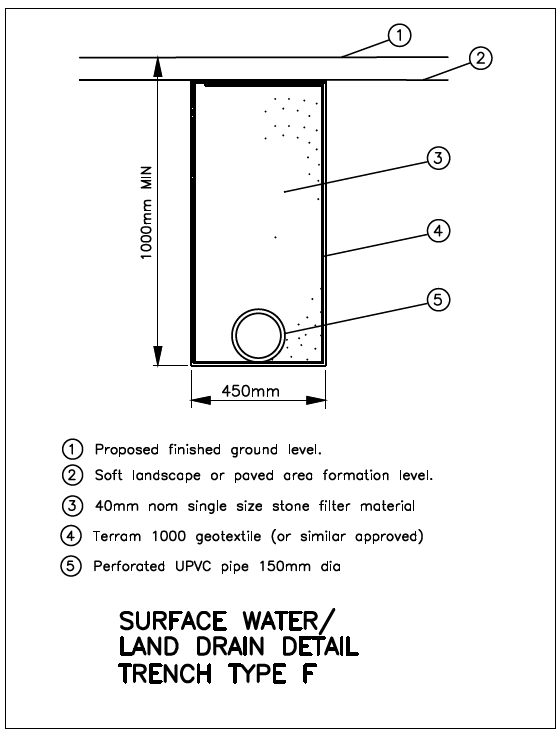
I found BC to be pragmatic. I'm also on clay, and have slightly higher ground the other side of the house to the ditch that the fields drain to, so I circled the house with a land drain and joined up the down pipes to that land drain, taking all the water off the house and what would have previously drained across and under the site, straight to the ditch. Attenuation tanks are useful in urban development, but aren't going to make any difference in a rural setting. The land drain was a significant bit of ground works, being roughly 150m in length, but very glad I did it. The fields above me can be water logged, with surface water running across them, but the house and 10m around it is always perfectly drained.
-
It's an area of development over the next few years, 22kW will become a standard offering. I'd also wait as long as possible before installing the 3P charger to benefit from the new Tech coming in, but easier to put the infrastructure in at the start.
-
Even at a reasonable premium, I'd go 3 phase for 22kW home charging and future proofing for V2H + the larger PV allowance. EV's are here to stay for at least the medium term and batteries will be increasing in capacity over the next 10 years.
-
Lay some ducting in the trench now, leave a pull chord in there, and later when you order the Service OR will pull the fibre through. OR should free supply the ducting, or use your own.
-
That's why I suggested pictures. Any steel would have to be coated, and once it's coated would you visually be able to tell the difference from a coated aluminium. The answer is perhaps "yes", if it's a Crittal style frame you are after, but maybe not for other styles. Don't just go on Thermal performance (U Value), also look at airtightness performance. A PH Timber or Aluminium frame is likely to have triple sealing for very good air tightness.
-
Have you got pictures of the style of window you are after. I can only think of Crittal type when I hear you say steel windows. Steel frames will be difficult to "thermally break", so I'd expect you to not have much choice for PassivHaus Steel windows. Before considering the glazing type, make sure the frame type can achieve the required performance. Aluminium frames can be easily thermally broken as the frames are an extruded profile that can include the features to retain the insulated spaces between internal and external frames, but you can't do that in steel. Better still timber frames (for cost effective thermal performance, or ali-clad timber - but they won't have the look of a steel frame.
-
That's not what I meant. I'd say everyone quoting a performance figure for their property will be quoting the standardised measurement figure that is measured at 50Pa, whether or not the 50Pa is stated. The "divide by 20 rule", is a rule of thumb that some heat loss calculators will use, or use a range similar if it asks the question "is the property sheltered, exposed or normal?" If someone is quoting 0.35ACH, they are quoting the @50Pa, measured value.
-
The standardised measurement is at 50Pa Heat loss calculators will then use a ratio/percentage of that figure to calculate the average infiltration and therefore the averaged heat losses through infiltration. The "divide by 20" rule is often quoted, ie the average infiltration of a property is only 5% of the measured figure @ 50Pa
-
Is anyone using, or has looked into, 1Home for Loxone integration? https://www.1home.io/how-it-works/google-loxone The price put me off previously, but they've got a new bridge coming out and are offering pre-orders at a better price. I'm probably going to give it a go, but one graphic has me a little concerned: The "via Cloud" comment for Google Home integration. I can't find what that relates to. It doesn't look like it's a subscription, but still concerning if it could be switched off in a couple of years. Maybe it's just that it uses Google speech to text cloud service for interpreting commands.

-
Timber framed VS SIP build.
IanR replied to gustyturbine's topic in Structural Insulated Panels (SIPs)
That suggests all insulation is equal and it's just a matter of choosing your product and appropriate thickness to meet your performance target. If that were the case then PIR/PUR insulation would be very competitive as few cost-effective insulations can achieve its U value within a given thickness. While I was investigating SIPs for my own build there were just too many unanswered questions with regards both PIR/PUR insulation and the SIPS themselves. I have a timber cladding rain screen and an Aluminium roof, so was concerned about decrement delay of the insulation and acoustic performance. I also had the experience of my existing home that had dormers with building regs levels of PIR insulation between the rafters and suffered from large temperature swings and very poor acoustics, even with a traditional tiled roof. When I got further into the detail of the build and started to spec for PassivHaus levels of performance, the real levels of performance for the "as-designed" SIP panels didn't meet marketing due to timber fraction and cold bridging, especially for the roof. Additional layers of board insulation were then required to mitigate these inherent shortfalls in the product. You also need to be comfortable with any potential toxicity and performance degradation related to off-gassing. While I was researching there was little definitive information and the distributors just dismissed any concern. One comment was "oh that was in the 80's", products are different now". Sick Building Syndrome is a real thing (although not only related to insulations), off-gassing, shrinkage and aging is a real thing and is to some extents accounted for with some performance specs. The choice I went with in the end was a blown cellulose fibre as its longer decrement delay is better suited to my choice of a lightweight rain screen, and good acoustic performance is a better choice for a vaulted ceiling, with the added benefit that its inclusion improves airtightness rather than needing additional actions to mitigate its short-comings. The reduced insulating properties though do mean I've had to give a away a bit of floor area for a bit of extra wall thickness to achieve the same U value. -
Timber framed VS SIP build.
IanR replied to gustyturbine's topic in Structural Insulated Panels (SIPs)
Don't believe what the SIPs companies tell you without fully researching. SIPs are liked by volume builders, when combing with a masonry rain screen and only wishing to achieve Building Regs levels of performance. If you are going timber frame, with a lightweight rain screen, on a one-off self-build there are better options than SIP with better U values, decrement delay and air tightness. -
Insulated Raft Foundations - Supplier List
IanR replied to Lexifir's topic in Insulated Concrete Formwork (ICF)
Not bad practice at all, when done for good reasons. If all was one zone, the rooms with solar gain would either overheat, or switch off the heating before those rooms without solar gain were at target temp. -
Insulated Raft Foundations - Supplier List
IanR replied to Lexifir's topic in Insulated Concrete Formwork (ICF)
I've split my area up into Zones. I can get quite a lot of solar gain in certain areas, so zones are good for me, allowing those rooms benefitting for the solar gain to not be heated by the UFH. -
Insulated Raft Foundations - Supplier List
IanR replied to Lexifir's topic in Insulated Concrete Formwork (ICF)
~ £40/m², but you don't need much EPS300 - just under the beams. -
Insulated Raft Foundations - Supplier List
IanR replied to Lexifir's topic in Insulated Concrete Formwork (ICF)
Yep, AFT do a version of their "MonoBeam" Raft that can be supported on Piles https://www.advancedfoundationtechnologylimited.co.uk/our-products/ecoraft-monobeam/ You'd need to check about Install, I'm not sure they'd do the Piling, but would have thought any piling company could do that. They will do the Install of the Raft, but the way they'd do it is with one guy coming to your site and you providing two labourers to work with him. Edited to add: And their "Type L" Raft will go on piles. If you plan a timber-framed structure, I'd probably go with this, It's a simpler solution and is close in performance to their Passive Raft, which I have. https://www.advancedfoundationtechnologylimited.co.uk/our-products/timber-steel-icf-framed-building-foundation/ -
Insulated Raft Foundations - Supplier List
IanR replied to Lexifir's topic in Insulated Concrete Formwork (ICF)
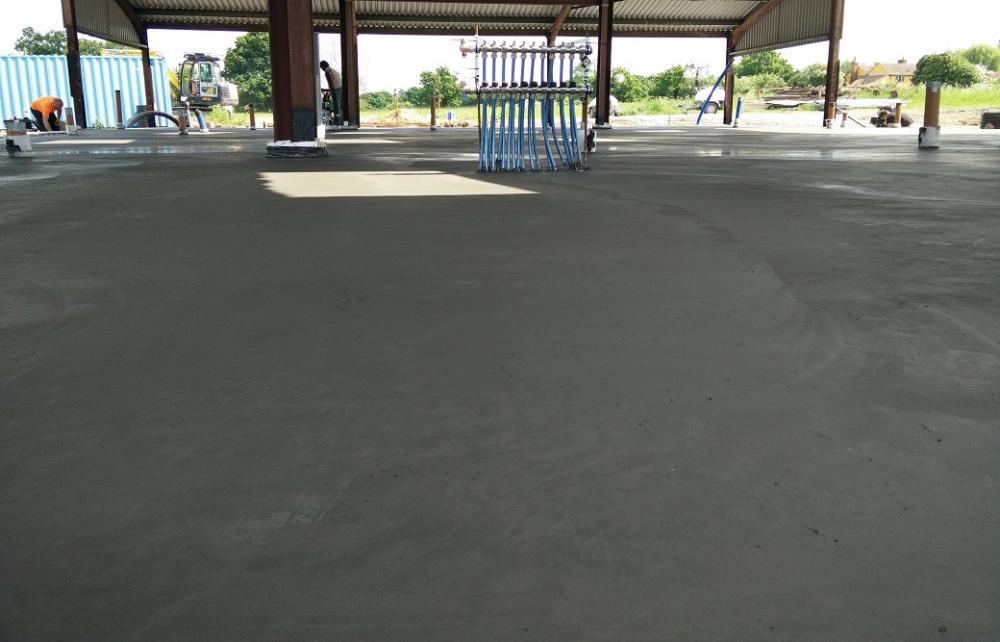
I have an AFT raft, and can thoroughly recommend them. Engineered and supplied via Springvale, UFH Design and Supply included. They'll help with the Install if you wish to self-build or support your groundworks contractor. There's more on that list than when I was researching, which is good to see. I found a number of companies were over-Engineering their rafts though, and specifying much thicker rafts than were required. Here's mine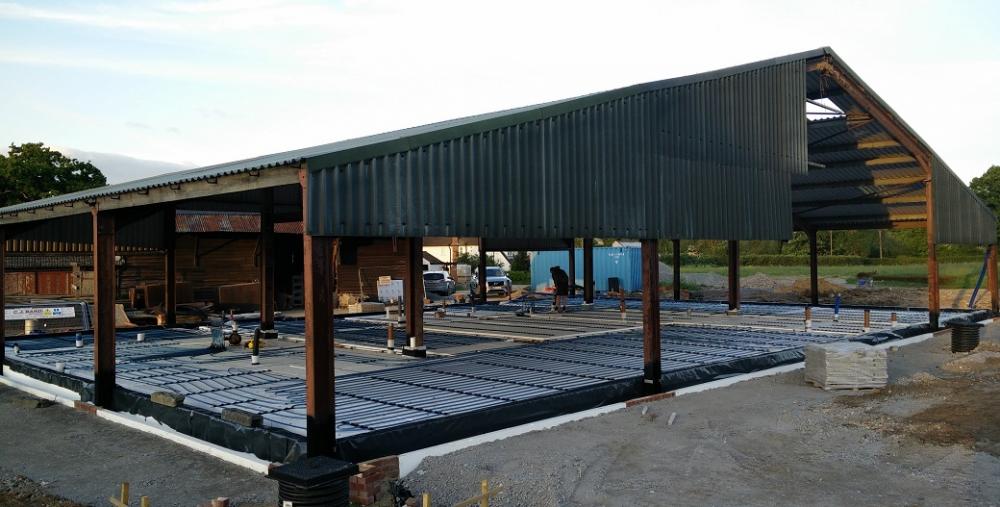
-
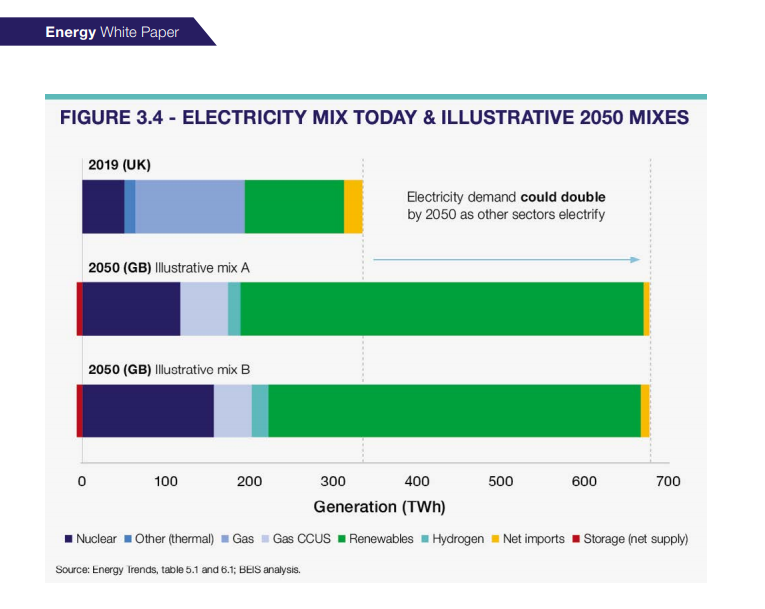
Rishi has signalled quite a change in policy, hopefully there will be some new numbers published to support the statement. In today's interview he has said that even when we meet Net Zero in 2050 "a quarter of our domestic energy needs will still come from oil and gas" That's a bit different from the Energy White paper from 2019, where Gas CCUS makes up < 10% :
-
Oops. Double-post
-
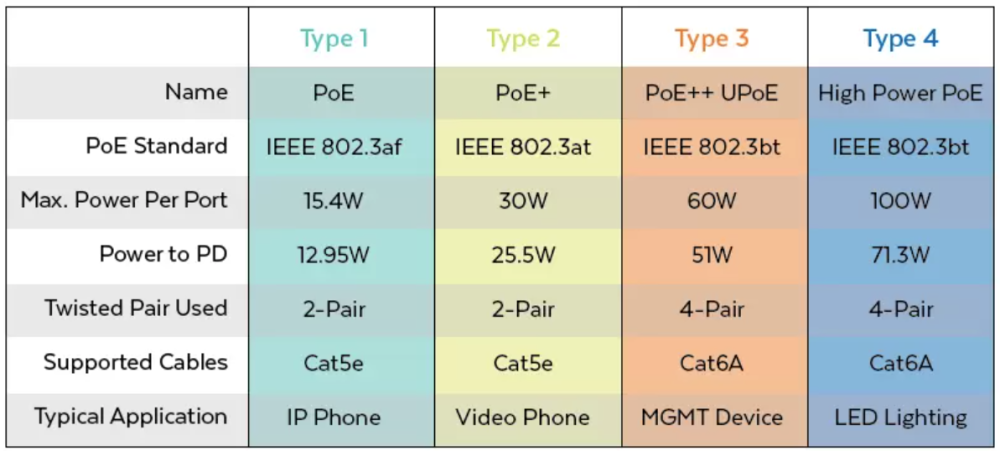
Ubiquity hardware is Enterprise level and therefore a little more expensive than consumer hardware but generally worth the money. Mine has worked seamlessly for 6 years needing only 1 or 2 reboots. But, maybe not that switch. It's a managed switch with loads of functionality that you are unlikely to use. Ubiquity APs will work fine attached to an unmanaged PoE switch, but, not all PoE are equal. I was just about to describe the 3 PoE types, but grabbing a suitable image highlights a fourth that I wasn't aware of: I believe the Unifi APs would work off a standard PoE connection, but I've not looked at the newer WiFi6 ones. Even if they did, I'd still recommend at least PoE+, as some CCTV cameras require that power level. When looking at the spec of a switch just check that all ports can be run at the power rating at the same time. Cheaper switches may not allow this. It's not clear on the marketing, but the Ubiquity UniFi range requires a Gateway console in order to set up the hardware, integrate them and give you all the functionality. You can install the software on a PC and use it that way, but the Gateway needs to be running if you want to use the smartphone apps, so it's better if it's on an always-on device. Some of the Ubiquity hardware includes the Gateway Console, but not the normal APs unfortunately. It may be worth considering a Ubiquity Dream Router (UDR), which will act as one Access Point, includes the Gateway Console and will supply x2 PoE outputs to drive 1 or 2 additional APs. It will need a little more planning though, as the best setup would be to turn your Sky Router into a bridge (assuming that can be done), and then route the WAN (broadband) connection through the UDR WiFi. That way all your WiFi will be under UniFi management . Re. CCTV. Simplest would be to have an NVR with integrated PoE Switch to control all the Cameras from. Makes that side of the install completely plug and play. Edited to add: If you go for a PoE+ Switch, something like this: https://www.netxl.com/poe-network-switches/netgear-16-port-network-switch-gs116pp-100eus/ I've not used this one, but I've found Netgear switches to just run and run. This is fanless also, which I struggled to find when installing my own network.
-
Contents and site insurance statics and containers etc
IanR replied to Spanners's topic in Self Build Insurance
Hi and Welcome. Interesting roof. Have you got a plan on how it's going to be constructed? While I'm not involved in the construction industry, I got involved in developing the "patterns" to metal clad a similar roof on two properties, being built on Sandbanks, off Poole. From the steel structure supporting it, to the ply deck and the metal cladding there were 100's and 100's of man hours to make it work. Looked amazing when done, but must have taken up about 50% of a very high construction budget. Hopefully you have a good main contractor. Edited to add: Is that a peg tile? or something that looks similar. You've got some areas on the roof where the pitch is barely 5°. What tile are you using that can work on that pitch? -
SNP plans to ban sales of house with gas boilers
IanR replied to Temp's topic in General Self Build & DIY Discussion
Sounds like they are just delivering their "Heat in Buildings Strategy", announced a couple of years back. UK Government announced a similar strategy, but were generally 1 or 2 years behind on each step.




