


IanR
-
Posts
1857 -
Joined
-
Days Won
6
Everything posted by IanR
-
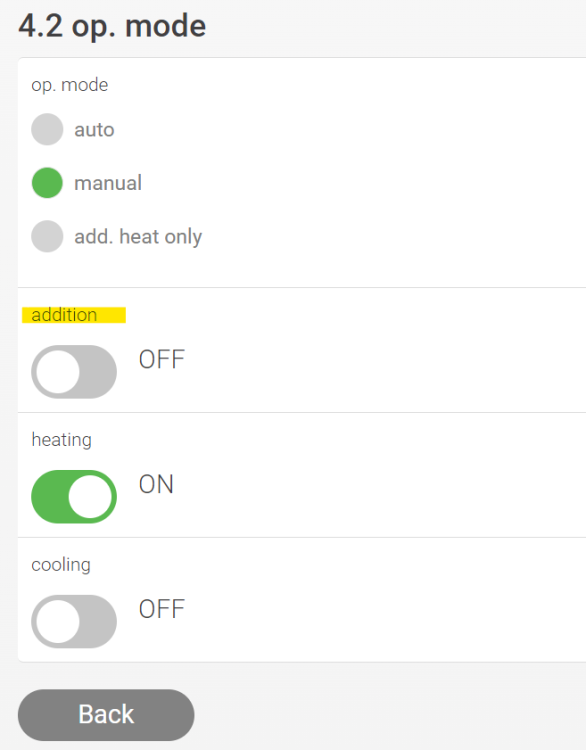
Yes. For the portion the "Additional Heat" is being used you're achieving at best a COP of 1. ie. 1 kWh of electricity for 1 kWh of heat into the house. If you can leave all your heating and DHW requirements to the compressor, you'll be achieving 2, 3, 4 or 5 times that - depending on the difference between outside air temp and flow temp.
-
Additional Heat can be switched off (Blocked), if the Compressor can cover all heating and DHW requirements at all temps. Try it, and if you find it's not managing to heat the house sufficiently put it back on. You may need to extend the ASHP running time if it's currently using additional heat regularly. I found the Nibe Controller brought it on unnecessarily. Biasing "Comfort" over efficiency. I wouldn't switch the UVC Immersion off. It's likely used for Legionella cycle.
-
It is Additional Electrical resistance heating, but for my Nibe it's integral in the heat pump and separate to the immersion in the DHW tank. I keep mine 100% Blocked so that it's never used, but my HP is overs-sized so can comfortably cover heating and DHW requirements. "Blocked" will be in your controller settings. But can also be blocked by Schedule and/or Schedule Blocking
-

MVHR settings for a less airtight house
IanR replied to pstunt's topic in Mechanical Ventilation with Heat Recovery (MVHR)
For reasonable air quality, you don't need to have your MVHR on as you are above 3m³/m².h@50Pa of natural infiltration. Had you been below then perhaps BC would have wanted to know more about the MVHR. I guess though that as you've installed MVHR you haven't got any other form of extraction to outside for your wet-rooms, in which case you'd need the MVHR on for boost. Can your MVHR be configured to be on but with 0% fan speed, if so I'd set it up like that for most of the time and just run the fans for boost. Since you don't need the MVHR for air quality, then having it running 24 hours a day will incur you extra losses as you are ventilating more than you need and loosing energy when you do. -
Internorm windows - Fixed vs Opening internal seals
IanR replied to Meabh's topic in Windows & Glazing
Factory applied for me, although on another window the glass did have to come out so the silicone was reapplied and I can barely tell the difference. With MVHR on we never get any condensation. -
What's more important for comfort U value or 'thermal mass'
IanR replied to Gone West's topic in Boffin's Corner
On my specific example I'm not aware of a better technology than injecting a damp course, which I know isn't robust. So damp will get into the wall and needs to be permitted to get back out. For me this is also somewhat under the control of the Conservation Officer at the LPA since it is a Listed Building, so removing sections of wall and installing a modern damp course isn't an option. The renovation completed in 1980 using cement render was also under the guidance of the Conservation Officer, and the guidance was wrong then, so may well be again, but lime render and plaster is now what is prescribed, and is backed up by English Heritage. -
Internorm windows - Fixed vs Opening internal seals
IanR replied to Meabh's topic in Windows & Glazing
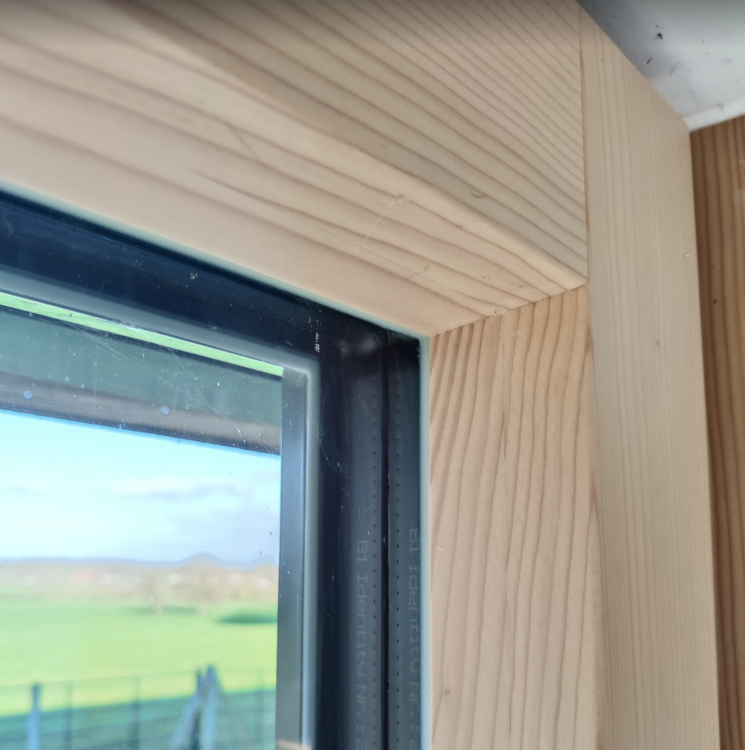
The first image is a fixed sash and the second and opening one. Both have the silicon bead between glass and frame.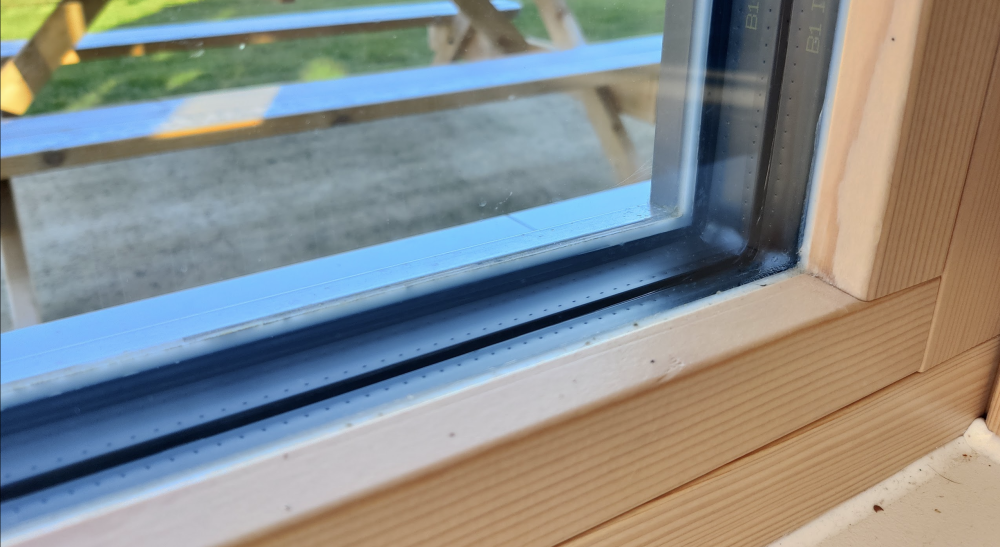
-
What's more important for comfort U value or 'thermal mass'
IanR replied to Gone West's topic in Boffin's Corner
In absolute terms you are right, but, on old solid walls with poor or no DPC, they will draw in damp from the ground by capillary action and need to be able to transfer that moisture to the outside. Cement based renders and plasters are known to restrict that transfer of moisture to the outside so it builds up to a level that then shows damp issues. Lime based renders and plaster are more vapour open and allow the moisture out so that it doesn't build up. Earliest DPC's were late 19th C. Injecting a damp proof course to remedy older walls helps but is not robust and has a finite life. Unless you are sure of a robust DPC you shouldn't use cement based renders and plasters. I'm currently planning my next project where I've taken on an old farmhouse that was renovated in 1980. The newest parts are mid C19 with solid masonry walls and in 1980 had a DPC injected and were cement rendered on the outside and plastered on the inner. The walls now show typical rising damp damage, where there's a tide mark at about 1m up the inside of the wall and both the plaster and render have blown. There are older walls that have got away with being cement rendered and plastered, some without any foundation at all, just sitting on an aggregate layer on earth, but the side of the house close to a water course is where most of the problems have occurred, so there are a number of factors to this. -
Then you just need a plate bearing test at the surface rather than a bore hole. Don't know them but these have a an office in Southampton https://www.earthenvironmental.co.uk/plate-bearing-test/#contact An advantage of bore hole tests though is that it will also identify if there's any ground water passing under the site, within or close to the depth of the foundation. I'm on clay and the bore holes showed there was water passing through seams in the clay at about 600mm down. While it was below the dig level I still took the French drain I'd planned around the perimeter a little deeper to make sure I kept any water away from the sub-base. Are Advanced Foundation Technology on your list? Or are you specifically going with Tanner as you plan to use MBC?
-
You've not mentioned needing to do a Contamination Survey ie. a Condition on your planning that requires one prior to commencement. If you don't have such a condition, then a Phase I isn't required. Even a Phase II is more than you need as it will likely include gas collection, lab work, which will be looking for contamination within the dug boreholes. People needing Contamination Surveys do combine them with a Ground investigation to save money, ie. if the right rig is used for the boreholes it can also give you the bearing capacity at various depths, which is the info the SE needs for the foundation design. Normally the SE designing the foundation will have a specific requirement for what they need. It may just be to be onsite when the trench is dug to see where the organic matter stops, or if it's for, say, a ground bearing insulated raft, they may specify a number of bore holes in specific locations where they want the bearing capacity down to 4m or 6m. Sounds like your foundation design is remote (and your timber frame, but not sure what they want from the ground investigation) So you don't need another SE to do the Ground investigation, someone like Geosphere Environmental Ltd. could send a rig down and do the bore holes in a morning. If the Foundation people really need to know soil types they could also do the analysis and/or lab work. What specifically are the foundation and timber-frame people asking for?
-
NIBE S2125 Particle Filter cleaning
IanR replied to Chriswills's topic in Air Source Heat Pumps (ASHP)
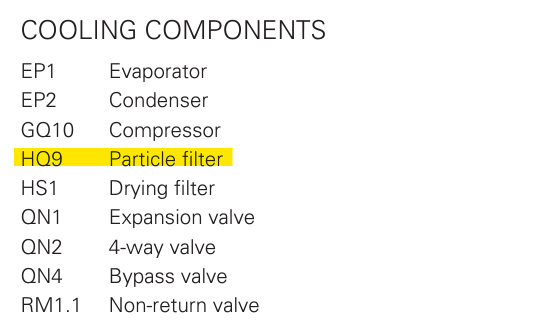
Since Nibe try to limit their hardware to Approved Installers that have to Install in the Nibe prescribed way, I wouldn't be surprised if they do care about the primary heating circuit. Not sure about the S2125, but the F2040 has an external circ. pump and they do stipulate the Particle Filter that must be used. Edited to add: From the manual: This does sound like the primary heating circuit Particle Filter
-
NIBE S2125 Particle Filter cleaning
IanR replied to Chriswills's topic in Air Source Heat Pumps (ASHP)
Perhaps it's measuring a high pressure, or low flow rate and is suggesting your central heating circuit Particle Filter needs cleaning, not the ASHP Particle Filter. -
NIBE S2125 Particle Filter cleaning
IanR replied to Chriswills's topic in Air Source Heat Pumps (ASHP)
The Manual suggests it's this: And on Page 39 does say: But from the image there's not an obvious way how that is done. Time to get a professional in?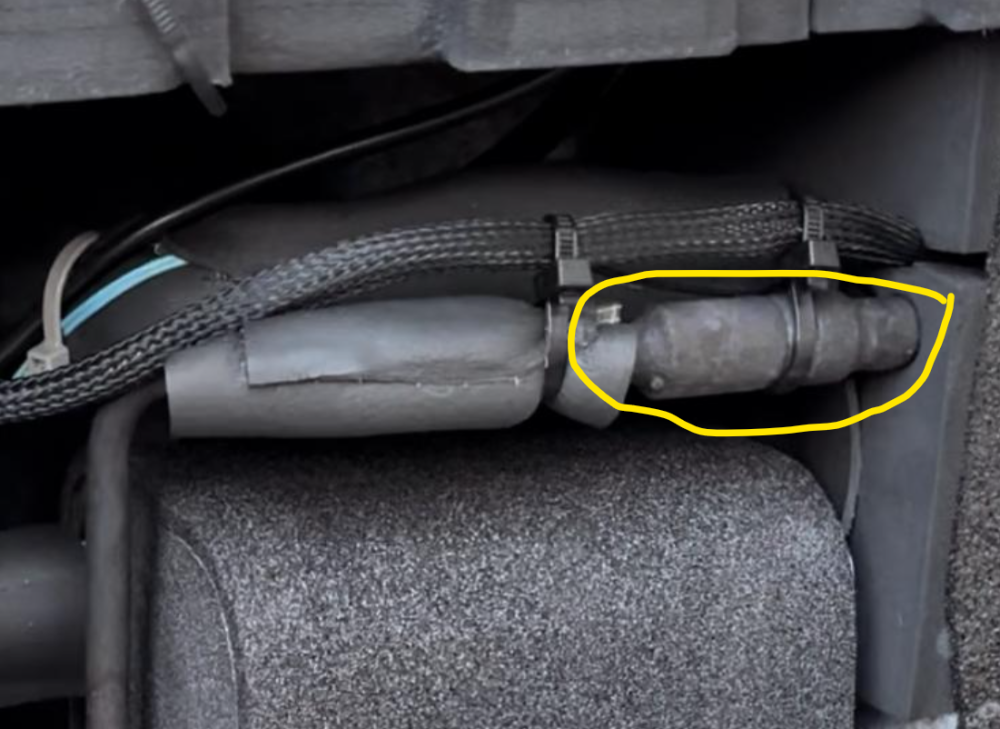

-
What's more important for comfort U value or 'thermal mass'
IanR replied to Gone West's topic in Boffin's Corner
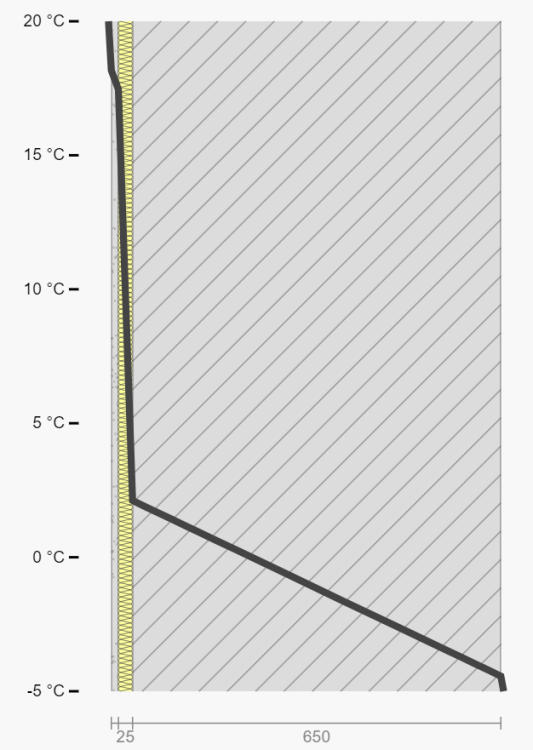
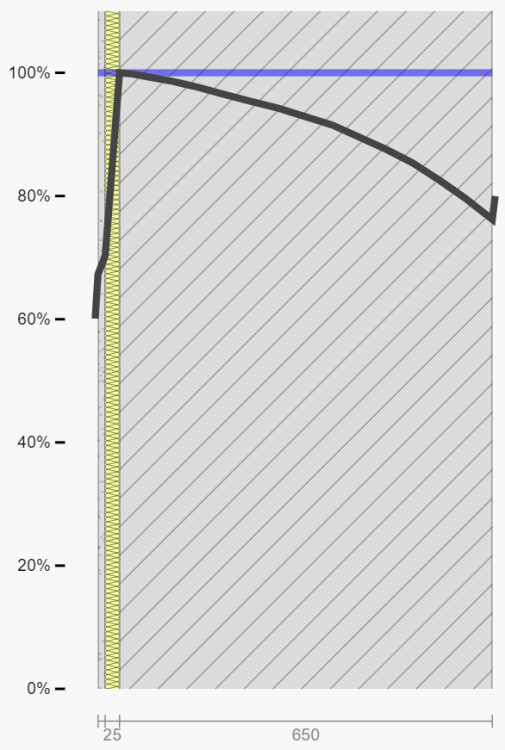
Even without "rising damp", it's a condensation risk. It's a good improvement in U Value 1.5 -> 0.565, but moisture collects between the PIR and Stone wall. Temp on the left and humidity on the right. But, the condensation may not be an absolute risk. It shows from 1° and below it's a risk, but it doesn't consider how long the temp needs to be below 1° for it to stabilise. The 650mm wall has a 23hr decrement delay, so it's got to be down at that temp for over a day before the inner face could drop below dew point.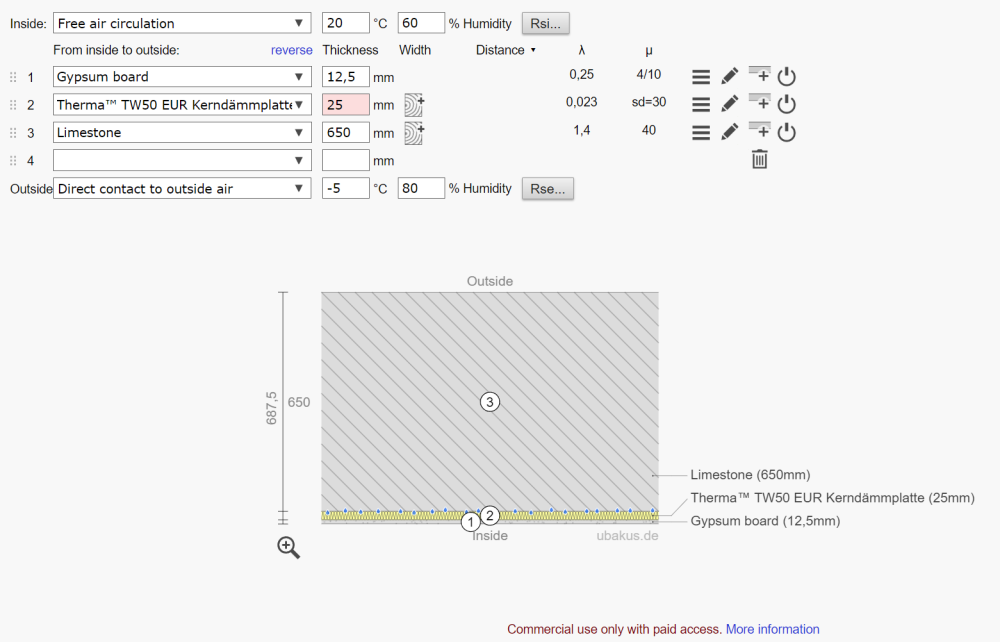

-
NIBE S2125 Particle Filter cleaning
IanR replied to Chriswills's topic in Air Source Heat Pumps (ASHP)
Page 18 https://www.nibe.eu/assets/documents/30143/431990-1.pdf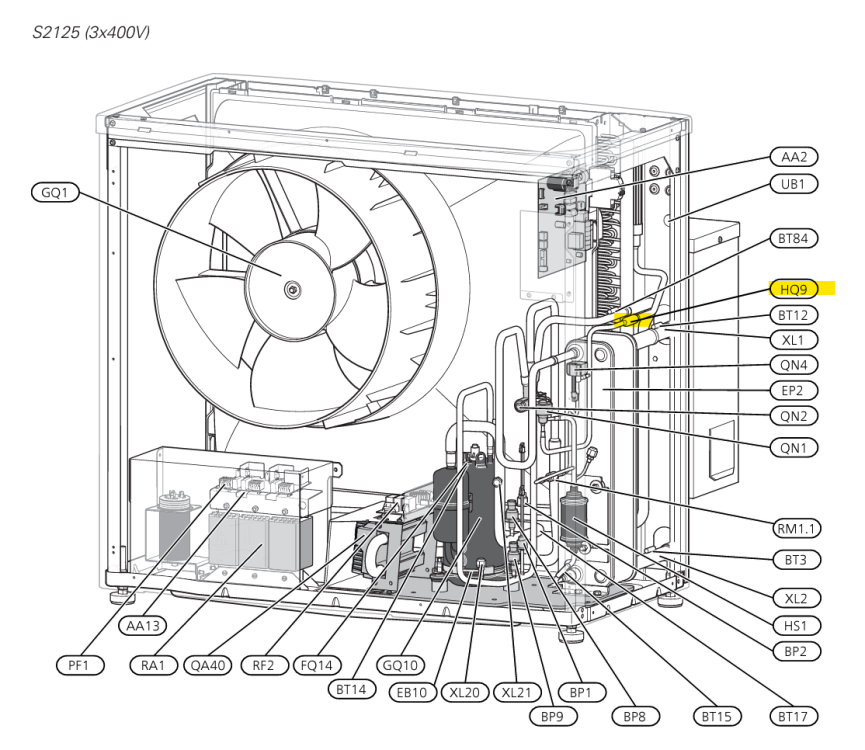
-
What's more important for comfort U value or 'thermal mass'
IanR replied to Gone West's topic in Boffin's Corner
But the Thermal Mass is still there, so you're improving U Value (a little) with the same mass, which may/should be an improvement in comfort. The closer the internal face of the wall is to ambient the lower the temp gradient is across the room reducing convection currents/drafts and comfort should be improved. But, will it make enough difference to notice it? Has the solid wall got a good DPC? A PIR insulation on the inboard face may trap condensation/damp. Would a lime plaster be better if there's a lack of DPC? -
Future Homes consultation 2023 - thoughts anyone?
IanR replied to FelixtheHousecat's topic in Environmental Building Politics
Only replacement ff boilers for off-gas-grid properties were changed. They we're due to be banned 2026, now they've been pushed back to 2035 along with all ff replacement boilers in all residential properties. FF boilers for New builds are still intended to be outlawed in the Future Homes Building Regs to be introduced 2025. -
Future Homes consultation 2023 - thoughts anyone?
IanR replied to FelixtheHousecat's topic in Environmental Building Politics
The final decision on hydrogen heating wasn't supposed to be until 2026, but looks like they've killed it early with dropping of the hydrogen ready boilers now. That's the right decision and allows manufacturers and installers to concentrate on electric alternatives. Heat Pumps won't be mandatory, but Fossil fuel heating will be off the table. The fossil fuel ban, for new builds has not been put back. -
That's what I suspected. For me the relative height to the neighbouring house is more important to the planning permission than a height above ground level. Since you haven't started the build yet, I'd bring this up with the Planning Officer unless you are happy with the risk. It would be too much of a risk for me. Hopefully the LPA just acknowledge the error and allow you to continue but they may request a material amendment which they may refuse. Can you still build what you want with a 400mm lower ridge? That would be your fall back if they refused the correct ridge height relationship to the neighbour. Assuming the Architect was responsible for the survey and not working off a 3rd party survey, paid for by you, then it's their mistake to be corrected at their cost. Had you occurred a loss due to the mistake that's when the Architects PII would come in, but I assume at the moment you've not incurred any losses. If you continue with the build with knowledge of the error and then incur a loss due to the LPA asking for changes, you can no longer rely on the Architect's PII.
-
Is that a dotted line for the outline of the neighbours building? Or a dotted leader line from the roof of the neighbours building towards your new roof line? ie. is the intention of the drawing to show your ridge similar to the neighbours. If the former, you'll likely to be OK, unless the scale of the neighbours is substantially different from reality.
-
? OP's not made any further replies, and doesn't mention what dimensions are on the drawing, or what conditions. As I said "surmising". No idea why you wish to create an argument out of attempts to give the OP some feedback. Not wishing to trash the thread any further, so will bid you good night.
-
As neither of us know what's in the drawings or written in the Design & Access statement, we can only surmise, hence me using "could", "not sure", "I suspect". What I don't get is: It's rude/arrogant and unnecessarily stifles contribution. You'll give architects a bad name.
-
It will be set as a condition. Ie. Built in line with submitted drawings, no's xxx, xxx No need for a separate condition.
-
I reckon that could be serious. In an urban area Relative height to neighbouring properties is more important than measured ridge height. Not sure what the LPA could do, but I suspect they could void the planning. But, they'd only do so if it's materially different and if they would have rejected the application had it been drawn correctly. Check the Architect's PI insurance.
-
15 day free trial of AutoCAD, and if you need it longer £60/mnth for AutoCAD LT https://www.autodesk.co.uk/products/autocad-lt/overview?term=1-YEAR&tab=subscription






