


IanR
-
Posts
1857 -
Joined
-
Days Won
6
Everything posted by IanR
-

Passivhaus Under Floor Heating & Water Supply
IanR replied to Carpe Diem's topic in Underfloor Heating
Very few decisions in life only consider cost. -
Passivhaus Under Floor Heating & Water Supply
IanR replied to Carpe Diem's topic in Underfloor Heating
As you mention it's about whole house control. So, for me, it's to co-ordinate Heating, Cooling or just recirc (for moving energy from solar gain areas to North East rooms) across ASHP, UFH, MVHR (incl. wet duct heater/cooler), external blinds and roof vents. Loxone also controls the hot water return circuit based on presence sensing. Triple tapping is just an option on the Touch switches, if you want to emulate C4/Lutron then have a dedicated retractive switch, or bank of switches and have them etched/printed with the functions you want, but this wouldn't be my choice, it's better to automate where possible so that physical inputs are not required. -
Only if you have it agreed that they owe you the DWG files. Do you have PDFs of the plans? Depending how they were printed/exported they can be of similar use as DWGs. But, DWGs are only half useful. They're a neutral file format for exporting between differing systems and loose any "intelligence" inherent in the authoring system. OK to trace around though, as are PDFs.
-
Passivhaus Under Floor Heating & Water Supply
IanR replied to Carpe Diem's topic in Underfloor Heating
Your description sounds like you have a thermal store, not a UVC, but your quote in the OP is stating a UVC, so fingers crossed that's what is installed and you are misunderstanding how your UFH is working. A thermal store is not appropriate for a ASHP installation. If you only have a single tank, and that is a UVC, then when "on", your UFH is fed directly from your ASHP and the UVC is not playing any part of your space heating. There maybe a minor issue that Loxone can shut down your UFH zones (as they come up to temp) and leave insufficient volume of water open to the ASHP while there is still a call for heat and cause the ASHP to short cycle, but that's not causing you to use excessive electricity. Your ASHP has been correctly sized and the 300l UVC @ 50°C is sufficient for 3 people occupancy. With the size of house though, could it have a higher occupancy (with a future owner) and maybe a 500l tank would have been more appropriate? 32kWh / day for heating and hot water does seem a bit excessive, if that's the average from November to now. If however that was just for a few days when it was averaging around 0°C, then it's in the right ball-park. If it's an average then maybe you have an electrical resistance heater in your ASHP and your settings are causing that to come on to support the compressor and it's driving down your overall COP. Do you know if the ASHP has an electrical resistance heater? If so, can you disable it? The HP is more than capable of covering your hot water and space heating requirements without it, given enough time. When you say your space heating is set to be on "7 till 10:30", I assume that is 7am to 10.30 pm? Your house is similar size and performance to my own (and also controlled by Loxone) and I'd expect it to loose around 1°C per day with no heating on, so your 21.5°C for 15.5 hours and 19.5°C for the rest is effectively switching it off from 10.30pm to 7am, as it's unlikely to be dropping to 19.5°C. That should be fine on all but the coldest day as there should be enough headroom on the ASHP to put sufficient energy into the house in a 15 hour period (minus the couple of hours it maybe doing hot water). In short, there's nothing particularly wrong with your set up (accept it could on occasion cause short-cycling), so if you are using excessive electricity I'd look to disabling the internal resistance heater on the ASHP, if you have one. -
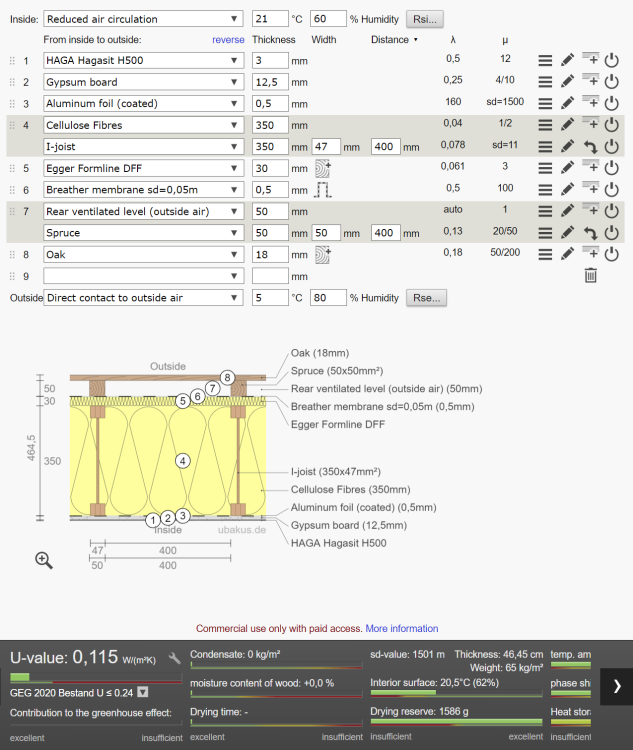
You only need to put a Service void where you are running plumbing, and in those cases there's often another option, ie within cabinets, or false walls hiding a concealed system, or within bath enclosures, or...etc. etc. Suitably rated electrics can run within the insulated wall/roof. So you could be at 465mm for a very high performing wall/roof structure. You could go 50mm less on the I-Joist / insulation and still meet PassivHaus targets.
-
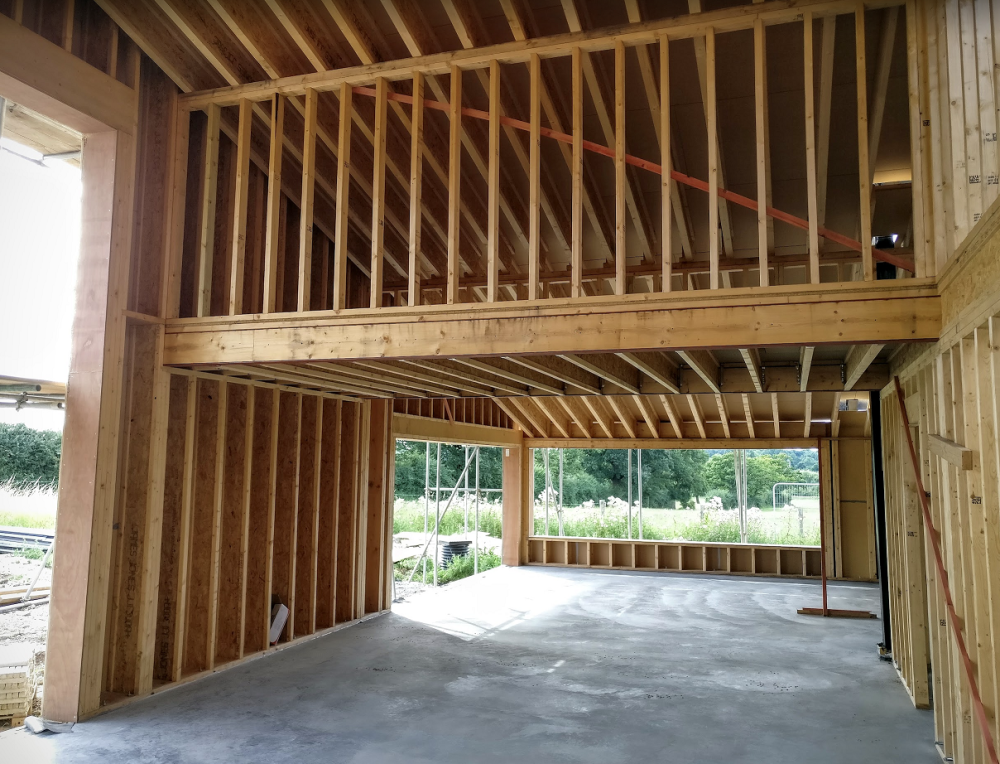
I'm not clear on what you feel is the advantage of building your own cassettes. I'm not sure there are awkward connections, there's just different detailing required compared to using solid timbers, and yes, if you need to fit to the side of an I-Beam you're likely to need to pack the web out to the same thickness as the flanges. There's a significant performance advantage to an I-Beam (or twin-stud) structure, it's worth investigating further. If you've also got a frame designer lined up that's confident, it takes the burden off you needing to know every detail beforehand. I've got a pretty comprehensive 3D model of my frame and am happy to post images of any junctions you are not clear on. Ply lining the window apertures gives a clean surface for the windows to fix into and an easy surface to tape to for good air tightness. The I-Beams weren't packed out though, the ply "just" went across the flanges.
-
Edit: Old story, I should have checked the publication date.
-
It is an Approved method, although you need to confirm it's OK for Aluminium. I thought Stainless and Aluminium touching was to be avoided due to galvanic corrosion. Mine is clinched on to hidden clipping brackets.
-
Is that to hold the capping on? Is it an approved (by manufacturer) fixing method? What metal is the roof. I'd not be happy with visible fixings, or holes drilled through the coated panel, or rusting hardware.
-
Looks very similar to BFP 21 L 3 071N0156 https://www.ebay.co.uk/itm/325254847243?hash=item4bbab31b0b:g:DyIAAOSwBjti0B65
-
Typo noticed after the 30 mins. "You should not need to press hard," Doh!
-
That's eliminated just about anything that could have been causing an issue. I'd just double-check the factory reset, as it sounds like this didn't work properly. You should need to press hard, but you should feel a micro-switch depress as you press down, and just hold in until the LEDs react. If nothing has happened after 30 seconds, then maybe it's bricked. If the factory reset fails, the it's try with the Bluetooth connection to your phone. Were your initial attempts via Bluetooth, or had you connected via Wi-Fi between your phone an the UDR?
-
But a bit like EVs from the 1900's they were pushed out by cheaper, higher performing fossil fuel based products. I believe for now, PU based foam thermal insulation products are fossil fuel based, but the industry is having to re-look at alternatives.
-
Is this not at research stage (for use as a thermal insulation product), with work still to do? Is there a commercial product available. I remember reading about blends of veg oil in fossil fuel based PU foams, but then more of the blended product being needed due to the reduced performance of the veg oil.
-
No problems with blown Cellulose here, ~0.1 ACH with no membranes. Can't say I didn't use tapes though, as all windows were taped and all penetration in the external air tight layer (T&G Egger DHF board) were either gasketed or taped. I went with blown cellulose primarily for its air tightness and acoustic qualities. At the time I was making the decision there were also numerous comments going around about PUR/PIR type insulations off-gassing and I wasn't able to quantify any potential risk involved with that, so went with the cellulose and other natural materials as much as possible.
-
It will if you have another Wi-Fi router running that your laptop knows the credentials for, as it will attach to that one and get its network setting from there, including default gateway. When you then plug the ethernet cable in it's going to see a second DHCP and router on 192.168.1.1 and grind to a halt. Probably best to switch off any other router and/or access point (if you have them) while you are trying to configure the UDR. They're very similar and I believe set up in the same way, with the same defaults.
-
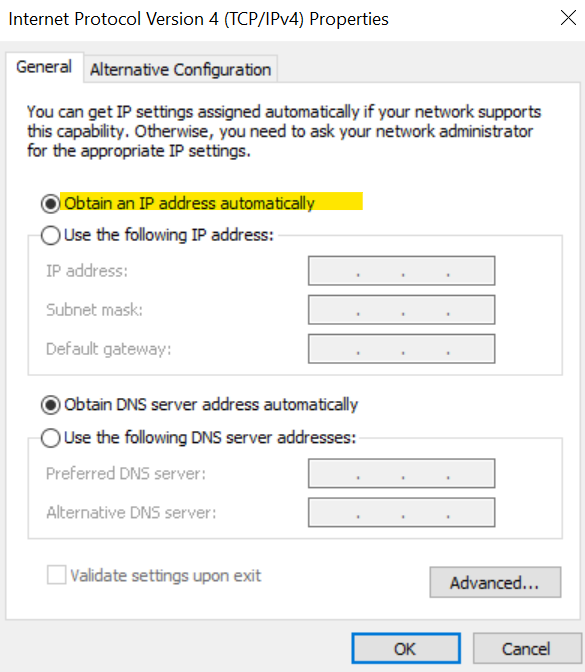
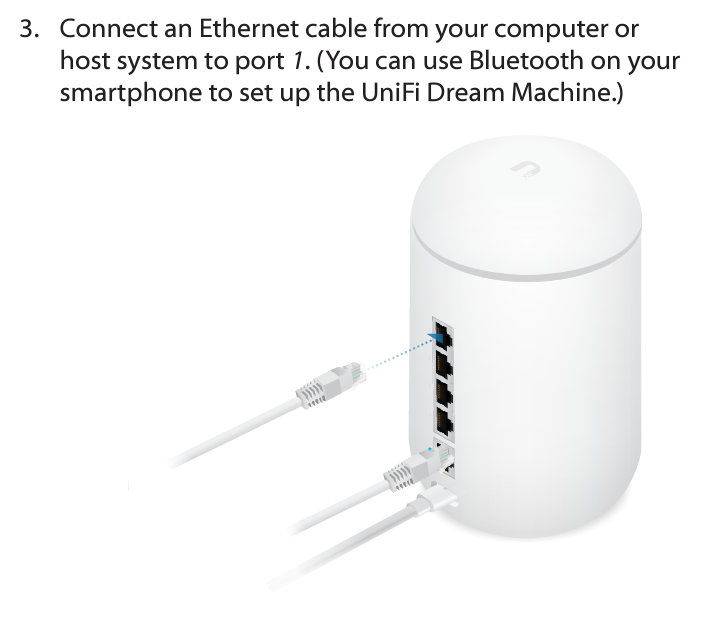
PPPoE is for the Broadband/WAN connection and DHCP is for the LAN connection (The DMR is the gateway between the two) So, setting WAN to PPoE will not effect the the LAN side. If your phone has connected previously and you haven't disabled the DHCP Server on the DMR we can assume DHCP is still enabled. Since you are not familiar with DHCP, it's likely that your laptop is also on its default Network settings (ie. , but it's worth checking. Is teh Laptop set up to automatically configure it's Network settings. If so, then this is use DHCP to retrieve it's settings from the DMR. On a Windows machine, the TCP/IPv4 Properties for the Ethernet connection should be set as below Switch the Laptop Wi-Fi off and connect a network cable between laptop and Port 1, then reboot the laptop. Ref. https://www.4gon.co.uk/documents/User-Manual-4075916.pdf You should then be able to open a browser and type http://192.168.1.1 and land on the login page for the router.
-
Is your laptop set to DHCP? The DMR would be setup as a DHCP server by default, have you changed that? If in doubt factory reset the DMR and start again. You have to connect to Port 1 to config the DMR via Network cable.
-
The HP will have two different flow temps, the lower one for Space Heating, which could be in the 35°C degree range, and a higher one for DHW which would be to achieve a stored water temp of the 50°C I mentioned, so would peak at 55°C. If you are budget constrained, simplify the system and avoid a Buffer, accepting you will have at least a portion of the UFH always open, but electric resistance heating for taps and showers is a false economy, you'll be paying around 3 times as much to heat your hot water and have a poorer hot water service.
-
Hi MattT, and Welcome Maybe, but you'll need to have sufficient volume of the UFH always "open". The HP will have a minimum volume of water it needs to avoid short cycling so if you don't have a buffer then you need some/all of the UFH to always be open to the HP to meet that minimum volume. There's not one solution that suits all properties. If you have a number of other heat sources that effect the property, ie. solar gain, WBS, cooking, occupation levels then you may need a control over the UFH that can adjust to the dynamic nature of those other sources and in those circumstances you may want all loops of the UFH to be able to be closed and then you will require a buffer or volumiser. In those circumstances a volumiser is the simpler option, ie. 2 port tank in the flow or return line (it's generally thought the return is the better option). A 3 or 4 port buffer has a specific use case where you have other heat emitters that use much less energy than the HP can modulate down to ie. a wet duct heater on an MVHR system or perhaps a fan coil heater, and you want a store of water at as close to flow temp as possible for those heating options. Yes, HP efficiency drops off the higher the flow temp it is run at, so for space heating and DHW you want to run each as low as you can. In a well insulated house you may be able to get your space heating flow temp below 30°C for much of the year, increasing it only for the coldest nights. Weather Compensation curves allow this to be automated. Not quite sure what you are saying here. With an ASHP you do require a water cylinder for DHW. Most would go with a UVC. To keep the ASHP flow temp at a reasonable level the UVC should be sized to supply sufficient hot water for the house at a stored water temp of, say, 50°C. Yes the UVC will have an immersion, but this is not used to generally lift the stored water temp to a higher level, except for a fortnightly legionella prevention cycle when the water is lifted to 60°C
-
Then a 50mm high grid and gravel should remain stable, with good edge support, but will cost a lot more than planings. I have planings on the farm track up to the property, done years ago and was never rollered. The surface does break up, similar to what you are saying. A similar track at a neighbours doesn't break up and his was rollered in hot weather. The local farmers tale is that you need to roller in +18°C. I'm planning to put another 50mm on mine and do just that.
-
Out of interest, what did the road planings go down on? Are the pot holes the planning surface breaking up, or is it the sub structure moving? The interlinking plastic honeycomb tiles require a sub structure (150mm hardcore), same as planings, so I'd expect it to move just the same, unless your issue is the surface layer breaking up.
-
So should be available to Cast to another Alexa device (the Wiim Mini or Pro) on the Network. The Workaround for Google is to Upload your personal Library to YouTube Music (up to 100,000 track free), connect YouTube Music to your Google Home account and then Stream your own tracks from YouTube Music for free.
-
Yes, a Mini or Pro per amp That's down to Alexa rather than the Wiim device. The Wiim device is just catching the Alexa Cast audio stream. Are you saying that Alexa will play an album off your LMS via voice command (or do you mean from a connected Streaming Service) If that works from your LMS local audio Library then I'd have thought "Cast album xxx to $Wiim_Device_name" would work.
-
Have you looked at Wiim? https://www.wiimhome.com/wiimmini/overview I don't know Alexa streaming and Alexa Cast, but thought it was similar functionality to Chromecast, which I am familiar with. With a Wiim Mini or Wiim Pro you can turn an "old" amp and speakers into a connected amp and speakers, group them with other similarly connected devices etc. You'd need one Mini or Pro for each amp. Not sure about Alexa Cast, but Chromecast will handle Streaming Service, Internet Radio, Podcasts etc. I think you'd need a separate App to play off your NAS. I use Plex and its integral Chromecast for that, but without Voice Control for Plex.





