


JohnMo
-
Posts
13308 -
Joined
-
Last visited
-
Days Won
200
Everything posted by JohnMo
-

I need to understand groundworks
JohnMo replied to flanagaj's topic in General Self Build & DIY Discussion
Sounds like you have the basics approved i.e. house will look like this and X number of bedrooms etc. You now need the detailed drawings, in Scotland that would be move to the building warrant stage, think it's the building regs stage in England. In Scotland you would also have a full structural design package. That would detail much of what you are asking. Soak aways need to be designed and are based around a percolation test of the soil. Never seen why people build a house with a cold air stream blowing below the house, but many think block and beam is great. 1. Engage an architect or architectural designer to get the details sorted and approved. Then you start at the bottom and build up. Foundation design will depend on the site and conditions it could also vary depending on house construction type. -
Buy one and do not connect until you do. You could do more than one inverter, two trackers inverter is easy to get and then add a second inverter. We have three arrays, done that way.
-
Starting at one end the first connection goes to the isolator via an extension. You then connect positive to negative along the string. The last panel will have a spare end, this end goes to the isolator, your isolator now has a positive and negative. Depending on panel voltage, you now a voltage that will kill you, so be careful.
-
Your planning authority should have given a list of what they require to see and a sign off form. If you can't find it the planners should be able to issue a duplicate. Basically give them only what they ask for. Then someone will come and do a final inspection.
- 1 reply
-
- 1
-

-
Really depends on location of heat pump and plant room or cylinder location. If you just can go through the wall two holes in wall - done.
-
Low loss headers and plate heat exchangers for air source heat pumps
JohnMo replied to dnb's topic in Boffin's Corner
Why are trapped into a 5 or 12kW heat pump, plenty of sizes in-between to choose from. Size so you have two to three hours for DHW and rest of the time to do house heating at your design temp. If you have your heat pump running 24/7 it will automatically utilise your PV, time DHW heating at around midday when most solar is available. You also need a PV diverter, heat pump heats cylinder to 50 and immersion takes it to 60. Heat pump will have a minimum flow rate and volume of water that must be engaged at all times. If you have zones that do not meet both requirements, you need to make a system that does meet them. So now you need to read up on volumisers, buffers (2, 3 and 4 port) and close coupled tees (CCT). They can all be used to get what you want, with differing affects on efficiency. The more simple the system the better the efficiency generally, heat pump direct to heating system (via a 3 port diverter), controlled by manufacturer controller is best. No third party stuff to mess things up. -
Low loss headers and plate heat exchangers for air source heat pumps
JohnMo replied to dnb's topic in Boffin's Corner
There are several grades of glycol, the stuff used in heating systems is food grade, it doesn't poison you. Stuff used in cars does. -
Maybe, you have to checked if your heat pump will modulate the circulation pump when doing DHW, mine just goes to full speed and stays there until DHW cycle is complete. Also have you checked the pump curve, to verify the actual flow rate you achieve with your expected pressure drop. The bigger the pressure drop (head required) the lower the flow rate you get.
-
Passivhaus Under Floor Heating & Water Supply
JohnMo replied to Carpe Diem's topic in Underfloor Heating
Heat pump possibly just short cycles produces next to no heat and consumes a bucket of energy. Example my house is not passive (not a million miles off, but leaks heat faster), its 8 degs outside, misty and raining, so no solar gain, my heating has been off for 7 hours and is unlikely to kick on, until after midnight. House temperature has not changed more than 0.1 degs so far. Your house floor just needs to charged once per day and then switched off (act as a storage heater) or a proper WC curve and run all day on a fully open system. But I find running flat out for a number of hours is way more economical than running all day or lots of stop starts. Been there had thermostats everywhere, and I started to actually monitor what was going on, after my first winter bill being twice what I expected. Stripped more and more equipment out and monitored energy usage. The simpler I got the more efficient I got. If a room is a bit cooler than I like I open the room door and its same temp as everywhere else 30 mins later. Went from 7 thermostats to 1. -
The normal max velocity for hot water below 60 degs through copper is 1.5m/s, above 60 the flow velocity is less than half that. Cold water can be up to 2.4m/s, but likely to be pretty noisy. High velocity will strip the corrosion layer away inside the pipe and never lets it reform and you get high erosion rates. As a side note Hep2O is only happy with 1.3m/s for hot water. Sounds like the pipe is bit small.
-
Loft roll tends to slump, accoustic roll is much stiffer and doesn't. I just use Rockwool Flexi and normal 12.5mm plasterboard, you don't hear much of anything through the the walls. Without the plasterboard on, but with Rockwool in place, the house was totally silent.
-
Not sure its either. Thinks it works like this Target flow temp of 35 deg. Every minute above or below this it calculates how much more running time it needs to do or not do to compensate. Example - My target flow temp is now fixed at 35. The heat pump runs UFH in a thick slab of concrete, it never actually goes above 33 and bit, it runs for around 8 hrs +/-. So in my case the heat pump would never actually stop, it would for ever chase its tail. Fan coils with a small system volume it may work to compensate for defrosts etc, but the fan on the fan coil does that for you anyway if room temp drops, it just increases fan speed.
-
Passivhaus Under Floor Heating & Water Supply
JohnMo replied to Carpe Diem's topic in Underfloor Heating
That is a low loss header. You basically need it or a buffer (same thing but bigger volume) because you have zoned your house in to small volumes. One or two zones only, you could delete it all together. No heating element so all the heat is coming from the heat pump, which is good. -
Suspended Timber Floor insulation - critique my plans please.
JohnMo replied to SoliD's topic in Heat Insulation
Main things I would think about Good insulation as the air below the floor is much colder than soil so losses downwards can be quite big. Especially if you heed the next thing The other is keeping the upward thermal resistance low. Otherwise the flow temperature though the loops can be very high to get through. Another way to do the insulation is use a breather membrane and allow to droop between joists then add mineral wool. Can see two clear advantages, airtightness and getting a good smug fit of the insulation first time. Then just replace the floor boards and utilise your existing radiator or replace with a designer one. Way cheaper to run, system inertia matches the rest of the system. No additional pump to run, home to find for a manifold. -
Just sounds like rubbish complication no-one really needs. May be ok for a very low inertia heating system, but absolutely rubbish with UFH for example.
-
You don't need planning permission to tidy your garden, tidying your land is no different. I had all my soak aways done etc before planning came through. As long as you do6start or be seen to start the house foundations all good. But get any ecology stuff done now, before breading season starts, otherwise you may forced into a 6 month waiting period. Do not hang about.
-
Really depends on what needs to be over and above just installing a heat pump. I did ASHP and cylinder without any grants for around £3k only outside help i had was an electrician for an hour doing the final hook ups. My battery install was just over a day. Batteries and inverters will do different things depending on what you want or pay. I wanted no difference in the house if grid goes down and that's what we have. Most inverters will only do a dedicated circuit or two, not the whole house, without grid power. The all in one battery manages a GivEnergy charger also if you need that. I did all mine in bite size chunks, so I could control easily and do those bits I could myself - and so I knew what the costs were etc...
-
It's not bad, nice and good quality build, seems good quality overall, works well, now I have my head around flow temperature. Pretty quiet overall, you can program so it doesn't boost the fan at the high speed ever and only does the lowest fan speed overnight. It has an adjustable threshold for water temperature (for cooling and heating) where it switches off the fan. If you set this too low it cools the room instead of heating, if you are not careful. Water temp target temp need to at about 33 to 35, so the water temp doesn't drop below about 28 in any heat pump off cycles, otherwise the fan just drops room temperature. It comes as standard equipped for cooling. Comes with its own programmer, user defined schedule programming etc.
-
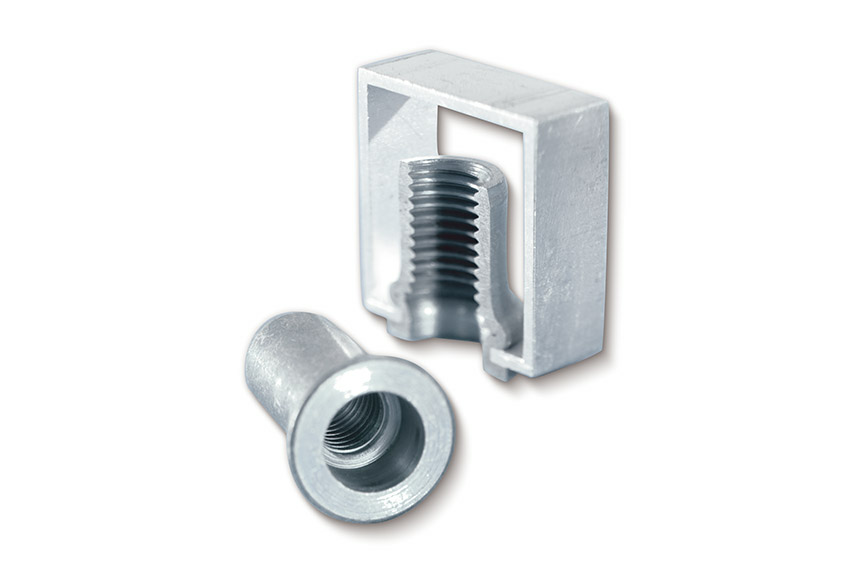
Thing with rivnuts you drill a hole in a plate or box section on the side you want to bolt. They go in the hole and you deform them so they compress against the base material. They don't go on the opposite side of the box section. Used hundreds building cars and kitcars.
-
calculating heat loss from window u values and degree days
JohnMo replied to rolling-orbit's topic in Windows & Glazing
Not sure I would use heat loss days. You would be better using the difference between your average outside temp (say 7) during the heating season, and average inside temp (say 20), as your dT. For you windows you need to use UW, not Ug for the calculation. Then it's area x Uw x 24 x number of heating season days (say 180) -
Recommendations for wet underfloor heating kit / company
JohnMo replied to KayleyH's topic in Underfloor Heating
Yes, there are two versions available normal temp and low temp. Well insulated and passive would require low temp just about anything else normal. No, except to have the actuator open implies you paid for them and required wiring centre. None in place and pump wired to thermostat, could be cheaper and simpler if you don't need to buy in the first place. -
Just been looking at the numbers for the last couple of sunny days. Our normal consumption of electric without heating and hot water is around 17 to 18kWh at this time of year. On standard rate tariff would cost £4.50 The heat pump used 19kWh electric each day (heating electrical demand of 4W/m2), for UFH and DHW. On standard rate tariff would cost £5.13 For comparison, a CoP of 3 would make 57kWh of heat, so from gas at 0.08p and 90% efficiency, would cost £5 plus standing charges, so pretty similar to ASHP. However we only imported an average per day of 24kWh at an E7 cost of £4.41 average per day. Utilisation of cheap rate rate was above 96% The remainder coming from Solar PV and PV stored in a battery. Total cost per day was £4.41 against a standard rate tariff, no PV or battery cost of £9.63 (17kWh for house and 19kWh to heat pump). So two good solar days (but sub zero during the night and between 5 and 8 during the day) saves £5 per day or £10 in total, with E7, battery, and PV. Or looking at from a heating perspective I am getting my heating for free.
-
Passivhaus Under Floor Heating & Water Supply
JohnMo replied to Carpe Diem's topic in Underfloor Heating
Worry when a plumber doesn't know a standard plumping term - UVC is an unvented cylinder. The black unit will be a low loss header. There because you have lots of zones, adds inefficiency to the system generally as it elevated running temperature. It shouldn't be allowed to heat water directly via an immersion as will start to cost lots to run. Good he found some things to fix. We run our UVC at 50 degs. It ends up charging once or twice a day. Your WC curve looks high for a passive house with UFH, but that maybe due to the low loss header and mixing that occurs within it. So possibly loosing around 0.5 in CoP because of it. -
Recommendations for wet underfloor heating kit / company
JohnMo replied to KayleyH's topic in Underfloor Heating
Conversely to I started with smart controls, ripped them all out and now have a single 0.1 hysterisis thermostat in the house, all loops open and no actuators. With UFH don't see any need to complicate what can be a very simple system. Assume you have radiators elsewhere, if so you need a mixer valve. Do yourself big favour and invest in an IVOR mixer. Far superior to most the rubbish being sold. Accurate temperature settings, adjustable spill back and mixing rates. -
Solid Wood v UPVC/Composite exterior door
JohnMo replied to Clark Kent's topic in Doors & Door Frames
Yes, basically a sandwich. In the grand scheme of things it's quite good. If you are replacing anyway, make it the best you can get with cost constraints. Our door has a U value of 1.0, the two side lights are 0.6. When comparing offers look at the whole U value, a lot of companies will just give glazing value. Frames can leak heat very well and it will just bypass the glazing or the door itself. If a company is unwilling to give the whole U value move to the next company. I had that a lot. You are looking for Ug is just the glass Uw is the whole U value


