


JohnMo
-
Posts
13308 -
Joined
-
Last visited
-
Days Won
200
Everything posted by JohnMo
-
Perhaps those people shouldn't be doing DIY, they should get the plumber in. Or possibly read the instructions that tell how to install a hose without kinking and twisting it.
-
Why, they are stupid expensive, hot water cylinder isn't. Control is way simpler for the cylinder also. From what you see on here, a cylinder is way more reliable, a thermostat is really all that can go wrong, so easy to fix or replace. Certainly with heat pump storage temperature (50 and below) heat losses are pretty low from a cylinder. And a cylinder can be heated by heat pump easily, phase change not so easy and if you do the CoP is dreadful, because the heat flow has to be above the phase change temperature at all times. Most heat pumps will not do that anyway.
-
3.1kW at 45 deg, and 4.5kW vertical. Not bad for NE Scotland, have generated 200kWh so far this month.
-
Your manual will say something like the below service pipe into the dwelling should be a minimum of 22mm (usually in the form of a 25mm MDPE supply). The optimum performance is achieved if the inlet pressure is 3 bar dynamic. However, will function with lower inlet pressures, but this will reduce the performance. There should be a flow of at least 30 litres per minute or above available into the property. Normally Ideal HP provides well in excess of 40 litres/min in most conditions. Q4, 22m isn't a long way, 25mm will.be fine. Lower friction, already a smooth surface, no need to look elsewhere. Q5 yes and you don't need 32mm. Q6 yes if it's part open. It should be fully open - if the leak is from the stem tighten the nut where the valve stem comes out the body, to punch the gland a little tighter.
-
The vertical panels are proving themselves very productive, just had a quick look and was producing around 5.6kW from the vertical and 45 deg arrays. 2/3 was from the vertical panels. Yesterday was the least import we have done over the winter months. We imported 16kWh, for all heating, DHW and normal household electricity. We had -1 overnight and a high of about 6 during the day, so heating was on. 2kWh topped the battery up to 60%, as it was still quite full from the previous day. The rest went into running things on cheap rate period (12kWh). The remainder of the day came from battery, PV (15.5kWh) and a final 2kWh at full price. Total price of electricity yesterday was £3.24. Last year even with the 45 deg panels we still imported 17kWh each day on average, with heating and hot water coming from gas. PV, battery, E7 and heat pump is proving to be quite a bit cheaper, than PV and gas boiler. Averaging around £80 saving per month over the winter so far (pricing corrected to current rates, so comparing like for like).
-
Tundish as per photo. There are requirements for sizes and bend positions.
-
You can check on any tap. Static is the pressure with no taps open, you then open a tap and the resulting pressure is the dynamic pressure.
-
£5k for the small one, that's a cylinder and 5 years heating on direct electric at 7kWh day.
-
Never had an issue with Flexi hoses. The only way they burst is if you get them all twisted and buckled. If flexible hoses are bad, I pity every car on the road as they have tonnes of them, for fuel, brakes, and air. Stop listening to plonkers on social media, that possibly don't know any better, and possibly caused there own issues in the first place.
-
You possibly get more from webuyanycar etc. On a recent car purchase they gave me £4500 more than I would have got trading in.
-
Think whatever the individual does will help something, but it is really small and possibly insignificant in the grand scheme of things. The steel plant that is closing in Wales is going to reduce CO2 emmisions of the UK by around 20% on its own. One plant!
-
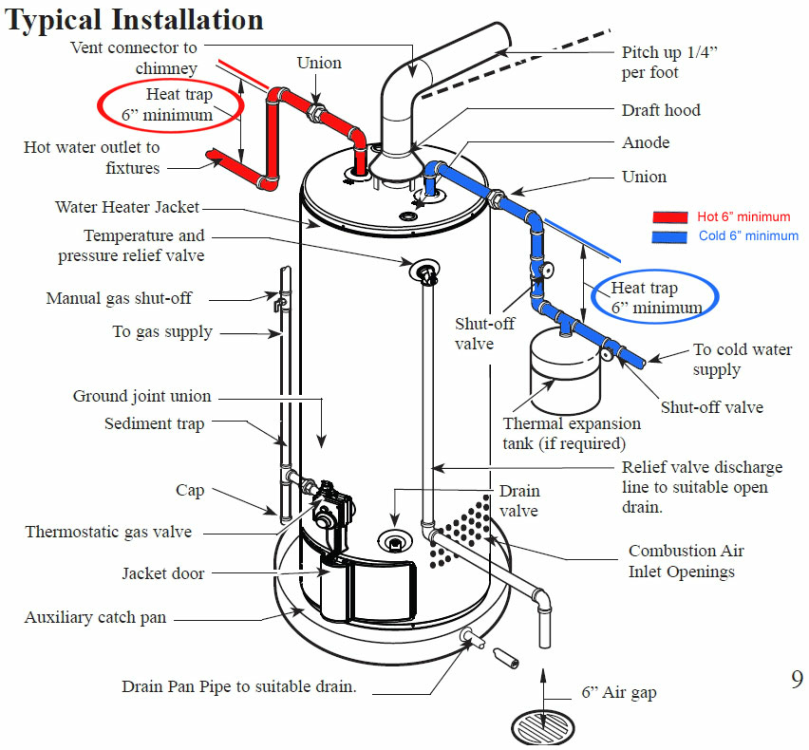
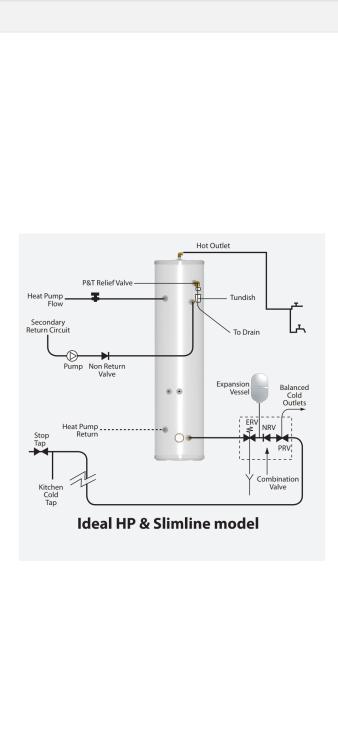
On both counts - This is not compliant the manufacturer instructions for the UVC and not compliant with G3 regulations. Is he certified to install and certify, ask him for his certificate and then report him to the certifying body (that will be on his certificate card that he is obliged to show you). Your installer is supposed to do static and dynamic pressure tests, it has to meet a minimum threshold for both to allow an UVC install to go ahead as a suitable solution. Not sure I would trust that fitting copper to lead either. This is how your cylinder should be configured. You have should have two pipes going to either individual or one combined tundish one from the combined valve and one from over pressure relief. Other comments the vertical pipe from the top of the cylinder will leach heat away from the cylinder at a high rate. To fix this do a 90 Deg at the cylinder connector, come the cylinder edge and the go down a min of 150mm the go back up. This is called a heat trap.
-
Especially if, as the topic says, you start to use it to backflow into the grid and the electricity wholesalers cycle the battery a couple of times per day. No one would to buy one of those cars 10 years old. Really makes a 10 year old EV a scrapper value wise.
-

Designing with contingency for any future crisis/emergency
JohnMo replied to saveasteading's topic in Barn Conversions
Own well for drinking water Own sewage system Plug in Generator with change over switch, big enough to run hob, water lift pump, sewage system, ASHP, and ventilation - not necessarily at the same time. Battery that can supply whole house, not just the odd circuit. We had a few hours of power cut last night, all I noticed was a slightly flicker of the lights. -
Time normal cylinder heating after you are likely to get past the excess PV period, so late afternoon, then if you haven't got the cylinder hot, your normal heating process will take over. Set your immersion at a temperature you are comfortable with.
-
What size Hot Water Cylinder for family of 5?
JohnMo replied to Meabh's topic in Boilers & Hot Water Tanks
Still not understanding how your heat loss is that big, even with MCS ignoring heat recovery. Your ventilation heat loss will be in the region of 1800W ignoring heat recovery. Are you sure they are using the correct U values for you walls, floor, roof and windows and doors. Or using a stupid design temperature. Not sure the heat loss you are being quoted, would meet current min building regs? -
Total Heating Total Control (THTC) Help
JohnMo replied to ColinG's topic in Central Heating (Radiators)
Life is to short - move. I even tried to move to EDF at one point and that became to difficult, the saving I could have made were not worth it. -
Low loss headers and plate heat exchangers for air source heat pumps
JohnMo replied to dnb's topic in Boffin's Corner
Also remember this is mostly summer generation, Dec and Jan will produce next to nothing, even if the sun is out the production day is very short. During most of Nov to Feb your heating will not come via anything your PV produces, it may offset a little. If you are using a ToU tariff (E7 etc) you really need to utilise that period well. -
Structural UFH boards - alternative to Omnie?
JohnMo replied to Del-inquent's topic in Underfloor Heating
Trouble with all these systems is flow temperature required. On the blurb on the web page it states flow temperature between 35 and 55. I used a similar sort of system in a very well insulated garden room, it needed a flow of 35 on a 12 deg day and room still wasn't that hot. At zero I tried 45 and the room was at 16 degs after 24 hrs. Absolutely rubbish. There is just to much thermal resistance in the system to work well at low flow temps. I would just steer clear all together. I ended up fitting a fan coil and now 33-35 degrees will happily heat to 22 when -5 outside. Insulation insulation and more insulation required if on a ground floor. Look at a dry screed (pug or biscuit) system. You can DIY and everything and can come from your favourite builders merchant. -
ASHP efficiency report 600%
JohnMo replied to saveasteading's topic in Energy Efficient & Sustainable Design Concepts
I would be sceptical especially if it exceeds what the manufacture states. But saying that if you are only flowing a temp of say 30 or less, most of the time with a target of 16 for the house, the heat pump will not have much work to do. The days have been sunny also (now and then) so if you are getting some solar gain also, the circulation pump is possibly on and the ASHP compressor doing no additional work. But the heat pump recording something going on. Its a good indication that things are working as they should. -
What size Hot Water Cylinder for family of 5?
JohnMo replied to Meabh's topic in Boilers & Hot Water Tanks
Our 195m2 big vaulted ceiling in every room and lots of glazing bungalow, uses around 3.5kW at -9, so yours must be huge, or the heat loss calcs are wrong. -
What size Hot Water Cylinder for family of 5?
JohnMo replied to Meabh's topic in Boilers & Hot Water Tanks
Heat pump cylinder size guide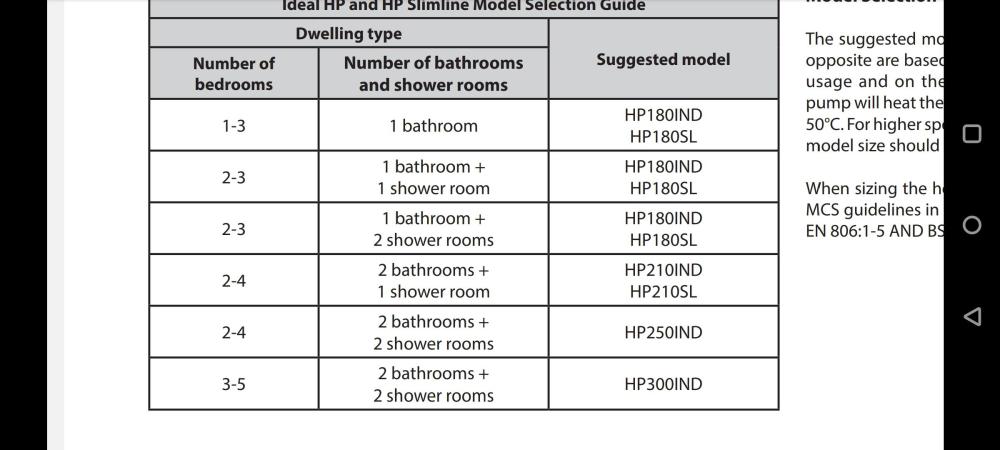
-
Yes, but you need a calibrated, with supporting certificate (that is in date), flow meter.
-
I rang mine and they basically said not interested. If covered by other work that required planning permission, they are interested, otherwise not interested, get on with it. So I would think most councils will be the same. Unlikely they log what properties have an UVC unless otherwise stated in a planning application. Basically I have 2 certs "water bylaws" it states I should join a self certification scheme, where as, the "G3" cert says nothing. You would think it would be the way round. Not sure they know which way is up, so why should anyone else? Think like a lot of conversation on here, it turns out the 1% (or less) of people try to go the right thing, while rest do what they want, even the professionals, than should know better.
-
MVHR retrofit requirements?
JohnMo replied to oliviaaa999's topic in Mechanical Ventilation with Heat Recovery (MVHR)
Hi, sounds like lots of working going on. I would split your questions into different topics each in it's relevant section, otherwise you will not get many answers that make much sense in a weeks time. So take all those questions not related to MVHR and repost. So looking at the ventilation, no ventilation gets you away from opening windows when it's hot. Flow rates are not sufficient for that. It will help a little but generally not much. There are three plausible ventilation strategies. MVHR - mechanical ventilation for supply and extract with heat recovery. This runs all the time and is an addition to any leaks within the building fabric. To get the best from this system the house needs a reasonable airtightness. Filters can be expensive depending on unit used. MEV - mechanical extract only. Trickle vents in windows or walls. Would only use this system if trickle vents are humidity controlled AND extract points are also humidity controlled AND fan speed is controlled on a constant pressure. Easier to install than MVHR, one fan instead of two. Only runs when needed so heat loss is minimal. No filters to replace in theory, but would install with filter socks in extract points. dMEV, easiest to implement, similar to above but each wet room has its own fan. Inlet devises as per MEV. No filters All the above require internal door undercuts of around 10mm to proved a ventilation route if doors are closed. All will give good humidity control, should be near silent in operation. All have a compromise cost/difficulty of install, weighted against ongoing running cost (electric and filter) and heating cost.





