Gone West
-
Posts
4668 -
Joined
-
Last visited
-
Days Won
20
Everything posted by Gone West
-
From what I read years ago it works, but only well, on a large scale.
-
So increasing the heat output by making it a triple panel would increase the heat going into the room by 50%. Many years ago my parents lived in a very old solid walled house and it was very warm because they had radiators that were large enough to keep it warm, around 22C, with an LPG boiler. Your ASHP will deliver much cooler water to your radiators so your radiators should be proportionately larger.
-
Is it a single, double or triple panel and is it a convector radiator ie does it have fins?
-
Oh no he won't.
-
The panel may be the largest you can fit in the room but you can buy triple or even quadruple panel radiators so I would be surprised if they were the largest heat output radiators around.
-
What you're saying when you say "it's just the rooms that are unbalanced" means the radiator is too small for the room.
-
So is the radiator in that bedroom consistantly the same temperature as the other radiators and it is the room temperature which varies.
-
I've already asked and was told no.
-
I would get a few more quotes for comparison because it does seem cheap.
-
There was a large variation in the quotes we had for asbestos removal. We went with the cheapest which was around a third of the most expensive. We paid £3850 for removal and disposal of 110m2 of asbestos sheets and £550 for disposal of roof slates which I removed.
-
You can always dream . It's what keeps me going.
-
 The second layer may have been fitted first to reduce draughts then at a later stage it was reroofed and a proper layer of felt was laid under the tiles.
 -
Has your architect calculated the level of solar gain through all these roof lights. The g-value of the glazing could be critical for comfort levels in the rooms affected.
-
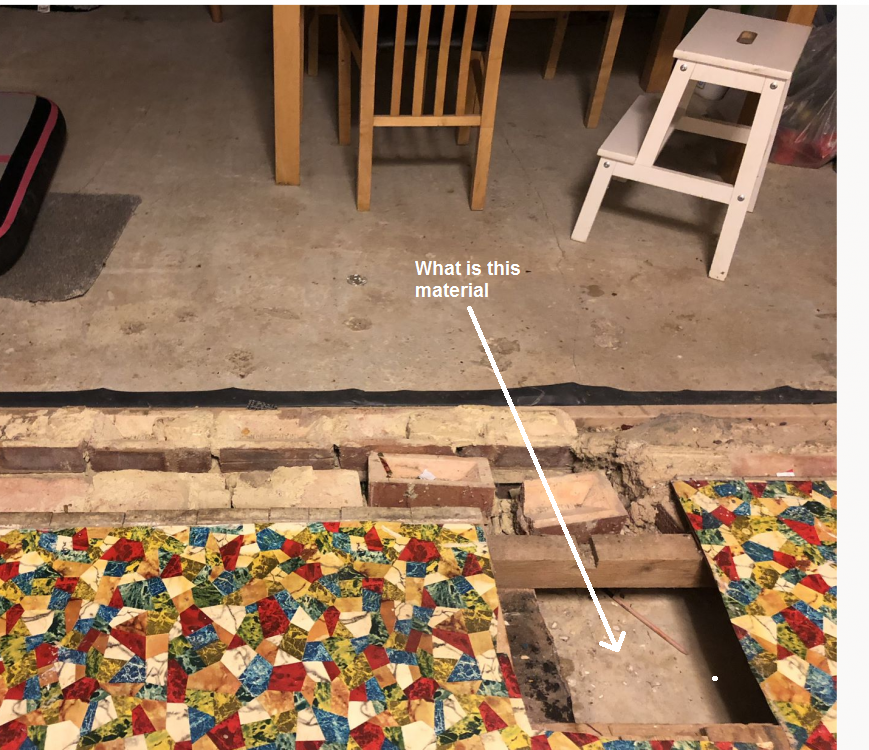
How can I join a concrete slab to a suspended floor?
Gone West replied to carlosdeanos's topic in Floor Structures
If so then can't you remove the joists and increase the height with EPS/PIR to match whatever the extension is going to be. Then run the UFH over the whole area. -
How can I join a concrete slab to a suspended floor?
Gone West replied to carlosdeanos's topic in Floor Structures
-
It's definitely a good idea to have a break occasionally. If the other radiators either side in the run are warm then they should all be warm. Any 'delay' would affect them all. If that one radiator behaves differently from the others it could be the TRV or air bubbles.
-
We have a triple glazed roof window in our bathroom with a g-value of 0.32. It doesn't cause overheating in the bathroom and is only opened, when the weather is hot, to purge heat in the evening. Roof windows are very good for purging heat in conjunction with an open door downstairs. Double glazing can also have low g-value glass.
-
Use a string level. https://www.screwfix.com/p/stabila-builders-line-level-3-80mm/5494x
-
Just highlight the bit of text you want to quote and a 'Quote Selection' box comes up.
-
Do you know the temperatures of both of the pipes connected to the radiator and the top of the radiator itself after it's been on for four hours?
-
Really cold last night -2.4C and 98%RH freezing fog. Coldest night of the winter by some way.
-
Sorry, that'll teach me not to read the title properly
- 10 replies
-
- 1
-

-
- door
- outbuilding
- (and 1 more)
-
Whoever told you that was wrong. UFH is more inefficient than radiators because even with a lot of insulation under the floor slab some heat will be lost to the ground.
-
I thought 1981 x 686mm was a standard size. https://www.internaldoors.co.uk/mexicano-modern-veneer-oak-door As an example.
- 10 replies
-
- 1
-

-
- door
- outbuilding
- (and 1 more)
-
That's odd. I'm with Good Energy and have been for years. I give a monthly reading as requested and my quarterly bill shows my usage and account balance. I have had one instance, some time ago, when they asked me to pay more and I refused and asked them to show me how they worked it out. They backed down and accepted my calculations.