PeterW
-
Posts
18480 -
Joined
-
Days Won
207
Everything posted by PeterW
-
You need to close the cavity - there will be a small 50mm cavity between the block and the timber frame. That needs closing with insulation and then a DPC over the top. Then just attach the board direct to the timber frame. It will be fine as the TF will not create anywhere near as much condensation risk as blockwork.
-
not needed - kitchen was solid brick/ block so that was to stop condensation. With the TF there isn’t this issue and the cavity just wants closing off with some insulation and then a DPC. Easy enough to staple this to the frame then board over the top. Is this being plaster skimmed or board and tape ..?
-
yes as decoration isn’t included in your price ..??
-
That is correct. It contains the bacteria needed to stop it smelling and process the waste
-
First question is what is your target uValue ..?? I’ve used bead at 150mm with a 25mm PIR lining and standard plasterboard and got a really good airtight finish and thermal performance. I’m not keen on cavity boards due to getting them “perfect” and unless you want to pay more per square metre on your blockwork and brickwork, you may not be happy with the results.
-

Anyone see these kind of radiators and valves in the UK?
PeterW replied to Raks's topic in Central Heating (Radiators)
They are designed for contraflow or side entry rads - they aren’t available in the UK. -
I thought the Self Build Exemption worked for this sort of thing ..?
-
As @Russell griffiths says, longer bar needs more power or will just bog down. It’s always surprising when you see people think you need a 20” bar for an 18” tree .... you can do that with a 12” bar ..! My old top handle Stihl had a 12” on and I took loads of stuff down with it much bigger than that.
-
How easy is it to buy nucleus now for a new hive ..??
-
Depends on the type of door... you won’t get the overlap unless you can find timber the same (assuming these are oak or other wood..?) or they are painted and you can hide the reveal.
-
Yep agree, tile the lot and don’t worry about missing tiles etc however .... I’ve seen a couple recently where they fitted the end panels and on a tiled floor they used 2mm silicone bumper “dots” on the bottom edge of the end panel to lift it slightly. Then all you do is a bead of clear CT1 under the edge and it is both sealed to the floor but also slight off the floor so should be protected from water.
-
Shower head clamp slipping down the rail.
PeterW replied to epsilonGreedy's topic in Bathrooms, Ensuites & Wetrooms
Take the slider off the pole then add a couple of layers of insulation tape to the face of the clamp block and then refit it. It will take up the space between the pole and the clamp. -
That is exactly my experience. I used a 14" steel jointing spreader for the FST, and used 40m crown staples to fix the boards to either timber framing or battens on the walls. I struggled to get Fermacell filler so used standard Alabastine filler for the staple heads and gaps. If you have reveals or returns to do then a cheap router with a laminate trim bit is ideal, cheap belt sander and extraction is always useful too !
-
As per @Declan52, correct PPE for a saw is helmet with face guard, ear defenders, chainsaw gloves, boots and either chaps or trousers. Overhead work I also use a Class 1 jacket. As my instructor said to me, wear that lot or wear running shoes, as a chain running at 14m/s can move faster than you ....
-
Chain is chain and bars are bars - Oregon make for most brands so pretty sure it’s going to be an Oregon bar on it anyway. Depending on the Makita you have, it will use a 3/8th 1.1 or 1.3mm chain with a certain number of links. My book is at home but from memory they come with a 14” bar ..? What PPE do you have for the saw ..?
-
Leaking stop tap: why does it always happen to me?
PeterW replied to ToughButterCup's topic in General Plumbing
If that’s in the piggery then it means the house is on a different feed ..? So .... the piggery isn’t metered..?????!!! -
You can join it but I tend to stagger the covers opposite to the track so any misalignment of the lower track will be masked by the covers.
- 1 reply
-
- 1
-

-
Oil is cheap, bars and chains are not. I use Rotatech oil as it comes in 25 litre drums and it’s about £1.25 a litre. I also buy their chains but either Oregon or Husqvarna bars. Turning down oil is not something I would do - most of them are set to a correct level and it will ensure the chains don’t go dry and overheat which can soon damage the chains and the bars themselves.
-
You’re topping the oil up once an hour..? That sounds about right although it may be worth using a decent oil such as the Stihl or Oregon brand. In terms of cleaning, you should be doing that as you go and at the end of the day. How often do you sharpen the chain and what with ..?
-
1/4” rounding over bit in a router would do that with some care.
-
MVHR duct lagging ideas
PeterW replied to Alfow's topic in Mechanical Ventilation with Heat Recovery (MVHR)
Either Armaflex or InsulTube for the nitrile and check one of the MVHR suppliers -
Underground soakaway crates, where to position an overflow pipe.
PeterW replied to epsilonGreedy's topic in Waste & Sewerage
Go deeper but narrower ..? Or even go with a wide inverted T as this is surely just storm attenuation ..? -
Underground soakaway crates, where to position an overflow pipe.
PeterW replied to epsilonGreedy's topic in Waste & Sewerage
It can be anywhere as long as it’s slightly lower than the inflow pipe. It should also be close to the top of the crates otherwise you won’t get the benefit of the whole of the crate volume. -
MVHR duct lagging ideas
PeterW replied to Alfow's topic in Mechanical Ventilation with Heat Recovery (MVHR)
Welcome. There are two standard products for this - either fibreglass / Rockwool foil backed insulation or nitrile rubber insulation. Both are fairly easy to install if you have patience - the main difference is the nitrile products are better bonded to the ducting with impact adhesive where the foil / fibre products are better fitted with tape joins and not stuck to the ducts. You will probably be looking at £6-8/m installed if you do it yourself. -
MVHR newbie.. help needed
PeterW replied to Savage87's topic in Mechanical Ventilation with Heat Recovery (MVHR)
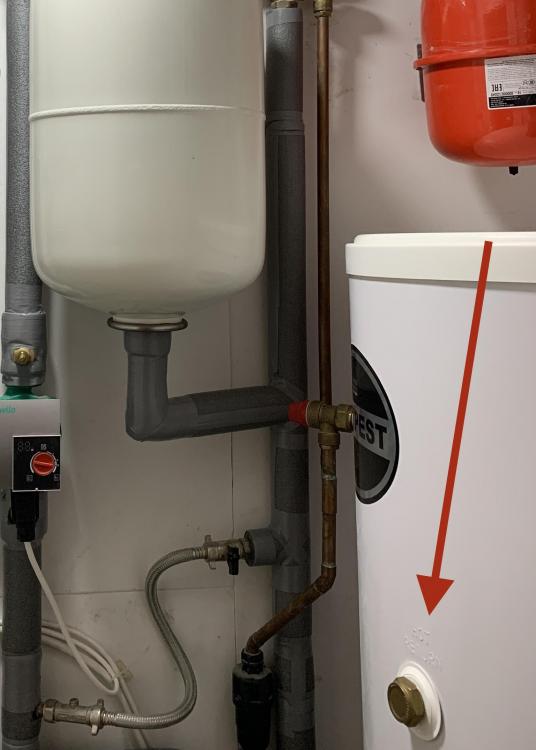
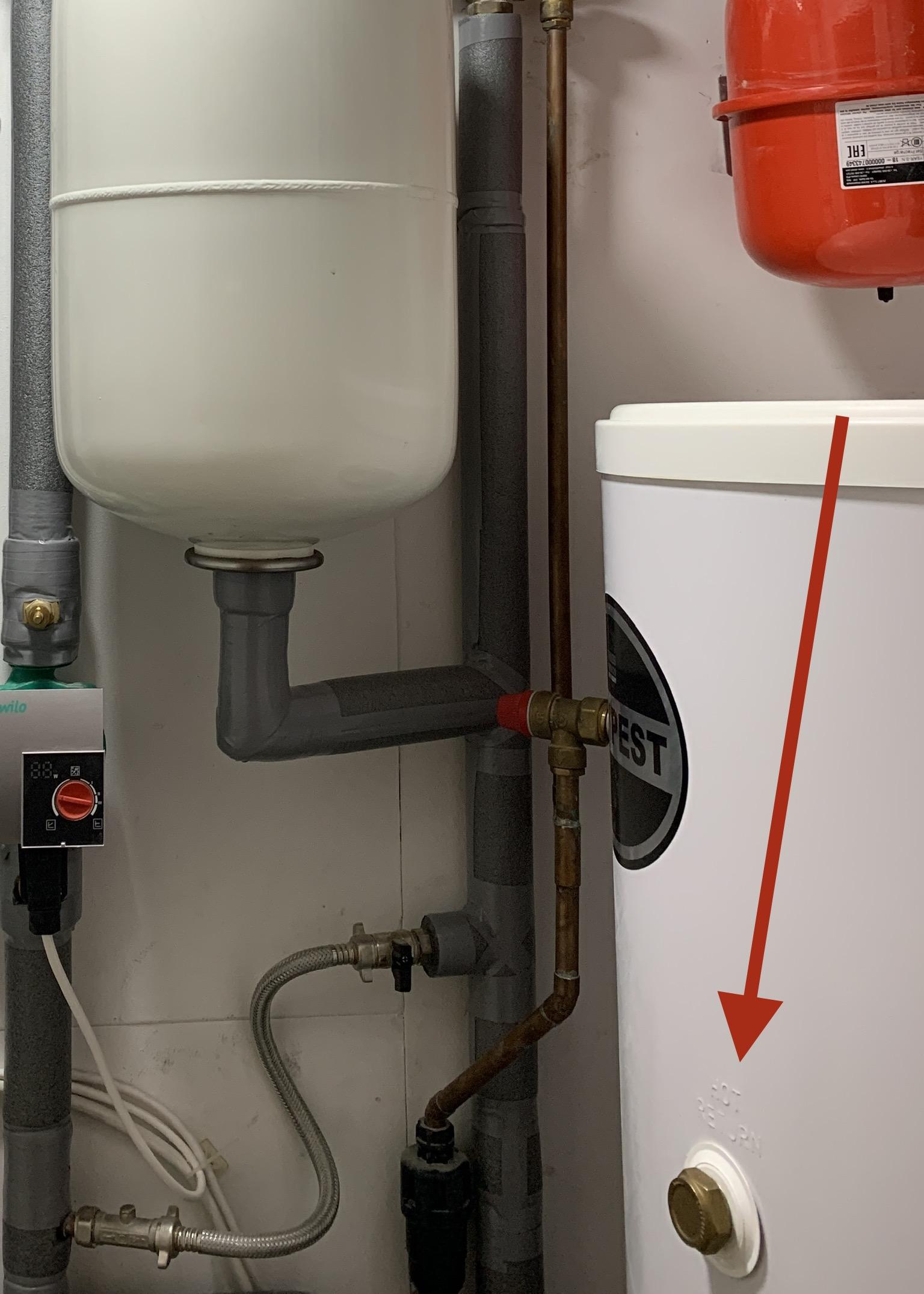
Ok... so ... Hot comes off the top of the tank down an insulated 22mm pipe, and then is tee’d off to each tap as close as you can get. After the last tap spur, it drops to 15mm or even 10mm and then returns to the tank via either a bronze or polypropylene bodied pump (due to it being potable water). Hot return port is here on a Telford Heat Pump cylinder. This pump runs intermittently to draw a slug of hot water from the tank, and then return the cooler water to the tank. Essentially this whole circuit is just a pressurised extension of the tank. When a tap is opened then the water pressure takes over and taps operate as normal but the only “cold” water is the last leg from the circulating loop to the tap.